The Line of Beauty

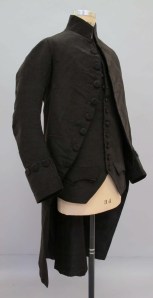
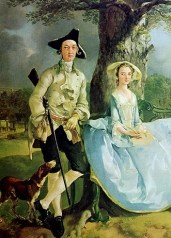
In considering menswear, I found this suit at the Met. Incredibly plain, it reminds me of classic Balenciaga: all about fabric and drape. It also reminded me of Hogarth’s Analysis of Beauty, and the serpentine line.

You could also call it the Ogee curve, and it’s found in the serpentine legs of 18th century tables, and does not come from, “Oh gee, that soldier’s got nice legs.”

In this variation on the theme, the contrasting lining emphasizes the lapel line, but the overall effect is less elegant. It’s about materials, too, not just cut. There’s so much to learn just by looking, really looking, at clothes and paintings from the past. There are subtleties we miss as we rush past, and miss because we haven’t read enough to understand what we’re being told.

So much hides in plain sight, because we don’t see the world the way the tailors and painters and engravers saw it. I don’t pretend to have the key to that world, but it’s worth looking for, mostly just by looking.

I Love a Man in a Uniform

Maybe it’s about the musket?

But that’s not my man, that’s Brian. Nice uniform, though, right? Blue broadcloth with white facings and pewter buttons, a cap with a red cockade, fitted white overalls: what’s not to like? (Making one, that’s what, and one is in my future.)

After getting Mr S’s workman’s jacket to the brink of buttons and buttonholes, we looked at it and said, “It’s so…plain. Where are the contrast facings? The tape and the lace? Should it be so much, well, one color?” Peacocks suddenly made sense.

It’s not about the musket. It’s about the buttons. And the breeches.

I spend my 18th century time with men in uniforms, and I forget the role of line, fit, and color in determining style. I see it in paintings, and in lovely coats in museums, but one thing we don’t have a lot of are paintings of middling and lower men who look stylish. Of course not! They couldn’t afford paintings, and style–refinement at least–was associated with class and gentility. There was a coded language, and clothes said a lot about the wearer.

So what did uniforms say about men, and how much could civilians, especially women, read the symbols? Hessians, with their tall brass hats, and grenadiers, with bearskins, are dressed not just to impress, but to overwhelm, visually. At Fort Lee last year, my mother was distinctly impressed by, and a little frighted of, the Hessians and Jaegers: the uniforms worked as intended.

Facings and frocks: Rhode Island stands out

Light Infantry troops wanted to set themselves apart, and used their cut-down caps and short jackets to achieve immediate visual distinction.

Working men used what they had: checkered or printed handkerchiefs, patterned waistcoats, and better buttons were some of the ways they dressed up their clothes. I know brass buttons will be in my sewing box soon, the sooner the better, say the men I sew for.

Waistcoat Weekend

My clothes are finished, and there was just enough left from a petticoat to cut the fronts, welts, facings and collar of a waistcoat for the Young Mr. It will have to be backed with the grey broadcloth of his father’s coat, which was brought to the brink of buttonholes Sunday evening.

Tonight, trousers to cut out, and a progress check-in for Mr S’s waistcoat. Menswear has such different construction techniques, stay tape and diagonal basting, such structure! I was better at those techniques 20 years ago, and now I don’t know what I’ve done with the books on couture techniques.

It’s a great quantity of buttonholes, really, so better not to count (24 + 18 + 10= 52) on the way to the 1,000 that Henry Cooke prescribes for proficiency. Will I ever get there? I will at least get better at them, or so I hope. When these garments are done, I think I will have done 100 in the past 12 months.

No progress photos: just newly acquired mirrors (drive across CT and back as fast as you can!),  hung in place.

The Wind From the Hudson

Looking East from Fort Lee Historic Park

The cold on the Palisades was not as bitter this past weekend as it was last year; there must have been at least an 8 degree (F) difference. There was a rumour of 37F/2C but I think it was about 45-50F (7-10C). Where there was sun, it was quite pleasant, as the wind was gentle.

So what did we wear? Mr S and the Young Mr had long underwear under their uniforms (white so it would not show under the overalls), and long stockings, too; the Young Mr has a wool waistcoat, and is still so wiggly that I don’t know how much he feels the cold yet.

Layers are your friend

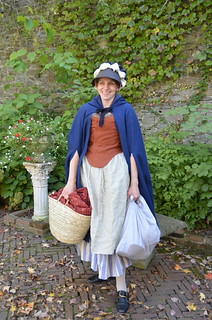
I wore my 1780s wool jacket, two linen petticoats and a wool petticoat, my still-unfaced cloak, and wool stockings, and was comfortable enough at nooning to take off my cloak. It’s a long cloak, based on one in the collection at work, but blue broadcloth and not drab (the extant cloak is drab, but both drab or dun and blue appear in RI runaway ads).

So what’s the key to keeping warm? Then, as now, (or now dressing as then) it does seem to be layers. The wool petticoat makes an effective barrier against cold, and the wool jacket is warm. I tried patterning mitts, but my hands are so large relative to my wrists that I tore the muslins at the thumb or had very baggy wrists.

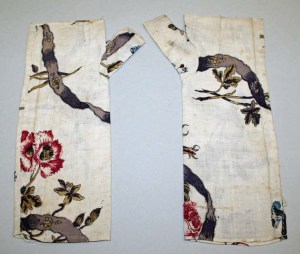
These chintz mitts from the Met (C.I.39.13.185a–d) seem to have a similar tendency to width at the wrist, and might work better than the pair I was following from Costume Close Up. It was late and I was tired, so a fresh start might work to keep my hands warm.

Post-war women with long sleeves would have been able to avoid that chill wind on the forearms, and I look forward to wearing my new long-sleeved wool dress.