A Pelisse for Emma Smith

This was an interesting project that only needed to fit my small mannequin, which was a relief since the ultimate client was in Ohio.
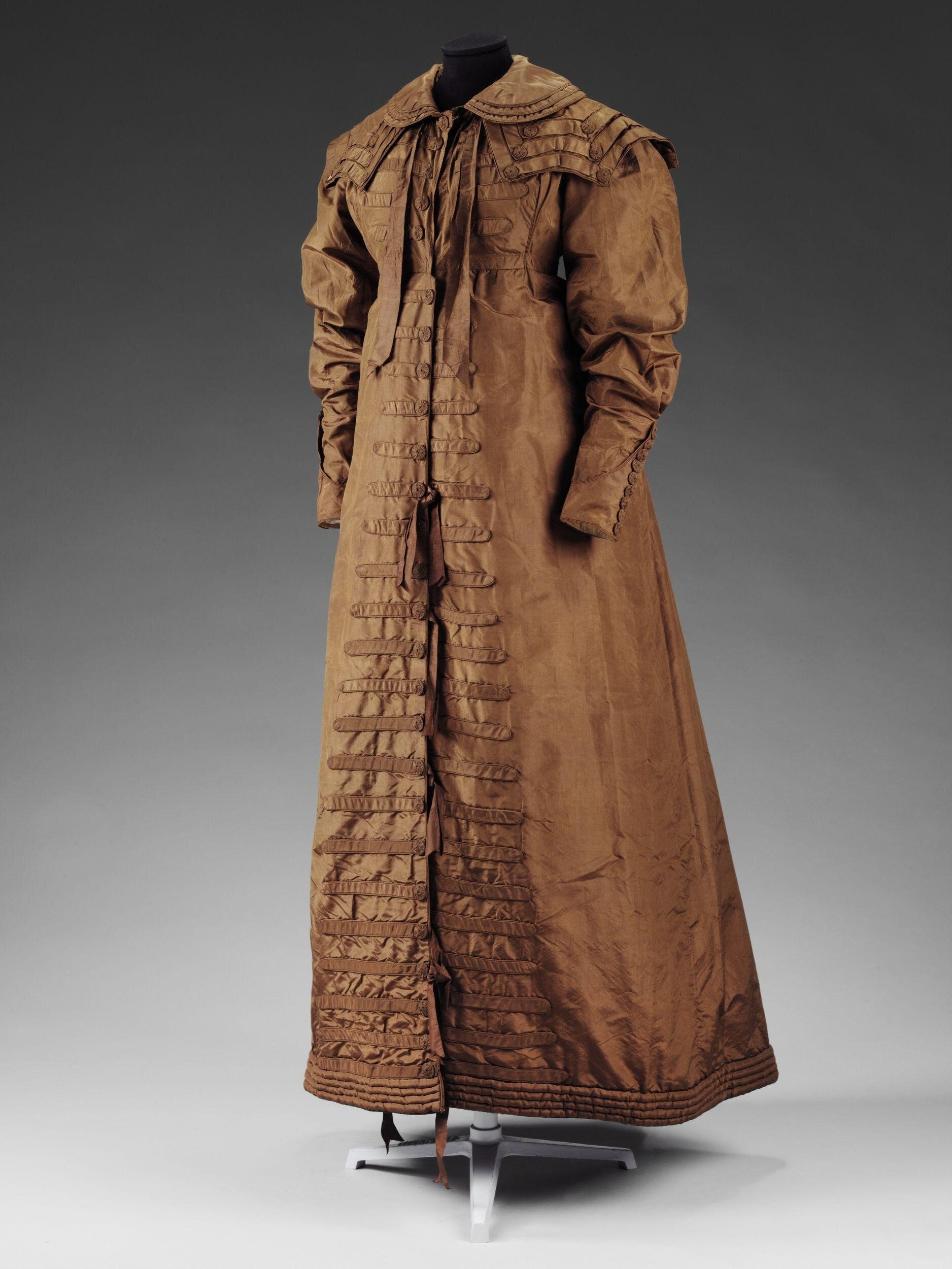
It started with a conversation in the summer of 2022 about 1830s pelisses. I have an interest in the decade because we spend time at Old Sturbridge Village, and it’s a weird time period. I like the way that sleeves get smaller after the crash of 1837, and the various ways you can connect fashion and style to economics and politics. (See American Fancy, by Sumpter Priddy.)
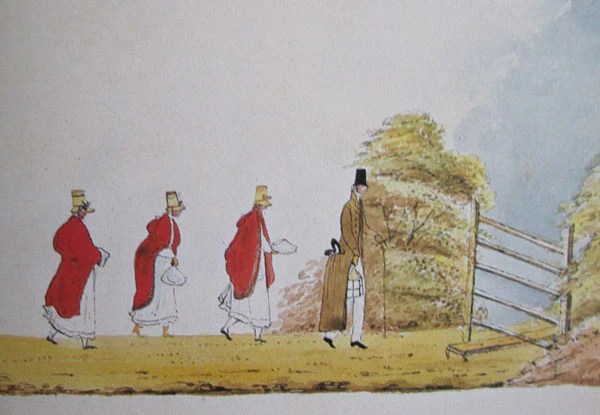
Pelisses were worn in the United States (and Europe) from the 1810s onward, though the bright scarlet wool cloak also persisted in use. The durability and water-resistance of the cloak, and the forgivingly loose fit, recommended them for continued use, Pelisses and cloaks were eventually superseded by sacques, dolmans, paletotes, and shawls, all of which accommodated the larger skirts and crinolines of the 1850s and 1860s. Many of these forms evolve but persist– think of the opera coat of the 1920s through 1960s, with its short sleeves, working over a range of silhouettes from shift dresses to tent dresses to bubble skirts.
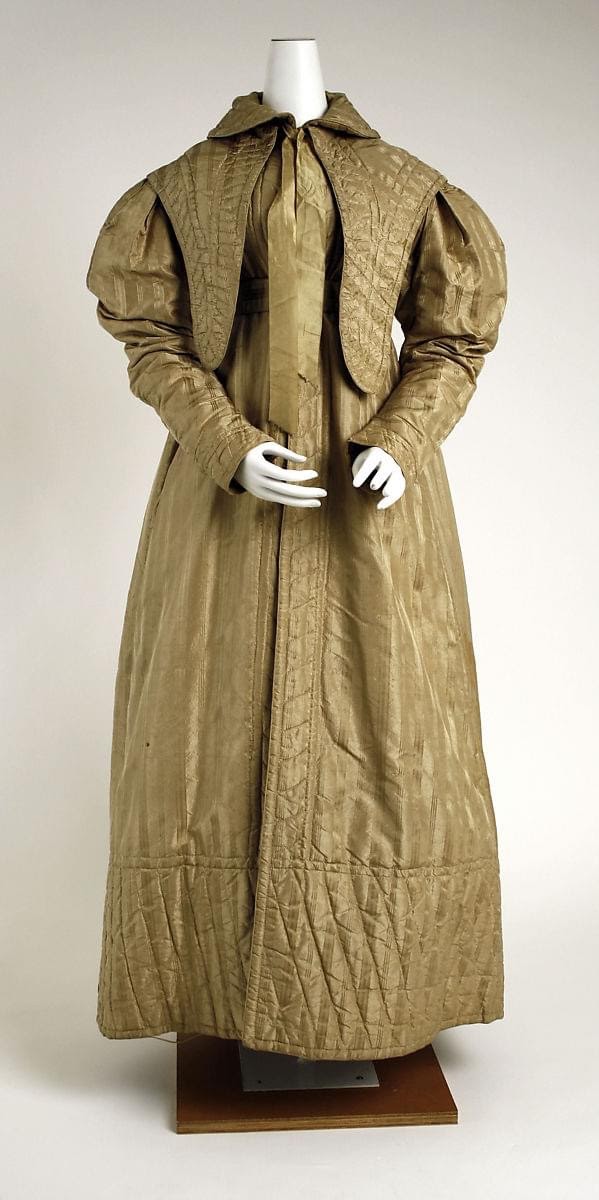
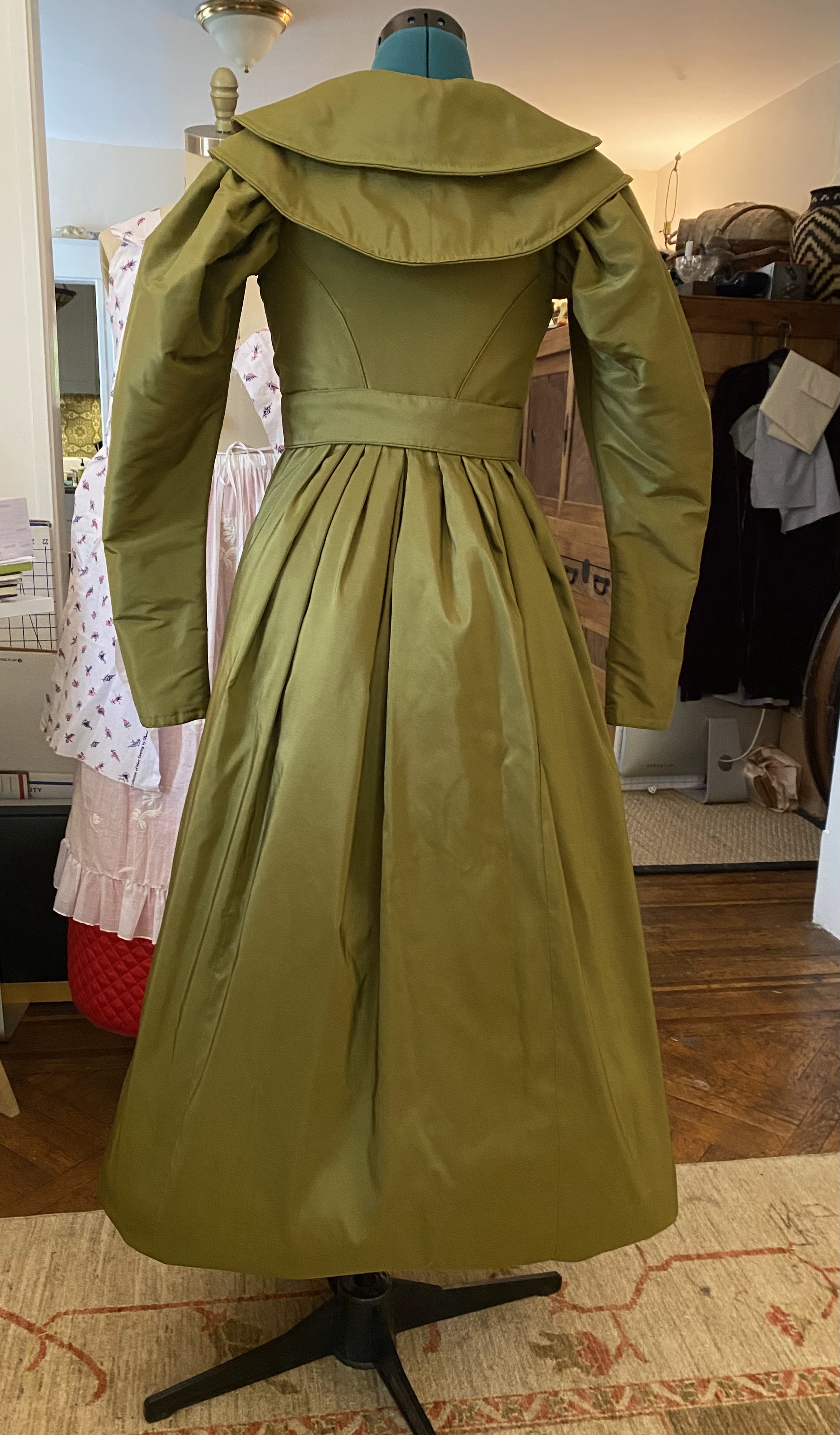
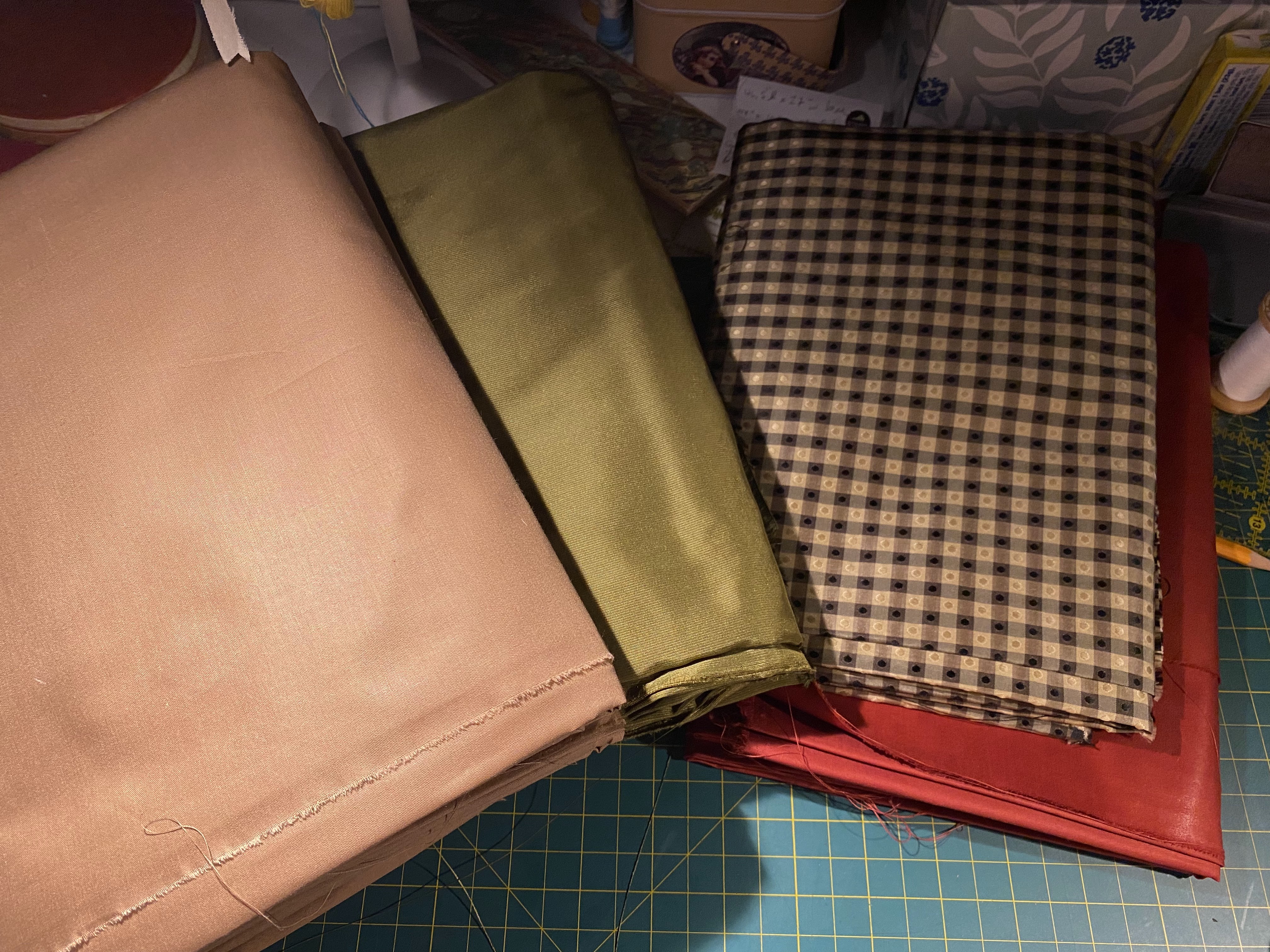
The typical colors seem to have been green or brown, with some stripes appearing as well. For this garment, I selected a range of green-brown silks for the client to choose from and, eventually, we settled on Silk Baron’s Ardennes green silk taffeta and I ordered the yardage. The lining was made of Renaissance Fabric’s polished cotton-poly blend, as the closest material I could find to the polished or glazed cotton linings seen in period garments.
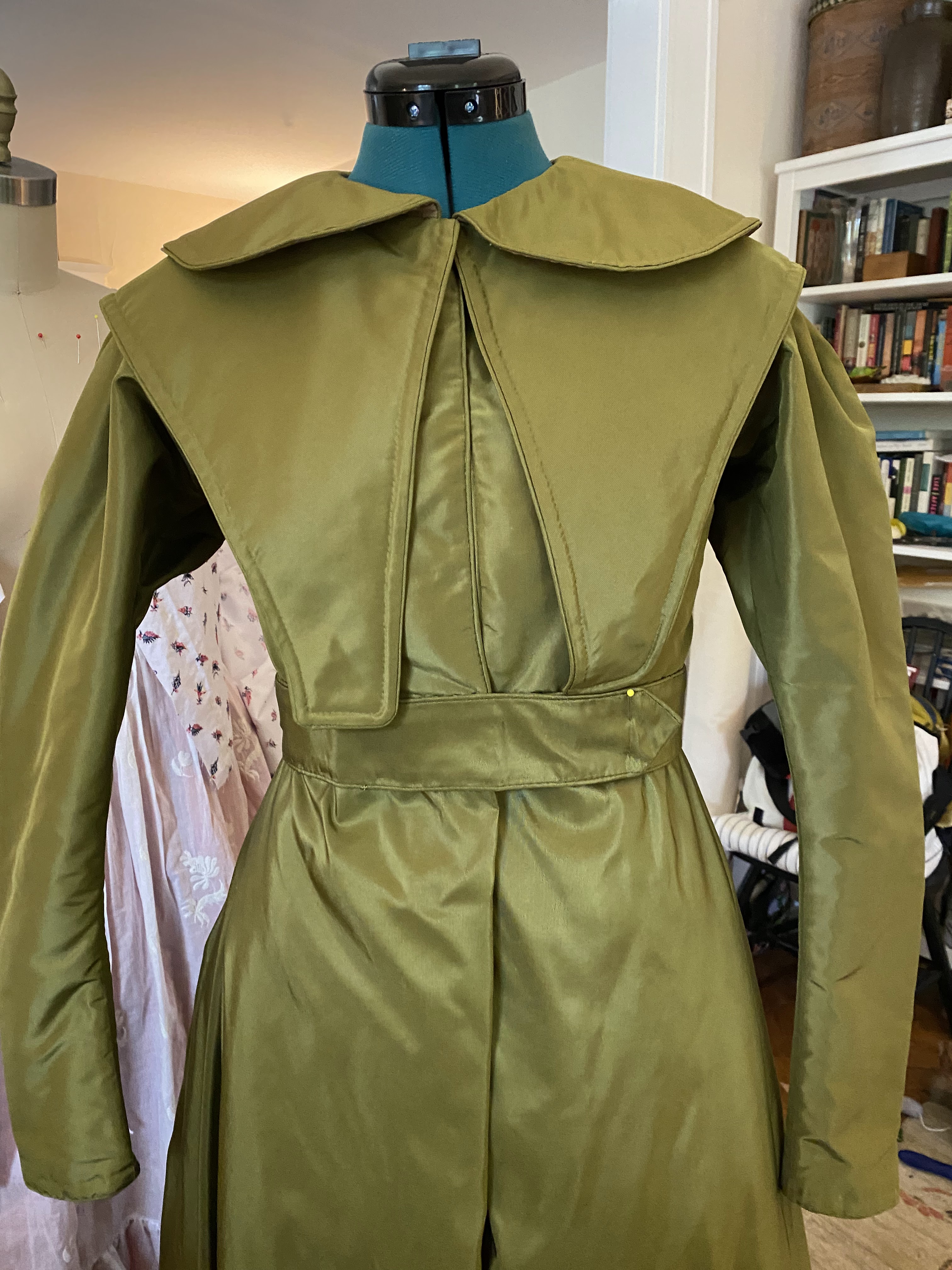
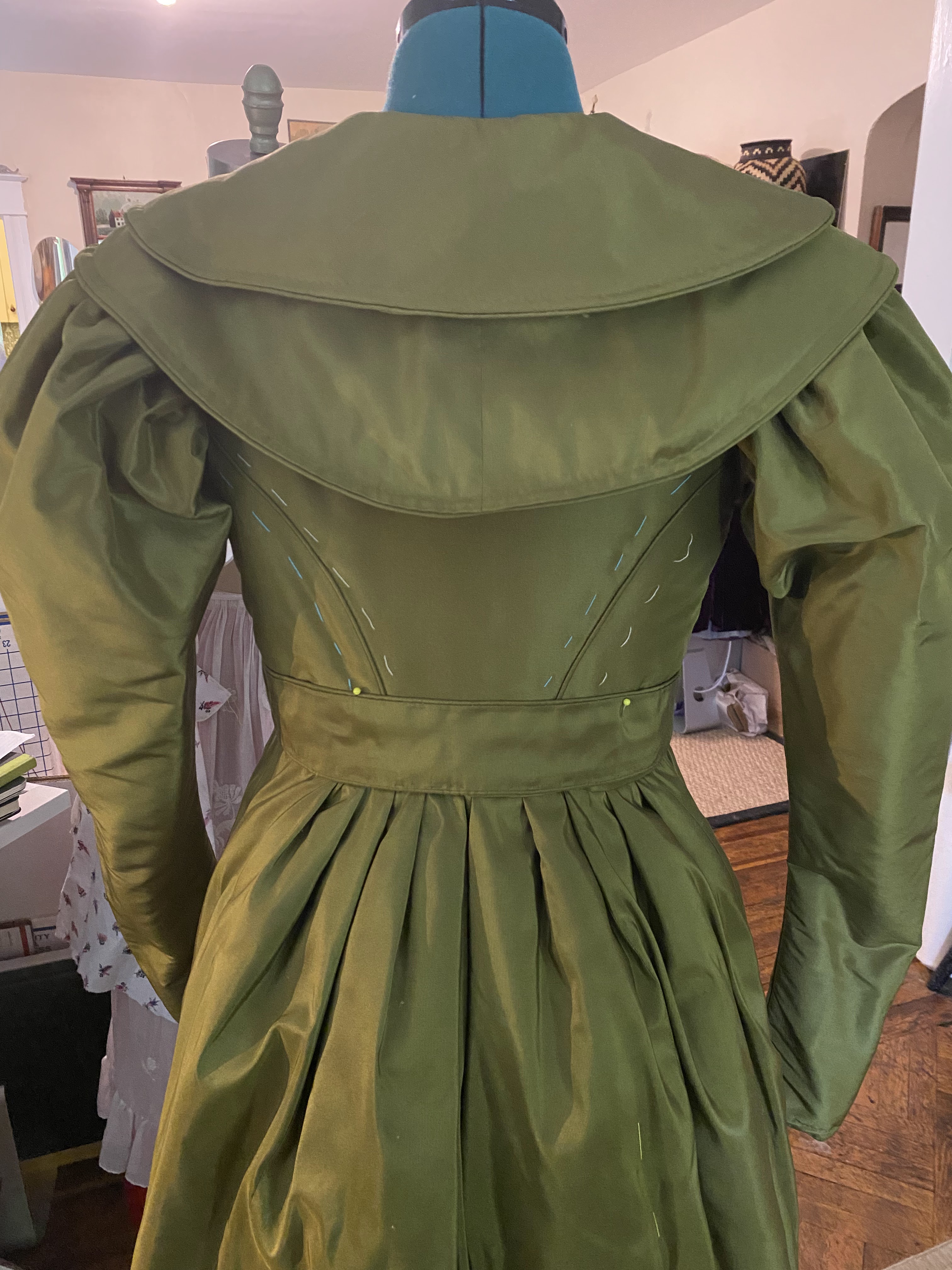
The pattern was scaled down from my own Spencer pattern, and draped to fit the mannequin. The sleeve pattern was a bit of kit-bashing, working between the Past Patterns Lowell Mill Girl’s dress sleeve and my own 1820s sleeve. I chose to err on the side of less enormous, trying to walk a line between fashionable but not too outre. For Boston, I’d make enormous sleeves; for the shore of Lake Erie, northeast of Cleveland, I went a little smaller.

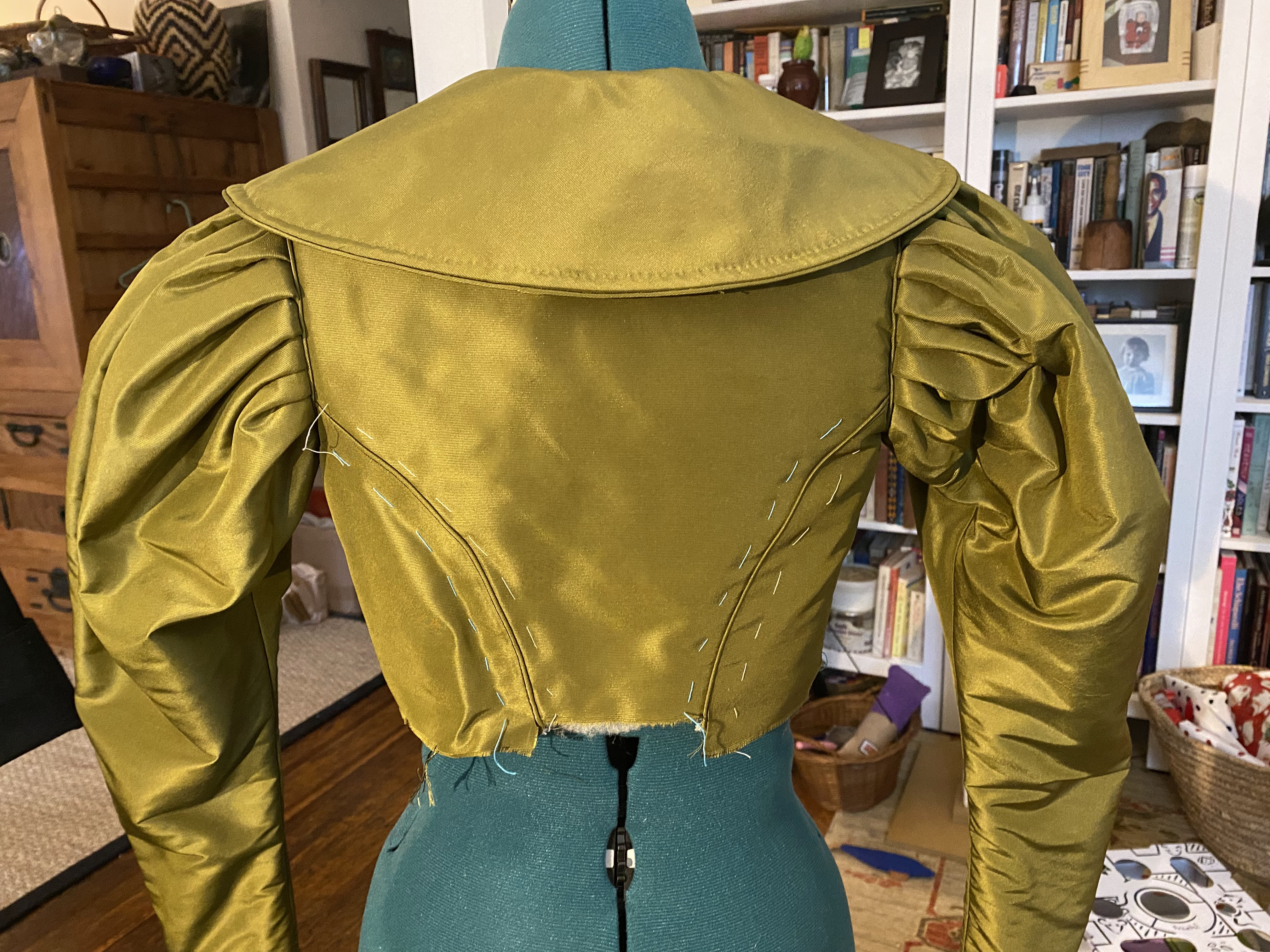
The bodice, sleeves, pelerine, collar, and skirt were all constructed with padded laters of woo batting between the silk exterior and the cotton lining. This was not a fun project to quilt, given the taught weave of both the silk and cotton layers, but the quilting and piping add snazzy details to the edges– and both were typical in pelisses, Spencers, and gowns of the period. 
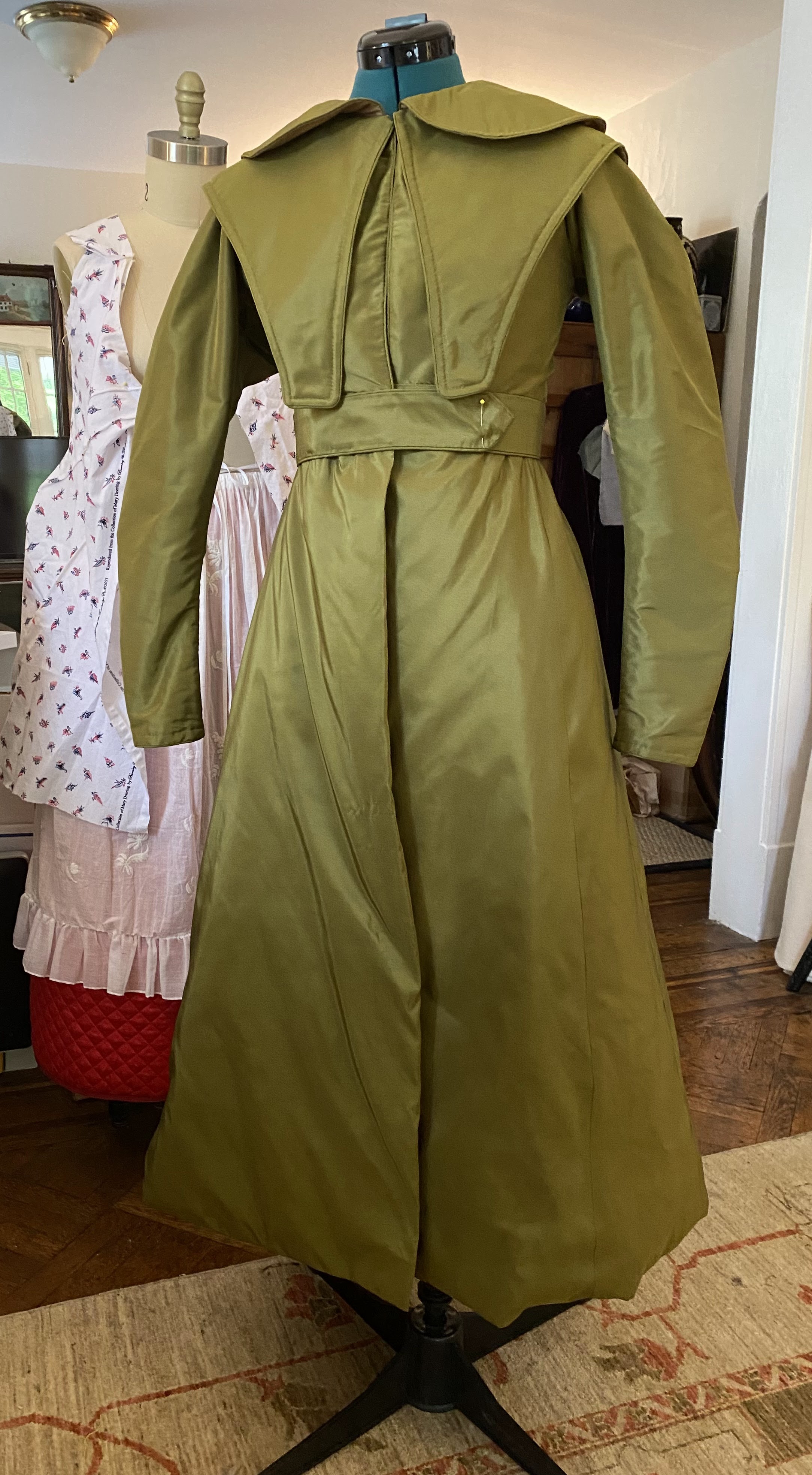
The sleeve puff is achieved in part through tiny pleating inside, a technique copied from the 1820s original gown in my collection, which was handy resource to have on hand, if a bit of splurge.

If I were to make one of these for myself, I would look for a lighter-weight silk taffeta, and I would consider a striped fabric. Some pelisses are less shaped– that is, they’re made more like a bathrobe, without a separate bodice and skirt (see Jane Austen’s pelisse, patterned and recreated by Hilary Davidson), but I prefer the shaped silhouette.

Winter Chores

Here we are, on the cusp of winter: the season is (mostly) over for living history events, the days are short, and what is there to do but pine until the season starts again? Chores, gentle reader: chores.

Before you pack your kit away for the season, or even if you never do, there are some tasks you can undertake to make it better. You don’t need a major overhaul to improve your experience, just some simple maintenance. (These tips are applicable in pretty much every time period.)

Nasty, right? This is why you wash your apron!

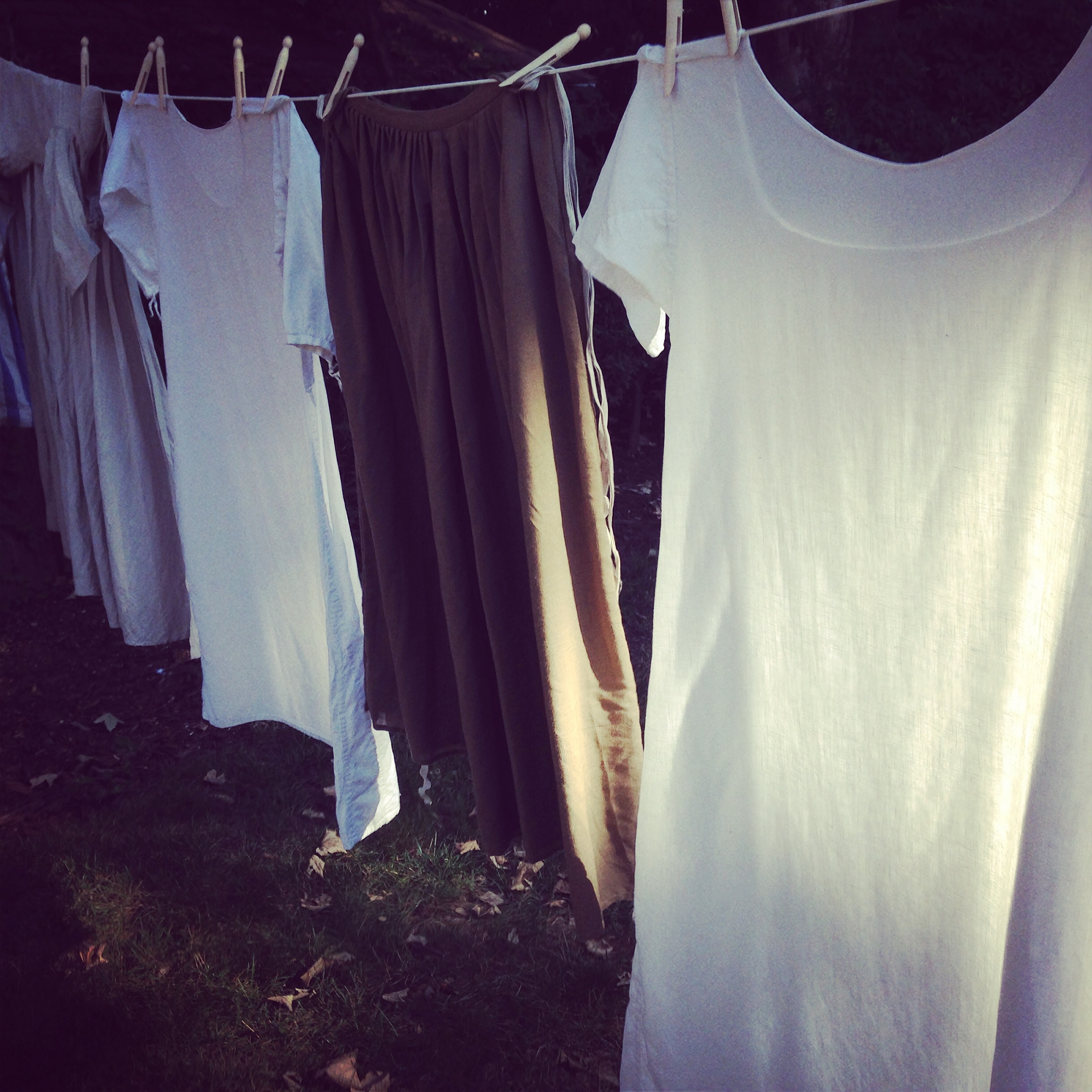
Wash your body linen. Please. Shirts, shifts, neck handkerchiefs, rollers: wash them. And your caps! They washed them, and so can you. I prefer to wash before I mend, but I hand wash my linens. We have a large kitchen sink that I can plug, so I fill it with hot water and wash my aprons, shifts, and stockings with lye soap. (I like that it does not smell like modern detergents; Drunk Tailor bought a lot of it for making white ball so we might as well use it.) Whenever possible, I hang my clothes to dry outside, preferably on a sunny day. You may also choose to spread your things out on the grass (if you have it); this helps whiten linens. We lack grass, or a clothesline, in our yard so it’s hangers in the trees or on the shower curtain rod for me. There’s no shame in that– it’s just not as picturesque. If you want to know more about laundry, Madam Johnson obliges.

Wash your stockings. Your feet will thank you. These are another handwash item; if you have wool stockings (I recommend Sally Pointer if you can get in the order window), handwashing is essential. Again, I use the kitchen sink, lukewarm water, and lye soap. Madam Johnson does not recommend using soap on worsted stockings, and she has a point: too much soap, heat, and agitation will felt your stockings. To dry, put down a towel, and reshape the stockings in the center of the towel. You may need to make sure the back seam is centered, and the feet correctly shaped. Fold in the edges of the towel and roll it. This will safely squeeze out the water. Dry flat (again, I like to put mine outdoors, but the guest bed will do in a pinch, or anyplace I can keep cat-free).

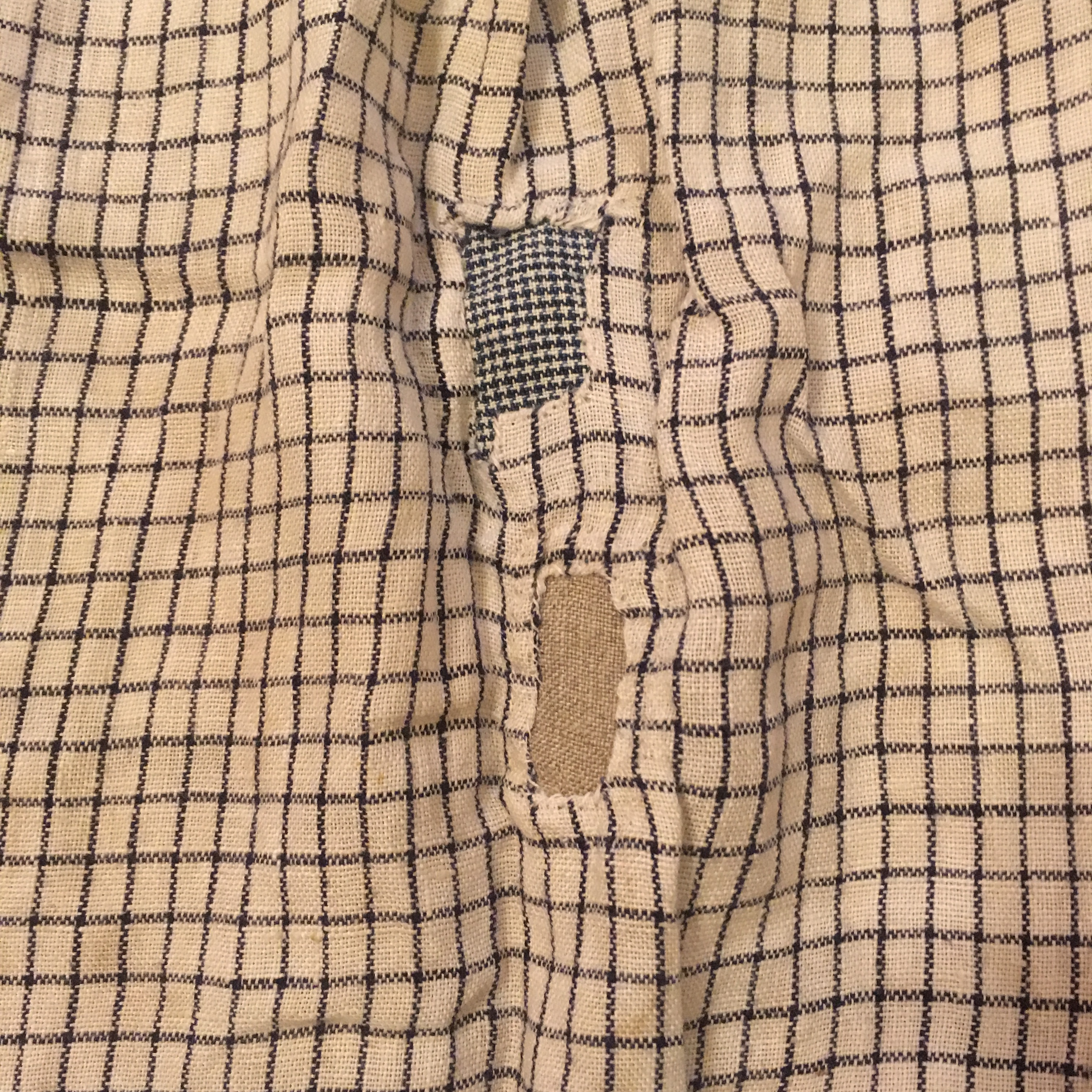
Patches that match are preferable.

Mend your linens. Underarms, collars, cuffs: they all get worn. Aprons get burned. Once you’ve gone over the garment to note the areas that need work, you can assemble your mending supplies: needle, thread, beeswax, and linen as close to the original as possible. Patch the holes neatly from the underside, making a small turned hem from the front. (This is not unlike needle-turned applique, but there are tutorials and guides. Turn or replace collars and cuffs. This is work I need to do on one of my shifts, along with restitching a neckline hem. It has taken several years to reach this point, but no matter the age of your clothes, it’s worth checking seams and hems and making repairs now.

Mend your stockings. These are often too expensive not to mend, plus, it’s period correct. There are tutorials for this, but the tools are simple: wool in weight similar to your stocking, a yarn needle, a darning egg, and patience. (Just use smaller yarn than shown here!) If you haven’t got a darning egg (and they’re pretty affordable, so…) a smooth, oval object will do (kitchen timer, small stone, a lime if you don’t poke it).

shifts and petticoats on a line
Living history laundry

Brush your outer garments. I have only laundered one of my gowns, and that was because it got very ashy and greasy. For the rest of my clothes, I brush off the dirt before I hang them up or pack them away. Greatcoats, regimentals, frock coats, breeches. Gowns, petticoats: all of them can benefit from a brushing. (This applies to your modern wool clothes, too.) There are a range of options, from brushes made in Sweden by the visually impaired to classic English options and German brushes for everything. Brush your hats, too! They get dirty, too. For all of these, if your garment is napped, brush with the nap, not against it.

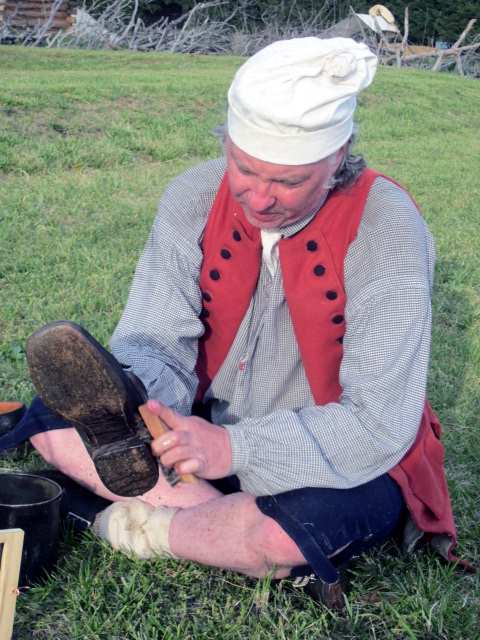
Drunk Tailor cleaning shoes

Clean, grease, and reshape your shoes. You may covet one of these shoe brush kits, or you may have some standard brushes already– they were available even at the grocery store in my long-past childhood. Redecker brushes– and there is a brush for everything shoe-related on these seven pages— take a little finding but last. First, brush off the mud and dirt. Then, wipe the shoes down with a damp washcloth or towel. Let them air dry. Never put your leather shoes directly on a heat source! Then treat the leather. (Tutorial here.) You may want to use black ball, or a colorless polish, depending on your shoes. Drunk Tailor has made it, though not blogged about it, but you can start here if you really want to dive into this. When I’m done, I put shoe trees in my shoes, or stuff them with acid-free tissue paper so they keep their shape.

Hoods and Caps and Bonnets, oh my!

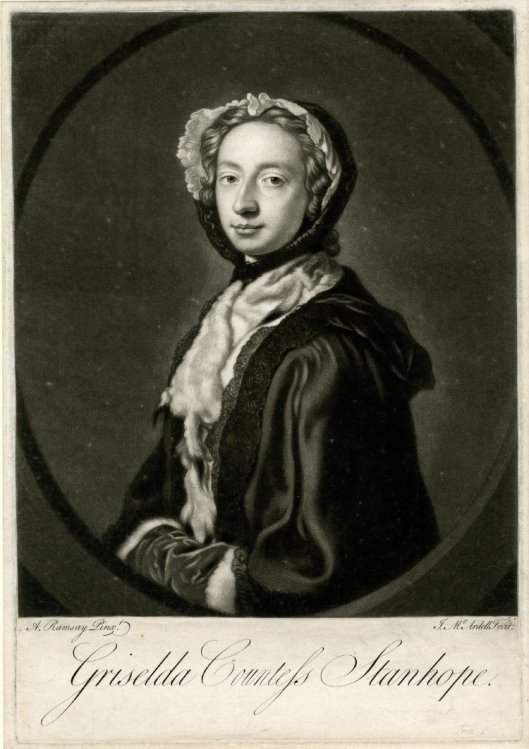
Griselda Countess Stanhope. Mezzotint engraving by James McArdell after Allen Ramsay. British Museum, ca 1760

Let’s take a closer look at Griselda, Countess Stanhope. She wears a hood over a fine white cap, as well as a hooded cloak. Around her neck, she wears a fur tippet, and her hands are snuggled into a muff. While most of the “common” women in the colonies wouldn’t rise to the Countess’s ermine tippet, they did have hoods.

Thomas Howe Ridgate’s inventory taken 19 June 1790 in Charles County Maryland includes “3 velvet and silk hoods,” while Mrs. Elizabeth Lawson’s inventory, taken 3 May 1766 in Prince Georges County Maryland includes one velvet hood and one “Allamod” hood. (She also has “1 old Striped Bonnet,” as well as 2 Womens New Capes, and 1 Womans Life everlasting Petticoat, which bears further investigation.)

Hoods appear fairly regularly in prints, worn over caps (as in Countess Stanhope), under hats, and even under bonnets, as in this print from the Victoria & Albert Museum.

January, engraving, ca. 1780. E.3520-1953. Victoria & Albert Museum

The mantelet hood worn over the bonnet, hood, and cap layers.

In the images above, I’m wearing a white cap, black silk hood, and black “stuff” bonnet, with a black silk mantlet over a silk neck-handkerchief. The hood needs some tweaking, size-wise, but the layers definitely recreate what we see in the print of “January.” The bonnet has an adjustable caul, so will easily fit over hair, cap, and hood; the hood has a drawstring closure at the neck that helps keep out the wind. Taken altogether, these layers are definitely insulating! Looking like an 18th century engraving is almost a bonus– but when you wear what they wore, you look like they did.

“Comfortably Covered”


The last event of 2018 (for me) was the “March In” evening event at Valley Forge. My reasons for choosing events may be quirky: anything I can get to at Fort Ti, because I love that fort and landscape; MoAR events because they’re imaginative, not too far, and, bonus, I get to see my mom; anything immersive at which I’ll have tasks and a role; anything that gets me behind the scenes or gives me a new perspective on a site, museum, or event; anything that allows me to flex my interpretive muscles. March In gave me a new perspective, a new site, and a chance to expand my interpretive range. I loved it. My son, not so much. While I’d thought he’d enjoy it– he got us into this living history business, after all–since we’d visited Valley Forge every summer when we went to see my mom, and our parts would be small, progressive-focused scenarios.

Reader, he quit. Ten minutes before the park reopened to the public, as we stood in the dark on the Joseph Plumb Martin Trail, he told me he wanted to quit reenacting.*

No wonder I found the evening chilly.

I wasn’t too concerned about keeping warm after surviving and thriving in Princeton. The weather on December 19th seemed, if not balmy, seasonably pleasant, so I left off a layer or two from the Princeton list, skipping the third neck handkerchief. My bonnet this time was an old woolen “stuff” bonnet made back when my bonnet obsession first began. In the April 8 1776 Pennsylvania Packet, an ad for runaway Margaret Collands records that she was wearing “a redish coloured worsted bonnet.” My choice seemed pretty apt for winter in Pennsylvania, and, lined with linen, I can confirm my head stayed warm. My neck was not!

Griselda Countess Stanhope. Mezzotint engraving by James McArdell after Allen Ramsay. British Museum, ca 1760

At Princeton, I solved the neck draft problem by tying my third neck handkerchief around the neck of my cloak hood (see above). When I came home from Valley Forge, I went shopping in the historical record to see what I could find: hoods. Close-fitting hoods, worn over caps. Some velvet, some, possibly, quilted. I also found bonnets with “quilted crowns,” which I think may describe quilted hoods.

_____________________
The title is taken from Tench Tilghman to John Cadwalder in Boyle, Writings from the Valley Forge Encampment, 1:26 “Our Men have all got comfortably covered in their Huts and Better quarters are not in the World…” Tench Tilghman to John Cadwalader, Valley Forge, 18 January 1778.

*More on this another time, but yes: he’s still alive and well and seems happy enough for an enormous 20-year-old home with a classic college break cold.