Furniture Check

The original, in 2013.

Lo these many years ago (one dozen) I embarked upon a gown-making folly based on the familiar Oyster Seller image. There was collective interest in this gown 12 years ago, probably because the original painting came up for auction at Christie’s in London. There’s more than one of these out there, and mine was not the best. I am okay with that.

I think we were using the print derived from the painting as a justification for the cross-barred gown, along with a bunch of silk cross-barred sacques. I don’t remember whether or not I’d clicked onto the Barbara Johnson album page with the “red and white Irish [stuff? skiff?] sack, April 1752” swatch. Good stuff, that, and I would be delighted to find fabric like that. However, I had a cross-bar in hand in a form that I did not love.
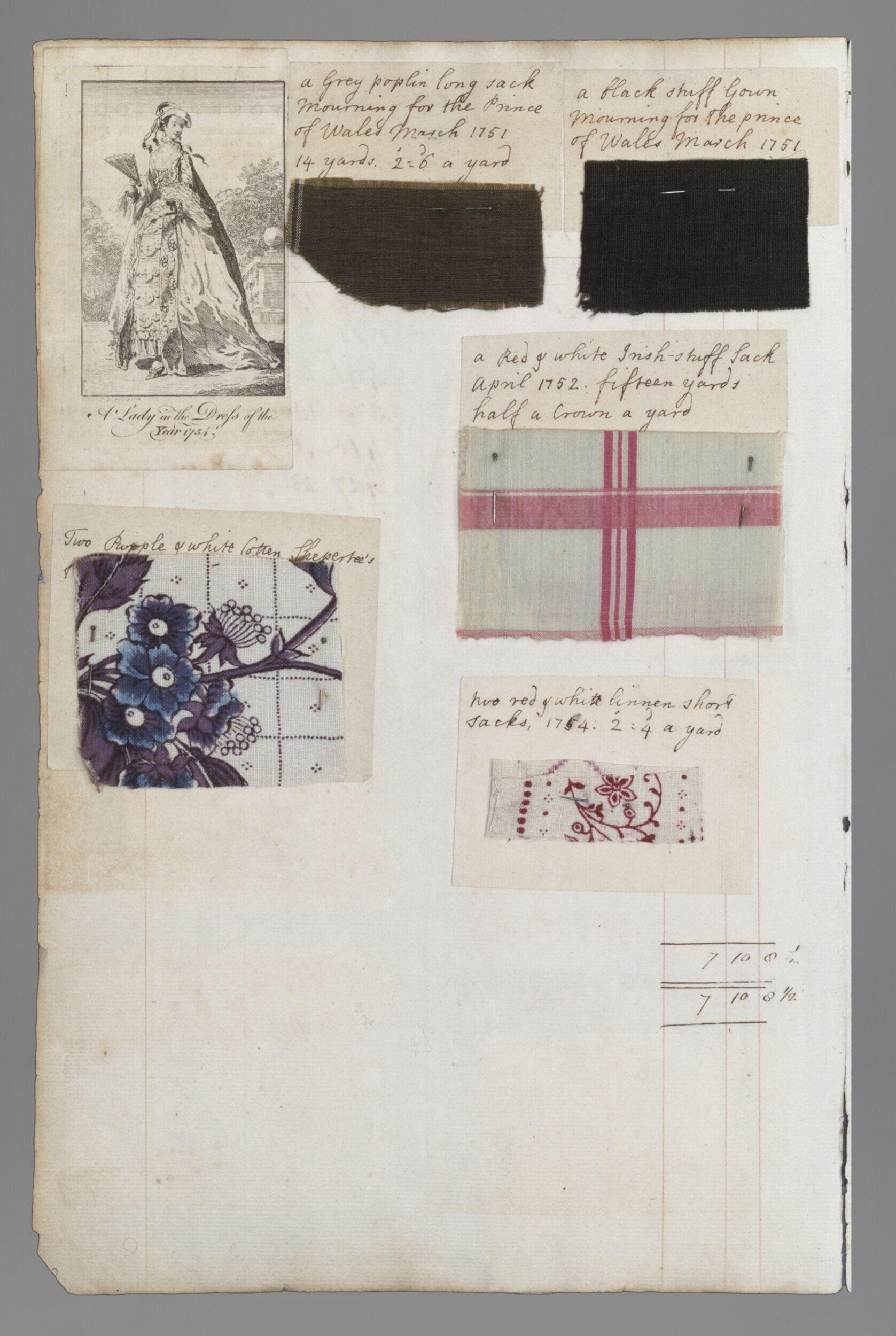
Barbara Johnson Album, Victoria & Albert Museum

I didn’t alter the gown at the time because… I was embarrassed by the failure. The person who pointed it out to me was renowned for lack-of-tact, and did not offer any solutions, suggestions, or offer assistance. (That behavior is why people leave all kinds of hobbies, folks. Being kind really ain’t that hard.)

But it is hot this month, and getting hotter. So although I went to storage to look for, and not find, another wardrobe option, I did see this old gown. Did a klaxon sound? A siren? A choir of angels?


Furniture check on an upholsteress? How could I not?

Equipped with more knowledge, and one hopes, more skills, I spent Friday night and part of Saturday disassembling the gown. 
What I like about this project is that not only will I end up with a new gown, I’ll have a new gown that is obviously remade from an old gown. Props to me for developing the patience to do this.

It’s not a huge change, but the modifications include making the back pleats actually make sense, and doing them the way Adventures in Mantuamaking taught me to; tweaking the overall silhouette to match the sleeves and cuffs; and adjusting the robings. This should also prevent the various wardrobe malfunctions previously experienced.

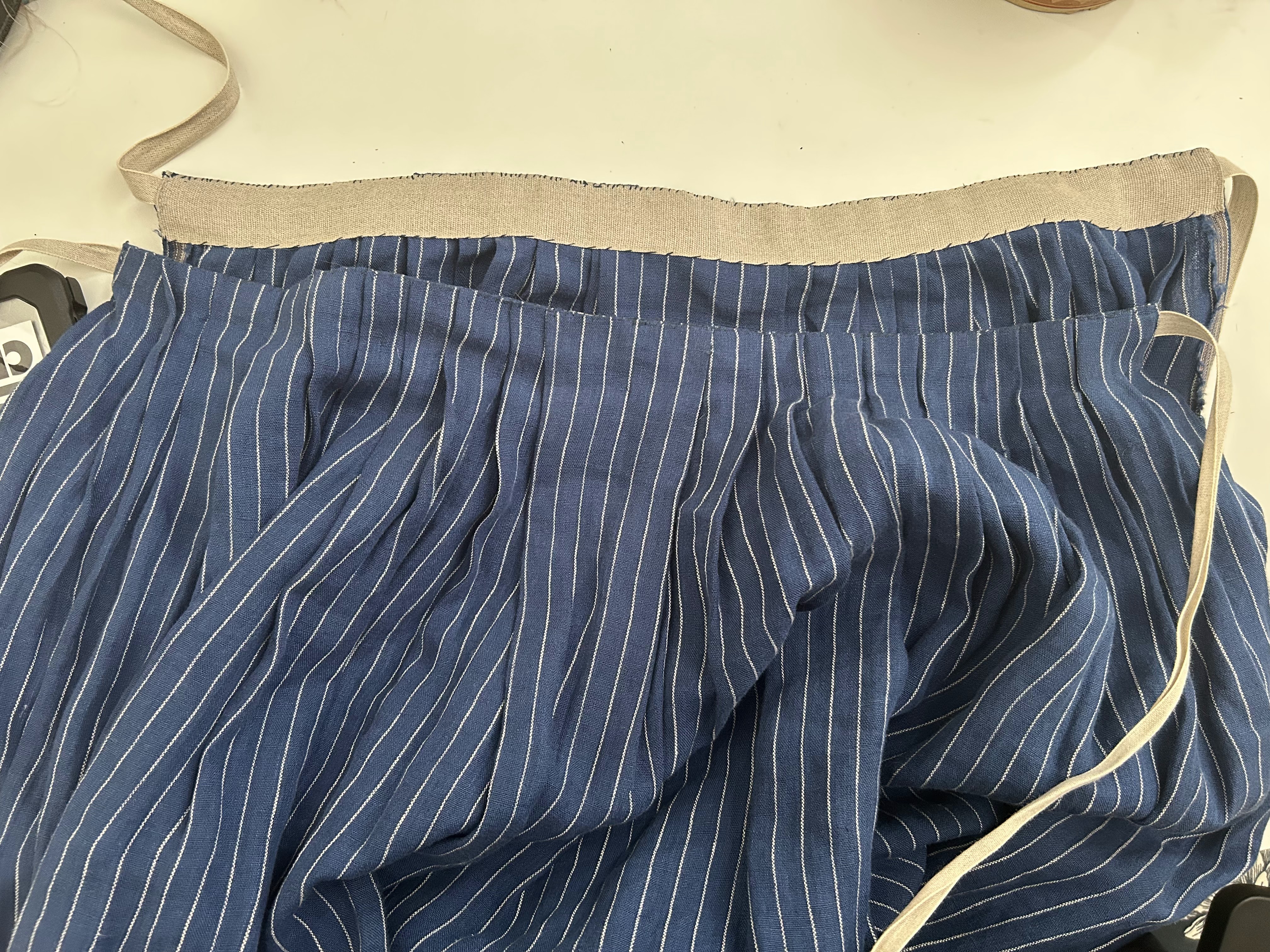
I did recut the back lining from fresh linen; the back strikes me as the most critical structural element, so I made sure to replace that. I then stitched a center seam in the upper back, as you do, to mark the center of the back and set the total bodice back length. Overall, the back seemed far too long, and the front too short.

Re-pleated and stitched, the back was ready for new fronts. These required piecing (which is period) and I almost managed it on the lining, but they needed extra work. Even if the piecing is “correct,” it will likely be hidden by an apron.

Fortunately, the sleeves worked with the new bodice shapes, and are actually a better match to the style– they are too narrow for the initial style. I have enough to to rework the robings, but I don’t think I can get a stomacher out of what I have– not unless it’s massively pieced, which is also OK. 

I spent some time digging into Pennsylvania newspaper advertisements looking for checks, check’d, and check fabrics. They’re there– plenty of them– though linen checks for women’s gowns are a lot harder to find. Oops. 

Still: I found  “check’d mantuas” (silk for gowns) and “Holland, Laval, Britannia, check’d and striped, linens.” Holland linens tend to be heavier, utility linens; Laval designated linen woven in Laval, in Pays de Lorraine (northeastern France), a town noted for fine linens. Could one of those be a lighter-weight check, suitable for a working woman’s gown? (That’s from the Pennsylvania Journal or Weekly Advertiser, December 26, 1781). It’s hard to say there weren’t checked linen gowns, just as it is hard to say there were. The possibility exists, partially because myriad types and patterns of linen were available in Philadelphia, and partially because we lack visual documentation of non-elite women in the Anglo-American colonies.
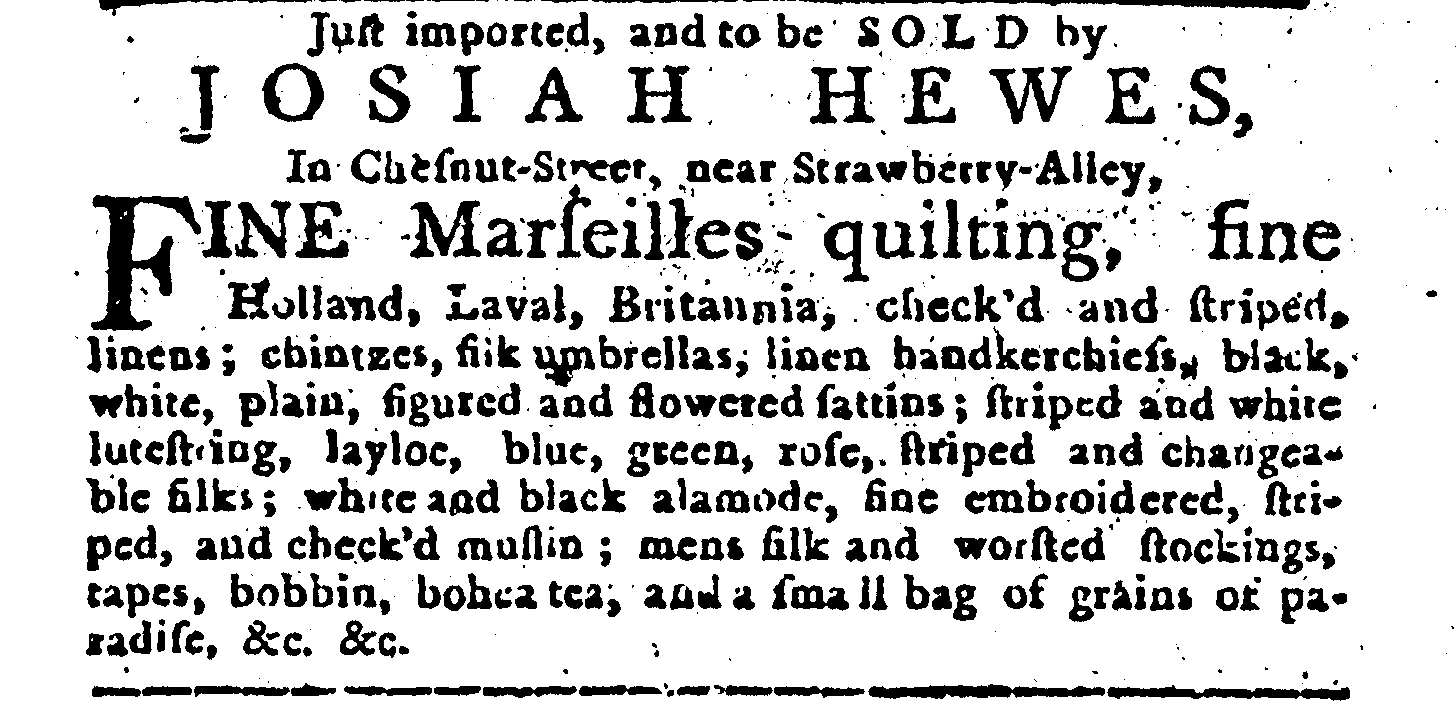
Pennsylvania Journal, or Weekly Advertiser, December 26, 1781

The runaway ads describe some Scots women and one English servant running away in checked gowns from 1753-1778. This does suggest checked gowns are associated with “lower sorts,” which isn’t exactly what I’m going for, but since I portray a working woman while also not melting, I’ll keep going. 

Pennsylvania Chronicle, July 10, 1769

A Blue Homespun Gown

How long does fabric need to ‘season’ in your stash? 

I like to savor yardage for half a decade or so, as once I have fabric I really like, I never think I’m adept enough to use it. I need to build up more skills before I cut into that silk/wool/what-have-you.

So, five years ago or so, I bought some lovely blue homespun from a friend who had determined she would not manifest her plans for it. It’s the same Burnley & Trowbridge fabric that Mr. K’s 1824 coat was made from, just not washed, and thus retains a smoother texture.

There was not quite five yards, but that never matters. Josie and I argue about whether or not I can make what I have work, and while she always says no, I can usually get an English gown out of four and a quarter to four and a half yards if the fabric is wide enough.

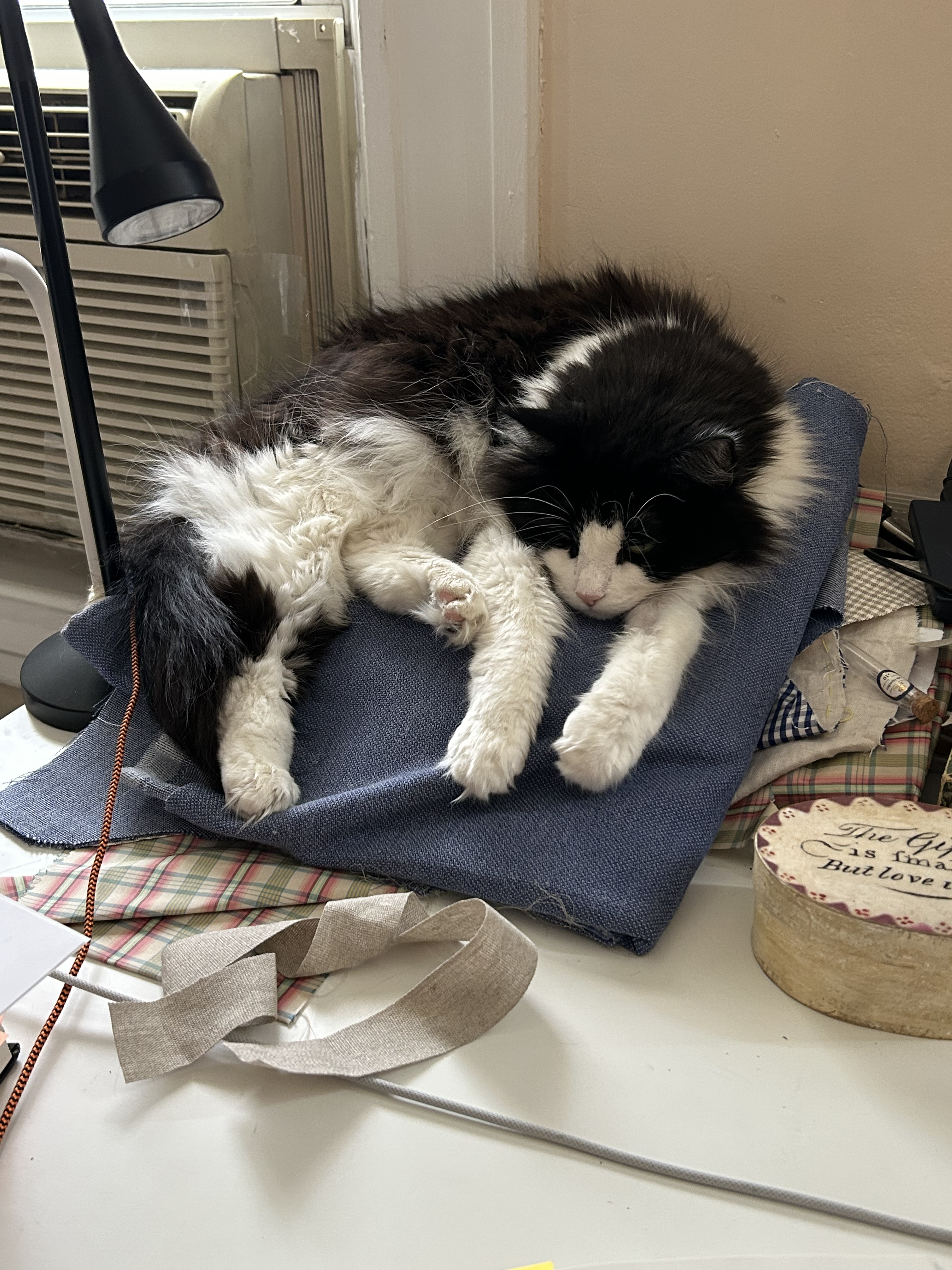
It took long enough to make that the fabric became a bed for the cat.

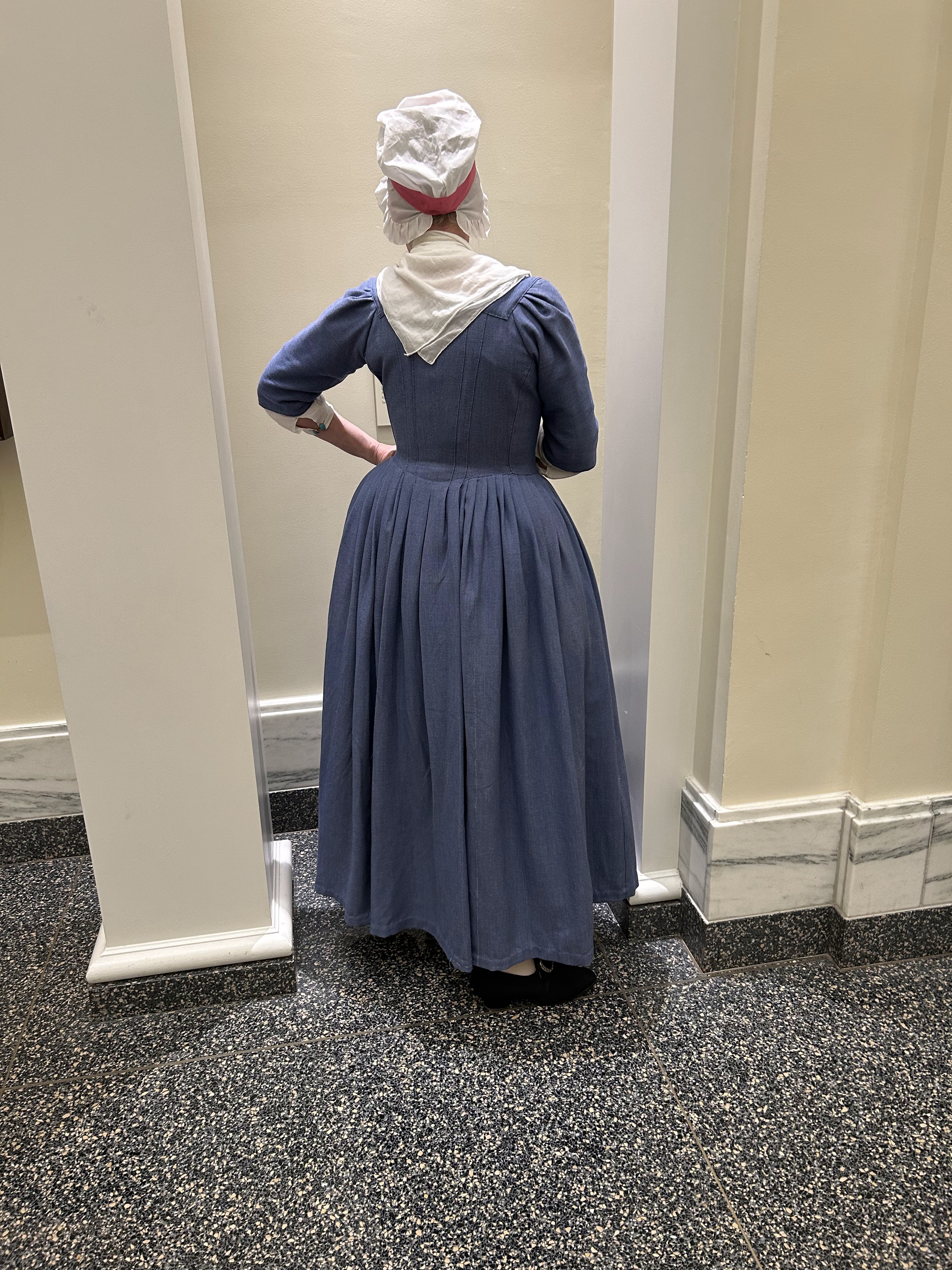
I was interrupted in the process: I took two classes this semester, taught a workshop, went to a friend’s birthday party in Philadelphia, tried to buy a house, and endured the world. I was glad to get back to the work, though, since sewing is always satisfying. It’s “just” another English gown with a pleated back and stomacher, in classic blue. I wore it to the Makers’ Event at the Museum of the American Revolution in May, just days before my final papers were due.

To make it fully a colonial lady stereotype, I wore it with a blue petticoat. The petticoat was remade from the first gown I ever made. Not only did the gown no longer quite fit, it wasn’t made to the standards I live by now. The linen was far too nice to let sit, another Burnley & Trowbridge fabric from over a decade ago.

Split Shift

img_7748
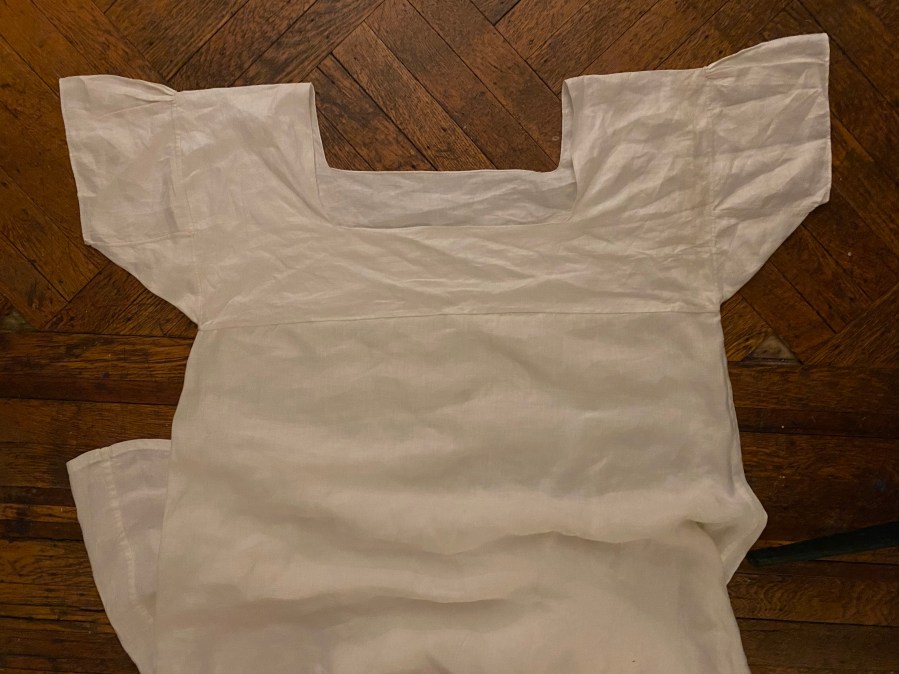
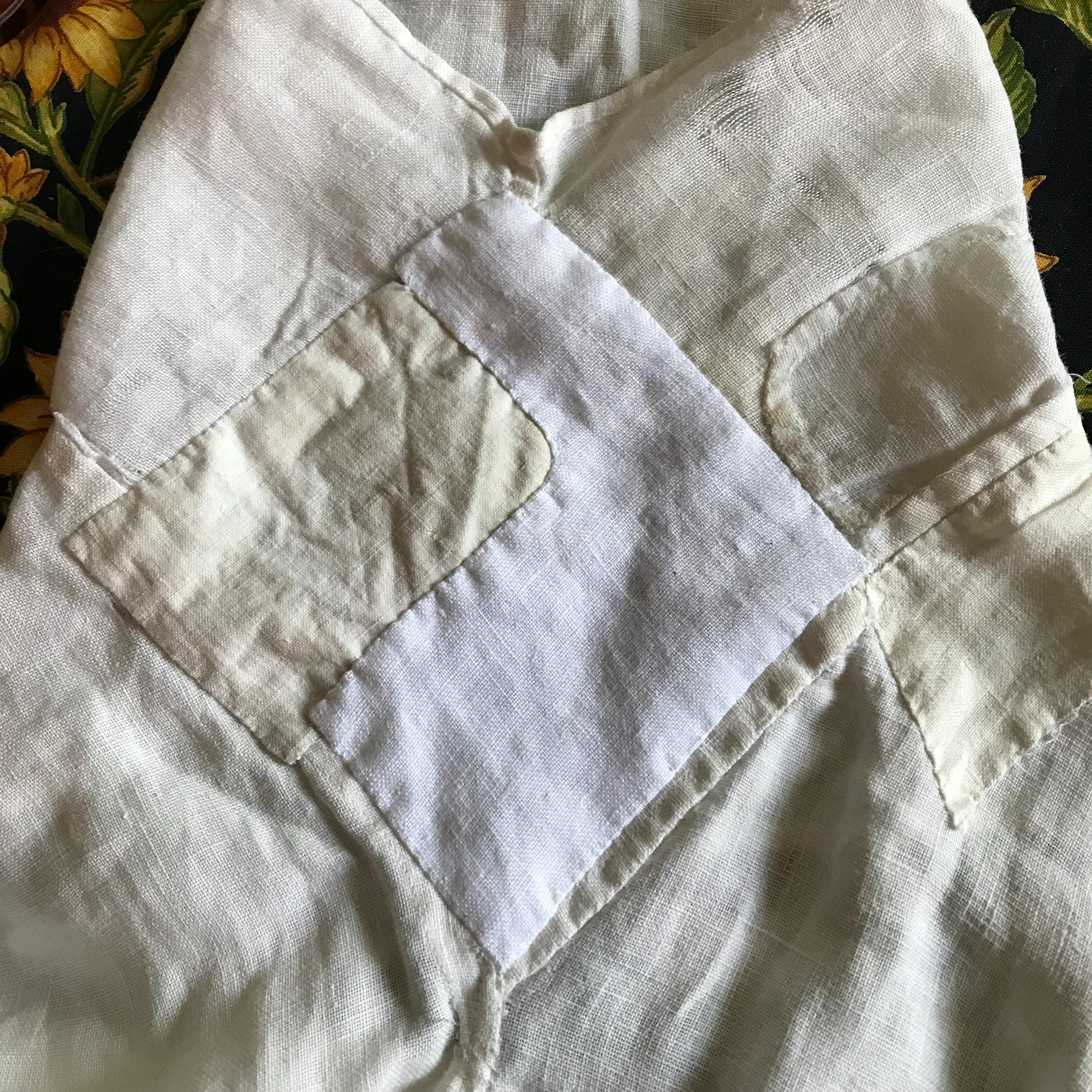
A well-patched underarm gusset

Once upon a time, I made a shift for the early 19th century– and promptly had to mend it. I have been mending that shift ever since (8 years!) whilst complaining that I need to make a new shift. 

Never mind that I could commission one. Never mind, never mind. 

Over the intervening 8 years, I learned more about sewing and shifts, and made a shift for the 1770s that I’m pleased with. That shift combined unbleached linen hand-woven by Rabbit Goody and purchased by my partner at a prop sale and white vintage linen found in a shop in Stockbridge, Mass.

56951198_10214538359594041_1091022036504936448_n
Underarm gusset of vintage linen

The vintage linen has a stain running along the center fold, but is otherwise white, soft, and more densely woven than most linen available today. It’s true that the more you make something, the better you get, and the better you will understand what you’re making. 

Another path to understanding is looking at originals (yes, reading counts, too).  I’ve been lucky enough to find and acquire two antique shifts, both from the early 19th century. While they’re not documentation for the period I interpret most often, they do provide clues to construction methods, and those clues are that aside from seams being felled for strength and durability, shifts are inconsistent. One shift uses the selvedge as the hem– which means the grain runs counter to the usual vertical orientation– while the other dispenses with the notion of bodice necklines to double down on the squares-and-rectangles trope.IMG_4592

Shifts are hard to date since they’re so basic (squares and rectangles) and don’t necessarily follow the lines of fashion. The sleeves here place this in the 19th century, though it could just be late (after 1785) 18th century.  I’m pretty sure it’s not, but the possibility points to the staying power of the basic bag-like form. 

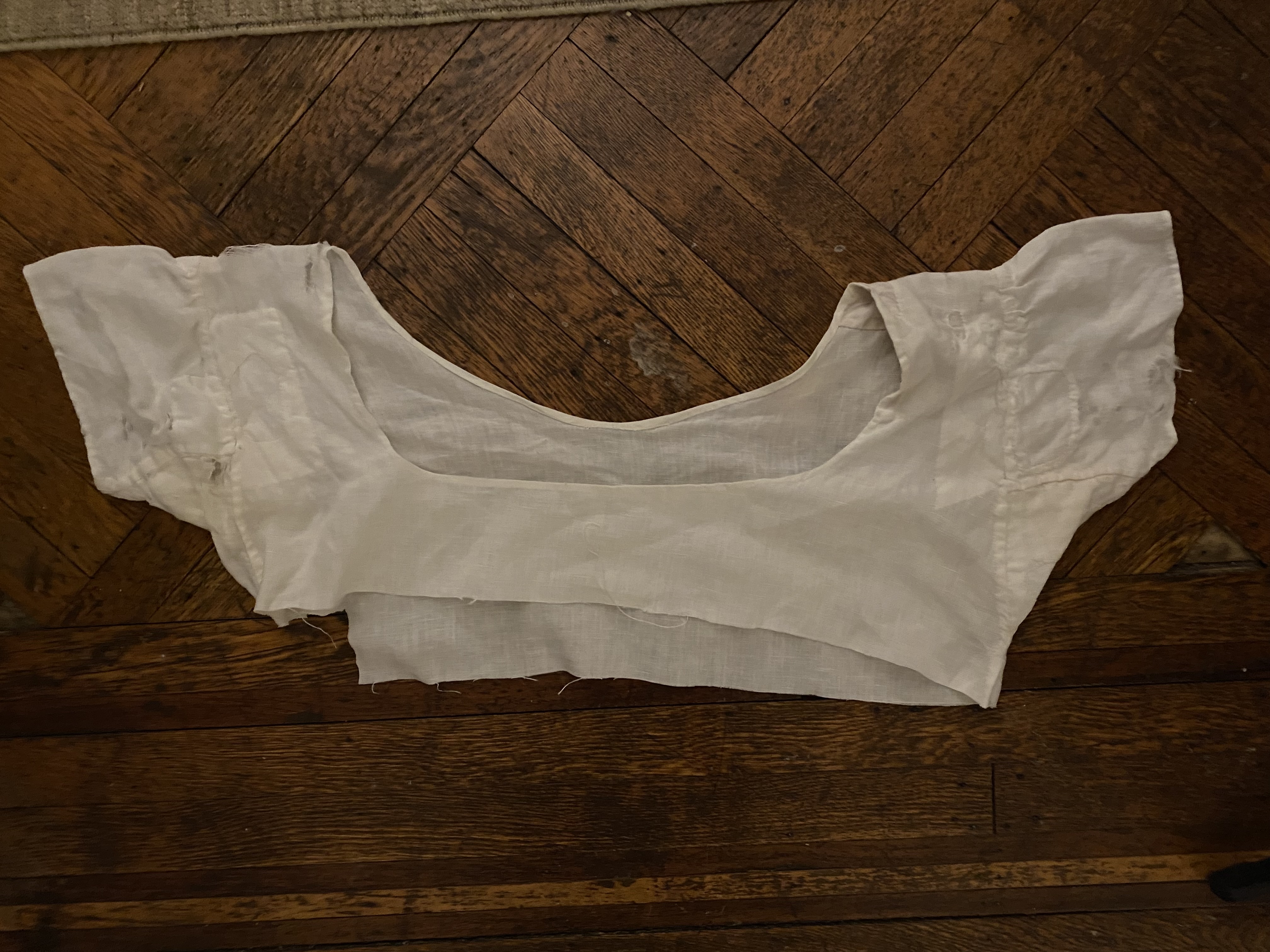
Using this shift as inspiration, I decided that instead of patching that worn shift one more time, I would chop-and-top, that is, I would replace the top, worn section, and append it to the perfectly fine lower body of the shift. 

I measured the extant top, measured my bicep, and cut the pieces accordingly after drawing threads to create straight lines. I had one rectangular piece with a slightly shaped neckline, two rectangles for sleeves, and two squares for gussets. Although I started this process in December, I was “overtaken by events” that included a yard sale, teaching a workshop, preparing a presentation, and taking a workshop. With a possible outing in late April and an 1820s dress workshop coming up in early May, I decided it was time to finish this.

Most of the work was in the gussets, four seams in all, two to attach the gusset to the sleeve, and two to attach the gusset to the shift body. Once the seams are backstitched, the offset side is folded over and felled all the way around the gusset. It is best not to count the number of seams you stitch for each sleeve and just keep sewing instead.

Over the course of a couple of days (Monday afternoon, and Tuesday and Wednesday evenings) I finished the neckline hem, attached the gussets, cut off the top of the old shift, and grafted the new top to the old body.

IMG_5396Removing the old top was not the neatest job, as I discovered part-way through the task. I decided to pull a thread across the bodice starting just under the underarm gusset. This worked well across one side but drifted badly across the other. (In which I discovered that I did NOT, in fact, cut that shift strictly on the grain.) I managed to fudge the situation but there’s no guarantee the seam and the hem don’t wander. They won’t be visible when worn, thank goodness, so I decided to live with the wobble and do better next time.
IMG_5395

Hips Do Lie

Nine years ago, I made a pair of hip pads to go under the unfinished cross-barred sacque. This time around, I thought I should make the more common hoops or pocket panniers. I used the Dreamstress’s Pannier-Along pattern and instructions but failed in a few respects. 

My panniers are crushed by petticoats, and fold in on themselves. The canes (I used synthetic whalebone) are both too soft and probably too long. The extra length allows them to curl in at the ends so that they migrate a bit to the rear even as they squish down. The linen I selected is too lightweight for this task; I erred by choosing based on color and not weight. Of course, I had (and have) enough mid-to-heavy-weight white linen in hand, but I was afraid I wouldn’t have enough for the gown lining. (Never mind the fact that I could have purchased fabric at the workshop, I was focused on the goal and not thinking things through as thoroughly as I might have.)

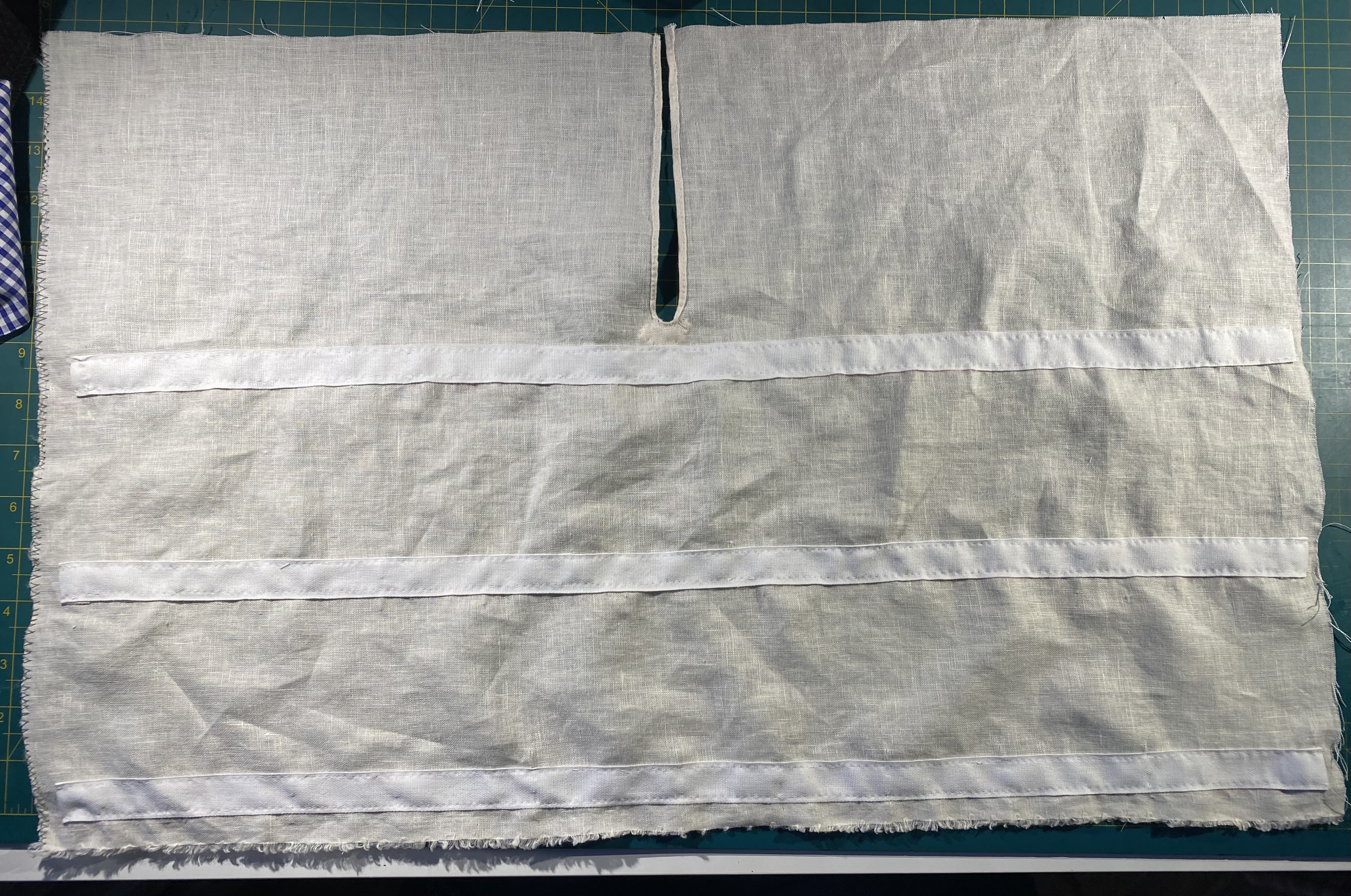
Side One with Tapes and pocket slit sewn

I started this project on Monday and finished by 10:00 PM on Tuesday, with full workdays in between start and finish. The panniers are sewn entirely by hand which makes it even more sad that they’re not all they could be. They’re supposed to be collapsible for travel, and they certainly are. That means that the solutions I try should not prevent these from folding flat. 

First side all finished

It makes sense to start by pulling out the bones and trimming them a bit to prevent the curling. Another step might be cutting a pasteboard bottom insert to maintain the silhouette. This will require undoing some stitching to slip the bottom piece in but it still seems worth a try. I could double the bones (if I have enough) or supplement what’s there with canes (I do have that). 

All finished, but a little squished

That’s three ideas before I need to start over with heavier linen. Even then, I can salvage and re-use the tape channels and bones to use again.