Longbourn: Book Review

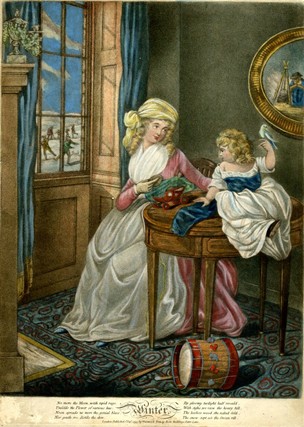
The Chocolate Girl is adapted for the cover of Jo Baker’s new book

 On Sunday, I read the NYT review of Jo Baker’s new book, Longbourn. As soon as I finished the review, I ordered the book, which arrived Wednesday evening. By 2:00 AM Thursday, I had finished it.

I like Austen, but my favorite Austen novel is Mansfield Park, not Pride & Prejudice. The BBC and other adaptations sometimes make the world of her novels seem too cloistered, too precious, and too refined to me. (Mrs Hurst Dancing can be a helpful corrective.) So of course I was captivated by the premise of Longbourn: “The world of the people who laid the fires, cooked the meals and fetched the horses for Jane Austen’s Bennet family.”

The story was engaging–heck, I stayed up until 2:00AM  to find out how it ended–and while I found it slightly romantic for my taste, on the whole, the world was believable.

For one thing, there is plenty of mud. And Sarah the housemaid must clean the mud off the Bennett girls’ petticoats. The hauling of water, laying of fires, and the chill and exhaustion the maids feel is pretty well rendered. Baker addresses the question I’ve always had, How did servants tolerate servitude? by portraying Sarah’s struggle with resentment and resignation to her lot.

I thought, too, that the way Baker described women as “breeding” was also good; she referred as well to Elizabeth Bennett’s “dark, musky” armpits, and that seemed a nice way to slip in historical hygiene information. But women in English gentry were valued for their breeding capabilities: the need for a male heir didn’t die with Henry VIII, and it is much of what drives, or drove, the plot of Downton Abbey. For women, the past was a smaller world, and Sarah’s life is particularly small. Her carriage rides help define the very real confinement of her world.

There are a few slips: backpack instead of knapsack once or twice, but not many. It feels well-researched, well imagined, and believable. I don’t want to wreck it for you, so I won’t go into too much…there are some classic plot twists and devices that I put up with because they’re so typical of the literature of the period. I particularly enjoyed that Sarah reads from Mr Bennett’s library, including Pamela. It was a nice way to reinforce Wickham’s creepiness, and the echoes between the novel derived from a novel, in which  fictional characters read real novels, delighted me. (Being a fictional character myself.)

Jo Baker’s not Hilary Mantel-– this isn’t the kind of writing where the language stops you cold and sentences leave you breathless with awe, but for historical fiction derived from Jane Austen, Baker’s book is excellent and well-written.
Always the Lady’s Maid, Never the Lady…

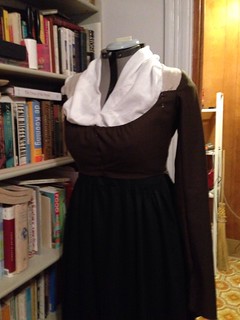
Testing the bodice and sleeve

but that’s fine, actually. I like to get dirty. The red Virginia cloth dress is now clay-splashed, and while it was made especially for the “People of 1763” event, it may no longer work. Fine for cherry-sellers, fine for hand-bill hawkers, it will not do for a lady’s maid, and I don’t especially want to clean it. Hope I can get my stays wrangled back into shape and that my cross-barred gown fits…but if not, I’ll be a recently promoted lady’s maid.

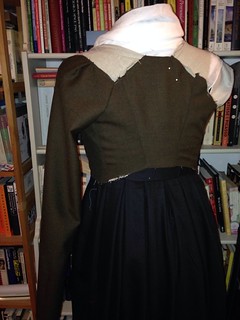
From the back.

My other upcoming role as a maid will be at the John Brown House Museum, on October 5. This has required quite a bit of thinking and stewing about appropriate clothing and realistic background. I finally settled on a black-and-brown combination of petticoat and open robe, with the style of the open robe based on Paul Sandby drawings and extant garments, but determined by the scant three and a quarter yards of brown worsted that I was able to find.

Winter, 1795. The British Museum, 2010,7081.509

The bodice back is based on the 1795-97 cross-front gown from Museum of Costume in Bath shown in The Cut of Women’s Clothes. The front is meant to be transitional: a little bit of gathering at the neck, but not a great deal, with the edges still pinning closed. The sleeves are long and slim, and will button at the wrist once I’ve gotten the length worked out.

The skirt will pleat, with fullness centered on the back triangle and decreasing to the front. For the black petticoat, I used the double inverted box pleat of the 1790s open robe in Costume in Detail. As you might imagine or just plain hope, they work! I’ve also made a small pad to help lift the skirt in the back and create the right profile; I’m thinking of adding buttons and loops so that it can migrate from gown to gown.

Missing the ‘maid’?

Ruth’s seat is for a side chair. But there’s value in them thar seats. MMA 50.228.3

Sarah Brown had a sister, Ruth Smith. Ruth was good with a needle, and there is an extant chair seat made by Ruth. I’d always thought, in a fuzzy, not-thinking-too-hard kind of way, that Ruth had made the chair seat for her sister and brother-in-law because they were family, and how else would a lady spend her time but with her needle?

My thinking sharpened radically late last week when a colleague said, “Didn’t Ruth make shirts for John and James [Brown]?”

Yes, she did. In Ruth Smith’s 1785 daybook there are two entries, though the pages are lined for more.

The first records 5 shirts made for John Brown February; against this, in March, Ruth received a pair of shoes, and a pound of Hyson tea.

In April, she made 4 shirts for John Brown’s son, James; in May, she received 9 yards of lutestring from James.

The values didn’t seem to quite line up, so I’ll have to pull the day book again, but what seemed most important was Ruth’s trading shirts for shoes, silk, and tea. In “Dress of the People,” John Styles writes about servants drawing goods from merchants on their masters’ credit; did this transactional relationship allow Ruth wider access to the world of goods than her means might otherwise allow?

Shirt, ca. 1780. MMA 2009.300.62

And if Ruth makes shirts for John and James, are there other, less-well-off relations doing other work for the Browns? There are records of servants or slaves of African descent working in the house on Power Street, but we can only find evidence of three, one dedicated to the horses. That’s not nearly enough people to run a house with a dozen fireplaces and a kitchen, and six or seven occupants. It seems unfathomable that the Browns tended their fireplaces, hauled their water and cooked all their food themselves. John Brown writes to a daughter of “your Marr baking pies,” but it seems radically unlikely that Mrs John Brown, wife of the wealthiest man in Providence, would handle the heavy round of chores required to keep a household and its visitors fed, clothed, cleaned, and entertained.

Direct it, yes. Do it all herself, no.

Could we be missing the maids? Could we be overlooking evidence of work being done by extended family members “visiting” or “come to stay?” Could the poor and widowed and never married women of the Brown and Smith families be the people we should be looking for along with the servants or slaves of African descent? (By 1790 and later, it is not clear if the Browns’ slaves are working in the Power Street house, or if they are at the farm at Spring Green or Bristol, Rhode Island. Many records remain in private hands and others remain badly processed and arranged. I have referred herein to collections publicly held and well-processed.)

What this means, as always, is more research and more looking. It also means that the relationships between Mrs Brown and her ‘maids’ might be more complicated and more interesting. She knows these women, and their families, and how they fit into her world and her family. Could one be a distant cousin, a daughter of a mother no longer living, whose father is abroad, perhaps on a boat owned by John Brown or his companies? Might a young, unmarried woman in her twenties exchange work for room and board and credit with Brown & Francis? Perhaps.

Mourning Embroidery by Ann Barton, 1800. RIHS 1840.1.14

That takes care of one or two of us–I’m looking for a widowed niece, with a son gone to  sea on a Brown ship to India. Mr S will have to tell me which battle he wants to widow me in, as he has rejected “lost at sea” and “frozen to death on the Oswego expedition” as possibilities. Actually, at my advanced age, I might have been widowed twice already. You’d think I would have done better with it.