Context is Critical

Context: it’s everything, right? We so dislike our statements taken out of context. But what about our clothes? They make statements, too, and so do our accessories.

A friend noticed that market baskets were fairly prominent carriers used by reenactors portraying the Boston gentry greeting L’Hermione this past weekend, and asked, “What gives? Is there something I missed?”

There are two images that people often turn to in documenting these baskets:

The Farmer’s Return, by Zoffany

Johan Joseph Zoffany RA, 1733–1810, German, active in Britain (from 1760), David Garrick and Mary Bradshaw in David Garrick’s “The Farmer’s Return”, ca. 1762, Oil on canvas, Yale Center for British Art, Paul Mellon Collection

and

The Harlot’s Progress, Plate 1

The Harlot's Progress, Plate 1. William Hogarth.
The Harlot’s Progress, Plate 1. William Hogarth.

In both of these, the context is working class and food-oriented. As my friend asked, “Are these floppy baskets for floppy birds?”

Two images from 1740 to 1760 aren’t a lot of documentation to go on for 1775-1783, so I checked the Rhode Island newspapers for 1770-1790, searching for “basket.” No mention in ads, but “baskets of grapes” appeared in stories, and a mention of Chinese dogs in cotton-lined baskets (apparently the “basket dog” is the 18th century equivalent of today’s purse dog).

As satisfying as basket-dogs might be, they’re not helpful in this instance.

The Yale Center for British Art helpfully adds keywords or tags to their catalog records, which allows one to look for “basket.” Aside from The Farmer’s Return, this ovoid, market-basket form isn’t really seen. What is seen?

For one thing, not many upper-class women carrying baskets, or any kind of burden or bundle. A woman carrying a kind of ovoid basket over her arm is shopping for food, not perambulating.

The upper class girl with her father has an open basket full of flowers (hint: probably symbolic) which appears to be made of what we lump into “wicker,” in an open design. (BTW, that’s not a pinner apron; zoom in and you will see shoulder straps. Fight at your leisure.)

Arthur Devis, 1712–1787, British, An Unknown Man with His Daughter, between 1746 and 1748, Oil on canvas, Yale Center for British Art, Paul Mellon Collection

In the most class-appropriate image, The Virtuous Comforted by Sympathy, the workbasket at the woman’s feet is a tidy, round form with a lid, more similar to Nantucket baskets* than to market baskets. It really doesn’t look like the kind of thing you’d leave home with. It’s a sewing basket.

Edward Penny RA, 1714–1791, British, The Virtuous Comforted by Sympathy, 1774, Oil on canvas, Yale Center for British Art, Paul Mellon Collection

On balance, I think it appears that public basket carrying is more suited to carrying foodstuffs than personal items, and that the most common use of baskets in this period is to collect and carry food, whether from a greengrocer, fish stall, or gathering apples— at least if you are trying to be quite precise in the use of documented accessories. If you’re using a market basket to carry food, you do so knowing that it’s only (thus far) documented to England, and that the handles must be woven and not leather riveted to the side.

The material from which the baskets are made is another question altogether, along with the proper woven form. As I noted to my friend, I don’t care that much. And why?

Balthazar Nebot, active 1730–1762, Spanish, active in Britain (from 1729), Fishmonger's stall, 1737, Oil on copper, Yale Center for British Art, Paul Mellon Collection
Balthazar Nebot, active 1730–1762, Spanish, active in Britain (from 1729), Fishmonger’s stall, 1737, Oil on copper, Yale Center for British Art, Paul Mellon Collection

Pockets, of course. My enormous pockets contain multitudes, sometimes even camera and water bottle along with wallet and phone, even if that much stuff distorts the line of my skirts somewhat. I can also fit my knitting in a pocket, and a slim, if dangerous novel (perhaps Moll Flanders). For carrying more than that, a wallet is probably best, or a cloth bag, or a portmanteau. But for a day in town, even if you’re a lady, you can carry quite as much in your pockets as I can as Bridget, though of course of a better quality.

* I am not advocating carrying Nantucket baskets, to be quite clear.

Room, Officers’, for the use of.

Sometimes I feel like a third wheel at Rev War events. There is not always a lot for women to do besides chores, and the public often ignore us. Still, there is one maxim I know to be true: if you’re bored, work.

Thus, when I found myself drifting off Saturday, I started dinner. The best part was where I got to make dinner: in a chamber off the main room of the Temple at the New Windsor Cantonment. These two rooms were occupied by the 10th Mass this year. Last year, the unfinished room had been the scene of Dirt Stew.

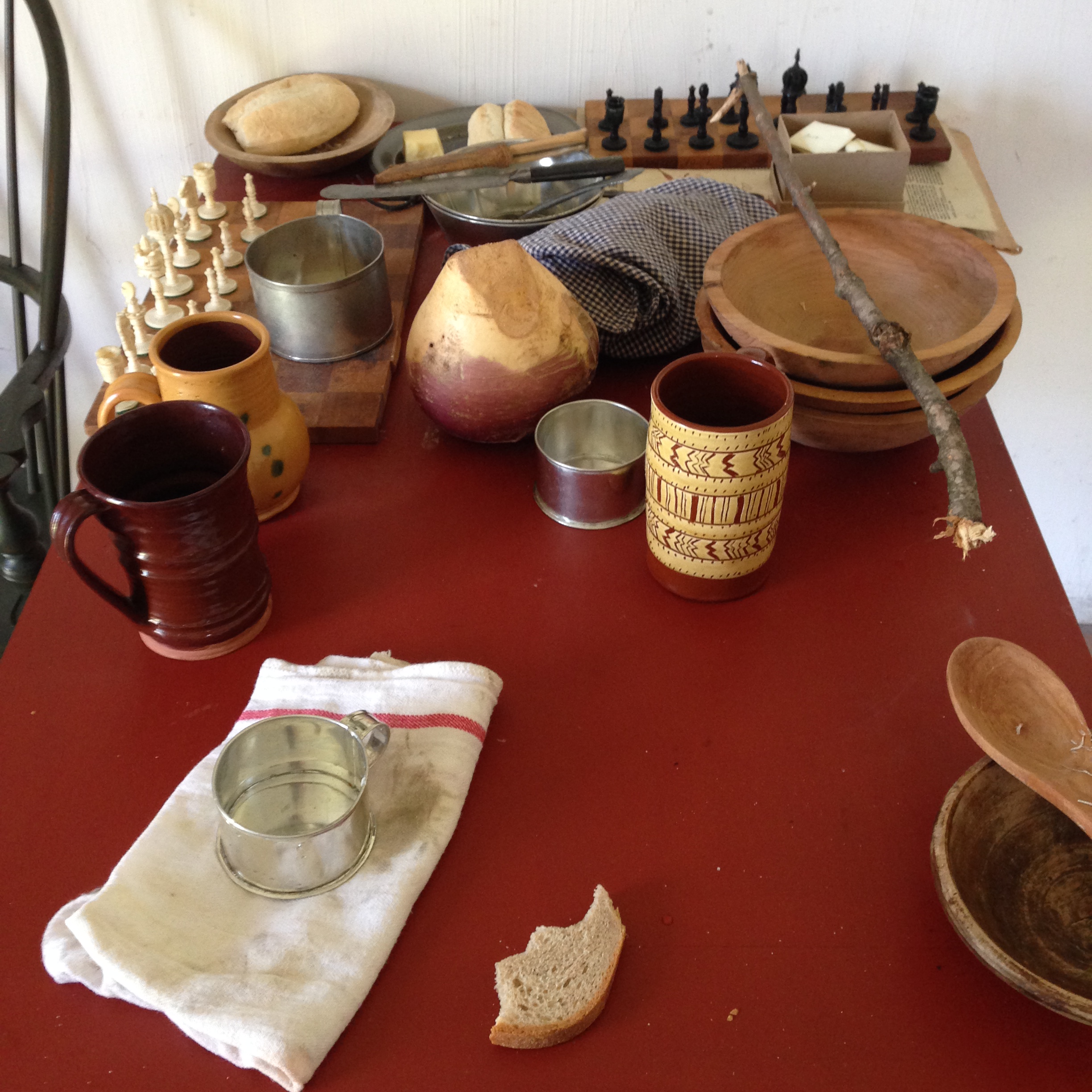
Cutting vegetables on a table was a major upgrade; last year, I think I used the kettle lid, the floor being too gritty even for me.

IMG_3470

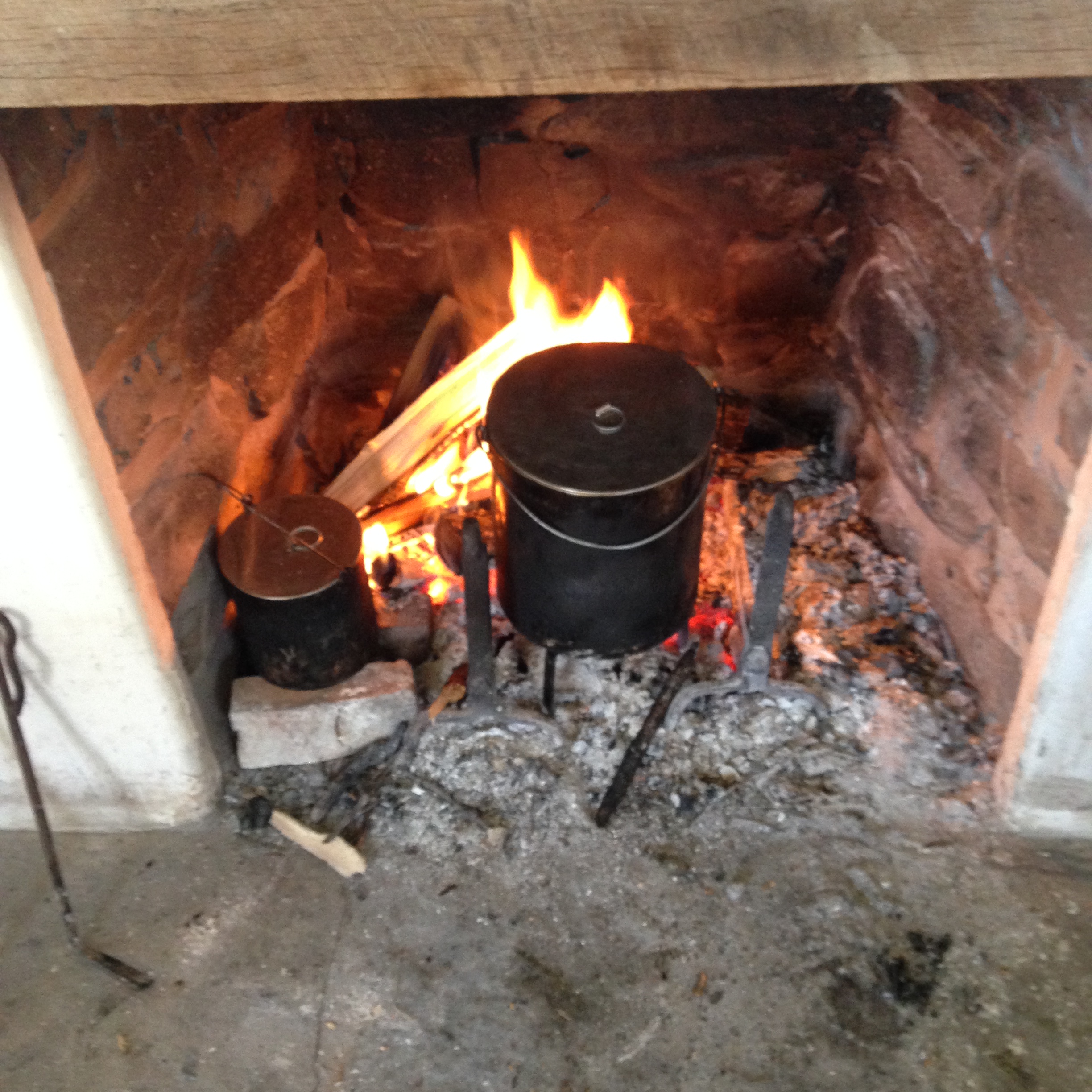
It’s End of Stored Root Vegetable season here, so largish carrots and parsnips went into the pot, along with potatoes, onions, and a cooked chicken disjointed by hand (a task I have experience in).

This year, we brought the only iron we own, a small trivet-like stand to put the big kettle on; the little one went on bricks from the Temple’s other fireplace. Was that slim piece of iron wrong? Probably, but in a place where we can’t dig a kitchen or make a fire outdoors, we compromised in the name of keeping supper unspilled.

IMG_3471

Why no fires outdoors? Red flag warnings, due to high winds and low RH. That all hobbies will be affected by climate change was clear on Saturday, as we discussed invasive species, transporting wood across state lines, and various site rules on using brush to build shelters. It’s not just about digging fire pits or kitchens and archaeology anymore.

Surreal School

On the King's Highway, behind Knox's HQ
On the King’s Highway, behind Knox’s HQ

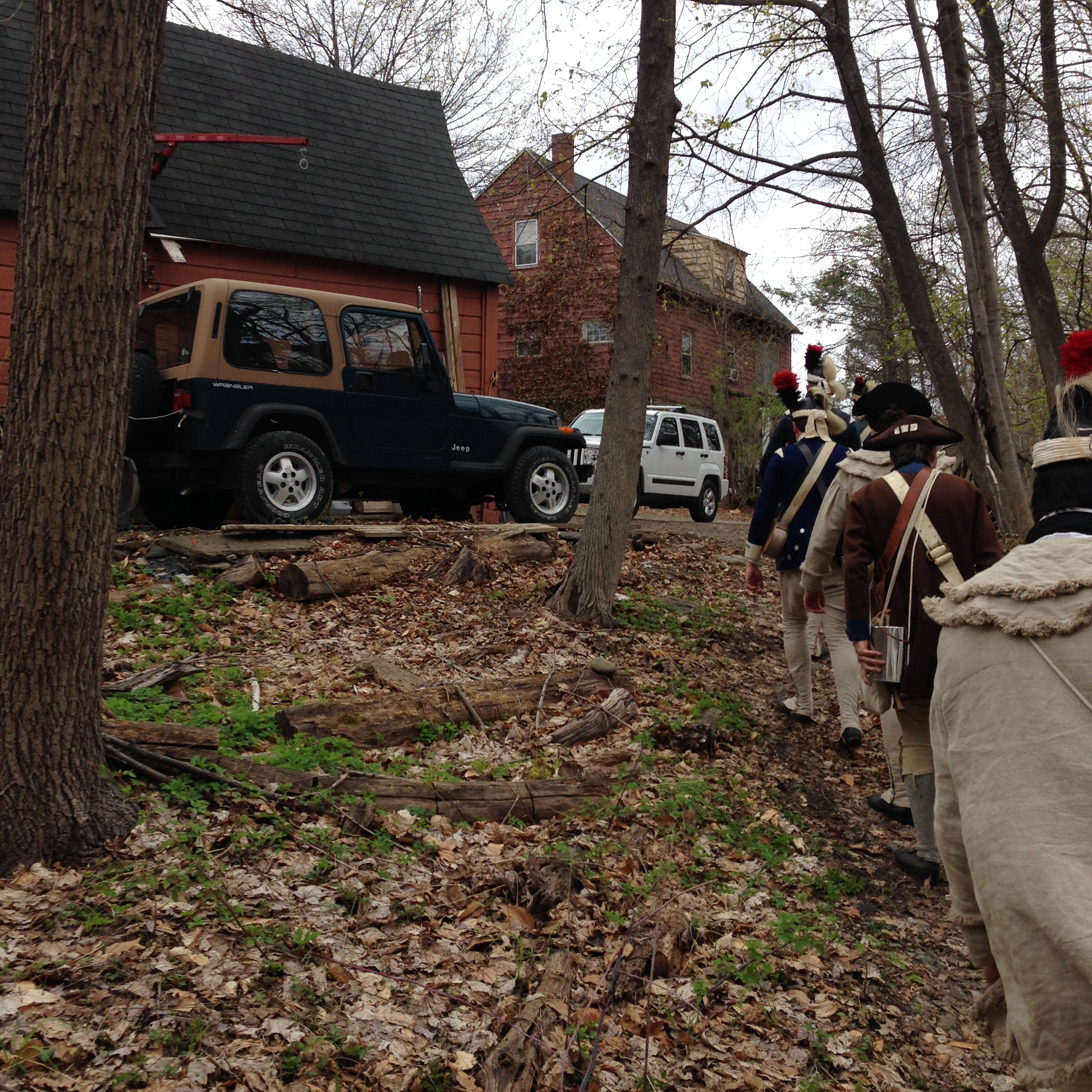
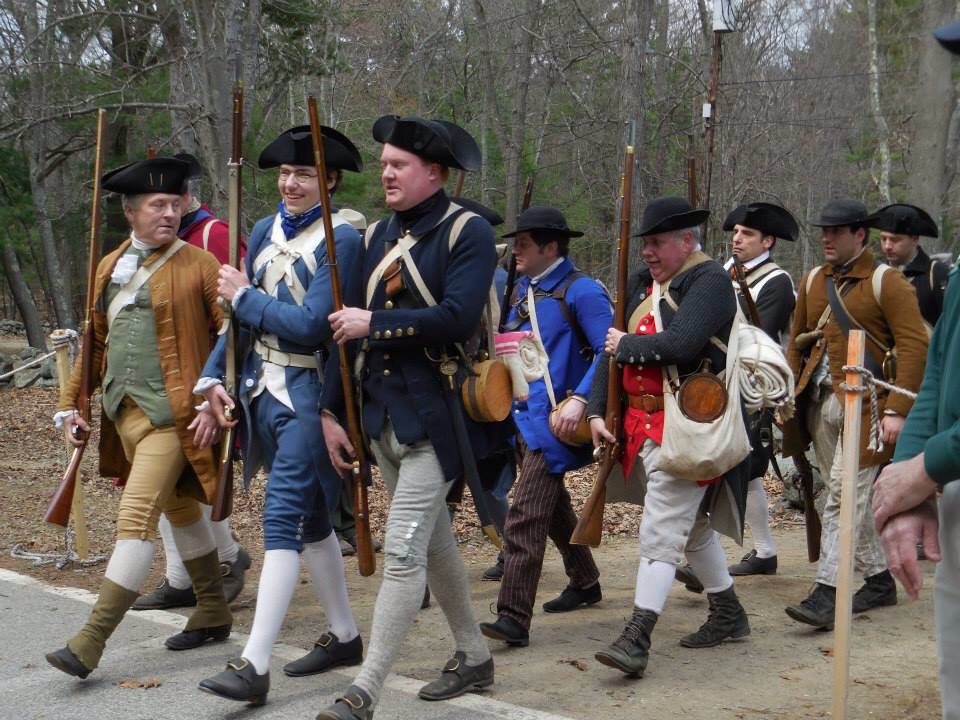
The School of Instruction is always interesting, and this year was no exception. One of my favorite activities is walking with the troops (well, behind). The experience is usually surreal, and the walk we took behind Knox’s Headquarters met expectations.

Clash of the Time Periods

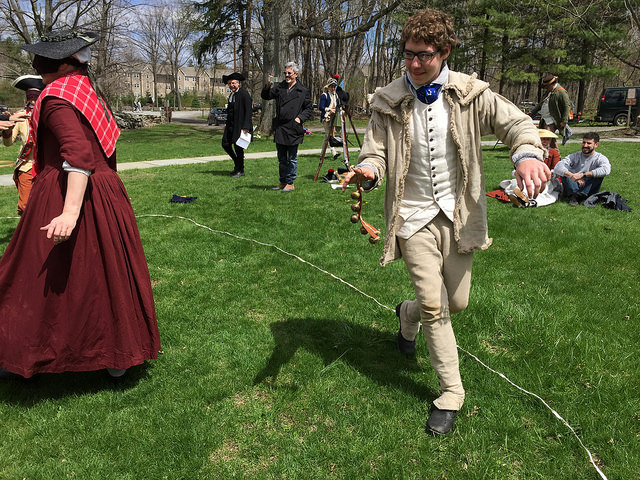
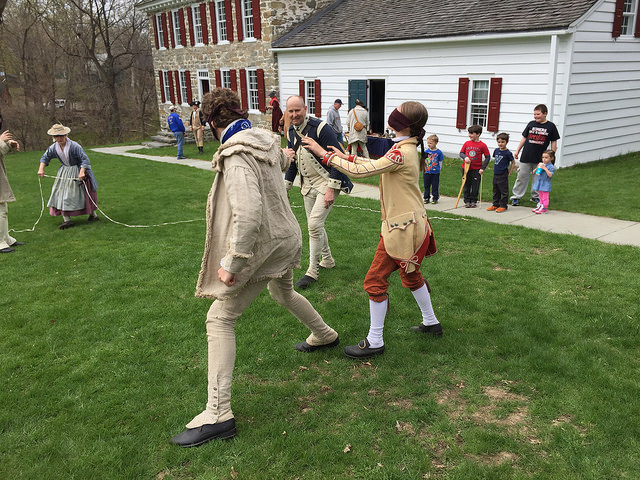
Knox’s Headquarters was a new location for us, with new activities: we played a Jingling Match, which resulted in as much giggling as jingling, and felt like the Walking Dead met the 18th Century.

Jingling without Giggling is the hard part

The game is pretty simple: mark out an area, blindfold as many as are willing to play, and set one without blindfold loose. The object is to touch the person ringing the bell, and it is a hilarious and merry game indeed, though I do agree with Mr McC that playing with a number of men full in their cups, or at certain sites (Stony Point comes to mind) would be too dangerous.
WildJingling

Still, it’s simple and fun, if a little Kubrickian when you first tie on the blindfold. The person who catches the jingler is the next one to taunt the blindfolded.

tomBrianwill

Next stop? Bell research, of course. I definitely want to play this in Newport later this summer.

Battle Road Made a Man 

(with apologies for the child-centered content.)

Well, sort of.  The Young Mr sported a brand-new, all-hand-sewn frock coat and breeches, as well as brand new size 15 shoes (thank you, USPS Priority  Mail and Robert Land’s stock of the rara avis size 15.)  He was spotted in photos that were shared with me later, and there he is, front and center, in his new, blue wool broadcloth suit. (I do like the side eye Mr C is giving as he checks on the second row.)

When he was dressed on Saturday, the Young Mr had a real presence. There is something about a suit that changes a man– well, in this case, a boy into a man. On the ride home, he told his father, “Now that I’m growing up, it feels weird to call you mom and dad. I think I should call you by your first names.” (I’ll wait here while you finish laughing. Yes, it is funny. No, we did not laugh at him.)

It’s a curious idea to us now, marking transitions with clothes. For some, coming of age is marked with a car or at least a driver’s license. For others, it may be a first job, or apartment. But once, stages were marked in clothing, as boys moved from gowns to breeches, and later from dresses to short pants to long pants.

 Our clothing is so much less formal, that we are less accustomed in most cases to seeing men in suits. Even as young as I was in those last “Mad Men” years, I remember more formal times, and shopping with my parents, seeing coats marked up in chalk and thread for my father, and the ranks of shirts and heavy-hangered trousers and coats at Brooks Brothers downtown in Chicago.  (I went there once as a teenager with a friend to buy a present for her father; we were not warmly welcomed in our punk clothes, but the glass cases were unforgettable.)

For the Young Mr, that kind of formality is lost. There’s not much point in buying him a modern suit: he’s all t-shirts and hoodies and hand-me-downs from a friend at work he’s rapidly growing past. He’d never wear a suit, except as he steps into the past, and his fittings happen in private homes or workshops, and not in front of a three-panel mirror.

The Young Mr steps into the past to step into adulthood, and comes back to a present where he has many more years and rites of passage before he will truly be an adult.