To Name a Thing is to Know theThing: Vocabulary Exercises

Today’s CoBloWriMo prompt is vocabulary, which in my case usually means blue, NSFW, or unprintable in the New York Times according to their Style Guide, (but now OK in the New Yorker, thank you Tina Brown).

Captain Haddock proclivities aside, I find myself trying to remember to use period-correct terms as I work, which means trying to figure out what the terms mean. It isn’t always easy, but there are number of printed and online sources.
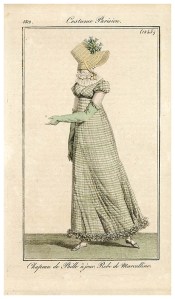
Here, for example, is the Robe de Marcelline fashion plate I’ve been obsessed with since at least 2011, when Sabine made hers. I finally tracked down some dark green gingham fabric in Framingham, but, d’oh! It’s cotton and not marcel(l)ine.

Google Books provides many useful lookups, through dictionaries and, best of all at the moment, The Dictionary of Fashion History, which helpfully illuminates marceline as “a brilliant but slight kind of sarcenet.” That helps narrow down “lining fabric for women’s clothes,” and confirms that this is a lightweight, probably plain weave, silk.

That doesn’t solve my fabric issue, but given that I am still lack full-time work outside the house, Imma stick with my remnant table cotton. But at least I know what I *should* be using, and have expanded my vocabulary along the way.
Styles Style: Book Recommendation

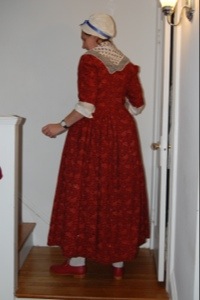
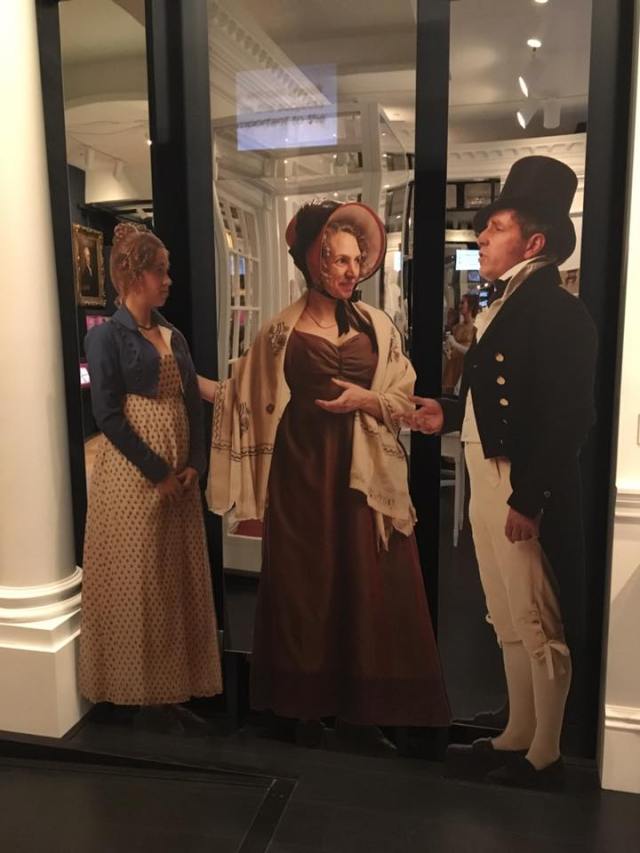
Please forgive the watch– a test shot of a gown from a runaway ad.

This is a quick one, because I’m writing in advance of a trip to New England, but for me, the best secondary source I’ve read that helped me understand the people I was clothing is John Styles’ The Dress of the People. That’s not to say that I haven’t read more, and found period resources and collections of resources equally useful. If you’re doing a poor woman in America, Don Hagist is your man, with Wenches, Wives and Serving Girls (now Wives, Slaves, and Servant Girls. Read Good Wives, Nasty Wenches, and Uneasy Patriarchs for more on period terminology).

I like Styles because he helps us understand the why of people’s clothing, and their wants. For me, context is key (I harp on this a lot) so insight into how many shifts are usual, the fashion for pocket watches, and the activity of the second hand clothes market is really helpful. So despite my love of shiny satin gowns and fashion of all eras, among the few books I didn’t send to storage when I moved was The Dress of the People. I think that’s a strong recommendation.

(researc

Fave Friday: Full-On Federal


Favorite Era? Easy-peasy! Federal, of course. Whether furniture or fashion, the early Republic is my thing. I spend a fair amount of time in the 18th century, since there are so many events in that time period, and while I loved the story of the American Revolution as a child, the early Federal* period intrigues me more. Furniture, porcelain, wallpaper, and clothing from 1790-1820 all appeal to me, as well as the notion that women’s roles were in flux in the earliest decades of the United States.

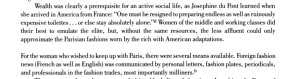
“American Women and French Fashion,” from The Age of Napoleon

I love the idea of women in mercantile businesses and trade, and the way that milliners provided access to fashion (and you can read more about that in The Age of Napoleon).

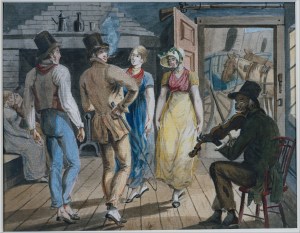
Merrymaking at a Wayside Inn, watercolor on paper by John Lewis Krimmel. 1811-1813. Metropolitan Museum of Art, 42.95.12

I also love the way that American women (and men) translated European high style into a vernacular, as seen in John Lewis Krimmel’s watercolors of Philadelphia and surrounding areas.

This is a time period I’m comfortable in (yes, the stays are part of that comfort) but aside from comfort and aesthetics, I think it’s also because for a brief time, women had slightly more freedom than they had previously.

It was short-lived, and Republican motherhood was confining in its own way before the “cult of womanhood” blossomed fully. But ideals of freedom and fashion very briefly aligned, and for that, I love the Federal– and vain creature that I am, I think it suits me.

*pre-Andy Jackson, amirite?

Mop It Up

"Useful occupations: Women's work, sewing, spinning, washing, ironing etc," illustration from Basedow's 'Elementary Work', 1770. Etching by Daniel Chodowiecki — at LACMA
“Useful occupations: Women’s work, sewing, spinning, washing, ironing etc,” illustration from Basedow’s ‘Elementary Work’, 1770. Etching by Daniel Chodowiecki — at LACMA

Mrs. Boice is at it again, folks: you can register now for a workshop in just a few weeks where you can learn more than you thought you’d ever want to know about getting ready for winter, laundry, caps, games, and dancing. Thought honestly, I think you can never know too much about these things, which is why I keep trying!

Yes, it’s what I think about: how did women prepare houses for winter? How did they get things clean? It was a lot of hard work, and is often underrepresented in historic sites both domestic and military.

You can learn more about the weekend online or download the detailed flier.