The Europeans continue to rock the museum thing. Check out the Digital Museum of the Norsk Folkemuseum in Olso. That’s where I found this lovely jacket (I like making jackets, they’re the cupcake of clothing, like bonnets are the cupcake of head wear.)
What is especially sweet about this is that there are drawings, and a pattern. Pattern!
It’s another goal to try to achieve for the collections I work with.
If you like history and costume and paintings (oh my) stop reading this and go play at the Rijksmuseum.
Hot tip: search for “jak” or “japon” if you’re looking for jackets and dresses.
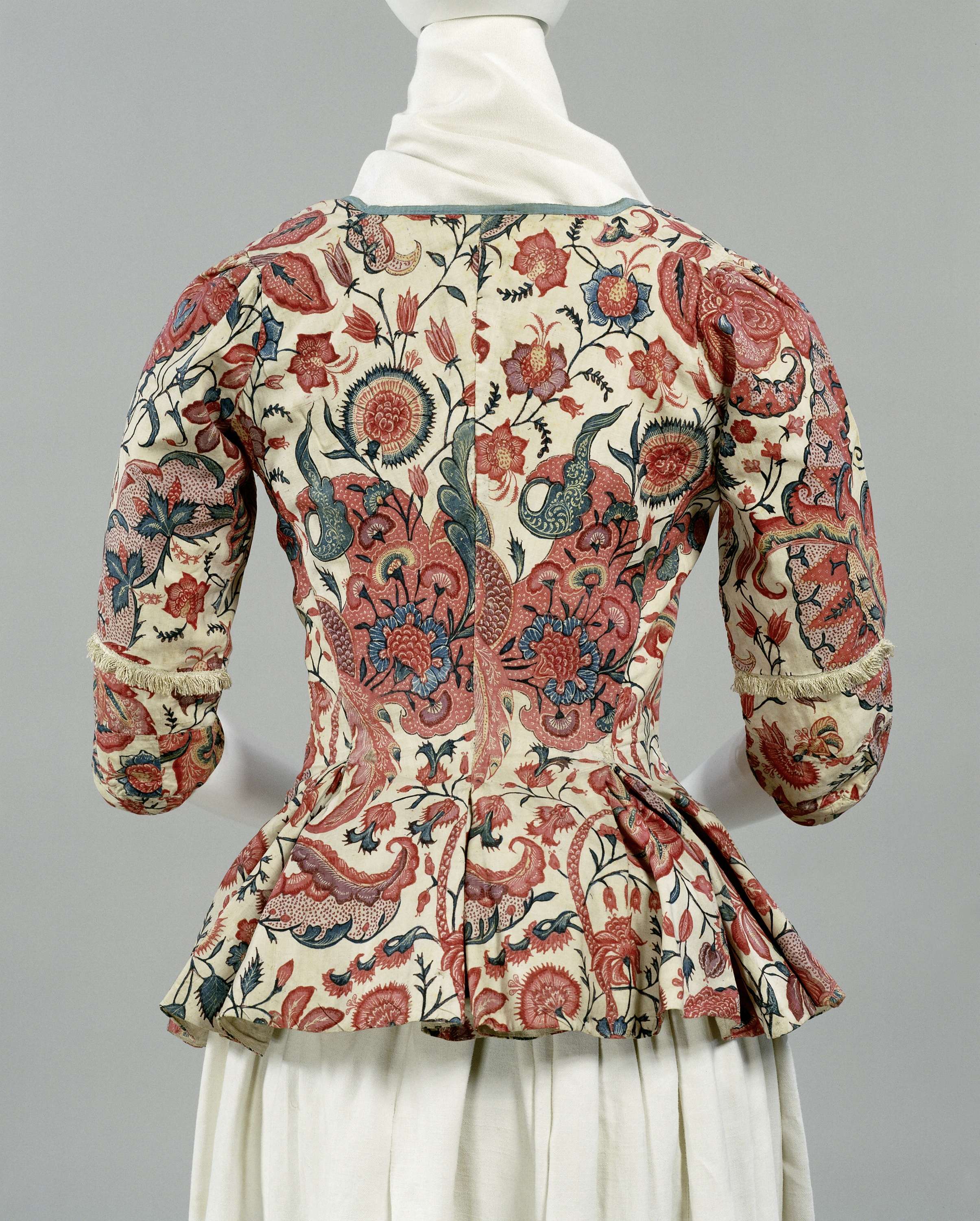
The zoom feature is amazing, and the collections are clearly drop-dead awesome. Only a tiny fraction are digitized, but what has been is astonishing. Look at that jacket! It’s dated 1810-1820, but earlier fabric.
Rijksmuseum, jak, BK-NM-4959 There’s another one, earlier, and less visually striking but still lovely.
We’re ready at work (electronics unplugged, shutters closed, anything outside brought in) and at home (water and non-perishables in stock, matches–or flint and steel–plus candles at the ready) so now all there is to do is to wait for Sandy’s effects to be felt.
What to do while waiting? Laundry, for one thing, vacuuming for another (day). And what else but obsessing?
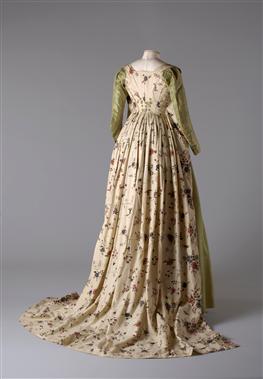
First, the Curtain-along-kerfluffle continues. Found last night, a gown from Fairfax House in Essex (UK). Looks like a robe that goes over a lighter gown, shown here with a green silk underdress. And then there are the Kyoto Costume Institute’s English gowns from Revolution in Fashion and Fashion.
I also love the detail in the back of the V&A’s printed cotton open robe, so in the end, what I may do is design a gown based on the principles of extant examples and fashion plates, rather than recreate an extant example.
Before any of that can really happen (sigh), I must have the right undergarments. I have been hunting up examples, and I may be able to adapt and refine the hand-sewn pair based on a set at the Met that I made to wear to Coggeshall Farm. I have to address those anyway because…the guys want to volunteer for winter chores in December, and needs must dress appropriately.
That puts me at a project list:
1. Refine, correct, beat into shape 1790s Met stays………………….December 2
2. Two pairs men’s trousers (5-7 buttonholes each)………………….December 2
3. Two men’s waistcoats ca. 1790 (8-10 buttonholes each)……….December 2
5. Undefined outerwear in wool for child (too many buttonholes)..December 2
6. Wool gown and petticoat, 1790s…………………………………………December 2
7. 1790s gown in Indienne print………………………………………………March 9
8. 1790s white cotton petticoat………………………………………………..March 9
9. 10th MA regimental coat, private’s……………………………………….April 20 –or–
10. 2nd RI regimental coat, private’s………………………………………….April 20—and–
11. 10th MA musician’s coat……………………………………………………..April 20–or–
12. 2nd RI musician’s coat………………………………………………………..April 20
13. Umm, excuse me, I lost track of the fun here……………..
Right. I note the lack of wool 1770 gown for April 13 here, or my quilted petticoat, or the floaty blue silk 1799 gown and blue wool spencer I want to make. It’s hard to be dressmaker and tailor. Also not on the list above are the finer shift and white linen shirt that are in process in my basket, and the Williamsburg jacket of remnant reproduction print. At least that’s an easy one, like making gingerbread. I have a pattern that works, I have the fabric, all I have to do is cut it out and sew.
Not to be confused with the Great Benefit Street Curtain Kerfluffle of 2007, in which I averred in a lectured that the wealthy of Providence did, in fact, have not just shutters but also curtains, and was publicly challenged by irate docents. Sometimes I feel the need to remind them that John Brown did not in fact squat naked in a corner of a fireless room gnawing on a joint until Benjamin Franklin appeared with the gift of fire called down from the sky by a kite….why, yes, I do have some docent issues.
Way back in a warm sunny month I bought the Waverly curtains at Lowe’s in the cream color way, though both the black and the red were also tempting. Now the question is, what to make? Not that there aren’t plenty of other projects requiring my attention…but sometimes, you want to do something just because it’s fun.
“Fun” is a concept I have some trouble with. I am much better with work and responsibility and guilt. “Spontaneous” isn’t too bad (how do you think I end up in some of the situations I find myself in?) but simple “fun” can be tricky. So here I am with the spontaneously purchased curtains, and the need for a plan.
The plan has vacillated between “just for fun” dress and a fully documented dress. A “just for fun” dress would not have to be documented to 1770-1780 New England or 1790-1805 Rhode Island. How liberating! French dressing, here I come! Except…where and when would I get to wear my new creation? So I need not just a plan but a cunning plan.
Where to turn? I chose the Met, and here’s what I found.
Dress number 1, 1725-1750, British, embroidered linen. Has the right features (open, robings, cuffs) and the fabric could be plausibly mimicked with the print. Could be worn with a matching petticoat (need another curtain if I do that) or a red flannel petticoat. Would be super amazing with a crewel stomacher if I made myself do that. Could probably be worn to Rev War events if I felt a bit brazen. (She wore curtains at Battle Road?! My dear, the idea!)
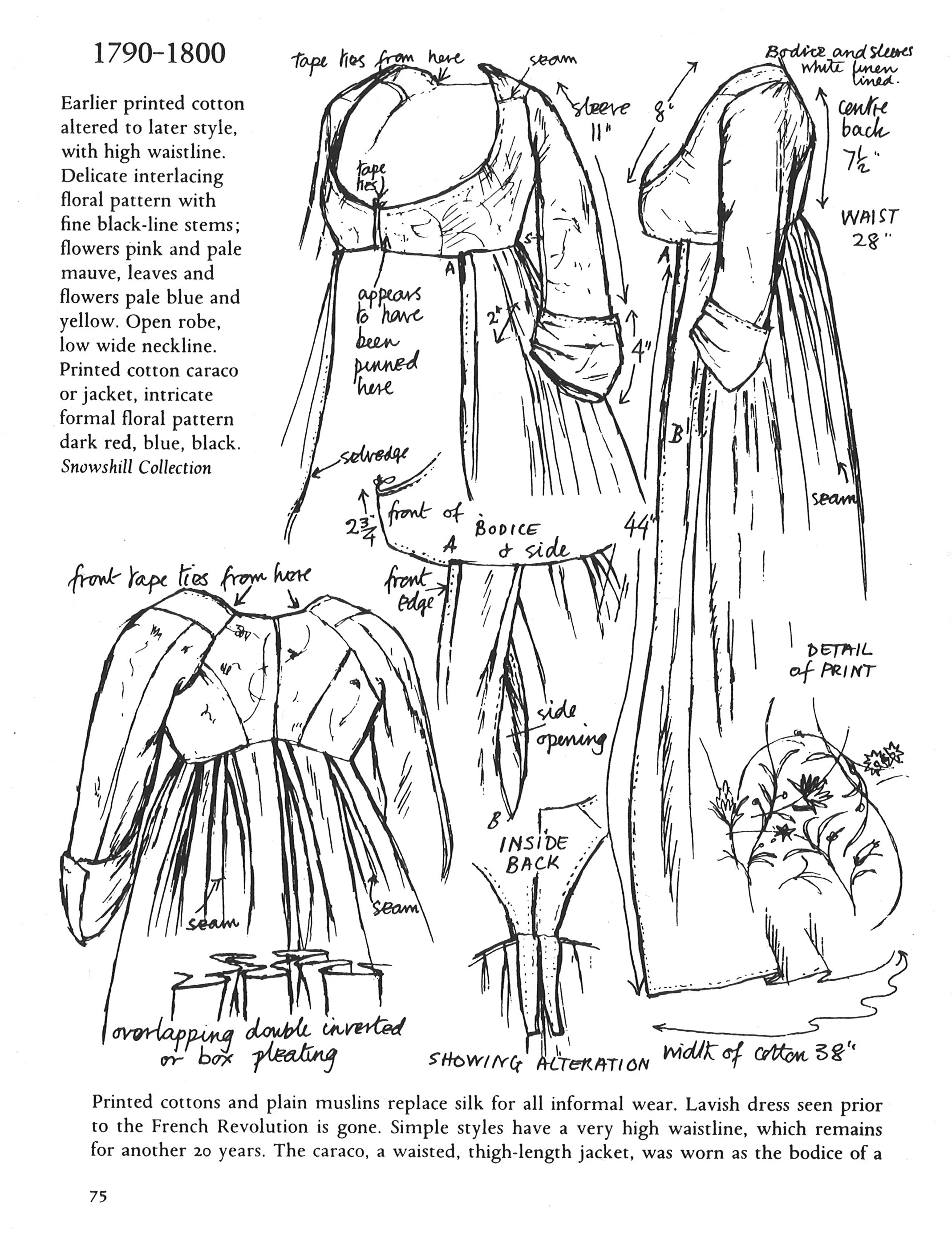
Dress number 2, 18th century, French. Printed cotton. Actually a two-piece item, jacket or bodice and petticoat, this is probably 1790-1800. Dates are good for work and other places in Rhode Island. Problem? It’s French, and there’s no evidence that anything like this was worn in the U.S., much less in New England.
Dress number 3, mid-18th century, American, linen and cotton. The bodice closes edge-to-edge, the back is pleated, and the skirts open. Probably 1775-1785, trending later than 1775 judging by the closed front and the longer sleeves and the style of the cuff. Not OK for Rev War events. Just OK for events at work, but not ideal.
Dress number 4, ca. 1780, from the Scottish National Museums. I have been looking in the National Trust Collections online for an image of the gown that appears in Nancy Bradfield’s book (see below), but to no avail. (I do keep falling asleep at night, and while that doesn’t help, it may be that the dress has not been photographed.) The fun part of this dress is that I have some light-weight Ikea curtains to make a petticoat and kerchief out of. Also, my hair can get into the crazy hedgehog style practically on its own. But I can document this to Rhode Island 1780-1790?
See the dilemma? Maybe the thing to do is to make the fabric into a banyan for Mr S (that would be a little weird to see on a private soldier in von Steuben camp) and think again about the later styles.
Or maybe the thing to do is to lighten up a tiny bit and make a dress that’s just for fun.

 That’s where I found this lovely jacket (I like making jackets, they’re the cupcake of clothing, like bonnets are the cupcake of head wear.)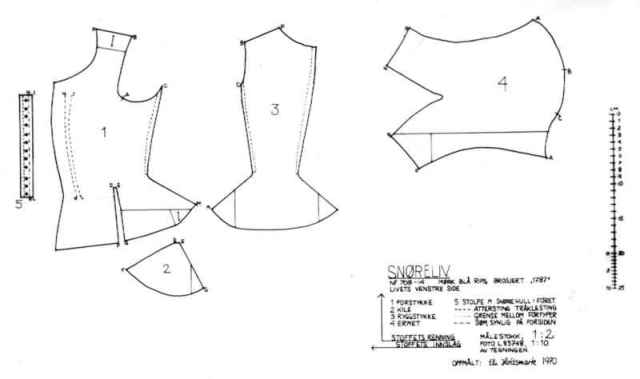





 Kirsten Hammerstrom
You must be logged in to post a comment.