Muff-ed Up

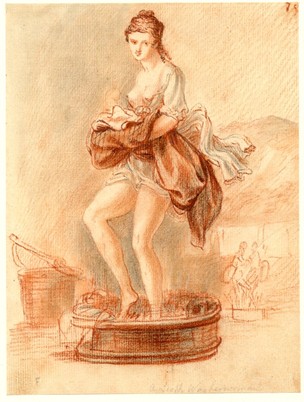
Remember the Amazon? She has the dressed-up dog and the Muff of Doom. I’ve gotten a little obsessed with her, and that obsession has led to some interesting places.
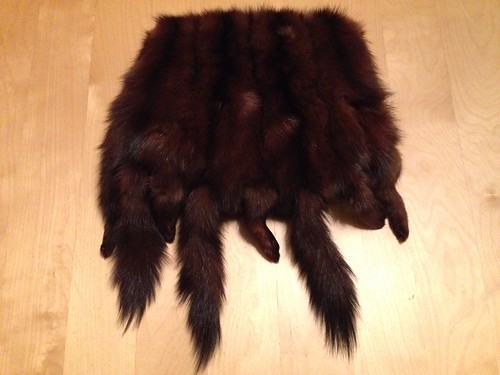
The Muff of Dooms Past. Poor minks.

For one thing, it’s winter, and everybody has cold hands, so everybody is making muffs.

Here at Crazy Scheme Central, I had thought about making the great Ikea sheepskin Muff of Doom, but that’s a place I generally don’t go until after the Christmas madness, when the store in Stoughton does look as if it had been plundered by orcs.

Instead, I bought a Muff of Dooms Past at an antique store. I wouldn’t buy a new real fur anything, and I do feel bad about the poor minks, but at least no new minks were harmed. Or sheep. But golly, it’s soft and delicious and it’s easy to see why people wanted fur, given that we’re essentially hairless mammals. It measures 11 inches high (not including decoration) by 11 inches wide at the narrowest point, and 14 inches wide at the base.

Pupils of nature Maria Caroline Temple delt. ; TS. sculp. London] : Pubd. April 30, 1798, by S.W. Fores, No. 50 Piccadilly, corner of Sachville [sic] St., [1798]. Lewis Walpole Library Call Number 798.04.30.01+

The Muff of Dooms Past is not nearly as large as the Amazon’s muff, or as large as the ones seen in fashion plates and satires.  The sad little tail-and-paw fringe has precedent (see left), though I believe at least one tail has been lost. As far as I can tell, with no label, this is probably a 1950s muff of local manufacture (there is a fur company, now in Warwick, that started in Providence, and is now going out of business). It could be earlier, but the flexibility of the pelts suggests a more recent vintage.

The Met has some fantastic late 18th/early 19th century muffs of a color that screams warmth. The size of the brighter one is just 8 by 7 inches. In case you think that’s anomalous, here’s another muff of similar type and size.

They seem small compared to the Amazon’s muff, and even the Student of Nature’s. And yet, there they are. It’s hard to know exactly where the measurements were taken, and if they include the extreme fluff of the feathers; I tend to think not, but that the measurements are for the firmest part of the muff. (That’s how we would measure, and then include the largest “fluff” measurements in a ‘special measurements’ field with a note.) There is a 1780-1820 swan’s down muff at the V&A with a record but no photo or measurements.

Satires are hard to use: we know they’re depicting some grain of truth, usually in the background details, but also in what they’re portraying. How do we interpret those enormous muffs? They appear over and over, in consecutive years of satirical engravings and fashion plates. Maybe the way to interpret them is to see those muffs as the extreme end of fashion– Alexander McQueen muffs, if you will– and the extant muffs represent the more reasonable dimensions of fashion. I wouldn’t call red feather muffs typical, and I wouldn’t suggest we all carry them. But based on what exists in museum collections, maybe a smaller-than-satire muff is within the bounds of reason for actual use.

Ironing on Grass

Paul Sandy, The Laundress, 1780. British Museum, 1904,0819.624

This print makes me think of Gertrude Stein, “Irons on the grass alas” because I think I would be pretty alas if I were ironing on grass. Still, I’m glad to know that ironing in camp is plausible, because it’s one more thing I can do, though also one more heavy item to pack.

I continue to chase laundry in my spare time, with a Pinterest board of collected images, which will give you a sense of the timeless drudgery of washing clothes. There will be stooping.

A Washerwoman, by John Varley (1778-1842). Tate Britain, T08695

In this sketch by John Varley, he has helpfully given notes to supplement the lines.

“neckhandkf
spots Drab stays
blue check apron”

The symbol in front of ‘spots’ suggests the neckhandkerchief’s pattern, a dot in a square, much like the ones you can today from Burnley & Trowbridge.  “Drab stays” suggests a very utilitarian pair of wool stays, and that the washerwoman has stripped off her gown or bodice, and is working in shift, stays, and petticoat(s). This seems to be the same woman is in the “Woman with Wash-Tubs” drawing, and I’d guess her hat is straw.

A Scotch Washerwoman. Crayon drawing by Pauil Sandby after 1745. British Museum, Nn,6.61

There’s a remarkable consistency in the English drawings, though Varney and Sandby are about two decades apart. The tubs, the tools, the stooping: laundry is hard and unglamorous work, Sandby’s Scottish laundress aside. I can guarantee you that the 10th Massachusetts would have to outsource laundry in that style. (In any case, Scotland typified poverty and backwardness for late-eighteenth century Englishmen, so Sandby’s drawing, in addition to being titillating, is perpetuating English stereotypes of Scottish dress and practices and is, thankfully, not a reliable source.)

“Unsuspected Cat”

Squatting plump on an unsuspected cat in your chair!! George Cruikshank [1800]. Lewis Walpole Library, Image ID lwlpr09721 Call Number 800.00.00.176+

The Lewis Walpole Library provides endless amusement, and searching by subject yields some fun. People have had curious relationships with domestic pets for a centuries, and thank goodness cats invented the interwebs so we could get real perspective on this.

Quite aside from the minor domestic comedy of this engraving (I dislike the dark of winter and take my fun where I can), we can learn a lot. The domestic comedy itself helps remind us that while the people of the past saw the world differently, they were as foolish, bawdy and rude (or more so) than we are.

From a material culture perspective, we have (among many things):

  • a geometrically-patterned floor covering, probably a carpet but possibly painted.
  • floor-length curtains
  • looking glasses, paired
  • a slip-covered easy chair, matching the curtains and the cat’s cushion
  • two candles (only two!)
  • glasses with the characteristic straight temple pieces that end in loops
  • a colored open robe over a white muslin petticoat
  • a young gentleman in trousers, an old gentleman in breeches

I can imagine this depicting Emma and Mr Knightley (after their marriage) at home after dinner with her father and their young son: Mr Woodhouse in his nightcap and banyan, reading; Mr Knightley upset by the cat, while the Spaniel barks at the excitement.  All in all, highly satisfying.

The Checkered Past

Some gentlemen I know should consider what they might want to do to avoid (or alternately, encourage) having this coat made for them. It’s really a lovely thing, found as the best things are, while looking for something else.

It reminded me, too, of the textile sample book at the Met, currently on display in the Interwoven Globe exhibition. (No, I haven’t seen it; I’m going to try, but…).

Wm Booth has a new linen coming in the winter, and as the men in my house have outgrown or outworn their shirts, I am thinking of making new check shirts. I did finish a white shirt at Fort Lee, which will go to the Young Mr (his small clothes being now his too-small clothes). I will have to make Mr S a white shirt for best wear, but they could each use a second working shirt. At least with checks you get “cut here” and “sew here” lines.

Last week, I found a weavers’ book in the Arkwright Company Records (Box 1, Folder 1, 1815). It’s a slim, blue paper-covered volume with small samplers glued in to the pages, and full of checks and stripes. Blue and white, red and blue, checks and stripes were prevalent in the late 18th and early 19th centuries. The more I look at extant garments, sample books, and ads, the more I think the streets must have been a vibrant, if grimy, visual riot.