Free-for-All Friday

Well, at least I can dress myself.

Most sadly, my obnoxious yellow gown will not be finished for this coming weekend, so I will not be flaunting my goods in such flashy clothing. Instead, I will be dressed like a giant version of the darling Miss B, whom I fear does wear the Space Invaders print better than I.

The real point, of course, is the action expected for Saturday, June 25, at the Craig House. The press release is fairly general about how we’ll be representin’ New Jersey’s 18th century civil war, and no one has leaped up to portray Little Anthony the [Quaker] Insurrectionist, but here’s the scene:

Craig House is empty the day of the battle. John Craig is with the Continental Army, leaving Ann Craig to flee with chattel, child, and two slaves in two wagons. This leaves the house and remaining property vulnerable to occupation and depredation.

An armed member of the Association for Retaliation is snooping around the Craig house and catches Loyalist and Quaker refugees who are squatting/hiding, as well as a “London” trader. He can’t let them go, and he is afraid to move them for fear of the British by day and the Tories by night. The Retaliator is joined by a local farmer who has stopped by to check on Mrs Craig’s safety in the surrounding commotion of the troops moving towards the coming battle. 

“Disaffected” smugglers use the chaos of the war in New Jersey to continue trading with the British and Loyalists. The “London trade” feeds the taste for tea, fabrics, rum, lemons, and sugar that even the Revolutionaries cannot shake.

Quakers are viewed with suspicion and animosity for their pacifist, anti-slavery views, which gives the impression that they are Loyalists. Harassed in Philadelphia by various committees requisitioning blankets and other goods; by 1778, the Quakers’ abolitionist views make them vastly unpopular in Monmouth County.

These characters in search of a plot will encounter each other at Craig House and, with some history improv, portray the tension and conflict between New Jersey residents in the Revolutionary period. Want to come out? Craig House is here, and a visitors’ guide is here.
A Request from the Academie

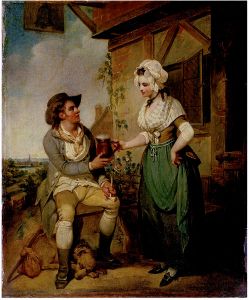
At the Inn Door, oil on canvas by Henry Singleton, ca. 1780, V&A Museum 1834-1900

Gentle Readers, Living History Enthusiasts, and Rev War Junkies: Your assistance is requested. Mrs. Boice’s Historie Academie is looking for your input for future hands-on learning weekends.

There are some interesting topics in the list– brewing? I certainly enjoy the results of brewing. Dairying? I like cows and love the local dairy farm. Language and speech patterns? I could certainly do better. Professions? Hmmm….I’ve considered several. Much to love in this list, and I’m looking forward to learning more.

Go forth, and register your opinion.

Massacres and Mondays

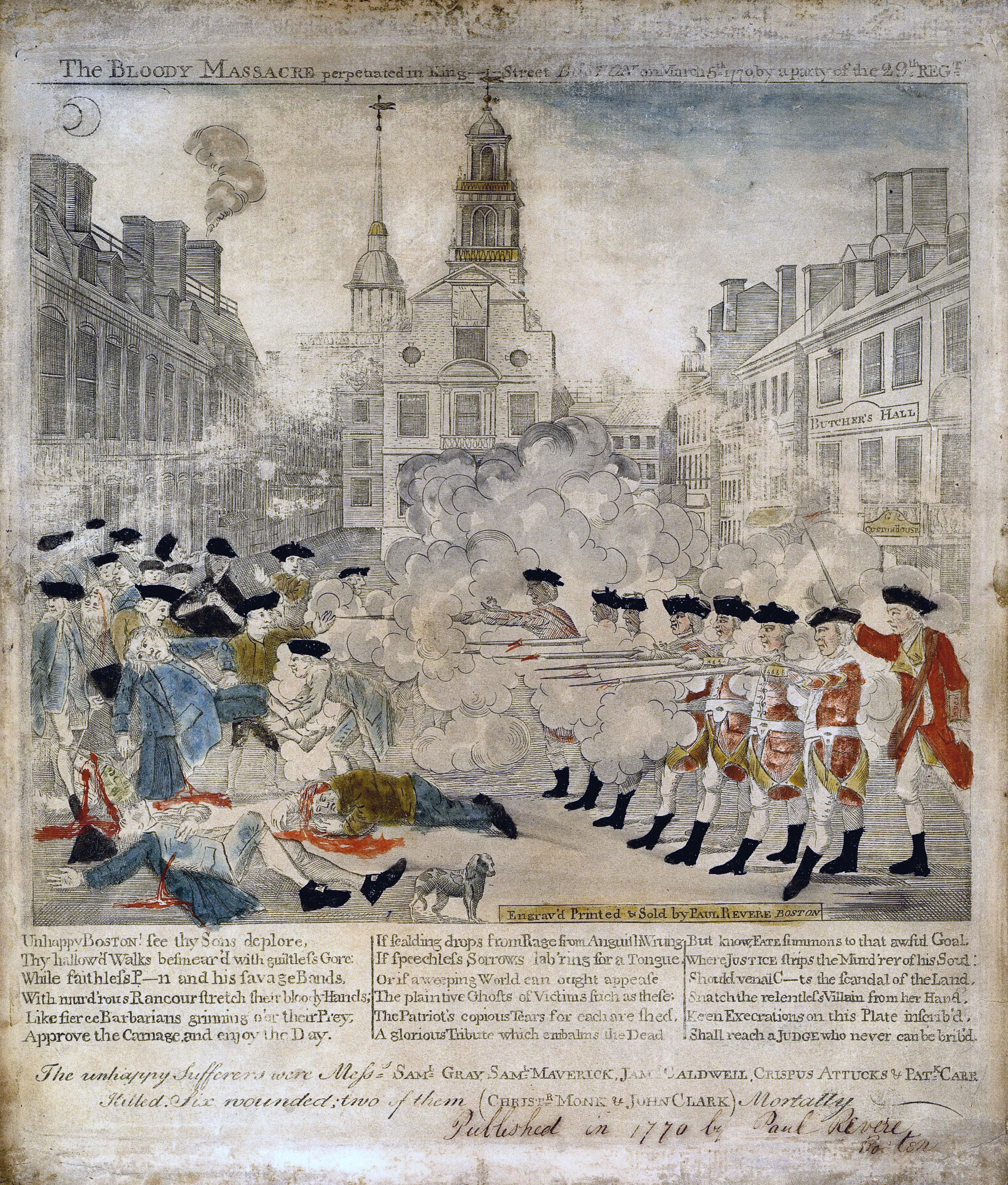
March 5, 1770: Sound familiar? The Boston Massacre.

Happened on a Monday, by the way: how ironic is that?

But here’s the thing: if the Monday is emphasized, the Massacre stands out. Focusing on the normal makes the unusual ever much more so. And in the case of Monday, March 5, 1770, the usual is actually unusual.

Paul Revere, “The Bloody Massacre in King-Street, March 5, 1770.” Boston, 1770

Over the course of the month leading up to Saturday’s event, Drunk Tailor and I spent a lot of time talking about the night watch, peddling, food supplies to Boston, population, and what I might call “the texture of everyday life” in a meeting at work. Any reading you do forces you to realize that the key to the Massacre is how very abnormal everyday life had become in Boston that winter.

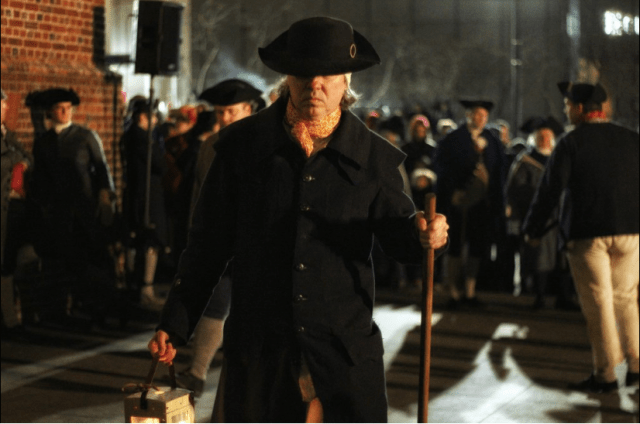
Edward Langford, disaffected nightwatchman. Boston Str
Edward Langford, disaffected nightwatchman. @BostonStrolls on Twitter

By 1770, Boston was an occupied city: Ferguson comes to mind, or Ramadi. Soldiers and watchmen patrol the streets, civil and martial structures clash, and the Sons of Liberty chafe under this control– or attempt at control. Scuffles, fights, brawls, break out. A boy is shot to death– accidentally– and tensions mount higher.  Sailors and soldiers alike commit acts of vandalism. Women are assaulted. Normal isn’t normal anymore, and Boston was always expensive to live in. Even in a city occupied by “friendly” forces, gathering supplies and going about one’s daily business became harder.

People are scared. This is a tense city. Lots of people are just trying to survive. Lots of those people are children. Roughly 16,000 people, and if the estimates are correct, 2,000 soldiers and 4,000 men (white, African, other, free, indented and enslaved), which means about 4,000 women and 8,000 children under 16. Let that one sink in: lots of children, lots of teenagers. I don’t know about you, but a city with a large population of teenagers is going to be tense under the best of circumstances, even in an era before the rise of youth culture. Hormones, man. The kid can’t help it.

So imagine this: instead of a mobile monument and a commemorative ritual that substitutes fists for muskets, the Massacre commemoration expands to include the day, and not just the night. Monday and a Massacre.

Townspeople hurry home as dark falls. Women lug laundry back to customers or to the washhouse, or trundle barrows home, empty, after a day of hawking cats’ meat, oysters, or fish. Tired cordwainers trudge the streets, hoping for meat at supper. A mother scavenges firewood to warm her rented rooms, keeping an eye out for the watch. Those are not Mr Hutchinson’s fence posts, truly.

Photo by Tommy Tringale (Claus' Rangers, 2nd NH, 3rdMA and HMS Somerset)
Photo by Tommy Tringale (Claus’ Rangers, 2nd NH, 3rdMA and HMS Somerset)

Women look over their shoulders, nervous at the sound of hobnailed shoes on the streets. Older men skirt closer to buildings, out of the way of soldiers in the street. Apprentices mock an officer, a sentry responds.

Insults, a scuffle, a boy knocked down. A mob, soldiers, a woman shoved, shots fired, men killed and wounded, blood on the snow.

Murder in the midst of the mundane. More horrifying (in truth, I have never heard Boston so silent as I did on Saturday night) within its context than set apart.

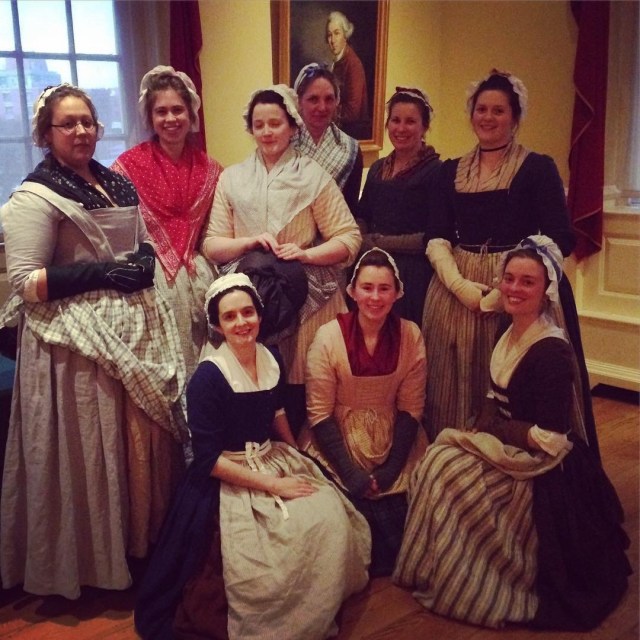
The Women of the 2017 Boston Massacre commemoration. Photo by Drunk Tailor at the behest of Our Girl History

The benefits?
A more complete picture of life in 1770 that puts the events of the evening of March 5, 1770 into deeper context and thus a sharper contrast.
A recognition that history isn’t just about men and conflict.
Understanding that what made living under occupation so hard was more the living– trying to be normal–than the occupation.
And, yes: more for women to do.

Change the Question

photo courtesy Drunktailor

Lately, I have felt like a street preacher exhorting people to change their ways.

Feel the power of the primary source.

Behold the possibility in the unknown.

Surrender to uncertainty.

It’s not for everybody, I know. But rethinking reenacting will change not just you and your appearance, but the way you “do” history. The more you dig in, the more you question and change, the more engaged you’ll be—and the more engaged your visitor will be. The more fun you have, the more fun the public will have.

“That’s great, Aunt Kitty,” you say. “But how am I supposed to do that? I’ve already learned rabbtre sous le main and buttonholes and pinning my stomacher and making soap. What more can I do?”

Stop asking how. Start asking why.

Look, I get it. Those 18th century skills are hard to acquire. Tons of people have better skills than I do, and I willingly and happily admit my general incompetence.

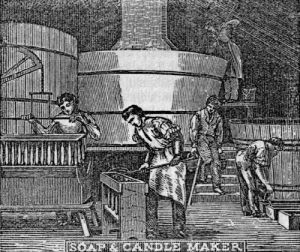
The Soap Boiler and Candle Maker. Popular Technology or, Professions and Trades.

Take soap. I cannot make soap. I know that it takes lye and tallow and heat. I know it is slimey and hot and dangerous and vaguely disgusting. (I’ve done my time with tallow candles, thanks.) So I respect the soap.

But honestly, so what? is the question I ask when y’all tell me how to make soap. I want to know why you’re making soap.

Are you selling it? What will you wash with it? How often do you do laundry? Do you share the soap? And if you’re selling soap, how do people know to come to you? Why is your soap better than, say, Bono Brown across the river? He’s cheaper by a penny, why is your soap so special? If you do sell it, what do you do with the money? Are you married? Does your husband drink the profits?

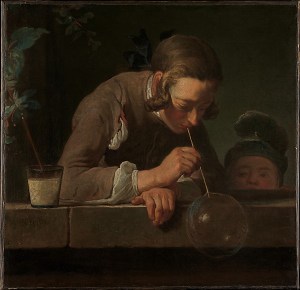
Jean Siméon Chardin (French, Paris 1699–1779 Paris) Soap Bubbles, ca. 1733–34 Oil on canvas; 24 x 24 7/8 in. (61 x 63.2 cm) The Metropolitan Museum of Art, New York, Wentworth Fund, 1949 (49.24)
Jean Siméon Chardin
Soap Bubbles, ca. 1733–34
The Metropolitan Museum of Art, New York, Wentworth Fund, 1949 (49.24) Soap bubbles I can do.

Tell me a story. Tell me why you’re doing something, or why it was done in the past, not just how. Then I might give a damn. But telling me only how a musket works, and not why you have it and where you got it and what you’ll do with it and whether the sergeant yelled at you the last time you failed to clean it and the punishment you got when you failed AGAIN to clean it…. Well, you see what I mean.

Change the question, change the answer, change how people see history.