15 Ways to Have a Bad Living History Event

The Enraged Musician. Chaos has a long history, and often I am for it.
The Enraged Musician. Chaos has a long history, and often I am for it. But not always.

For Organizers

  1. Do not advertise. Having no audience makes an event super-lame.
  2. Have no attendance limits on a closed site. Intense crowds and no security makes an event scary. Add alcohol for intensity.
  3. Do not publish participant standards or a schedule. Confusion and laxity breed chaos.
  4. Publish standards, but do not enforce them uniformly. Creating the appearance that standards are only enforced for people you don’t know erodes trust and credibility and discourages participation, reinforcing adolescent clique behavior.
  5. Do not highlight (or provide) participant amenities like water, toilets, or dry firewood.
John Greenwood, Sea Captains Carousing in Suriname. Good times, no?
John Greenwood, Sea Captains Carousing in Suriname. Authentically bad behaviour.

For Participants

  1. Don’t bring your own lunch, water, or powder.
  2. Don’t follow the rules at a new event. Standards are for chumps. Text your friends while minding a rope line and acting as an interpreter.
  3. Get drunk. Who doesn’t love an inebriate around gunpowder? Safety, schmafety. Besides, drunkenness is authentic.
  4. Smoke cigarettes on the field. You can always hide your hand behind your back, next to your cartridge box…what can go wrong? The captain will never notice.
  5. Make critical comments about the public and other reenactors just within their hearing. Don’t smile.

For the Public
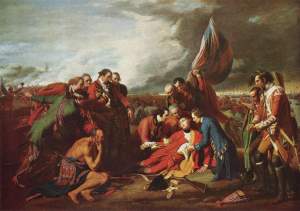
The Death of General Wolfe, Benjamin West. NGC
What, no dogs? The Death of General Wolfe, Benjamin West. NGC
  1. Bring a dog. Dogs love guns, drums, and cannons. “Cry Havoc! And let slip the dogs of war,” right?
  2. Ride your bicycle through the crowd. Make disparaging comments about the crowd interrupting your ride.
  3. Touch things and people. Touch reenactors’ tools, weapons, clothes, children, food. Heck, use their tools. It’s not real, it’s history, so it has to be safe–right?
  4. Interrupt people answering your questions, or better yet, someone else’s questions, and answer yourself.
  5. Get drunk, especially on a hot, humid summer day or night.

Stop.

Breathe.

Think.

Then speak or act. Think about what you’re doing. Is it sensible? Is it kind? Is it how you would like to be treated? Does you behaviour foster a pleasant and welcoming environment?

If not, don’t do it.

A Day in Time

You know what’s wrong with most reenactments and living history events?

They’re not actual days. They’re fragments of many days jammed together like a fractured mosaic.

It’s tough and tiring to imagine and script and play out a whole day—all the simultaneous pieces—but if living history or reenacting events were run as A Day In Time, there would more likely be:

• Roles for More [kinds of] People
• Contextualization of Events
• Boring Bits like Paper Work
• No Time for Spinning
• Moar Drilling
• Rations & Messes, Actually
• Moar Drilling
• Courts Martial
• Small Acts of Drama Amid the Quotidian

Of course, y’all would have to work together…but imagine the power if an entire event ran the way a military camp should be, would have been, run. Orderly books provide plenty of ideas, entire days of stuff to do and get in trouble for.

Stop splitting, start lumping, and these events will, at last, become truly engaging on both sides of the rope line.

Men, Women, and Work

After a late afternoon meeting that left me raw from the way men speak over, interrupt, and dismiss women, I began to think again about a conversation I’d had with a friend at lunch about women’s roles at living history events, primarily military, but also militia, so let’s call them Gun Shows.

14999323655_5d9dcf2259_o

What do women do at the Gun Shows? They cook, for one thing, tied to camp fires. That’s at least a little better than the spinning that can happen, but it’s still not always right. I think a lot about how we’re not truly representing the ways that armies moved, slept, provisioned themselves, and how that affects the roles that women, children, and the (forgive me ) Invalid Corps might play. Yes, there are options: laundry, petty sutlering. There are women doing those things and doing them well, which is fantastic. When I think about how I might complement that, I end up thinking about women even naughtier than Bridget– and I think Bridget must have been very naughty indeed.

Even when you move away from military events, let us say to militia events, similar segregation occurs: women cook and wash dishes, men fire weapons. It just makes me tired, this notion of women forever being pendant to a gun, dependent on housework. It leaves me wondering what else I can do.

Perhaps more Gaskell than Austen, here

That’s easier in a civilian context. Women ran boarding houses, had small shops, ran needlework and boarding schools, worked as seamstresses, soap makers, tailoresses, milliners, mantua makers, painters and silhouette cutters. None of those things belong in a camp, and I begin to think that unless I can figure out a feminist interpretation of women’s lives of drudgery, I will have to give up the Gun Shows completely. And yes, for those of you who know me, that will be a natural transition, won’t it?

Frivolous Friday: Festive but Frigid

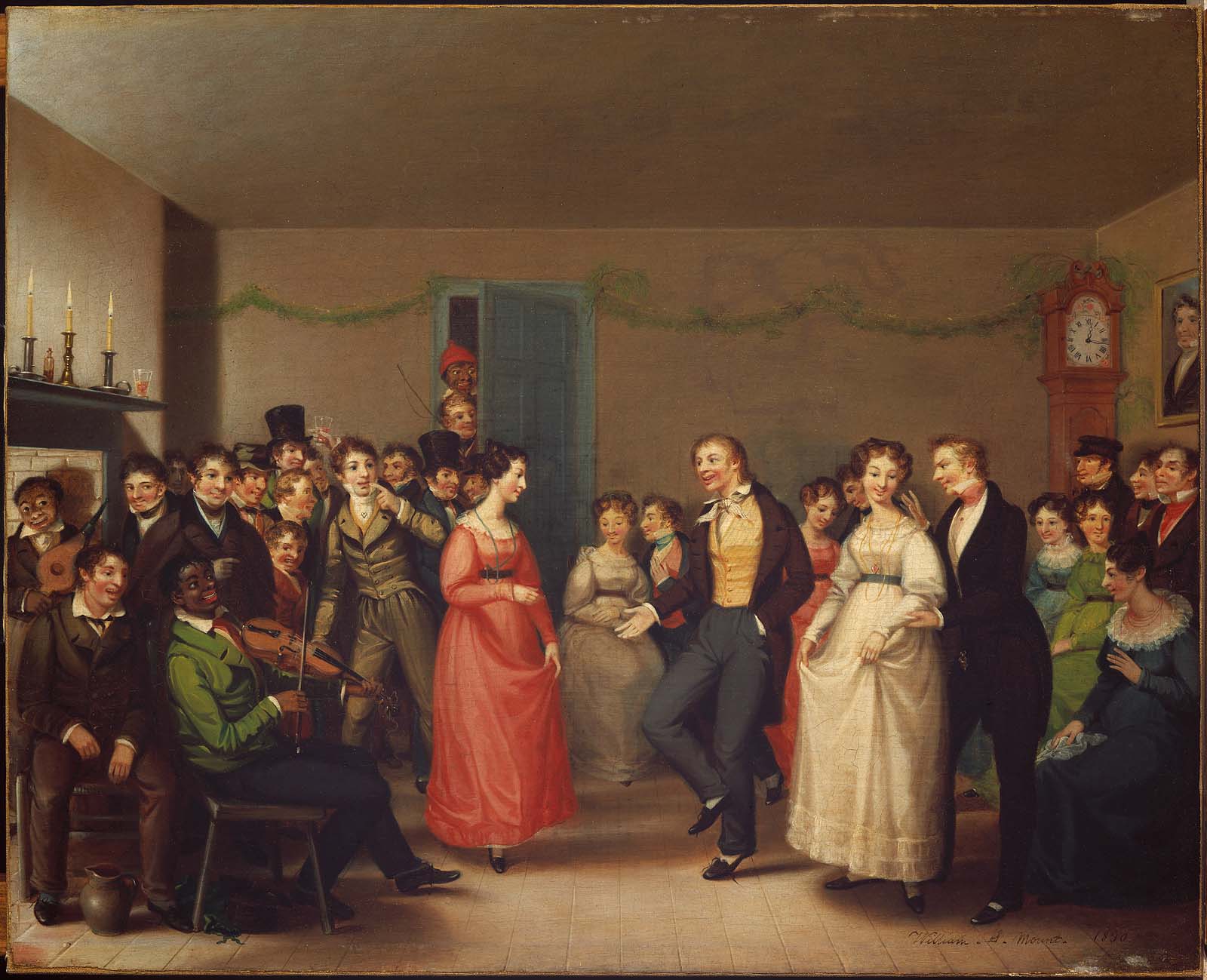
Rustic Dance After a Sleigh Ride, 1830. William Sidney Mount MFA Boston 48.458
Rustic Dance After a Sleigh Ride, 1830.
William Sidney Mount MFA Boston 48.458

I don’t know about your weather, but we’re in full summer in New England, sultry and humid, with the occasional thunderstorm and power outage to enliven the evening. A sleigh ride sounds like fun today– and I know we all just finished complaining about the snow of February– but a brisk ride followed by a dance would certainly round out this week.

1833 approaches faster than expected, so it’s time to pick that back up and get serious. Not just a gown but petticoats and, ideally, a new shift should be made. This may be the project that breaks my resolve and finds the Bernina back on my table for cording a petticoat.

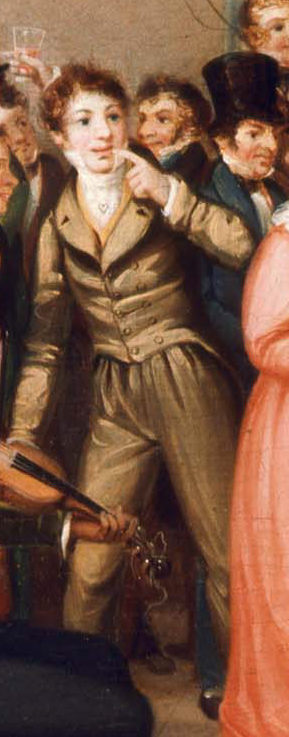
Detail, Rustic Dance After a Sleigh Ride, 1830. William Sidney Mount. MFA Boston 48.458

This image helps define the look of the early 1830s: not nearly as exaggerated as the fashion plates, these dresses and coats seem to fall into a progression from the 1820s– as you’d expect this early in the decade.

The gentleman at the back, in the drab colored suit, sports an interesting pair of trousers. I don’t think I know anyone ready to bust out the cossacks, but Mr Drab may be sporting a slightly modified pair. The collars and lapels show a shawl-shape that seems new, and modified from the more serpentine form seen in fashion plates– or else not yet as developed. There’s a range of headwear, too: tall hats on the left, a soft cap on the right. The Ladies’ Workbook has a pattern for one of those caps. Wonder how hard they are to make?

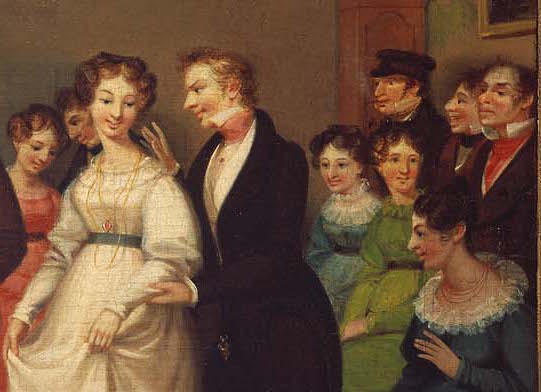
Detail, Rustic Dance After a Sleigh Ride, 1830. William Sidney Mount. MFA Boston, 48.458

In the detail, we can also see the women’s hairstyles, less exaggerated than the fashion plates with their high top knots, and within the realm of possibility for those of us not practiced in historical hairstyle recreation.

So much has carried into this decade: colored neck wear, ruffles or chemisettes under women’s gowns, men’s hair brushed forward. As always, it’s the details that count. Tall shirt collars, rounded lapels, ladies’ sashes, the shape of sleeves. This should be a fun decade to represent.