Medical Monday

The view across Nassau St

Today I’m procedure plus seven, and glad to be on this side of the OR. Surgery is never a fun or pretty thing, and even the most rational action (take care of this now, before it gets worse) seems crazy to your self-protective mind (but it’ll hurt!).

I am very fortunate that my surgeon has a sense of humor and a skillful hand, though when the visiting nurse saw the incision and said, “Wow, he’s good. That’s no Rhode Island incision,” I will confess I was of two minds. One, sad that I was not typical of the Ocean State in the way of a mahogany chair, and two, scornful and proud because of course I went to Boston where they can tell left from right, thank you.
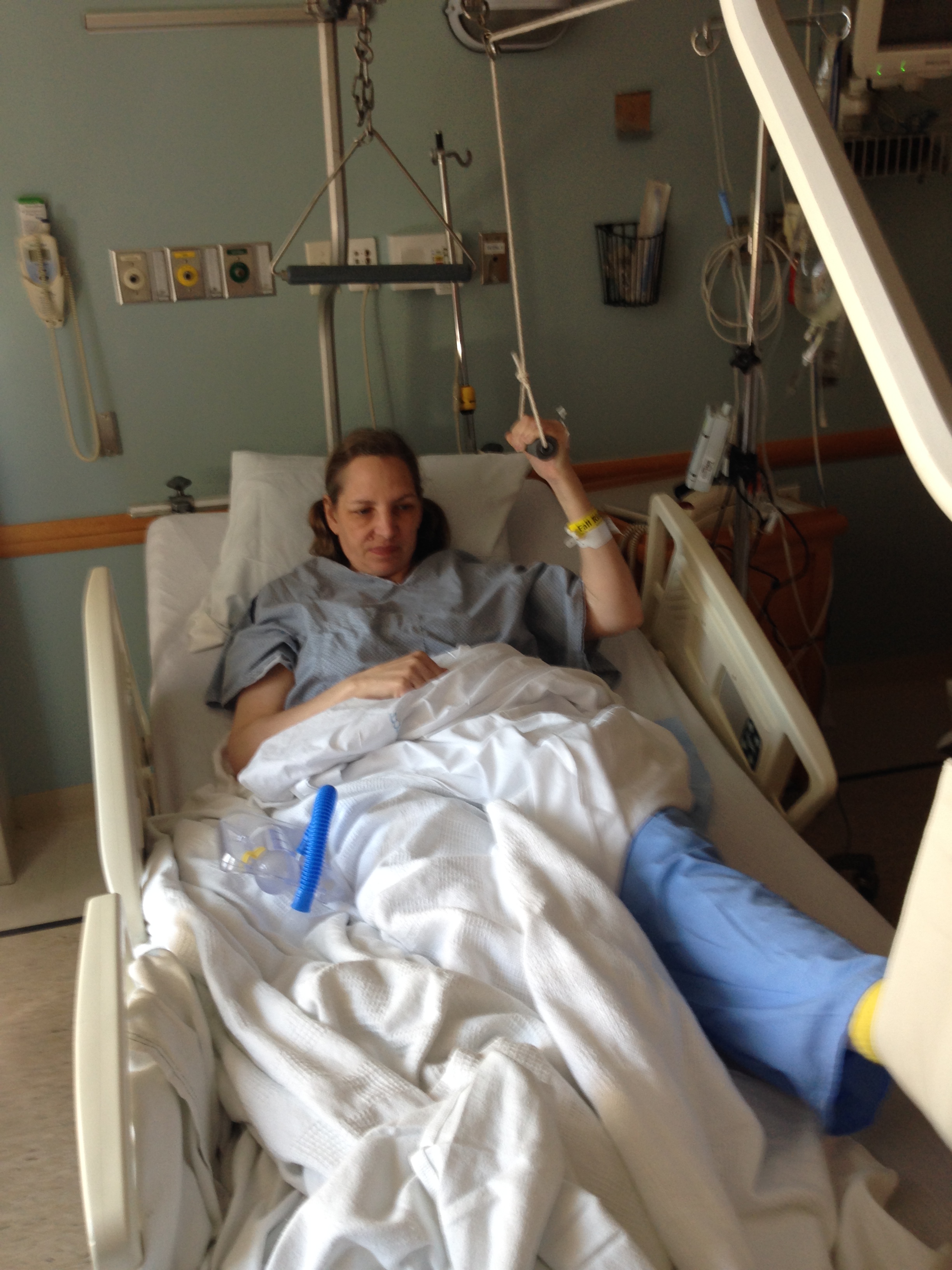
Your foot goes in the sling, and you have to move your leg about.

I’m still not quite ready to read (I work my way through the Times, but I don’t know that it sticks), and I am definitely not ready to sew.

There’s a lot of time spent on physical therapy, reminding muscles that they’re just fine, and can wake up now. In the hospital, you are provided with a trapeze to lift your leg and encouraged to move it about. While oddly old-fashioned, and seemingly borrowed from Foyle’s War, it does work. I can’t slide my leg back-and-forth on the bed, but I can move if someone holds it up just a little bit. (The socks they give you are color coded: yellow is fall risk. I called them duckling feet, and the nurses were entertained.)

Lemon Ice. Delicious.

The other big focus is meals. In the hospital, you call and order your meal, and it is the only place I know where you can order Lemon Ice for breakfast with fruit and coffee, and where the kitchen will call and wake you up to make sure you place a dinner request before it’s too late.

Time becomes a strange thing: often, it’s measured in the blocks between doses of painkillers, and I find my sense of “early” and “late” are altered. The world gets small, focused as it is on basic needs, and small is how it will stay for a while. Every day is better, and this time around so much better than the last, but it will still be a while before I can really read and write and sew and think.

Thanks to everyone for all of your comments last week! They were very nice to read when I got my phone back on Tuesday, but replying was beyond my ken last week.

No, he didn't eat them
No, he didn’t eat them

The next week or two are going to be cat-like for me: meals, naps, exercise, and today, perhaps a trip to the porch. Fortunately, I have experts here to provide advice. Mr Whiskers understands the importance of meals, and fully appreciated the fragrant salad placed before him on Mother’s Day.

Fortunately, he left the flowers unmolested, and moved on to staring out the window at the birds who sounded like they were saying very rude things about him.

Kitty Calash On Hiatus

A nurse on the ward at the Hospital of St. John and St. Elizabeth Hospital, St. John's Wood. Photograph by Henry Grant, 1954. Museum of London Image Number 008798
A nurse on the ward at the Hospital of St. John and St. Elizabeth Hospital, St. John’s Wood. Photograph by Henry Grant, 1954. Museum of London Image Number 008798

Gentle Readers, you may recall this post. In February, it seemed May would never come, but it has, which means a temporary halt to writing, posting, traveling, and sewing.

Thank you for reading, commenting, and sharing till now: there should be more fun come this summer, sooner if all goes well.

Fewer Words

unknown artist, A Country Woman, , Pen and black ink and watercolor on laid paper laid down on a contemporary(?) mount, Yale Center for British Art, Paul Mellon Collection. B1975.4.46

Gentle readers, I am indeed posting less often. I don’t have less to say (take pity on Mr S), but I have less time.

I have a new routine, which includes a morning workout and more cooking in the evening. That workout takes up the time when I used to write (and sew—I’m behind there, too). But I need to get stronger, because in about three months (83 days according to the countdown app) I’m getting a new left hip. Yay!

Three years ago, I got a new right hip and I love it. Even though it took a while to get used to (which was really about bone growing around the implant so it wouldn’t be so cold in the winter), the lack of pain was a terrific change.

18 months ago, my surgeon told me plainly that it was just a matter of time before the left one would need to be done. We spent some time looking at the x-rays in January, and it’s a fine thing to see the bone lumps that thunk and clunk as you move. Oh, that’s why climbing stairs is noisy and painful… But stronger I must get, so for while, more Pilates and fewer paragraphs.

A Visit with the Ladies

The apple never falls far from the tree, my mother used to say, of me and my grandmother, her mother, Elsa. Elsa went to a woman’s college, majored in botany, graduated in the mid-twenties, and went back to western New York State, where she opened an eponymous dress shop.

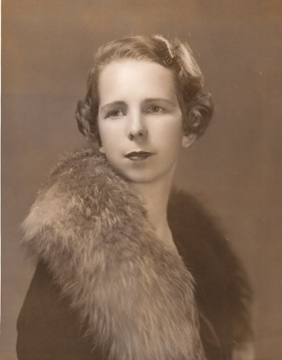
Elsa, Studio Portait ca 1935
Elsa, Studio portrait ca 1935

Elsa managed that shop for more than 50 years, dressed most of the women in town (or at least the type of woman who knew how to dress, and be dressed), and even dressed a woman who later became a donor to the architectural collection I managed in St. Louis.

She was a controlling woman, no doubt, and carefully managed and cared about her appearance. She was also a lady of a steely, ladder-climbing type native to the 1940s and 1950s, full of the foibles and desires of the daughter of immigrants who spoke Swedish at home. The stories they told about her would make a cat laugh: the day the local radio station called and Elsa answered the phone (on air? That part was never clear) to find out that the household had won a month’s supply of white bread.

“Oh no,” she said. “I don’t believe we care for that,” and hung up.

Not of the quality to which she had become accustomed, you see: she insisted on some picky particular white sandwich bread for fancy lunches, and otherwise ate the limpa rye the cook or  Ingeborg made. All the household help was Swedish, as were the women who did alterations at the shop.

Elsa married late, at 35, and her husband moved into the house she shared with my great-aunt and their father, August, known as Morfar after my mother was born. Buying trips to New York for her store resulted in the delivery of boxes from Saks Fifth Avenue, deliveries that came so often, in such quantity that my grandfather questioned her.

“I don’t know,” she said. “They just keep sending them.”

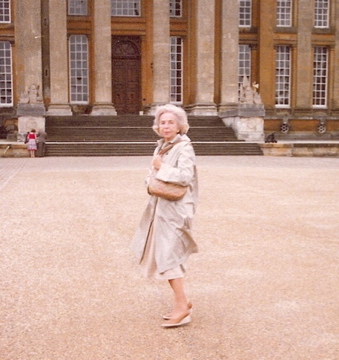
Elsa in Italy ca. 1980

They were boxes of shoes, spectators and sling backs, pumps, court shoes, Cuban heels, stilettos, peep toes, sandals, every kind of shoe you can imagine, and all in brown, tan, beige, ecru, off-white, cream, none of them black or red or blue or green. Beige: that was her signature color, beiges and browns with occasional accents of coral or green or gold. She assigned blue to her younger sister, my great-aunt Gladys, and when Gladys once dared to buy a beige dress she liked, Elsa had a temper tantrum. A quiet one, but effective.

She died before she could meet my husband, died before I was married, and I am sorry about that. But I remembered her this week when I went with my friend (and Registrar) to visit two older ladies, sisters, on the East Side. We picked up a collection of clothing worn when the two ladies (now in their early 90s and late 80s) were babies, the wedding dress their mother wore in 1918, the dress one wore in 1939 that her daughter wore again in 1970, with quite the wrong black moccasins, at a Christmas Eve party in Georgetown.

The sisters reminded me of my grandmother and aunt, and the clothes reminded me of what my grandmother sold and boxed and wrapped in her store. Sitting at the mahogany table for lunch, drinking tea and eating a slightly stale roll, I missed Elsa and Gladys terribly, but was glad for all they’d taught me about how to behave and what the world was like for independent women in the 1940s and 1950s