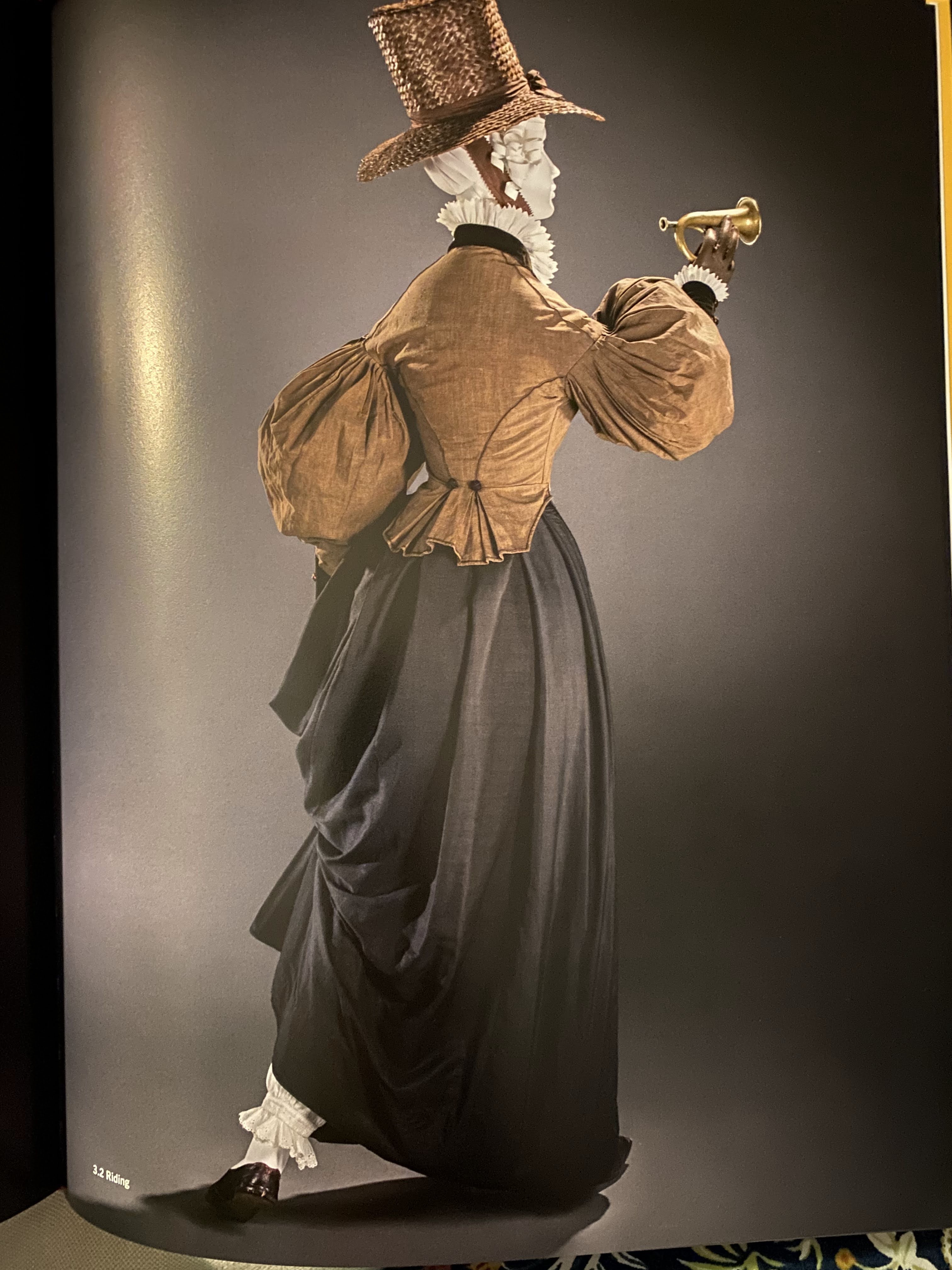
1830s Riding Jacket

There’s a wonderful exhibit winding up a tour, and although I have not been able (yet?) to see it, the catalog was a Christmas present in 2022. One ensemble in particular captivated me: an 1830s unbleached linen riding jacket worn in Boston, MA. The enormous sleeves and oversized hat probably contributed to my fascination, and with a place to actually wear such a thing, making seemed like a good idea. Or at least an achievable idea. 

This journey started in July, 2022, and was finished in August, 2023. Things happened.
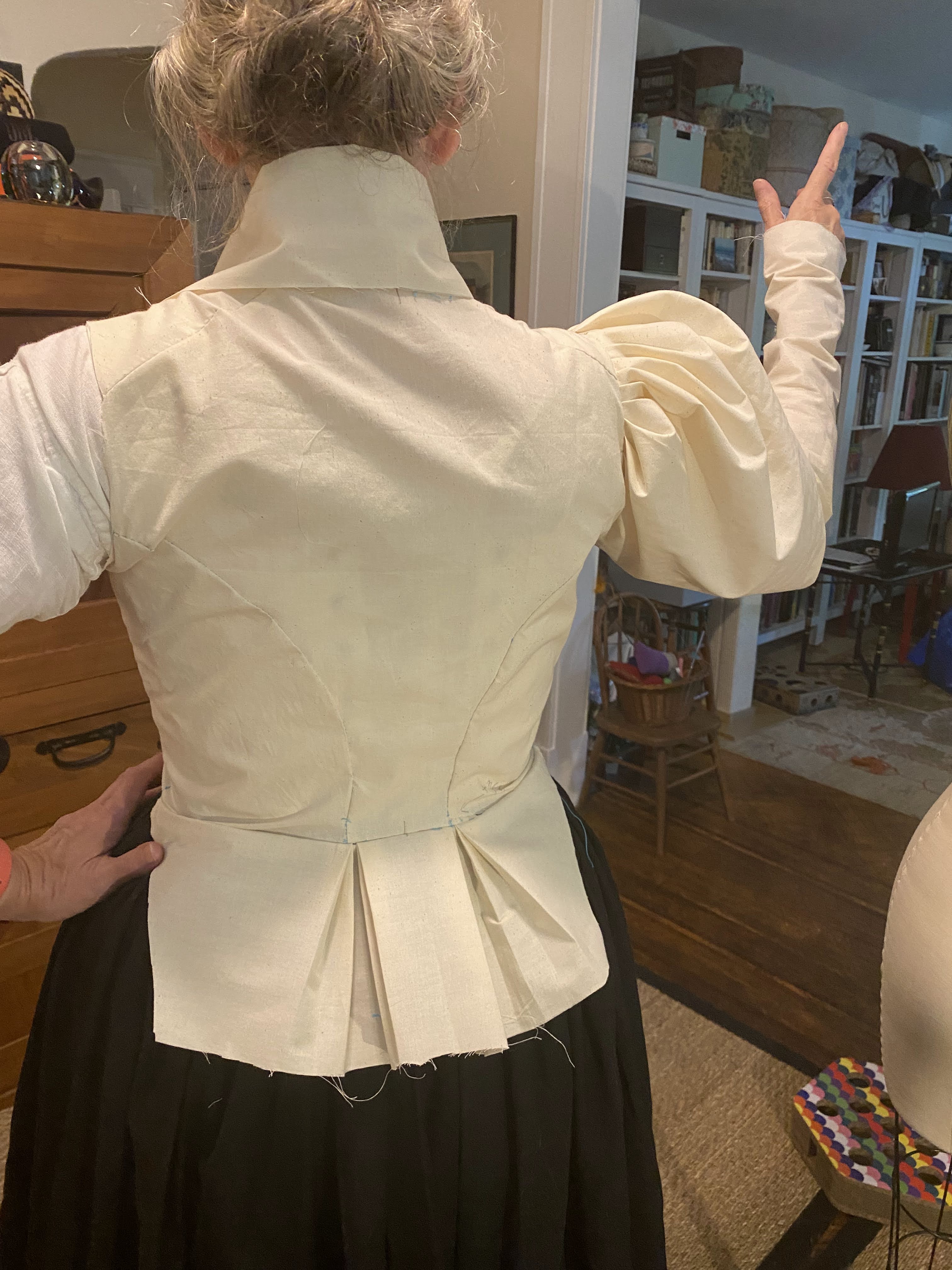
I started with a muslin mock-up, of course, using a previous year’s Spencer a l’Hussard as a starting point. (There is a point when you’ve made enough different things that you can kit-bash your way to many new garments.) The biggest change to the Spencer pattern was in the front closing and collar. The a l’Hussard has a standing collar and fastens with hooks, while this has a fall collar, lapels, and closes with buttons.

There are no published images of the front of the extant jacket, so I looked at both fashion plates and other extant riding habits, ultimately deciding to make a single-breasted jacket.

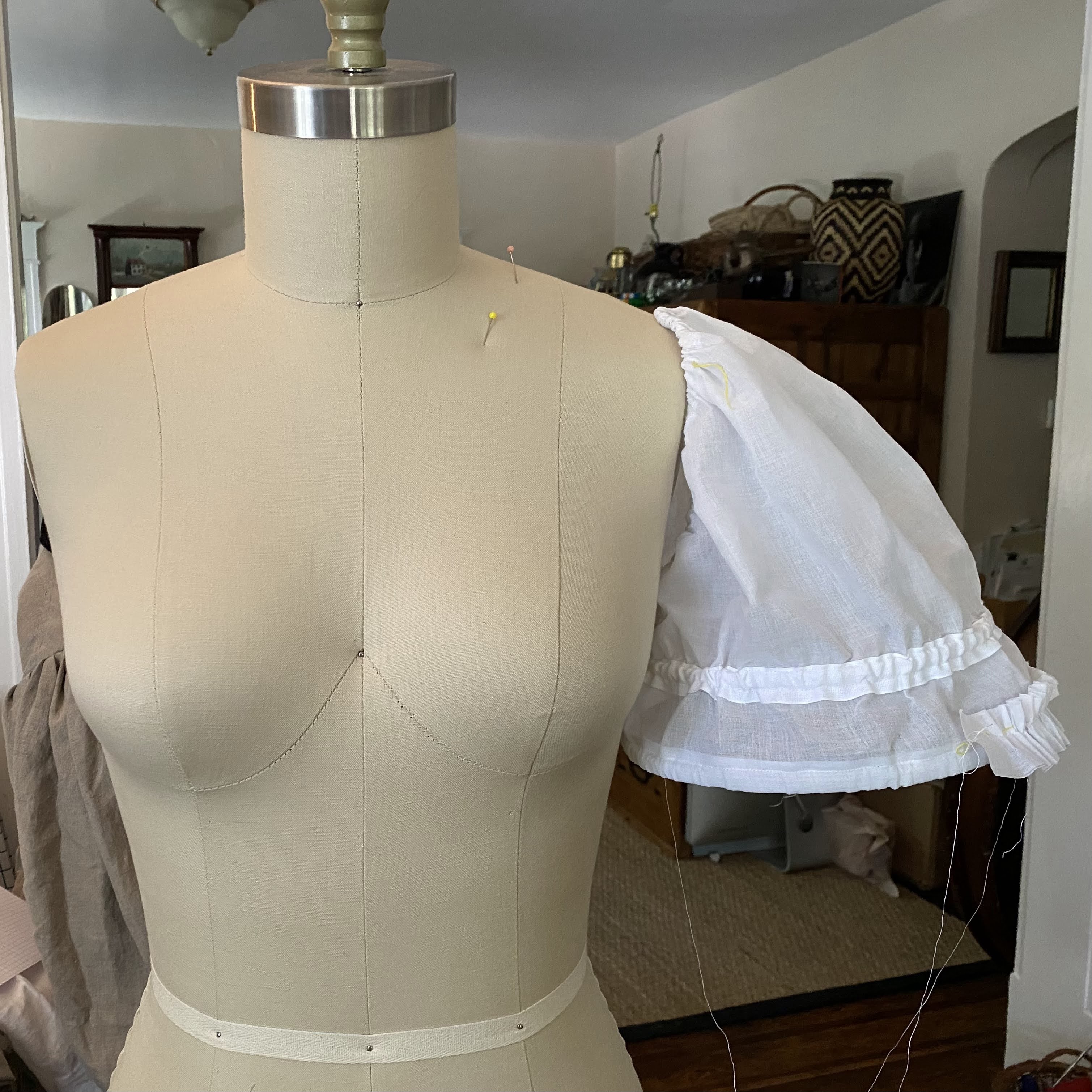
The construction is straightforward, and much like a gown from the period. The bodice is lined, while the sleeves are not. I took advantage of the smaller piece sizes to use up some linen cabbage, and got myself a flashy mis-matched lining as a bonus. One of the trickiest parts was figuring out sleeve supports. I had a melt down over the cage supports, which showed through the lightweight linen and looked awful. I tried them first because I was concerned about the heat down- or wool-filled sleeve puffs would generate for an Labor Day weekend event. In the end, I remembered that I had cotton organdy, and that crumpled up to a nice volume inside some polished cotton covers. These are made with twill tape to attach them to stay straps, if you’re wearing them under a gown; the straps slip over your arms and the puffs rest more or less on your biceps.
Unfortunately, I became anemic while I was making this, and attending a workshop not long before we were supposed to travel to New England wore me out to the extent that we could not travel. Truly annoying, both in thwarted plans and how lousy I felt. Many iron supplements and one appendectomy later, we decided we would make it to the Militia Muster event at Old Sturbridge Village. (It was quite a year.)
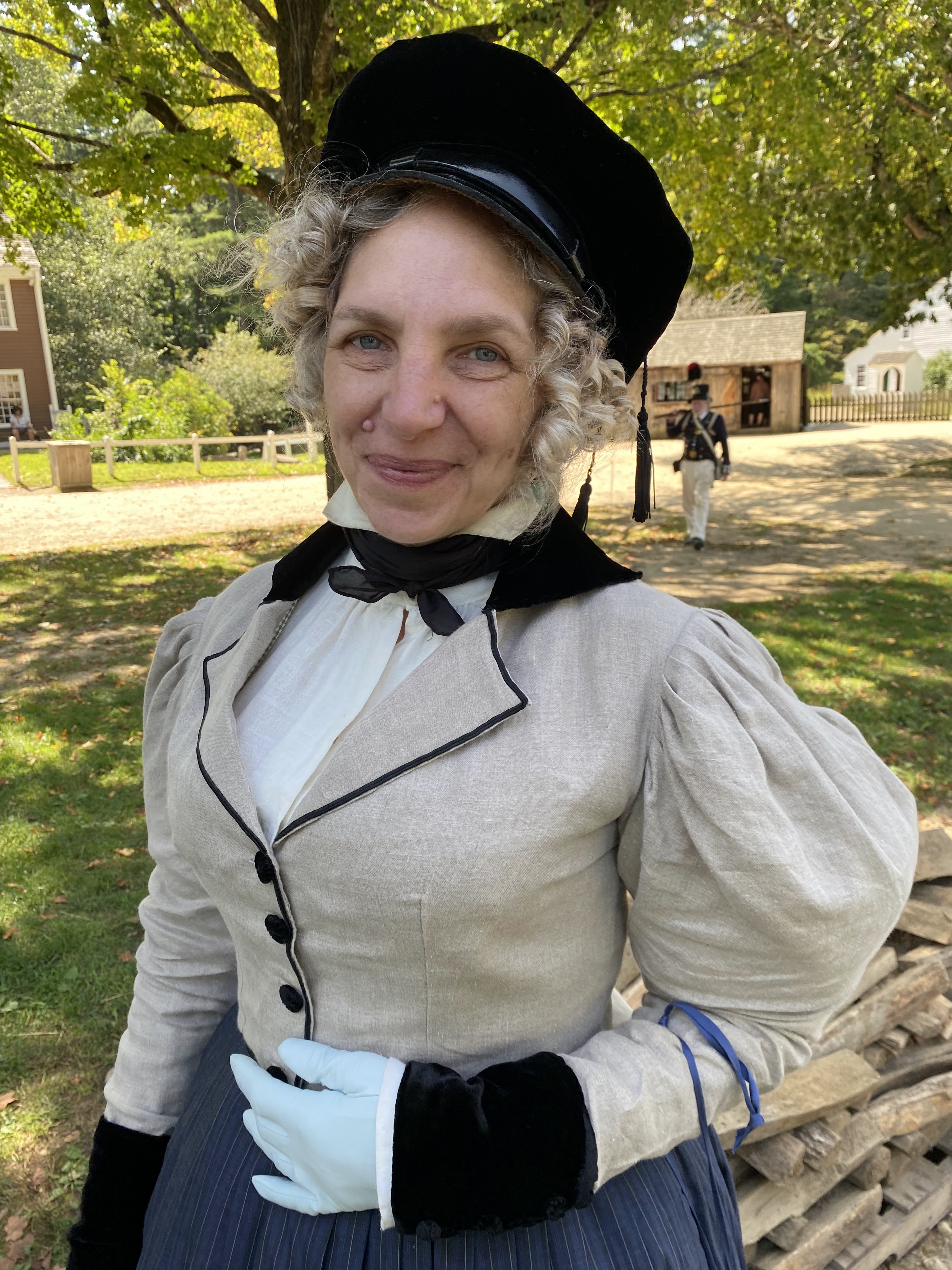
To finish this, I stitched on the black wool tape, outlinng back seams, the hem of the peplim, and the front edges. I couldn’t tell from the images whether or not the original had tape, but decided to err on the side of embellished, especially since the cuffs and collar were black velvet. I added custom black velvet buttons embellished with silk thread, made by Blue Cat Buttonworks. Truly lovely, and not within my skill level.
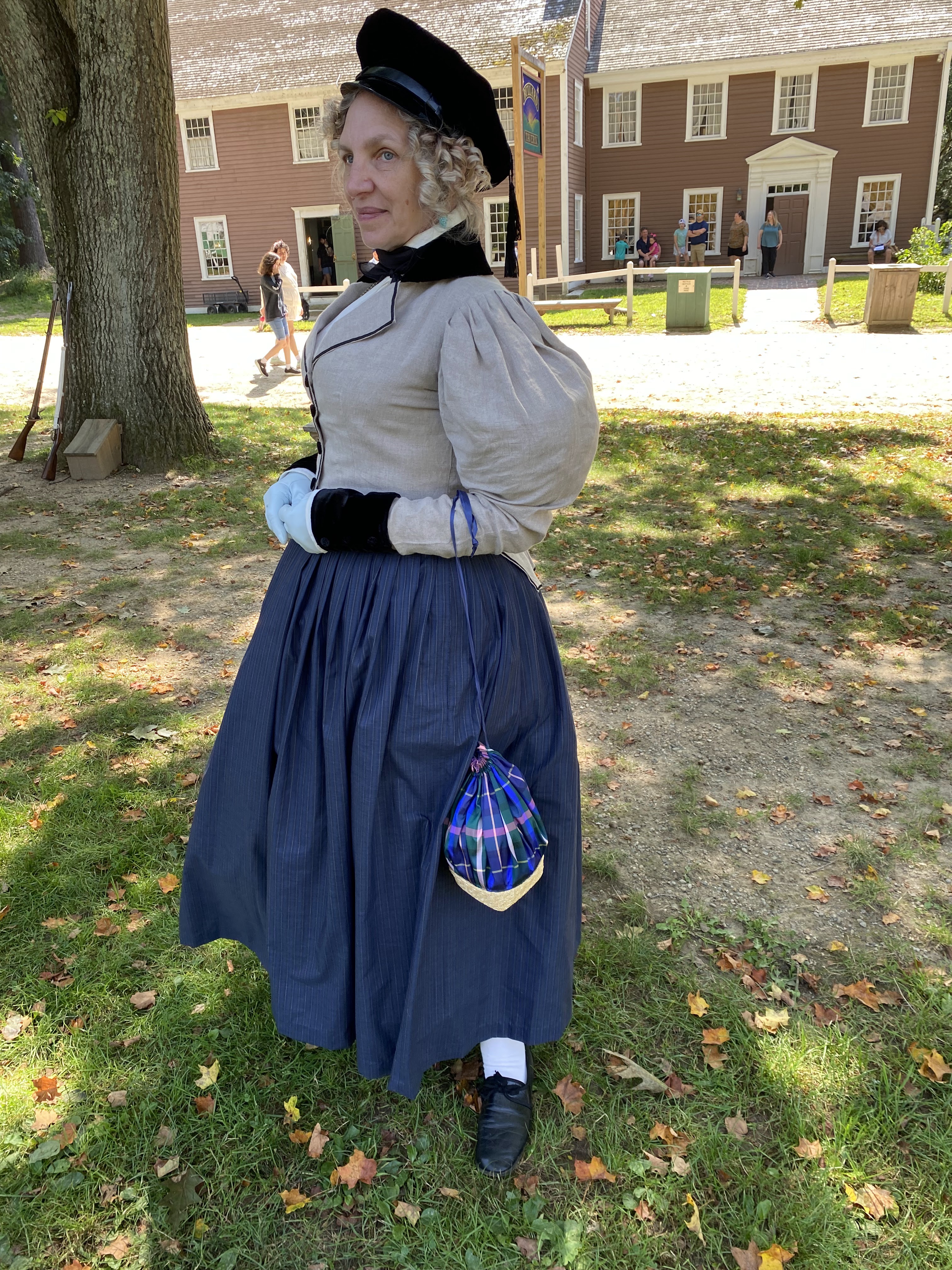
I had planned to wear this with the blue cotton skirt and a riding shirt or habit shirt, but I miscalculated the neck opening and ended up without enough time to restart, so I borrowed a shirt from Mr. K. Luckily the sleeve plumper fit over the shirt, and the jacket fit over all of it! The weather was lovely for early September in New England, and I spent a pleasant day talking about women’s sportswear and the rising interest in physical culture as part of a well-rounded and healthy education in the early 19th century.

The ensemble is accessorized with a black velvet wheel cap, for which Mr. K made the shiny leather brim. The reticule/workbag was made by Anna Worden, and the shoes are black leather Robert Land Regency slippers. The unbleached linen and checked linen lining came from Burnley and Trowbridge, while the skirt fabric came from a Rhode Island mill store remnant table. 

Go Big When You Go Home

heading north

A year after moving, Virginia feels like home, even as I continue to experience accent-based misunderstandings and yearn for different apples. But if home is where the heart is, my home is split between the place where my kid grew up and goes to college, and where I live now. After having all vacations cancelled (thanks, Fairfax County Jury System), we scheduled one for the end of the summer, a chance to visit friends, antique (and buy a new school wardrobe for a college sophomore).

You can never have enough eagles or feathers.

The trip hinged on the Militia Days event at Old Sturbridge Village, with Drunk Tailor mustering as a member of the Oxford Light Infantry or “Ollies.” The OLI has a ridiculously shiny and ornamented shako, which contributes to the appeal of the impression. The early Federal-era militia units certainly appeal to me, with gold buttons, chain, tassels, and plenty of eagles everywhere. There’s a lot of visual myth-making to unpack there, and the fact that the muster re-enacts a sham battle makes it ever so much more so wonderful and New England. This is meta-enacting (or re-re-enacting), and I am all for it.

A new time period meant a new dress. And a new bonnet. And new hair– that last complicated by the new summer haircut. (I had a wool gown from the Turkey Shoot several years ago, but wool in August at Sturbridge is possible but not recommended.) So, what to wear? I remembered some lightweight chintz gowns in the Kyoto Costume Institute collections, and happily there’s one on their website (my copy of the book is still in storage). While I prefer the audacity of many of the reproduction cotton prints, the hand of the quilting cottons is often heavier than I want, so I ordered a print from India– one that has been used for many other dresses in different time periods.

The pattern is a straight-up version of the Past Patterns Lowell Mill Operative’s gown. The first 1830 gown I made was from the State Historical Society of Wisconsin pattern, which did not fit as well over the collar bones; the Past Patterns neckline resolves well and fits like a dream– the only change I would make the next time around is to make the back pieces smaller. I had way more overlap than I really needed, but otherwise, I was lucky that this required no adjustments to fit pretty well. Every now and then, it’s nice to have a break from drafting my own patterns and fighting with fit.

Shoot meat, win a target

That’s almost literally true: shoot a target, win a target would be a more accurate description of Saturday’s frivols in Massachusetts. At least the gentlemen seem to know they’re a little silly.

1830s  shooting party
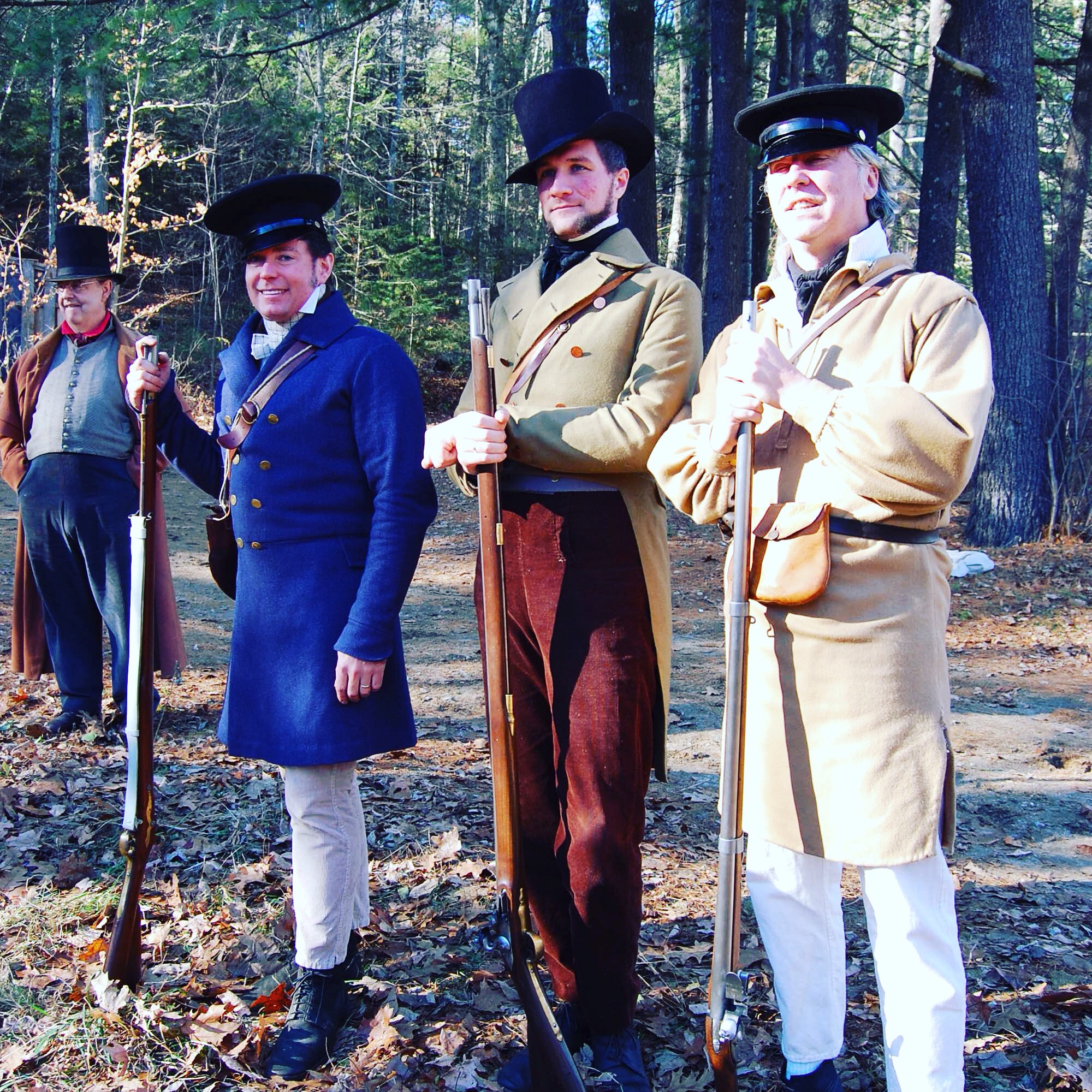
Literal musketeers: Mr B, Mr K, and Drunk Tailor

Of course, this kind of event is typical of late autumn New England. My favorite version is the sqiral/skirl/sqwirl hunt.

Invitation to a squirrel hunt, 1759. MSS 9001-S , Rhode Island Historical Society

In 1759, Cousin Stafford was promised to be handsomely treated at a sqiral [sic] hunt. They would hunt for what looks like the astonishing and possibly sarcastic prize of “‘100 pound in money’ and 15 gallons of Rum and one baral of cider.” Good times in Coventry, Rhode Island that January– just not for sqirals, unless the Rum and cider were consumed before the hunt began.

Silly, in a way, though deadly for the creatures on the wrong end of the muzzle. I found this past Saturday to be suitably silly, and about the maximum level of Gun Show I can tolerate, if only because it has a greater resonance with its historical antecedants than the ritualized commemoration of battles portrayed without adhering to the turn of actual events, fortifications, or troops present. My quest for accuracy does not demand tethering turkeys as targets, and the painted wooden silhouettes with glued-on feathers presented challenging, somewhat light-hearted targets.

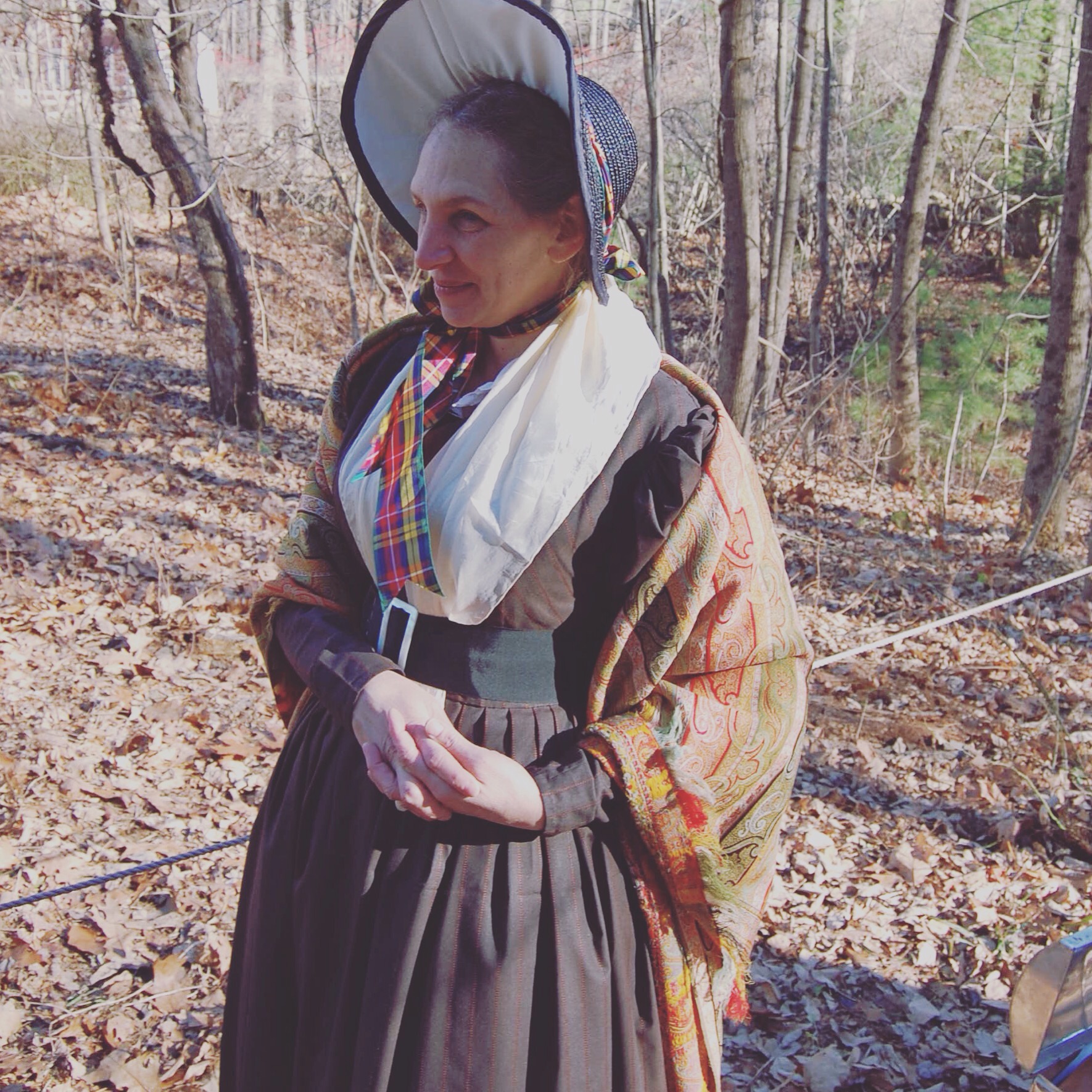
Silly bonnet, silly sleeves, original shawl

To finish out the silliness, sleeves o’ pouf, though hidden here under a shawl. If I’m going to keep doing these colder-weather events, I will need to invest (i.e. sew) wool shifts. I can definitely document one to Rhode Island circa 1830-1840, for whatever that’s worth. Happily, my lower half was plenty warm thanks to Mrs B’s  generous loan of a quilted petticoat (warm legs and a poufy skirt), so only my shoulders were cold by the end of the day.

Now that the last cutout has been hung and shot, and my poufy sleeves retired to the closet, I’m back to finishing up that woman’s winter waistcoat and another wool petticoat for next month. Turns out I have stocking issues I didn’t know I had– which is to say, I am in need of grippier garters (hello, mismatched wool tape!) and some quality darning time. Wool mitts may also be in my future, as I cannot locate either of my pairs of mitts– linen or wool/silk blend–among my things. I’ll be sorry not to have gloves or mittens, but as goes the documentation, so goes the frostbite and chilblains.

Packing Meat

If it bleeds, it leads.
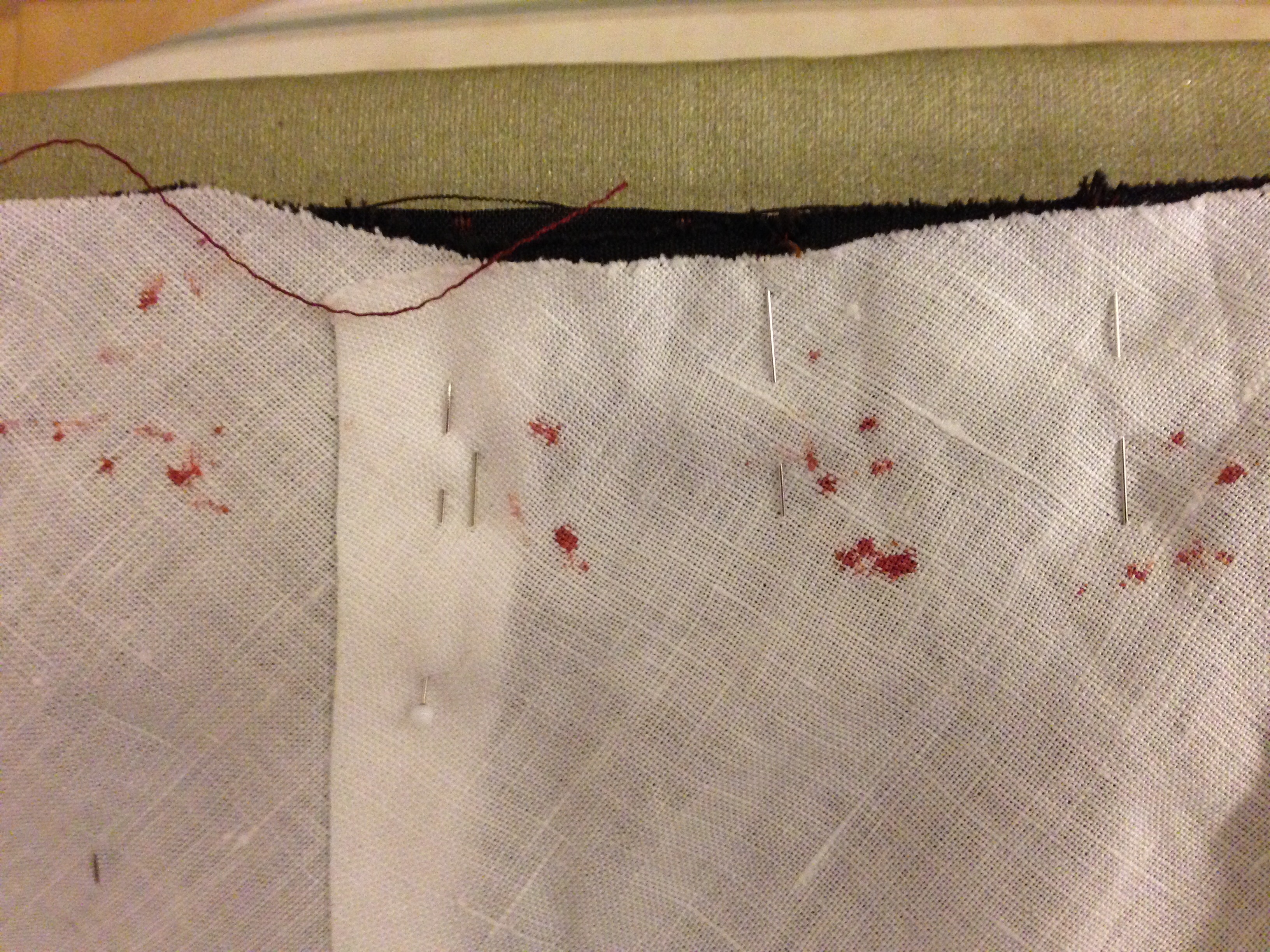
If it bleeds, it leads. Waistband pinning is surprisingly dangerous.

Sometimes you end up doing things for reasons you don’t entirely understand. Remember that brief flirtation with the 1830s? Well… we met again, and this time, I said yes to the dress.

Several friends are on the “shoot meat, win a target” program at OSV this weekend, and I agreed to go along. Yes, it’s a gun show. Yes, I’m compromising again.

Gentle reader, it gets worse. While I had not planned to dress, I rethought this choice last week. Awake in the early morning hours of November 11, I thought about dress patterns, wool petticoats, and the contents of the Strategic Fabric Reserve. One of my wool petticoats fit the waistline of my 1820s dress better than the 1800 dress I made it for, so I figured I was on my way towards being warm outdoors in November.

Spot the error. It's the dyslexic '30s.
Spot the error. It’s the dyslexic ’30s.

I have 1830s patterns, and a muslin was quick to make. Worse yet, once the muslin was made up and tried on over stays, it needed no alteration beyond a slight shoulder seam adjustment. Can you imagine? That hideous decade fits me? Doom or destiny, you be the judge: I had enough striped wool blend to cut a dress and a pelerine… so I did.

The other sleeve's stripes are just slightly off.
The other sleeve’s stripes are just slightly off.

The bodice went together quickly, and the sleeves were fairly easy at the shoulder and arm scye (I really enjoy setting sleeves). It was the length and width along the forearm that threw me, and I ended up having to piece on the lower sleeve. Twice.

The sleeves are where the meat comes in: you say pork chop, I say leg of lamb, the fashion plate says gigot. I did reduce the arc a bit, which makes this a more late-1820s style than firmly mid-1830s. Since some of the folks I’m going with will be wearing a mix of late 1820s and 1830s styles, slimmer sleeves seemed reasonable.

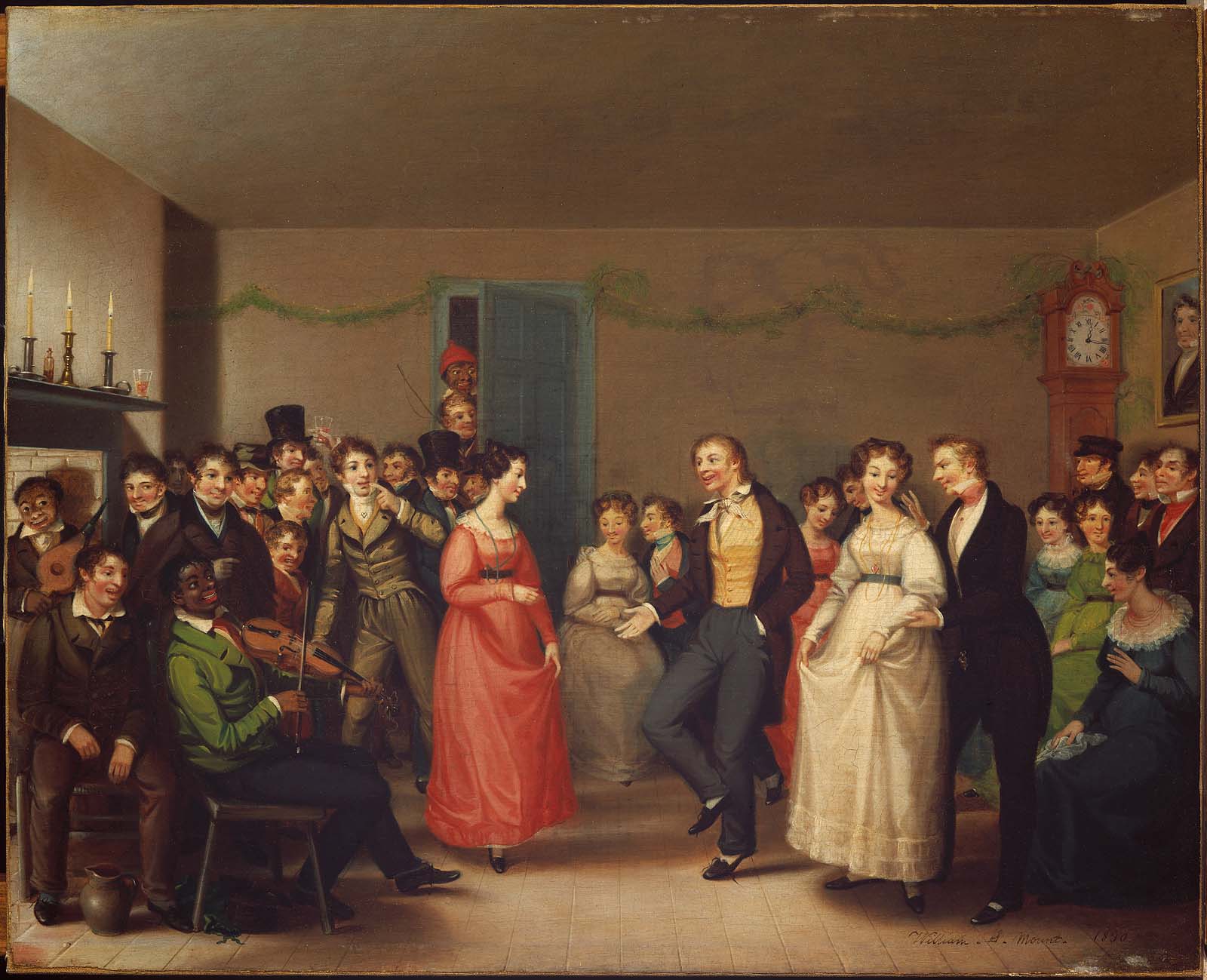
Rustic Dance After a Sleigh Ride, 1830. William Sidney Mount MFA Boston 48.458
Rustic Dance After a Sleigh Ride, 1830.
William Sidney Mount MFA Boston 48.458

More seriously, I’m taking cues from the William Sidney Mount painting I’m so fond of. The women in this 1830 painting have less flamboyant sleeves and possibly achievable hair. Honestly, the things I get into when I lie awake and think. I ought to know better by now…but every decade is a new adventure.

What remains to be done? Backstitching the waistband and waistband lining, hooks and bars at the back closing, the ever-popular hem of enormity, and a final pressing. Achievable, I think, with focus and some lunchtime sewing.