Sandby in Salem (New Jersey)

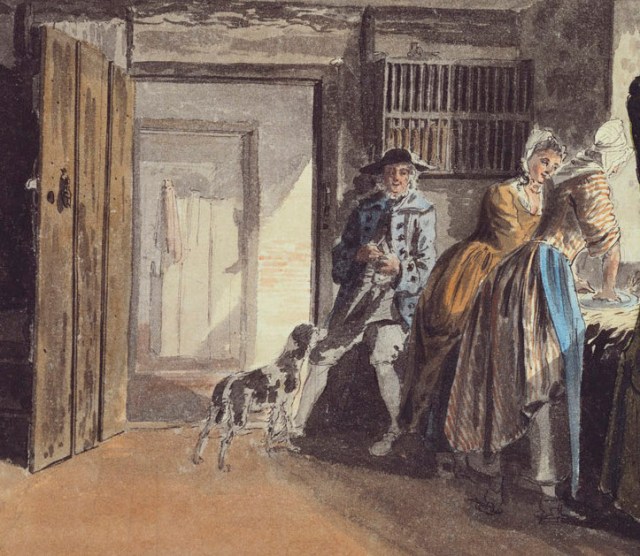
The Kitchen at Sandpit Gate (detail). Watercolor on paper by Paul Sandby 1754. Royal Collection Trust, RCIN 914331

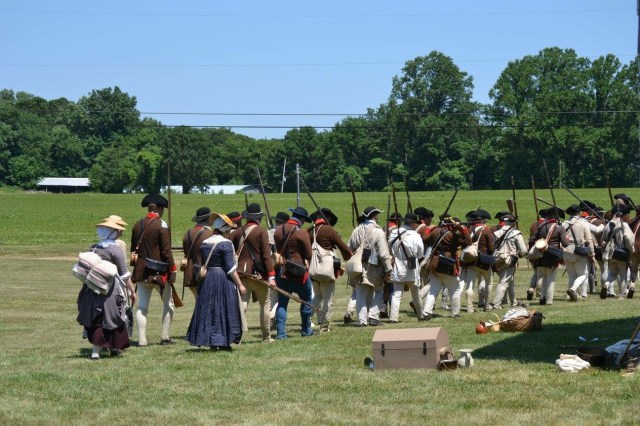
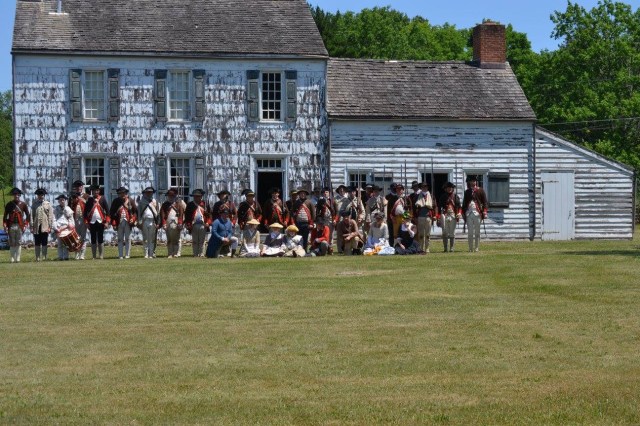
The best times are always those when we are the least self-conscious– not that we can necessarily choose those times. Often they simply happen to us, but if we are lucky enough, we will notice, or someone else will record those moments for us. Last weekend, without even meaning to, we came as close as I may ever hope to get to recreating Sandby images of the Sandpit Gate kitchen.

Mistress F commanded the kitchen: I served as her reasonably able scullion, and, with assistance from Drunk Tailor and the company of the B’s, we managed to produce enough food for several dozen people.


(I baked the pound cake at home, but the egg and onion pies were made on site. I lack historically correct baking apparatus aside from one pie plate.) Cooking in the cabin at Hancock House reminded me of good times long ago— and not so long ago–and how much I enjoyed throwing refuse out a window, and using a soapstone sink. The weekend also brought to mind “show, don’t tell” as it applies to interpretation, and made me think again about how to create more immersive educational experiences for visitors, without becoming ritualistic.

There’s not much time to think those esoteric, grad-school-seminar thoughts when you’re in the midst of cooking, and that can actually be a relief. Instead, better to think of the light, and the landscape, and the time remaining until a pie is cooked through.


The landscape and the light: redemptive, all that space, the blue sky and the grasses. I thought of The Witch of Blackbird Pond, which I haven’t read in decades, for in some ways, the coast of New Jersey resembles the coast of Connecticut. It’s one of the first historical novels I remember reading– it is probably one reason I have ended up doing the work I do, and spending as much time as I did in New England. (You can read it here.) It’s not brilliant literature, and it was nearly two decades old when I read it, but it was certainly memorable.
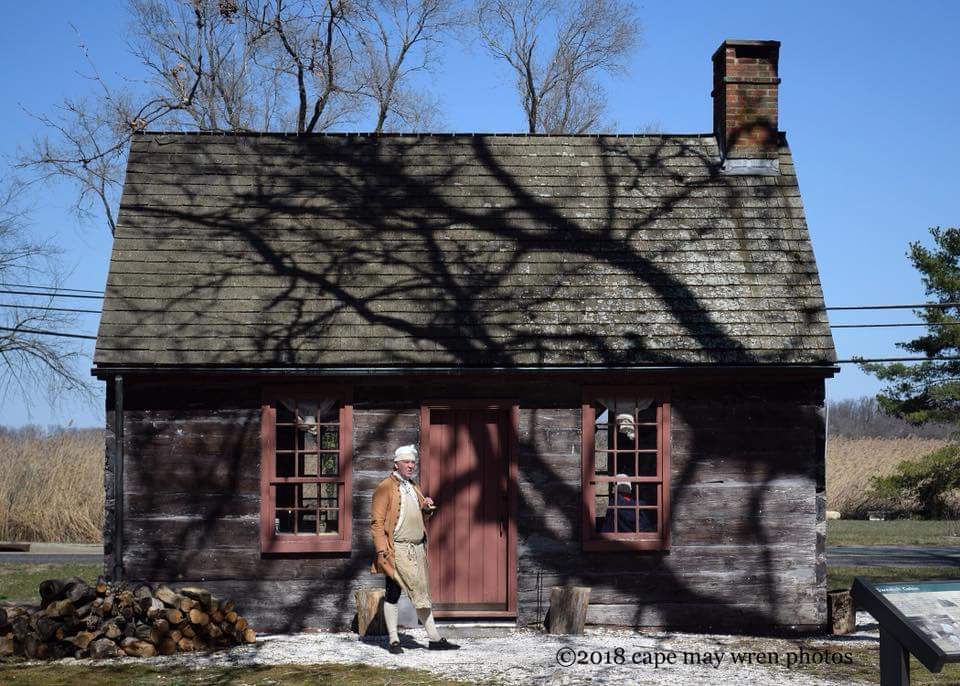
Photos courtesy of HM 17th Regiment, Al Pochek, and Cape May Wren Photography.
Occupy Princeton

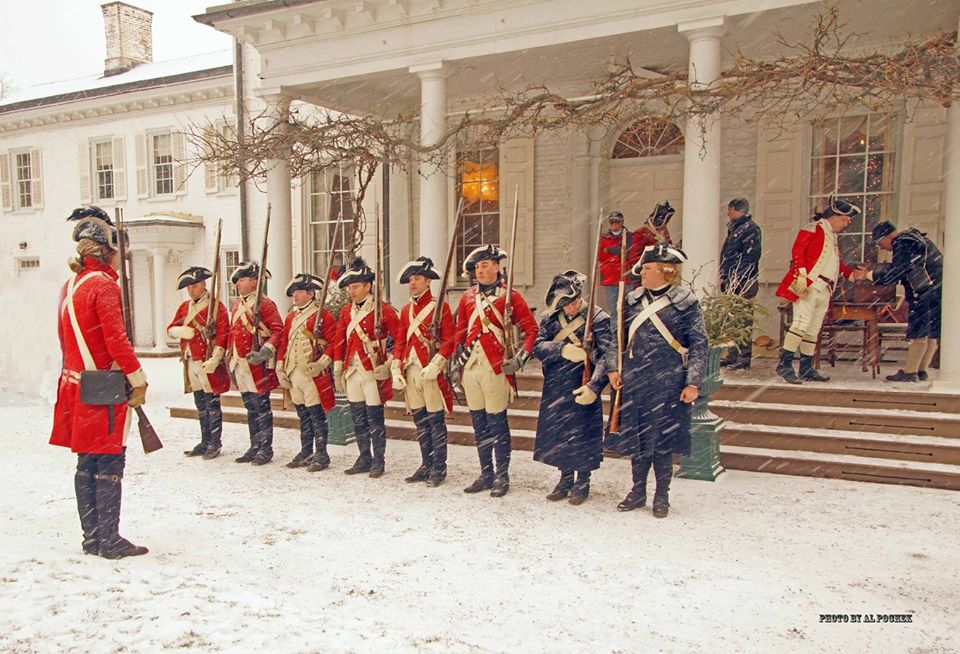
Morven Museum (Richard Stockton's house) under occupation. Photo by Al Pochek
Morven Museum (Richard Stockton’s house) under occupation. Photo by Al Pochek

What if they had a reenactment and there was no battle? Can you really interpret military history without a battle?

Why yes; yes, you can. And you can do it well, engaging and exciting visitors and interpreters alike.

Last Saturday, Princeton was under British occupation once again, as we recreated the winter of 1777 this past weekend. I joined the planning for this  back in October– I double checked– and it really started months before that. Many hands (and imaginations) make events like this work, but for me, the most exciting part was helping to produce an essentially civilian day of programming that interpreted the Revolutionary War in New Jersey. Yes, there was “a musket thing” mid-day, but that wasn’t the focus of the action.

The ink froze, but oaths were to be signed anyway. Photo by Al Pochek.
The ink froze, but oaths were to be signed anyway.

HM 17th Regiment made their base of operations/occupation the porch of Morven House (formerly Richard Stockton’s residence) while the populace of Princeton attempted to go about their daily lives in Palmer Square. Quakers found themselves pressed to sign the Oath of Allegiance to King George III, despite their protestations that they could not take sides in a war.

Quakers and citizens, surrounded by occupying troops, listen to the officer's exhortations. From instagram @thebentspoon
Quakers and citizens, surrounded by occupying troops, listen to the officer’s exhortations. From instagram @thebentspoon

Some citizens seemed all too eager to sign the Oath, though rumor had it that one had previously pledged his loyalty to the rebel cause. (Sources have it that by the summer of 1778, this miscreant will be exacting revenge upon his neighbors as a Retaliator.)

Vignettes were drawn from documentation like the Brief Narrative of the Ravages of the British and Hessians at Princeton, 1776-1777:

“Triumph on that Days Victory the noted third day of January 1777 when they took two men and a Woman that could not stand Prisoners one of the men being much younger then the other & haveing shoes on made his Escape The Woman being unable to march they left her so they had in truth none from Princetown to Crown their Conquest with but the poor Old Captive without shoes. This is the Renowned Victory Obtained that day near Prince- town Which (it is said) is amply set forth in one of the New York newspapers 1 to be a Compleat victory obtained by the Regulars over the Continental Army so far as I have Related is true according to best Information that I can get, And so far I agree with that news Paper that the Regulars gained a Victory over two men and one woman. …. In takeing these three Prisoners they violated three of their Officers Protections for the two men had Each of them one, and the Womans Husband had another Besides they are all Reputed Quakers…” (Brief Narrative pp 18-20)

Lance Corporal Becnel proved himself in the afternoon.
Lance Corporal Becnel proved himself in the afternoon. Photo by Al Pochek

The constant snow kept our shoes on, but goods were stolen, occupants assaulted, soldiers beaten, prisoners taken, and justice served.

Hardy visitors followed us from Morven to Palmer Square and back, and one of the most exciting moments of the day for me was when a visitor said, “Wow, so the [British] soldiers didn’t really protect you, did they? You couldn’t count on them to keep you safe!” This seemed a pretty good summation of our interpretive goals:

  • The British failed to win the “hearts and minds” of New Jersey residents because they turned liberation into occupation.
  • The British lost the war in New Jersey because they treated everyone as a traitor.
  • The revolutionary war in New Jersey was as much a civil war as a rebellion against the crown.

I count that a major win for living history.

Trigger Warnings

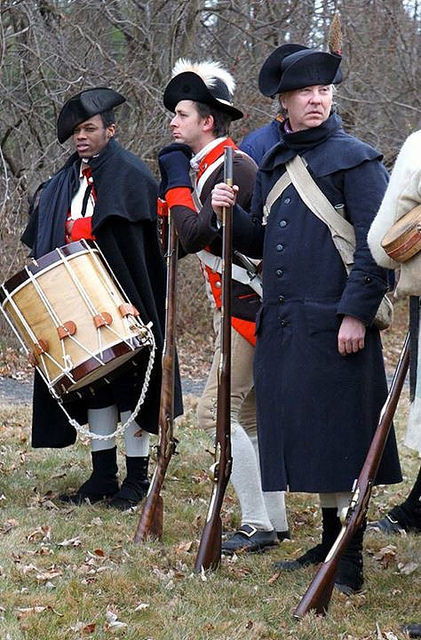
Reenactors portraying Philadelphia Associators take part in the real time tour of the Battle of Princeton, Princeton, NJ, January 3, 2015. Beverly Schaefer, Times of Trenton
Philadelphia Associators January 3, 2015. Beverly Schaefer, Times of Trenton

It’s upon us, this Princeton event, and Peale’s, too. And the overnight march I missed two years ago. I’m so glad to be part of this, and I’m interested in seeing where it goes from here– partly for me, and partly for the way we do living history. Now, I’ll miss some of what I’d like to see (like Mr. White’s tour of the second battle of Trenton, but when you’re plundering in Princeton, you’re committed.) A formal media release may be downloaded here.

A little more than two years ago I was asked if I wanted to join the Peale’s March to Princeton. I said no, because women couldn’t march and that was the experience I wanted. Someday, I will have the hallucination that allows me to square experiential learning with authenticity, and, at the same time, the world will care about having a women’s Tour de France.

Anyway: there’s a point. This event became a pivot point for me in thinking about accuracy and authenticity of all kinds.

Accurate impressions rendered in a place of shared value will transport you to the past, and give you insights you did not expect. That is the point of these exercises: insight and understanding. It’s how to get high on history.

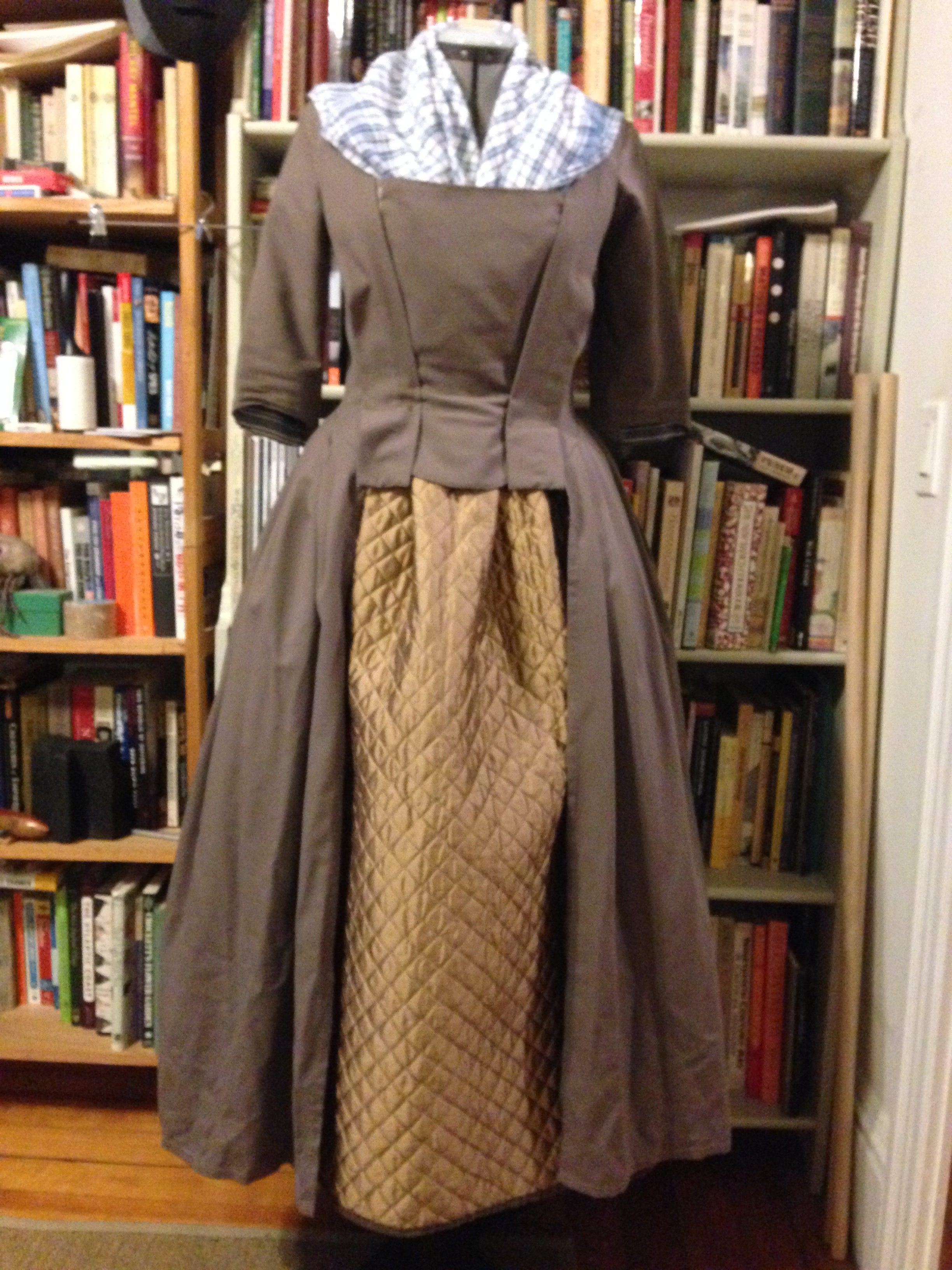
Test run: bedspread petticoat. Girl's gotta keep warm.
Test run: bedspread petticoat. Girl’s gotta keep warm.

In Palmer Square and at Morven, that means stealing (from each other), soldiers arresting Quakers, Loyalists and Whigs insulting each other, arguments about loyalty oaths, and women being attacked. (When you see the grey gown grabbed off the square by the red coat, please know that this is acting.) It means rough justice in a drum head court martial.

Will it work? I think so. Will it change my life, the way not attending two years ago did? That will depend on what I regret.

Indocent Exposure

IMG_7288 Or, Confusion into Confusion.

Docents and volunteers: the backbone of any non-profit organization, right?

Well…sort of. I’ve worked with docents for more than a decade, and along the way I’ve learned what does and doesn’t work. What does work is intensive engagement and participation, though the occasional shock to the system can be necessary and useful. For special events, though, and in cases of turf, diplomatic relations must be opened with the enemy early and often.

That is not to fault the organizers of the “Order Out of Confusion” event this past weekend, for I was one of the people organizing the civilian, non-marching end of things, and due to turbulence in my own life, I failed to plan adequately in the arena of Docent Relations.

IMG_7296

We had a Retaliator, a Pine Robber, a Quaker, and a Slave-Owning Patriot. We managed a debate or two over slavery. We begged people to take the Quaker home with them. But we did not occupy the house, for the house was occupied by red-shirted volunteers who gave at least some of us the five cent Condescension Tour punctuated with, “But I suppose you’re not interested in that.”

IMG_7298

Actually, that look was one of sheer disbelief, sir, at the farm implements in a bedroom, the tidy piles of perfectly formed ashen coals under the cookware in the fireplace, and the roomful of flax accented with a snake charmer’s basket. In my line of work, I enjoy house tours, but find they generally go better when tour guides don’t point out all the flaws to me. Complaining about the state (which owns the site) and onerous regulations that make repairs expensive will also increase my look of horror and disbelief. But really, if you want full-on horror, kindly inform the Quaker that Japanese POW camps “really weren’t that bad” because we are thriving on confusion today.

IMG_7297

The volunteers were thrilled by the marchers, and were clearly very positive about the event. They love Craig House, and the battlefield, but that sense of pride and ownership made it impossible for them to share the house with us, or to see us as anything but invaders– an Army of Occupation in our own right.

It’s my fault that I’m not an agile enough negotiator to convince recalcitrant octogenarians that my friends and I are safe to play with and will respect the house, and it’s my fault that I didn’t put in place all the lessons I’ve learned in the past decade. Then again, I don’t know that I would have had time to travel for meetings with the volunteers to generate buy in and support, given the maelstrom that was my life this past spring.

IMG_7289

But it’s a lesson well-learned: interpreters will read voraciously, acquire tons of material, and turn that research into appropriately-dressed characters making interpretive points, but unless you work with the site and its volunteers or staff to create agreement about presentation, you’ll get about half the value of the work you put into the planning.

Many heartfelt thanks to everyone who participated, and to the organizers for letting me try out my interpretive model. Next time, I know I have to work with the site staff and volunteers to make sure that execution matches vision.