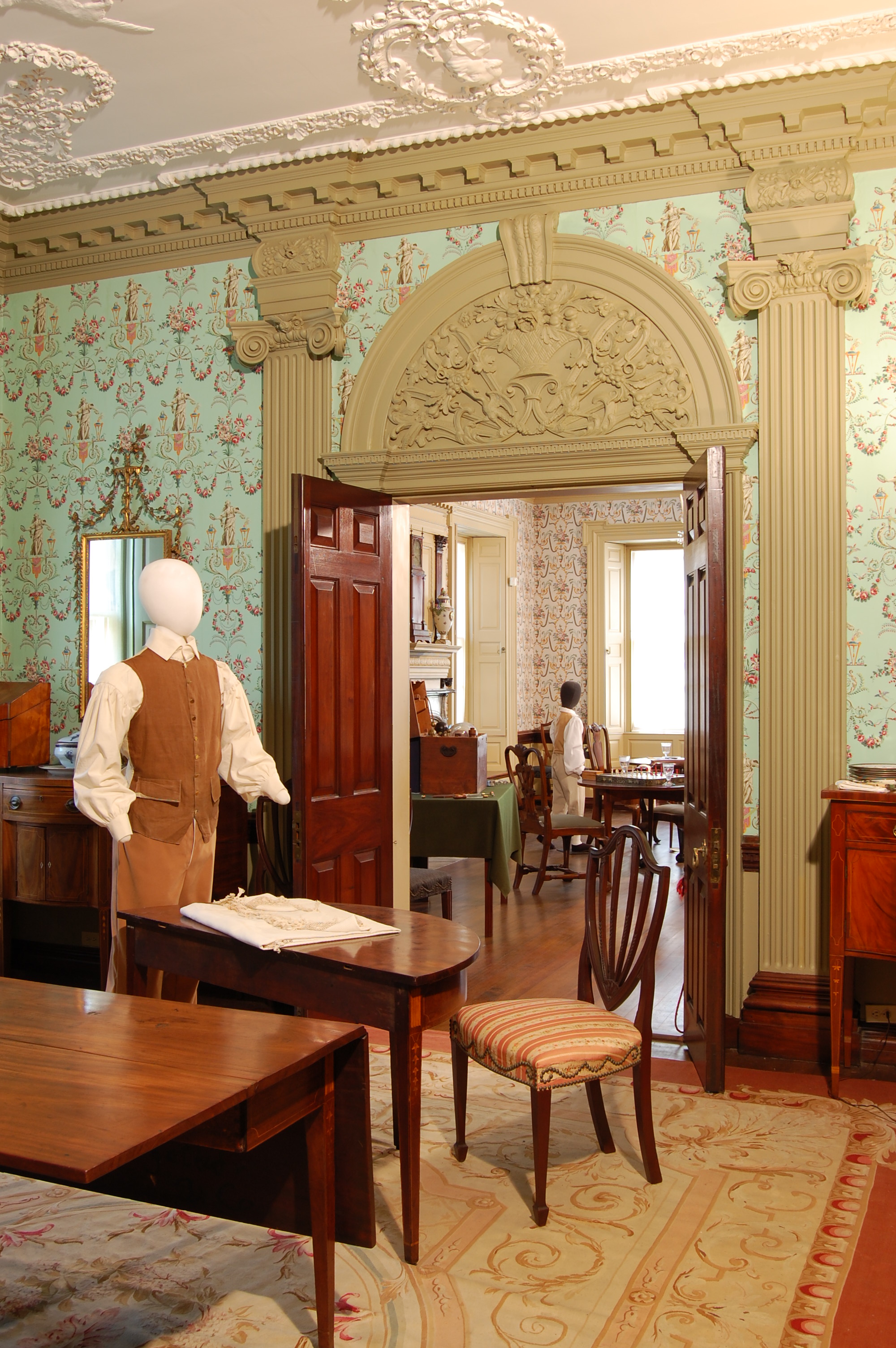
Glaciers in the House

IceDamFeb2015

I don’t mean the ice dams and icicles that plagued the house and streaked the service ell’s windows as they melted: I mean change.

I’m reading The Half Has Never Been Told (it kept selling out, so I only just got a copy), and thinking about the representation of a past that people would rather forget, and sometimes actively deny in the North– and the South, as you will tell from reading African-American History Fail.

Change in historic houses can be glacially-paced, as staff and docents alike resist changes to interpretation. Resistance to change is usually about comfort and confrontation, especially when the change is large.

I get that: Oh no, new stuff to learn. What was wrong with what we did before? But docents and staff get comfortable and loose sight of the context of the content they present. They say some interesting stuff.

Most jaw-dropping of all: Sometimes I like to pretend I’m Mrs Owner of the House. That one was creepy, to me. But it did give me some insight into the “ooh, wish I lived here” backwardly aspirational tour motivation.

How would you feel if living here meant you owned and traded slaves? Defended the slave trade in Congress? If a small girl had the care of your horses? We don’t ask those specific questions, but I think we need to. Slavery is slavery.

In the 1790 census of Rhode Island, there are 948 slaves, representing 1.3% of the population. That would be 13,000 people of Rhode Island’s total population today, less than the city of Central Falls (19,383 in the last census, and one of our smallest towns).

We think it’s a small number, but to those 948 people, being enslaved was everything. I don’t necessarily want to make our visitors feel personal guilt about slavery– that’s up to them–but I do want to them to think about what slavery meant, and what it did, as an economic system.

I want visitors to understand that the beauty of the house they see is built in part on the ugly and forced exploitation of a class of people. If they relate that to the rest of the world they inhabit today, even better. I think we owe at least this much to every site where enslaved people worked or lived.

Two Shells, One Man, Dozens of Stories

Yesterday I felt like an anthropologist on Mars, or perhaps more precisely, like Ariel and her collection of human objects, as my friend suggested.

TALY. Anzio. January, 1943. American soldiers rejoicing upon reaching Italian soil, after their beachhead landings. © Robert Capa © International Center of Photography

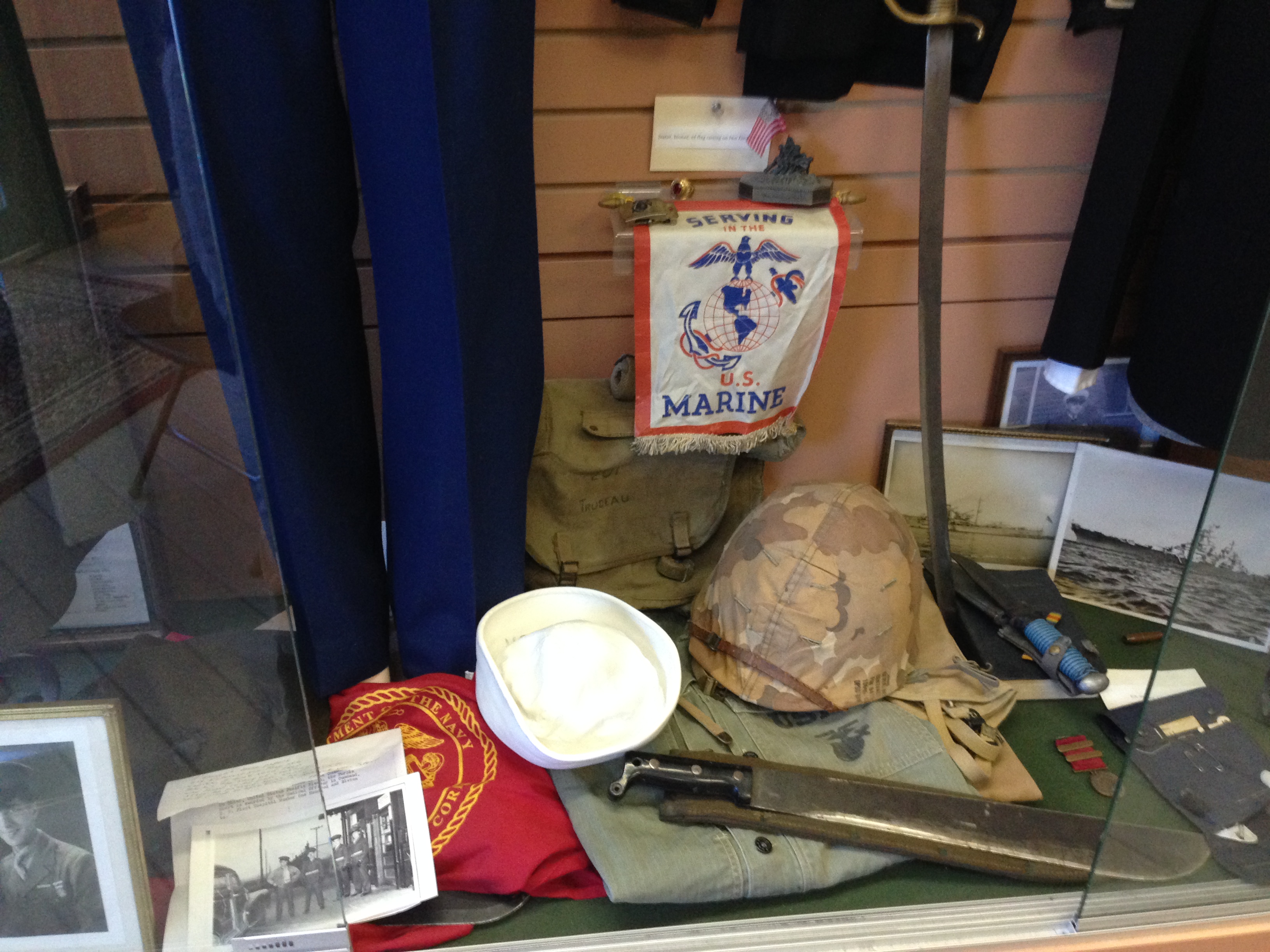
We are inventorying a collection of militaria currently on display at a museum in the northern part of our tiny state, and while I recognize most of the things, I don’t have the intensive knowledge that some of my friends and acquaintances have to recognize the subtle changes in accouterments over time. Fortunately, plenty of things are marked: the military tends to do that. And fortunately, there are books and the Google and I remember enough of what I learned to ask the right questions.

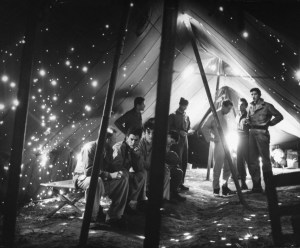
American soldiers inside hospital tent riddled w. holes caused by German schrapnel from long range gun attacks which killed 5 & wounded 8 patients in the tent. Photograph by George Silk. Life Magazine

The most meaningful items are the ones that have been personalized in some way, or that were never issued at all. There were, for a long time, two small shells picked up at Anzio and Nettuno, each white interior curve labeled in ink, one Anzio and one Nettuno. I could only guess at their significance, as you probably can too: what I did not know was that the soldier who picked them up was only 18 in January 1944—and how appropriate it is to have returned them to his daughter this month.

Not about Anzio, but this is a typical case.

The cases are packed with things he and his friend collected, all of which had some meaning to them: that guy, this place, that story, these memories. The soldier who picked up the shells could never tell his daughter or granddaughters any of what he had seen, though later on, he began to tell his nephews. But he assembled this collection and in that, I think, he was telling us all. Our job at the museum is to translate mute, general issue objects into meaningful individual narratives.

Same Place, Different Day

We were doing some preliminary planning for an event this fall, and we were considering recreating the 1803 funeral of Important White Guy. Our event is in October; the funeral was in September. Somebody asked me, “What does it matter when we do it?” and I didn’t respond nearly as gracefully or eloquently as I could have.

Why does it matter? Does it matter to anyone but me and my cohort?

It does, and here’s one reason why: When interpreting the funeral in late October, perhaps a member of the public will ask, “When did he die?” Can an interpreter really say “September 20” and not expect a slew of questions about how long the body was kept and why the funeral was delayed and wasn’t that a health hazard? Can the event orientation start out with “We’re doing it in October because that’s when we want to do it,” without fundamentally changing the event?

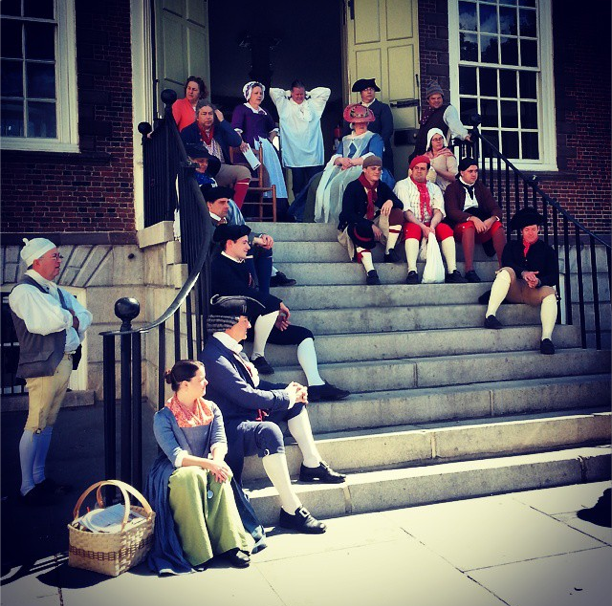
On the Colony House steps
August is hot. Can we riot in September? No!

Moving the recreation of a specific event by more than it takes to get to a weekend* seems dishonest to me: do you really want to celebrate your birthday 5 weeks after the actual date for someone else’s convenience? July 4th: Gosh, it’s not working for me this year. Let’s do that in August.

For a historical organization to suspend caring about accuracy for living history events but not for published articles, catalog records, or finding aids just contributes to the greater problem in and of living history.

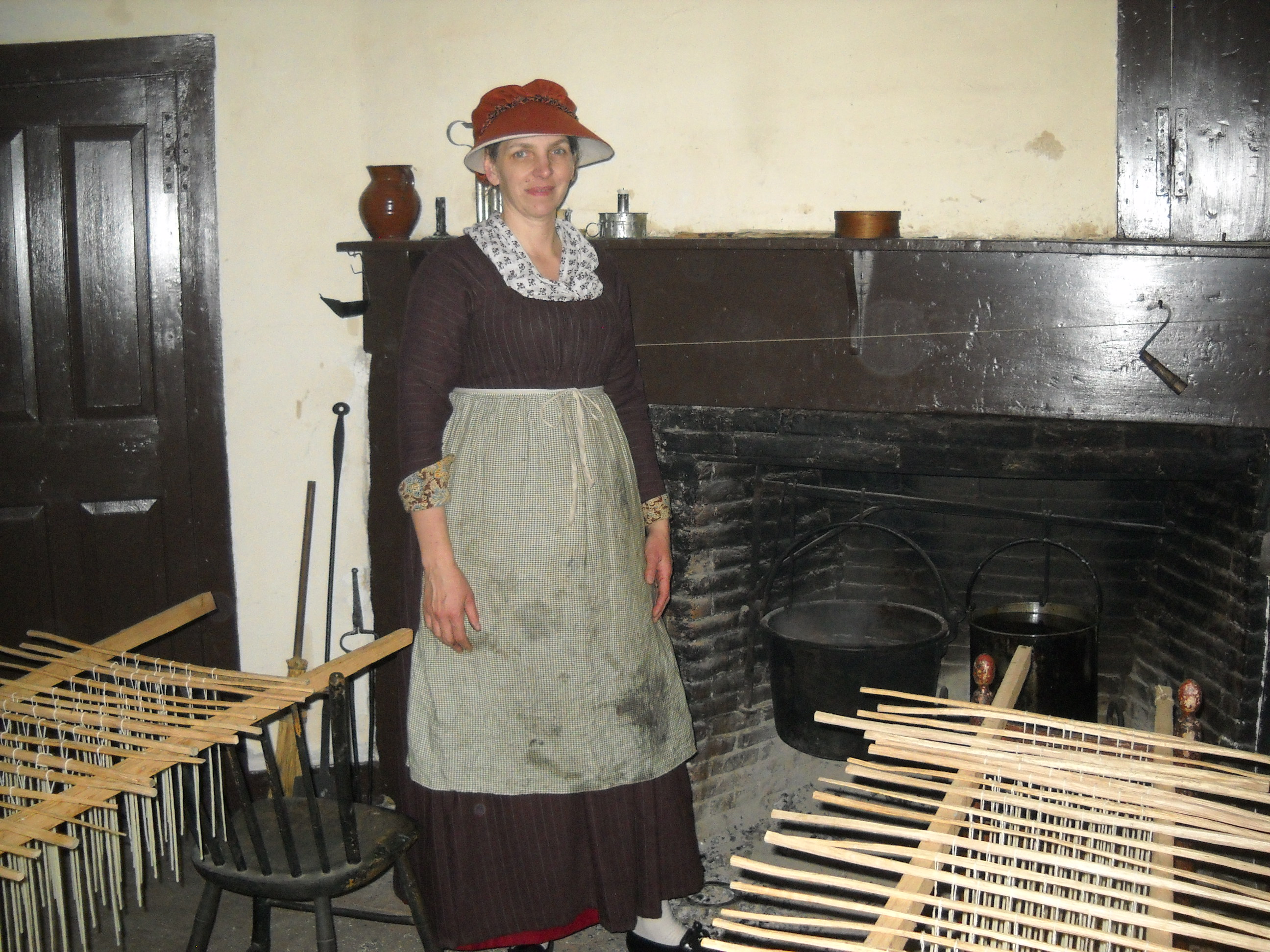
When asked about the goal of a living history event, I have been told, “Well, we want families, right? So we should have some hands-on activities, you know, immersive, like candle dipping.”+

It took a bit, but at last I grasped the core of the angry-making: Kids like living history, therefore it is less sophisticated than other forms of history.

The right place for immersive string activities.

Living history is not as sophisticated, nor need it be as accurate, as traditional (written, orated, curated) historical presentations: I think that is the background assumption a lot of people make, both in the adminstration of traditional historical organizations and in the presentation on the field. It is a complete fallacy.

Living history done well and done right is as well-researched as a paper, exhibition, or article. It draws from primary sources both written and visual, it requires the absorption of countless secondary sources to help analyze the primary sources. It is as collaborative and negotiated a process as any museum exhibition, and like exhibitions, it uses material culture interpretation to deliver its messages, i.e. meet its educational and interpretive goals.

15316751814_946818c254_z

A good living history event is beautiful, but like a ballet, that beauty does not come easily. There are no shortcuts, and beauty does not equal superficial or stupid. It indicates sophistication. Part of that appeal is accuracy: the better, the more accurate and immersive the historical setting and action you create, the more visitors can learn without asking.

Lawn games
Lawn games

When I organize an event in our house at work (or even on a guided tour) one of my interpretive points is always “people saw the world differently– literally– and this event/house tour helps you see the world of 1800 the way people living then saw it.” Aesthetics were different, and were underpinned by ideas and opinions. But understanding those aesthetics and the opinions people held about race, gender, beauty, work and class takes actual research and analysis. It’s not all putting on a pretty dress and cavorting on the lawn. Facts matter. Accuracy matters.

Museums are some of the most trusted organizations. If we started juicing facts like every History channel show, we’d lose that trust, and rightly so. Our trustworthiness is grounded in our honesty and integrity.

Living history events are mobile museums, and every reenactor curates his or her own impression. To retain the trust and interest of the public, we have to be accurate.

*Events are moved to weekends because that’s when interpreters and audiences can come.

+This at a house that not only lacks a working kitchen earlier than 1960 in the staff area and was owned by a partner in a candle factory. I’m thinking “bought ’em in bulk,” here, not dipping.

Preservation or Petrification?

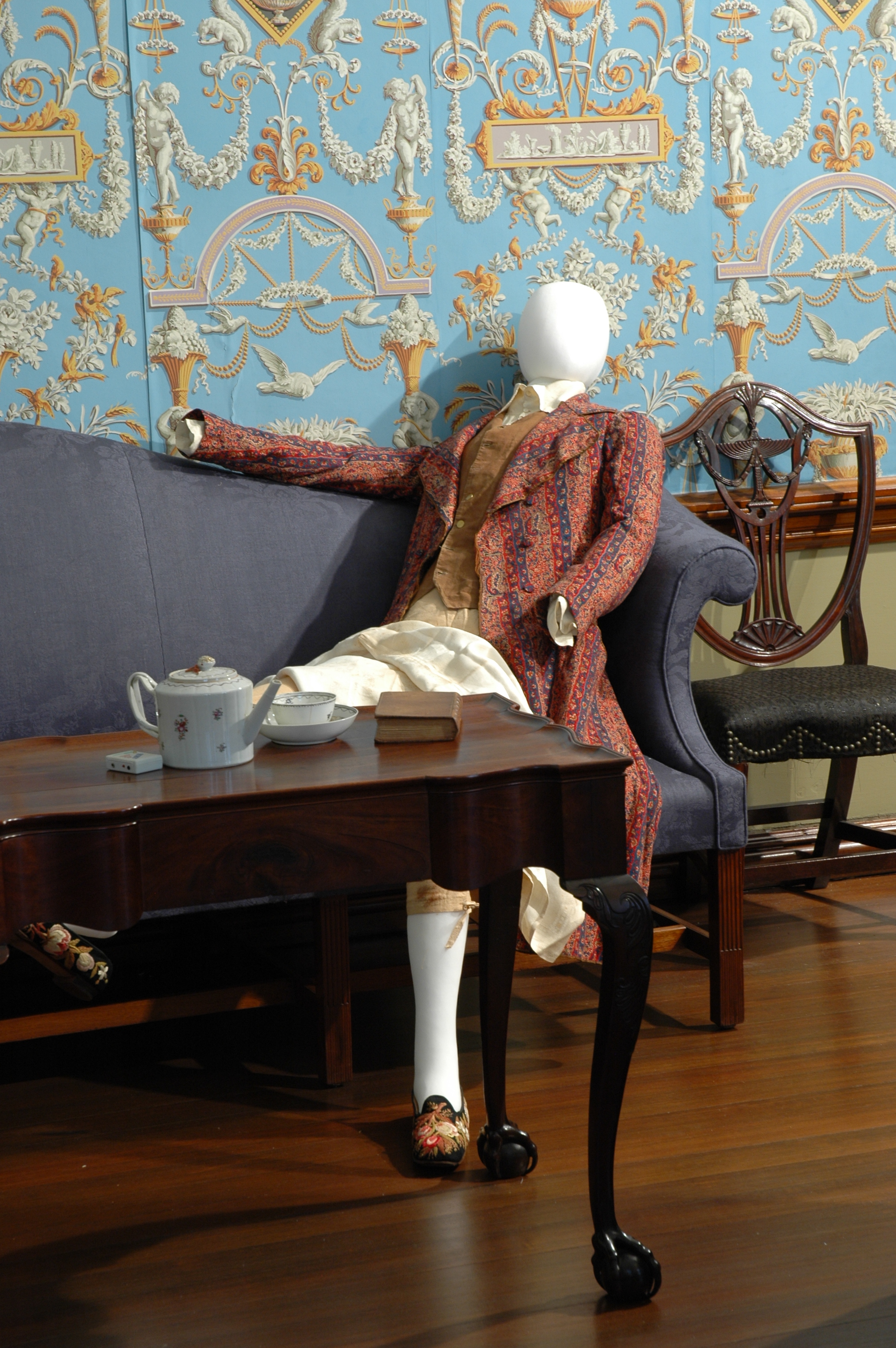
For almost ten years, I’ve been working on the re-interpretation and re-presentation of the HHM that is part of my employer’s stable of properties. We’ve had mixed results: guides who refuse to look me in the face, guides who quit because a piano got moved, guides who hissed “hedonism!” at the site of a lounging mannequin, and guides who were made incredibly sad by the representation of a sick (dying) child.

James, recovering from a party the night before
James, recovering from a party the night before, angered some guides (2007)

Me, I consider all those things successes.
The people who had to deal directly with that fall out, maybe not so much.

Change is hard and scary, and every one has a different tolerance for risk. As you have probably guessed, mine’s fairly high. I blog, I go out into the world in some pretty funny clothes, and inhabit characters I am not. I expect to fail regularly: it’s a reliable way of learning.

Change is hard to maintain, it’s hard to continually evolve and push an interpretation forward. It takes time, focus, and money; it takes cross-disciplinary collaboration and communication between curators, educators, and docents or guides.

Taking risks in spaces full of very expensive furniture is particularly daunting, but especially rewarding when you see how a house looks, inhabited and, to a degree, used.

Alice receives the mantua maker's letter
They’re sitting in real, accessioned chairs. (2014)

The job of museums is to preserve, but we sometimes seem determined to petrify, to freeze a perfect moment in amber, to freeze our visitors with fear of touching, photographing, asking, and to freeze and understanding, all in a fluid world.

If we reject the beautiful and untouchable past to embrace the messy human past, we can juxtapose the fine mahogany-furnished rooms of the merchant elite with the work to create those rooms and make the picture more whole by including slaves, servants, workmen and tradesmen.

More of us would have been working than lounging
More of us would have been working than lounging (2006)

Most of us would not have lived the way the merchants did: to a degree, our historic house visits are backwardly aspirational, as we wish for nostalgia that is more false than most nostalgia.

I am not advocating favoring the smelly past, or descriptions of unpleasantness, over exultations about carvings and upholstery—except that I am—because I see these pendulum swings as a part of the process of creating more complete and honest representations and recreations of the past, in museums, at historic sites, and in living history presentations.

It’s past time for me to work again on re-imagining the house under my care: I acknowledge that. Synthesizing what I learn in living history with the work I do in museums, and vice-versa, will improve and enhance the public experience of history inside and out.