In the Pink

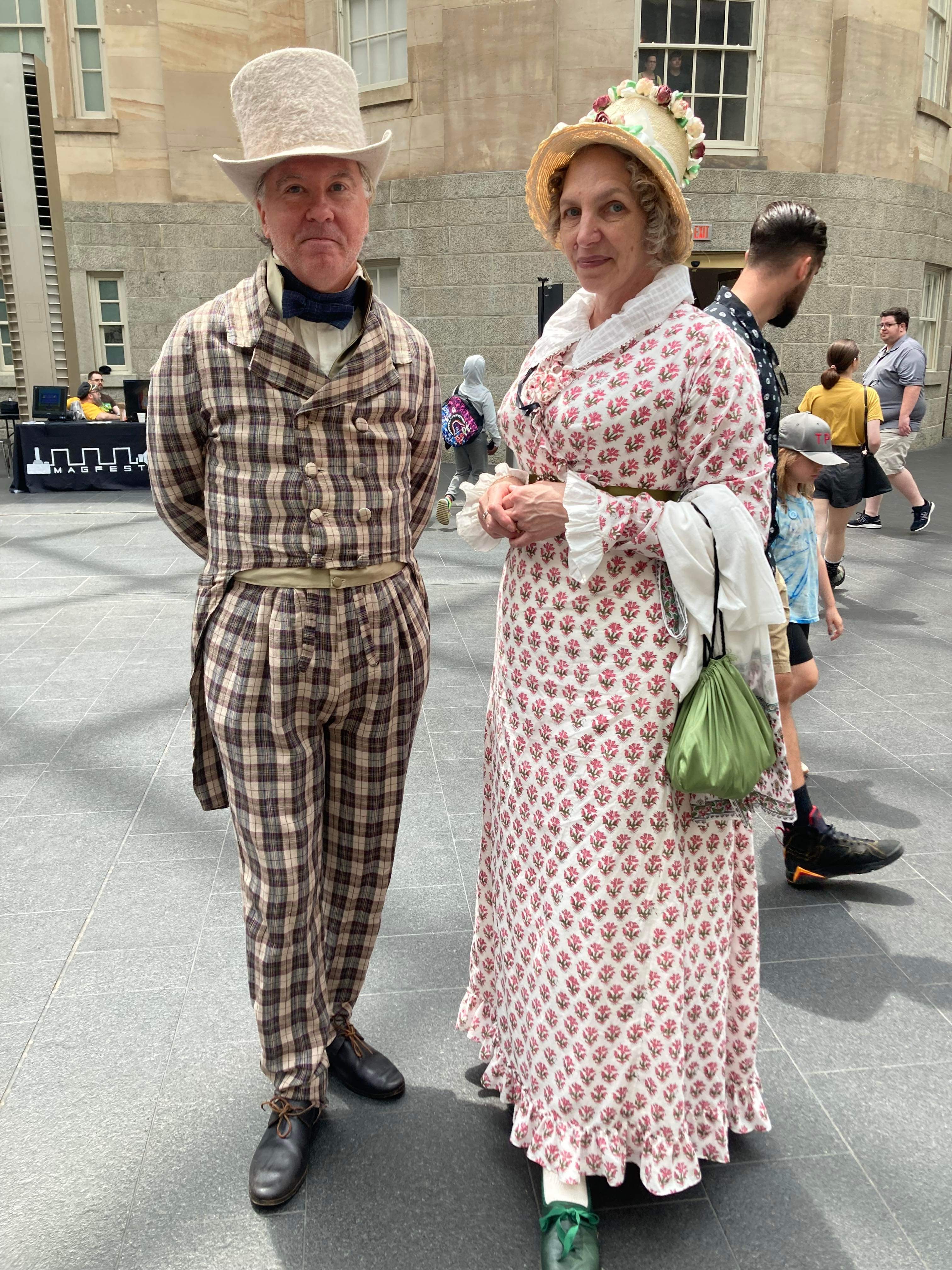
The costumed event schedule has been remarkably thin for obvious reasons, and for me since 2019 when I worked every weekend and thus lost the habit of traveling. In an attempt to change that, I joined a Facebook group for local-regional costumer meet-ups, mostly held at local museums. I talked Mr. K  into going with me to one in July at the National Portrait Gallery in Chinatown and then talked myself into making a new gown.

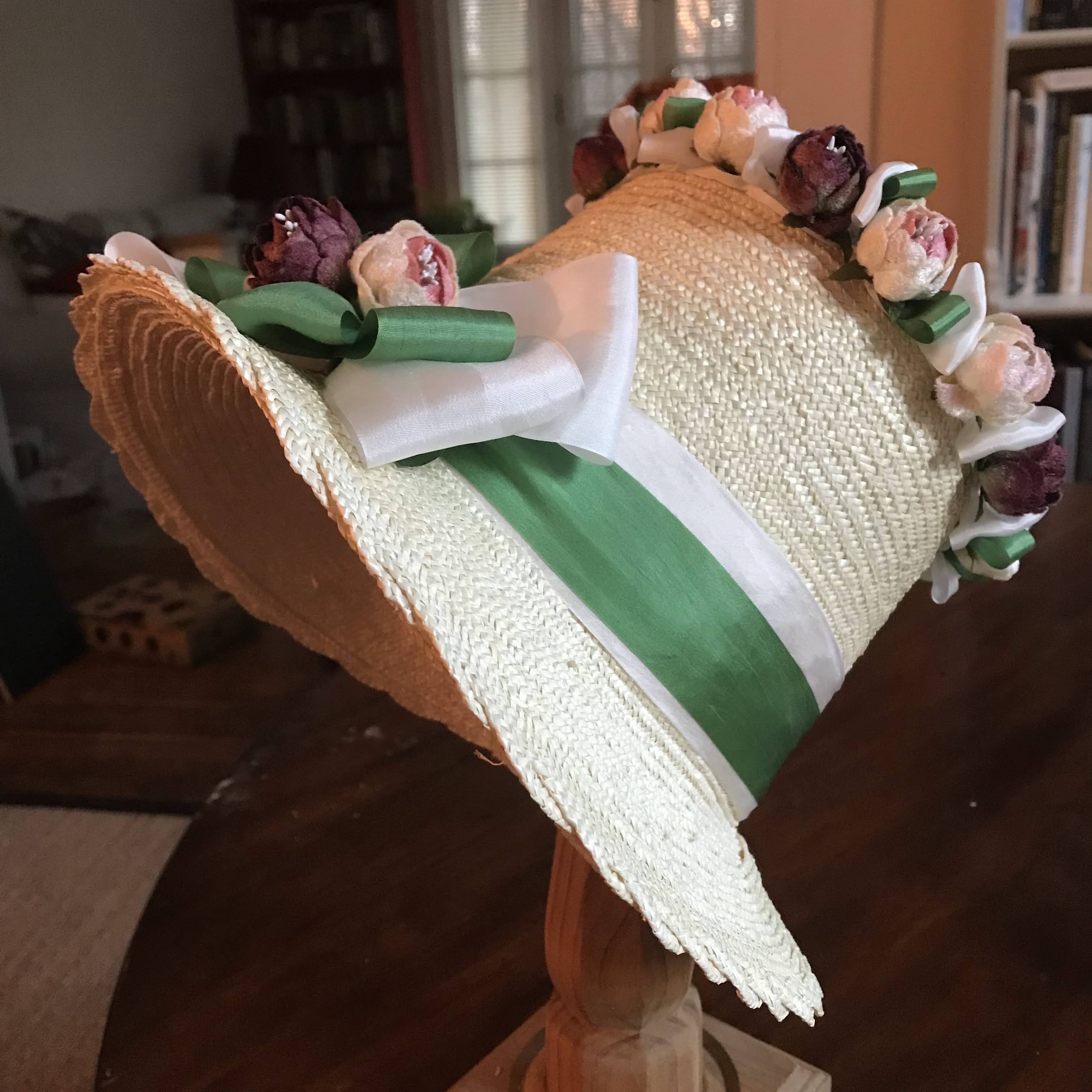
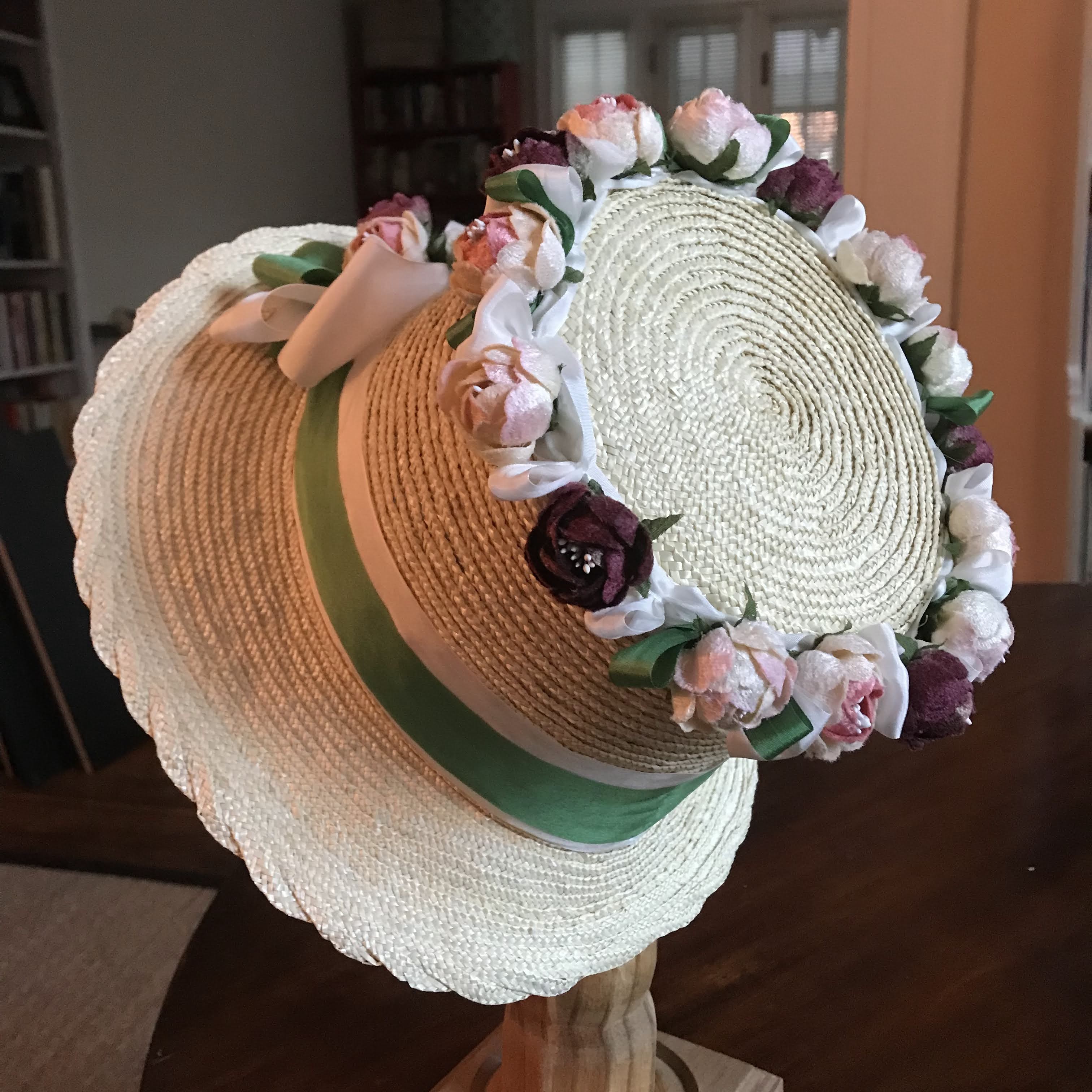
I built the outfit around two things: wanting to match Mr. K’s era and wanting to wear a straw hat I trimmed in late 2021 but probably purchased years earlier. Initially, that bonnet was going to be part of a historical wedding outfit but in the end, I settled for just a chance to wear it.

This 1814 fashion plate has long appealed to me: I like the expression on the model’s face, and I like the color scheme: Just Preppy Enough. Enter the Surplice Front Gown in block-printed Indian cotton. I used a pattern I worked up in early 2020; happily, it still fits so I did not have to make any modifications.

From there, it was simple enough to stitch pretty quickly and even work out trim. Not enough time to tier the ruffles at the hem, but enough to satisfy my desire to look like a strawberry smoothie. Worn with Robert Land Regency slippers in green leather, a shawl from Burnley & Trowbridge, and a chemisette and reticule made by me.

The straw hat was made by Anna Worden, and trimmed by me with vintage fabric roses and ribbon probably found on Etsy and at May Arts Ribbon. Portrait Gallery photos by Mike and Gloria of In the Long Run Designs.

Bonnet Remodel


I had a bonnet I made in 2014 (I think) that had been languishing in a box for years. I liked it– the soft tip was unusual, and the vintage ribbon and pink paper roses from the V&A went well with the dull grey– but I didn’t wear it. Sunday morning, I woke up resolved to remake the bonnet into something I will wear.

An upcoming weekend event in Dutchess County has me trawling through the fashion plates again, along with research helpfully sent along by the event organizers. A particular plate has stuck with me for some time, and finally I had the skill set necessary to tackle the thing. It takes making and looking and failing and remaking to figure out these things.

Step one was to take apart the bonnet-as-was. Satisfying work, really, not as unnerving as I feared it might be. And then? Paper patterns to figure out the sizes of the ridge and crest pieces.

I’d already committed myself to the silver-grey taffeta– slightly slubby, so second-chop, I’d already made muff cover, and had just enough left for a bonnet. The silver-grey seemed well-suited to a helmet-inspired style, and came close to the deep grey of the gros de Naples of the plate.

For mull, I used organic cotton quilt batting. It’s a little thick, but I pull my stitches tight and don’t want the buckram or pasteboard to show too much. The old brim piece served as a pattern for new, though I did have to use a different color for the brim lining.

The ridge was cut from homemade buckram (gum arabic on coarse linen from Burnley and Trowbridge). I used heavy cotton organdy to interline the crest. I know there is a way to get the ruffle more even, but my brain hasn’t produced it yet. Cartridge pleats and starch come to mind, along with goffering irons, as places to start. For now, this represents a Hudson River Valley milliner’s interpretation of the latest fashions.

The crown is taken from the 1770s bonnet I made, to take advantage of the way that crown slopes from a brim shaped like this one. If I were to make another one of these, I might switch up the order of assembly, and I might make the ridge piece of interfaced taffeta instead of taffeta-covered wired buckram.

The finished bonnet reused the same ties as the original bonnet, with a similar Petersham or grosgrain ribbon band. With my 2014 pelisse and a new muff, the only new accessory I’d like to make (or can remember wanting to make) is another, slightly larger, reticule to complete the ensemble.

Bonnet UnBoxing

I’m really looking forward to recreating this (and to making a custom stand for it). It reminds me of the lovely brown bonnet sold by Augusta Auctions ten years ago. Poking around in fashion plates, I’d be comfortable putting a date range of 1825-1835 on this, with a likely date of ca. 1828. The two-part construction, the exuberance of the caned brim, and the color suggest to me that this is pre-1837 (when the effects of the economic crash can be seen almost immediately in smaller sleeves and tighter bonnets). Still, combing through fashion plates is never dull and I look forward to learning more in the year ahead.

Saturday Afternoon in the Park with Kitty

The strawberries and cream hat, with pinballs and pincushions

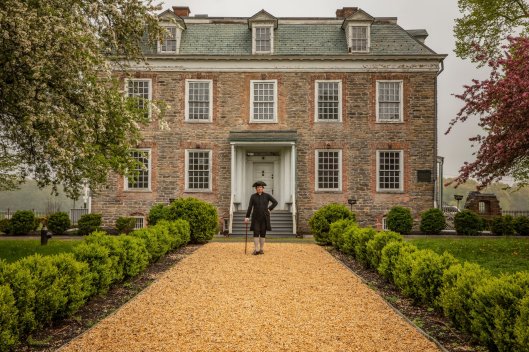
Last Saturday, I enjoyed a beautiful late summer afternoon on the lawn at Van Cortlandt House Museum in the Bronx. Built in 1748 for Frederick Van Cortlandt and his family, the house served as Washington’s headquarters in 1776, and again in 1783.

was  The Van Cortlandt House, dating from 1748, is the oldest building in the Bronx.CreditTony Cenicola/The New York Times

It’s an idyllic site, and waking up to the sound of cricket bats and Canada geese, a visitor could be fooled into thinking you were not in the Bronx at all. Mist rose above the cricket pitch when I woke up, a large flock of geese picking at the grass. It was Netherland come to life, men beating bats on their cleats and laughing. I’m really grateful to Mrs M. for the place to sleep and chance for adventure.

This trip was a remarkable cultural experience for me, and one I really needed. Growing up on the north side of Chicago, I was used to urban density and scale, so after two years in Northern Virginia suburbs, a dose of urban life was welcome. It was all the more welcome because instead of spending my time judged by cats, I got to play with dogs (and earned a sore bicep for all the stick and giraffe throwing I did for one). The trip to Stew Leonard’s was remarkable, after the tame mercantile experiences of tiny Rhode Island, and even Wegman’s paled in comparison. It was a good set up for thinking about mercantile enterprises, impulse purchases, and the ways merchants (including milliners) and shop owners needed to keep customers coming back, tempting them with new goods. (Or, in the case of Stew Leonard’s, singing cows and/or milk cartons.)

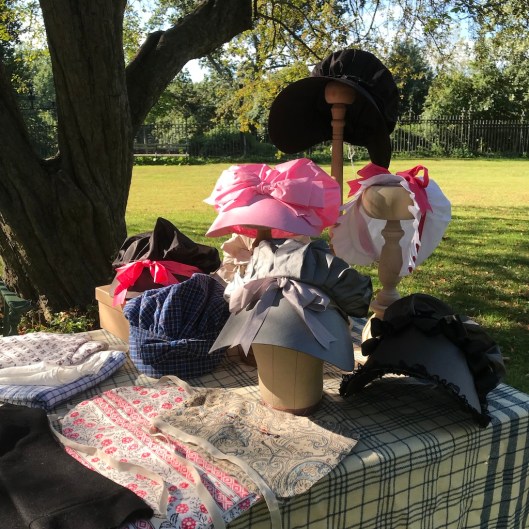
More bonnets, most of which are available on Etsy

I managed, somehow, to finish a red silk satin quilted petticoat in time (lined with red “stuff” from Burley and Trowbridge, it was not too bed-covering like until the late afternoon) to dress up the Nancy Dawson dress. I didn’t manage to locate my sleeve ruffles in time ( stitched on a garment ) but in other regards, I was pleased with how this turned out.

Bathroom selfie, but you can see that sweet silk petticoat

Dressing my clothes up– that is, moving them up the social ladder– can be a challenge, but good accessories make a big difference. Eventually I will get a finer apron made, one with a ruffle, but for now, that has to wait.

With Lark, perhaps the sweetest little rescue pup I’ve ever met.

I have a trip to Philadelphia to make, bottles to label, and receipts to write. Elizabeth Weed returns to Carpenters Hall this weekend as part of the Occupied Philadelphia programming.