Auction Season: The Holiday Sales

Screen Shot 2018-12-05 at 6.34.13 AM
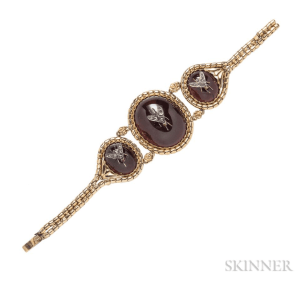
Lot 1159 Antique Gold, Carbuncle Garnet, and Diamond Bracelet. Yes, those are rose-cut diamond flies.

First come the jewelry sales, the big guns like Sotheby’s leading the way with sales as crazy as Marie Antoinette’s jewelry (Royal Jewels from the Bourbon Family of Parma, technically, though it sounds more like a delicious lunch than a sale), but the smaller houses play, too. Skinner’s sale closed December 5, Freeman’s earlier, but later than Sotheby’s. These are not sales I bid in, but they are places to see things you’d might not otherwise see. Garnet bracelets with rose-cut diamond flies? Not something I see gracing the wrists of my fellow Metro riders or grocery shoppers.

Screen Shot 2018-12-05 at 6.41.39 AM
Lot 7, Contemporary painted tin hat trade sign, 20th Century. 7″ x 13.25″

Once the serious stuff has sold, the fun begins: the toys! Pook and Pook’s two-day toy sale begins December 7th, and you might call it whimsies and toys, since it begins with shop signs. Who doesn’t want an enormous tin hat? What’s the point, you ask? Why look, if you don’t collect? Because you can collect– information, screen caps of reference images, ideas for things to make, and a visual reference library to fill in the blanks of what you read. The steam engine that breaks in The Railway Children seemed crazy to me as a child, and I assumed it was just a model of a steam locomotive. But no: there were steam toys and accessories, from lighthouses in moats with Indians in sailboats to working looms to….steam locomotives.
Screen Shot 2018-12-05 at 6.52.23 AM
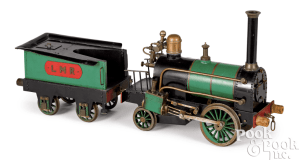
Day Two, Lot 521, Large Bassett Lowke live steam train locomotive and tender, 3 1/2″ gauge, engine – 13 1/2″ l.

The darling thing even looks like Percy, filling in the gaps of the origins of Thomas the Tank Engine, Edwardian children’s stories, and the wonders of the steam age (which you can replicate, if you choose). Hard to believe, in our age of safety, that steam engines might be de rigueur in the parlors of well-to-do Victorian and Edwardian families. (Perhaps your childhood was not as full of E. Nesbitt, Kenneth Grahame, and Arthur Ransome as mine, but if your mother’s primary caregiver was born in late 19th-century Great Britain, you might grow up with an attachment disorder and a taste for fabulist literature of the early 20th century.)

Day One, Lot 230,
German dressmaker and milliners shop room box.

And then there are the dioramas or room boxes, many, if not most, German. These early 20th-century displays give us a sense of the kinds of craft or hobby activities people enjoyed, front-facing dioramas. I think you either “get” them, or you don’t; not everyone wants a miniature world to control or fantasize about, but from the perspective of someone trying to understand what the past looked like, these can provide a three-dimensional view of what are usually only black and white images. Are they perfectly correct? No. But they do give us a sense of the kind of visual stimulation people encountered and enjoyed shopping and playing.
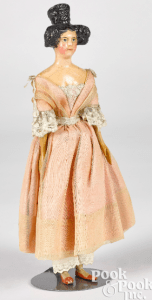
Day One, Lot 220, Papier-mâché milliner’s model doll.

There are dolls, always divisive (they’re creepy or cute, few folks fall in between) and they have they own usefulness. None in this Pook sale tell us much about early toys, but there are a couple of early 19th century examples to remind us of what children played with in the past, and how new fashions were disseminated. In the case of the milliner’s model doll at left, we get a good sense of the Apollo’s knot hairstyle, and a pair of red slippers I would love to have. The back view is equally useful, for it is only with three-dimensional objects (dolls or sculpture) that we can get a complete sense of a hairstyle or costume. With enough looking, you can extrapolate, but there’s nothing like being able to see the past in the round. That’s even better than the telephone-book-thick catalogs from Sears and J.C. Penney that arrived before the holidays in decades past.
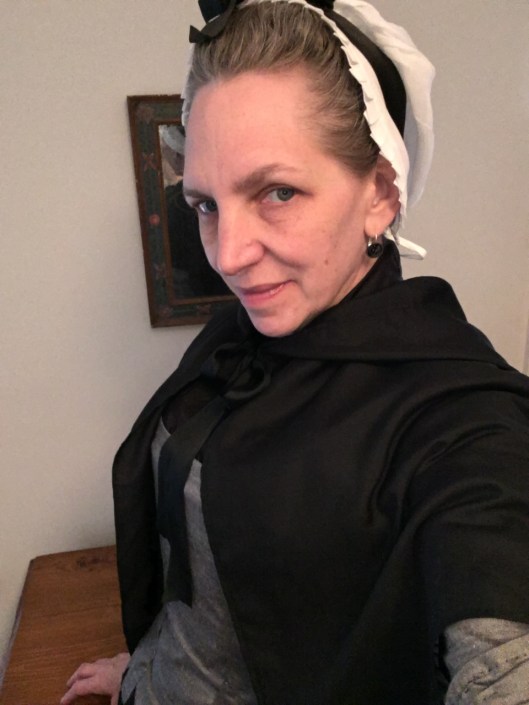
The Material World of Widow Weed: an interpretation

Pomade, powder, a pad, and a liberal dose of hairspray got me closer to Big Hair than I’ve ever been.

Part four of a series

Widow Elizabeth Weed: what would she wear? What would she own? My first inclination had been to wear the grey tabby wool gown I already had, until I realized how much of George Weed’s estate Elizabeth had received. As detailed in the first post, the strategic fabric reserve (SFR) provided a “just enough” remnant of shiny silk to make a gown. Second mourning seemed right, for six months past the death of her second husband; with Mrs. Mifflin’s 1773 gown style in mind, I decided to make an English gown with robings and stomacher. (To be honest, I’m pretty pleased with how close my cuff came to Mrs. Mifflin’s, considering how badly I can mess up a cuff, and that this was my first finished silk gown in an 18th century style.)

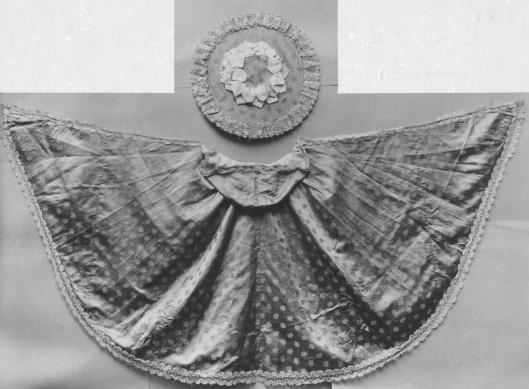
A gown is one thing, but what about the rest of the ensemble? The Widow Costard print provided some guidance, despite being some years later than 1777. The black hood and cloak or mantelet over a white cap appears in other widows’ portraits, although the black silk cloak is not an uncommon accessory. I had been toying with making one already, and had patterned one from the original in Costume Close Up; extant examples aren’t thick on the ground, but there are enough to demonstrate some consistencies.

Cloak, figured cerise silk satin with a lace trim, 1760-1770. Victoria and Albert Museum, T.61-1934

1760s example at the Victoria and Albert has a shape similar to that in the Williamsburg Collection, while another at the Met (dated, without a reason cited, to 1820-1829; perhaps the reason is in the selvage or the lace), provides some clues to construction and materials. So, with another remnant from the SFR in hand, I worked from my muslin to a paper pattern, using the neck cutout from my red wool short cloak as an additional guide. It went together in fairly short order, since it is mostly hemming, with just two seams and some pleating. While I wore it untrimmed due to time constraints, self trim or lace or would be ideal additions.

Portrait of a Woman called Lady Fawkener ca. 1760. Jean-Etienne Liotard.

Additional clues to Elizabeth Weed’s status as a six-months widow are found in the black silk ribbon of her cap; black and white hats are common enough that the hat alone does not signal “widow.” I chose to make mine from a black figured silk taffeta lined with white, based on an ad in a Philadelphia paper. On October 15, 1776, John Brown advertised in the Pennsylvania Evening Post for a runaway Irish servant girl, Judith Kennedy, wearing, among other items, a “black spotted silk bonnet lined with white.” Obviously, this might well mean “bonnet” in the form we are most familiar with, and I have taken liberties by extrapolating the spotted silk to my hat cover. Nonetheless, black and white hats are a thing, and I was looking to upgrade from my tatty and faded black chip hat.

Gathering white linen evenly is a challenge: literal thread counting.

Gown, hat, cloak, updated caps: so far, so good. I had a black wool petticoat already, suitable for mid-Atlantic autumn (there was no way a black silk quilted petticoat was happening in the time allotted), and black worsted (woven) mitts. What else would Mrs. Weed need? Upgraded shoes are tempting but beyond my budget, so the last article of clothing was an apron.

The majority of my aprons are check linen, with one clean unbleached linen apron and one stained white linen apron (coffee is my weakness). Fortunately, I found 30 yards of vintage white linen on a trip to New England, and thus had apron fabric handy. After making five aprons, this one went together in less than a day.

The final piece was jewelry. A few years ago I found a “Georgian” cut steel and glass locket suitable for hair that I wore as a widowed housekeeper; on a fresh black silk ribbon, that would be a cornerstone. I added a three-strand necklace of black glass beads to contrast with the locket (thanks to the local hobby store and a stash of findings). Earrings also came from the stash, made up quickly from modified buttons and black faceted drops.

Accessories. I finally have them.

I added a white silk neck-handkerchief for warmth, and bought a black one just in case. Based on images, I thought white most appropriate, but somehow, with the grey gown, the image of “Pilgrim” was hard for some visitors to overcome, so on Sunday, I switched to black. Sometimes you have to choose accessories to lower the hurdles for your audience. Explaining that I was not a Pilgrim, but in mourning–while providing an opportunity for interpretation–was not my primary objective, so the easy color switch seemed well worth making.

The remedies (as promised) were another, slightly strickier matter. While making them according to the receipts I found was relatively simple– this is long before big pharma– carrying them was another challenge. I opted to make a box, and fill some bottles, as will become plain in the next installment.

Kits, Boxes, Sticks, and All

Jens Juel, Self portrait at an easel. Oil on canvas, 1766. Royal Academy of Fine Arts, Denmark.

Once again, I’m looking into artists’ materials and techniques, though instead of trying to kit myself out for the early Federal era, I’m digging into the last half (quarter) of the 18th century. It seems to be a time of rapid transitions in art materials as new pigments and media are developed. While Mr. Juel is beginning a work in oils, we still see some of the same tools that a watercolorist would use. Brushes, though his are shaped for working in oil; a shell, perhaps to combine pigment with medium, and bags of paint.

Before collapsible tubes were invented in 1841, artists scooped or scraped pigments mulled with medium into skin bags, secured them with twine or string, and then poked a hole in the bag to extrude pigment. Some more clever sorts would plug the hole with a cork– untying the bag would make more of a mess than a distribution system– but otherwise, you risked having your paint dry before you could use it up. Clearly there were some inefficiencies built into the system. (I think it also helps explain why “thick” paintings, that is, paintings using exuberant and textured layers of paint, do not appear until after collapsible tubes are invented and in wide use.)

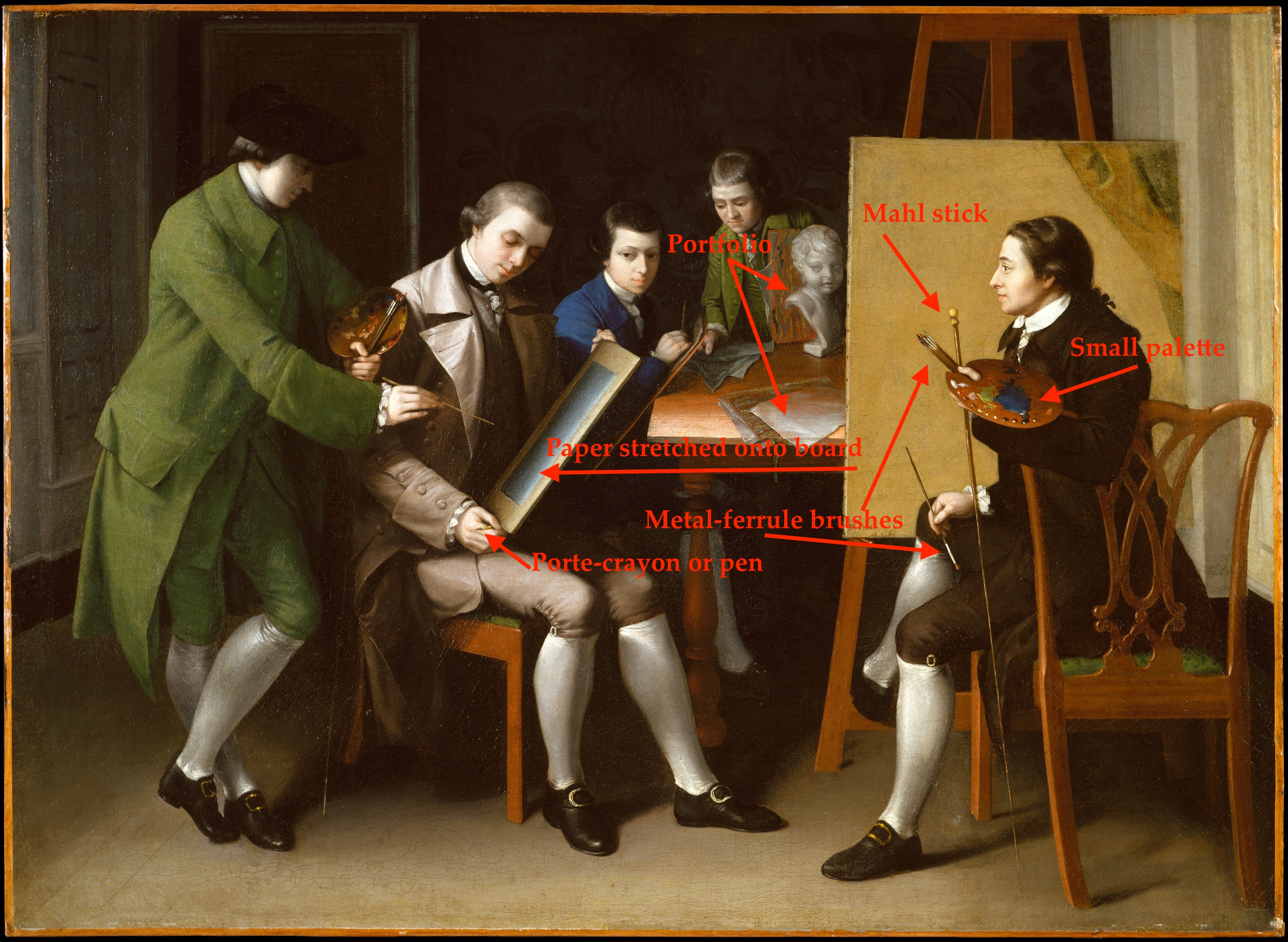
Matthew Pratt, The American School. oil on canvas, 1765. Metropolitan Museum of Art, Gift of Samuel P. Avery, 1897, 97.29.3

In Pratt’s American School, we can see how small the palettes are, and how small the dots of paint are compared to the pools where colors have been mixed. The easel, presented from another angle, offers clues to the adjustable pegs and triangular/tripod shape of the main support. But what of watercolors?

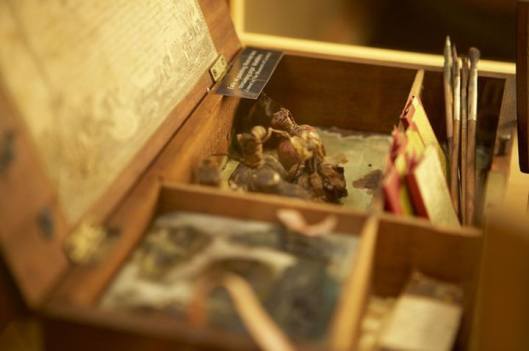
Winsor & Newton Old Paints: note the tiny bags of paint.

To date, I’ve found conservation reports more helpful than anything else, especially those analyzing paint content for sugars and gums. (One of the keys to watercolors was the re-wettable aspect of the colors; gum arabic, gum tragacanth and honey or sugar were ingredients used in varying proportions to achieve what we now take for granted.) The first watercolor cakes or blocks are introduced in 1780 by William Reeves; often, these were very hard, and had to be agitated in water (ground on a surface) to be used, much like sumi-e ink. Once paint was ground with water, it could be dried in a dish or container for re-wetting and later use. The question of course is, what do dry it in? How do you mix and use the paint?

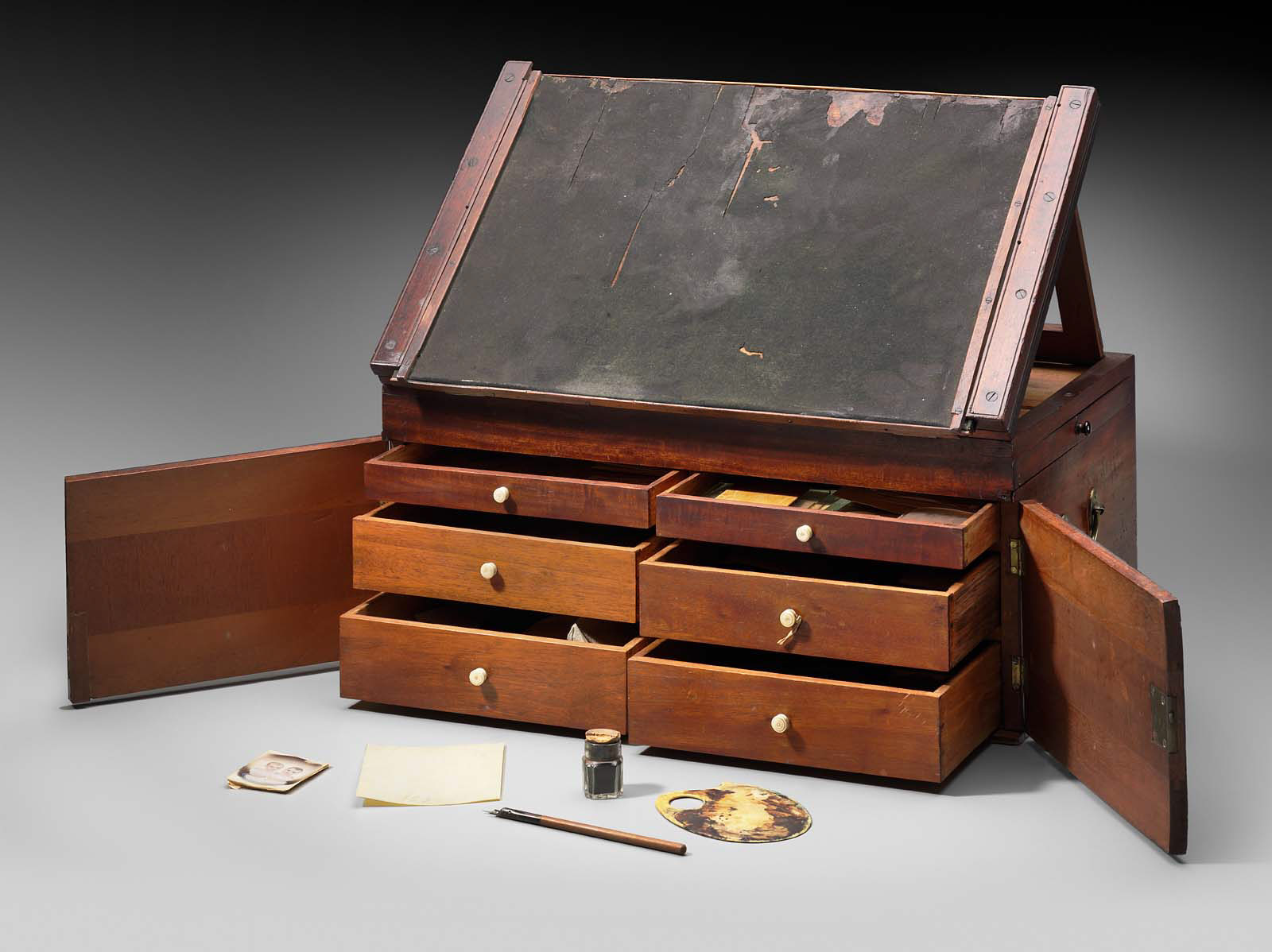
Caroline Schetky Richardson’s Paint Box
about 1820–30. MFA Boston. 1995.156.1

Mixing is simpler to solve: a palette, of course. The small, dirty-looking oval in the image above is the ivory palette used by Caroline Schetky Richardson; while her box is 1820-1830, it’s still very similar to box in Charles Willson Peale’s portrait of his brother James (below). The box is 21 inches wide, 10 inches high, and 13 inches deep. That makes the palette something like 3 inches wide, if we take a drawer as five inches wide.

James Peale painting a miniature. Oil on canvas by Charles Willson Peale, 1795. Meade Art Museum, Amherst, MA

In the CWP portrait of JP, the slightly open drawer of the painting stand may be giving us a peek at his palette; the simple tumbler of water helps confirm that he is working in watercolor on ivory, and give us a sense of what kind of water container artists used– which, happily, can be more easily sourced than Mr Peale’s box.

The Stuff of Life

We all love things, don’t we? Things in the literal, corporeal, piled-in-a-heap sense: plates, shoes, books, chairs, necklaces, models. But what makes us love them? How deeply do we really love them?

Someone posed the questions, What would you take if you had to pack in a hurry to leave home forever? What will your kids remember you by?

Those are hard to unpack: how will other people remember us? Often, we have no idea what we mean to other people, even the ones closest to us. It’s easier for me to know what I would take or keep to remember someone else by– a single sleeve link; a wooden train engine; a stainless steel spoon; a necklace of handmade beads. None of those things reflects what is truly meaningful to me about them, that is, without my knowledge, these aren’t particularly interesting or aesthetic objects. What makes them special is the story I attach to them.
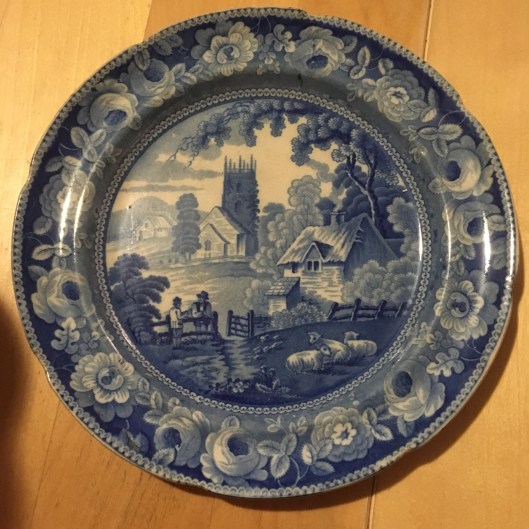
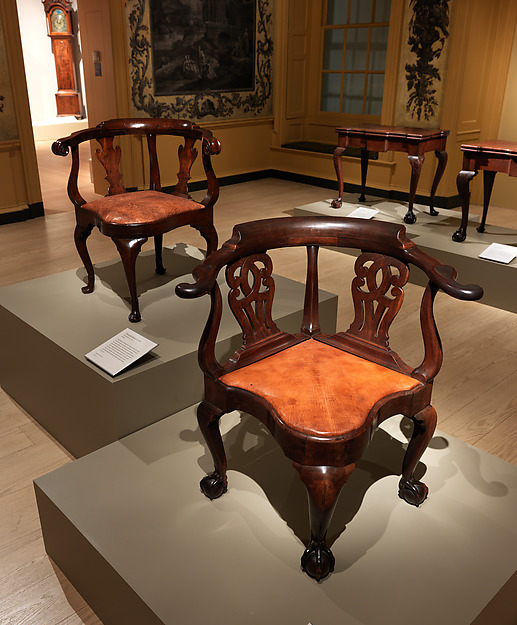
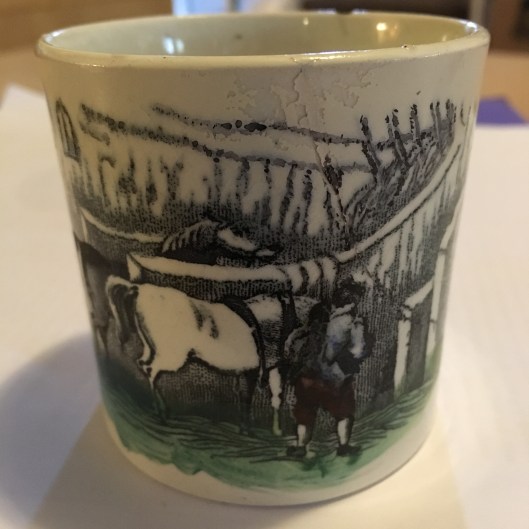
That is, of course, the key to interpreting objects in a social history context: the story is what makes the object more interesting, more important, more compelling. It’s the difference between a provenanced and an unprovenanced object, between a roundabout (or corner) chair in context, and one out of context.

Corner chair, probably John Goddard. Metropolitan Museum of Art, L2014.9.1a,b Lent by the Wunsch Collection, 2014

This is not to say that beautiful things are without value removed from context, but what makes that Goddard chair more compelling is knowing who made it, who it was made for, and when– knowing that it was part of a set of furniture ordered to furnish a house for Providence newlyweds, made in Newport by one of the hottest makers of the time. It’s the people who make the object more interesting, who make it worth having, seeing, holding on to– whether it’s a $6 million chair or a $25 mug, memories and stories make things compelling beyond our associations with them.

Part of a museum curator’s job is understanding those stories, placing objects in context, and connecting them back to their stories, to their makers, users, owners, and keepers. We may buy things because they’re beautiful or useful, but often we keep them because of their meaning– which is, more often than not, about people. Unprovenanced objects have less meaning; an object sold outside, or without, its context will not fetch as much. Value resides in people, not in things.

I think of this not only because a portion of my work is to recreate or reestablish the human contexts and connections for things, but because there is a human instinct to grab onto something tangible (like an object), rather than something ethereal (like a memory), even though what will sustain us in the end is not things, but other people, and our memories of them.