Sometimes a Great Notion

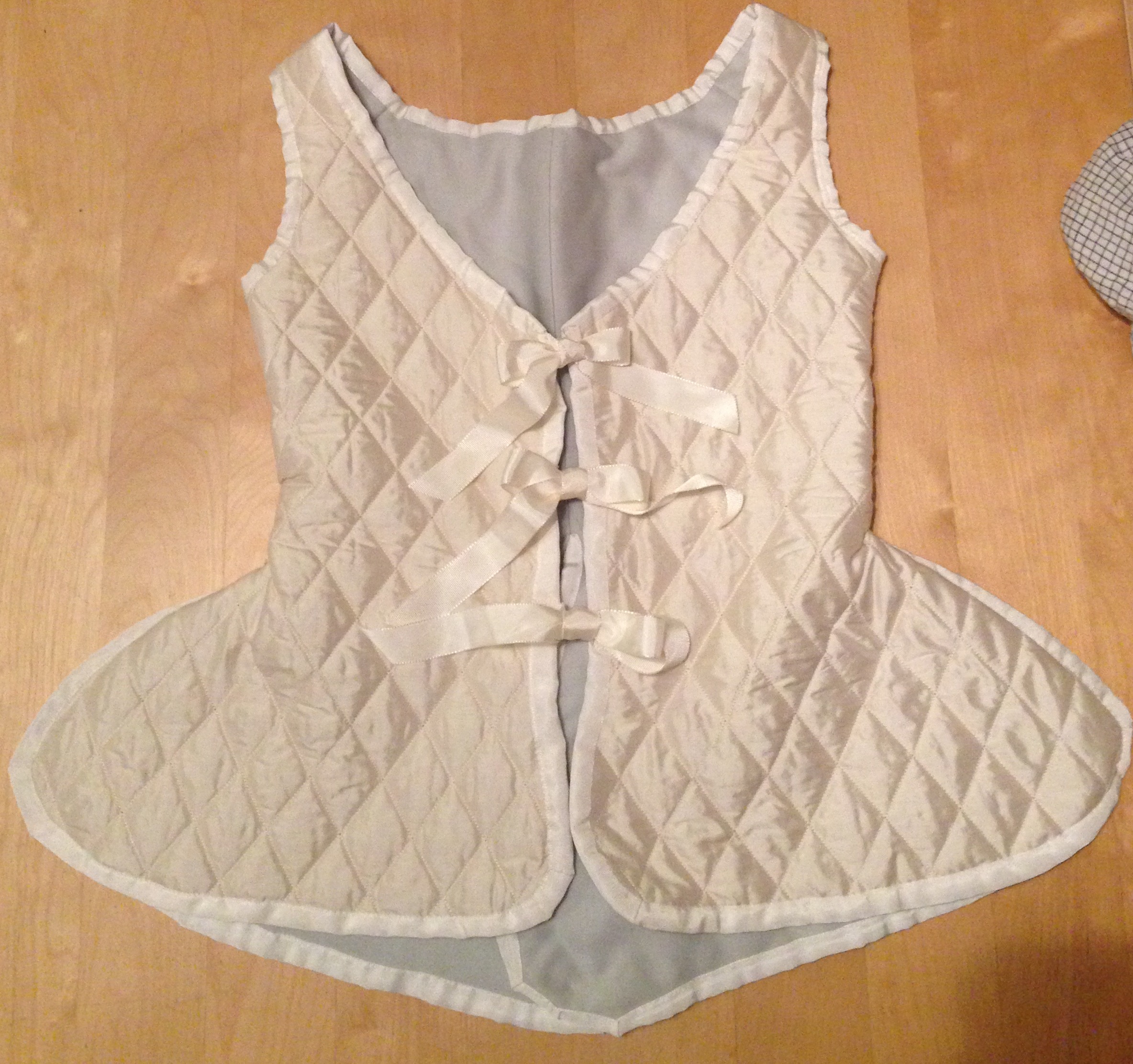
Finished! Cozy, too.

(Think Lead Belly, not Ken Kesey.)

No, I did not take a notion to jump in the river, but I did take a notion to sew slightly more than the quilted waistcoat.

I couldn't resist.
I couldn’t resist.

I got this unshakable great notion, you see, about some wool from the remnant table in Framingham. It was a lovely olive color, and paired up with some plain weave I already had, it reminded me strongly of World War II-era Army uniforms from the ETO, which I had been packing recently in Rhode Island’s alpine north. And yes, if I find a pinker tan for a petticoat, I will procure it.

Since I already have an olive wool petticoat that will also work for this notion, I started on the gown last week, cutting it out on Wednesday night so the table would be clear for Thanksgiving dinner.

The wool was a little slippery to pleat, and the twill slightly dazzling with its sheen. Let’s pretend it’s shalloon, shall we?

A week into the project (after a brief annoying detour attempting to correct my mitt pattern), I have only half the hem and the bottom of the robings to finish. Not too shabby, thanks to a holiday weekend and hours of The Pacific, Band of Brothers, and The Purple Plain. Homage to the color, I suppose.

I'm never not smirking, so thanks for not smacking me.
I’m never not smirking, so thanks for not smacking me.

It fits– which always seems like a miracle, even with a tested pattern– and better yet, it fits over that plush waistcoat.

The rustle of the silk and the swish of the wool are unlike anything I’ve ever worn. I think I shall feel quite fancy– let us hope I shall also feel quite warm.

Contextualize This*

Right on, Mr. Hiwell: The music of the Army being in general very bad is a post I could never write, because I lack the detailed knowledge, or the desire to acquire music-specific knowledge (just as Mr Hiwell could give two rats’ about stay-making details, or the subtleties of stew). But here’s the gist of his post, on which I wish to elaborate, and which has been touched on elsewhere: You’re Doing It Wrong.

Let’s take this:

I’m tired of going to events, knowing all the camp duties fifers and drummers played from sunrise to sunset and never playing a single one of them besides Drummer’s Call and Assembly.

One of my favorite hobby horses: lack of discipline and camps that look like that Infamous Catalog just puked on a field. Why on earth can we not see tents are set up properly, in rows, with appropriate numbers of kitchens instead of wobbly lines, marquee tents that disgorge giggling teenage girls in bodices, and enough iron to make the scrap man sing with joy? 

But even then, even if people are too lazy or stubborn to leave stuff at home, why can’t a camp run the way it would’ve? There’s ample documentation on which to draw. Quite aside from the voluminous papers of General Washington and General Greene, and the massive archives in Britain, every regiment had orderly books, of which many survive. They’re hilarious reading and full of things to do.

Most reenactments are boring. Well, so was army life. The 10th Massachusetts was constantly in trouble up on the Hudson late in war, and the Marshall book at the Society of the Cincinnati contains the proof.
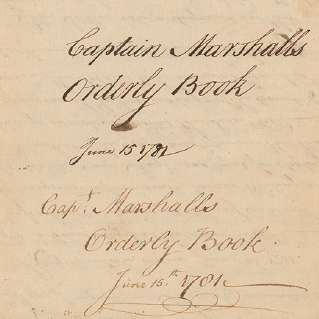
Here’s something fun to do: inspection. Huts, cabins, tents: they all needed to be kept neat., and apparently weren’t.

Some part of the Camp and about the long Barracks in particular is relaxing into nastiness. Regimental QuarterMasters have been ordered to have them Clean and keep them so. An Officer of each Company has been ordered to visit the Barracks every day and to Confine & Report those who throw bones of meat Pot Liquor or filth of any kind near the Barracks. Yet all this has been done and no report has been made. it is hatefull to General Howe to Reitterate orders as it ought to be shamefull those who make it necessary.

Don’t like to clean, prefer cooking? Marching?

Regimnl Orders June 6th 1782

the Regiment will turn out to Morrow Morning at the Beating of the Revelee and to March By Six oClock they are to pack there clothing and kook there provisions this Evening when they have arivd on the Ground for Encamping the officer commanding on the Spot will order a partry if Forty men from the Regiment a Capt and two Sub’s to Command them to Return to the Encampment in order to asist in Bringin on the Baggage the Soldiers are to Carry there kittles in there hands and are to Leave there arms and pakes &c at the New Encampment any Soldier who is found Plundering another pack is to be tyd up and punished with out Trial..

Tyd up and punished without Trial. You know there’s a guy who’s up for that in every unit.

And lest you think that there’s nothing for women in these books, let me assure you, there is:

Regimental Orders, July 23rd 1782

At a Regimental Court Martial whereof Capt Francis is president, Briget Conner a Woman Belonging to the 10th Massachusetts Regiment was tried for purchesing a publick Shurt from a Soldier in Sd. Regiment found Guilty and Sentanced to Return the Shurt to the person from whom she purshest it and loos what She gav for the Shurt.

The Colo approves the opinion of the Court and orders it to take place Immediately

Regimental orders July 25th 1782

Bridget Conner a woman Belonging to the 10th Massachusetts Regiment is Directed to Leave Camp Between this and to Morrow Morning at Roal Call for her Insolence to the officers of sd Regiment on pane of Being Treated with Severity

This is easy, people. Authenticity, accuracy, and Stuff to Do increases exponentially if you use documentation to recreate a “normal” day in either army.  There’s Cuthbertson, for example.

cuthbertson.png

There’s Lochee, if you want to get in tents. And orderly book after orderly book. And if I, a mere woman, can find these things, there is no excuse for you men not to read, absorb, and use these sources well.

Inspections. Returns. Reports. There’s so much to do in a day, and running a camp or a barracks by the regulations would give everyone so much more to interpret, and begin to present real history instead of merely heritage. This is where the real splits are going to come, and sooner than you think. It won’t be about uniform details, or stitch and thread counts, but about actually engaging historical interpretation. If interpreters aren’t engaged, the public won’t be either.


*If you know me, you know what the next word is.

A Side of Oysters

Or, Fleshing Sexism into History

06512-2

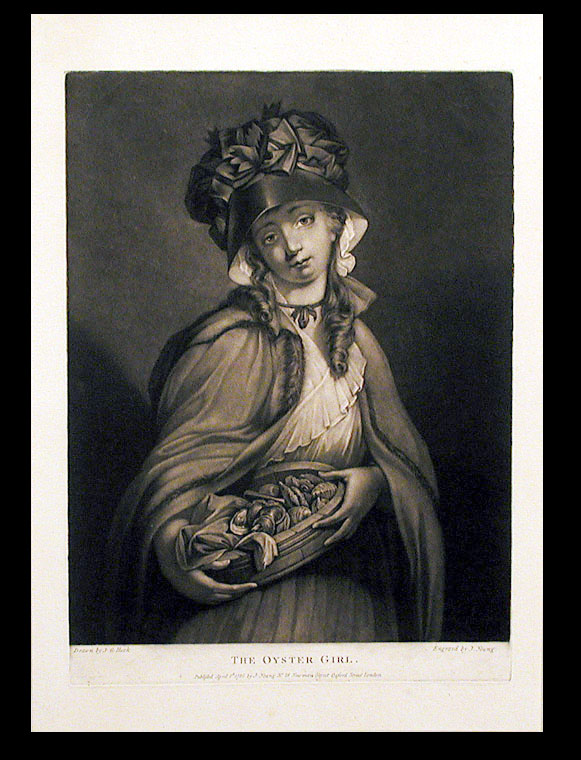
Here’s a bitter blog post instead of the angry one someone expected after the Turkey Shoot. It started elsewhere with a discussion of this print: there’s more going on in this, and in many genre images of oyster girls and oyster sellers, than you notice at first glance. (First glance is that fab-u-lous bonnet.) There are clues, though, that she is selling more than just oysters. It’s a code, remember? The gaze is one clue, though it reminds me of a cholera victim’s languor.

Yes: this image suggests she is also selling herself.

It’s something I’ve thought about doing as part of my street vendor/Bridget impression. Transgressive, dangerous: true. As a milliner, I’ve had a money bag shaken in my face, coins rattling suggestively, a sailor eager to spend his pay. Milliners and seamstresses both had reputations as women of exploitable, if not overtly easy, virtue. They’re a classic trope in 19th century literature, though I suspect the real reason for the suggestion of looseness was economic independence. But women certainly were selling themselves in the past, so why not portray that reality with carefully selected, trusted role players?

circle_of_francis_wheatley_ra_the_oyster_girl_d5466162h

For one thing, it’s dangerous. You’d have to script it, and interact only with really trustworthy people. It’s not family friendly, though despite the strenuous efforts of some sites, actual history isn’t family friendly either. (I’m looking at you, CW .)

I ponder this role, and women’s lack of power historical, as I ponder Fort Ti and nurses’ reputations, carefully maintained in Army hospitals in later wars. (Not to fear, I will behave, honest.) And I also ponder it as I continue to struggle to understand the Gun Show, the misogyny in the hobby, and the general misogyny of American culture. Like many others, I’ve read this blog post,, and some of the more annoying comments. Yes, I, too, de-escalate now and have in the past. Some of the changes I’ve made in my life revolve back to this concept, and have to do with authenticity and stepping back from de-escalation, subsumation, and self-repression. So why would I not continue that process into my historical work and play?

philip_mercier_the_oyster_girl_d5714611h

As I wonder how to spin a feminist interpretation of women’s marginal roles and drudgery in the past, it occurs to me that forcing the women’s economic disparity and lack of agency to the foreground might provide an answer. Selling myself along with oysters, apples, or cherries might finally make the points I want to not just about women’s lives historically, but about women’s roles today.

(I’ve already made the jokes about hands-on demonstrations, so y’all can keep ‘em yourselves, okay?)

Shoot meat, win a target

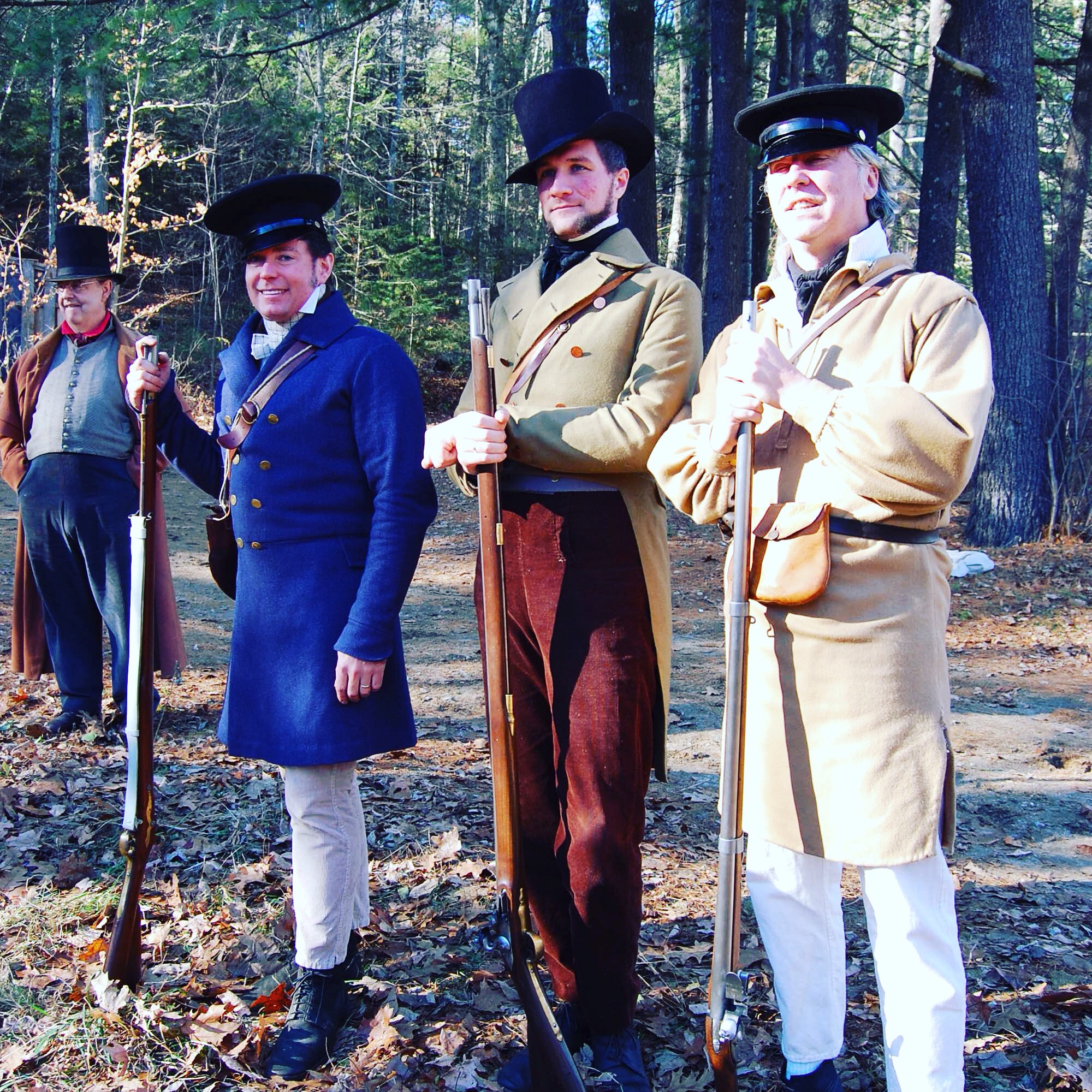
That’s almost literally true: shoot a target, win a target would be a more accurate description of Saturday’s frivols in Massachusetts. At least the gentlemen seem to know they’re a little silly.

1830s  shooting party
Literal musketeers: Mr B, Mr K, and Drunk Tailor

Of course, this kind of event is typical of late autumn New England. My favorite version is the sqiral/skirl/sqwirl hunt.

Invitation to a squirrel hunt, 1759. MSS 9001-S , Rhode Island Historical Society

In 1759, Cousin Stafford was promised to be handsomely treated at a sqiral [sic] hunt. They would hunt for what looks like the astonishing and possibly sarcastic prize of “‘100 pound in money’ and 15 gallons of Rum and one baral of cider.” Good times in Coventry, Rhode Island that January– just not for sqirals, unless the Rum and cider were consumed before the hunt began.

Silly, in a way, though deadly for the creatures on the wrong end of the muzzle. I found this past Saturday to be suitably silly, and about the maximum level of Gun Show I can tolerate, if only because it has a greater resonance with its historical antecedants than the ritualized commemoration of battles portrayed without adhering to the turn of actual events, fortifications, or troops present. My quest for accuracy does not demand tethering turkeys as targets, and the painted wooden silhouettes with glued-on feathers presented challenging, somewhat light-hearted targets.

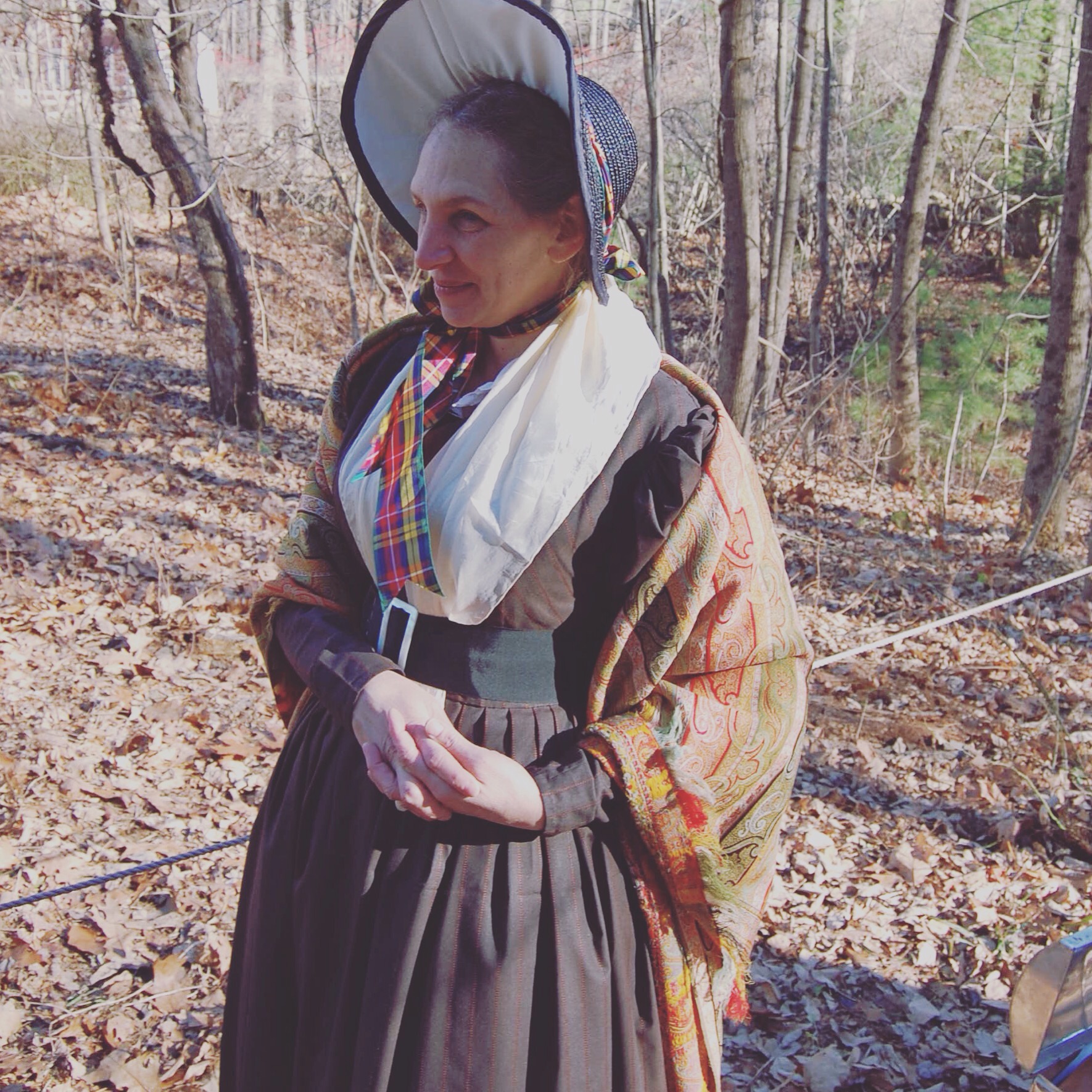
Silly bonnet, silly sleeves, original shawl

To finish out the silliness, sleeves o’ pouf, though hidden here under a shawl. If I’m going to keep doing these colder-weather events, I will need to invest (i.e. sew) wool shifts. I can definitely document one to Rhode Island circa 1830-1840, for whatever that’s worth. Happily, my lower half was plenty warm thanks to Mrs B’s  generous loan of a quilted petticoat (warm legs and a poufy skirt), so only my shoulders were cold by the end of the day.

Now that the last cutout has been hung and shot, and my poufy sleeves retired to the closet, I’m back to finishing up that woman’s winter waistcoat and another wool petticoat for next month. Turns out I have stocking issues I didn’t know I had– which is to say, I am in need of grippier garters (hello, mismatched wool tape!) and some quality darning time. Wool mitts may also be in my future, as I cannot locate either of my pairs of mitts– linen or wool/silk blend–among my things. I’ll be sorry not to have gloves or mittens, but as goes the documentation, so goes the frostbite and chilblains.