Sideways Into Immersion


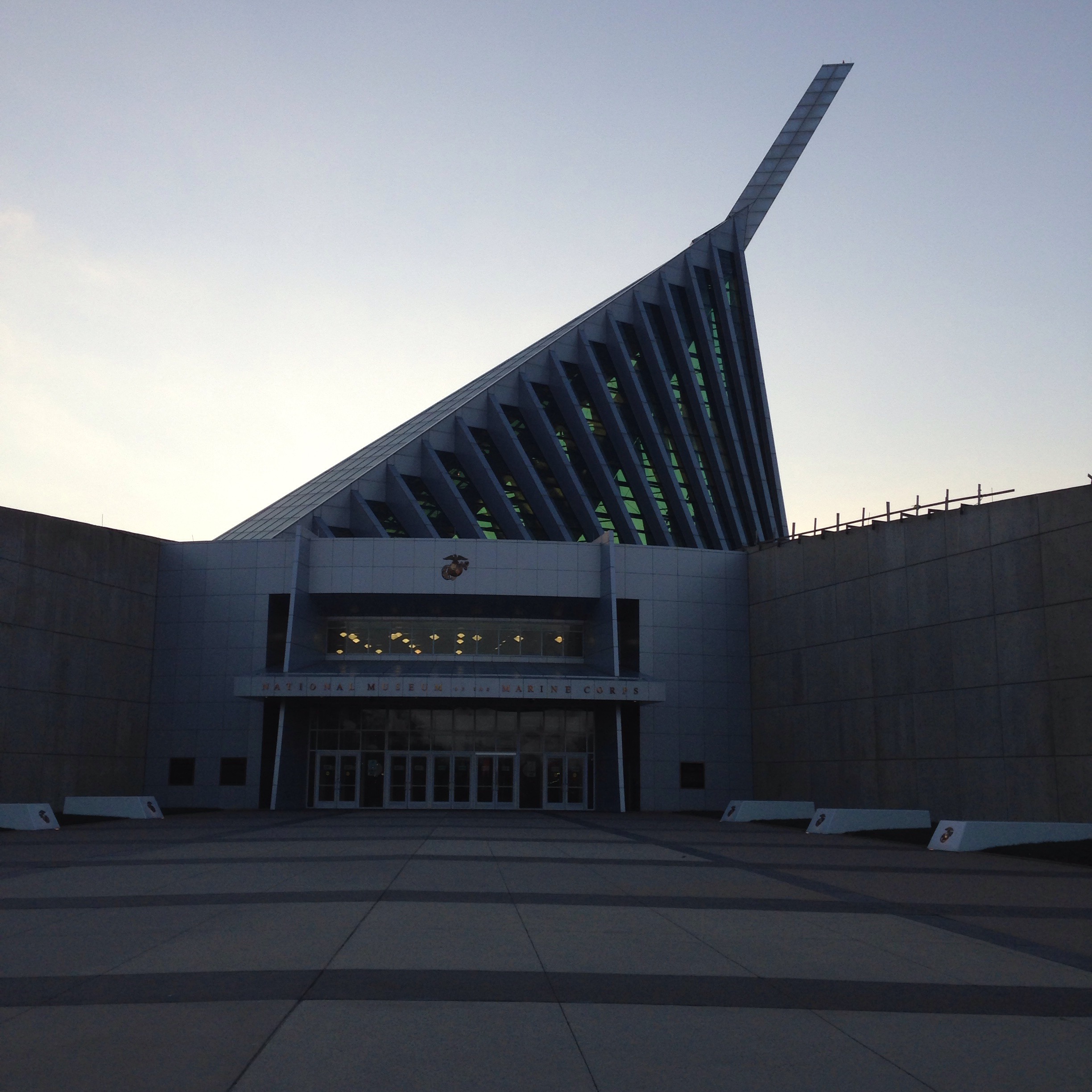
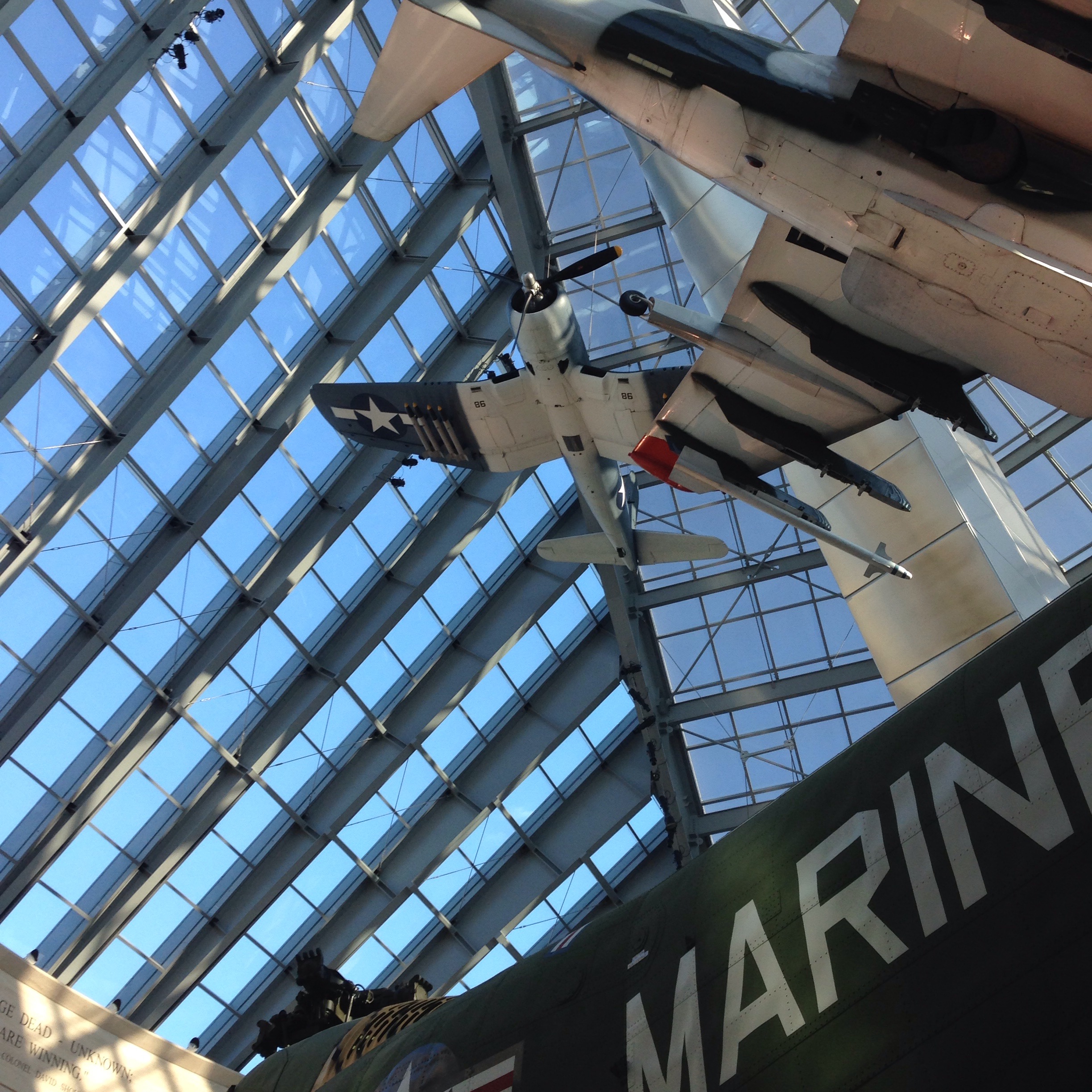
I was recently asked where I found inspiration for my work, and the obvious answer was in my travels, from the arrangement of bannister-back chairs on the wall at the Yale University Art Gallery to men shaving with straight razors on the parade ground at Fort Ticonderoga. There’s a kind of middle-ground answer as well: the National Museum of the Marine Corps.


Drunk Tailor took me there almost a year ago, and since What Cheer Day prompted me to think about emotional goals, I’ve wanted to go back. Anna asked about uncomfortable emotions, and while Sharon is absolutely right about the United State Holocaust Memorial Museum being necessary, it was the NMMC’s 20th century displays that came to mind, particularly Chosin and Khe Sanh– Chosin all the more so after watching the American Experience program on the battle of Chosin.
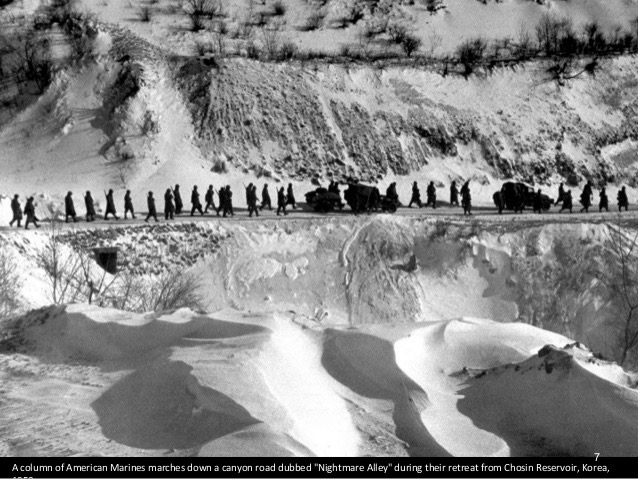

A year ago, the Chosin Reservoir gallery experience resonated with me because it was so well done. Reproductions of David Douglas Duncan photos (he sticks with me because, like Omar Bradley, he came from Missouri) hang on the wall beside two glass doors. To the right, a film runs on a loop, framed by cast resin icicles. Open the doors, and even Drunk Tailor and I are dwarfed by the landscape looming out of the dark. Figures of Marines crouch above us, sheltering behind a snowbank…of dead, frozen Marines. Artillery rounds burst against the dark sky, and I wrap my coat around me because, more than fearful or shocked by the noise and lights, I’m cold. Really cold.

There’s no possible way a gallery –even a Marine Corps Museum gallery– can replicate a fraction of the Chosin experience, but the gallery succeeds in shocking our senses through the simple use of temperature shift, and that is enough to take us out of the everyday. Physical discomfort prompts an emotional shift that allows us to better empathize with, and understand, the experience of the Marine at Chosin. Now, the NMMC and I may have very different takeaways from this gallery: while I absolutely respect and admire the Marine corps (c’mon, I sew OD gowns while binge-watching The Pacific), my instinctive response is No More Wars. That’s a complicated response to have in a military museum, and one I feel more strongly at the NMMC than I have at the West Point Museum.

I attribute these different responses to the greater sophistication of the NMMC compared to the WPM, which presents very standard uniform/flag/weapon/label displays. The NMMC begins that way (the sole “motion” in the earliest galleries is stylized seagulls against a blue sky), and while I love roundabouts and shakos nearly as much as Drunk Tailor, these galleries do not connect us to the history as immediately — as emotionally– as Chosin and Khe Sahn.


Khe Sahn was slightly disappointing this visit compared to last year. To be sure, the helicopter entrance continues to impress me, but I recall the gallery having higher heat and more rats, as well as louder volume. The temperature contrast was particularly notable against Chosin, and I remember taking my coat off in the Khe Sahn gallery last year. Despite those differences, a toddler entering Khe Sahn promptly turned around to leave. The radio noise was clearer this year, and I suspect that the gallery continues to be fine-tuned, as staff attempt to balance the noise of the siege against the noise of the entrance. This is a place where a faint odor of hydraulic fluid lingers in the helicopter, and probably prompted the emotional response Drunk Tailor observed visiting with veterans.


The bottom line, though, is that mindful use of sensory input in any museum can increase visitors’ emotional connection to, and engagement in, the material presented. Visitors are smart: it won’t take much for them to notice a smell, temperature or sound, so even the most cautious museums can sidle into more sensory engagement.

Mrs Pabodie, I presume?

Mrs William (Jane) Pabodie. oil on canvas, 1813. RIHS 1970.60.2

Remember Mrs Pabodie? She appeared a week ago today in Providence after an intense sewing effort left your author with numb fingers. The process was as straightforward as these things ever are, manipulating fabrics to do your bidding once you think you have the right materials.

It took more rounds of white muslins from Burnley and Trowbridge than I care to count, and a variety of book muslins from Wm Booth Draper, just for the chemisette and cap. The laces came from Farmhouse Fabrics in the most expensive small package I’ve yet ordered that did not contain antique jewelry.

Mrs Pabodie attempts to remember when she was born (1771). Photo by J. D. Kay

The gown is a wool and silk blend remnant from Wm Booth Draper, just enough to make a gown (even at my height) though I admit the front hem will need some piecing or a ruffle to give it the proper length. Still, the thing more or less works, though as I compare the details to the original painting, I admit we’re still in beta.

I was joined by three friends from different eras (because you know me: if it’s not didactic, we’re not doing it): a sailor who on the run from a Newport press gang in 1765; Reverend Enos Hitchcock of the Beneficient Congregational Church in 1785; and Sissieretta Jones, soprano of Providence, around 1880. Each of the characters described their lives and their clothing, and I will admit that the Annual Meeting audience may not have been fully prepared for some of what they heard– I’m not certain they had ever considered how apt “balancing a sheep on my head” might be in describing Reverend Hitchcock’s wig.

Mrs Pabodie points out East Side landmarks to a visitor examining the theatre curtain backdrop painted around 1810. Photo by J. D. Kay

In the end, they were entertained, and may even have learned something, as we celebrated 2016’s interpretive theme, Fashioning Rhode Island.

The Art of Deviance

portrait as a process test

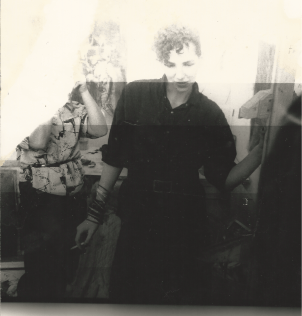
Some regular readers know I was part of Chicago’s punk rock scene in the early 1980s: my first foray into unusual music and natty dressing.* I think that’s me and my keffiyeh at a Naked Raygun show in the Chicago episode of Sonic Highways. But more to the point, I was on the fringes of an underground, taking style tips from obscure English zines, and being told I looked like a whore by a variety of men using Chicago’s public transit system. Judge not lest ye be judged aside, I’m accustomed to occupying uncomfortable spaces by design and by accident. (I wasn’t looking to be called a whore on the Fullerton El platform when I dressed in a below-the-knee vintage skirt and lot of Bakelite jewelry combined with bullet belts and studded leather, but everybody’s a critic when it comes to women’s appearance.)

The Frail Sisters, 1794

Now that I live in Providence, where indoor prostitution was legal for decades, if not centuries, my interest in gender role non-conformity extends to finding ways to document and represent sex workers in Rhode Island history. The adult section of the now-defunct Providence Phoenix, ‘zines, and diaries help record at least some aspects of this facet of our culture, but how do we represent it, and do it well? Jamie Lee Curtis in Trading Places is not a realistic model.

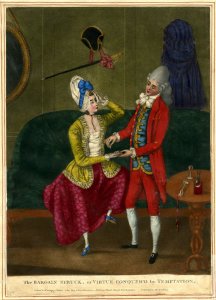
In discussing this lately, I’ve found consistent themes in representing sex workers in the 18th century: white face powder, rouge, bright clothing, visible stays, friendliness rather than reserve. There are lithographs to guide the portrayal through clothing, and visual tropes that signified a lack of virtue in the 18th century. In considering the local variations on this theme, my thought had been to expand upon the visual imagery by reading the Providence and Newport town papers, and the records of the Colony of Rhode Island, along with the contemporary newspapers.

The Tar's Triumph, or Bawdy-House Battery, print by Charles Mosley, 1749. British Museum 1868,0808.3896
The Tar’s Triumph, or Bawdy-House Battery, print by Charles Mosley, 1749. British Museum 1868,0808.3896

Nothing is likely to be quite as good as the Nort’ Providence chief of police who, in the midst of Tropical Storm Irene, pursued a stripper who took clients on the side when she ran a red light in her SUV. She crashed into a parked car in Pawtucket and abandoned the car, at which point the chief of police searched the vehicle, found her open purse, and stole the cash she’d earned that morning. When questioned later, he was at pains to explain why the money was wet…** in any case, the Providence brothel riot of 1782 aside, I do not expect to find anything quite as lurid.

The Bargain Struck, or Virtue conquer'd by Temptation. Mezzotint, 1773. British Museum 1935,0522.1.130
The Bargain Struck, or Virtue conquer’d by Temptation. Mezzotint, 1773. British Museum 1935,0522.1.130

My sartorial choices for a prostitute would include a rather over-fancy cap with a worn silk ribbon, rouge and a velvet patch, a silk gown stained on the back, silk petticoat stained at the knees, laddered stockings, and heeled shoes tied with silk ribbons, or fastened with paste buckles. If my character worked from a brothel, the dress could be brighter and cleaner, but in either case, neck handkerchiefs would be optional or silk and askew, showing my stays and cleavage.

This is not an easy impression. It’s not just that I do not want to parody an 18th century prostitute, but that I want to honor the memory of these largely forgotten women. They had families– in all likelihood they had children, as we know from the story of Mary Bowen and Eliza Jumel– they had feelings, desires, dreams, felt love and pain. They were likely desperate.

They were human.

We owe them the respect of representing them well– of representing them at all– if we strive to recreate a more complete picture of the past.


*What else is this crazy thing we do?

**You cannot make this stuff up.

A Giant One-Night Stand

Drunk Tailor’s told you some of the story, and Our Girl History a little bit more, but here we specialize in confessions, so let’s begin.

One night stands: no, not that kind, this kind: the Anarchist kind. I’ve been following Mr Vagnone’s work for some time now, and while museum professionals are not all in agreement about his techniques and approaches, I find them intriguing and thought provoking. I’ve also found that the best way to accomplish anything is by baby steps, as annoying as that can be. That’s how we got to this What Cheer Day: incremental progress over a five-year period. What was so different? Well….

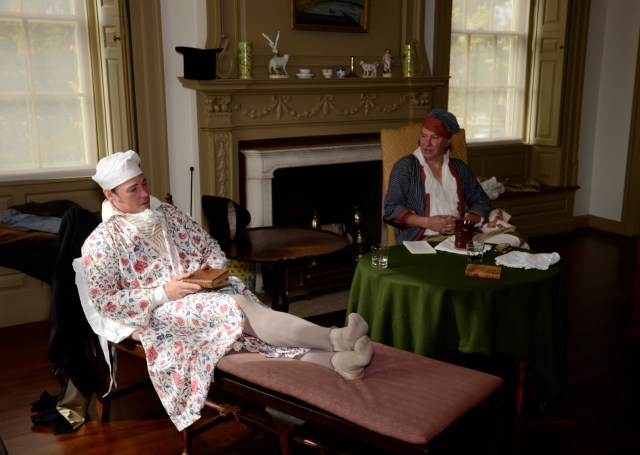
Jimmie and Billie, unwell and unable to dress themselves without Gideon's aid. Photograph by J. D. Kay
Jimmie and Billie, unwell and unable to dress themselves without Gideon’s aid. Photograph by J. D. Kay

To begin with, we slept in the house. Eight of us. In the period beds and on the period sofas. No harm came to anything, except the gentlemen, who seem to have contracted mild, possibly mold-based, ailments from ancient feather beds.*

img_8303

We scampered around the enormous house (I swear the front hallway would contain my entire flat, both floors!) in bare feet and period night clothes. I has a regret about that, because the floors could be cleaner, and I forgot to ask for my slippers back.  

Anyway:

Big house. Dark night. Flickering candles. Rain storm. Cantonware cider jug.

Mind blowing.

Why? Why do it? Why risk it? Why, when I’ve been there after dark? Why, when I’ve slept in other historic houses and historic beds? Because to really understand someone, you have to walk in their shoes– or sleep in their bed, as the case may be.

Goody Morris makes up a bed. Photograph by J. D. Kay

I lay in bed in an enormous mansion house, the first one built on the hill in Providence, completed in 1788. Almost every week, I tell the story of the house, the family moving, James complaining about the June heat as he walked up the hill from Water Street to move into the new brick edifice. I tell the story of Abby’s wedding, the longways dances on the second floor of the unfinished house, candles and dancers glittering in the enormous mirrors at either end of adjoining rooms. But I’d never seen it. I’d never heard it. I’d never really thought about service circulation and stealthy maneuverings in the house.

Now I have.

Now I have lain in the enveloping warmth of a feather bed and heard the rain pouring outside, and nothing else. I’ve heard the deep quiet of thick brick walls. I’ve seen the utter darkness of the house at night, and, padding up the stairs to bathroom, been comforted by the presence of my companions even as they failed to sleep across the hall.**

A dreadful night: almost too much to bear. Photograph by J. D. Kay.

To enter the room as a maid, I’ve used the doorway from the former service stairs, and silently carried in a jug to serve the occupants. I’ve gotten closer to the near-invisible role of servants, in a period when full invisibility hasn’t yet been established. I’ve watched someone I love sleep off a migraine in a room where we interpret illness and 18th century medicine.

Best Maid/Bad Maid.  Photograph by J. D. Kay
Best Maid/Bad Maid. Photograph by J. D. Kay

All of that is mundane. And because I did all of that in a historic house with period furnishings, all of that is magical. My job now is take what I have learned and felt, and find new ways to use those personal experiences to connect our visitors’ personal experiences to a larger (and a smaller) story about Providence, early Federal Rhode Island, and a family.


* Most amazingly comfortable feather beds ever. Drunk Tailor’s review is unprintable on a family blog, but hilarious.

** Sorry about that… I slept pretty well, considering.