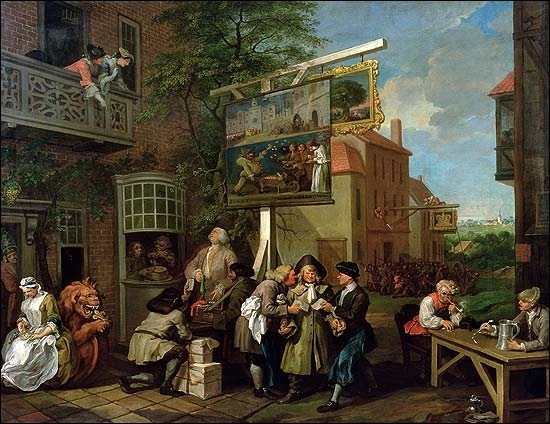
On Wednesday last, I met with two fantastic colleagues, one from my own house, and the other from the local living history farm/museum. We went over topics and themes and ideas about history, and we tried to stay focused…but it was hard, because really, all three of us think the 18th century is hot stuff, and the thing we most want to share with the rest of the world.
At one point, our farm based colleague reminded us that his people (tenant farmers) would not have been able to vote. And I realized, as the conversation quickly hopped to the westward migration of Rhode Islanders–some to take occupation and ownership of Western Reserve lands given as bounty for Revolutionary War service–that there were plenty of men who served in the Continental Army who, at war’s end could not vote.
Let that one sink in for a moment: in Rhode Island, only property owners could vote. A man who served with the Rhode Island Regiments who did not own property fought, in some cases for eight years, but at war’s end, could not vote. They could not participate in the democracy they might have sacrificed not only time and profit but their own bodies to achieve.
One man, one vote was not the law in Rhode Island until after the Dorr Rebellion of 1841, when white male property owners AND men who could pay a $1 poll tax were granted suffrage.
Universal suffrage rights aside, what did voting mean to the men who fought in the Revolutionary War? How did the people of the late 18th century understand their rights, and they role in democracy? It was far different from what we take for granted in America now, which is different from how democracy was understood just 100 years ago.
Again, we could delve into how Senators were formerly not chosen by popular vote or argue about the electoral college, but what I wonder now, as I ponder the men who portray Rev War units, is to what degree those men understand how very different the men of the past were from the men they are today. It is not just breeches and “Good Days” that make us different. The way we think– how we see the world and how we see ourselves– is fundamentally different.

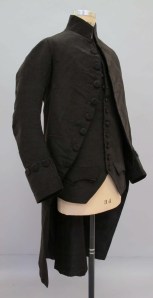 In considering menswear, I found this suit at the Met. Incredibly plain, it reminds me of classic Balenciaga: all about fabric and drape. It also reminded me of Hogarth’s Analysis of Beauty, and the serpentine line.
 You could also call it the Ogee curve, and it’s found in the serpentine legs of 18th century tables, and does not come from, “Oh gee, that soldier’s got nice legs.”
 In this variation on the theme, the contrasting lining emphasizes the lapel line, but the overall effect is less elegant. It’s about materials, too, not just cut. There’s so much to learn just by looking, really looking, at clothes and paintings from the past. There are subtleties we miss as we rush past, and miss because we haven’t read enough to understand what we’re being told.
 Kirsten Hammerstrom
You must be logged in to post a comment.