Split Shift

img_7748
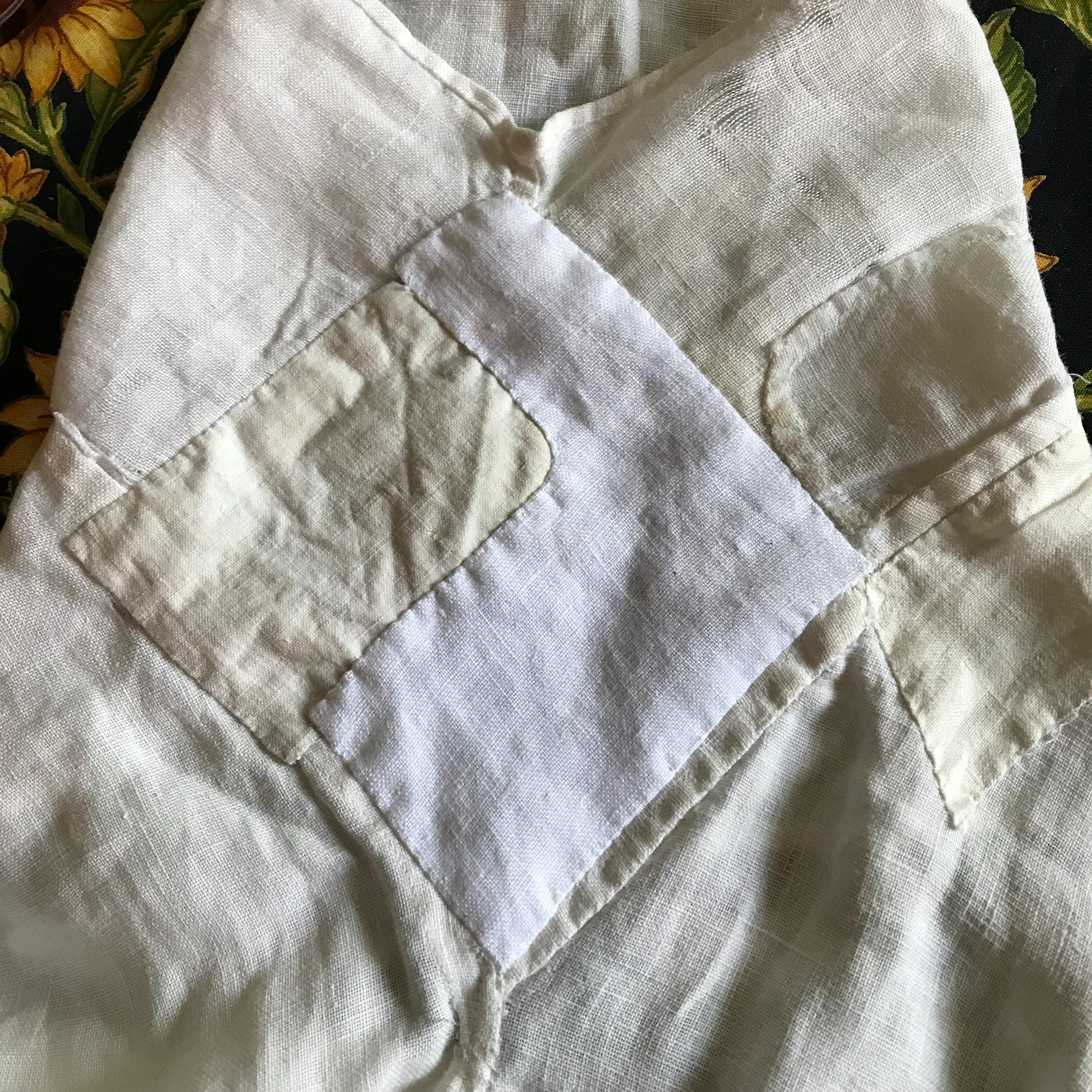
A well-patched underarm gusset

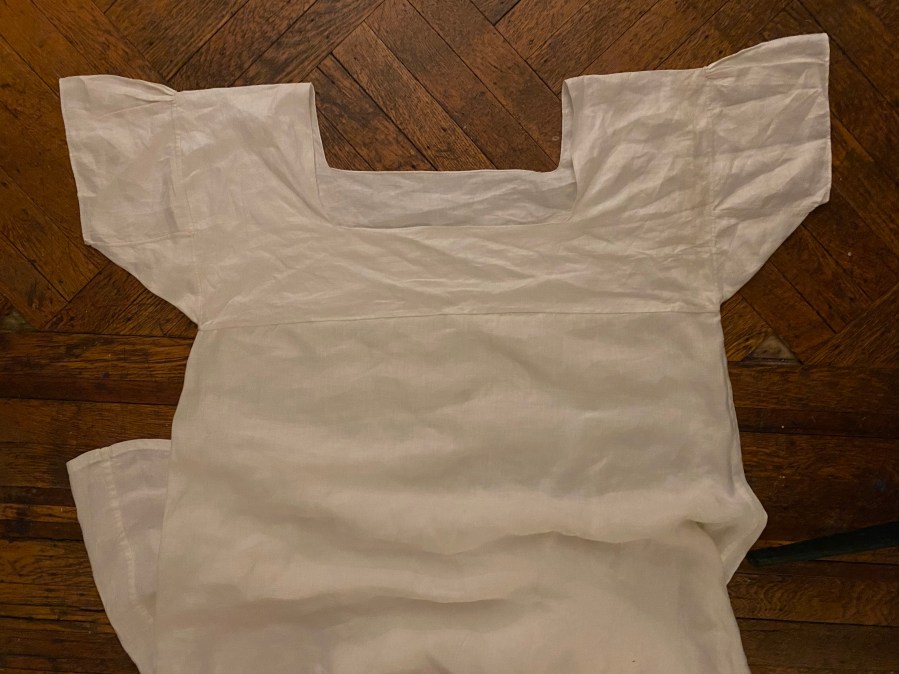
Once upon a time, I made a shift for the early 19th century– and promptly had to mend it. I have been mending that shift ever since (8 years!) whilst complaining that I need to make a new shift. 

Never mind that I could commission one. Never mind, never mind. 

Over the intervening 8 years, I learned more about sewing and shifts, and made a shift for the 1770s that I’m pleased with. That shift combined unbleached linen hand-woven by Rabbit Goody and purchased by my partner at a prop sale and white vintage linen found in a shop in Stockbridge, Mass.

56951198_10214538359594041_1091022036504936448_n
Underarm gusset of vintage linen

The vintage linen has a stain running along the center fold, but is otherwise white, soft, and more densely woven than most linen available today. It’s true that the more you make something, the better you get, and the better you will understand what you’re making. 

Another path to understanding is looking at originals (yes, reading counts, too).  I’ve been lucky enough to find and acquire two antique shifts, both from the early 19th century. While they’re not documentation for the period I interpret most often, they do provide clues to construction methods, and those clues are that aside from seams being felled for strength and durability, shifts are inconsistent. One shift uses the selvedge as the hem– which means the grain runs counter to the usual vertical orientation– while the other dispenses with the notion of bodice necklines to double down on the squares-and-rectangles trope.IMG_4592

Shifts are hard to date since they’re so basic (squares and rectangles) and don’t necessarily follow the lines of fashion. The sleeves here place this in the 19th century, though it could just be late (after 1785) 18th century.  I’m pretty sure it’s not, but the possibility points to the staying power of the basic bag-like form. 

Using this shift as inspiration, I decided that instead of patching that worn shift one more time, I would chop-and-top, that is, I would replace the top, worn section, and append it to the perfectly fine lower body of the shift. 

I measured the extant top, measured my bicep, and cut the pieces accordingly after drawing threads to create straight lines. I had one rectangular piece with a slightly shaped neckline, two rectangles for sleeves, and two squares for gussets. Although I started this process in December, I was “overtaken by events” that included a yard sale, teaching a workshop, preparing a presentation, and taking a workshop. With a possible outing in late April and an 1820s dress workshop coming up in early May, I decided it was time to finish this.

Most of the work was in the gussets, four seams in all, two to attach the gusset to the sleeve, and two to attach the gusset to the shift body. Once the seams are backstitched, the offset side is folded over and felled all the way around the gusset. It is best not to count the number of seams you stitch for each sleeve and just keep sewing instead.

Over the course of a couple of days (Monday afternoon, and Tuesday and Wednesday evenings) I finished the neckline hem, attached the gussets, cut off the top of the old shift, and grafted the new top to the old body.
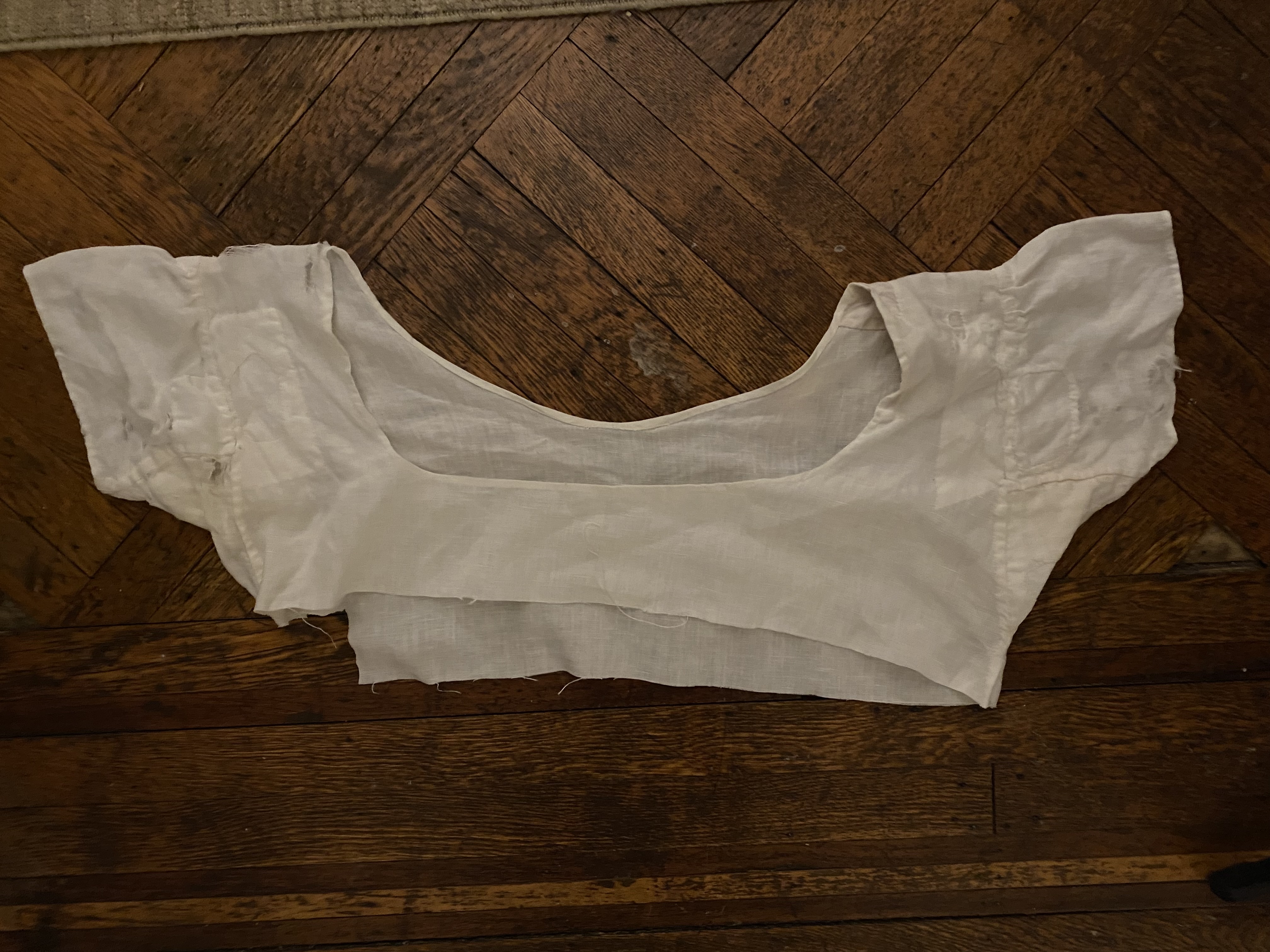
IMG_5396Removing the old top was not the neatest job, as I discovered part-way through the task. I decided to pull a thread across the bodice starting just under the underarm gusset. This worked well across one side but drifted badly across the other. (In which I discovered that I did NOT, in fact, cut that shift strictly on the grain.) I managed to fudge the situation but there’s no guarantee the seam and the hem don’t wander. They won’t be visible when worn, thank goodness, so I decided to live with the wobble and do better next time.

IMG_5395

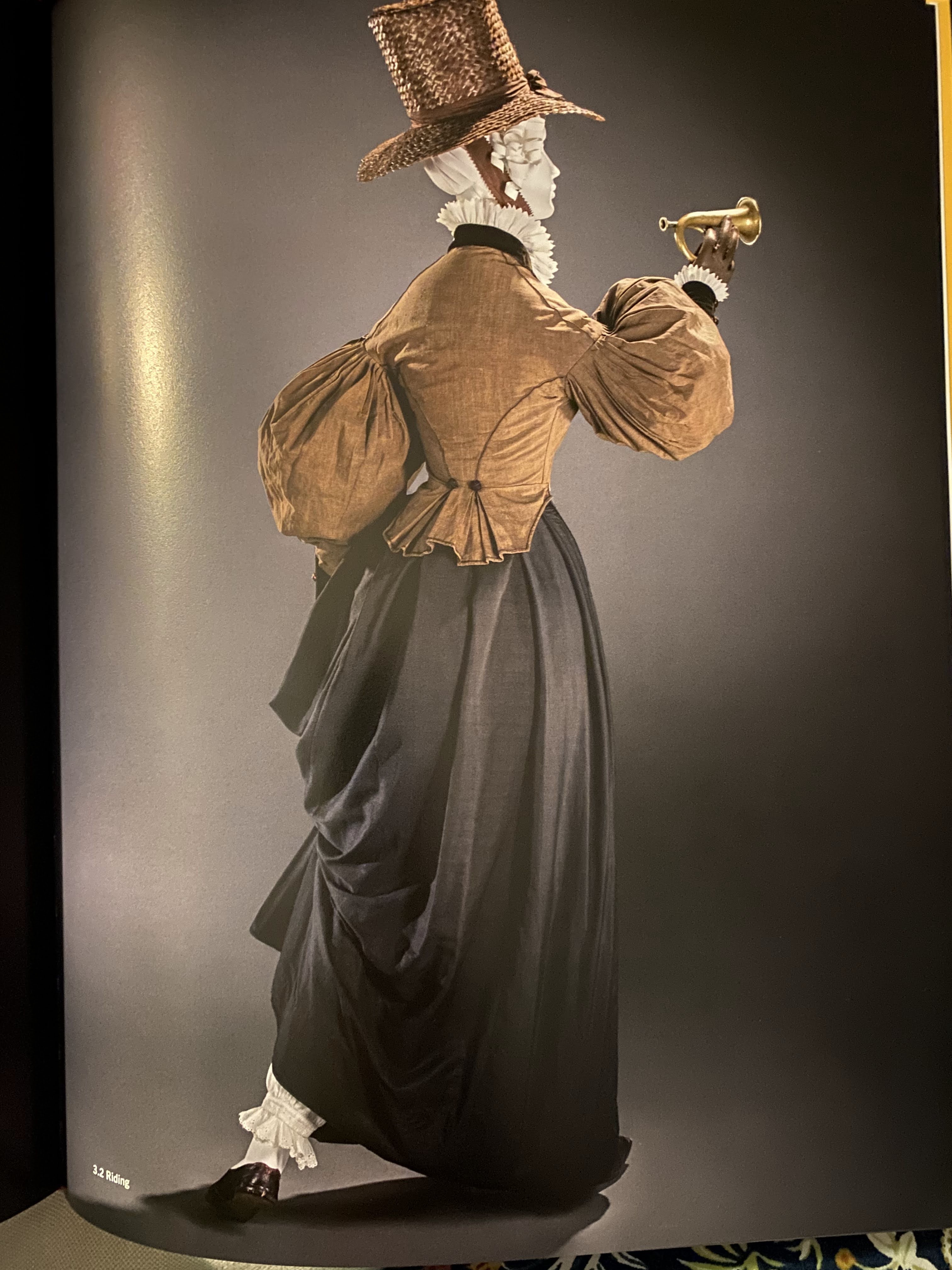
1830s Riding Jacket

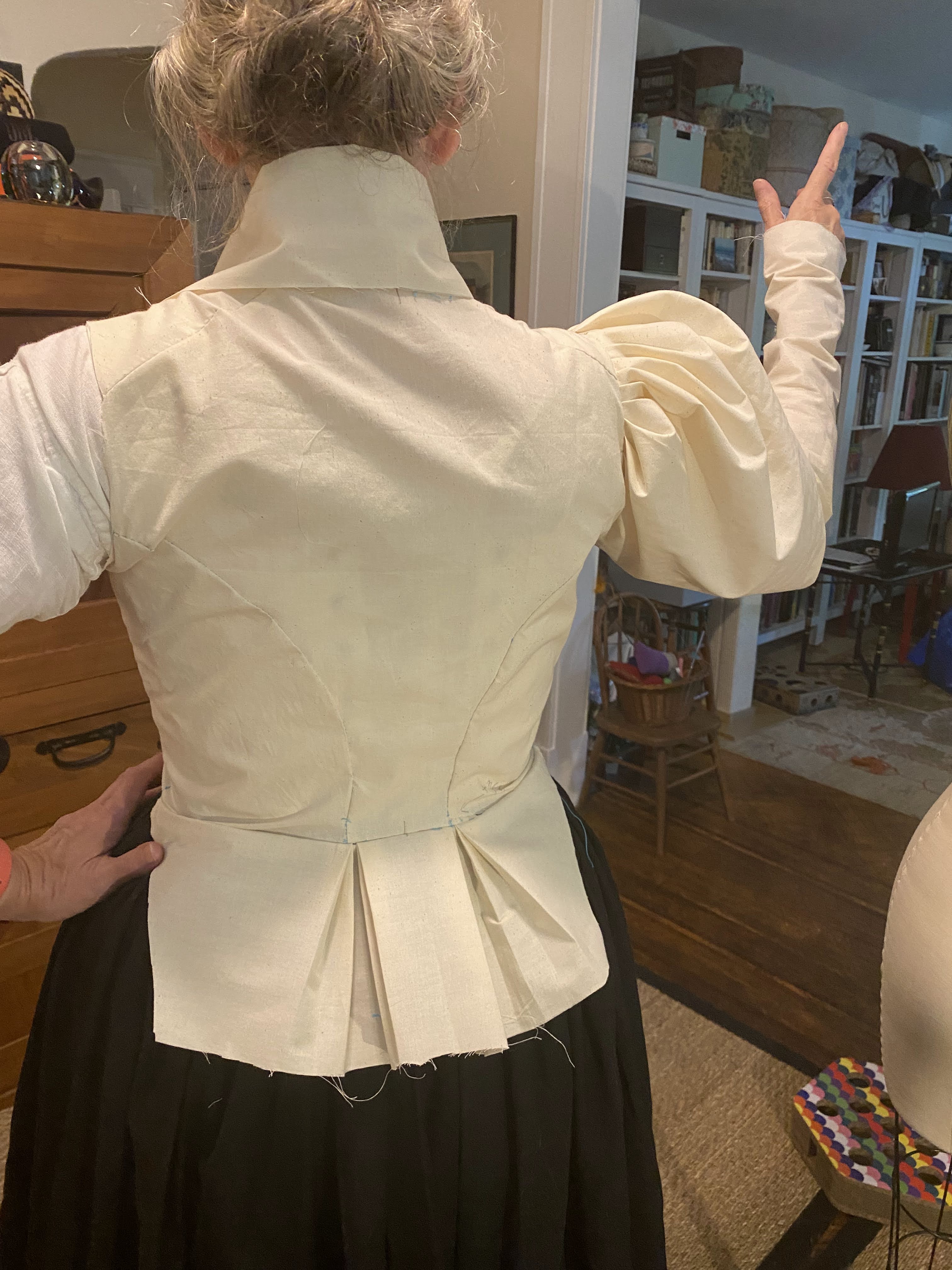
There’s a wonderful exhibit winding up a tour, and although I have not been able (yet?) to see it, the catalog was a Christmas present in 2022. One ensemble in particular captivated me: an 1830s unbleached linen riding jacket worn in Boston, MA. The enormous sleeves and oversized hat probably contributed to my fascination, and with a place to actually wear such a thing, making seemed like a good idea. Or at least an achievable idea. 

This journey started in July, 2022, and was finished in August, 2023. Things happened.

I started with a muslin mock-up, of course, using a previous year’s Spencer a l’Hussard as a starting point. (There is a point when you’ve made enough different things that you can kit-bash your way to many new garments.) The biggest change to the Spencer pattern was in the front closing and collar. The a l’Hussard has a standing collar and fastens with hooks, while this has a fall collar, lapels, and closes with buttons.

There are no published images of the front of the extant jacket, so I looked at both fashion plates and other extant riding habits, ultimately deciding to make a single-breasted jacket.

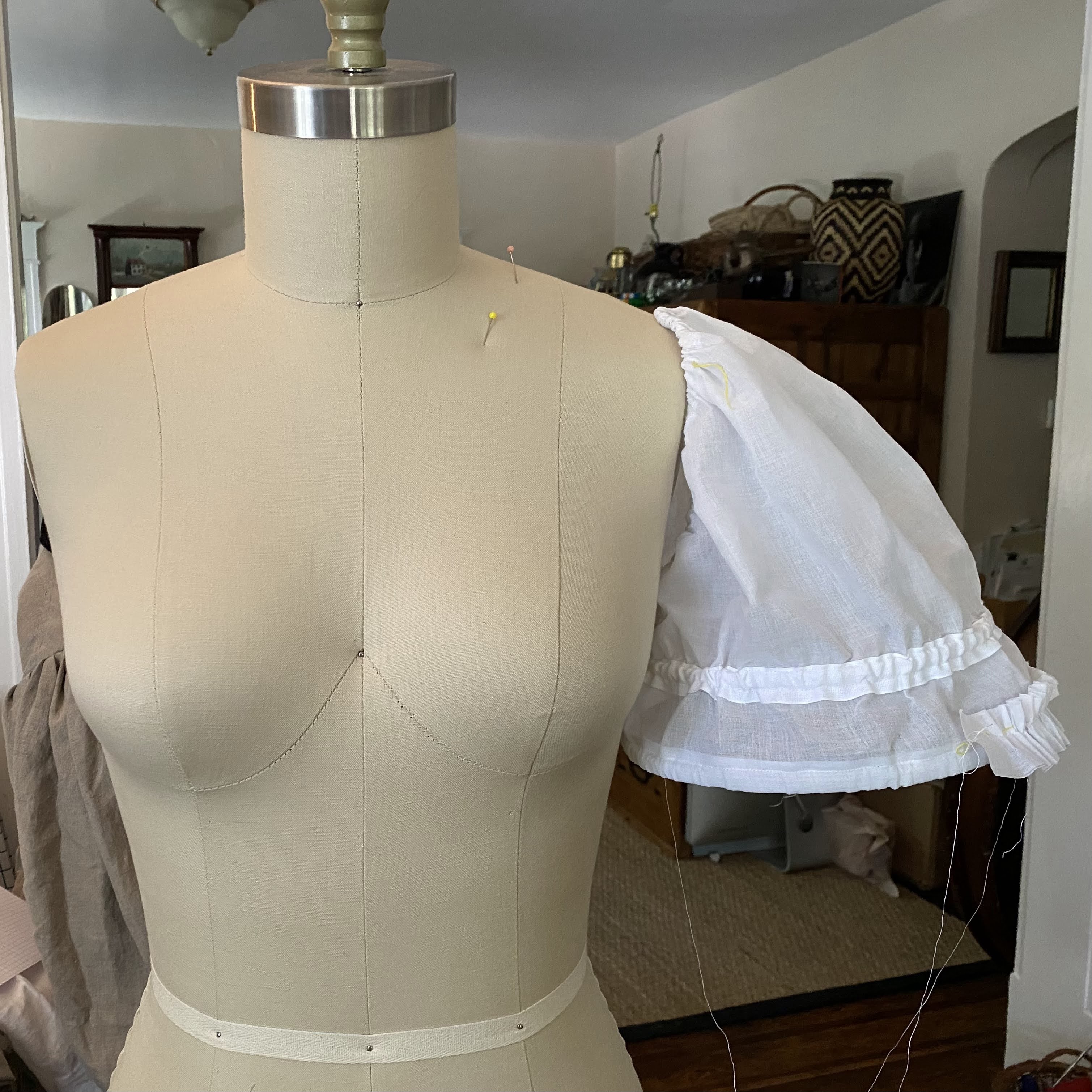
The construction is straightforward, and much like a gown from the period. The bodice is lined, while the sleeves are not. I took advantage of the smaller piece sizes to use up some linen cabbage, and got myself a flashy mis-matched lining as a bonus. One of the trickiest parts was figuring out sleeve supports. I had a melt down over the cage supports, which showed through the lightweight linen and looked awful. I tried them first because I was concerned about the heat down- or wool-filled sleeve puffs would generate for an Labor Day weekend event. In the end, I remembered that I had cotton organdy, and that crumpled up to a nice volume inside some polished cotton covers. These are made with twill tape to attach them to stay straps, if you’re wearing them under a gown; the straps slip over your arms and the puffs rest more or less on your biceps.

Unfortunately, I became anemic while I was making this, and attending a workshop not long before we were supposed to travel to New England wore me out to the extent that we could not travel. Truly annoying, both in thwarted plans and how lousy I felt. Many iron supplements and one appendectomy later, we decided we would make it to the Militia Muster event at Old Sturbridge Village. (It was quite a year.)

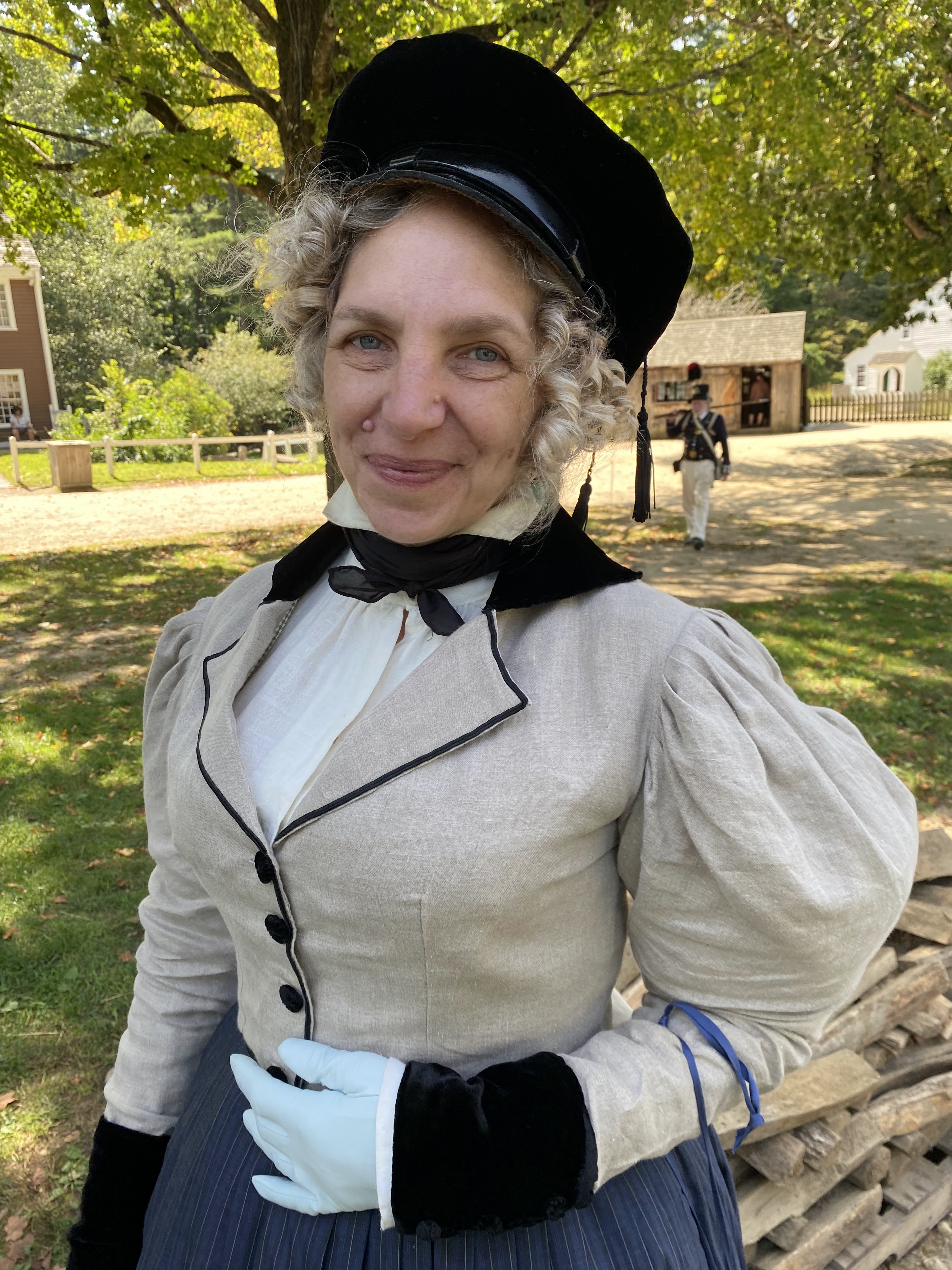
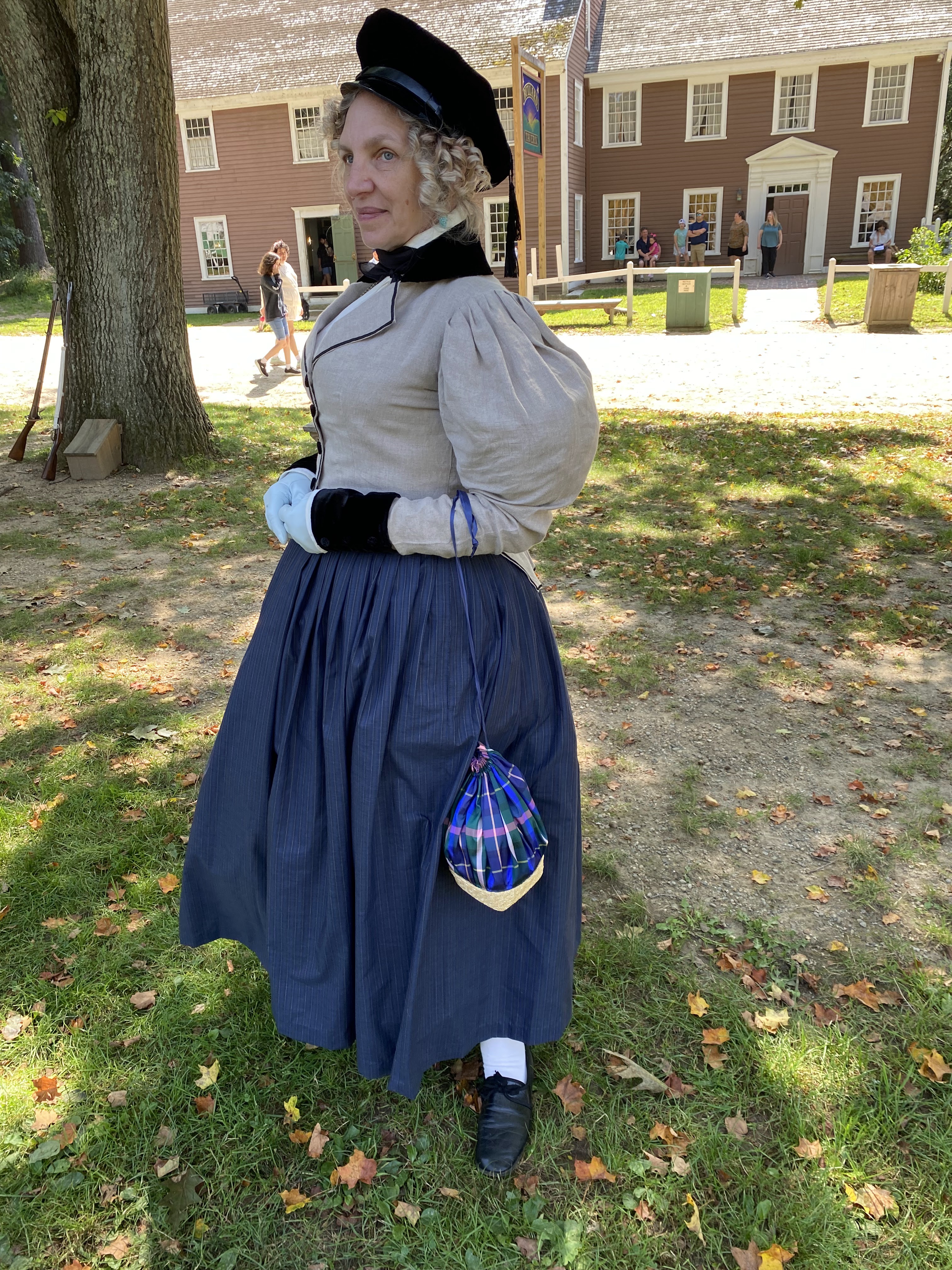
To finish this, I stitched on the black wool tape, outlinng back seams, the hem of the peplim, and the front edges. I couldn’t tell from the images whether or not the original had tape, but decided to err on the side of embellished, especially since the cuffs and collar were black velvet. I added custom black velvet buttons embellished with silk thread, made by Blue Cat Buttonworks. Truly lovely, and not within my skill level.

I had planned to wear this with the blue cotton skirt and a riding shirt or habit shirt, but I miscalculated the neck opening and ended up without enough time to restart, so I borrowed a shirt from Mr. K. Luckily the sleeve plumper fit over the shirt, and the jacket fit over all of it! The weather was lovely for early September in New England, and I spent a pleasant day talking about women’s sportswear and the rising interest in physical culture as part of a well-rounded and healthy education in the early 19th century.

The ensemble is accessorized with a black velvet wheel cap, for which Mr. K made the shiny leather brim. The reticule/workbag was made by Anna Worden, and the shoes are black leather Robert Land Regency slippers. The unbleached linen and checked linen lining came from Burnley and Trowbridge, while the skirt fabric came from a Rhode Island mill store remnant table. 

The Material World of Widow Weed: an interpretation

Pomade, powder, a pad, and a liberal dose of hairspray got me closer to Big Hair than I’ve ever been.

Part four of a series

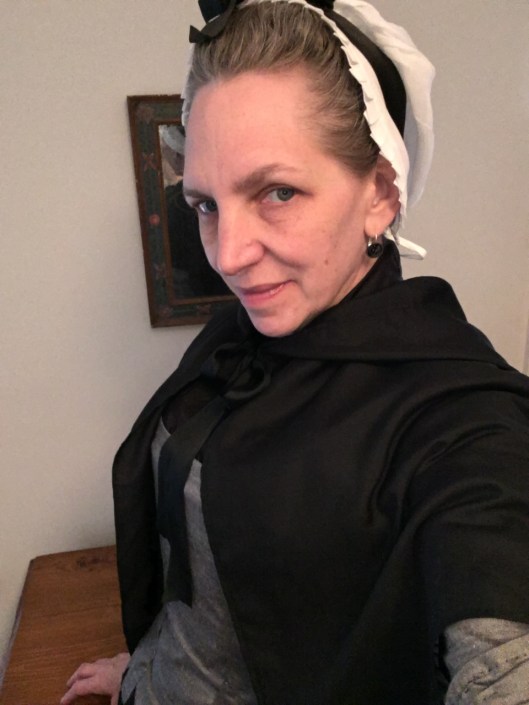
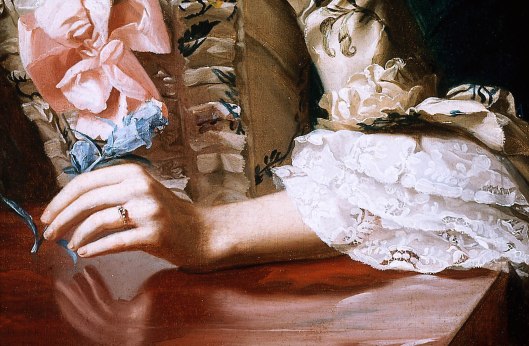
Widow Elizabeth Weed: what would she wear? What would she own? My first inclination had been to wear the grey tabby wool gown I already had, until I realized how much of George Weed’s estate Elizabeth had received. As detailed in the first post, the strategic fabric reserve (SFR) provided a “just enough” remnant of shiny silk to make a gown. Second mourning seemed right, for six months past the death of her second husband; with Mrs. Mifflin’s 1773 gown style in mind, I decided to make an English gown with robings and stomacher. (To be honest, I’m pretty pleased with how close my cuff came to Mrs. Mifflin’s, considering how badly I can mess up a cuff, and that this was my first finished silk gown in an 18th century style.)

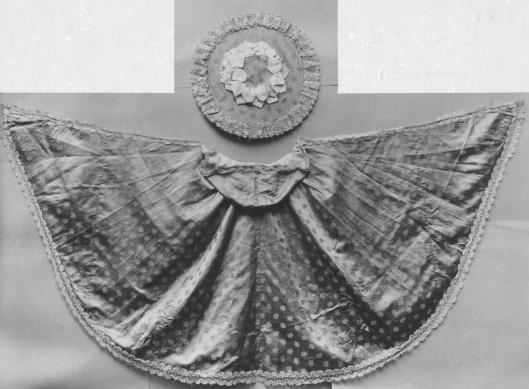
A gown is one thing, but what about the rest of the ensemble? The Widow Costard print provided some guidance, despite being some years later than 1777. The black hood and cloak or mantelet over a white cap appears in other widows’ portraits, although the black silk cloak is not an uncommon accessory. I had been toying with making one already, and had patterned one from the original in Costume Close Up; extant examples aren’t thick on the ground, but there are enough to demonstrate some consistencies.

Cloak, figured cerise silk satin with a lace trim, 1760-1770. Victoria and Albert Museum, T.61-1934

1760s example at the Victoria and Albert has a shape similar to that in the Williamsburg Collection, while another at the Met (dated, without a reason cited, to 1820-1829; perhaps the reason is in the selvage or the lace), provides some clues to construction and materials. So, with another remnant from the SFR in hand, I worked from my muslin to a paper pattern, using the neck cutout from my red wool short cloak as an additional guide. It went together in fairly short order, since it is mostly hemming, with just two seams and some pleating. While I wore it untrimmed due to time constraints, self trim or lace or would be ideal additions.

Portrait of a Woman called Lady Fawkener ca. 1760. Jean-Etienne Liotard.

Additional clues to Elizabeth Weed’s status as a six-months widow are found in the black silk ribbon of her cap; black and white hats are common enough that the hat alone does not signal “widow.” I chose to make mine from a black figured silk taffeta lined with white, based on an ad in a Philadelphia paper. On October 15, 1776, John Brown advertised in the Pennsylvania Evening Post for a runaway Irish servant girl, Judith Kennedy, wearing, among other items, a “black spotted silk bonnet lined with white.” Obviously, this might well mean “bonnet” in the form we are most familiar with, and I have taken liberties by extrapolating the spotted silk to my hat cover. Nonetheless, black and white hats are a thing, and I was looking to upgrade from my tatty and faded black chip hat.

Gathering white linen evenly is a challenge: literal thread counting.

Gown, hat, cloak, updated caps: so far, so good. I had a black wool petticoat already, suitable for mid-Atlantic autumn (there was no way a black silk quilted petticoat was happening in the time allotted), and black worsted (woven) mitts. What else would Mrs. Weed need? Upgraded shoes are tempting but beyond my budget, so the last article of clothing was an apron.

The majority of my aprons are check linen, with one clean unbleached linen apron and one stained white linen apron (coffee is my weakness). Fortunately, I found 30 yards of vintage white linen on a trip to New England, and thus had apron fabric handy. After making five aprons, this one went together in less than a day.

The final piece was jewelry. A few years ago I found a “Georgian” cut steel and glass locket suitable for hair that I wore as a widowed housekeeper; on a fresh black silk ribbon, that would be a cornerstone. I added a three-strand necklace of black glass beads to contrast with the locket (thanks to the local hobby store and a stash of findings). Earrings also came from the stash, made up quickly from modified buttons and black faceted drops.

Accessories. I finally have them.

I added a white silk neck-handkerchief for warmth, and bought a black one just in case. Based on images, I thought white most appropriate, but somehow, with the grey gown, the image of “Pilgrim” was hard for some visitors to overcome, so on Sunday, I switched to black. Sometimes you have to choose accessories to lower the hurdles for your audience. Explaining that I was not a Pilgrim, but in mourning–while providing an opportunity for interpretation–was not my primary objective, so the easy color switch seemed well worth making.

The remedies (as promised) were another, slightly strickier matter. While making them according to the receipts I found was relatively simple– this is long before big pharma– carrying them was another challenge. I opted to make a box, and fill some bottles, as will become plain in the next installment.

The Myth of Perfection

Ain’t nothin’ perfect.

Jackie’s got good points, and although I think they are slightly tangential to where I thought I was going on Monday, let’s pick them up.

Completely 1819 to represent 1819? My standard reply to pretty much every question is: It depends. Who are you, where are you, what are you doing? Middle class or higher bride? You are so 1819 it’s scary, from your skin out, head to toe. Lower class? You’ve altered your best dress, if not made a new one, and refreshed your accessories.

Look, folks: part of our problem is that we forget that the people in the past had the same covetous, jealous hearts that we have. They had wants and yearnings, for each other, for new bonnets, for velocipedes and overcoats. They were just as interested in impressing each other as we are, even if they sublimated desire into poetic images of greater obscurity than James Brown ever used.

I thought about this notion of mixed up times for clothing as I stood on a landing at work yesterday. Skin out, here’s what I wore on 1 September 2015:

  • Black Natori sports bra, purchased in Boston on January 10, 2014 (I saw my surgeon so I remember.)
  • White cotton tank top, label gone, acquired ca. 2013, possibly from Target
  • Blue and white striped cotton 3/4 sleeve J. Crew blouse, 2006
  • Black Nike undershorts, 2010
  • Lucky brand jeans, August, 2015
  • Red suede belt with brass buckle, ca. 2004
  • Red suede Naya oxfords, late winter, 2014

The oldest thing was the belt, followed by the blouse. The most stylistically determinate item is probably the jeans, since waistline height and cut of the legs fix trouser/jeans style. So, what could this mean for us, when we dress for the past?

Let’s start with dressing for the American Revolutionary War period, 1775-1783. What you wear depends of course on who and where you are; here I am in New England, wishing I was middling sorts.

Detail, Mrs Richard Skinner, oil on canvas by John Singleton Copley, 1772. MFA Boston, 06.2428
Detail, Mrs Richard Skinner, oil on canvas by John Singleton Copley, 1772. MFA Boston, 06.242

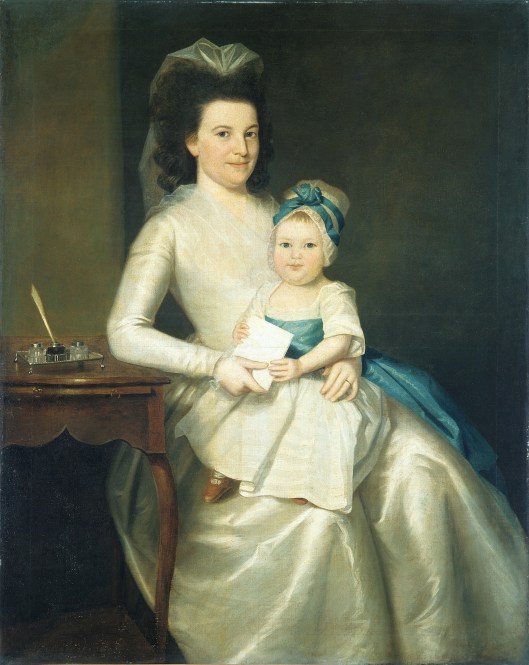
If I wear an open-front stomacher gown in 1775, will I still feel comfortable in that in 1783, when the ladies of means around me have switched to closed-front gowns? Or will I feel like I’m wearing bell bottoms and a macrame vest to high school, while the cool girls are wearing pegged Guess jeans and Fair Isle sweaters? (Not what happened to me, but you follow my point). Think how much American fashion changed between 1975 and 1983, and while you will surely see pieces carried over– watches, headbands, socks, Tretorn sneakers– they will be primarily small pieces, accessories, and not main garments.

Lady Williams and Child, oil on canvas by Ralph Earl, 1783. Metropolitan Museum of Art, 06.179
Lady Williams and Child, oil on canvas by Ralph Earl, 1783. Metropolitan Museum of Art, 06.17

That’s really want I think we want to get at: Yes, people mixed up clothes, wore favorite things, wore things out. But then as now, they wanted to be stylish. The more care you put into imagining yourself in the past, really being that person, the more convincing you’ll be. You won’t be perfect, and authenticity is as unachievable as objective truth, but you will be closer to real, and yes, even the public will know.