Objectification

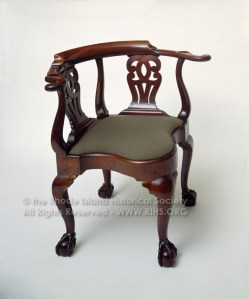
Corner chair. Mahogany with fabric-covered slip seat. John Goddard, 1763. RIHS 1990.36.1 RHix5136

I’ve had more alone time than usual at work, which is to say, I’ve been the only living creature in 16,000 SF for multiple consecutive days, which allows me both time to get lots of work done but also permits my mind to wander more than it might otherwise. One of the ideas I continually return to is about the objectification of objects. That’s a terrible phrase, isn’t it? What is the essential thingness of any given thing?

Let’s take chairs: I really like chairs, which is to say that I have, at last, succumbed to the seductive qualities of chairs.[i] But what makes a chair a chair?

Most simply, a chair is to be sat upon. Keeps your rump off the cold, cold ground. Supports your legs and back. Sometimes a chair is for lolling. Sometimes it’s for working. Sometimes it’s for projecting power. But essential, a chair is for sitting.

If use– specifically human use[ii]– is what chairs are for, what happens when a chair is removed from use, and placed on display in a museum?[iii] And what difference does it make whether that chair is on a white plinth in an art museum, or in a historic house, or in the historic house where it was used? When is a chair most a chair, other than the times you are sitting in one?

As I said: a lot of alone time.

servant mannequin in 18th century room
That’s no ghost, that’s my kid. Corner chair just in front of the ghost.

Within a historic house, it seems that the ideal situation is the chair in the room in the house.

That would seem to maximize the “realness” of the thing, right? But we don’t always have the chair, and even when we do, we may not know which room it was used in most often.

The way a chair is displayed and understood in an art museum: Object of Beauty is very different from the way a chair is displayed and understood in a history: Who Sat Here? It’s a conundrum though, because just as the chair become Beautiful Thing in an art museum, it can become Story from the Past in a history museum. Neither presentation/interpretation really gets at Chairness, which is really best experienced by sitting in the chair yourself.

Did I mention I spend a lot of time alone with objects?

Storeroom, Rhode Island Historical Society. RHix17 399

The way that I think these questions about Chairness relate to living history is by realizing that just as museums fetishize objects on white pedestals, living history interpreters/reenactors sometimes fetishize objects without contextualizing them. You know: Muskets. Clothes. Spinning Wheels.[iv]

Putting the chair in the room where it was used gives it context, and the visitor a new perspective that wouldn’t be gained from a white pedestal, or from the curb. The same is true of the things that we carry as interpreters. Context matters. It’s how meaning is derived and understood. Like repetition, isolation can rob an object—or a person—of meaning. Not that I’m lonely. I have all those chairs, after all.

____________________________

[i] Not to get too weird, though: I won’t rhapsodize (yet) about the sensual curve of a chair leg, or a delicate, finely-turned ankle, as I have heard some (fetishistic?) curators so. Yet: there’s still time.

[ii] Sorry cats: chairs were not actually made for you. Now get down!

[iii] If you know anything about art history and theory, you can probably guess which decade I was in graduate seminars.

[iv] My *favorite* thing to see in a military setting.

Good Grief

1803 dress and hair
Pre-sweat melted hair

I had my doubts about this event, since we were interpreting the death and mourning of John Brown a full month after it actually happened, and initially resisted somewhat strenuously. But people change, and by the time I was operating a motor vehicle at high speed on I-90 six months later, I could be– and was– convinced. Knowing little, if anything, about early Federal mourning customs mattered not at all. There’s always time to learn, right? Well… if you read fast enough, you can do anything.

Esther and Kitty draping the mirrors

Despite the bustle, Esther and I found time to cover many of the mirrors with sheets, and the portraits with black crepe; this is a time of reflection, not vanity. It gave our rooms a gloomy mien, and reminded us of our short span on this earth.

Visitors in the front hall of the John Brown House, Providence RI
We had many callers

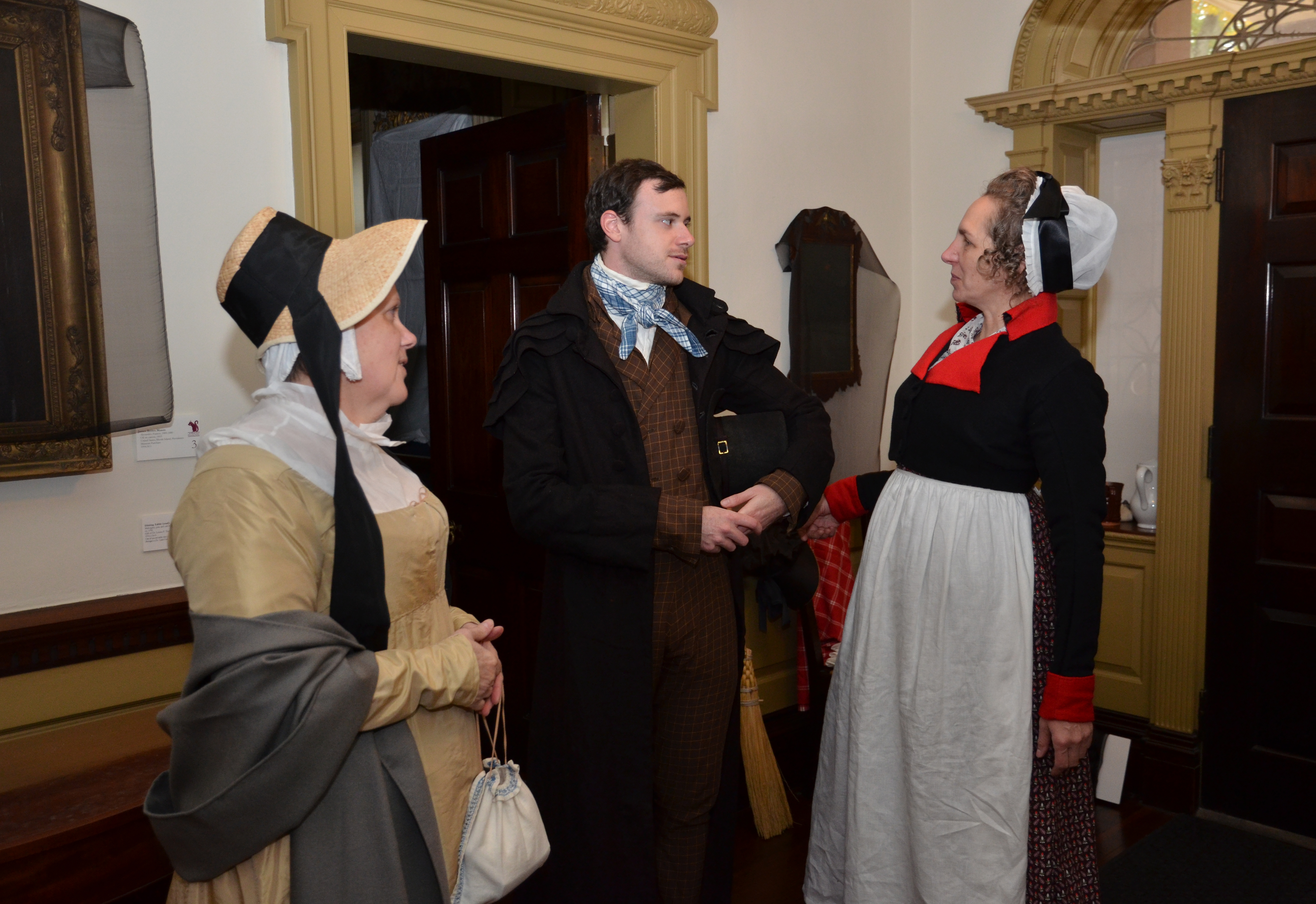
We did have many callers Saturday afternoon, as John Brown was such a significant figure in Providence. He accumulated significant wealth, as Mr and Mrs Thurber attested when they came to inquire about the profits from the voyage Mr T had invested in– $30,000!

Callers pay respects to Mr Brown
Mr and Mrs Thurber pay their respects to Mr Brown

Thirty thousand is a fine sum indeed, though one wonders where Mrs Thurber might spend those proceeds. While a generally refined person, she made many inquiries about sherry, so I was relieved I’d had the foresight to lock away the decanters. So many people call during a time of grief that you cannot be too careful.

1803 ladies ponder fashion plates
Considering mourning dress options

The mantua maker came to call, bringing black silks and plates for the ladies to choose from. We have had a mix of joy and sorrow in this house, and it is only of late that Mrs Francis (on the left, in blue), has left behind her more matronly garb following the death of her beloved husband John Francis in 1796. It was a crushing blow for her, but she does seem to have recovered now.

1803 woman and baby
Mrs H and her darling daughter, Anna

Mrs Herreshoff was with us, visiting from Point Pleasant in Bristol, and her mother found baby Anna, now just more than five months old, a great consolation indeed. Anna was dressed in mourning for her grand-papa, though she will not remember him. Despite the many callers, baby Anna was truly an angel.

Historical minister and coffin
The Congregational minister called.

The ladies upstairs were a respite for us servants, though we were comforted by the visiting minister from the Congregational church. They cannot make up their minds to a new minister, now that their beloved Dr Hitchcock has left them for heaven. They try on new ones for size nearly every week, and while that is not my congregation, I do think the Reverend Cooke is an excellent choice, combining devotion with humor.

costumed interpreters
The sexton’s son came to inquire if Mrs B wished rent the hearse

A more troublesome caller was Mr Richard Hoppin, son of the sexton at First Baptist church. They do possess the sole hearse in our town, and kindly (for a fee) provide it in times of need. I’m not certain of Mr Hoppin’s stability, for he was inclined to– well, to hop!– in our hallway, a most inappropriate action. The widow did seem to cause him fright (she is a formidable personage, as one would be, after so many years married to Mr Brown), so perhaps he was merely addled by his encounter with her. She wisely inquired after the solidity and soundness of the hearse, for Mr Brown was a substantial figure.

1803 widow and coffin
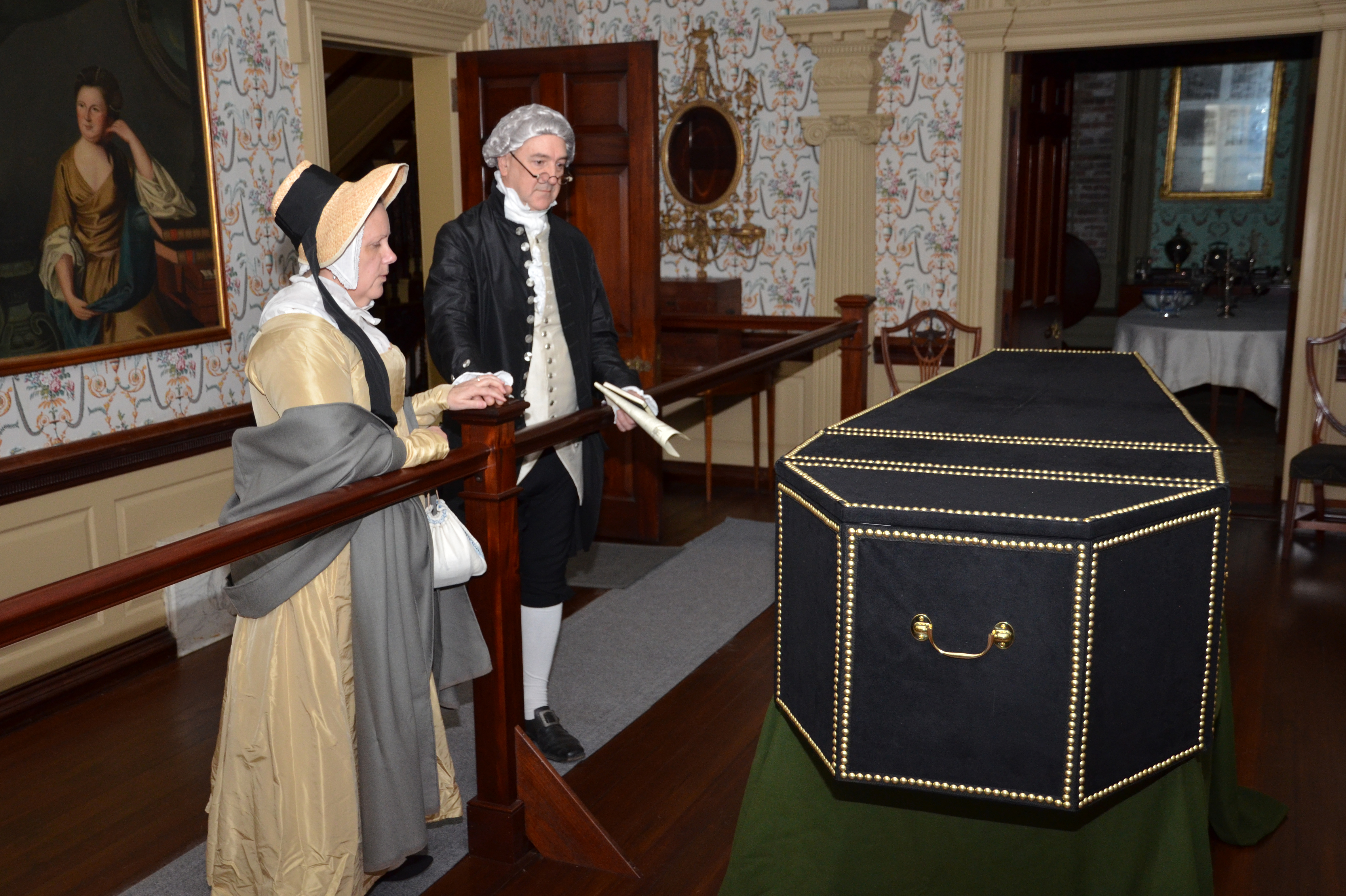
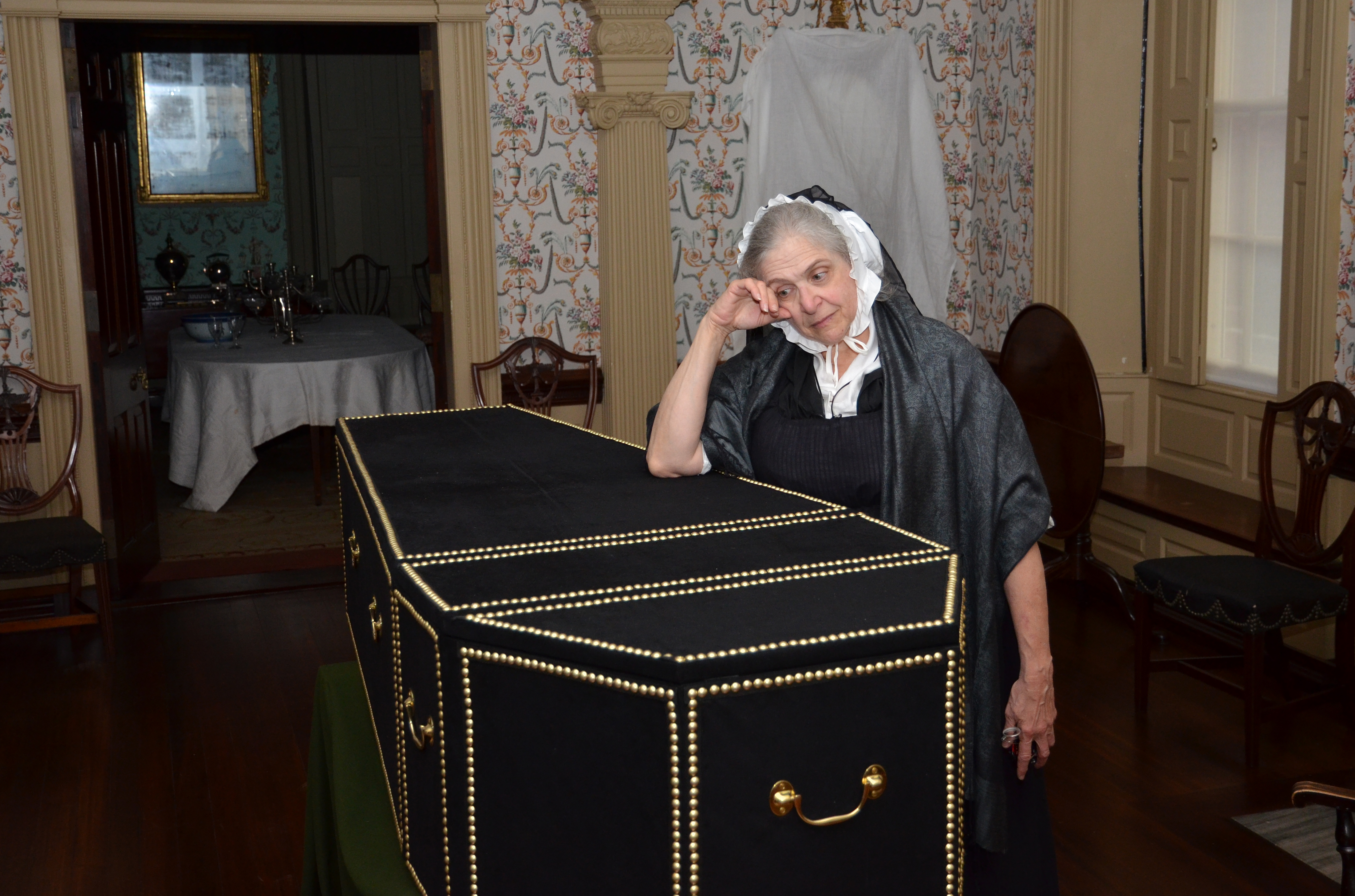
The widow Mrs Brown reflects upon her late husband

Mr Brown was a great support to us all, and his absence will truly be noted in our household and in our town. I do expect the house will feel empty without his presence, and that Esther, Goody and I will much remark upon the quiet as we go about our tasks.

costumed interpreters on the steps of the John Brown House
The obligatory group photo finale.

From an administrative and managerial stance, this What Cheer Day was different: we cut the interpreted day in half, running the event from 1:00 till 4:00, but still saw about the same number of visitors as we had in a six-hour day. A shorter day meant interpreters were somewhat less exhausted by the close of the day (costumed staff who started their day at 5:00 AM excepted), and the schedule did not have to be as detailed as in previous years. We also reprised a “make your own miniature” activity from the August George Washington 1790 event, and brought in period musicians, who played in the Washington Wallpaper room while people colored miniatures. We also put out an exhibit of memorial art and mourning jewelry, to help contextualize the miniature activity. Since we’ll be leaving the coffin on display and the mirrors and portraits draped through next weekend, a small display (three cases, labels finally finished at 11 AM on the day of the event) seemed like a good idea and opportunity. Upsides: chance to show off the collection, engage people in a hands-on activity, multi-sensory experiences. Downsides: Slightly more to accomplish than hands to do the work, still short a servant, always a little rough the first time you change topics. Unexpected bonus: slightly bumpy transitions in personal life make a suitably sad housekeeper. Score!

Glaciers in the House

IceDamFeb2015

I don’t mean the ice dams and icicles that plagued the house and streaked the service ell’s windows as they melted: I mean change.

I’m reading The Half Has Never Been Told (it kept selling out, so I only just got a copy), and thinking about the representation of a past that people would rather forget, and sometimes actively deny in the North– and the South, as you will tell from reading African-American History Fail.

Change in historic houses can be glacially-paced, as staff and docents alike resist changes to interpretation. Resistance to change is usually about comfort and confrontation, especially when the change is large.

I get that: Oh no, new stuff to learn. What was wrong with what we did before? But docents and staff get comfortable and loose sight of the context of the content they present. They say some interesting stuff.

Most jaw-dropping of all: Sometimes I like to pretend I’m Mrs Owner of the House. That one was creepy, to me. But it did give me some insight into the “ooh, wish I lived here” backwardly aspirational tour motivation.

How would you feel if living here meant you owned and traded slaves? Defended the slave trade in Congress? If a small girl had the care of your horses? We don’t ask those specific questions, but I think we need to. Slavery is slavery.

In the 1790 census of Rhode Island, there are 948 slaves, representing 1.3% of the population. That would be 13,000 people of Rhode Island’s total population today, less than the city of Central Falls (19,383 in the last census, and one of our smallest towns).

We think it’s a small number, but to those 948 people, being enslaved was everything. I don’t necessarily want to make our visitors feel personal guilt about slavery– that’s up to them–but I do want to them to think about what slavery meant, and what it did, as an economic system.

I want visitors to understand that the beauty of the house they see is built in part on the ugly and forced exploitation of a class of people. If they relate that to the rest of the world they inhabit today, even better. I think we owe at least this much to every site where enslaved people worked or lived.

The Museum of Crap

After an intense three days spent thinking about museums, we went to the antique mall on Sunday. It did not disappoint, being stuffed with a variety of material goods.

image

We had not gone past the first round of booths when it occurred to me that what I was walking past a series of touchable period rooms or installations, a kind of non-judged science fair of historical displays, each one trying to convince me to literally buy its message.

This came home when I saw the booth on the left, arranged much the way a period room in a museum is arranged, with the desk suggesting that someone has just walked away from it.

I’d seen this at a house in Boston, and I’ve seen it at home: it’s not enough. At least at antique mall, you can touch everything. At the museum, unless that desk and room are jam-packed*, we are not going far enough.

image

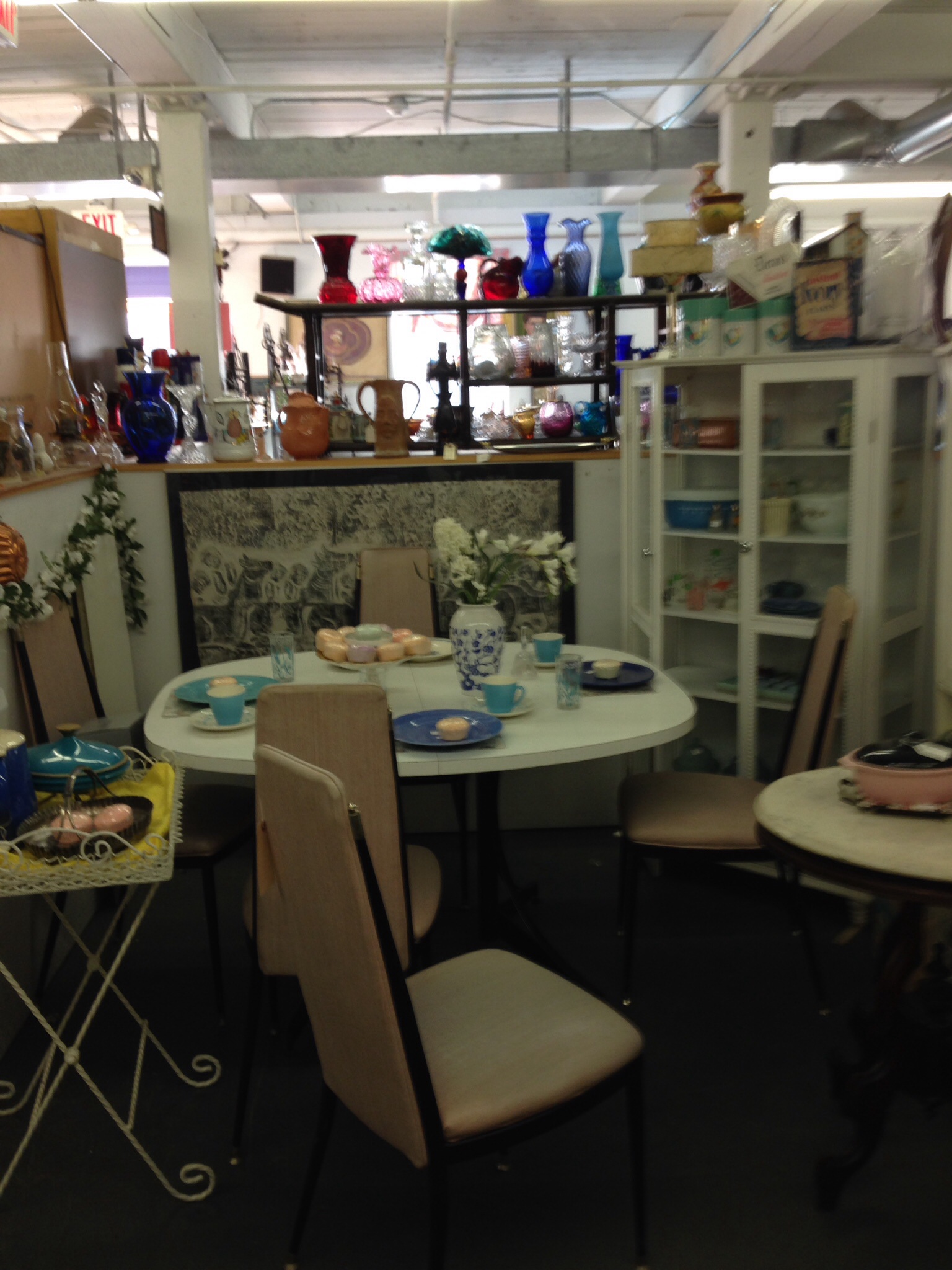
In this vignette, you can step into a dinette and sit at the table. Feel the linens, touch the dishes (I’d avoid the glittery cupcakes, myself) and pretend you are home.

This kind of interactivity is reserved for children’s museums, with varying degrees of success, often oversimplified based on an assumption that children need streamlined displays to “get” the exhibit message. Sometimes I feel a similar lack of sophistication in the presentations at the Museum of Crap, a lack of deep consideration– it is, after all, just a booth at a mall.

image

There are also the booths that really capture the deathly “Sunday dinner with the stiff relatives” feeling of some historic house museums and bad summer vacation memories, or perhaps for you it’s “tense Thanksgiving dinner with the in-laws,” or even “happy birthday tea with auntie,” and it’s a pleasant memory.

Antique malls clearly offer an array of display techniques, just as an major (large) museum with a variety of galleries.

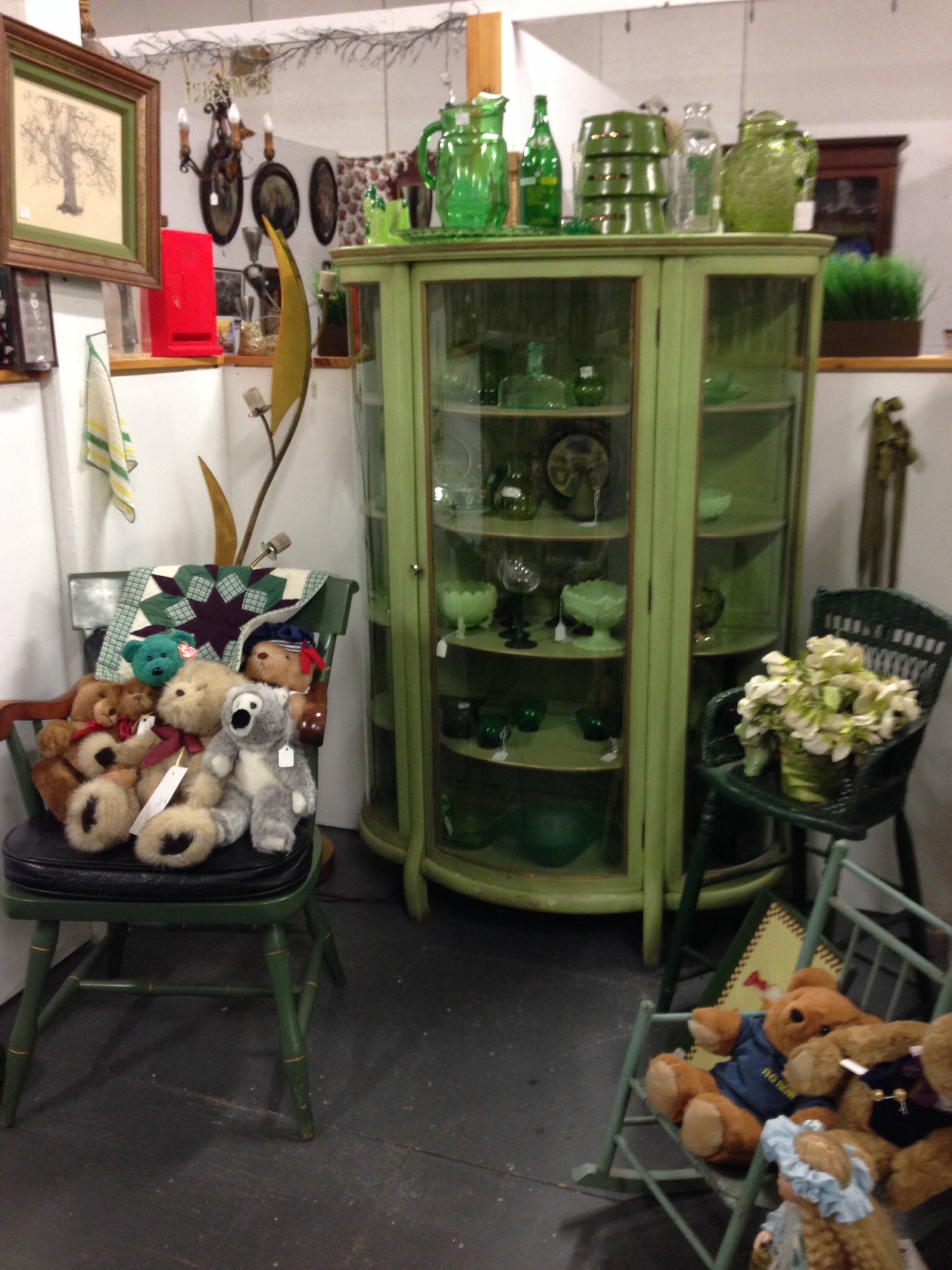
Martha Stewart Living taught us about sorting things by color back in the 1990s, and it also taught us about the power of similarity: grouping like with like can create powerful visual displays and be quite attractive. Here’s the Gallery of Green. There was even an faux spongeware cat figurine, with a green sponge glaze. Details matter: difference stands out: that’s why the teddy bears pop in this booth.

image

image

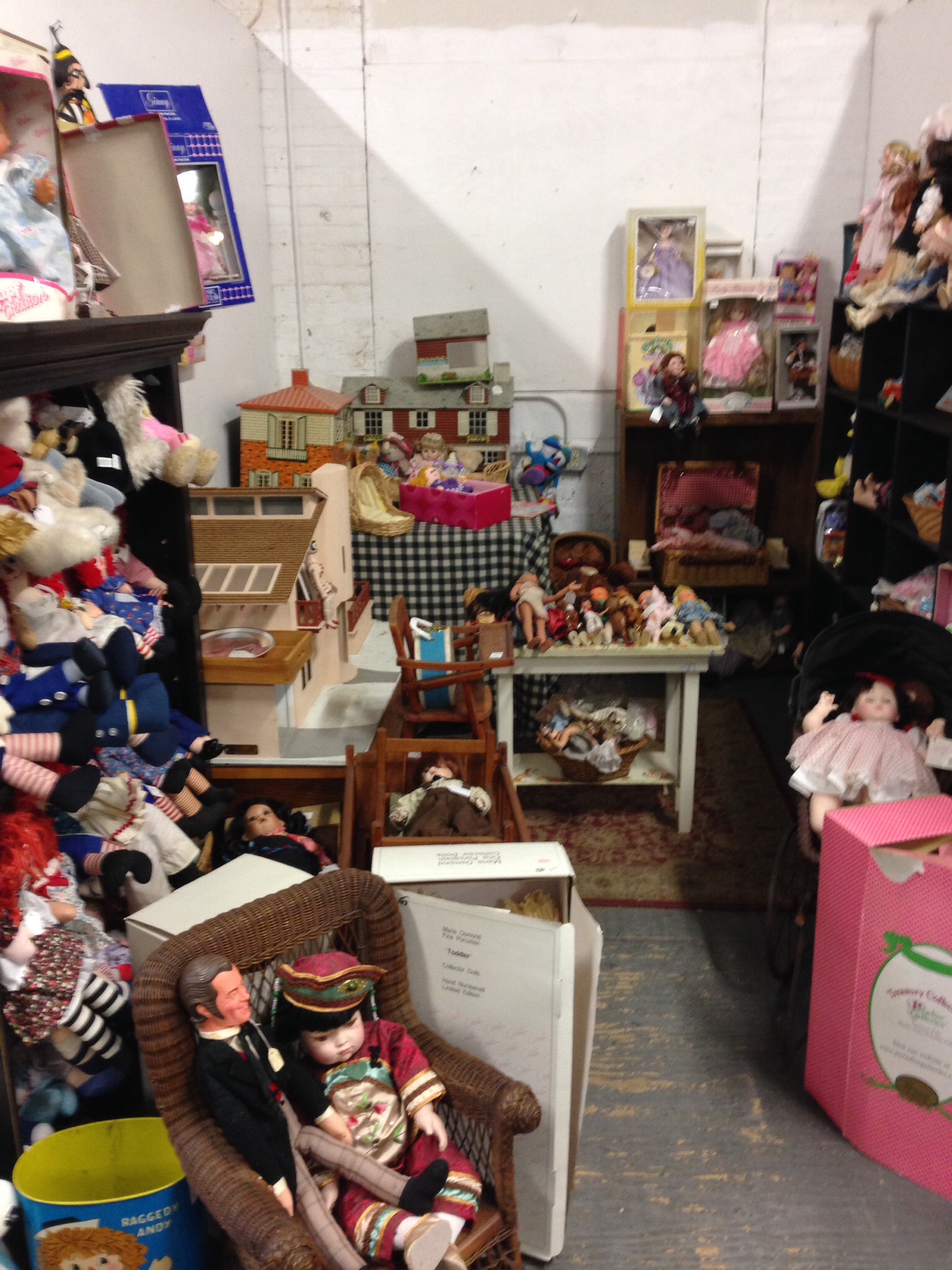
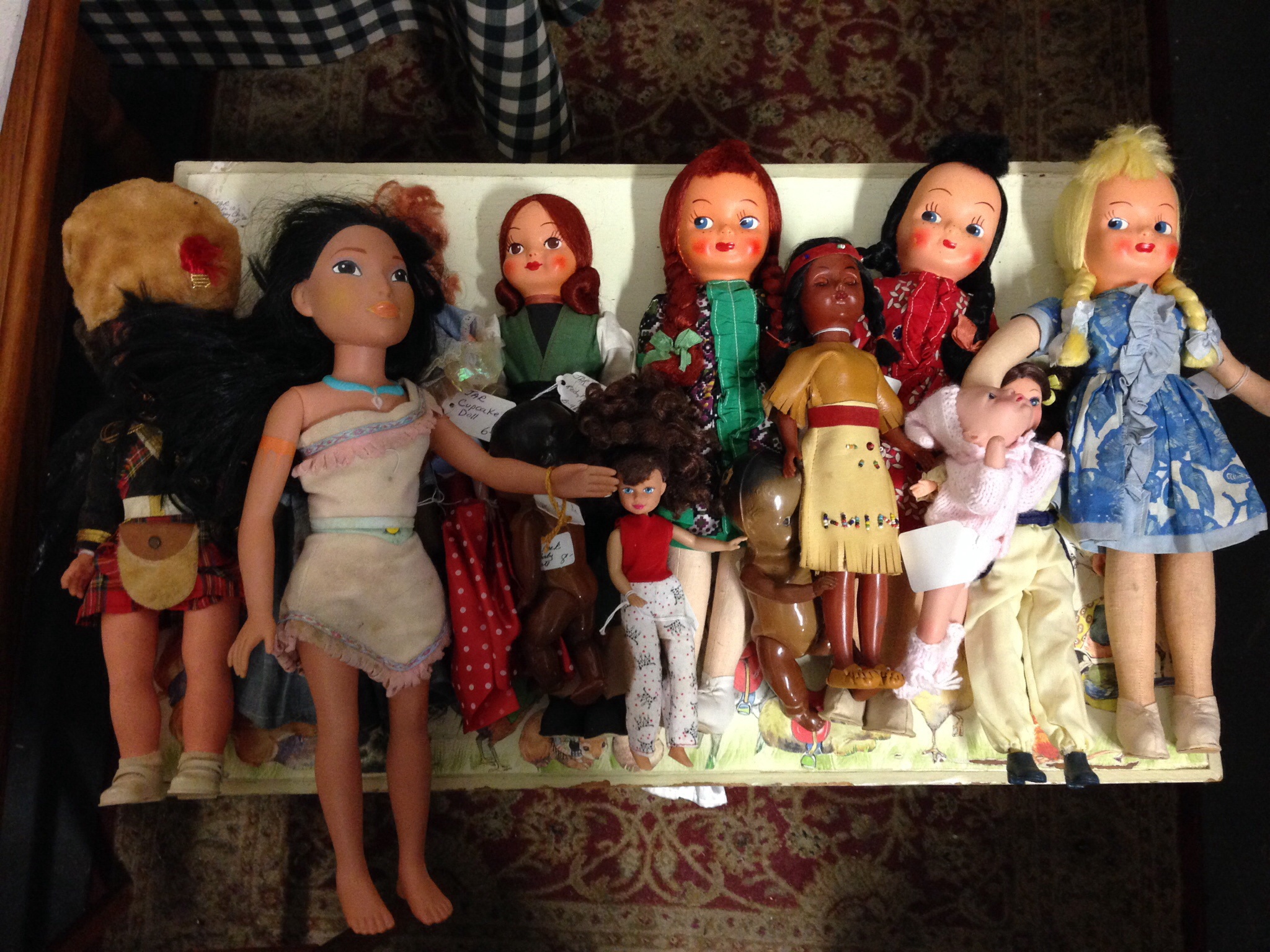
Perhaps you prefer the natural history museum, or a medical museum? There are doll morgues for you folks. This proved quite popular with women of a certain age, thankfully still a little older than I.

image

There are displays for (almost) every taste. Couples go through these emporia, often at a similar pace (Mr S and I usually split up, and come together only occasionally to compare and share reactions) but not necessarily in unison.


Here’s an entire case that might come to life in an episode of Futurama, but it’s full of stuff for nostalgic guys: G.I. Joe in Crash Team suit, Planet of the Apes figures, Captain Kirk, and the Indian Scout Rifle and Bandolier. Cars, trucks, a flying circus: here’s a man’s past for him to admire without the responsibility of keeping it up. These are social experiences, where people wander through and talk about their objects, the things they owned, or coveted, the memories they have, the future they imagine.

image

We’re consumers: our lives are all about stuff these days (having it, getting it, curating it, getting rid of it– even minimalists are about stuff) and whether you think that’s sad or not, it’s true. We express ourselves through things. Antique malls give us access to the things of the past in immediate, tangible ways. We can talk, remember, and play in these compendia in ways that we cannot in museums.

There are some unlikely display techniques. This is not an arrangement I would have come up with, but I enjoy it. It caught my attention. I can imagine that I know some folks who would have come up with this display, and had they done so in a museum under my purview, I would have undone it. Maybe that wouldn’t be right. It certainly stopped me and Mr S, and we both made certain the other saw it.

image

The carriage, while heavy, had an amazingly smooth suspension system unlike any pram I’ve ever pushed at home or elsewhere. I couldn’t tell you what Mary and Jesus and a plush Persian cat were doing in a pram, but I do recognize the care with which they have been arranged, and the whiteness of the display, which speaks perhaps to the universal innocence of this trio. Someone chose this, deliberately. This isn’t art, or hipsterism, this is as genuine as the doo-wop songs on the 1950s radio station chosen by the antique mall.

It’s all so sincere: the nostalgia, the Everly Brothers crooning through the ceiling speakers in the converted mill, the soft, smoothing touches of consumers handling the goods. As sincere as we are in museums, we’re missing something by keeping all of our collections out of reach, and by cloistering all of our galleries in silence.

I’m a huge fan of silence, but what would happen if we did play music in galleries? Would removing the silence allow people to talk more, between their companions and even strangers? I get the marketing spin of doo-wop soundtrack, and I get how wrong it would sound in Nathan Hale’s homestead…but wouldn’t it be interesting to try it now and then? Exile on Main Street resounding in the halls of the period mansion is how the staff sometimes experience it, and we love the places where we work. Why not show the public how we see the houses sometimes, instead of insisting on a false, and silent, objectivity?

*Exceptions made for displays of minimalist architects’s homes, with documentation. What would Corbu’s house musuem look like?