Making Plans….

I have set my sights on being at Van Cortlandt House Museum’s Second Annual History and Culture Fair on Saturday, September 21. This is a bit of a stretch: It’s farther than Philadelphia, where I’m scheduled to be the following weekend at the Museum of the American Revolution– and I want tweak that impression and its material culture a bit, too. Still: setting up a ca. 1777-1780 milliner and mantua maker or merchant display has been on my to-do wish list for years, and I’m pretty sure I can pull this off as long as I modify/upgrade items already in my closet.

There are enough images to provide good inspiration and ways to start accessorizing.

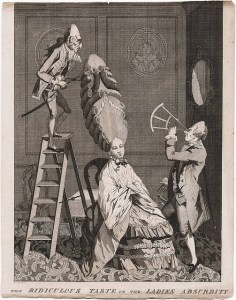
Several prints  from the British Museum provide guidance.

It’s clear– as I knew already– that my accessory game requires major upping. But this is solvable! It’s not ideal, being in a situation where I can’t buy new fabric, and I don’t have the time to make up the fabric I do already have in the garment styles I need. This is no time to start a new patterning project!

So this means making accessories to upgrade a gown and petticoat already on hand and known to fit (though they should be fit-tested once again before committing!).

Which dress? Why, Nancy Dawson, of course. She’s the brightest and most stylish gown I have. Thankfully, I have upgraded my cap collection, and could even– probably– manage a new cap in the time allotted.

So what do I need? A well-decorated, possibly floofier cap, a LBB (™) of the kind worn in “The Rival Milleners”, a breast knot or bow, a new fine silk or cotton apron, and some kind of sleeve treatment.

The maid in the back of “A Morning Visit,” carrying in the tea tray, demonstrates the more understated upgrades I think I will be able to manage in the time I have. In a year, a trimmed silk gown can happen. In a month, it cannot.

The main upgrade I’d like to make is to add a red silk quilted petticoat, since they appear in so many prints with cotton print gowns, including a print of Nancy Dawson herself.

Miss Nancy Dawson, aquatint print. Victoria and Albert Museum. E.4968-1968

I almost assuredly have red silk in my stash: the question is, can I find it, back it, and quilt it in time? Probably not. So there are choices to be made, like the sensible one of simply upgrading sleeve finish and apron and adding bow knots.

Those are just the upgrades I hope to make to my personal kit! I need a dome top trunk (underway; I need the one I have for Elizabeth Weed), and there are inventory items to make that have been on the list for a while.

All of this has to get done while I’m splitting my 55-60 hour weeks between commissions and a retail gig (which I am trying to streamline!).

Once again, I start down the path of madness. Won’t you join me? I think it’ll be a blast!

Safe as Houses

Collections staff climb wobbly ladders all too often

Someone brought up the Plimoth Plantation workers concerns for safety, and how those outweighed the low wages in their drive to unionize. Uneven streets, low staffing levels and safety requirements placed on them– watching open fires– meant that they were unable to leave the houses even for “nature breaks.” These are all legitimate concerns and the expectation that workers will tolerate unforgiving, dangerous, or humiliating conditions because “it’s all for a good cause” is ridiculous (and, apparently, a darned good way to inspire a union).

The union effort I was part of was not driven solely by low wages. There were other factors, including an executive director with a large but fragile ego, who was inclined to operate rather whimsically. When the drive failed, the need for union was by no means diminished, especially given the retaliations that followed, including the case of a woman who went on maternity leave, only to find on her return that her job had not been saved for her, despite the museum’s need to comply with the FMLA and assurances made before she went on maternity leave.

Bad management makes it hard to get out of bed.

Do not think that cannot happen today, because changes to the terms of employment happen all the time in museums, even when the leave alternate work schedules have been negotiated and put in writing. Museums and their directors are, in general, no more benevolent than any other employer.

But safety seems basic, right? Well….would you like to be the sole person working in a 16,000SF historic house? Granted, no open fires, but you are still expected to answer the door and you will find that people will force their way into the house, even when you tell them the museum is closed. Lucky for you, none of them were threatening.

Some are more equal than others

Except of course the one who was. When the concerns were brought to the executive director, there was a surprising lack of support– It’s one incident. He’s crazy, so what? You’re overreacting. That’s the best neighborhood in [small town redacted]. House staff asked for mirrors at the door and minimum staffing levels of two. Someone suggested maybe Boy Scouts would be good to have come in on the weekend afternoons when the staff person is alone– Boy Scouts need service hours for college applications, after all. In less than a year, the house manager resigned. The exterior lights around the house were not fixed or replaced, and it was pitch dark and empty on the walk to the parking lot. Only when the executive director’s husband said, “Gosh, the parking lot seems kinda rapey when so it’s so dark” did the parking lot lights get replaced– but only the lot, because she used it to park in when she went out to dinner with board members.

The same employer expected staff to come to work even when the water had been shut off at the site all day for repair work; fortunately, they could be convinced to close sites to the public on those occasions. I have worked in modern museum and research facilities without heat, light, or water because no quarter was given, and no exceptions were made for you to work at a different, functioning site.

Toodles might as well have been on security

For years, I was the on-call person for all alarms at the collections facilities. This meant that in the middle of the night, I had to go to the sites if the alarms were tripped. I had to go in alone, and was expected to sweep the facility and site for intruders. Eventually, I talked the police into a policy of staying with me until the sweep was complete, but I can assure you that a 16,000SF facility is creepy AF at 3:00 in the morning when the security alarm has gone off and you don’t know if someone has broken in or not.

Employers send very clear signals about how much they value employees and they punish employees in ways both small and large. Punishing an entire division, and putting the director put on six months probation because the director and division staff tried to follow the employee handbook and procedures to deal with a new hire who turned out to be incompetent and unwilling to work? Not great. The new hire was transferred to another division where the same behaviour played out, and caused great frustration to her new supervisor and colleagues. Eventually, she quit when it became clear that she was going to be let go and could no longer manipulate the system. For a division director to be told, in a meeting with the executive director, that “This isn’t your fault, and this isn’t about you– you’re here because of what other people did,” is not reassuring in the least. Punishing people for trying to follow the rules when the HR staff won’t will not generate good morale, or retention.

Because I said so, that’s why

Employee leaves are another serious pressure point in museums. Often no one extra is hired and no tasks are reduced, but are instead spread across a variety of people. Sadly, when someone like a registrar takes an extended leave, and the museum refuses to reduce collecting or loans, someone has to process all the paperwork. Asking people who are already doing two jobs to take on a third is not uncommon. Directors reveal a great deal about themselves in the response they have when they’re approached with a request to reduce some of the workload because the person covering is burning out. Dismissing the request with “It’s just a few more weeks,” 10 weeks into a 16 week leave with major program planning starting on top of all the other tasks is not helpful, supportive, or collaborative.

Directors who say, “I’m the director, I always win,” when direct reports disagree with them, may find their direct reports seeking work elsewhere. I’ve heard directors complain about having to “seek consensus,” and chafe at having to convince boards to support changes to staff structure. Directors who chastise front line staff in front of the public and shake their fingers in the staff member’s face– and then turn out to be wrong about what they’re upset about, but refuse to apologize– are not as uncommon as you might hope.

Safety. Consistency. Respect. That’s all employees want, no matter where they work. They want policies that are applied equitably, and workplaces that do not place them in danger either by condition of the site or the attitude of the management. When any employer fails to provide those conditions, the result will be low morale and high turnover. The cost of those is significant, both in declining visitor experience and increased training.

I came, I saw, I sighed

img_8909

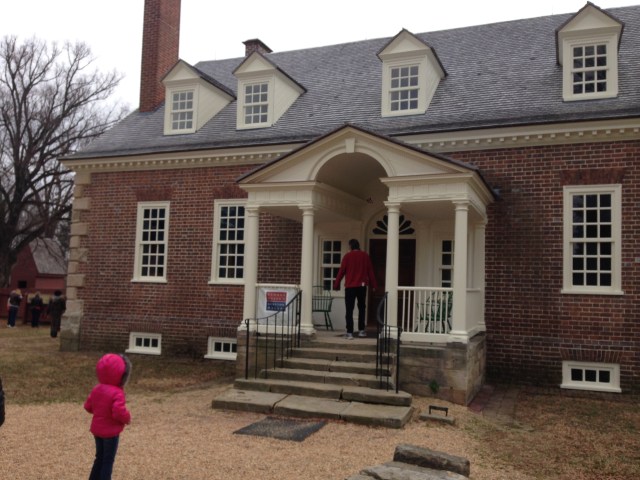
Gunston Hall has been on my list of must-visit places for some time, and now I can cross it off my list. I was impressed by their Room Use Study and remain so. They’ve also done some decent work on slavery, and it shows on their website. So my hopes were high. You know where this is going, right? Yup.

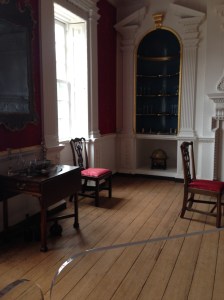
The room in which Martha Washington and Mrs Mason may have had a "chit-chat" about the two Georges.
The room in which Martha Washington and Mrs Mason may have had a “chit-chat” about the two Georges.

Pretty sure the guided tour is dead. Also pretty sure most museums need to look long and hard at the actual execution of their mission. Granted, this was another one of those January R&R visits, when it is entirely likely that the multiple “Out of Order” signs were a mere mid-winter fluke. But day-um, I was underwhelmed.

Granted, this house is older than “mine.” And smaller. And I didn’t ask any questions on the tour because I fear my tone will be far too telling. But there was a small, excited-in-a-good-way child on the tour, and several other adults. When asked by the docent what we were interested in, the group settled on “life.”

WHO touched that railing?
WHO touched that railing? THAT’S why I should care?

We ended up with the incantation of “many famous people have sat in this room.” “Many famous people have touched this stair rail.” I might have heard an audible intake of breath when we were told something was original; my right eyebrow shot up in an expression well known to my friends.

The house is lovely, of course, Georgian balance and all that, and nicely decorated, whether the chinoiserie paper in the dining chamber or the Virginia-Chesapeake Neat and Plain office. But why the default emphasis is on famous people touched this, stepped here, slept here, I do not know. My docents do it, too, sometimes. But what troubles me more is what I came away without: A sense of George Mason and his family.

Red damask on the walls, because "they could have had it." Infelicitous phrasing.
Red damask on the walls, because “they could have had it.” Infelicitous phrasing.

Most troubling to me, being Of a Certain Age, was the statement that Mason’s second marriage, to Sarah Brent, was “for friendship and companionship.”

Really?

George and Sarah sign a marriage agreement several days before they are wed, protecting in a limited way Sarah’s individual property. Under the terms of this contract, Sarah gives ownership of her slaves to her husband for the length of her marriage, but regains possession of them should her husband die and there be no offspring between them. Under these same conditions, Sarah is promised as dower 400 acres of her husband’s land at Dogues Neck.

Over the years, it has been pointed out that the marriage agreement between Sarah and George indicates that their relationship was more business-like and convenient, rather than loving. However, the marriage compact also can be seen as a fair solution between two practical people who want to safeguard their property for future generations — Mason for his children and Sarah for the sons and daughters of her sister Jean in Dumfries. In Sarah’s will of 1794, she indeed does pass on to these children and one of their offspring the slaves she regains upon the death of her husband.

Really?

That looks to me like a sensible arrangement between two mature adults. The way that a 50-year-old approaches marriage and relationships in any century will be different. Even in the 18th century, a woman of 50 has an established identity, knowledge of the world, and experience in running a household, if not a business.

Why yes, I may well have some baggage, why do you ask?
Why yes, I do have some baggage, why do you ask?

To suggest that sensibility excludes or precludes sex is to miss the point of Jane Austen completely, and is ageist in the absence of evidence. In all likelihood, Sarah is peri-menopausal at least and menopausal at most (it varies widely; some 50-year-old women are still fertile, shocking though that may seem). That doesn’t mean she’s asexual, and while George Mason may well have (probably did) take sexual advantage of the women he owned, that doesn’t mean he’s not interested in, and expecting, a sexual relationship with his second wife.

What all of this suggests to me is a reluctance in museums to talk about sex, unless there are children from a marriage, in which case one can just assume the couple were busy in bed and not actually address it…all in all, a weird thing, and one that turns up in my own museum from time to time.

This is not to suggest that I didn’t enjoy the tour, the house, or the landscape. But I felt dissatisfied, as if the real meat of the place was not to be found on the tour. Exploring the upstairs on our own was much more fun– I would have liked some object labels up there, and downstairs, too– and had more of an air of exploration and discovery.

And that’s what the guided tour kills: discovering for yourself. It doesn’t have to be a full-blown you-paid-for-it Museum Hack bonding experience. It doesn’t need to be a handout with “How many squirrels can you find?”

img_8950

Exploring, reading labels, listening, smelling, touching: using our senses to learn about a place, a space, an object, a person, will be engaging enough.

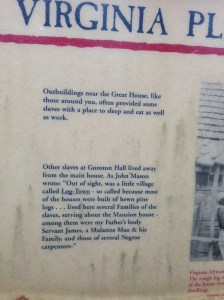
With so much good, deep, content on the website, I know Gunston Hall has the material a great tour and historic house museum is made of. I know, from reading the labels about slavery at the site and reading the text about slavery on the web, that they know more, do more, and understand more about the enslaved people than their permanent exhibitions indicate.

A Giant One-Night Stand

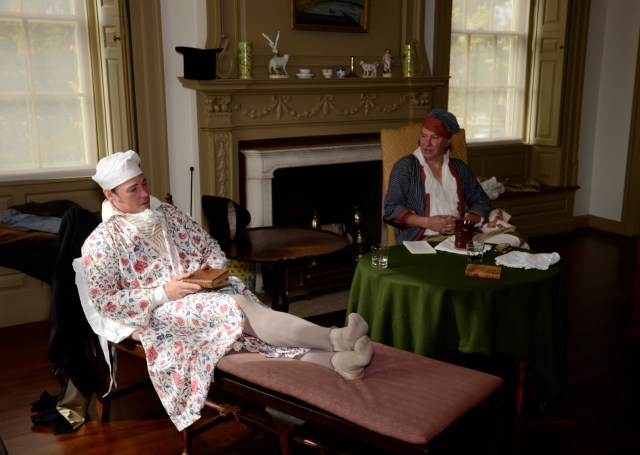
Drunk Tailor’s told you some of the story, and Our Girl History a little bit more, but here we specialize in confessions, so let’s begin.

One night stands: no, not that kind, this kind: the Anarchist kind. I’ve been following Mr Vagnone’s work for some time now, and while museum professionals are not all in agreement about his techniques and approaches, I find them intriguing and thought provoking. I’ve also found that the best way to accomplish anything is by baby steps, as annoying as that can be. That’s how we got to this What Cheer Day: incremental progress over a five-year period. What was so different? Well….

Jimmie and Billie, unwell and unable to dress themselves without Gideon's aid. Photograph by J. D. Kay
Jimmie and Billie, unwell and unable to dress themselves without Gideon’s aid. Photograph by J. D. Kay

To begin with, we slept in the house. Eight of us. In the period beds and on the period sofas. No harm came to anything, except the gentlemen, who seem to have contracted mild, possibly mold-based, ailments from ancient feather beds.*

img_8303

We scampered around the enormous house (I swear the front hallway would contain my entire flat, both floors!) in bare feet and period night clothes. I has a regret about that, because the floors could be cleaner, and I forgot to ask for my slippers back.  

Anyway:

Big house. Dark night. Flickering candles. Rain storm. Cantonware cider jug.

Mind blowing.

Why? Why do it? Why risk it? Why, when I’ve been there after dark? Why, when I’ve slept in other historic houses and historic beds? Because to really understand someone, you have to walk in their shoes– or sleep in their bed, as the case may be.

Goody Morris makes up a bed. Photograph by J. D. Kay

I lay in bed in an enormous mansion house, the first one built on the hill in Providence, completed in 1788. Almost every week, I tell the story of the house, the family moving, James complaining about the June heat as he walked up the hill from Water Street to move into the new brick edifice. I tell the story of Abby’s wedding, the longways dances on the second floor of the unfinished house, candles and dancers glittering in the enormous mirrors at either end of adjoining rooms. But I’d never seen it. I’d never heard it. I’d never really thought about service circulation and stealthy maneuverings in the house.

Now I have.

Now I have lain in the enveloping warmth of a feather bed and heard the rain pouring outside, and nothing else. I’ve heard the deep quiet of thick brick walls. I’ve seen the utter darkness of the house at night, and, padding up the stairs to bathroom, been comforted by the presence of my companions even as they failed to sleep across the hall.**

A dreadful night: almost too much to bear. Photograph by J. D. Kay.

To enter the room as a maid, I’ve used the doorway from the former service stairs, and silently carried in a jug to serve the occupants. I’ve gotten closer to the near-invisible role of servants, in a period when full invisibility hasn’t yet been established. I’ve watched someone I love sleep off a migraine in a room where we interpret illness and 18th century medicine.

Best Maid/Bad Maid.  Photograph by J. D. Kay
Best Maid/Bad Maid. Photograph by J. D. Kay

All of that is mundane. And because I did all of that in a historic house with period furnishings, all of that is magical. My job now is take what I have learned and felt, and find new ways to use those personal experiences to connect our visitors’ personal experiences to a larger (and a smaller) story about Providence, early Federal Rhode Island, and a family.


* Most amazingly comfortable feather beds ever. Drunk Tailor’s review is unprintable on a family blog, but hilarious.

** Sorry about that… I slept pretty well, considering.