Good Grief

1803 dress and hair
Pre-sweat melted hair

I had my doubts about this event, since we were interpreting the death and mourning of John Brown a full month after it actually happened, and initially resisted somewhat strenuously. But people change, and by the time I was operating a motor vehicle at high speed on I-90 six months later, I could be– and was– convinced. Knowing little, if anything, about early Federal mourning customs mattered not at all. There’s always time to learn, right? Well… if you read fast enough, you can do anything.

Esther and Kitty draping the mirrors

Despite the bustle, Esther and I found time to cover many of the mirrors with sheets, and the portraits with black crepe; this is a time of reflection, not vanity. It gave our rooms a gloomy mien, and reminded us of our short span on this earth.

Visitors in the front hall of the John Brown House, Providence RI
We had many callers

We did have many callers Saturday afternoon, as John Brown was such a significant figure in Providence. He accumulated significant wealth, as Mr and Mrs Thurber attested when they came to inquire about the profits from the voyage Mr T had invested in– $30,000!
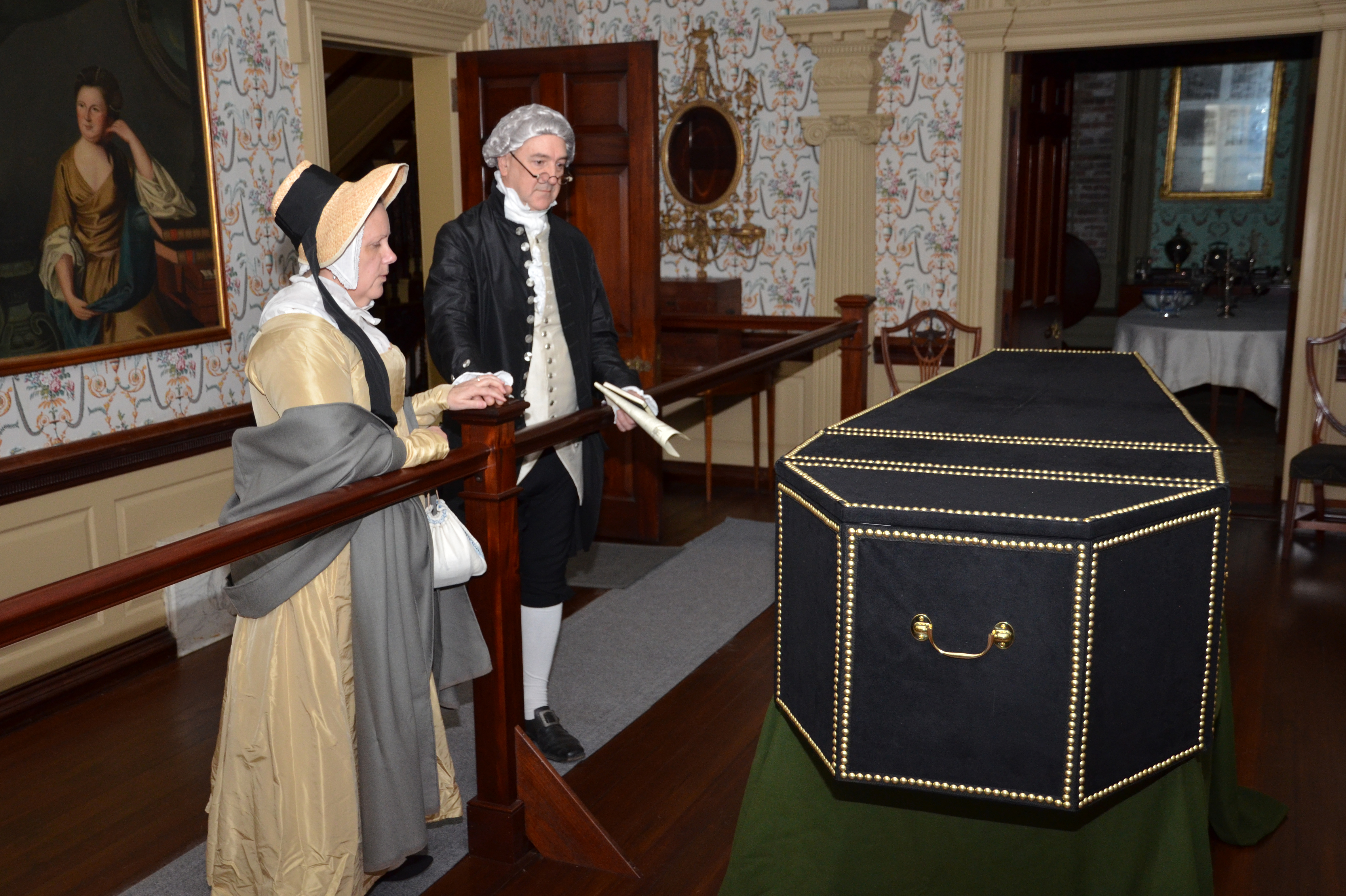
Callers pay respects to Mr Brown
Mr and Mrs Thurber pay their respects to Mr Brown

Thirty thousand is a fine sum indeed, though one wonders where Mrs Thurber might spend those proceeds. While a generally refined person, she made many inquiries about sherry, so I was relieved I’d had the foresight to lock away the decanters. So many people call during a time of grief that you cannot be too careful.

1803 ladies ponder fashion plates
Considering mourning dress options

The mantua maker came to call, bringing black silks and plates for the ladies to choose from. We have had a mix of joy and sorrow in this house, and it is only of late that Mrs Francis (on the left, in blue), has left behind her more matronly garb following the death of her beloved husband John Francis in 1796. It was a crushing blow for her, but she does seem to have recovered now.

1803 woman and baby
Mrs H and her darling daughter, Anna

Mrs Herreshoff was with us, visiting from Point Pleasant in Bristol, and her mother found baby Anna, now just more than five months old, a great consolation indeed. Anna was dressed in mourning for her grand-papa, though she will not remember him. Despite the many callers, baby Anna was truly an angel.

Historical minister and coffin
The Congregational minister called.

The ladies upstairs were a respite for us servants, though we were comforted by the visiting minister from the Congregational church. They cannot make up their minds to a new minister, now that their beloved Dr Hitchcock has left them for heaven. They try on new ones for size nearly every week, and while that is not my congregation, I do think the Reverend Cooke is an excellent choice, combining devotion with humor.
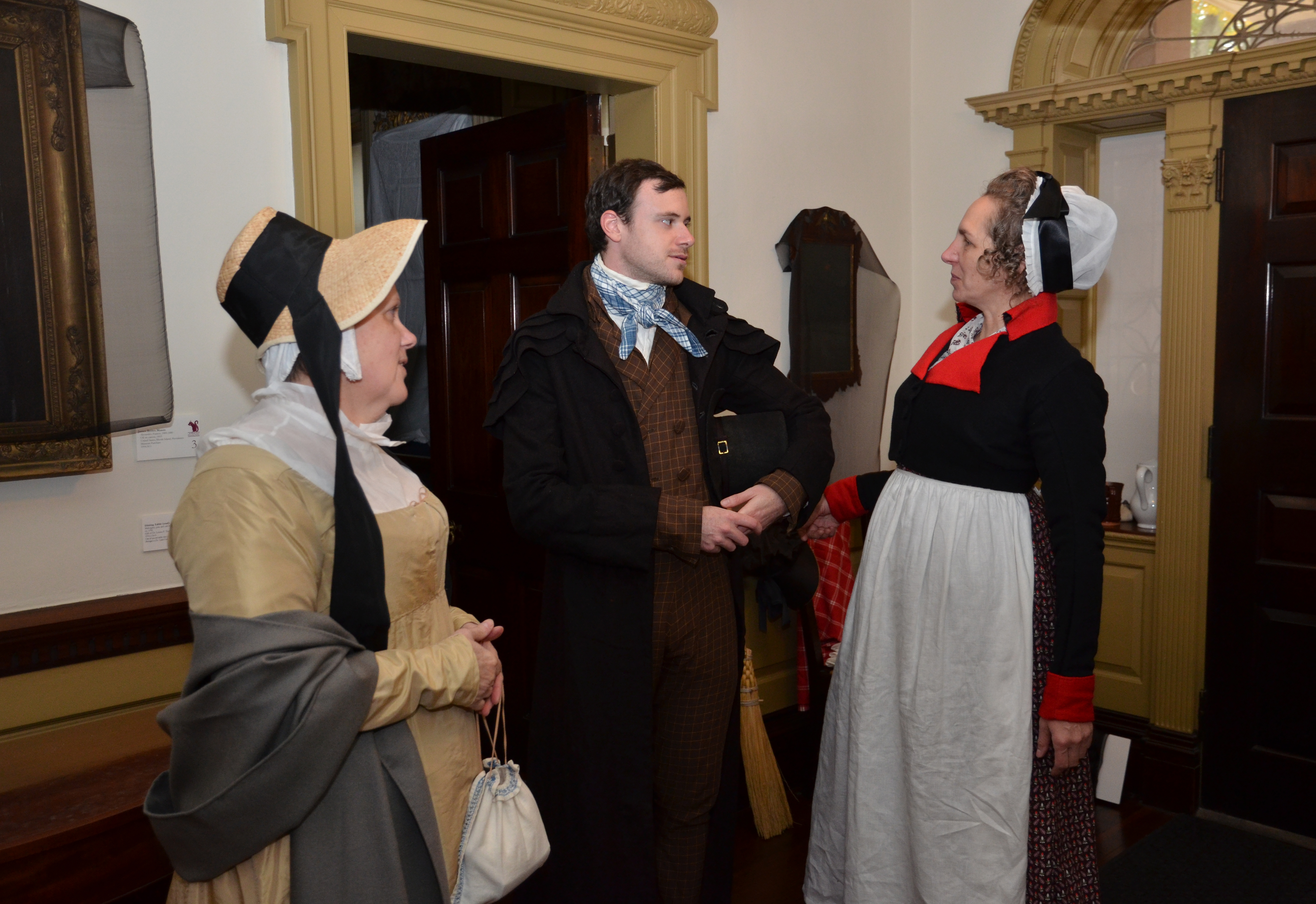
costumed interpreters
The sexton’s son came to inquire if Mrs B wished rent the hearse

A more troublesome caller was Mr Richard Hoppin, son of the sexton at First Baptist church. They do possess the sole hearse in our town, and kindly (for a fee) provide it in times of need. I’m not certain of Mr Hoppin’s stability, for he was inclined to– well, to hop!– in our hallway, a most inappropriate action. The widow did seem to cause him fright (she is a formidable personage, as one would be, after so many years married to Mr Brown), so perhaps he was merely addled by his encounter with her. She wisely inquired after the solidity and soundness of the hearse, for Mr Brown was a substantial figure.
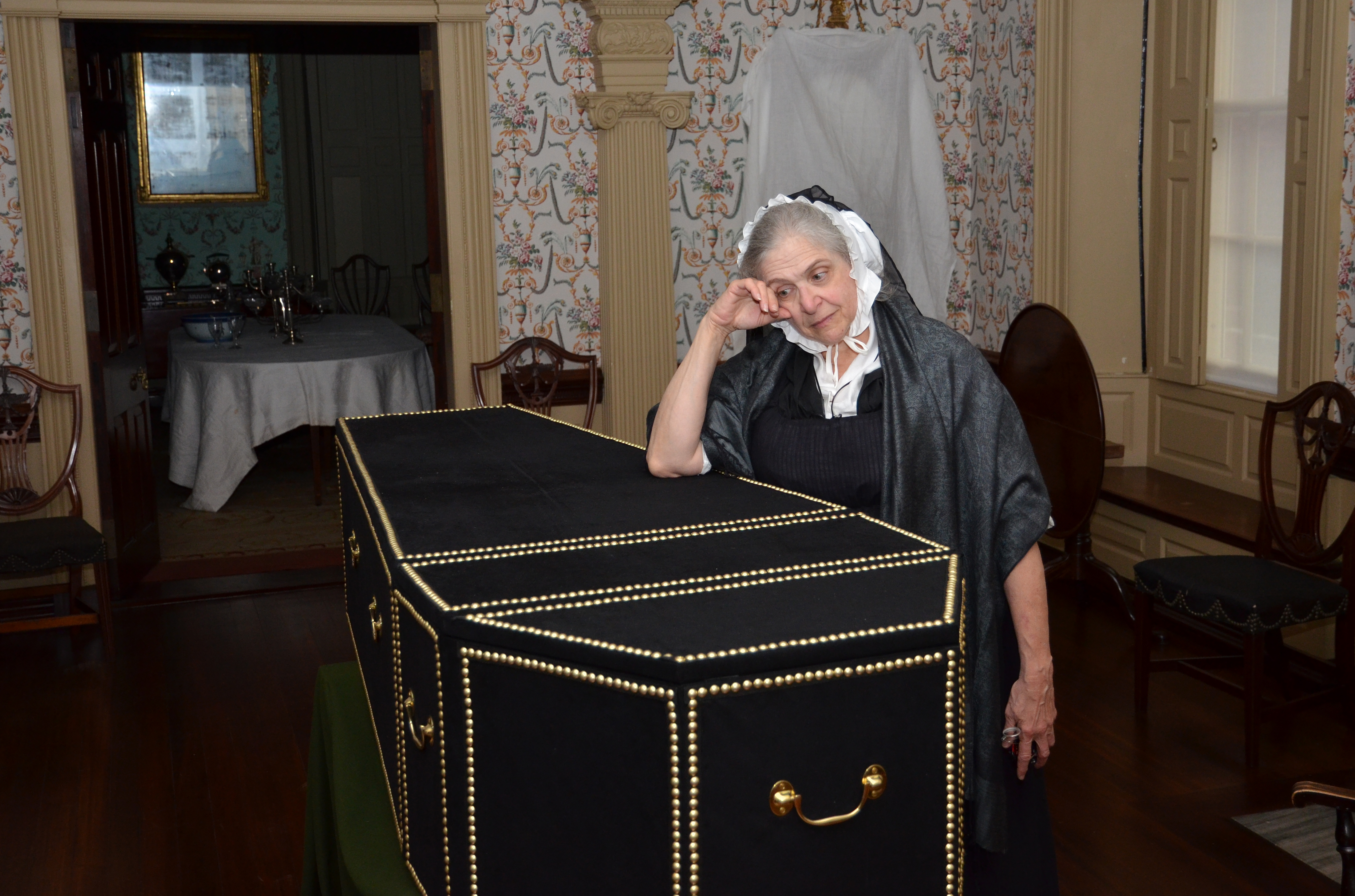
1803 widow and coffin
The widow Mrs Brown reflects upon her late husband

Mr Brown was a great support to us all, and his absence will truly be noted in our household and in our town. I do expect the house will feel empty without his presence, and that Esther, Goody and I will much remark upon the quiet as we go about our tasks.

costumed interpreters on the steps of the John Brown House
The obligatory group photo finale.

From an administrative and managerial stance, this What Cheer Day was different: we cut the interpreted day in half, running the event from 1:00 till 4:00, but still saw about the same number of visitors as we had in a six-hour day. A shorter day meant interpreters were somewhat less exhausted by the close of the day (costumed staff who started their day at 5:00 AM excepted), and the schedule did not have to be as detailed as in previous years. We also reprised a “make your own miniature” activity from the August George Washington 1790 event, and brought in period musicians, who played in the Washington Wallpaper room while people colored miniatures. We also put out an exhibit of memorial art and mourning jewelry, to help contextualize the miniature activity. Since we’ll be leaving the coffin on display and the mirrors and portraits draped through next weekend, a small display (three cases, labels finally finished at 11 AM on the day of the event) seemed like a good idea and opportunity. Upsides: chance to show off the collection, engage people in a hands-on activity, multi-sensory experiences. Downsides: Slightly more to accomplish than hands to do the work, still short a servant, always a little rough the first time you change topics. Unexpected bonus: slightly bumpy transitions in personal life make a suitably sad housekeeper. Score!

Wrestling with Myself

Hard choices!
Hard choices!

I wrestle a lot with myself, which sounds much sexier and more athletic than it is, when it’s your patience and conscience. It’s a constant fight with my own brain and animal nature, like Snowy pondering a bone.

  • It’s hard to keep sewing for an ever-taller young man who refuses almost all attempts at fitting. (Especially when your calloused fingertips and split thumb keep catching on the silk buttonhole twist.)
  • It’s hard to have program ideas and then realize you will end up as the maid, serving a meal to a group including some people you might not like. (Don’t you think that must be a fairly authentic emotion, historically?)
  • It’s hard to put aside plans for your first pretty silk dress because someone doesn’t want to go where you want to go.
  • It’s hard to embrace the importance and meaning of interpreting the ordinary in a culture that celebrates the unique.

I come to that and stop: mission.

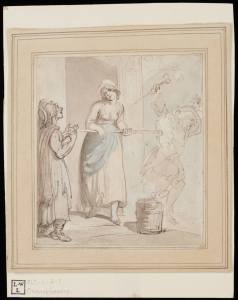
I'm a bad maid. Watercolor by Thomas Rowlandson, 1785? Lewis Walpole LibraryDrawings R79 no. 7
Watercolor by Thomas Rowlandson, 1785? Lewis Walpole LibraryDrawings R79 no. 7

You can take anything too far, of course, and an occasional silk gown and turn around a dance floor might make being the maid a little easier, but in the end I know that what’s important to me is representing the people who have been forgotten.

That same impulse may be part of what drives the splintering into ever-smaller groups with every-different coats, but walking the cat back also leads me to think that lace, tape, and shiny buttons may be part of the equation, too. Are those uniforms the gents’ equivalent to cross-barr’d silk sacques? As in any culture, it is easier to have your cake and eat it, too if you’re a guy.

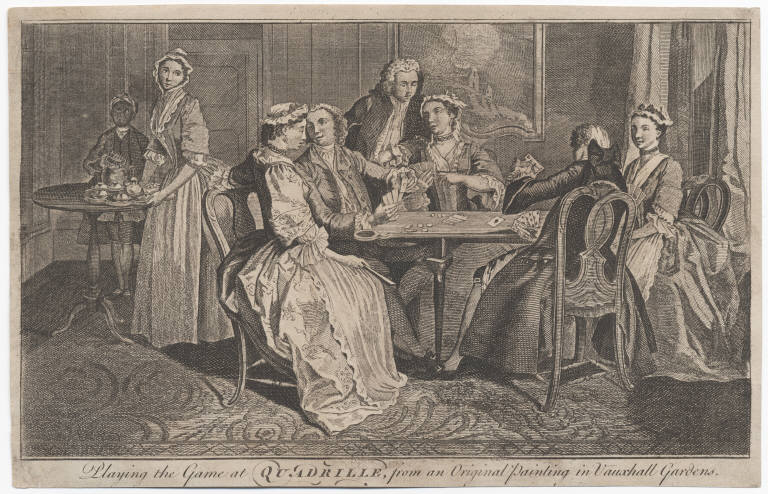
For most of us women inhabiting the past, if we’re not baking cake, we’re serving it.

Playing the game at quadrille : from an original painting in Vauxhall Gardens. London : Robert Sayer, ca. 1750. Lewis Walpole Library, 750.00.00.14

It’s a funny thing to want a break from work you find important, but as with anything, variety and perspective are important.

She looks wistful, doesn't she? The others are whist-full.
She looks wistful, doesn’t she? The others are whist-full.

In a world of individualists, each trying to stand out, quotidian celebrities– cast a skeptical glance at your social media feed and tell me I’m wrong–our impulse may not be to inhabit the background. But most of us are the background. We’re large only in our own minds, stars of the movies of our lives that flicker past our eyelids. And that’s ok: that’s noble, even, to live a small, thoughtful life.

 Silver Pocket Watch of Meriwether Lewis, 1936.30.5
Silver Pocket Watch of Meriwether Lewis, 1936.30.5

Once upon a time, when I worked in Missouri, I was fortunate enough to spend a lot of quality time with some amazing artifacts.

Meriwether Lewis’s refracting telescope.

William Clark’s compass.

Meriwether Lewis’s pocket watch.

William Clark’s Account with John Griffin for thread, cloth and other articles including a hat for George and shoes for Mary. (July 1820, William Clark Papers, B13/F5, MHS)

Account of expenses in “horse keeping,” 1829- 1831. Request to Clark to pay to Mrs. Ingram, with request to serve as receipt. On same document: ADS Dashney to Major Graham, 26 June 1826. Order to pay William C. Wiggins. (1831 Dec 13, William Clark Papers, B14/F2, MHS).

There are letters to one of Clark’s sons, trying to get him to stay at West Point. There are bills for bolts and iron work for Clark’s house. Yes: there are amazing things in the collection as well, and historians of all kinds can do amazing work in the papers.

But they are ordinary. They are daily life played out in the first third of the nineteenth century in St. Louis, bills and accounts punctuated by letters from famous people and news of wars and explorers. But after processing the family’s collection, what struck me more than anything was how ordinary they were, how quotidian.

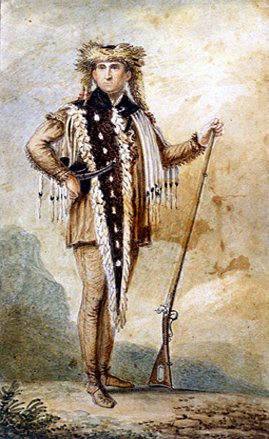
Meriwether Lewis in Indian dress. engraving after St. Memin, 1807.

Lewis was fabulous, interesting and mysterious. I don’t know what really happened on the Natchez Trace, but I know what happened in St. Louis. William Clark kept living, paying his bills and stumbling sometimes, refusing a role as territorial governor before accepting it. He got boring. And for that, I love him more than Lewis.

There’s real value in interpreting the everyday, ordinary people, in bringing work and working people to life in the past. I don’t always love repressing my ego, but I know that a nostalgic view of the past can be dangerous. I meant backwardly aspirational when I first wrote it, and I mean it now: most of us would not have been merchants wearing silks and velvets and superfine wools.

After wrestling with my ego and silk dress disappointment most of this afternoon*, I’ve found satisfaction in the thought of expanding my understanding of working class women. If really digging into interpreting the world of the marginal makes me uncomfortable, it must be worth doing, and doing well.

*Thankfully whilst performing useful tasks like running errands and thus wasting little real time on this nonsense.

Pushing Interpretation Forward

Dare I say progressing?

servant mannequin in 18th century room
That’s no ghost, that’s my kid

In the past decade, museums, particularly historic house museums, have been challenged to refresh and reinvent their interpretations and presentations. The most notable challenge has come from the Anarchist Guide to Historic House Museums (AGHHM), and the Historic House Trust of New York’s executive director, Franklin Vagnone.

I re-read a number of Vagnone and Deborah Ryan’s papers recently (including this one), thinking not just about What Cheer Day in a historic house, but about reenacting, living history, and costumed interpretation.

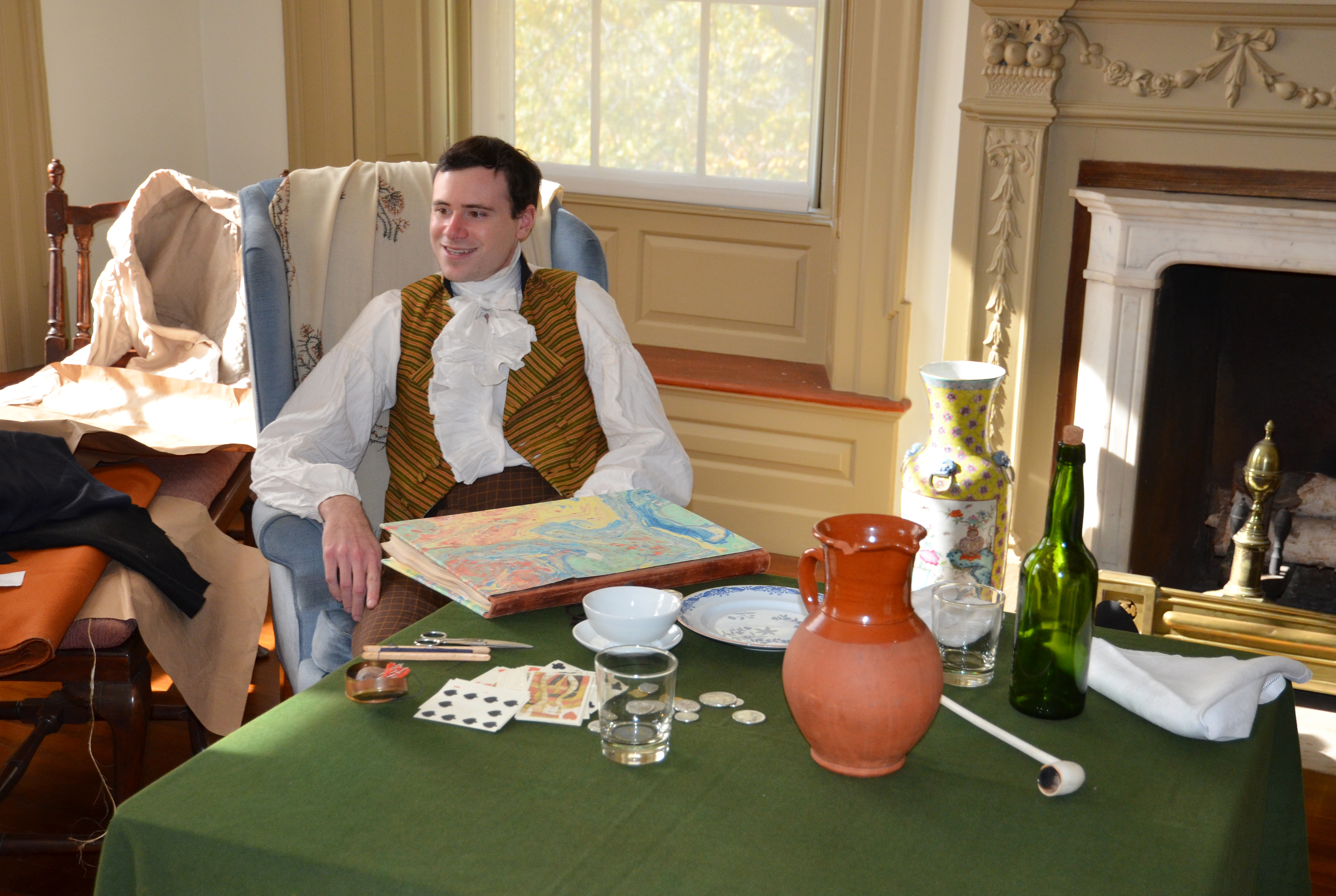
To make a historic house museum (HHM) seem more inhabited and real takes a lot of stuff: clothes, dishes, shoes, stockings, toys— all the stuff that surrounds us now, but correct for the time of the HHM, and arranged in a plausible manner, not like a sitcom set, where chairs before a fireplace face the visitor and not the hearth.

Man with cards, glasses and pipe in 18th century room
Stuff makes a house

To a degree, this is set-dressing, but set-dressing for a still-life, or real life, if the habitation will be by costumed interpreters. It has to be accurate to be authentic, whether it’s a HHM or a living history event that is striving to create a moment, or series of moments, in time– immersive moments.

We cannot step into the past unless we believe the representation we’re seeing, and that’s true no matter where we are: that’s why fabric matters, sewing techniques matter, tent pins and kettles and canteens matter. The world is made up of tiny details that we do actually notice without even knowing it: we see more than we realize, faster than we think. We’ll trip on the different, and stop.

A variety of coats can tell a variety of stories

But what we want to do, as interpreters, is to have the visitor catch the right difference: not the one about which canteen and why, but the larger interpretive point. In one hypothetical example, wooden canteens are a way to talk about defense contracting and supplying the American army, just as over-dyed captured coats are a way to talk about the American Revolution as an international, and not just a civil, war.

An encampment is, in a way, a neighborhood of HHMs turned inside out, with each regiment a separate family within the larger neighborhood. Each regiment tells a story about itself and its history, and is a lens through which visitors see the larger story.

14999323655_5d9dcf2259_o

That’s why accuracy matters: you don’t want to debunk Ye Olde Colonial craft in camp, or cotton-poly polonaises (poly-naises?) worn by purported women on the ration: you want to focus on the larger interpretive point. When not everyone plays by the same rules, it is better to focus on your own accuracy and authenticity and to ignore Ye Olde Annoyances.

Tell the larger story, the story of your own regiment’s people: that’s your interpretive goal.