How Now, Brown Gown?

Finished. Hope it fits, right?

Finished, that’s how, with holes in my fingers and a split in my thumb.

Sure hope it fits…I have tried it on along the way, and it is an open robe, so chances are good it will fit. But after I dressed Cassandra, I did have that “What if…?” moment of dread. There’s a lot of this that’s like art school. Hours laboring alone, hours of studying precedent, craft/technique and theory, and then you have a presentation, i.e. you wear the thing in public. I try not to think about it too much.

I could take this apart for you (the sleeve is more ‘modern’ than the cuff; gowns are not known to have been bound at the hem, though petticoats were; didn’t finish the matching petticoat; did I use the fabric the wrong side out?) but Gentle Reader, I suspect you can supply your own quantity of anxiety, and need not borrow a cup or quart from me.

Let’s talk about the fun parts:

For a while, I hated this gown. Seriously. The closer I got to being done with it, the more I flat-out despised it and found it ugly. Why? Too nice. That’s a respectable gown, that is. It’s the gown your mother would tell you to wear, or the one she thought you ought to change into when she said, “You’re going out in that?” As if you were planning to run away in a red and black calico gown… And I hated the color. Then I thought the wool was too heavy.

Mrs Sylvanus Bourne, JS Copley, 1766. MMA, 24.79

I am not this old. My impression is not this wealthy. My dress is not silk. But when I look at what I’ve managed to make, and I look at this (my own white apron is coming; I almost finished it yesterday, but the alarm company called and I had to go deal with an early-morning bat) I feel better. I have white mitts, a white kerchief, and there will be a white apron, bats or no bats.

It’s a neat presentation, the brown and white will look well together, and with a black hat or black bonnet. And by the time I’ve sat on dirt and ground some soil into the skirt, and burned a hole into the hem, I’ll probably like this gown.

But it seems so…proper…and that just doesn’t seem like me.
Hat, Rescued

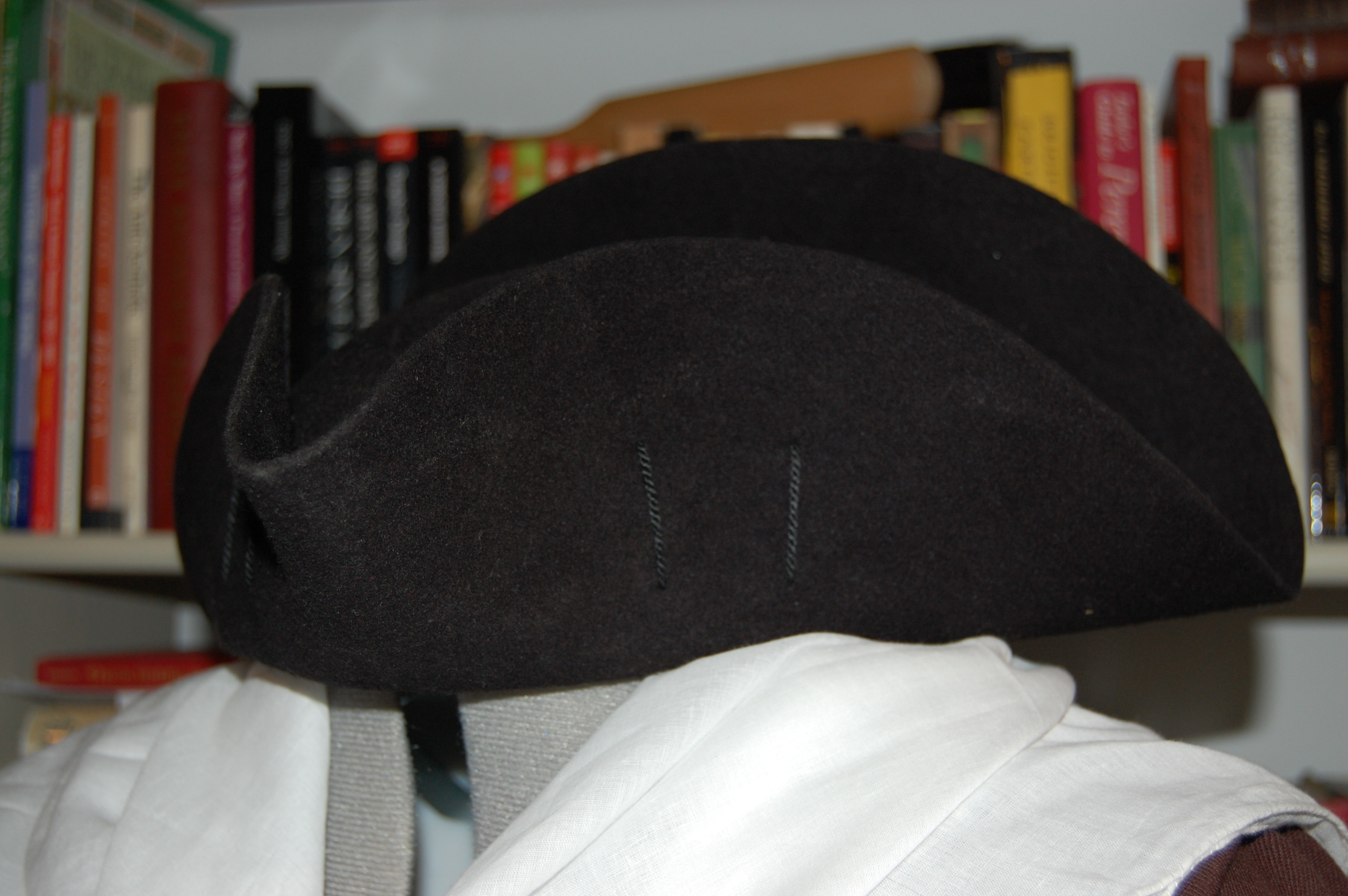
Really, the power of the interwebs. Not that I shouldn’t have contacted the hat maker, but the hat is soft and lovely and looks just like one in a painting at work. And I so readily saw it ornamented with ostrich plumes that would have made it twice as pettable.

20130410-054451.jpg
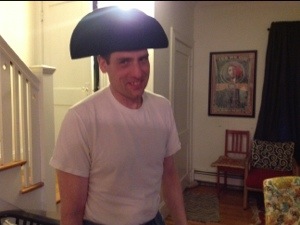
But the hat maker emailed and recommended a technique I will call “steam and cram” but which involves the judicious application of steam followed by placing the hat on the head. So I pulsed steam into the crown of the hat, avoiding a) the neat label pasted on the top and b) the sides, which have such a lovely feel and verticality. And then hat was then placed firmly on Mr S’s head.

Felt is such amazing stuff: I love the way the wool changes as you felt knitting. There is a moment when the fibers change– it’s hard to describe, exactly, but there’s a feeling of release, and then the knitting as a whole becomes more plastic and malleable.

The same thing happened with this hat: while atop Mr S’s head, he felt it relax, and voila! Hat! Fitting!

He looks pretty happy about it, doesn’t he?

I did find an article comparing Concord and Lexington in the pre-Revolutionary period which included a statistical analysis of the Lexington Militia with a small number of non-tax payers and men with small holdings, justifying the appearance of the two this household will provide. Apparently they do not have my same need for fully-researched, found-it-on-JSTOR fantasies.

The Drama of the Hat, or….

Lady Francis Scott and Lady Eliot, watercolor by Paul Sandy ca. 1770. YCBA, B1977.14.4410

Why a Riding or Shooting Coat Must be Made. A Diversion to take place in Several Acts, with Entertainments for All.

There was a bit of drama chez Calash following the March 23 inspection at Hartwell Tavern. There was a sense that a certain hat was not quite all it could be. There was a feeling that the hat might have been sat upon by the horse employed by the Captain to make the Regimental Garments. (Why else do they smell the way they do?)

The Matt Hat
The Matt Hat

So the favorite hat maker was contacted, and after negotiations, a hat was ordered. It was thought it would fit Mr S.

It does not.

It does, however, fit me, which means that in order to make use of the hat, I shall have to make myself a riding habit or shooting coat (the more likely item). Poor me, a tailoring exercise.

We could send the hat back, but instead I’ll knit another Monmouth cap, and put “civilian hat” on the birthday or Christmas list.

King of the Coats

Douglas, 8th Duke of Hamilton on his Grand Tour, © National Museums Scotland A.1991.156

He’s hard to miss, the 8th Duke of Hamilton, in his red coat. I’d hazard it wool, because of the contrast with the sheen of the blue coat his physician, Dr John Moore (at right), is wearing. Dr Moore’s coat gleams like silk; the Duke’s looks dull and woolen. (Look at the way the light strikes the Dr’s shoulder; another clue is the way the button holes are worked.)

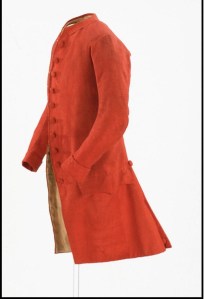
The coat below is a simpler, provincial relative of the Duke’s coat. This is the Amos King coat, owned by Colonial Williamsburg. I love the description:

“Wool plain weave fulled and napped “broadcloth”; twill worsted “shalloon” lining; tabby linen lining center back. Pocket flap lined with twill worsted; sleeves lined with tabby linen; right lower pocket is linen; left pocket is leather; inside pocket on left breast is linen, with broadcloth welt.”

Man's Coat, red broadcloth ca. 1770, CW 1953-59
Man’s Coat, red broadcloth
ca. 1770, CW 1953-59

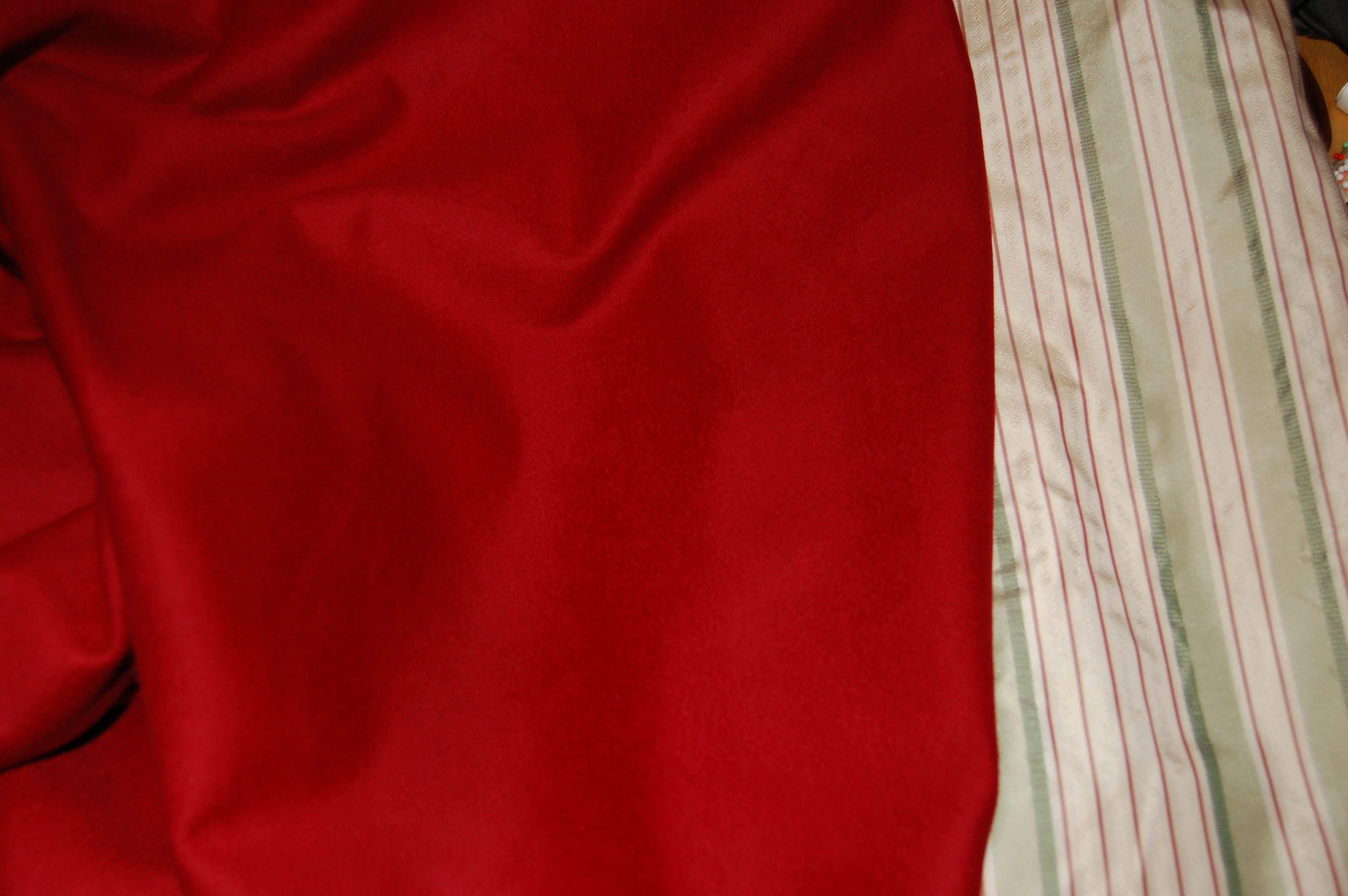
Shalloon. Tabby. Pocket leather. That paragraph is comprised of many of my favorite fabric and clothing words. And fabrics. And a leather pocket. As you may recall, I have a thing for fabric that is not at all about hoarding, and but rather about establishing reserves. When I see two yards of quality material at discount and purchase it, that yardage becomes part of the Strategic Fabric Reserve so vital to this nation’s safety. (We are all unsafe when a fabric addict is deprived of his or her fix. I’ve got a threaded needle, and I’m not afraid to use it!)

Part of this household's Strategic Fabric Reserve.
Part of this household’s Strategic Fabric Reserve.

Yardage arrived in the patriotic red, white and blue “if it fits, it ships” box on Wednesday, and when opened, we all proceeded to pet the lovely nap of the wool. Mr S wrapped himself in it, and I knew then that I would be making a red broadcloth coat of one kind or another.

It probably won’t be the “Quemans Pattern” coat John Buss mentions, not when I’ve got silk fabric for a waistcoat. The silk is from the remnant table at Artee Fabrics in Pawtucket. With careful cutting and a plain back for at least one waistcoat, there should be just enough to make both a 1770s and a 1790s waistcoat. We’ll get fancy around here eventually.