Roller Print Obsession

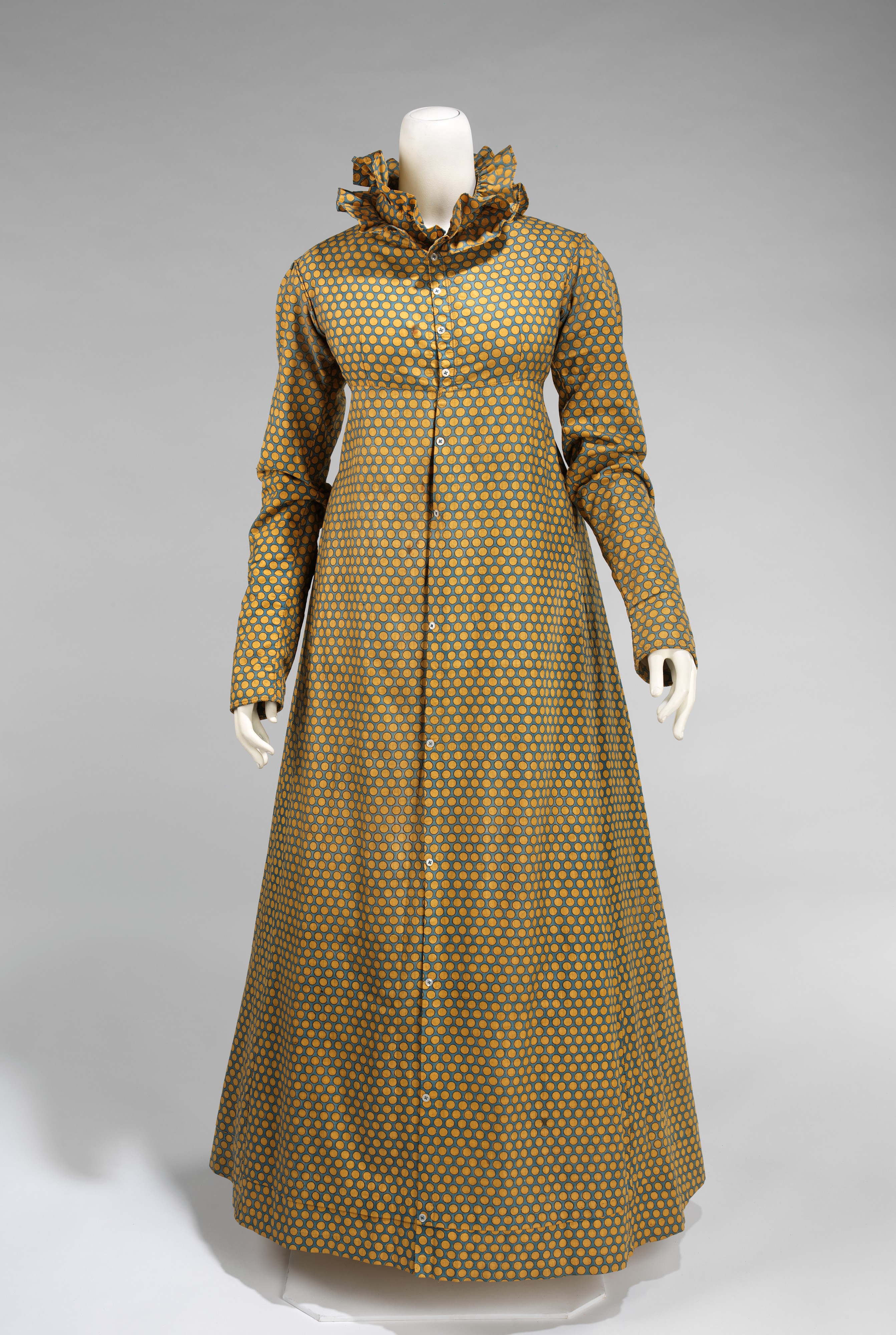
Roller print day dress, 1810-1815. Susan Greene Collection, GCVM 90.25
Day dress of roller-printed cotton, 1810-1815. Susan Greene Collection, GCVM 90.25

Lately, I have developed an obsession with this roller-print day dress from the Greene Collection At Genessee Country Village Museum. I first encountered it on the 19th US Infantry’s website, a haven for those of us consumed with the early Federal everyday.

The 19th US site provides more photos and a drawing of the dress, so that if one were to become impossibly obsessed with the dress, one could recreate it. And if one were up late nights, one might consider how to create a copper-engraved roller for printing cotton.

Johann Klein dress, 1810

A more productive line of thought might be to consider this fashion plate, found during an early-morning Pinterest session. I think it gives us a sense of how rapidly fashion crossed the Atlantic (just as quick as engravings could be printed and bound into magazines, and boats could make the trip), and how avidly women copied the latest fashion.

That avidity would have been tempered by access to fabrics, but the resemblance between the dress at Genessee and the fashion illustration is striking, indeed.

Now, to find some fabric…

Frivolous Friday: Fashionable Reading

Anna Maria von Phul’s delicate watercolors of Saint Louis in 1818 (example at left) remind us that cities in the hinterland of America have never been as far behind the times as coastal dwellers might imagine. As a former resident of the Great Fly Over, I know how defensive people can be about their relative sophistication, and that could be why our Young Lady here appears slightly defensive in her posture.

The young lady is certainly fashionable in that white gown, and literate, too, though we cannot see what she is reading; perhaps Maria Edgeworth.

It took some doing to find a similarly posed and dated fashion plate with a book, for fashion has always been more fantasy than reality.

Frivolous Friday: London fashionable Walking Dresses

The Ladies Magazine, v/ 4, plate 53, Wednesday July 1, 1812. Casey Fashion Plate Collection, LA Public Library

I don’t know which I like best: the green and white bonnet, the green silk Spencer, or the suspicious and candid glance of the woman on the left. Perhaps its the date: mere weeks before the purported milliner’s store this coming August. Have I already purchased green silk and white cotton organza? Of course I have. Never let a fashion plate or an event keep you from a new and slightly mad project to make something new.

Frivolous Friday: Polka Dots!

Dress Date: ca. 1815 Culture: American Medium: cotton Dimensions: Length at CB: 54 in. (137.2 cm) Credit Line: Brooklyn Museum Costume Collection at The Metropolitan Museum of Art, Gift of the Brooklyn Museum, 2009; Gift of Florence Inniss, 1970 Accession Number: 2009.300.943
Dress
Date: ca. 1815 Culture: American Medium: cotton Dimensions: Length at CB: 54 in. (137.2 cm) Credit Line: Brooklyn Museum Costume Collection at The Metropolitan Museum of Art, Gift of the Brooklyn Museum, 2009; Gift of Florence Inniss, 1970 Accession Number: 2009.300.943

In typical museum fashion, whilst looking for something else, I found something I didn’t know I wanted.

I’ve been asked to portray an 1812 milliner in Salem this coming August (which feels like next year but will soon be Ohmygoodness that’s TOMORROW) so I’ve been getting a start on images of bonnets and hats and gowns and things because you know I’ll have to have something new. Have to. And there at the Met was this garment, unassuming and bronze-looking in the thumbnail of catalog hits and ever so much more so when you get up close.

I recommend getting quite close to really appreciate the print. I’m pretty sure I’ve seen something similar in the quilting cottons, Amy Butler or Kaffe Fasset, and of course I’m tempted. Wouldn’t you be? How often do you get to mix historic costumes and Op-Art?

Mostly only if you’re a textiles curator at the MFA, where you should check out the Quilts and Color show if you get the chance.