What’s In a Wardrobe?

Ann Bamford & unreadable (below ground) Luke Exall Bamford?

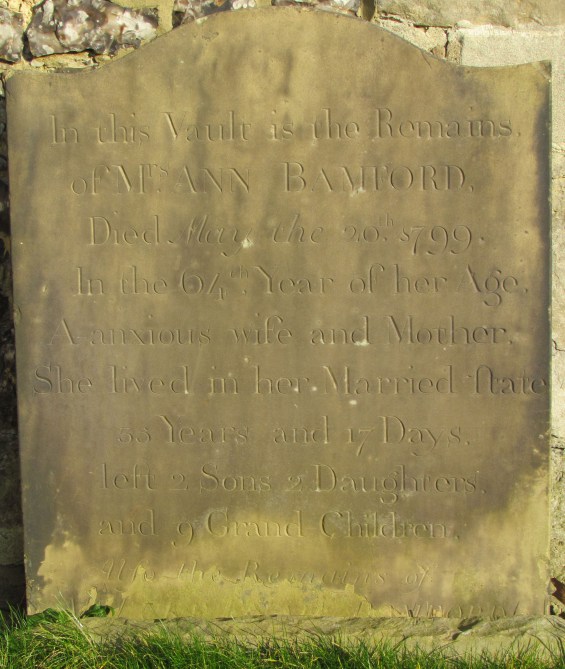
Like Mary Cooley, Mrs. Ann Bamford provides a look into what a woman wore in the 18th century. Born in 1735, Mrs. Bamford’s estate inventory was created after her death at the age of 64 in May, 1799. (She is buried in the St. John the Baptist Churchyard, Borough of Harrow, Greater London. Her gravestone notes she was “An anxious wife and mother,” and records that she was married state to Luke Exall Bamford for 35 years and 17 days. That tells us that the Bamfords married in 1764, when she was 29. I love this detail of the late-20s marriage, actually reasonably typical for women of the period. When Anne Pearson and James Sparks married in 1772, they were roughly 43 and 50, respectively. Older, certainly than Mrs. Bamford when she married (James Sparks’ first marriage was in 1751, when he was 25; and early marriage, but he was by then already a Captain and ship’s master). 

Six years, at most, separate the Ann(e)s, Bamford and Sparks. In 1799, Anne Pearson Sparks is 70 or nearly so, married to a former Captain now gentleman and living in England, so the Bamford probate inventory provides a window into what the fashionable and well-to-lady of a certain age might have owned.

lwlacq000090The inventory, taken by a man,  and now in the collection of the Lewis Walpole Library, may suffer from a lack of feminine insight when it comes to descriptions, but it is comprehensive, listing at least 399 items. It begins: 

  • A Brocaded Sik Nightgown
  • A Gold Laced Jacket and Pettycoat silk grosgrain
  • A pair of pocket hoops
  • Two white petticoats worked at the bottom
  • A Black velvet bonnet
  • A Black Bombazine Negligee and Pettycoat
  • A piece of Printed Muslin for a Gown
  • One sprigged muslin nightgown
  • One Brocaded silk gown unmadeup

In the entire list, there are (among other things):

  • 3 jackets and petticoats, probably riding habits
  • 15 gowns and nightgowns
  • 5 negligees or sacque-back gowns
  • 20 petticoats
  • 14 shifts
  • 28 pairs of sleeve ruffles (various sizes, some worked, some laced)
  • 8 pairs of shoes
  • 3 waistcoats; 2 white, 1 fustian
  • 45 aprons, cloth, muslin, net, worked and embroidered
  • 33 caps, including wired caps and caps “with ribands”
  • 4 bonnets, including one in black velvet and one white
  • 11 hats
  • 26 pairs of stockings, including a pair in green silk
  • 3 stomachers
  • 12 cloaks
  • 58 handkerchiefs of various kinds, some “for wearing,” some worked (embroidered) in gold and silver
  • 5 entries described as“gown unmade up”
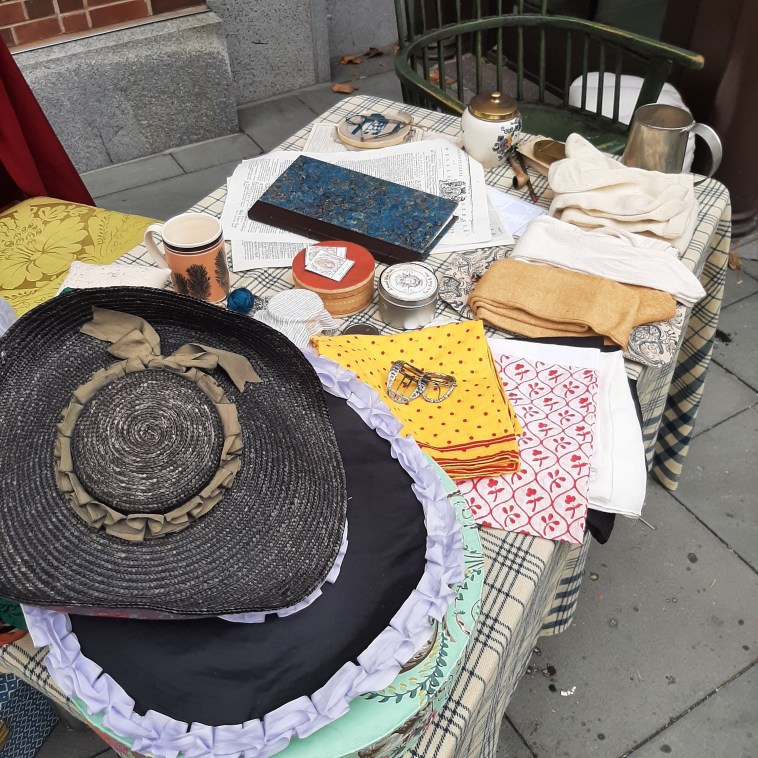
    a stack of 18th century hats and patterned handkerchiefs sit on a check blanket
    I love a stack of hats and handkerchiefs, too! Hats & hankies from Burnley & Trowbridge

There’s no reliable way to know when the gowns were made, or what exact style they are. We cannot know the state of all 45 aprons, the styles of all 33 caps, or 4 bonnets. There’s hope in the five gowns “unmade up.” There’s frivolity and impulse purchasing in 58 handkerchiefs. Fifty-eight! 26 pairs of stockings, one pair of green silk, and one pair of thread with clocks, but the majority seem to be worsted. 

What does Ann Bamford not have? There are no quilted or matelasse petticoats; this may be a function of the list being made in 1799 when the fashionable shape shifted away from the round bell provided by quilted petticoats, but Ann retains a pair of pocket hoops and has no rumps or pads. The infrastructure of a fashionable shape for the 1780s and 1790s seems missing. 

Screen Shot 2024-01-23 at 6.11.36 PM
Cabinet des Modes, August 1, 1786.

It’s likely that the inventory contains clothing from a range of years, possibly dating back to Ann’s marriage. The brocade gowns may well have been reworked from earlier styles, and the jacket-and-petticoat combination in silk grosgrain with lace sounds like the laced and decorated riding habits of the 1760s when Ann was married. As styles changed in the 1770s and 1780s, she might have had additional riding habits made, since they were worn as traveling and visiting costumes and even at home. There are other clues: the black bombazine nightgown and petticoat and the black silk negligee and petticoat suggest mourning, as do the silver silk negligee and petticoat (there is a second silver silk petticoat as well). These would provide stages of mourning, deepest in black and half in silver. English, Ann’s mourning garb might have been worn for deaths in the royal family (like Barbara Johnson) as well as for her own family. (In this context, negligee describes an informal gown, that is, one worn at home, during the day. Nightgowns, or English gowns, were slightly more formal, for day or evening wear. There are subtle distinctions lost to us, but not entirely dissimilar from our “work to evening” outfits where accessories can change an outfit’s meaning.

A Milliner’s Wardrobe

Among the things I ponder about Anne Pearson Sparks is what she wore, and how much clothing she had. She would have seen the latest fashions and fabrics when she traveled to England to buy millinery goods. How did she translate those styles for her Philadelphia customers, like Mrs. Cadwalader, and how did she interpret them for herself? It’s largely unknowable since there are no known images of Anne. Probate inventories provide insights into the quantity and type of clothing women had in the 1770s. They skew higher income since people without wealth had so much less to leave, but given that Anne Pearson owned her own house, and had a £2700 marriage settlement, she certainly had means.

(Above right, Portrait of a woman by Charles Willson Peale, ca 1775. Metropolitan Museum of Art Accession Number: 26.129.2)

The February 1778 inventory of Mary Cooley’s estate, digitized by Colonial Williamsburg, provides an extensive list of clothing and other items owned by a York County (VA) midwife, including 10 gowns, 6 petticoats, 9 shifts, 5 pairs of shoes (4 leather and one black satin), 15 caps, 9 “chex” (checked) aprons, and 4 other aprons, presumably white. The type of gown is not specified, that is, they are not itemized as “nightgowns,” “sacks,” or “negligees,” though there is an additional wrapper. No bedgowns appear on the list, and there is only one pair of stays. Since only items with value (i.e. sale value) were listed, Mary Cooley’s total inventory probably included bedgowns. The clothing worn by the enslaved woman Bett and her child Peter was also probably not on the list. Bett and Peter appear at the end of the list after items typically found in a kitchen, where they probably worked, lived, and slept; it is likely their clothes were few and had no value.

What does Mary Cooley’s list suggest for Anne Pearson?

The gowns include:

  • 1 Brown damask Gown 60
  • 1 black Callimanco Gown 60
  • 1 Striped Holland Gown 70
  • 1 dark ground Callico Do. 70
  • 1 Callico Do. £5 
  • 1 flower’d Do. £7 
  • 1 India brown Persian Do. £3..10/
  • 1 Purple Do. £5 
  • 1 flower’d Crimson Sattin Do. £12
  • 1 Striped Holland Gown 70/

That gives us:

  • 2 Holland (fine linen) gowns suited to the hot, humid Tidewater.
  • 1 Calamanco (glazed woolen) gown, best for winter 
  • 1 Damask (probably silk, could be silk and wool) gown, worth 60 shillings ( £3), so less than the silks
  • 3 Calico (cotton, probably all printed, one with a dark ground), also suited to Tidewater 
  • 3 Silk gowns, in “India brown,” flowered crimson satin, and purple Persian. 
Woman’s Round Gown (Robe à l’anglaise) c. 1775-1780s. Striped cotton plain weave. Accession Number:
1959-113-1 Philadelphia Museum of Art

Linen, wool, silk. Living in Philadelphia, Anne Pearson probably had more wool than Mary Cooley; how many more? Would we swap one linen and cotton for two woolen (stuff or worsted or calamanco) gowns? Would we swap a cotton gown for a riding habit? Anne traveled back and forth between Philadelphia and London for years, and a riding habit or (and?) a Brunswick would make sense for travel. With appearance a key part of advertising her trade and reputation, Anne probably had more than 10 gowns, but call it 10 and add at least a riding habit.

Then we add petticoats. Petticoats expand a wardrobe by matching or contrasting with open robe gowns. Six petticoats! That’s a good number of options, but remember, they need to balance the seasons.

Mary Cooley has:

  • 1 Pink Persian Quilt
  • 1 Black Shalloon Petticoat
  • 1 Blue Callimanco Petticoat
  • 1 India Cotton Petticoat
  • 1 old striped Stuff Quilt
  • 1 blue Quilted Petticoat
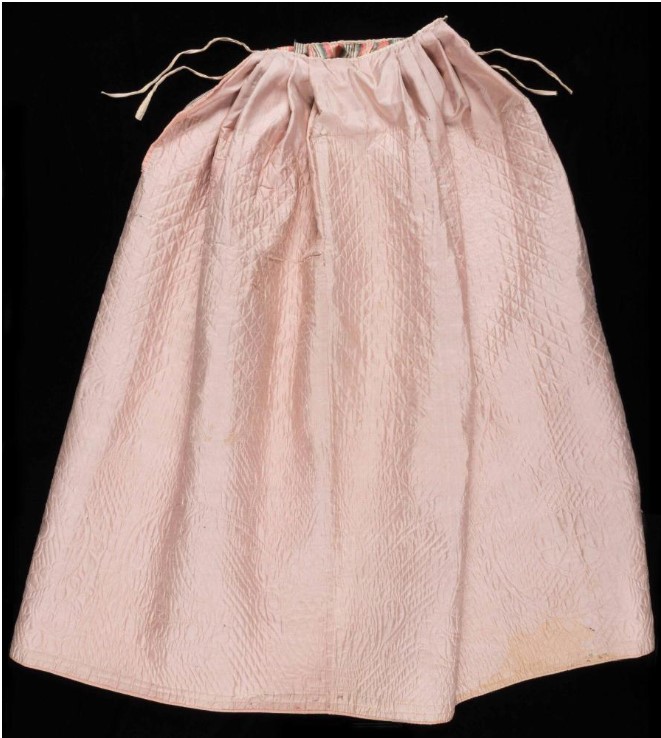
Quilted Petticoat, 1770-1775. Colonial Williamsburg OBJECT NUMBER 1995-191

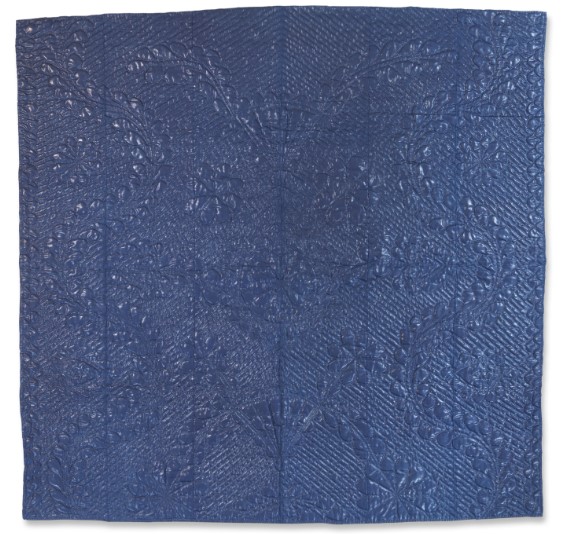
The pink Persian (silk) quilted petticoat certainly came from a milliner’s shop, and was likely made in England; it could easily be worn with those silk gowns. Having the color here helps us begin to imagine the combinations. Pink Persian and brown damask? Black shalloon and black calamanco? Black calamanco and blue calamanco? The India cotton petticoat was probably worn with one of the calico gowns, and we can contemplate striped stuff with a striped Holland gown. In any case, Mary Cooley’s two, possibly three, quilted petticoats helped her keep warm in silk, calico, or linen. The blue calamanco petticoat might also have been quilted; there are many calamanco whole-cloth quilts, and I like to imagine one as vibrant and shining as this quilt or perhaps this one. Quilted or not, under candlelight both gown and petticoat would glisten. 

Deep Indigo Glazed Calamanco Quilt, Probably New England, Late 18th Century

In the Pink

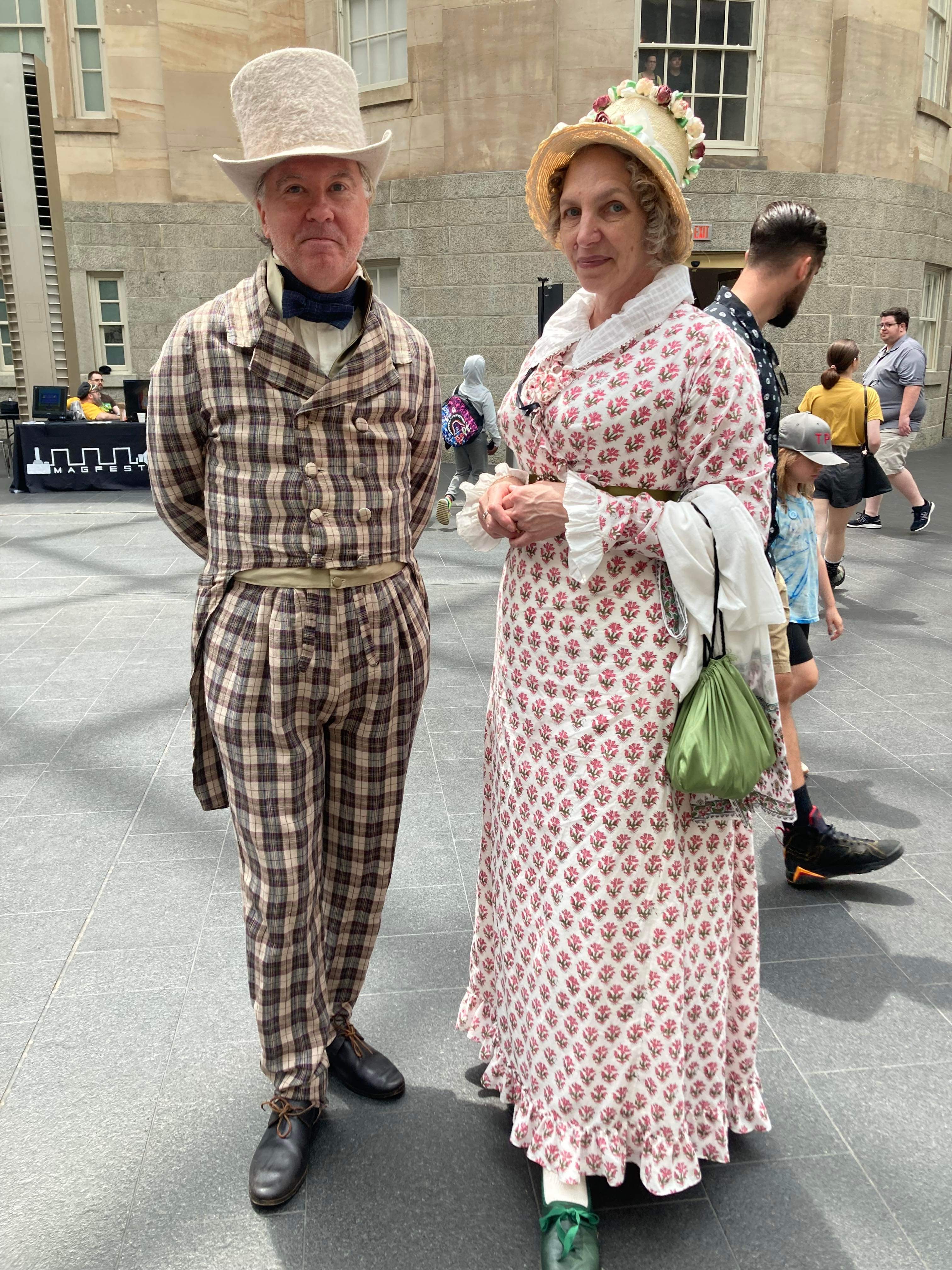
The costumed event schedule has been remarkably thin for obvious reasons, and for me since 2019 when I worked every weekend and thus lost the habit of traveling. In an attempt to change that, I joined a Facebook group for local-regional costumer meet-ups, mostly held at local museums. I talked Mr. K  into going with me to one in July at the National Portrait Gallery in Chinatown and then talked myself into making a new gown.

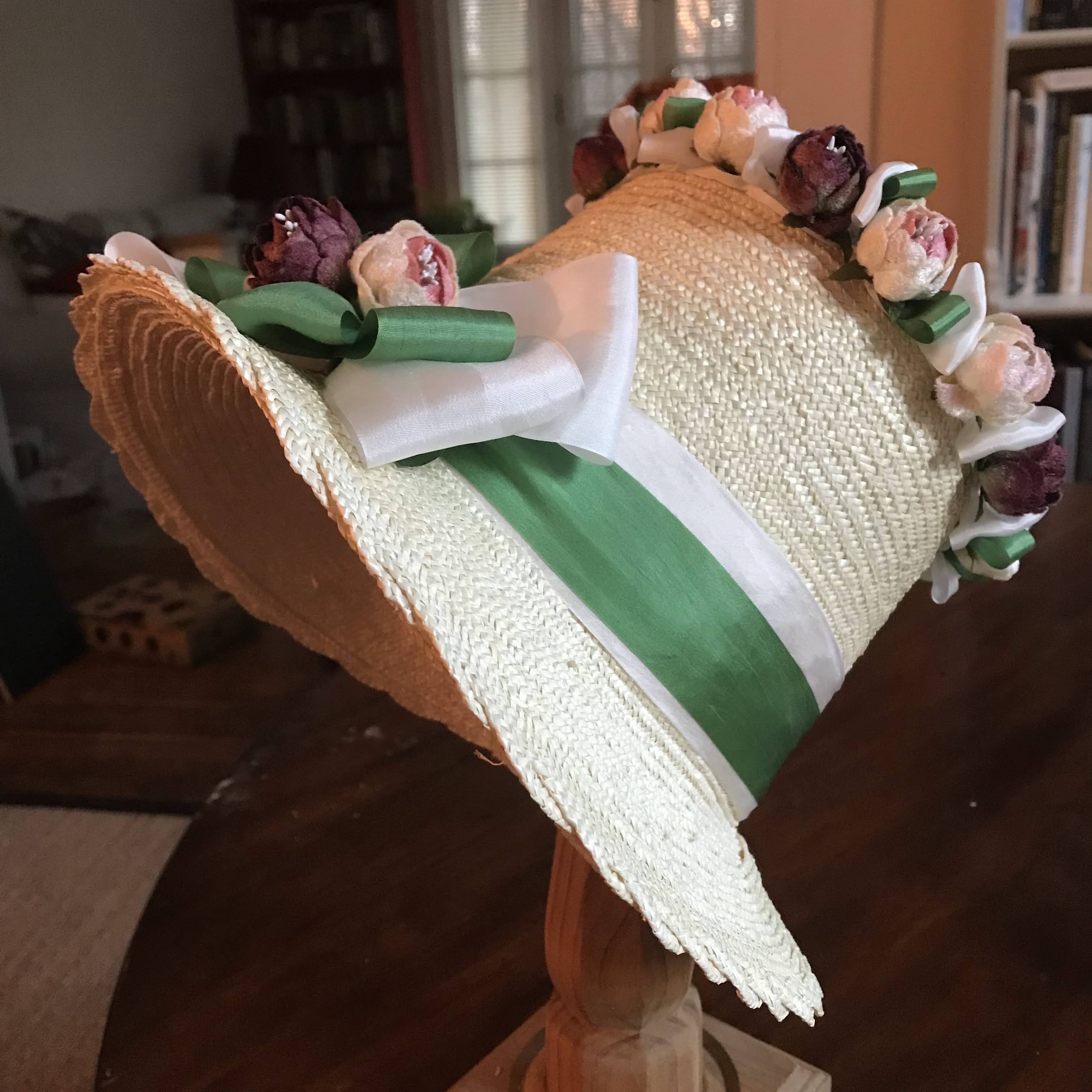
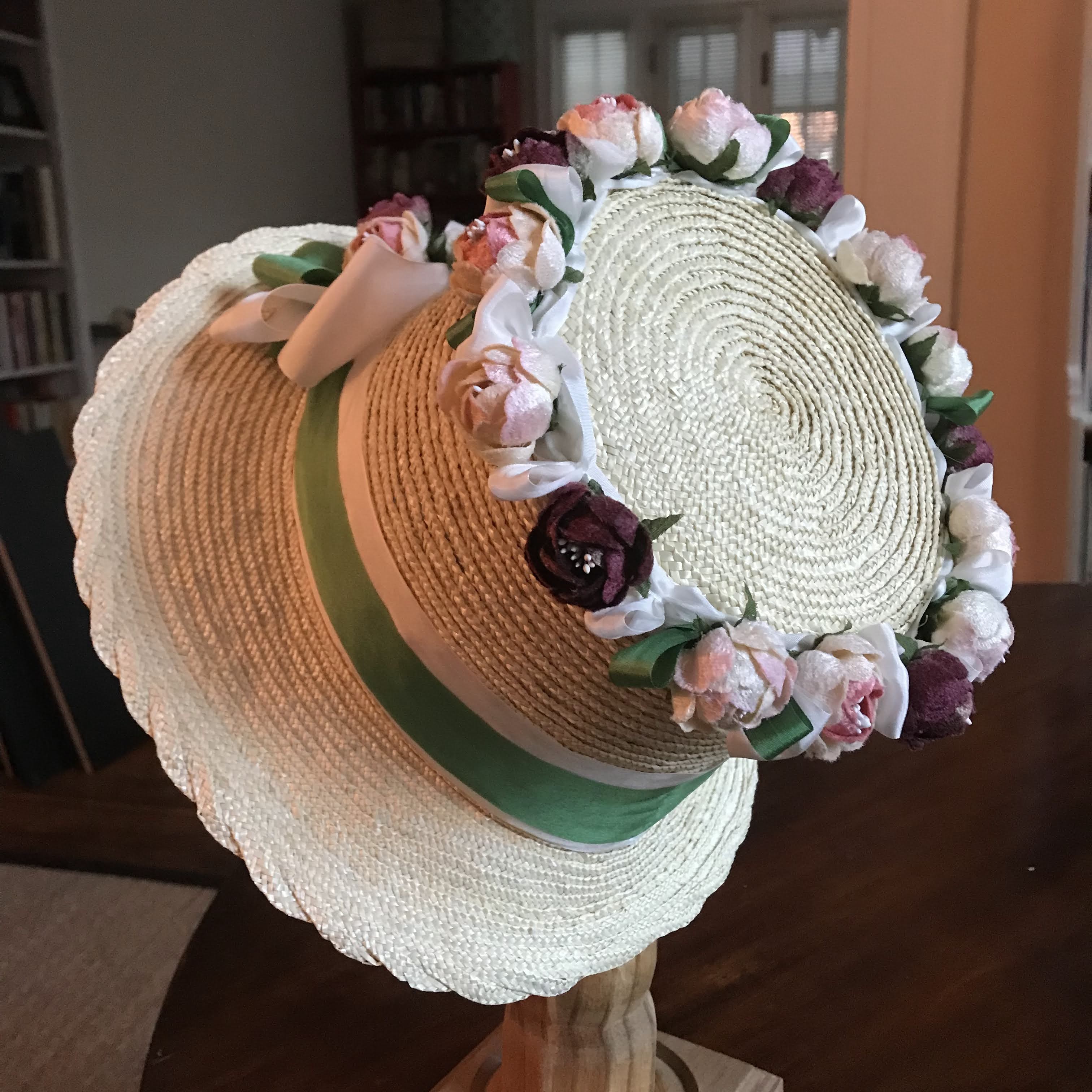
I built the outfit around two things: wanting to match Mr. K’s era and wanting to wear a straw hat I trimmed in late 2021 but probably purchased years earlier. Initially, that bonnet was going to be part of a historical wedding outfit but in the end, I settled for just a chance to wear it.

This 1814 fashion plate has long appealed to me: I like the expression on the model’s face, and I like the color scheme: Just Preppy Enough. Enter the Surplice Front Gown in block-printed Indian cotton. I used a pattern I worked up in early 2020; happily, it still fits so I did not have to make any modifications.

From there, it was simple enough to stitch pretty quickly and even work out trim. Not enough time to tier the ruffles at the hem, but enough to satisfy my desire to look like a strawberry smoothie. Worn with Robert Land Regency slippers in green leather, a shawl from Burnley & Trowbridge, and a chemisette and reticule made by me.

The straw hat was made by Anna Worden, and trimmed by me with vintage fabric roses and ribbon probably found on Etsy and at May Arts Ribbon. Portrait Gallery photos by Mike and Gloria of In the Long Run Designs.

A Pelisse for Emma Smith

This was an interesting project that only needed to fit my small mannequin, which was a relief since the ultimate client was in Ohio.
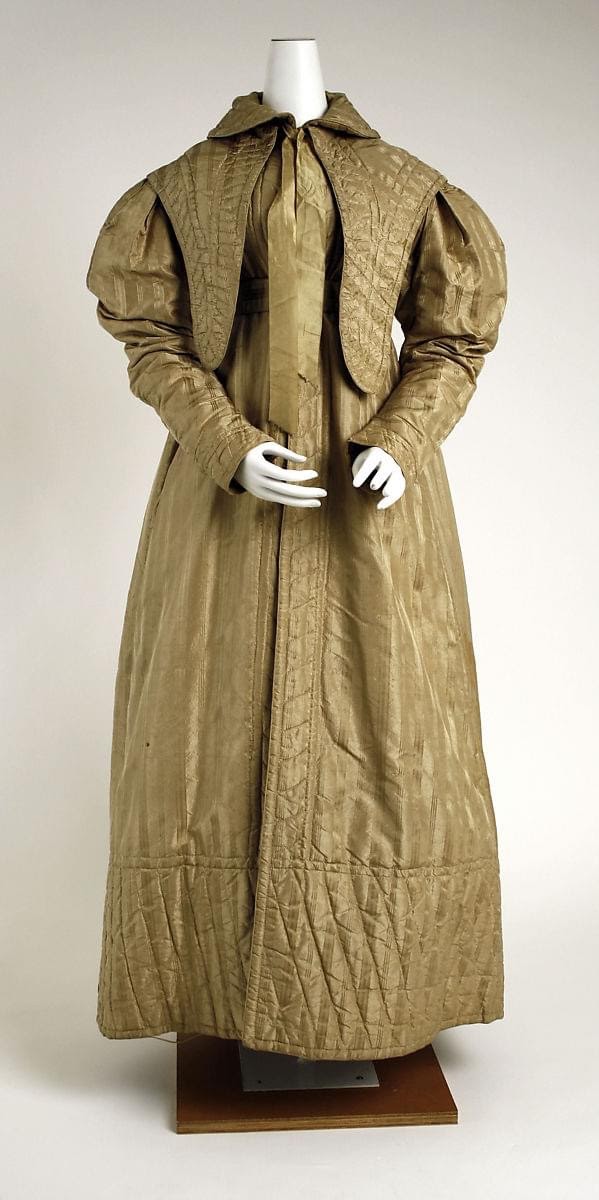
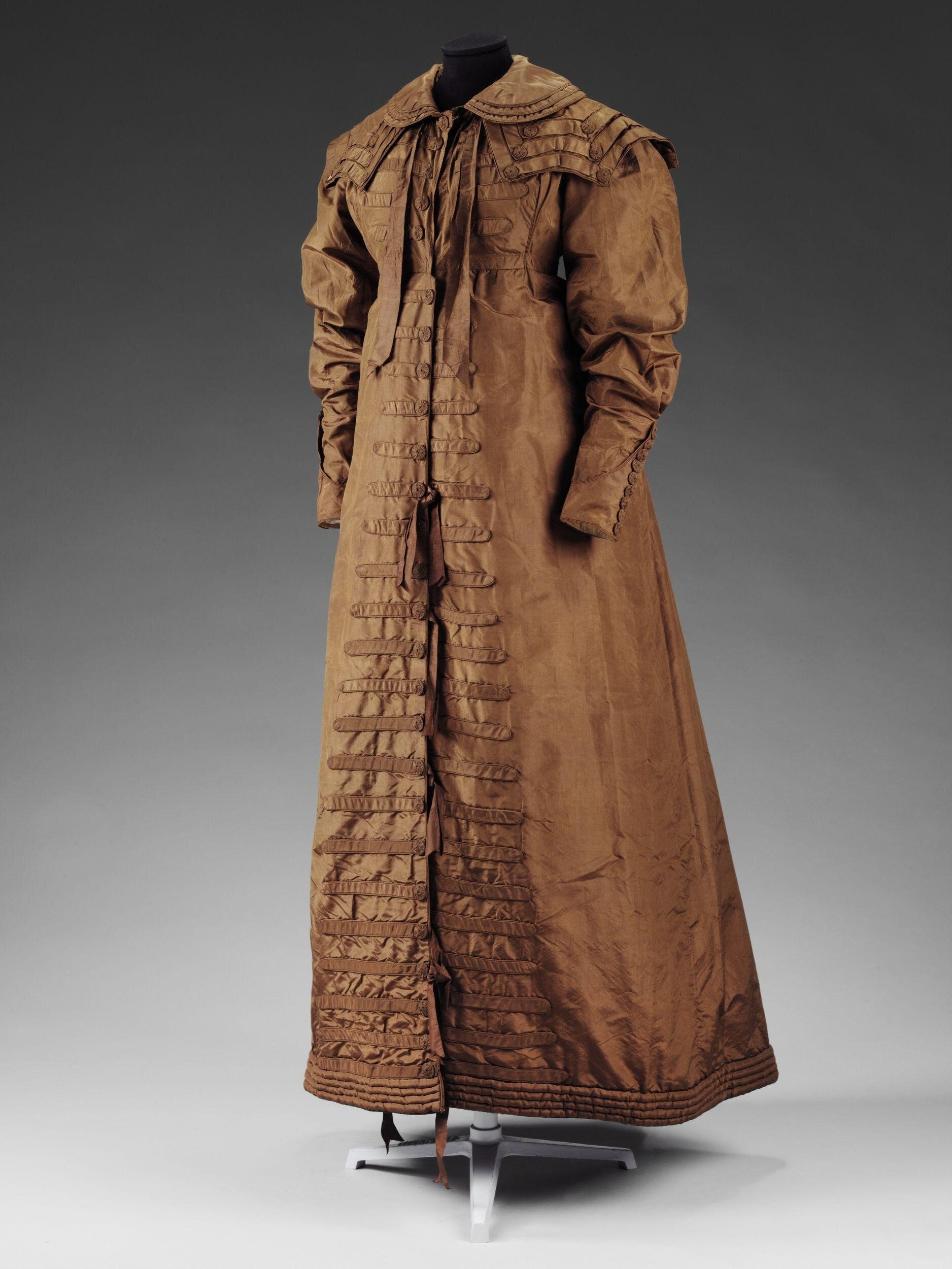
It started with a conversation in the summer of 2022 about 1830s pelisses. I have an interest in the decade because we spend time at Old Sturbridge Village, and it’s a weird time period. I like the way that sleeves get smaller after the crash of 1837, and the various ways you can connect fashion and style to economics and politics. (See American Fancy, by Sumpter Priddy.)

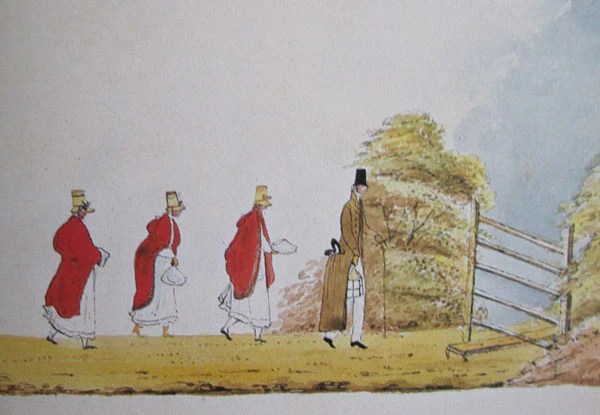
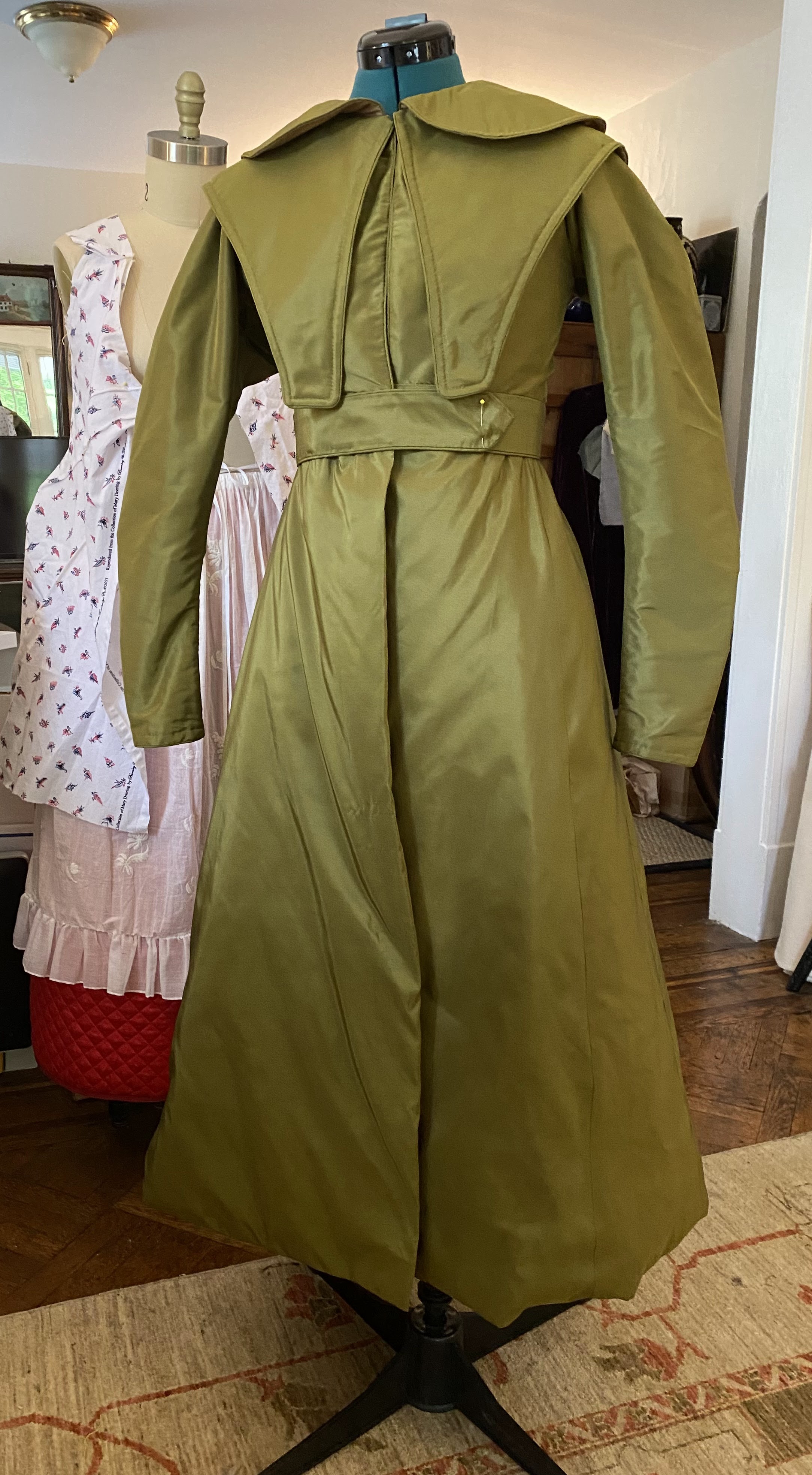
Pelisses were worn in the United States (and Europe) from the 1810s onward, though the bright scarlet wool cloak also persisted in use. The durability and water-resistance of the cloak, and the forgivingly loose fit, recommended them for continued use, Pelisses and cloaks were eventually superseded by sacques, dolmans, paletotes, and shawls, all of which accommodated the larger skirts and crinolines of the 1850s and 1860s. Many of these forms evolve but persist– think of the opera coat of the 1920s through 1960s, with its short sleeves, working over a range of silhouettes from shift dresses to tent dresses to bubble skirts.

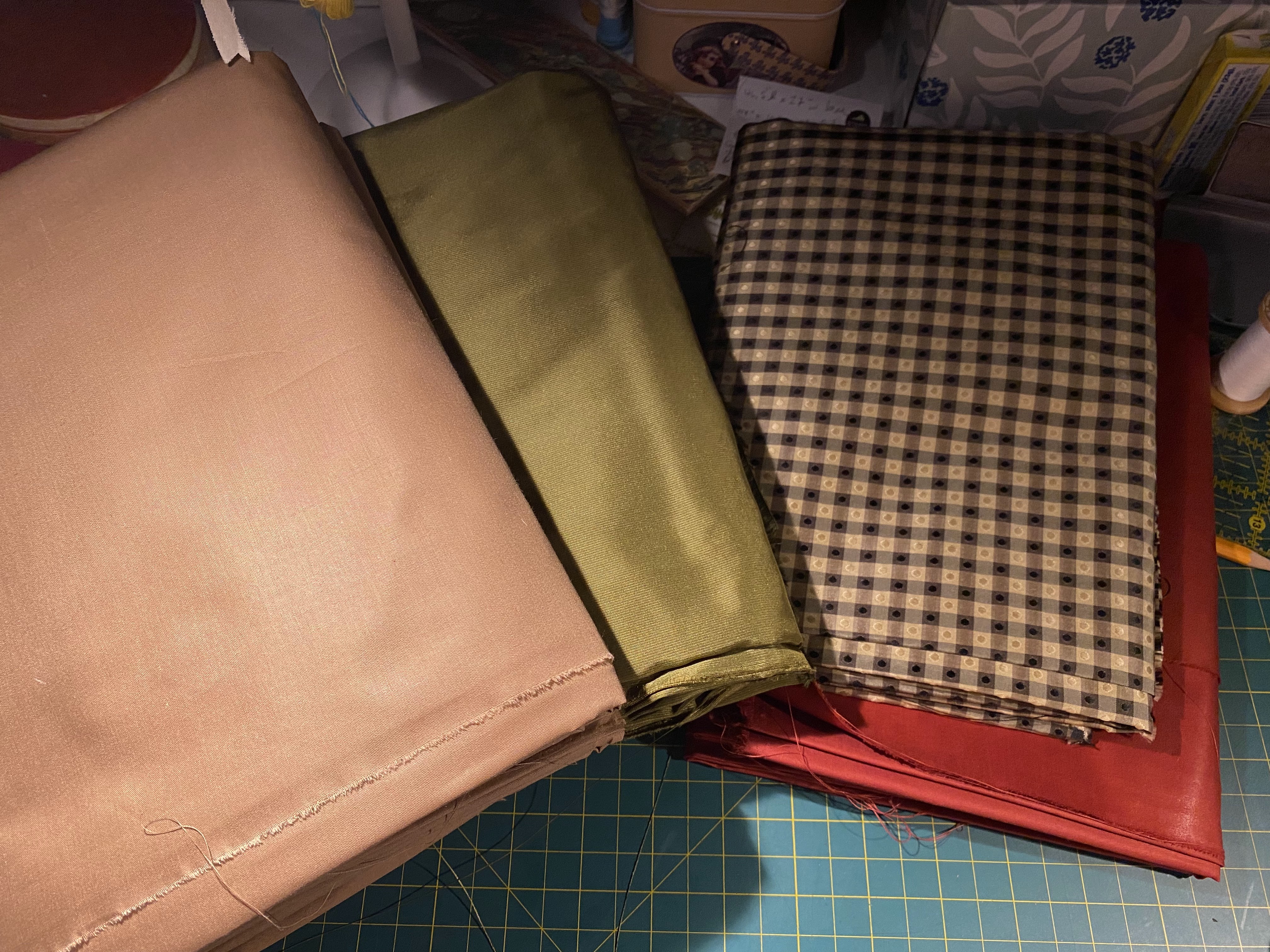
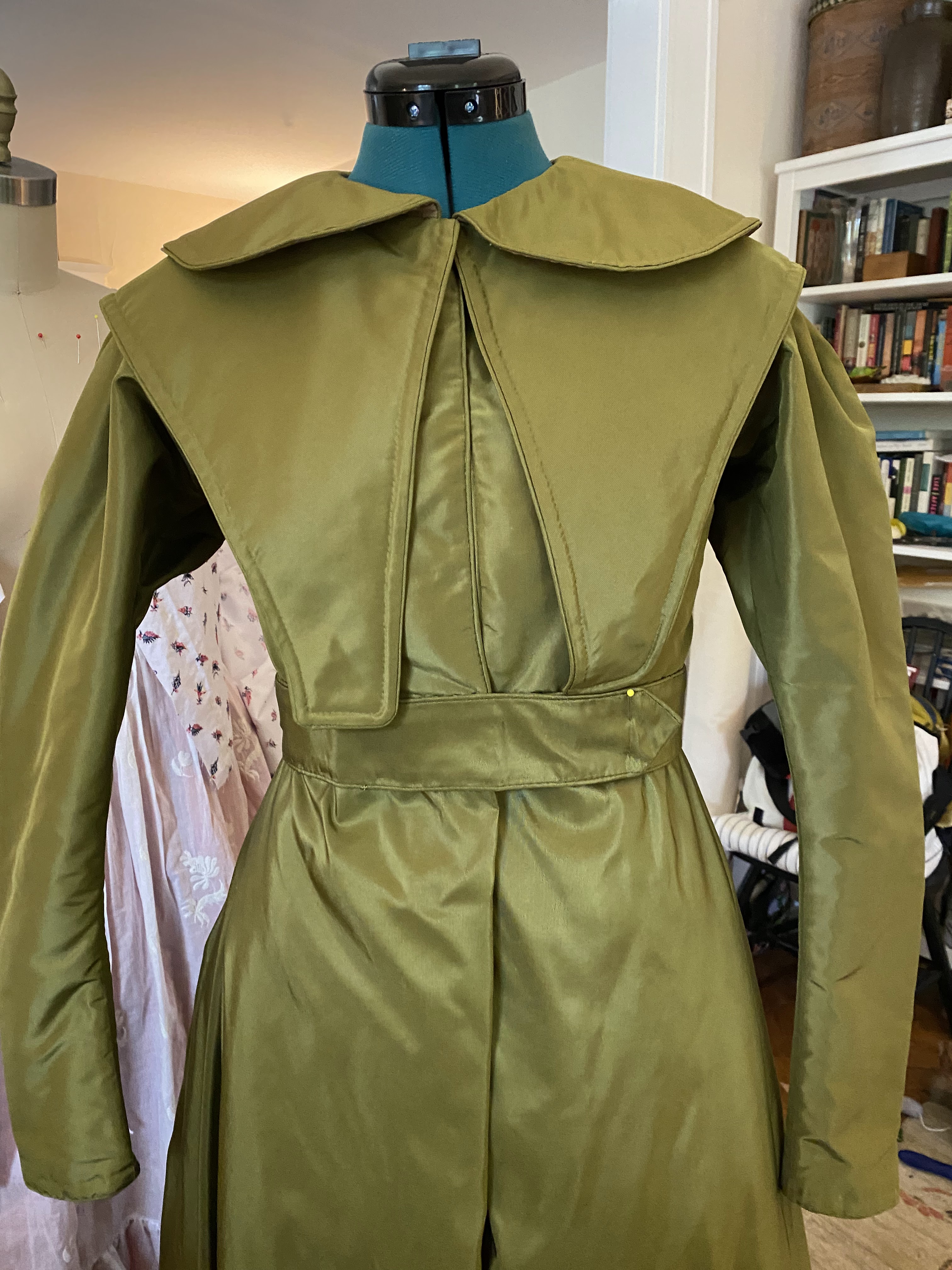
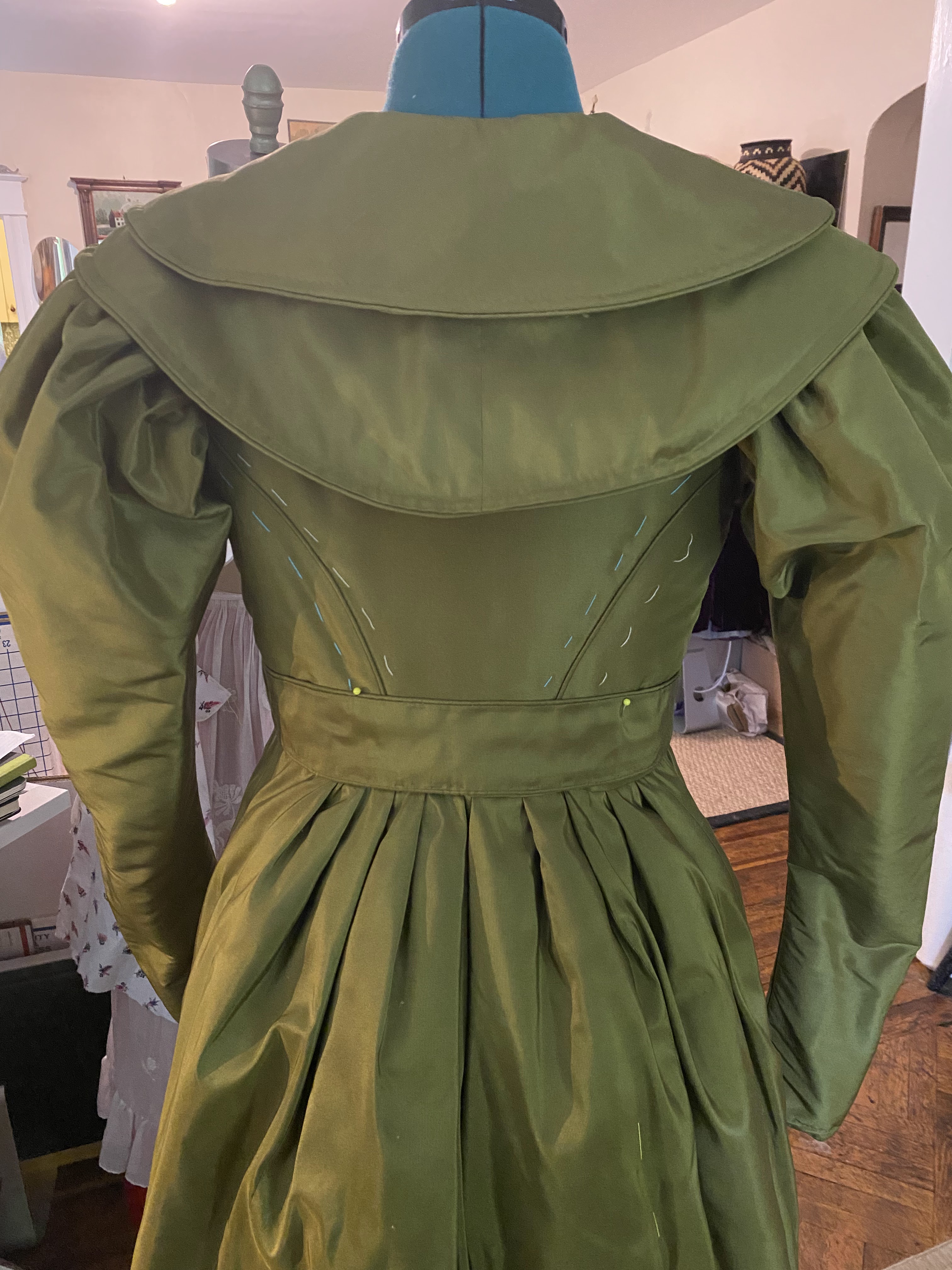
The typical colors seem to have been green or brown, with some stripes appearing as well. For this garment, I selected a range of green-brown silks for the client to choose from and, eventually, we settled on Silk Baron’s Ardennes green silk taffeta and I ordered the yardage. The lining was made of Renaissance Fabric’s polished cotton-poly blend, as the closest material I could find to the polished or glazed cotton linings seen in period garments.

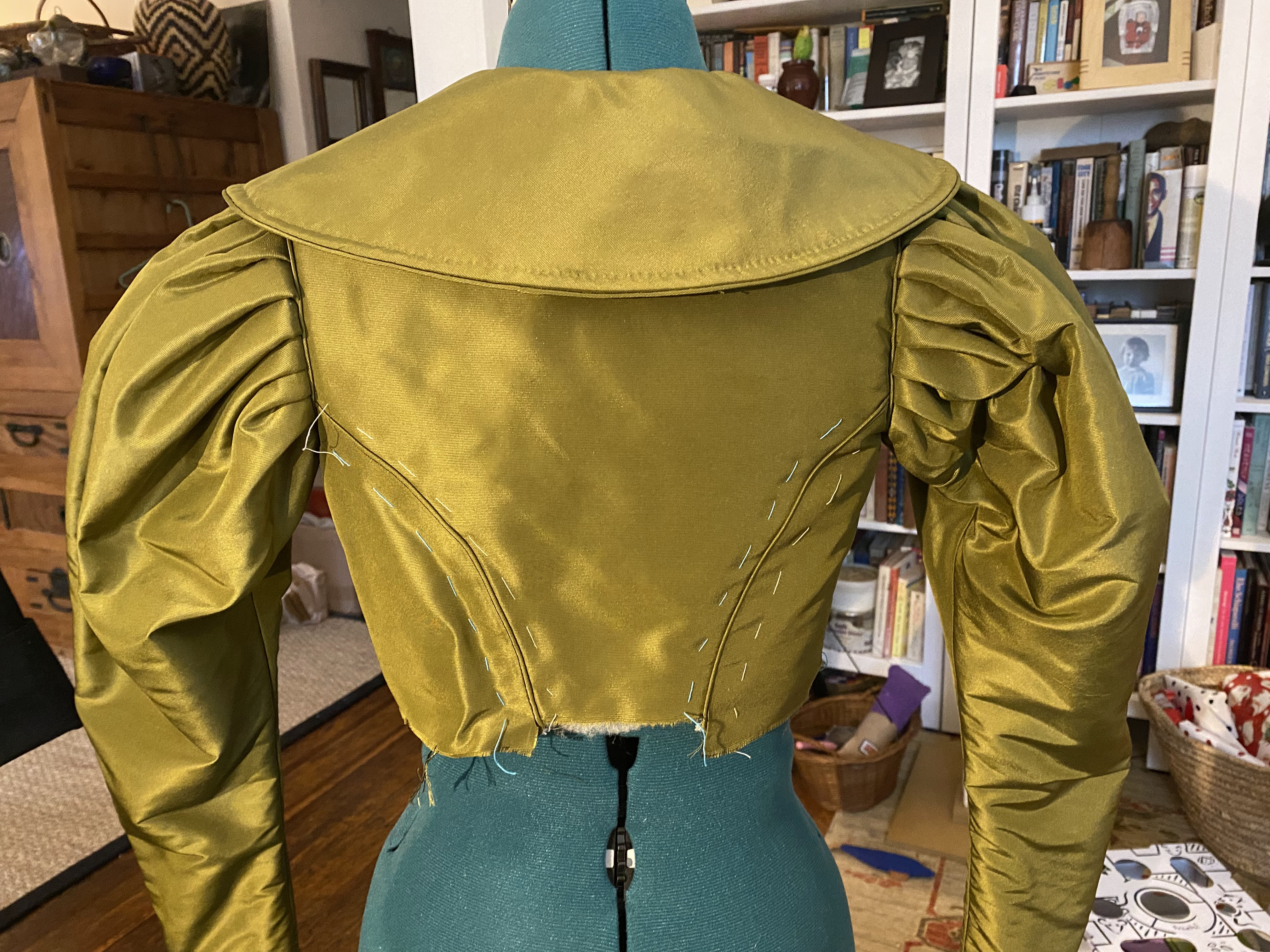
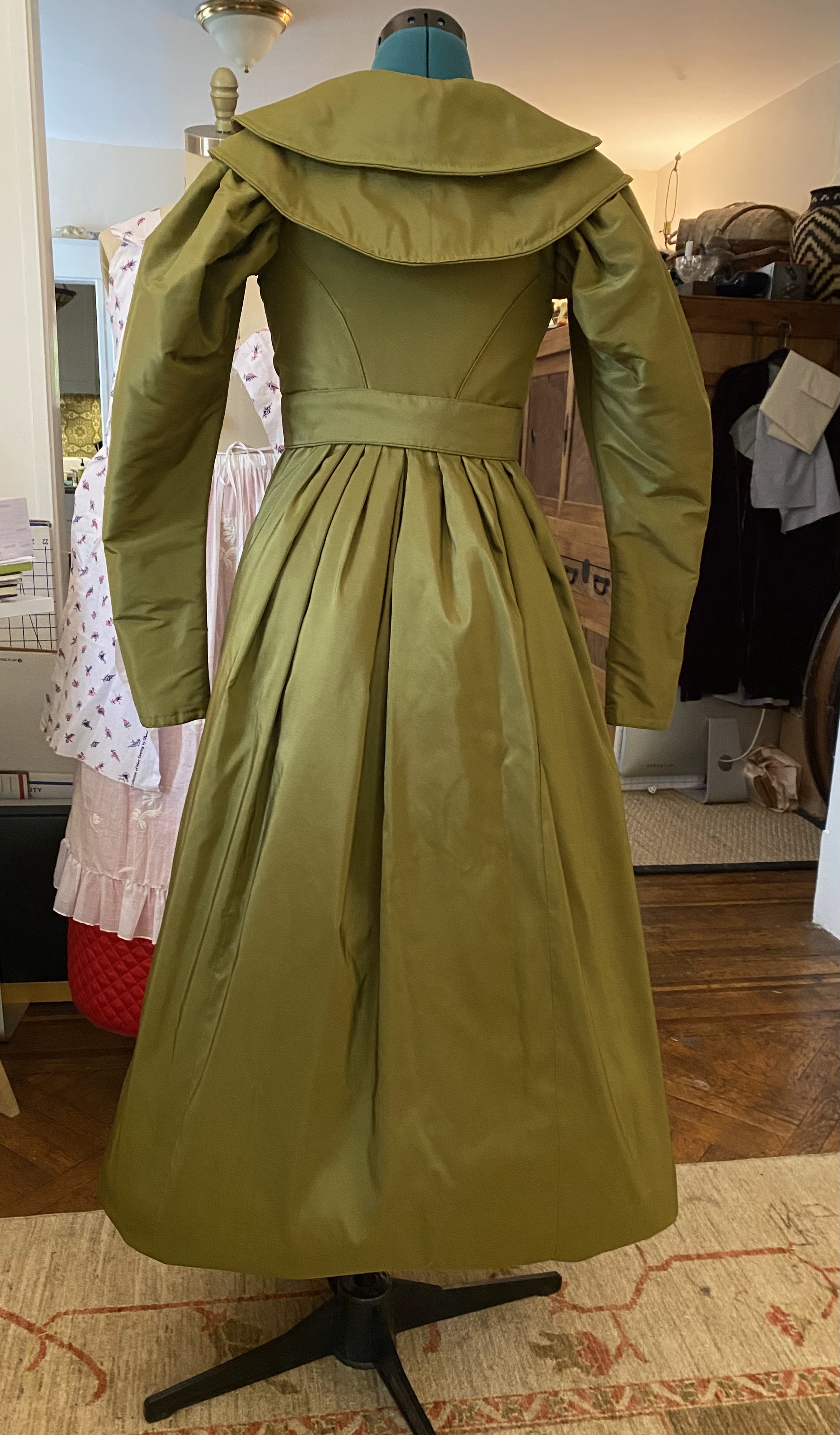
The pattern was scaled down from my own Spencer pattern, and draped to fit the mannequin. The sleeve pattern was a bit of kit-bashing, working between the Past Patterns Lowell Mill Girl’s dress sleeve and my own 1820s sleeve. I chose to err on the side of less enormous, trying to walk a line between fashionable but not too outre. For Boston, I’d make enormous sleeves; for the shore of Lake Erie, northeast of Cleveland, I went a little smaller.

The bodice, sleeves, pelerine, collar, and skirt were all constructed with padded laters of woo batting between the silk exterior and the cotton lining. This was not a fun project to quilt, given the taught weave of both the silk and cotton layers, but the quilting and piping add snazzy details to the edges– and both were typical in pelisses, Spencers, and gowns of the period. 

The sleeve puff is achieved in part through tiny pleating inside, a technique copied from the 1820s original gown in my collection, which was handy resource to have on hand, if a bit of splurge.

If I were to make one of these for myself, I would look for a lighter-weight silk taffeta, and I would consider a striped fabric. Some pelisses are less shaped– that is, they’re made more like a bathrobe, without a separate bodice and skirt (see Jane Austen’s pelisse, patterned and recreated by Hilary Davidson), but I prefer the shaped silhouette.