What’s In a Wardrobe?

Ann Bamford & unreadable (below ground) Luke Exall Bamford?

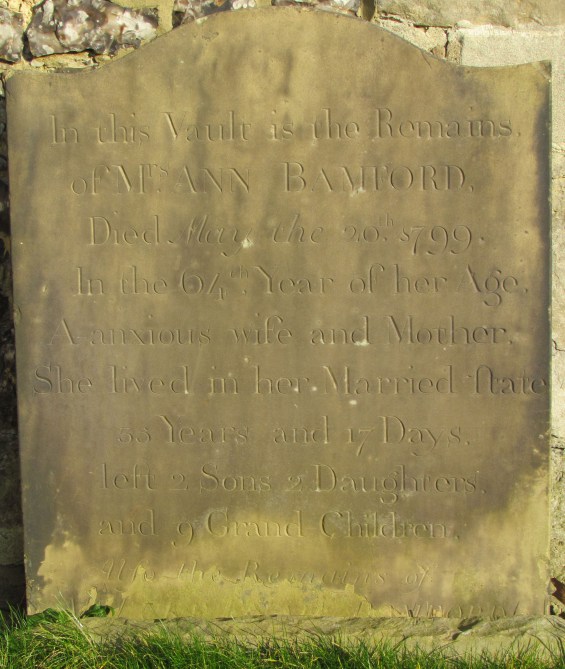
Like Mary Cooley, Mrs. Ann Bamford provides a look into what a woman wore in the 18th century. Born in 1735, Mrs. Bamford’s estate inventory was created after her death at the age of 64 in May, 1799. (She is buried in the St. John the Baptist Churchyard, Borough of Harrow, Greater London. Her gravestone notes she was “An anxious wife and mother,” and records that she was married state to Luke Exall Bamford for 35 years and 17 days. That tells us that the Bamfords married in 1764, when she was 29. I love this detail of the late-20s marriage, actually reasonably typical for women of the period. When Anne Pearson and James Sparks married in 1772, they were roughly 43 and 50, respectively. Older, certainly than Mrs. Bamford when she married (James Sparks’ first marriage was in 1751, when he was 25; and early marriage, but he was by then already a Captain and ship’s master). 

Six years, at most, separate the Ann(e)s, Bamford and Sparks. In 1799, Anne Pearson Sparks is 70 or nearly so, married to a former Captain now gentleman and living in England, so the Bamford probate inventory provides a window into what the fashionable and well-to-lady of a certain age might have owned.

lwlacq000090The inventory, taken by a man,  and now in the collection of the Lewis Walpole Library, may suffer from a lack of feminine insight when it comes to descriptions, but it is comprehensive, listing at least 399 items. It begins: 

  • A Brocaded Sik Nightgown
  • A Gold Laced Jacket and Pettycoat silk grosgrain
  • A pair of pocket hoops
  • Two white petticoats worked at the bottom
  • A Black velvet bonnet
  • A Black Bombazine Negligee and Pettycoat
  • A piece of Printed Muslin for a Gown
  • One sprigged muslin nightgown
  • One Brocaded silk gown unmadeup

In the entire list, there are (among other things):

  • 3 jackets and petticoats, probably riding habits
  • 15 gowns and nightgowns
  • 5 negligees or sacque-back gowns
  • 20 petticoats
  • 14 shifts
  • 28 pairs of sleeve ruffles (various sizes, some worked, some laced)
  • 8 pairs of shoes
  • 3 waistcoats; 2 white, 1 fustian
  • 45 aprons, cloth, muslin, net, worked and embroidered
  • 33 caps, including wired caps and caps “with ribands”
  • 4 bonnets, including one in black velvet and one white
  • 11 hats
  • 26 pairs of stockings, including a pair in green silk
  • 3 stomachers
  • 12 cloaks
  • 58 handkerchiefs of various kinds, some “for wearing,” some worked (embroidered) in gold and silver
  • 5 entries described as“gown unmade up”
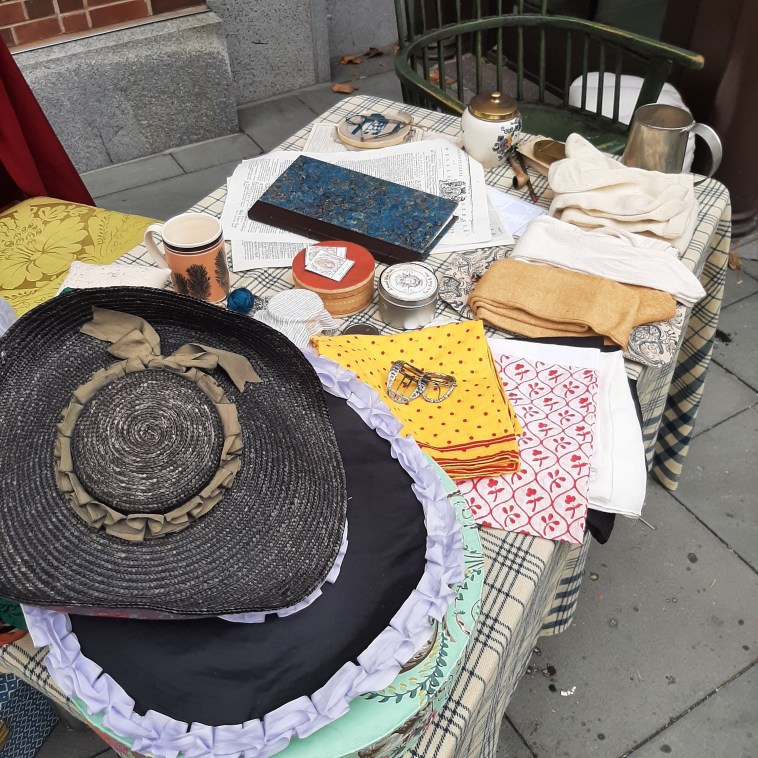
    a stack of 18th century hats and patterned handkerchiefs sit on a check blanket
    I love a stack of hats and handkerchiefs, too! Hats & hankies from Burnley & Trowbridge

There’s no reliable way to know when the gowns were made, or what exact style they are. We cannot know the state of all 45 aprons, the styles of all 33 caps, or 4 bonnets. There’s hope in the five gowns “unmade up.” There’s frivolity and impulse purchasing in 58 handkerchiefs. Fifty-eight! 26 pairs of stockings, one pair of green silk, and one pair of thread with clocks, but the majority seem to be worsted. 

What does Ann Bamford not have? There are no quilted or matelasse petticoats; this may be a function of the list being made in 1799 when the fashionable shape shifted away from the round bell provided by quilted petticoats, but Ann retains a pair of pocket hoops and has no rumps or pads. The infrastructure of a fashionable shape for the 1780s and 1790s seems missing. 

Screen Shot 2024-01-23 at 6.11.36 PM
Cabinet des Modes, August 1, 1786.

It’s likely that the inventory contains clothing from a range of years, possibly dating back to Ann’s marriage. The brocade gowns may well have been reworked from earlier styles, and the jacket-and-petticoat combination in silk grosgrain with lace sounds like the laced and decorated riding habits of the 1760s when Ann was married. As styles changed in the 1770s and 1780s, she might have had additional riding habits made, since they were worn as traveling and visiting costumes and even at home. There are other clues: the black bombazine nightgown and petticoat and the black silk negligee and petticoat suggest mourning, as do the silver silk negligee and petticoat (there is a second silver silk petticoat as well). These would provide stages of mourning, deepest in black and half in silver. English, Ann’s mourning garb might have been worn for deaths in the royal family (like Barbara Johnson) as well as for her own family. (In this context, negligee describes an informal gown, that is, one worn at home, during the day. Nightgowns, or English gowns, were slightly more formal, for day or evening wear. There are subtle distinctions lost to us, but not entirely dissimilar from our “work to evening” outfits where accessories can change an outfit’s meaning.
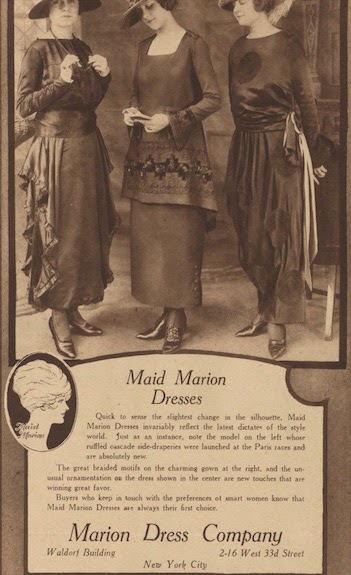
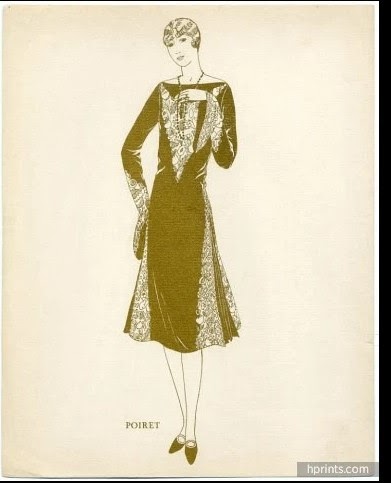
A 1920s-style Dress for a Wedding

It’s the time of year when people post what they accomplished in the past year. I’m late to the party, but I found it helpful to look at what I did manage as I think about what I’d like to do in the coming year. Underlying all these goals is the near-constant existential crisis of daily life in this world, which produces drag on anyone paying a bit of attention. Oh, and health issues like appendicitis twice and an ear infection to see the years out and in with a flourish. As I look back, I’ll break the year down chronologically into multiple posts. 

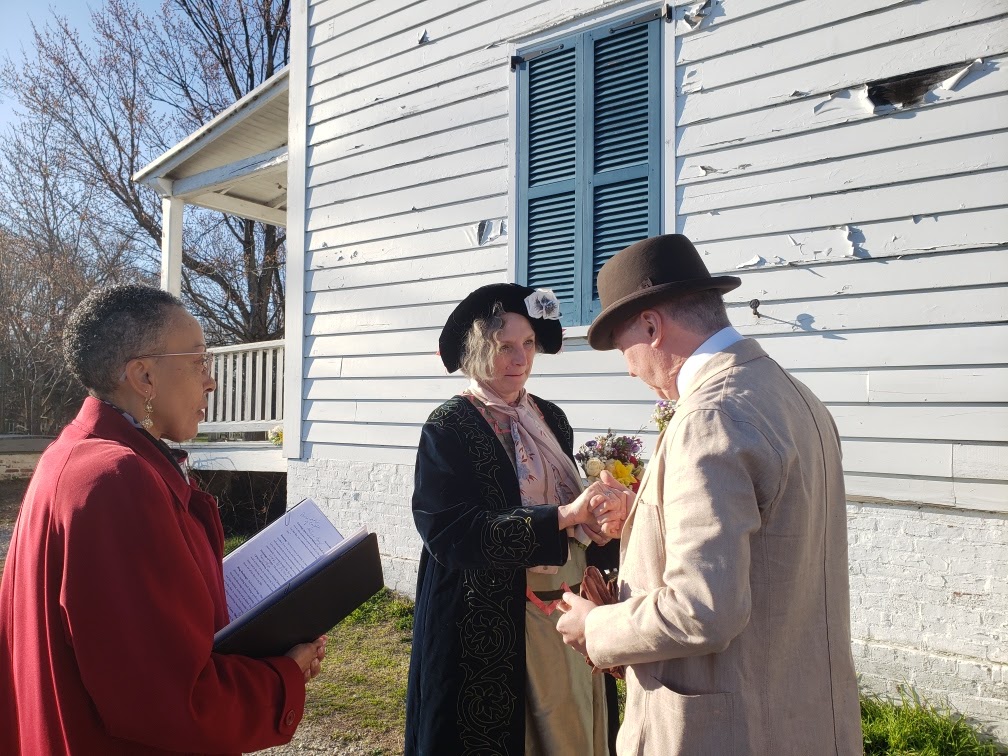
January was packed with disparate projects, each with their problems. There was a big work project that consumed a lot of the month, so Bryan decided that this was the time to plan and schedule a wedding. That meant making a dress at the same time I was working on a quilted hood and padded silk pelisse to represent Emma Smith at the Joseph Smith house in Ohio. Making a dress in this context meant deciding on a time period and a pattern, along with the undergarments, accessories, and shoes. I settled on the 1920s to work with a suit Bryan could comfortably wear– weather was also a consideration, as we anticipated being outdoors– and looked for inspiration and patterns. 

In the end, I made a hat, a corset, a slip, and three dresses. The three dresses were all the same pattern: the first to test the shape in silk, the second to be married in, and the third to wear on our “honeymoon” trip to Atlanta. That dress was made up in a vintage-style cotton print from Mood.

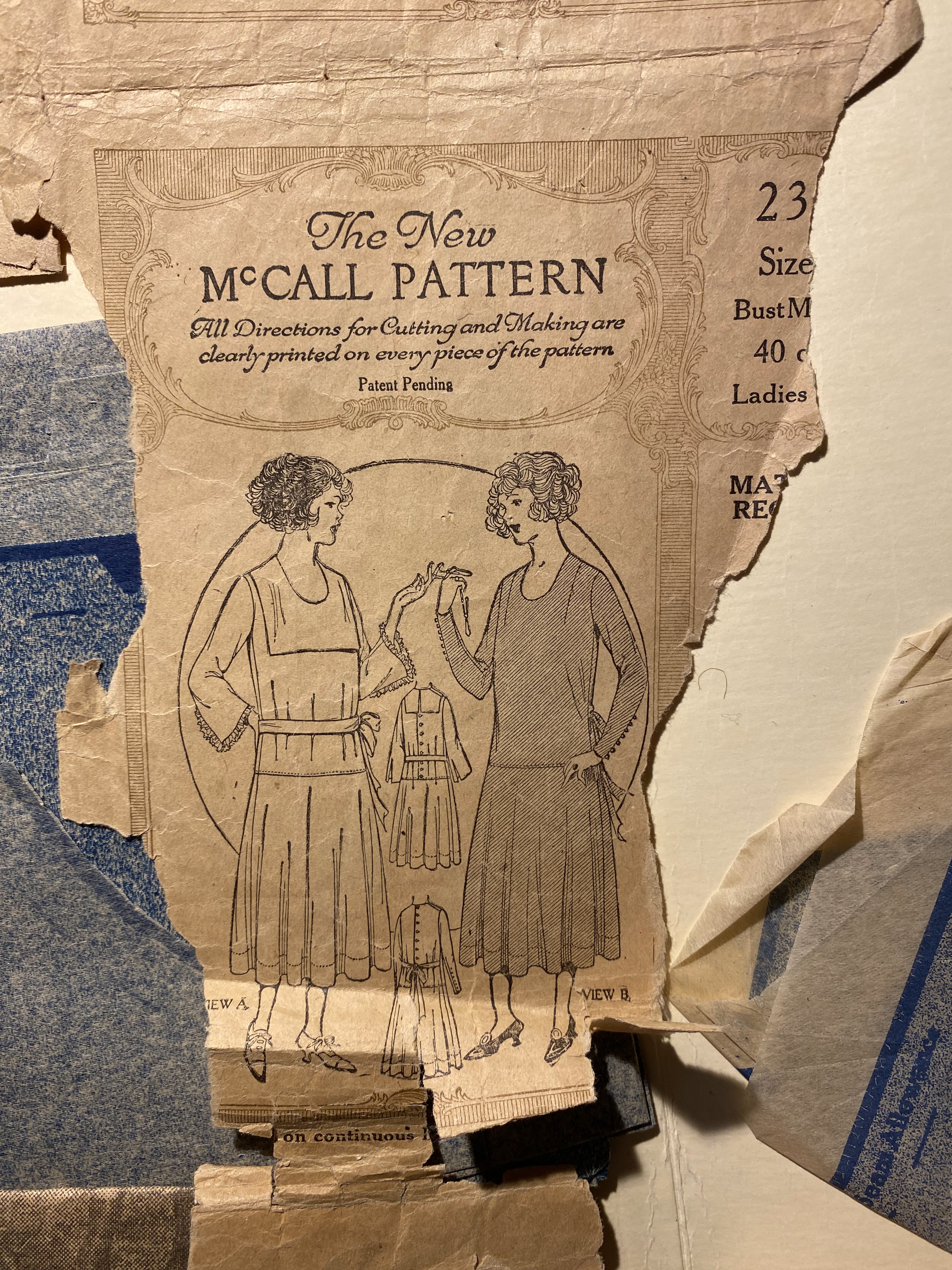
The pattern I used was based on an original 1923 McCall’s pattern in my collection. I traced the entire pattern and then scanned by sections to assemble a full, cuttable version that I could grade. The sleeve pieces were not intact, so I had to recreate the sleeve I wanted. Is this madness? Yes. Is it also my SOP? Again, yes. Obviously, I made up a muslin, but I also made a mockup in some gingham taffeta that I wasn’t particularly in love with, and had forgotten why I’d bought it. I took this step because I knew silk and cotton behave differently, and I really wanted to head off a draping failure.

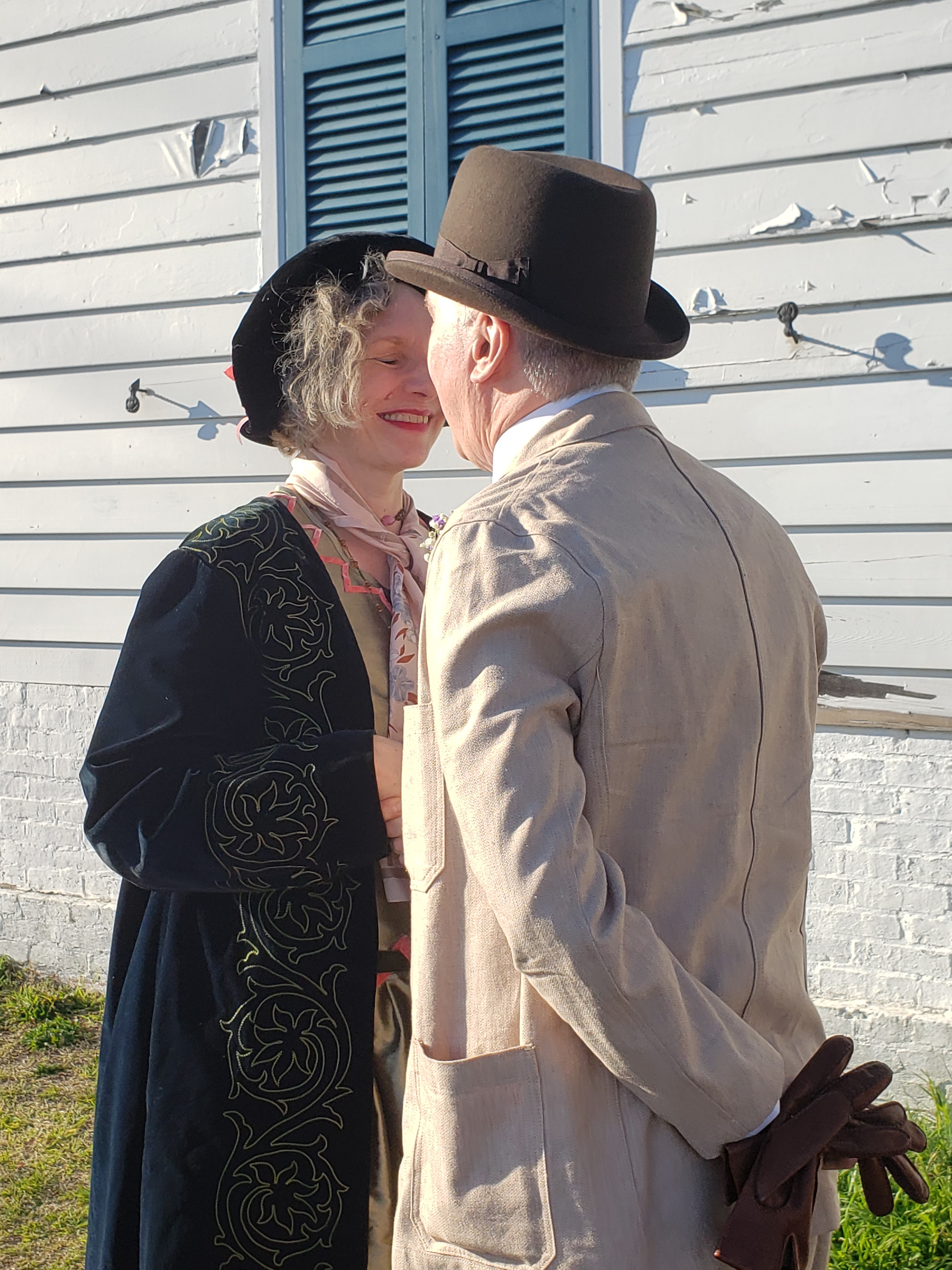
In the end, It’s a very simple dress: a two-piece bodice slips over the head, with the main interest in the color and trim. The dress trim is vintage velvet ribbon in a simple geometric pattern that didn’t take too much repinning. The accessories are a vintage wool purse I already had and a coat I picked up in a Facebook sewing group. The hat was originally a rose-colored straw sun hat my mother sent me. I covered it in black velvet and finished it with vintage trims.

We got married down on the Potomac River at Jones Point Park, with just one friend with us. To celebrate with other friends, we took the cake to them, which made scheduling a lot easier. 

And, in best vintage fashion, the “traveling” dress in the same pattern, worn at the Atlanta Botanical Garden, one of the places we visited on our honeymoon.

Sticking to It

So this happened: I sold things from a stick at Brandywine, and found a thing I enjoy doing with people I enjoy being with. (It’s so hard when you want to be with people, but can’t figure out how you belong, especially when you have a need to be busy.)

Now, street peddling is a thing I’ve looked into before with mixed results. I have some hope that I can find more documentation for this line of work in the mid-Atlantic region, since it seems to suit me. It’s a chance to channel my inner Elsa, and draw on memories of my grandmother’s store while maintaining a lower-class role.

It’s a chance to work out a backstory (confusing as my approach may be to some people, it works for me) that involves leaving the Boston poorhouse with city-paid passage to Philadelphia, commentary on the difference between New England and wherever I happen to be, and observations on the effect of war on local economies. It also affords plenty of opportunity to move around a site, talk to a variety of people I know, and explore wherever I happen to be.

And when I’m done, there’s always interpretive napping.

Photo by Anna Kiefer

The ‘Nancy Dawson’ Dress

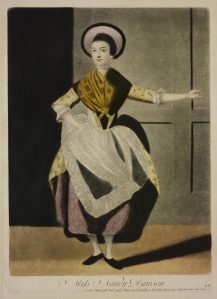
Miss Nancy Dawson, aquatint print. Victoria and Albert Museum. E.4968-1968

Hat tip to Mr B for pointing out the resemblance; I know the print and never connected it to this fabric.

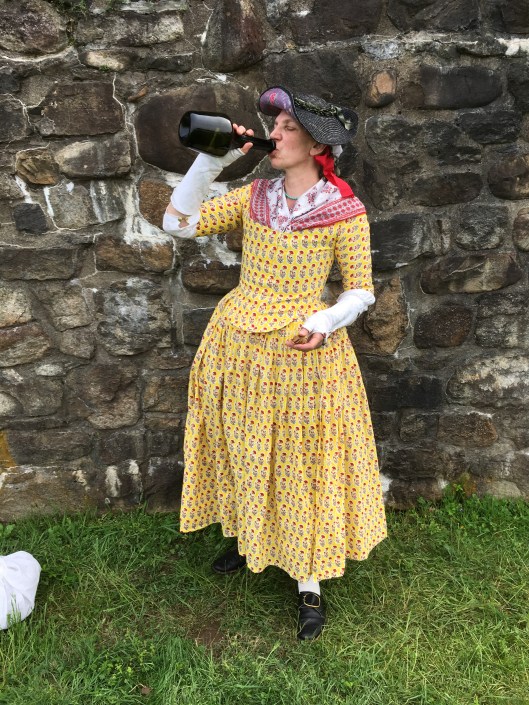
It’s been almost a year in the making, this bright yellow billboard of a gown. I’m not sure why I dawdled over the making; usually I’m pretty quick with a needle, but perhaps it was in part because the goal kept changing: first December, and then, it seemed, never, would I have an occasion to wear this. Federal exploits intervened, work intensified, things changed. But late April presented itself as an opportunity, so finally I had a goal, a deadline.

It was hot. And humid. That’s only water.

And I met it, with Drunk Tailor’s help (setting hems by yourself is a pain).

This is a fairly straightforward affair. I did use the Larkin and Smith “fashionable gown” pattern because I know how it fits me, but the front is modified to a simple closing and the skirts aren’t meant to be drawn up. This gown aspires to pretensions– though you can tell I’m fairly prosperous by the number of different prints I’m wearing.

The petticoat did require piecing– at my height, 44 inch wide fabric often needs to be pieced to achieve the lengths or width I need in historical skirts.

Happily, the piecing matches and doesn’t match, in a fairly satisfactory way. When this fabric arrived on my doorstep, I determined that it needed to be used in the most obnoxious manner possible– and since I’m not a small woman, a gown and matching petticoat seemed the best possible use. (I have other obnoxious fabrics for later time periods).

I did take care as I made it up, though, stitching with white thread and trying to make the pleats small and correct to the fashion and fabric. Any failures or flaws make it, to my eye, better as an article of aspiration to a rank and style I really can’t pull off.

One thing I forgot to pack was a bum roll– though wearing that on the drive to Fort Frederick would have been extra interesting– which was unfortunate, as it is truly required. These new (they’re a year old, and I expect to call them “new” for a long time to come) stays make a different shape in the back than the old stays, and now my own padding no longer negates the need for a bum roll. Still, I’m pleased with the result, even if it still wants cuffs. Not bad for eleven months of work.