HSF # 3: Under it All: A shift, and a petticoat

Done at last: the shift. Plus bonus bonnet

Remember that shift I couldn’t finish in time for HSF # 2, UFO? I did get it finished for HSF # 3, and a bonus petticoat as well. They don’t go together, but in honor of the excessive amount of snow we got this weekend, they’re both white. The snow is also how they got done: nothing like snow days and travel bans to keep one home and sewing.

How ‘Bout Them Facts?

Fabric:

  • For the shift, lightweight linen, probably this one.
  • For the petticoat, one of a pair of Ikea curtains found on sale one day. The light-weight cotton appealed to me and suggested filmy late 18th century petticoat better than anything I had seen at a fabric store.
The petticoat, over another petticoat. It’s that sheer.
Back view (again with cat bowl)

Pattern:

Shift:

Year:

  • Shift: 1775-1783
  • Petticoat: 1795-1800

Notions: Both: Just thread. And some left over white cotton twill tape.

How historically accurate is it?

The shift is pretty close. The fabric is, well, not the linen they had, but it’s as fine as I could afford. It is entirely hand-sewn, and the sleeves have bands and tie closed.

The petticoat is also hand sewn, and uses a historic garment for a basis. (I also looked at bodiced petticoats at the Met.) However, it is made from a curtain and while I unpicked all the seams, the machine stitching holes remain. It gets the job done that I wanted it to do, though: fluffy white stuff.

Hours to complete:

Shift: Killer. Started it last August and have worked on it off and on since then. It went to so many events in the basket that it smelled like woodsmoke. Intensively completing it probably took 24 -30 hours, so it could be a 40+ hour shift. After a while I stop paying attention.

Petticoat: Like candy. Started it Saturday morning, finished it Sunday afternoon. Best guess, about 10 hours.

First worn:

Shift, probably April 13.

Petticoat? Probably Dress U.

Total cost:

No good way to know…the fabric was bought so long ago! The petticoat curtains, when not on sale, are $20, so $10, because I only used one. For the shift, it’s harder to say. I piece aggressively when cutting out, so I bought less than the pattern recommends. Remnants were used for the petticoat bodice and various linings, including the Curtain-Along robe currently underway.

Shameful and Shifty: HSF #2,UFO

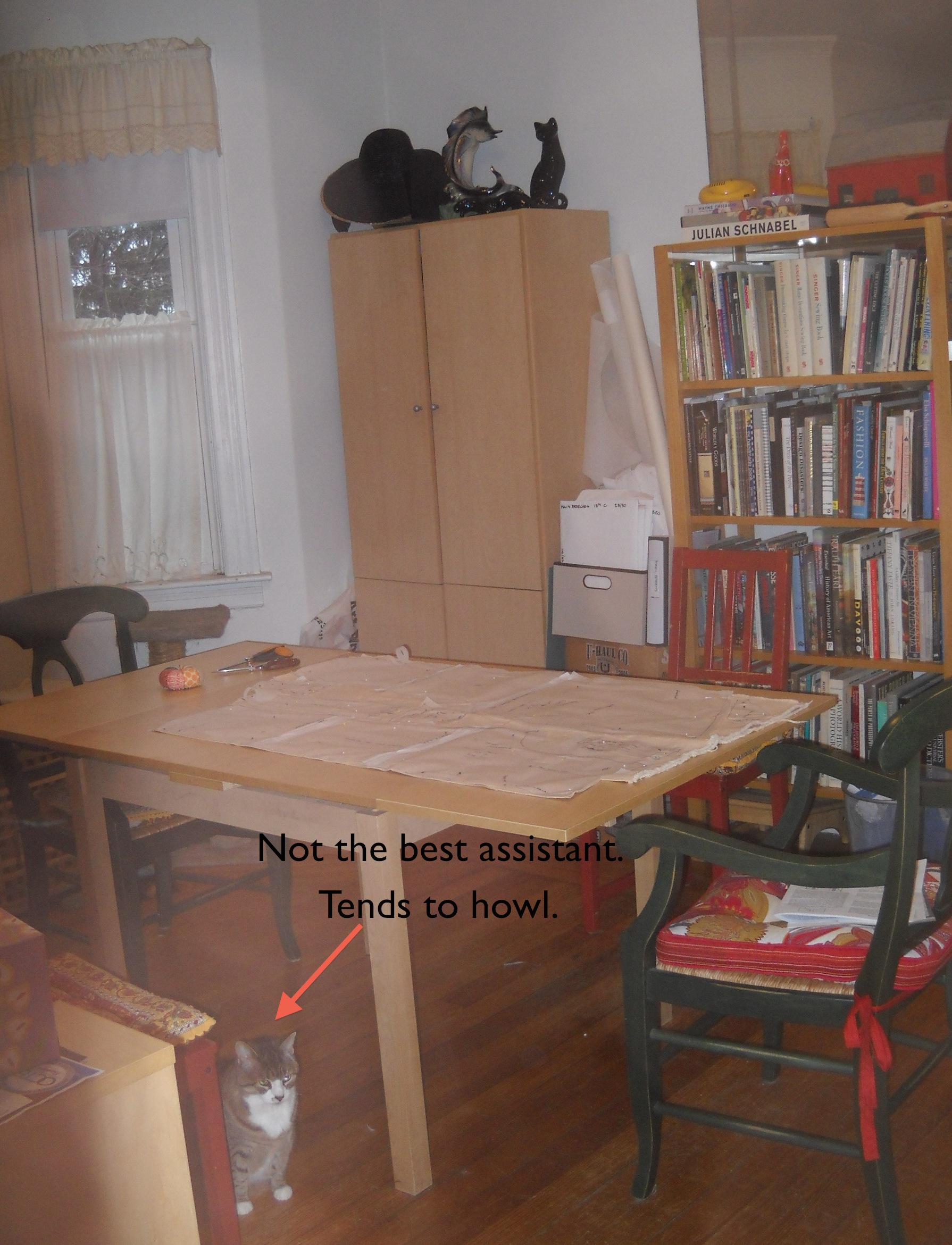
Chaos on deck, assistant elsewhere

It’s not done, it’s as simple as that. I had a shift in hand for HSF #2: UFO. Along the way, I made significant progress: side seams sewn up, sleeve seams sewn up, and all of them flat-felled, until, at last: One sleeve band and a hem stood between me and completion. Whatever week that was, on that Sunday evening, reader, I slept. Work does that to me.

Dining/sewing/library room with "assistant"
Assistant has been howling more of late

Luckily, I can kick it forward to HSF#3, Under it All, because that petticoat isn’t cutting itself out. It’s not its fault: there’s homework piled on top of the table, a bill from the dentist, and other assorted bonnet-related chaos. All day long the linen and cotton listen to my howling assistant, then the Young Mr comes home and coughs, and what’s yardage to do? Drape over a chair, flat-out, folded, and exhausted.

It’s not history until it hurts, and I can assure you that from how my colleagues and I feel, our Library is chock-full of history goodness (along with 18,240 moved books and a great deal of newly assembled Ikea furniture).

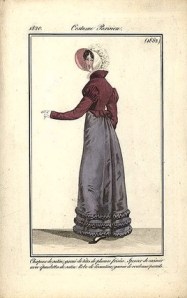
Feeling 1820ish

Walking Dress, 1820
Walking Dress, 1820

For no good reason, I’ve been feeling 1820ish. This is a huge distraction from my primary objectives, which for the short term are 1775, 1799, and points in between. The in-betweens depend on what unit Mr S is fielding with, and at which event. Monmouth, for example, is the 235th of the battle fought June 28,1778 in New Jersey. The Second Helping regiment was at that Battle, (I checked the order of battle and know from diaries like Jeremiah Greenman‘s) and that means that his regular old hunting frock (called the “fluffy shirt” by my Facebook friends) would do, if—and only if—he fields with the Second Helpings. If not, then it is another piece of work altogether. Major casualties at that engagement were from heatstroke, by the by, so it may be that wearing two layers of wool in New Jersey in June is not recommended by most physicians.

But I digress, yet again.

e14fa91f099434a95ac644c723e8cfaa

I am feeling 1820sish because Robert Land has, at long last, shipped my Regency Lady’s Boots. They should arrive by Saturday, and for having ordered them in mid-October for a mid-January event, we are actually on fairly normal Robert Land time. Sigh. I’d get mad, but the man’s shoes fit my pedal extremities, which really are colossal.

So the boots are on their way, in green, and while they won’t be exactly like these, they can be modified, with blue laces to begin with, and tape later. 

And that has led me to think about the obstreperous bonnets of the 1820s, like this fantastic quilted item from the MFA,

Quilted Bonnet, MFA

There are dresses at the V&A for which I have comparable fabric, and Spencers at the Met, and many fashion plates to delight (see the Pinterest board. I may not get any of these things made, but they’re fun to think about—especially the bonnets.

This is all supposed to be fun, isn’t it? It’s surely more fun than moving 18,240 books (some of them twice) which we did this past week at work.

Projects A-Waiting and Awry

One of things I like about the HSF series is that it keeps me sewing. It’s good to have accountability, and the challenge provides it. Structure, and deadlines: good for the soul.

And then there’s that factor known as work. We’ll call it that, as the effects are often described in language not suitable for the New York Times, last bastion of manners. Poor William Shawn spins as each New Yorker is printed: he’d never let //platform.twitter.com/widgets.js” target=”_blank”>douchebag pass.

But I digress.

Things changed in the schedule and now I don’t have to sew delicious frock coats and corduroy breeches for February. The good news is that I will not have to wrangle the unwilling to be fitted immediately, and I will be that much more skilled by Fall, when the clothes will be wanted. It also means (sort of) that there is actually time to sew for me. This is a very good thing, as I am planning to attend Dress U and even to teach (heaven help us all) two classes, one on using museum records and collections online and in person, and another on what Reenactors and Costumers can learn from each other. So while I’m thinking about 1790s wool jackets and trousers, a Battle Road-worthy wool gown (pfft! Gowns seem easy now!), Battle Road men’s wear (a little queasy, not so easy) and at least one more pair of overalls (unprintable, really) I am also thinking about how much I don’t want to be the tiara-less, non-sparkly girl again.

What does that mean? That means silk, and the Curtain-Along Gown, which I think I have figured out. (Figuring out the silk part will come later, I’m just happy to have gotten this far…)

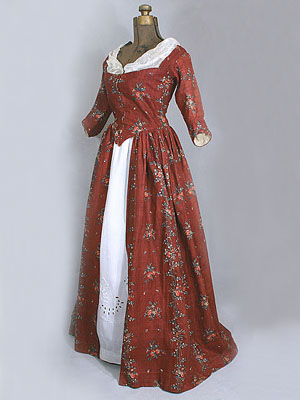
1780-1790 chintz gown
Fairfax House
Fairfax House

Historical Sew Fortnightly  #3 Under It All: I meant to do my shift, but that changed. Voila, petticoat. I have Ikea cotton curtains that will make a lovely petticoat that can be worn with a Curtain—Along gown of the dark red Waverly chintz, which I plan to make in the style of one of these gowns. An all-cotton, all-curtain ensemble makes me laugh: I am a Carol Burnett fan.

If I get the petticoat done, then I will have to make the pretty dress, at least eventually, which should be sometime between overalls (April 20) and Dress U (May 31).

10th Mass LI at Nathan Hale

That leaves time for something wicked regimental this way comes by June 15. Oh, yes, I expect Monmouth is in my future, humidity, turnpike and all. Why would I miss that?