A Whale-Safe Bonnet

Complete with my interpretation of "Hat Face"
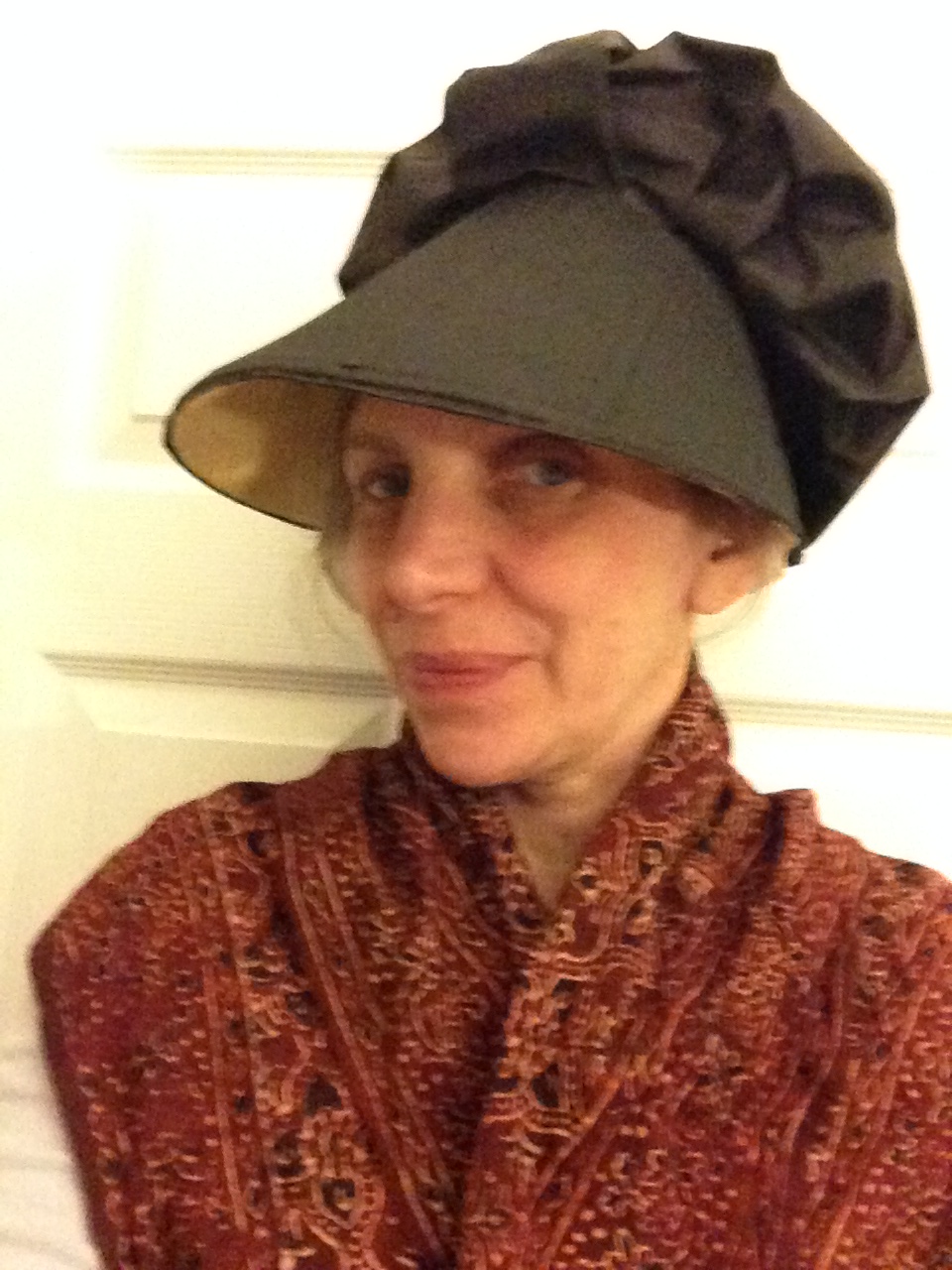
Complete with my interpretation of “Hat Face”

As promised, my interpretation of the ribbed bonnet in the 1789 engraving. There are a few problems with this beyond the model. (Which is not to say that I don’t like this bonnet– I do!)

I used the Kannik’s Korner bonnet pattern (view F, I think) as the basis for this because I already had a brim, lining, and caul cut and in a drawer. Given my current medicated state, using something pre-cut seemed advisable. That means I didn’t play with the brim to create the line of the Williamsburg bonnet, or the curve of the brim in the “Fortune Teller” engraving.
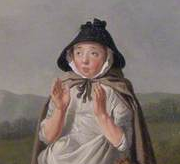
Detail, The Marquis of Grandby

Is this style acceptable for the period I typically interpret (1775-1783)? Well… there are other examples of the lampshade-style bonnet, as in the Edward Penny painting of the Marquis of Granby. This painting is dated “after 1765” so there’s some room for interpretation there…too much room. But if that’s 1765-1770, and the “Fortune Teller” is 1789, I think we have comfortably covered the 1775-1783 time frame, even if it is a bit like a queen-sized blanket on a twin bed.
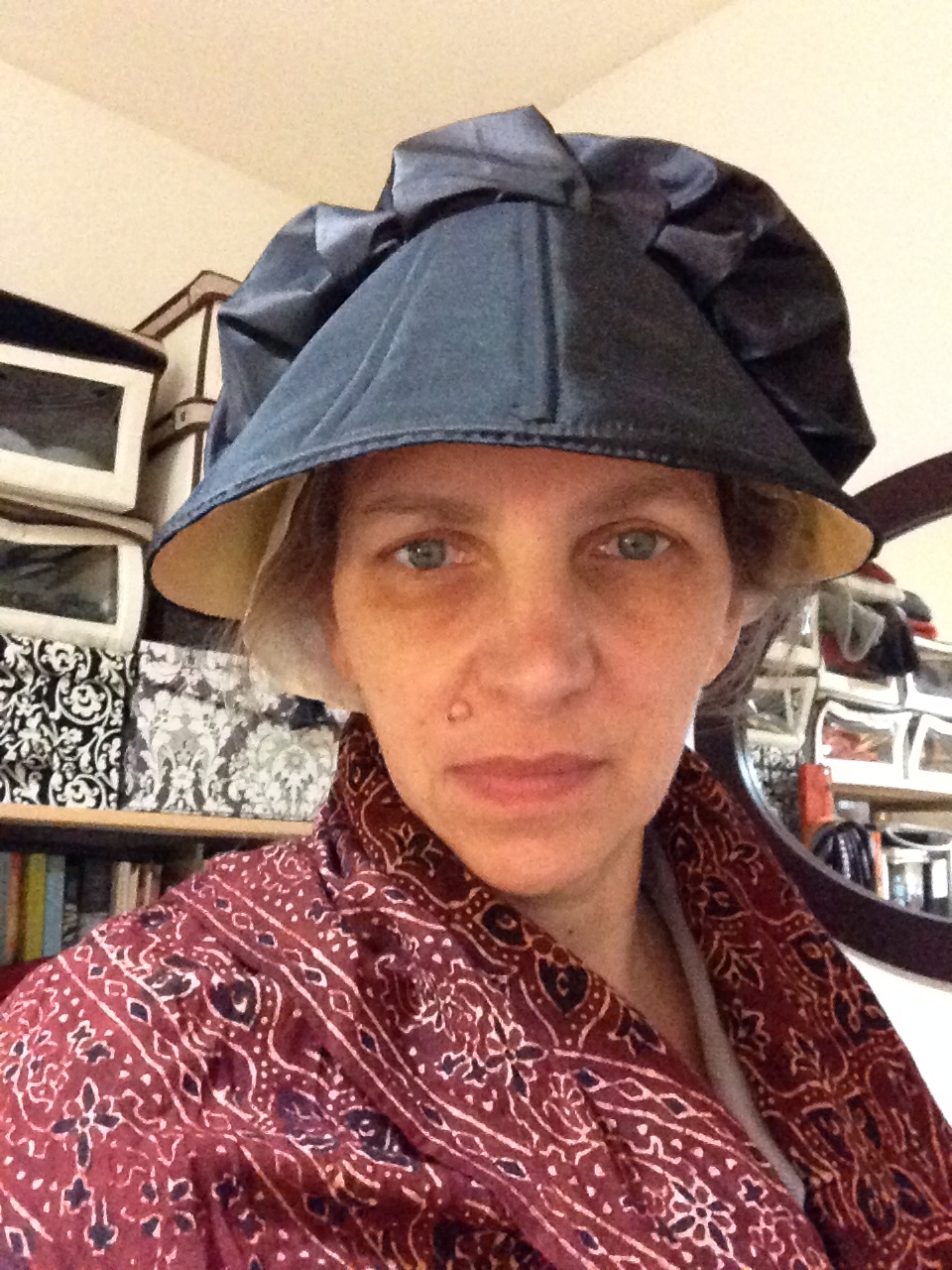
Front view: more lamp-shade like.

As you can see, the bonnet does have some lamp-shade-like tendencies on my head, which I consider a benefit. I like the way the ribs are visible, even if I remain unconvinced by the caning. I think it’s a little too wide, and lacks resiliency, though to be honest, I have only felt baleen at the New Bedford Whaling Museum, where there is a large sample on the second floor.

To compensate for the disappointing cane in the brim, I slipped a piece of millinery wire into the pocket underneath the cane. The layers in the brim are:

  • black taffeta
  • horsehair canvas
  • linen buckram
  • yellow taffeta

The channels are all hand-sewn, and then the cane was slipped in. I stitched the black taffeta caul to the first three layers, and then lapped the yellow taffeta over the raw edges and stitched it down to finish the brim/caul seam.

No, I didn’t take any in-process pictures…probably because this took considerable snake-eyed concentration last weekend. IMG_1477 IMG_1476

Usually, I line the cauls of my bonnets, but through shear laziness or distraction, I opted not to this time, and I think I’ll leave it this way for a while. You will also note that I have not trimmed this: I have some black silk ribbon coming, and I may try that. I don’t have enough black taffeta left to cut self-fabric ties, and there do seem to be some plain examples. A plainer, lamp-shade-like bonnet may be just the ticket for Bridget.

What would I do differently? Next time I would definitely play with the brim shape using a paper template. I’d like a lower, curvier, brim. Once I had the shape worked out in paper, I would use that as a template to cut the taffeta and horsehair or light buckram layers.

The Edenton Tea Party

I’d also try zip ties. I know: not period correct! But short of risking federal prosecution resulting from a trip to New Bedford with some shears, I’m not sure that anything other than plastic will have the resiliency and spring that baleen has, and that made these bonnets so special. I thought of them while making this bonnet, but I think Mr S used them all at work in the past two months. A Facebook friend has been thinking of zip ties, though, and has a hankering for one of these bonnets. I can’t say that I blame her– and honestly, I think I might join her.
Interpreting Bridget

Shirts? What shirts?

This weekend, we’ll be at the Brigade of the American Revolution’s School of Instruction, taking anxiety to the Hudson Highlands as I give a presentation on interpretation. Sure, it’s part of my day job to interpret objects and documents and even, sometimes, to do costumed interpretation, but experience has never prevented me from worrying. It has allowed me to focus my worries more productively and specifically. One of the things we’ll be trying, or attempting to try, are vignettes based on the shirt-stealing and selling ring of 1782.

Events from Captain Abbot’s Orderly Book for interpretive vignettes

Soldiers Steal a Shirt and dispose of same (~July 13-14, 1782)*
Cast: Two soldiers, officer who catches them
Props: shirts

Court-Martial July 15, 1782: Paul Poindexter and Titus Tuttle, for theft of a shirt
Cast: Two soldiers, accusing officer, three officers of the court
Props: Shirt; table and seats, orderly book (optional)

Discovered buying a shirt (~July 21-22, 1782)*
Cast: Bridget, soldier selling shirt, officer who catches them
Props: Shirt(s), money

Court-Martial July 23, 1782: Bridget tried for buying a ‘publick shirt’
Cast: Bridget, accusing officer, three officers of the court
Props: Shirt & money; table and seats, orderly book (optional)

Insolence to Officers of the 10th Mass (~July 23-24, 1782)*
Cast: Bridget, officers (two preferable, one adequate)
Props: None required, large stick probably handy

Court-Martial July 25, 1782: Bridget tried for insolence
Cast: Bridget, accusing officer, three officers of the court
Props: Table and seats, orderly book (optional)

Expelled from camp, July 25, 1782*
Cast: Bridget, drummer, officer(s), jeering onlookers; Francis skulking at the edge
Props: Drum, Bridget’s chattel

* Events are extrapolated from the Orderly Book as things that must have happened to cause the events that followed.

We’ll see…in the meantime, I’m finishing up a shirt for the Young Mr, so that his small clothes will no longer be too-small clothes, and so we have extra shirts for this black market ring.

Pockets 2.0

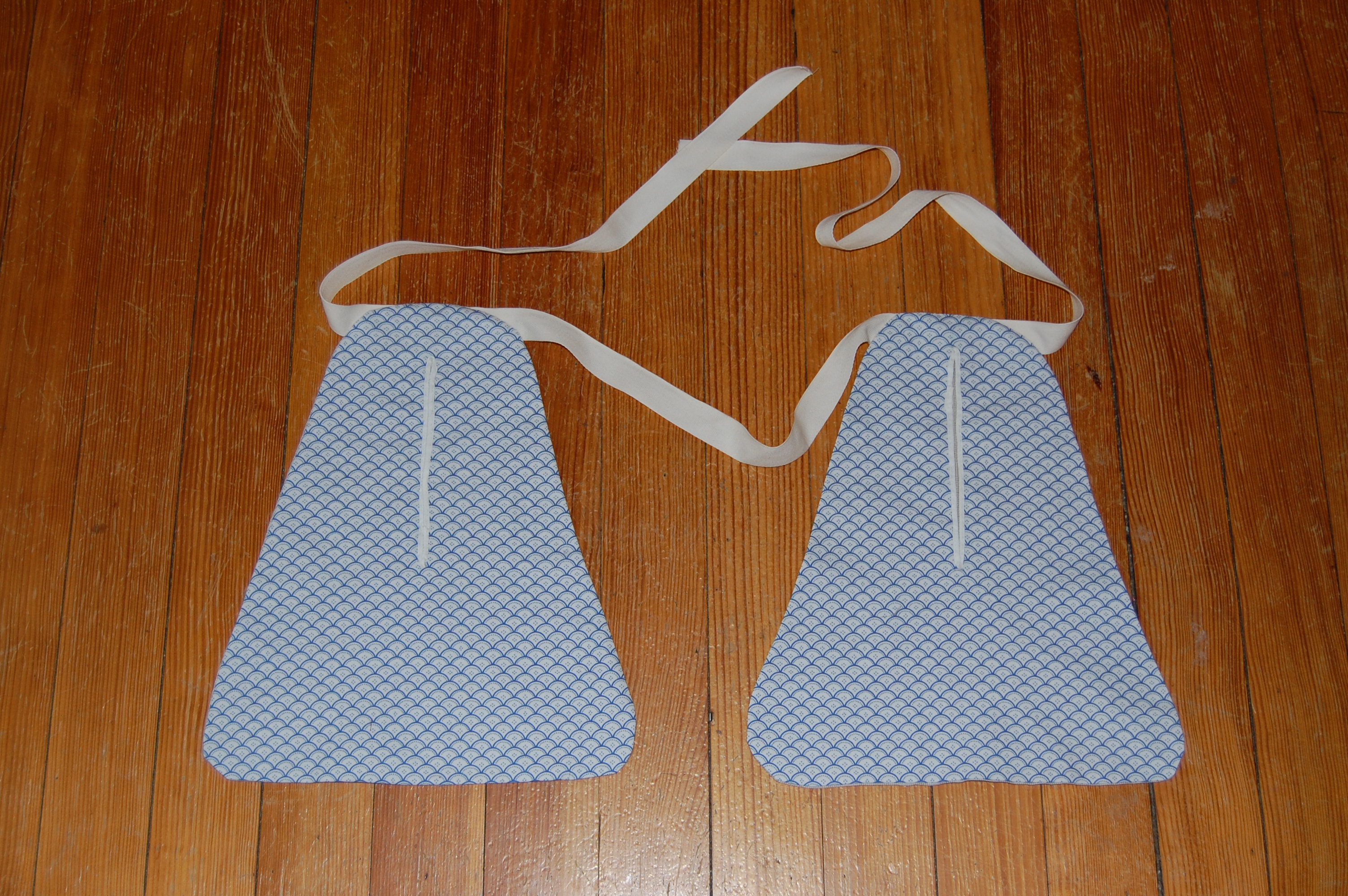
Pockets the First
Pockets the First

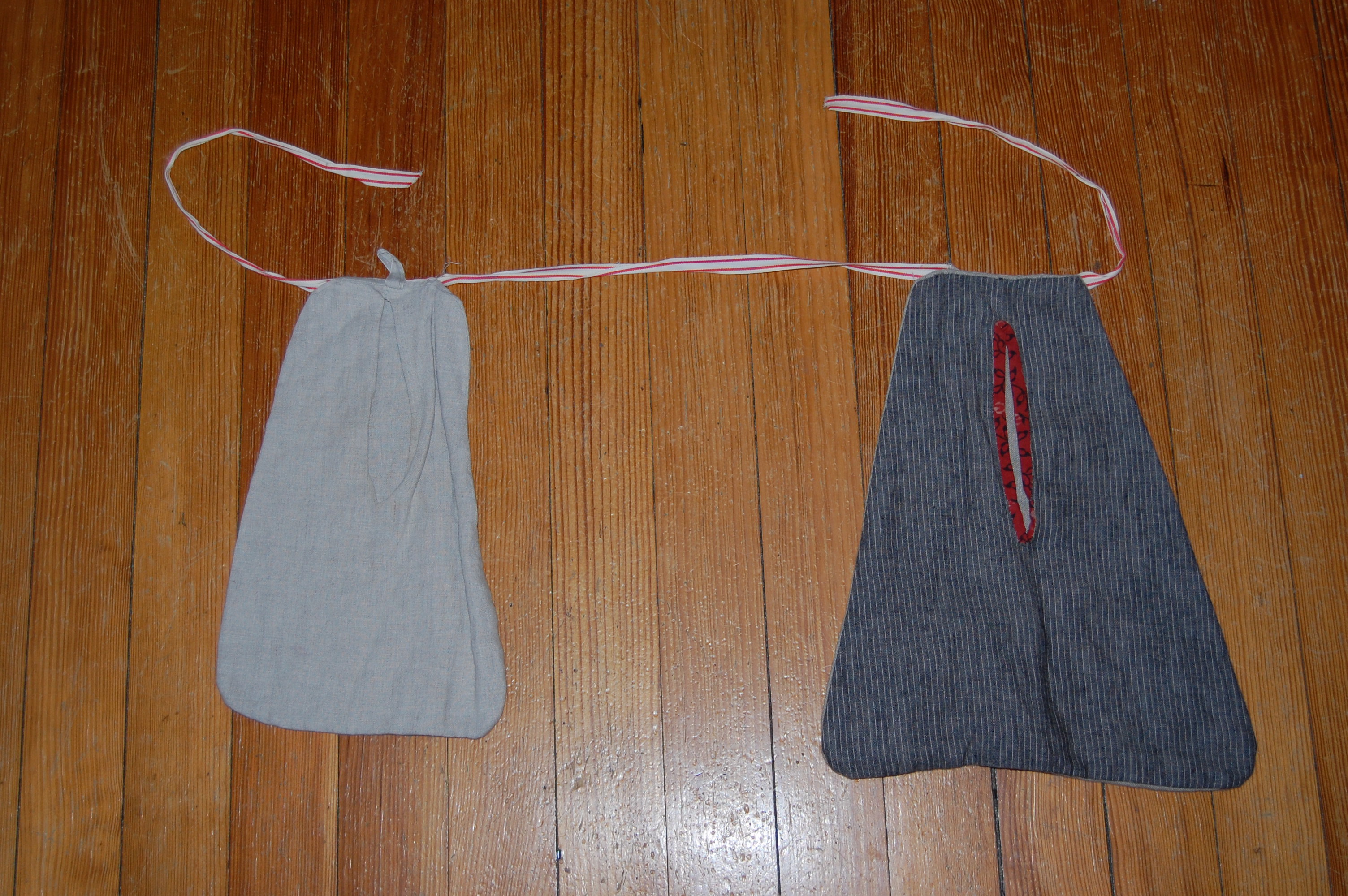
At left, Pockets 1.0 or perhaps beta. The far left pocket, when worn alone, was definitely beta. Then came the striped pocket, and then sewing them both to the tape. That helped– and I use the small pocket for things like wallet, phone, car keys and Band-aids, and the larger pocket for interpretive things. I try to follow the Under the Redcoat kind of model: one pocket is modern, one is historical; that way I don’t pull the car keys out along with the knitting, or am at least less likely to.

Too much stuff.
Too much stuff.

Here’s the stuff I carry in my purse today, actually a backpack-purse, downsized from a messenger bag. That’s a lot of stuff. But if you compare the list to the list of what might have been in an 18th century pocket, you’ll find a lot of similarities.

There’s a pen and a pencil, wallet and checkbook, granola bar, chewing gum, change purse, keys, more keys, and phone. All of those are just modern analogues for paper money, coins, orange or apple, candy, book and notebook, since the phone can fill in for so many things– notebook, money, keys, pen, book…

DSC_0174

The historical assortment is much more attractive, in part because I don’t use these things every day, and they don’t get tangled up and worn in a bag. Mitts, kerchief, hankie, my husband’s pay, knife, thimble, spoon, and knitting (I may never get a pair of stockings knit): these are all accurate to carry, though the knitting needles will have to change before that’s taken out in public.

DSC_0173

All that, or some combination of like things, will go into one pocket, and the modern mess into the other. I fear these new pockets are, for now, too nice for Bridget. I may just stick with my old, mis-matched ones for now.