To Wash or Not to Wash

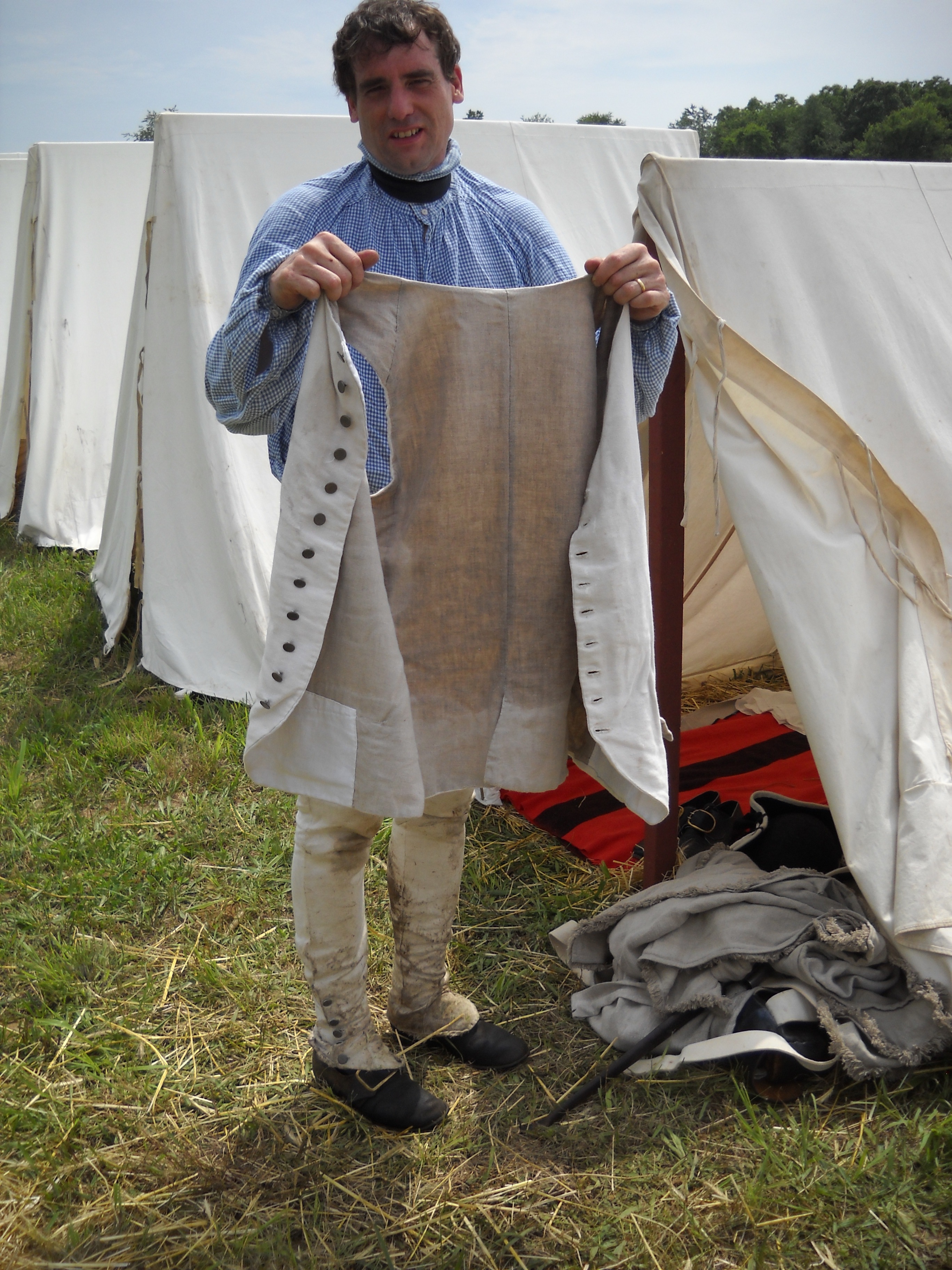
Mr S and his waistcoat at Monmouth

Sometimes I can almost hear, “Good God woman, what are you thinking?!” but so far I have only seen it in a man’s eyes. This is usually in regard to laundry.

I erred once in asking if one wanted his hunting shirt laundered, and I had planned only on cold water and hand washing, as the item seemed a bit crunchy and crumpled to my eye and hand. But, no, some other woman had washed that shirt some time ago, and it had taken considerable time—years—to reestablish fringe from fluff.

Well patinated now, formerly embarrassingly white.

Now, I give you Mr S’s waistcoat and overalls. Mr S’s waistcoat was completed on the New Jersey Turnpike in November 2011 while headed to Fort Lee. Since then, it has a acquired a smattering of powder specks, a patina of grunge, a stain or two of greasy beaver (curry, actually) and, most recently, spots of toothpaste. This is where I draw the line: the toothpaste spots must go, as they are inauthentic.

Shirts, shifts, stockings, aprons, and waistcoat

One doesn’t want one’s clothes too clean for reenactments or living history events: you’re “living” in the pre-detergent era, but that doesn’t mean you should never wash your clothes. We know that the armies employed women to wash clothing, and we know that linens–shirts, shifts, and drawers–were washed more frequently than outerwear like breeches, waistcoats, and gowns. It’s not so different from today, when we don’t clean business suits as often as we launder shirts or underwear. Still, we do clean our clothes, and there comes a point when those overalls will get washed. Right about when you figure you need gloves to handle them…

Frivolity

chintz jacket
Detail, back neck and neckhandkerchief

Well, not all that frivolous, but pretty frivolous for someone who has been doubled down on a uniform production and class prep.

The remnant of chintz has turned into a nearly finished jacket, which is good. All that remains to do is the hem, and once the lining has been trimmed that shouldn’t be too hard. The pattern is an adaptation of the JP Ryan jacket pattern, with sleeve and length adjustments. It’s plain enough to pass, and with a striped “lincey” petticoat, will answer for New York-New Jersey servant wear. I have my eye on Monmouth.

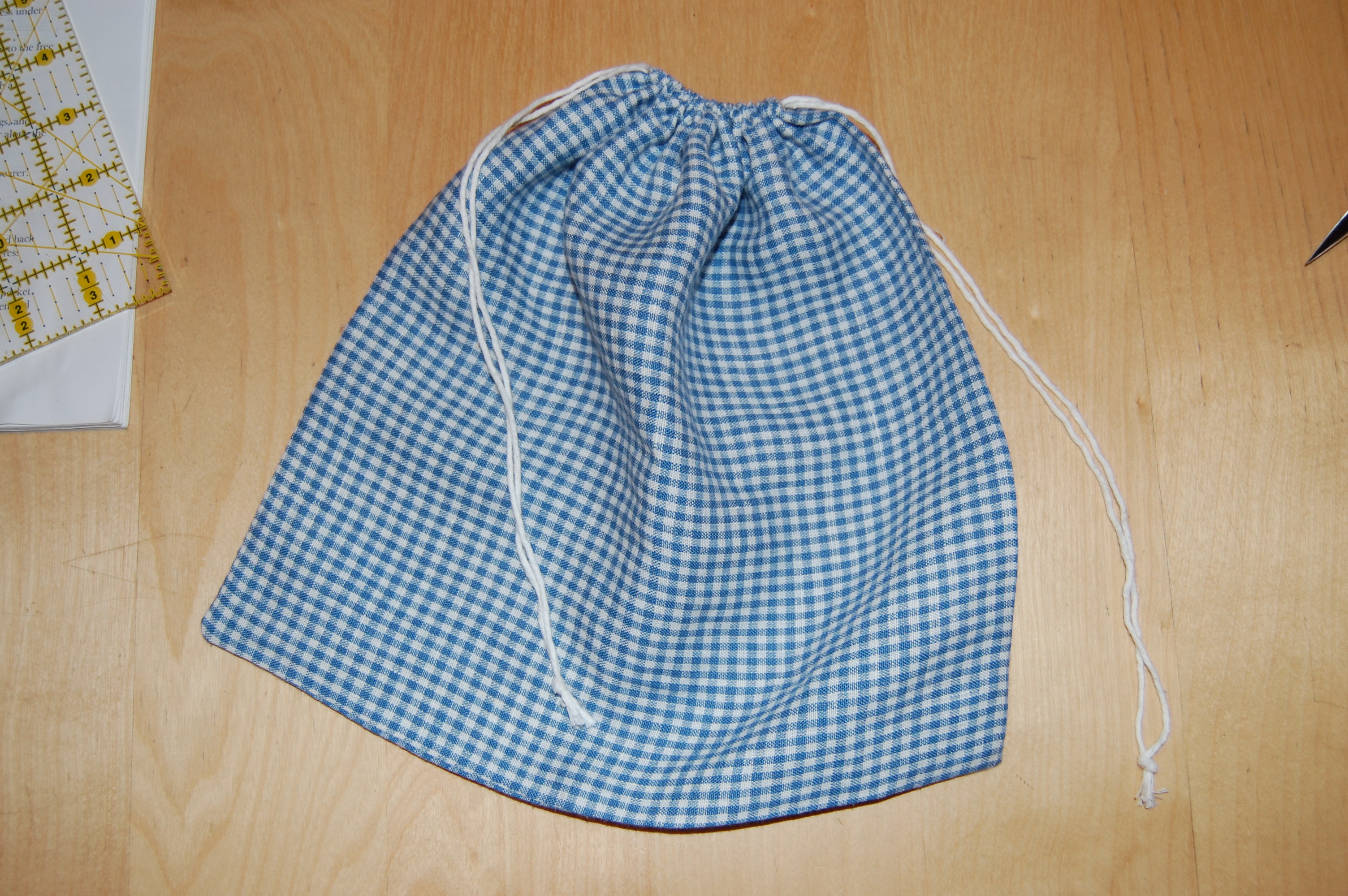
checked linen bagAlso for Monmouth, the first of two checked linen bags. Small enough for toothbrush, comb, and other toiletries necessary in this century but out of place in 1778, these bags should help make camp packing lighter weight and more authentic. Hope so anyway, or what’s that backstitching and overcasting for, fun?

JoAnn Cotton fabric.
I watched it for six months.

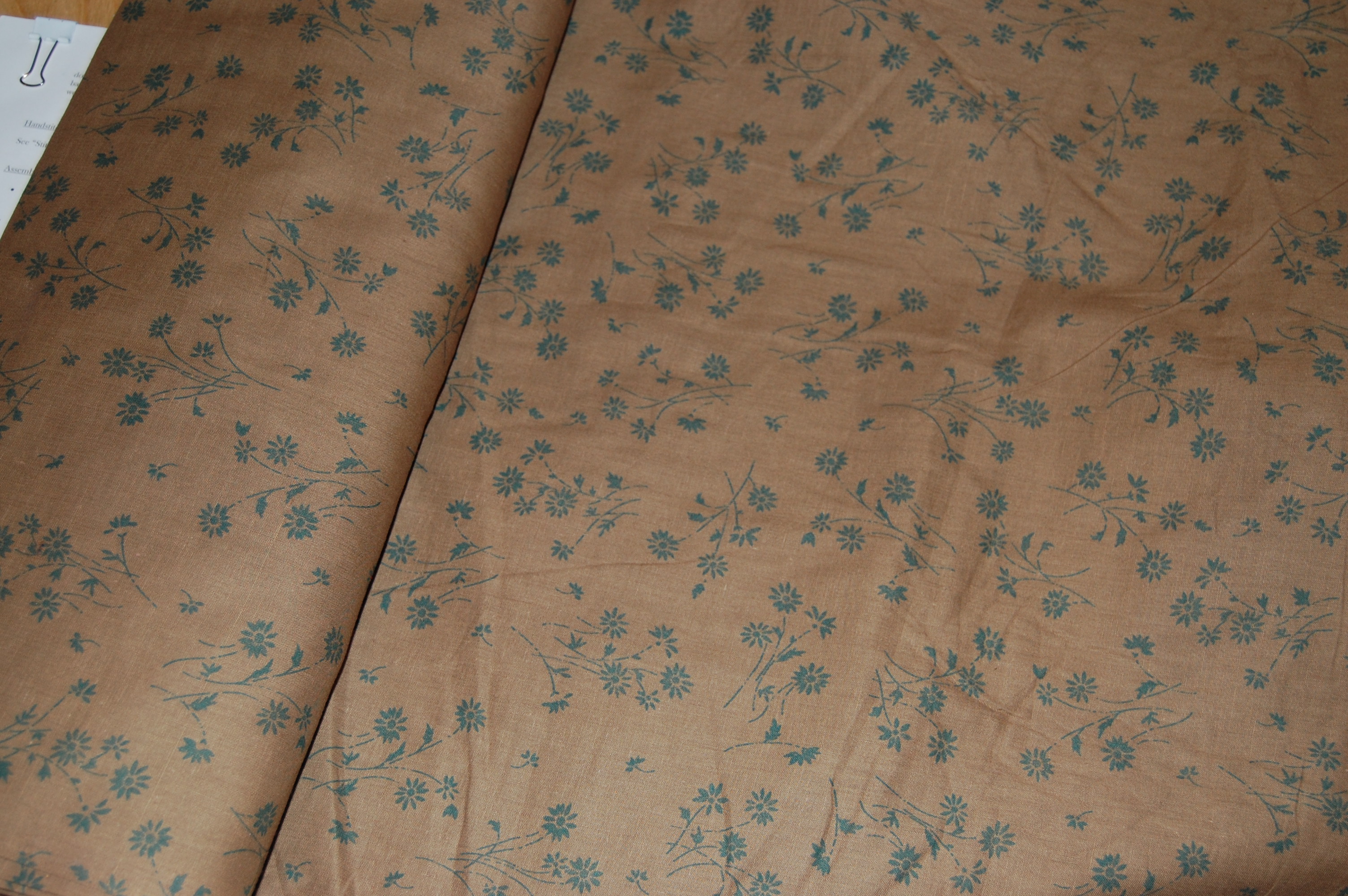
And, finally, on a whimsical trip to Jo-Ann for plastic drawers, the remnant table was half off. The fabric I’ve been watching since it was $7/yard was $1.50 a yard. I got all 8 yards for $12. I see a dress of some kind in this fabric, though it will require caution to wear. 100% cotton, this will burn. Which century or decade? Not sure yet. But I like it, and that’s enough to start with, when you’re feeling frivolous. (And yes, I did read that article in the Times about hoarding, but this is Strategic Fabric Reserve purchasing, not hoarding.)

Aspirational Shopping

So, I always thought that window shopping was a product of the late 19th or early 20th century, the plate glass windows of the Bon Ton, and The Lady’s Paradise.

Providence Gazette and Country Journal, 4-18-1772

I was wrong.  Check out the last line in this ad from the Providence Gazette and Country Journal of April, 1772:

“Any Person not wanting to purchase, but having a Mind to see the greatest Pennyworths, shall be waited on with great Chearfulness, by their very humble Servant, PAUL ALLEN.”

In case we forget, the past is there to remind us that the consumer culture started much, much earlier than we think it did. Stop blaming Don Draper: I give you Paul Allen.

Shoulders and Sleeves

Dante's Own Infernal Sleeve of Poof
Dante’s Own Infernal Sleeve of Poof

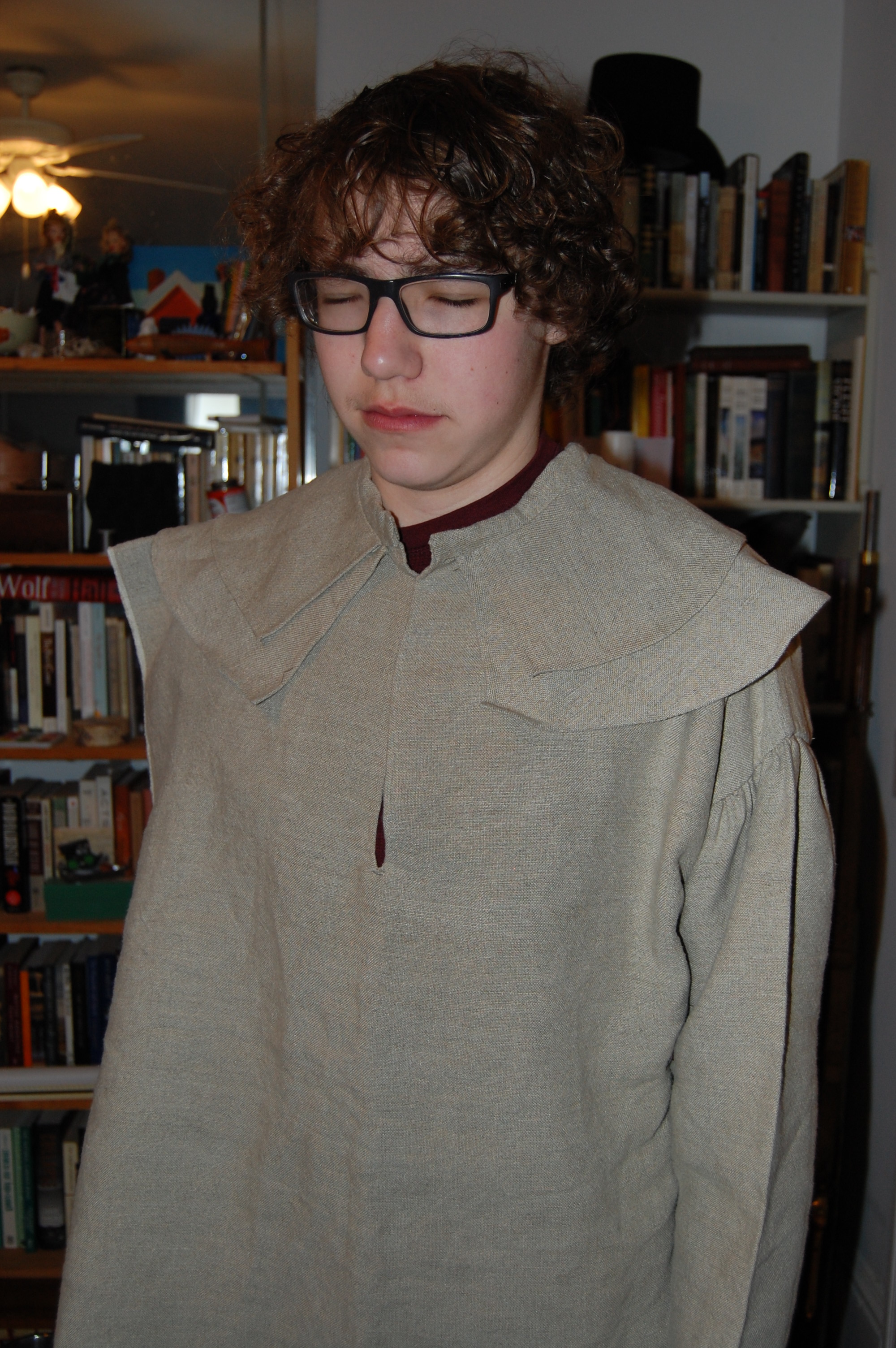
Twenty-four hours on, this is where we are: Poofy, shoulder-popping sleeve of doom. How can that be a uniform sleeve?

Well, Pilgrim, this is how:

Oh. They're all Infernal Sleeves of Doom.
Oh. They’re all Infernal Sleeves of Doom.

So glad I have that near-feral hunting shirt, because without it I would have ripped this out completely. Could the Poof of Doom be there to allow movement?

Subject was detained for photography.

Before school, even.

Arm out, doubts remain. Arm down, less terrifying.

I do feel sorry for him, but at the same time, I have to fit it to him.

It’s possible that the poof at the apogee of the shoulder is due to the intense pressing I gave this to retain the center line, and the fact that, despite washing, the linen is still pretty stiff. When I compare the two– the completed shirt and the in-progress shirt, I can see that while both display a tendency to drift up, the gathers on the adjutant’s shirt are more evenly distributed. You know what that means…and that’s why the sleeve is only basted in. Might as well change it now as on Sunday, because it must be done. So in the end, I am ripping it out completely, but with the knowledge that 1) the upward angle seems to be correct as shown in the finished garment, and 2) evening out gathers may reduce the Poof of Doom.