We all love things, don’t we? Things in the literal, corporeal, piled-in-a-heap sense: plates, shoes, books, chairs, necklaces, models. But what makes us love them? How deeply do we really love them?
Someone posed the questions, What would you take if you had to pack in a hurry to leave home forever? What will your kids remember you by?
Those are hard to unpack: how will other people remember us? Often, we have no idea what we mean to other people, even the ones closest to us. It’s easier for me to know what I would take or keep to remember someone else by– a single sleeve link; a wooden train engine; a stainless steel spoon; a necklace of handmade beads. None of those things reflects what is truly meaningful to me about them, that is, without my knowledge, these aren’t particularly interesting or aesthetic objects. What makes them special is the story I attach to them.
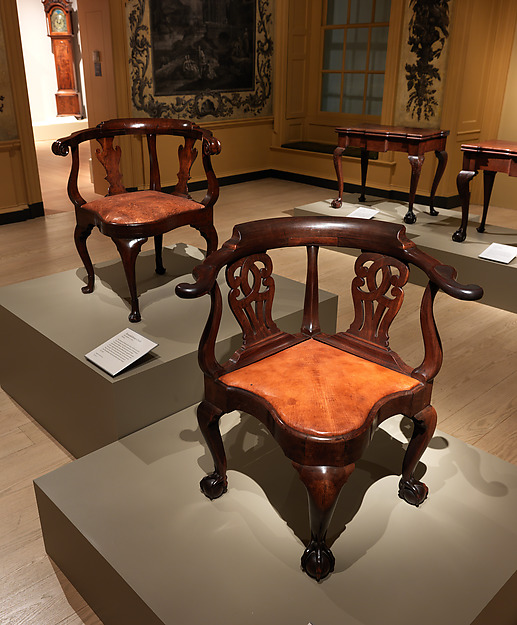
That is, of course, the key to interpreting objects in a social history context: the story is what makes the object more interesting, more important, more compelling. It’s the difference between a provenanced and an unprovenanced object, between a roundabout (or corner) chair in context, and one out of context.
Corner chair, probably John Goddard. Metropolitan Museum of Art, L2014.9.1a,b Lent by the Wunsch Collection, 2014
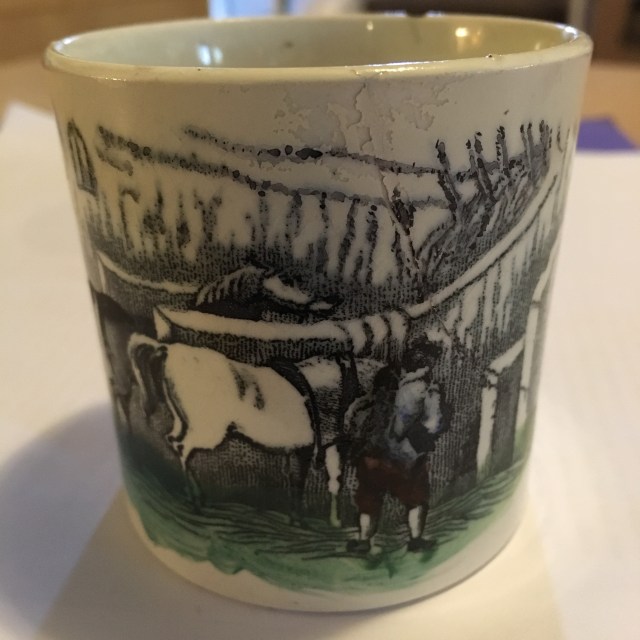
This is not to say that beautiful things are without value removed from context, but what makes that Goddard chair more compelling is knowing who made it, who it was made for, and when– knowing that it was part of a set of furniture ordered to furnish a house for Providence newlyweds, made in Newport by one of the hottest makers of the time. It’s the people who make the object more interesting, who make it worth having, seeing, holding on to– whether it’s a $6 million chair or a $25 mug, memories and stories make things compelling beyond our associations with them.
Part of a museum curator’s job is understanding those stories, placing objects in context, and connecting them back to their stories, to their makers, users, owners, and keepers. We may buy things because they’re beautiful or useful, but often we keep them because of their meaning– which is, more often than not, about people. Unprovenanced objects have less meaning; an object sold outside, or without, its context will not fetch as much. Value resides in people, not in things.
I think of this not only because a portion of my work is to recreate or reestablish the human contexts and connections for things, but because there is a human instinct to grab onto something tangible (like an object), rather than something ethereal (like a memory), even though what will sustain us in the end is not things, but other people, and our memories of them.
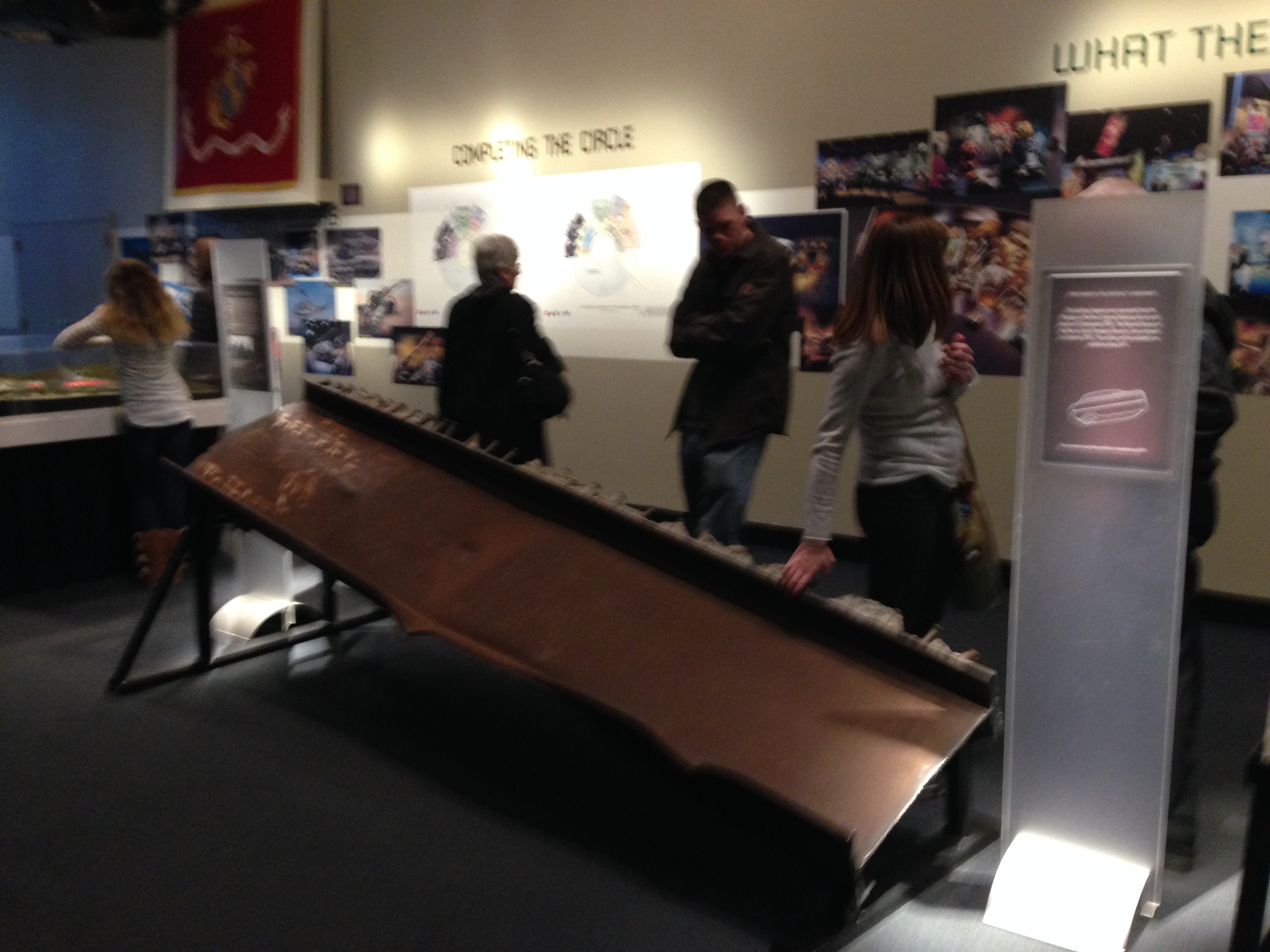
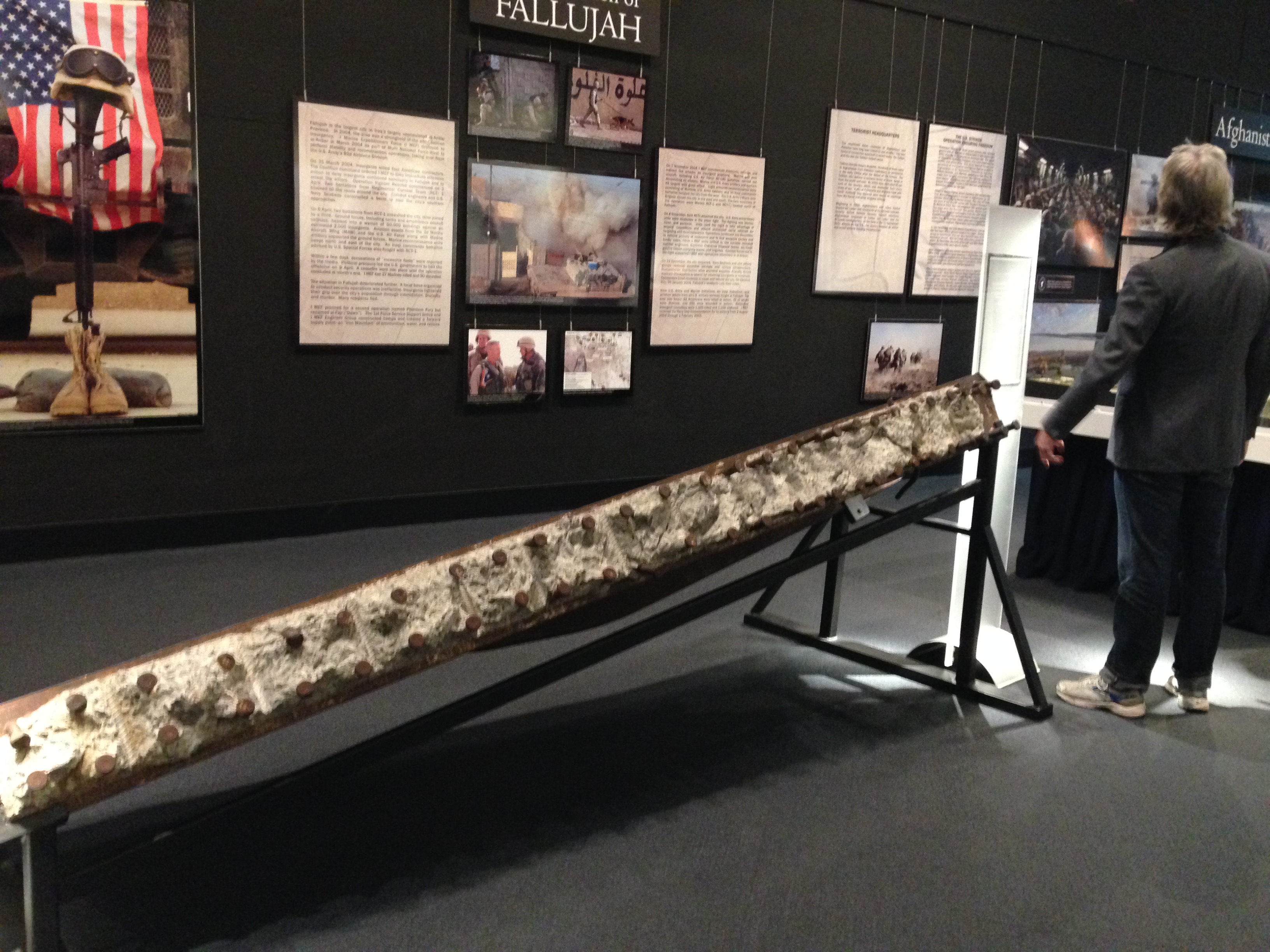
Do you know what this is? Do you think it’s real? Here’s a clue: it’s a relic of an iconic event in early 21st-century North America.
On the last visit to the National Marine Corps Museum, I watched the tourists circle objects at the end of the traditional galleries and displays, and overheard a woman ask her companions:
What’s this a replica of?
Reader, I cringed– and not for the sentence construction.
What’s this a replica of?
And then I stepped back. I thought that for someone my age it would be obvious. Here, have some additional museum context.
In a museum where everything is real, how does a visitor come to ask not only if that World Trade Center steel beam is a replica, but what is it replicating? I’m not sure semiotics can save us here. My first, New York Times-reading, media-soaked, Northeast Corridor response was, How can you miss that? How can you not recognize that, let alone mistake the steel and concrete relic for a replica?
Ah, hubris. There is a label, though I have seen better. Would it be more helpful in a larger font, turned perpendicularly to the I-beam? Possibly. But the lesson that’s deeper than label formatting and placement is recognizing how much we take for granted. Our visitors, even those we assume to be educated consumers of media and information, may not share our knowledge base. They may not read objects or images as readily as we think they do; we certainly cannot assume they’re all taking away the same information– and that has nothing to do with education or background.
Everyone truly sees the world differently. How, and what, we choose to put on a label should always be grounded in remembering that we do not all share the same information. Context is critical, and probably would have made these relics more real, and less replica.
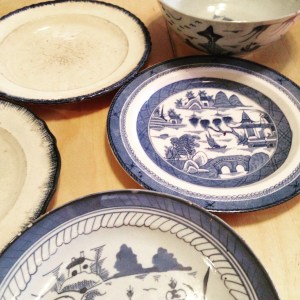
You can learn a lot about a place by visiting its antique and junk shops. Here, where the China Trade was A THING, you can practically fall over Chinese export porcelain (and its imitators) of a variety of types every day. It can become a bad habit. You can become an enabler.
Elsewhere, the objects for sale tell a different story. I’m fond of the haphazard antique malls museum of things world, and while on a tea pot delivery mission to Maryland, went to one in Mount Vernon. It was astonishing.
Mid-century modern furniture, the Arabia Anemone tableware of my childhood, and shelves of geisha dolls, Kabuto, ceramics, and the occasional sword confused me at first until I realized these were probably the jumbled contents of a prior generation of military and civil servants’ homes emptied by their children. The aesthetics were markedly different from what I typically encounter in southeastern New England, where I am accustomed to reading subtle variations between the states I frequent.
Local variations occurred in Vermont as well, though the general flavor was more familiar.
Some things are universal: chaotic piles of partially-identified snapshots can be found anywhere, stacks of pelts and dog-like foxes, not so much. Origins debatable, ethics questionable, the late mammals tempted the tourist trade in St. Johnsbury, where we stopped as we headed south for home.
We influence our landscape more than we credit: from changes in the land wrought by farming to climate change to the differences in what we cast off and what we collect, the visible human influence is undeniable. Material culture can be about place as much as it is about thing.
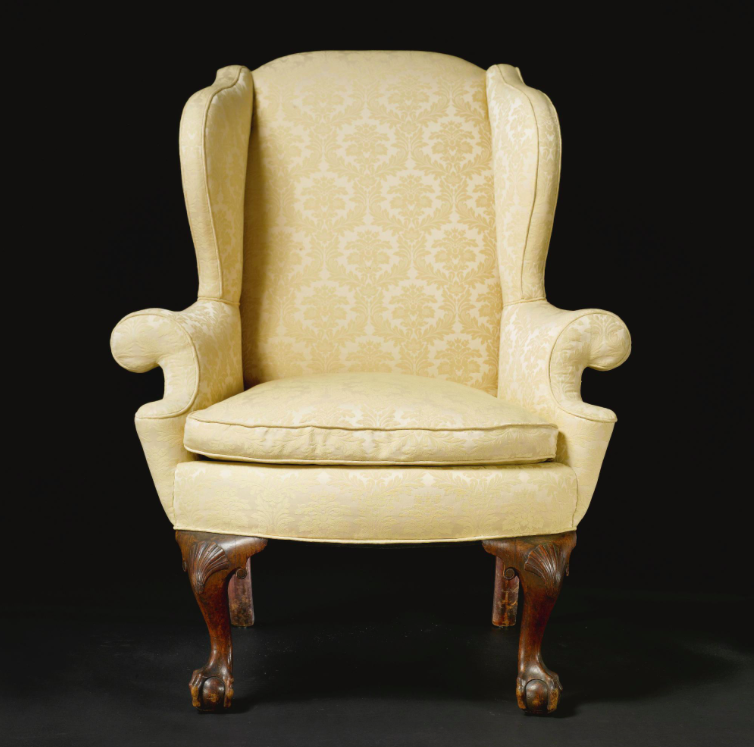
Sotheby’s Sale 8446, Lot 20. Easy Chair, Philadelphia ca 1770
We’re taking a brief break from this week’s nightlife programming to bring you this special report. Regular snark resumes with the next post.
It’s not a secret that I work in a museum. I operate in a world of objects that cannot be touched, sat upon, slept in, worn– you get the idea. Well, sometimes things that I believe belong in a museum don’t end up in one. Sometimes beautiful objects with great stories and deep resonance with the museum I think they belong in don’t make it there. Sometimes museum professionals take phone calls from irate family members who are incensed that you’re even talking to someone in the family about how to organize their materials. Sometimes objects do make it, but then, before the paperwork is executed, the gift is rescinded. People get weird about stuff.
Sometimes they get weird about stuff because of what it’s worth. Eleven years ago, a family chose not to fight over objects, but instead sold their family furniture. They grossed nearly $13 million. Thirteen Million Dollars: Enough for a baker’s dozen of Dr. Evils. With chairs that sell for $204,000 (Sale 8278, lot 586), it’s no wonder people get weird about stuff because of money.
Lot 586. It’s a pity the catalog is no longer available online, but even Sotheby’s has to conserve server space. It was a beautiful chair: a 1763 upholstered easy chair– upholstered by Plunket Fleeson of Philadelphia.* I pored over that catalog page in the Important Americana sale catalog. It would have come in just before Christmas, or just after, slick clay-coated pages printed with fine ink. When the auction catalogs arrive at work, we stand in the kitchen-mail room and bury our noses deep in the gutter: smells like money.**
Staircase Group (Portrait of Raphaelle Peale and Titian Ramsay Peale I) Charles Willson Peale. Philadelphia Museum of Art, E1945-1-1
I wanted that chair, Lot 586, that walnut easy chair made in Philadelphia. Wrong town, you say? Mais non, Philadelphia was the place to buy fancy goods– especially upholstered goods– in the 18th century. Providence merchants were trading with Philadelphia, the town that set the style for the colonies.*** It was sophisticated, urbane, refined. So, when Sarah Brown was pregnant with their first child, John Brown sent to Philadelphia for an easy chair. It would be the best.
He’d already ordered a tea table and roundabout chairs from Newport at the time of his marriage in 1760. These objects were about more than function: they were signifiers of taste and sensibility as much as wealth. So, as the time came closer for Sarah’s confinement, John Brown became increasingly agitated with Plunket Fleeson, who was delaying the delivery of the chair. John Brown was concerned for Sarah’s comfort postpartum, and said so in a letter. I can’t quote or link to it, because it’s in private hands, quoted in the catalog entry for lot 586.****
So what about that chair? Well… I got permission from the Authorities (a Board-level committee, with the support of the Executive Director) and we bid on the chair by phone. You know already we were not the winning bid. We were willing to bid a lot– really, a lot of money for us– for this chair.
Why?
Not because it’s worth so much. Not because of Plunket Fleeson, or the quality of the carvings, or the craftsmanship, really.
Because Sarah Brown sat in that chair cradling her son, James Brown, in 1763. She sat in that chair with the children who came after him, the babies who lived, and the babies who died.
Because that chair told a story about a family, about a relationship between a husband and wife, a man and a woman, at its most basic level.
That chair told a story about love.
Even I am a sucker for love.
Love is why people get weird about stuff, about the chairs, the family photos, the workbaskets, heck– the drill presses. We imbue objects with meaning, with memories, that substitute for the people we love when they’re gone. Sometimes it’s a t-shirt that smells of a lover. Sometimes it’s sewing basket used by three generations of women. And sometimes it’s a chair.
In the case of the easy chair, imagining the cradling comfort of the chair and the memories it recalls is simple. In the case of, say, shield back side chairs, the leap is a little harder. But perhaps– just perhaps– arranged around a festively set table, those chairs conjure memories of holiday meals, birthday dinners, graduation parties. Maybe those chairs take you back to the people and times when you felt loved.
Or maybe they’re worth $100,000, and you consign them to auction.
But if you value the story as much as the object, here’s the funny thing: you can keep that memory forever, and share the story with everyone, if you give that object to a museum.*****
When people really love an object and are fighting with their families over who gets to keep the things, I don’t play Solomon. I tell them a story about memory, and preservation, and about endurance. Sometimes I can convince them. Sometimes I can’t.
When I can’t, I tell them I understand, and that my priority– and my institution’s priority– is not things, but people. They can keep their object: we’ll be here when they’re ready. It’s all true, and I do mean it.
But inside, I feel like Indiana Jones, soaking wet on the deck of a pitching ship.
That belongs in a museum.
*If money were no object, I’d buy it for that name alone.
**The quality decreased in 2008, when the financial crisis hit everybody hard, but the paper weight and ink have been creeping back up in quality of late.
***I know, it sounds crazy now, but it was true. At the time of the American Revolution, it was the second largest English speaking city in the world, after London.
****You are correct, sir: I’d like the letter book it’s in, too.
*****Subject to acceptance. Some rules and regulations apply. Leaning is touching. Don’t lick it.


 Those are hard to unpack: how will other people remember us? Often, we have no idea what we mean to other people, even the ones closest to us. It’s easier for me to know what I would take or keep to remember someone else by– a single sleeve link; a wooden train engine; a stainless steel spoon; a necklace of handmade beads. None of those things reflects what is truly meaningful to me about them, that is, without my knowledge, these aren’t particularly interesting or aesthetic objects. What makes them special is the story I attach to them.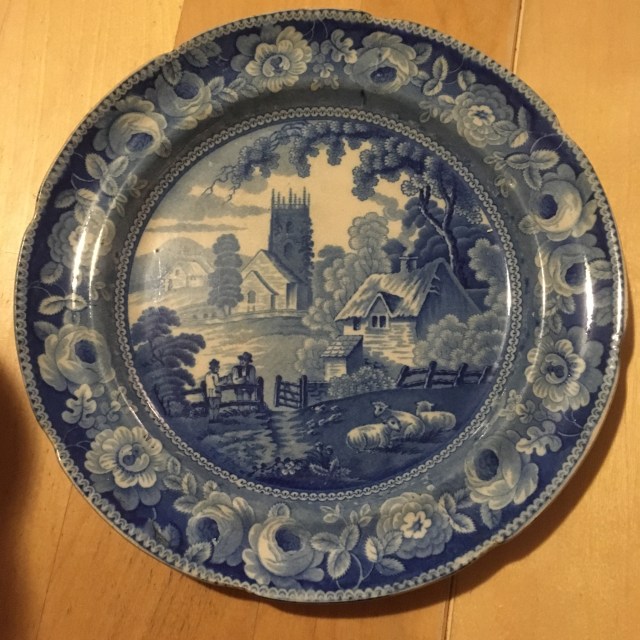






 Kirsten Hammerstrom
You must be logged in to post a comment.