The ‘Nancy Dawson’ Dress

Miss Nancy Dawson, aquatint print. Victoria and Albert Museum. E.4968-1968

Hat tip to Mr B for pointing out the resemblance; I know the print and never connected it to this fabric.

It’s been almost a year in the making, this bright yellow billboard of a gown. I’m not sure why I dawdled over the making; usually I’m pretty quick with a needle, but perhaps it was in part because the goal kept changing: first December, and then, it seemed, never, would I have an occasion to wear this. Federal exploits intervened, work intensified, things changed. But late April presented itself as an opportunity, so finally I had a goal, a deadline.
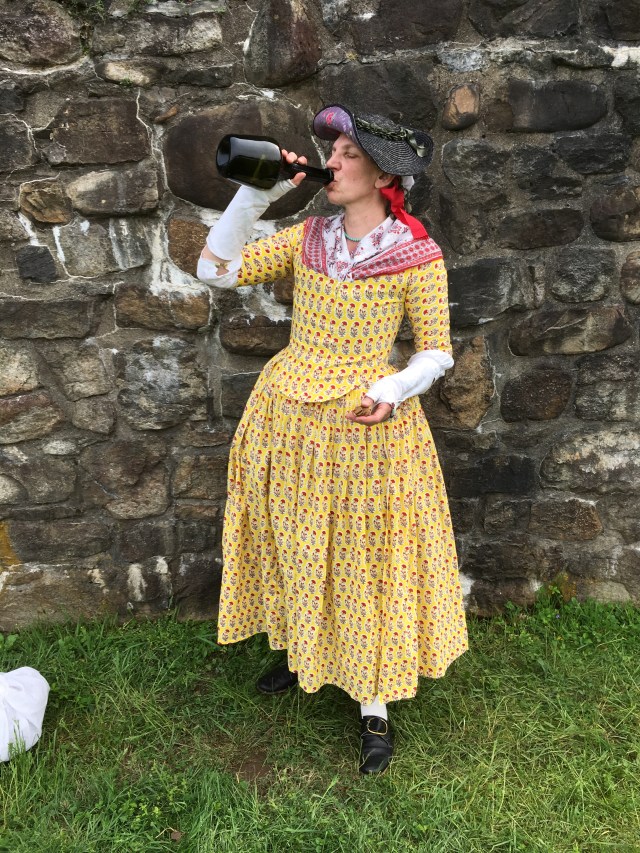
It was hot. And humid. That’s only water.

And I met it, with Drunk Tailor’s help (setting hems by yourself is a pain).

This is a fairly straightforward affair. I did use the Larkin and Smith “fashionable gown” pattern because I know how it fits me, but the front is modified to a simple closing and the skirts aren’t meant to be drawn up. This gown aspires to pretensions– though you can tell I’m fairly prosperous by the number of different prints I’m wearing.

The petticoat did require piecing– at my height, 44 inch wide fabric often needs to be pieced to achieve the lengths or width I need in historical skirts.
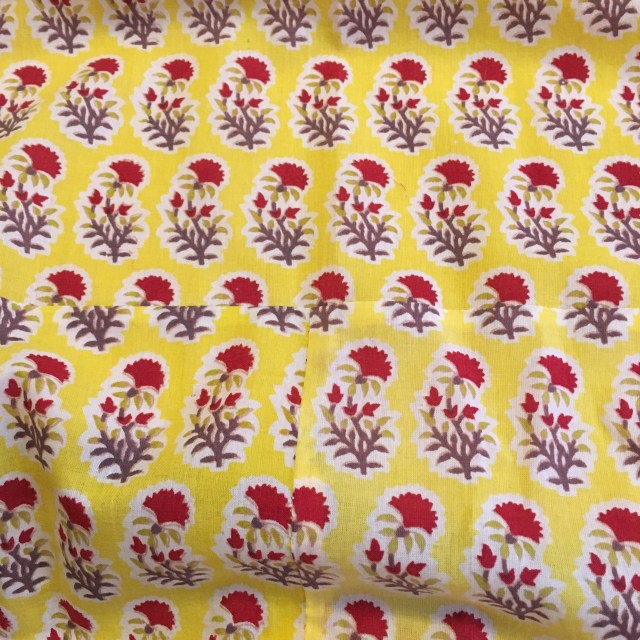
Happily, the piecing matches and doesn’t match, in a fairly satisfactory way. When this fabric arrived on my doorstep, I determined that it needed to be used in the most obnoxious manner possible– and since I’m not a small woman, a gown and matching petticoat seemed the best possible use. (I have other obnoxious fabrics for later time periods).
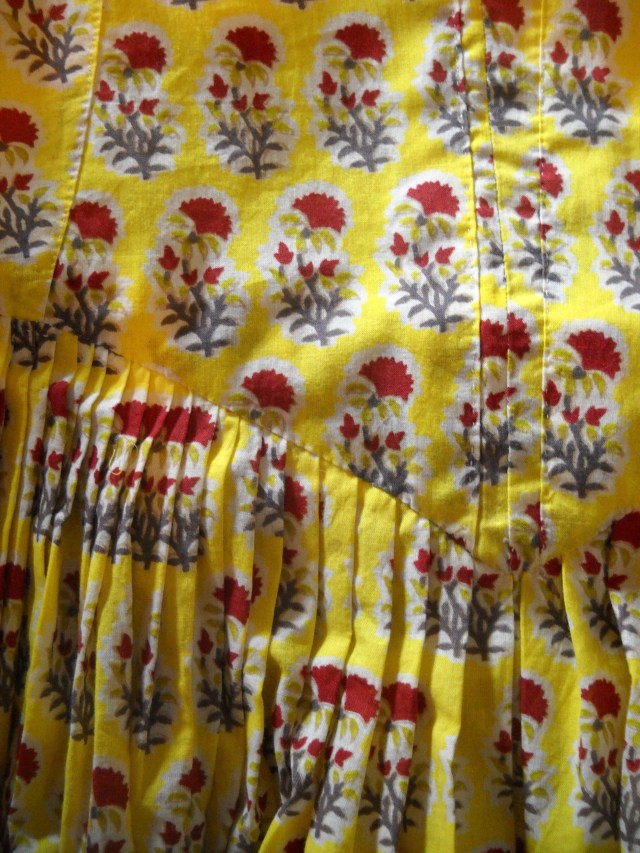
I did take care as I made it up, though, stitching with white thread and trying to make the pleats small and correct to the fashion and fabric. Any failures or flaws make it, to my eye, better as an article of aspiration to a rank and style I really can’t pull off.

One thing I forgot to pack was a bum roll– though wearing that on the drive to Fort Frederick would have been extra interesting– which was unfortunate, as it is truly required. These new (they’re a year old, and I expect to call them “new” for a long time to come) stays make a different shape in the back than the old stays, and now my own padding no longer negates the need for a bum roll. Still, I’m pleased with the result, even if it still wants cuffs. Not bad for eleven months of work.

History Hurts

We have been here before: terrible stays, stays in need of minor mods, and “it isn’t history till it hurts.” New this past weekend was the Busk Bust Blister (Bursting) which didn’t make History hurt, but sure did bring a sting to the wind-down afterwards.


These new stays are, so far, the best I’ve ever had and well worth the blood, sweat and swears it took to make them. Gowns do seem to fit better over these stays; they held up well at muggy Monmouth and in polar Princeton, but the last two rounds at Ti left me feeling like I’d taken a hoof to the ribs.

What gives, kidneys? At least this time I made it past Fort Ann and all the way into a private room in Glens Falls before I had to free the sisters and release the lower back.

IMG_7298

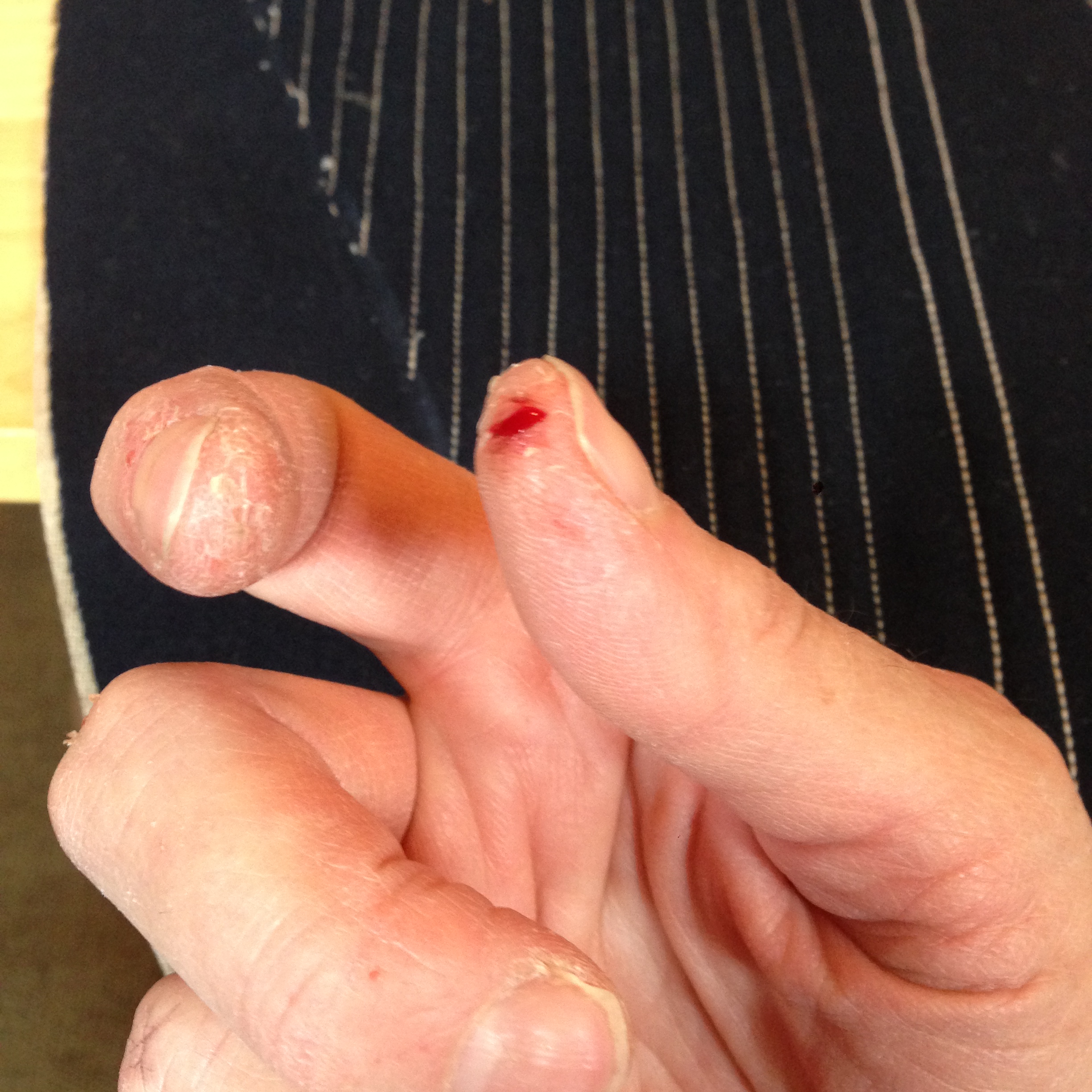
But this time, there was a bonus: the previously indicated Bust Blister. On the left side (I’m right handed), I developed a fairly robust .25” x .125” blister that crowned the top of a nearly 2” red mark, mirrored on the right by a less red and slightly less long mark. The culprit?

The Busk of Doom, of course.


dscn4568

Strictly speaking, I should not sport a busk when I desport as Captain Delaplace’s serving woman, or as a refugee cooking up the last of the bread, eggs, and milk. I’ve earned these marks and (potential) future scars by dressing above my station, and need to adjust accordingly.

Step one: Rounding down the busk edges (now in the capable hands of Drunk Tailor).
Step two: Foregoing the busk when working.
Step three: Wearing partially-boned stays when working.

Two is the easiest; three is the hardest. Which do you think I am, therefore, actually contemplating as a necessary next step?

But of Course: Step Three, Pathway to Finger Cracks and Stained Stays.

d'oh! surgical tape made this *much* better later.
d’oh! surgical tape made this *much* better later.

Fortunately I have people close to me who will ensure that I work through steps One and Two before embarking upon step Three, but I certainly want to know more about (and will look much more closely at images of) working women in the third quarter of the 18th century. My suspicion is that women who are performing labor that requires movement– up and down before a fire, back and forth across a floor, bending over a tub– may not be wearing stays made in exactly the way high style stays are made for ladies who bend over an embroidery hoop, glide back and forth across a ballroom floor, or move up and down the stairs of a well-built home they supervise.

Or my busk pocket is too big, my busk edges too square, and my actions too fast and continuous.

Paul Sandby. At Sandpit Gate circa 1752 Pencil, pen and ink and watercolor. RCIN 914329
Paul Sandby. At Sandpit Gate circa 1752
Pencil, pen and ink and watercolor. RCIN 914329

What are these women wearing? They certainly look fully boned. What can I change to make my stays work better for working? No matter what, where there are variables, there are experiments to run, and that’s what really makes history fun (even when it hurts).

My Life as a Chair, or, Warm in Winter

Can I get an “Aw, yiss” for being warm outdoors?

img_8826
After the aftermath. Photo by Drunk Tailor.

They may not be the most accurate <cough>machinestitchedoffabolt<cough> quilted petticoat and waistcoat, but they sure do make a difference.

These aren’t exactly base layers– a white wool flannel shift would not be amiss–but the quilted layers make a big difference to a day in the cold. When I added up the layers, I came to 8 without counting accessories like neck handkerchiefs and stockings:

  • Shift
  • Stays
  • Waistcoat
  • Lightweight Wool Petticoat
  • Heavy Wool Petticoat
  • Quilted Petticoat
  • Gown and Stomacher
  • Cloak

It isn’t always pretty, but in cold, wet weather, function trumps fashion (not that I’m not pretty pleased with this upholstery). The waistcoat ties on, so you have some adjustment should your weight or shape fluctuate. The petticoat, in this case, works like every other petticoat, with the sole exception of a short pocket slit on one side due to operator impatience (this was finished just a few days before it needed to be packed for Princeton).

img_8823
Thanks to Drunk Tailor for more patience.

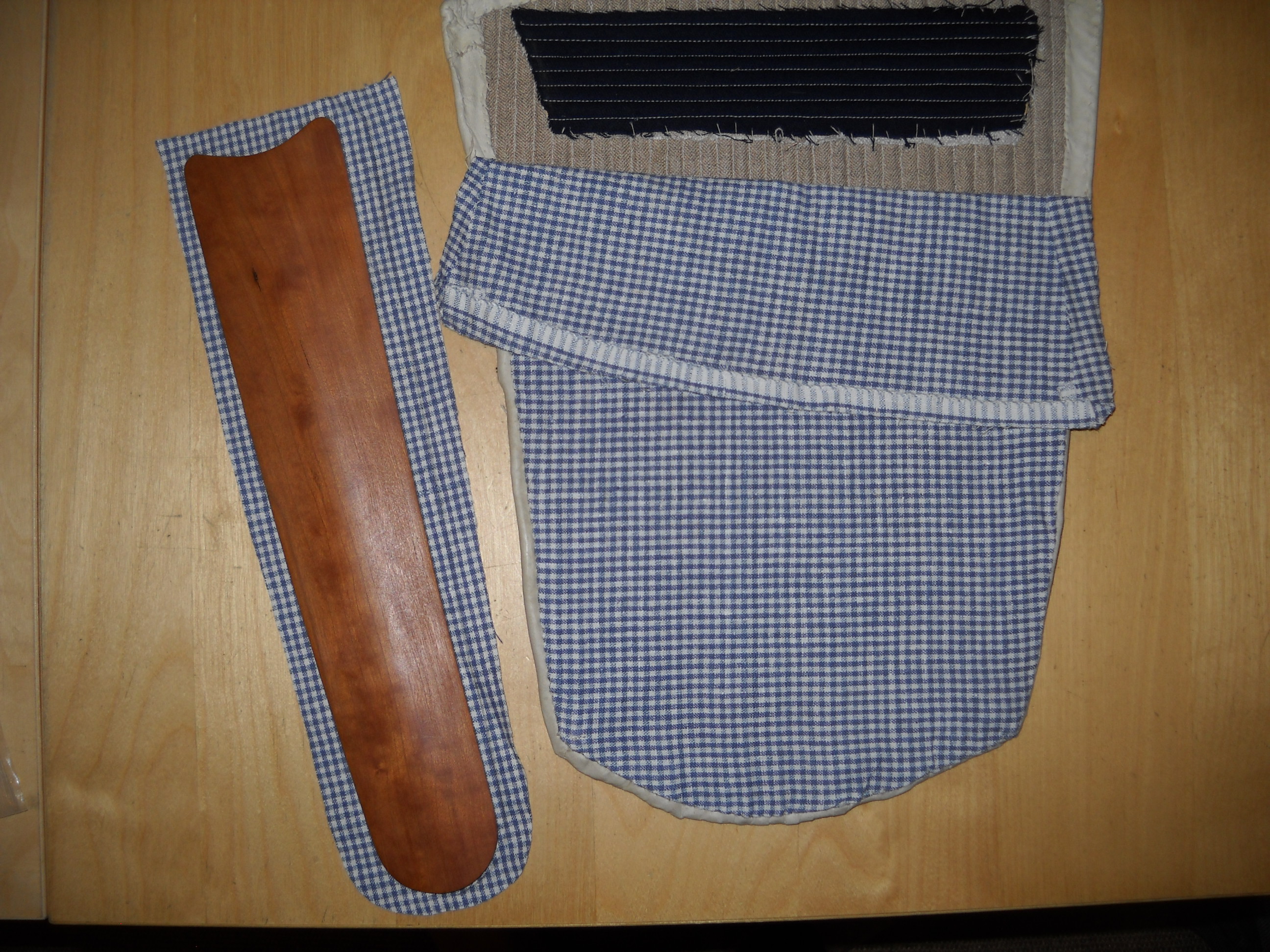
The quilted fabric (originally intended, I am sure, for a bedspread) is lined with a plain weave wool for extra insulation and body; the waist band is bound with wool tape, as is the hem. Down in the basement, there’s a camblet- wool batting- linen lining sandwich on a frame, ready for quilting, if I only I would drag it up stairs and start, and I know it would be both more insulating and more accurate.

Does it all fit? Well…pretty much! An open robe with stomacher makes it easier to fit all these layer underneath, and, happily, I don’t have the best sense of my own size, so my clothes tend to be a little bigger than they must be. Fortunately, historical clothing generally involves adjustable closures that make fluctuations and layering easy to accommodate.

After Anna B’s and Anna K’s comments on the overview of the event, I was reminded that these are the confessions of a known bonnet-wearer, and I will humiliate self for history, so in case you are wondering: no, I didn’t wear drawers of any kind, or leggings, or long underwear. A pair of silk stockings under a pair of wool stockings kept my lower extremities warm, but my nethers were sometimes chilly, in a highly specific, localized, but small way. I think this may be where the wool shift comes in– or one that fits a bit better than my current garment, which is a tad too large.

On the porch at Morven, a range of head coverings. Photo by Matt White
On the porch at Morven, a range of head coverings. Photo courtesy Matt White

When it comes to ears, you can see that we adopted a range of solutions. Ear-covering caps under bonnets, under straw hats, and under kerchiefs, were worn by some. At far left, my cap perched on top of my head, so I tied my bonnet on with a kerchief and pulled my hood over all of that. Mistress V (at far right) wore a cap, a kerchief and a hat (which was summarily removed in the afternoon, by Mistress S at her left). Mistress F, holding the cream colored blanket with a wide black stripe, wore a wool hood over a cap and under her straw hat. Wear enough layers– and the right layers, meaning mostly wool and silk– and you will be warm, perhaps even sweaty if you’re active. Still, I might trade in my “Hobo Woman of Princeton” look for a quilted silk hood if the right one came along.

Make Mine Menswear: The finished banyan

Banyan, 1750-1775. T.215-1992, V&A Museum
Banyan, 1750-1775.
T.215-1992, V&A Museum

Banyan or wrapping gown, either will do to wear as the year winds down. This project took longer than I wanted it to, mostly because I have a tendency to take on too many things at once and promptly get sick. I like to think of this ability as a gift.

In any case, this is a simple garment to make, made more fun by piecing– it’s the challenge that keeps you awake, when the majority of the work is in teeny-tiny back stitches.

I measured the subject and made up my own pattern, using the chintz banyan in Fitting and Proper and this one at the V&A as models.

img_6554

Patterning is a simple thing, really. Maybe too simple. Measure the gentleman’s chest, bicep circumference and arm length, neck, and back length. With those, you know how wide to made the body, the center back length you need to achieve, how wide to cut the neck hole, and how wide and how long the sleeves need to be. Really, not that hard.

You can use a diagram like this to start you off. I did wing the bottom width, guessing at the angle to give the garment a fullness similar to the chintz at the V&A.

I didn’t have quite enough fabric to accommodate the recipient’s full height, nor could I get enough of the red print lining material; I had to piece both the stripes and the lining.  Trying to match up the stripes was remarkably satisfying, both when I succeeded and when I was  little off. Life Goal: Dizzying, please.

Again with the two color lining.

It contrasted well with a blue woven coverlet, making a nice bright note as the rooms were prepped for What Cheer Day. This was the effect I had hoped to achieve waaay back in April when I failed to finish anything I wanted for the After Dark program thanks to a bout of strep throat.

By October, though, I was able to finish the entire item and make a matching cap, allowing Billie Bowen to recuperate in style from an evening at the Cold Meat Club.

Next up, using this as the base pattern: a wool bedgown, lined in wool, and pieced. More mis-matched stripes, please!