
Every now and then, by which I mean quite regularly, I lose my mind and agree to participate in something that I know little about (tallow candles? hadn’t dipped a candle in decades), haven’t really got time for (Saratoga coats, though I managed one in a week), or feel woefully unprepared for (my life in general). This is either madness or a form of life-long learning.
When the lovely Mrs B proposed the group Sacque-a-palooza, I said, “Sure! What fun!” and meant it, too. (We nearly went to an 18th century party last year, but it was snowed out. We would have had to wear our tenant farmers’ clothes, and we would have been embarrassed.) A sacque with a venue? What’s not to like? (For sacques-piration, which is different from what you do while dancing in a fancy silk gown, I’ve started a Pinterest Board.)


What was not to like at first was the yardage requirement: 10+ yards, and I really can’t skimp because of my height. I looked and did not find enough silk (though that didn’t stop me from picking up 7 yards of lovely pinky-lavender taffeta, because you never know when you’ll need to become a Ralph Earl painting). But, I got an afternoon when I could leave work early, and Sew 18th Century and I headed up to Boston to hit the fabric store before descending upon Mr and Mrs B. We did quite well and I like to think we were rawther restrained, considering the table of tropical weight wools at $2.99/yard…thank goodness there wasn’t enough of a grey cross-bar to make a gown for me! Despite my initial dithering, Sew 18th Century talked me into a cross-bar silk taffeta after we confirmed a very similar extant example.
Mrs B is a patient teacher, and helped guide us through the beginning construction steps. This was fortunate for me, because I’m not sure I was qualified to open an envelope last night, let alone pleat silk. Making a gown under tutelage is a far different and far better experience than wrangling fabric yourself on the back of a recalcitrant and unyielding dress form.
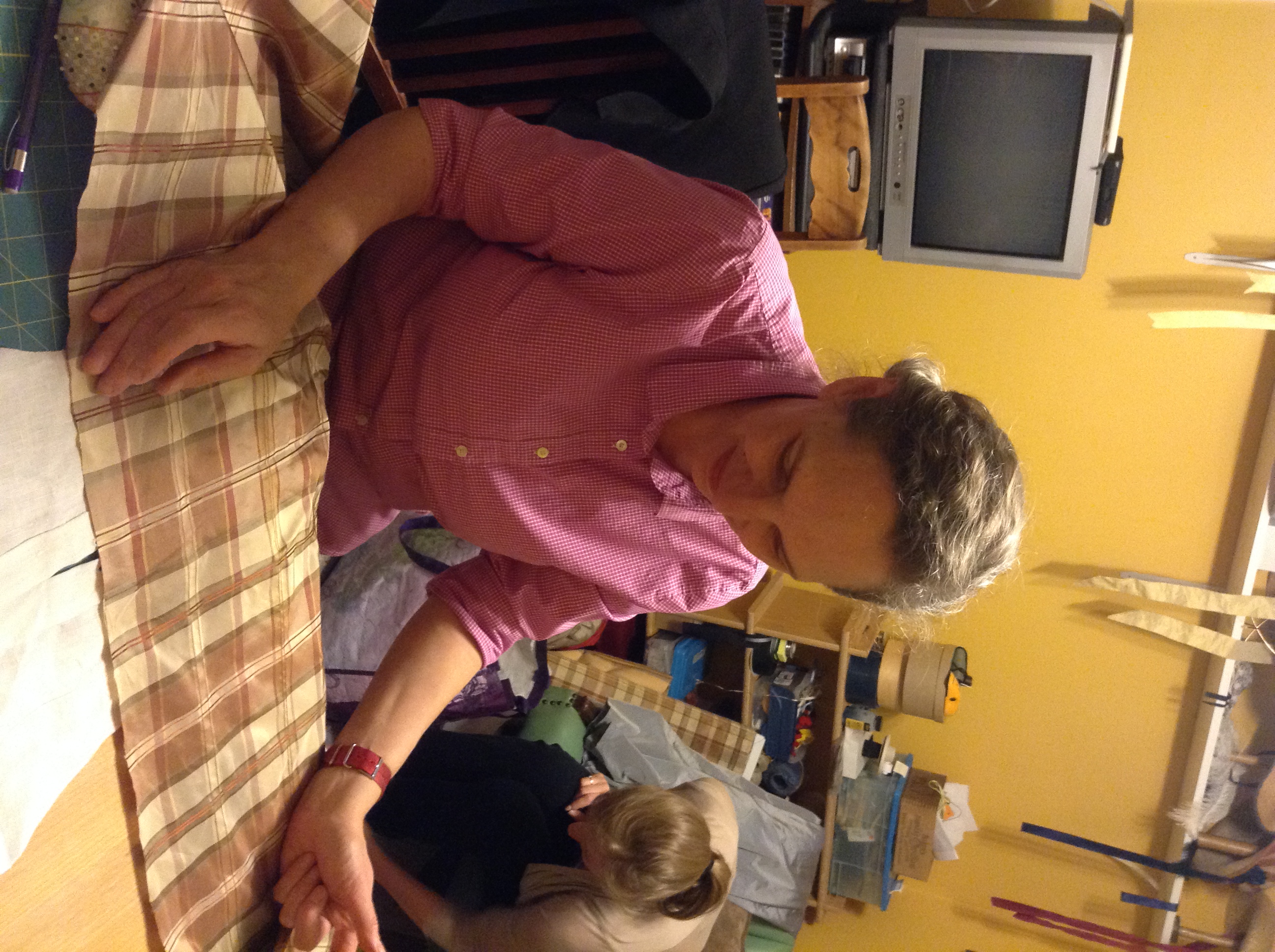
This morning, though I am a trifle bleary-eyed since the tsunami of What Cheer Day finally hit me on Thursday, I am in proud possession of a back lining and a pinned back ready to have the pleats sewn to the lining. That is quite good for a few hours work among congenial company.
I also learned a new mantra, which will be good for me, and a change from wielding the center-finding ruler: Done is better than perfect.

 Kirsten Hammerstrom
You must be logged in to post a comment.