Pockets 2.0

Pockets the First
Pockets the First

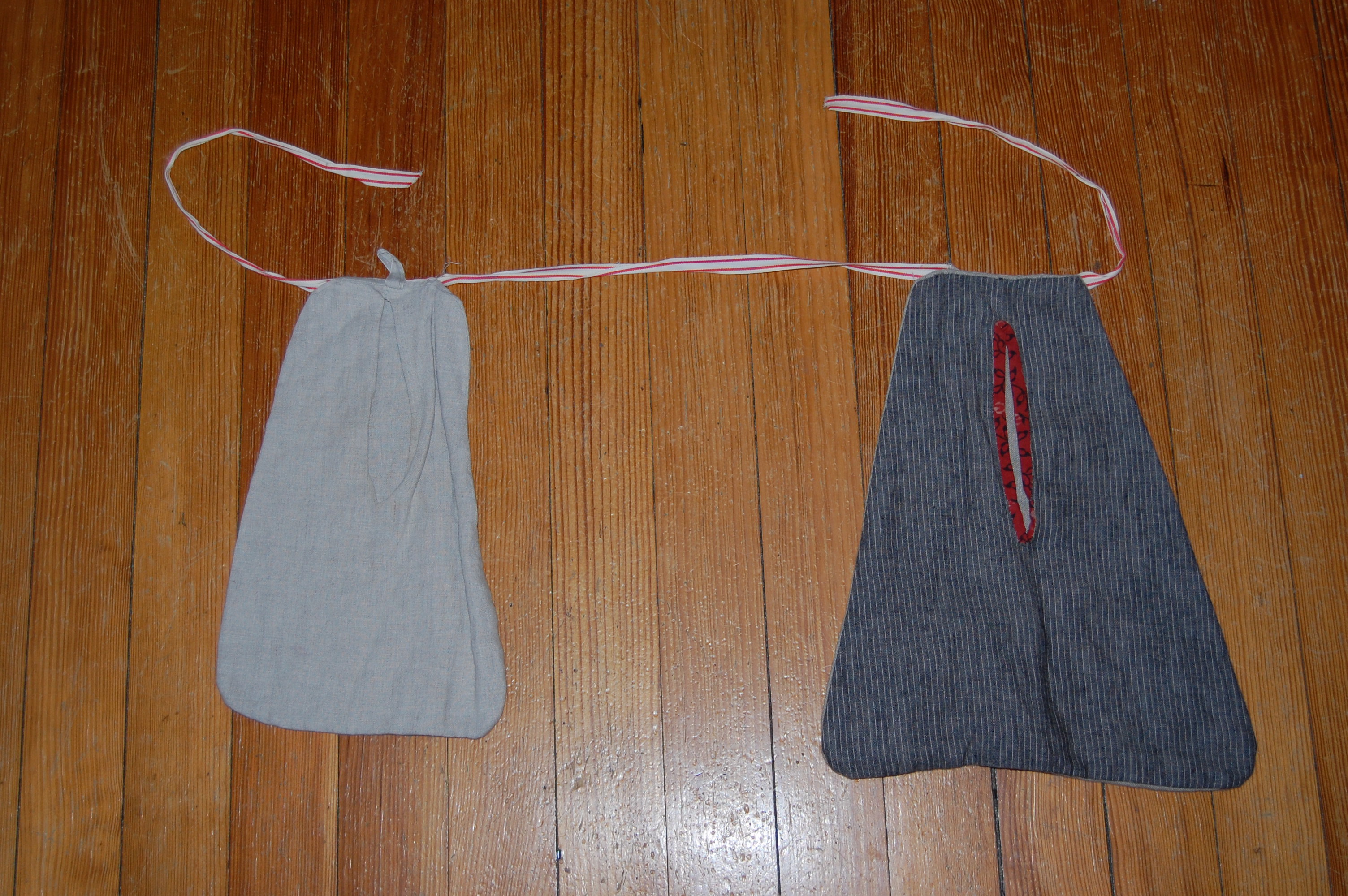
At left, Pockets 1.0 or perhaps beta. The far left pocket, when worn alone, was definitely beta. Then came the striped pocket, and then sewing them both to the tape. That helped– and I use the small pocket for things like wallet, phone, car keys and Band-aids, and the larger pocket for interpretive things. I try to follow the Under the Redcoat kind of model: one pocket is modern, one is historical; that way I don’t pull the car keys out along with the knitting, or am at least less likely to.

Too much stuff.
Too much stuff.

Here’s the stuff I carry in my purse today, actually a backpack-purse, downsized from a messenger bag. That’s a lot of stuff. But if you compare the list to the list of what might have been in an 18th century pocket, you’ll find a lot of similarities.

There’s a pen and a pencil, wallet and checkbook, granola bar, chewing gum, change purse, keys, more keys, and phone. All of those are just modern analogues for paper money, coins, orange or apple, candy, book and notebook, since the phone can fill in for so many things– notebook, money, keys, pen, book…

DSC_0174

The historical assortment is much more attractive, in part because I don’t use these things every day, and they don’t get tangled up and worn in a bag. Mitts, kerchief, hankie, my husband’s pay, knife, thimble, spoon, and knitting (I may never get a pair of stockings knit): these are all accurate to carry, though the knitting needles will have to change before that’s taken out in public.
DSC_0173

All that, or some combination of like things, will go into one pocket, and the modern mess into the other. I fear these new pockets are, for now, too nice for Bridget. I may just stick with my old, mis-matched ones for now.
Use it Up, Wear it Out, Make it Do

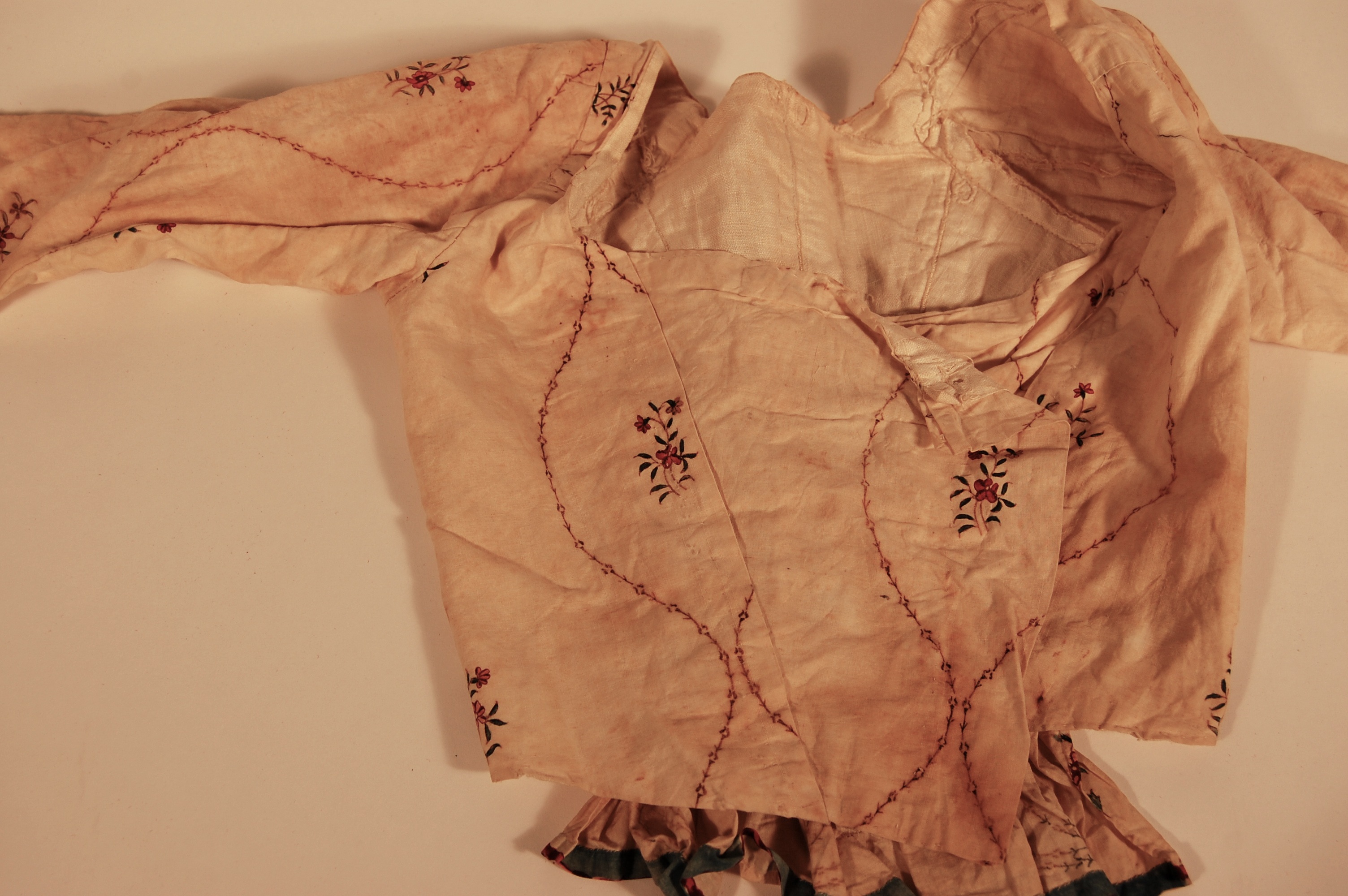
Bodice, painted Indian cotton, 1780-1795 RIHS 1990.36.27
Bodice, painted Indian cotton, 1780-1795
RIHS 1990.36.27

I’ve fallen behind again, as I spent considerable early morning time this past week working on a short presentation for a program in Worcester this past weekend. If you are among the people who do not wake at 4:00 AM panicking about the organization of your thoughts, or whom, exactly, might have worn a heavily-remade bodice, you are lucky indeed.

But I managed to present without falling all over myself, putting out someone’s eye, or causing mayhem and self-embarassment, so, phew! (I do this so much less often than I used to that my anticipatory anxiety is always high.)

Above you can see one of the items I talked about: a re-worked bodice from the collection of the Rhode Island Historical Society.

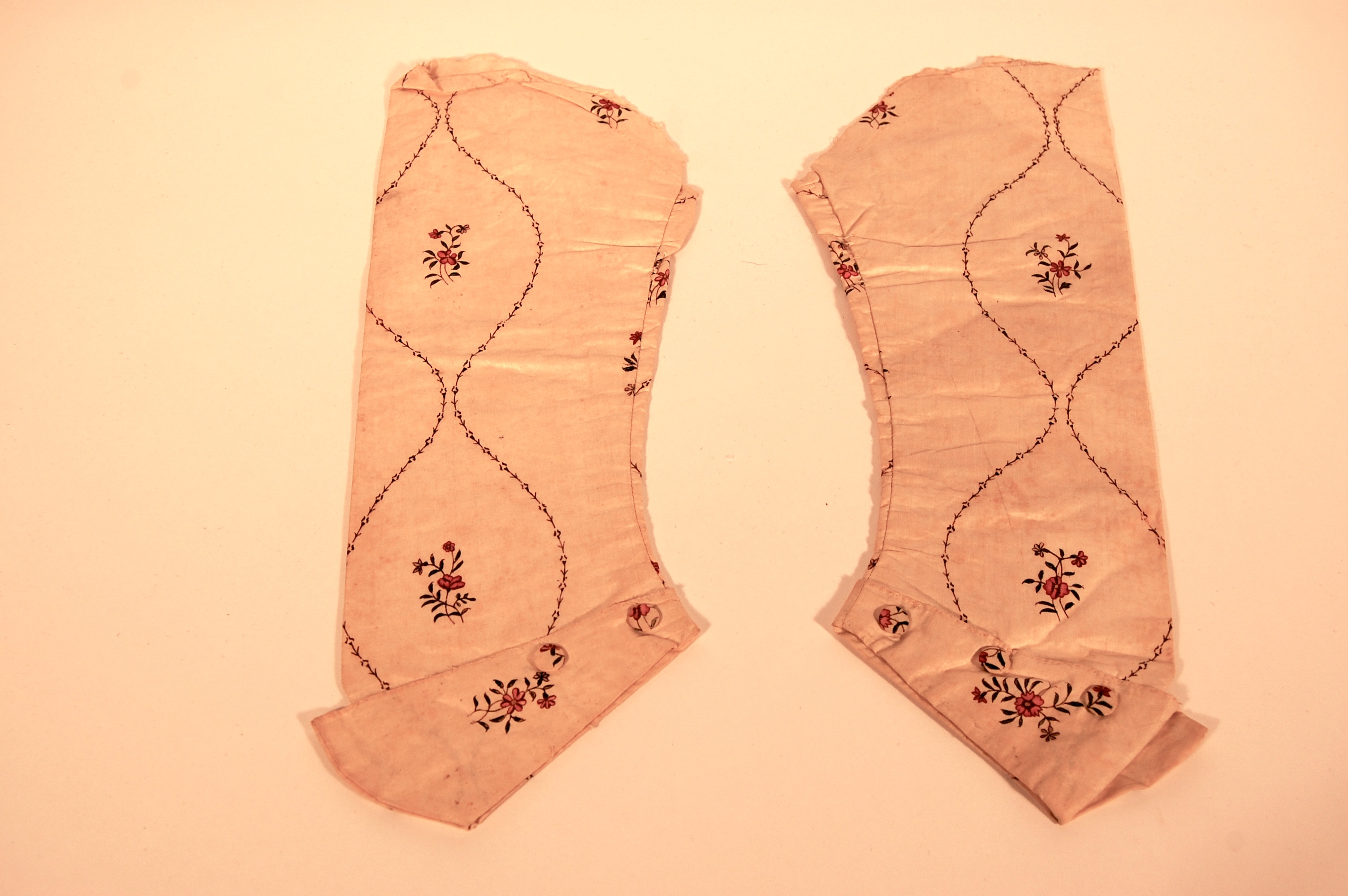
Sleeves, removed from bodice 1990.36.27. RIHS 1990.36.25A-B
Sleeves, removed from bodice 1990.36.27.
RIHS 1990.36.25A-B

I think, once upon a time, that bodice was part of a pieced-back closed-front gown with a matching petticoat.

And then I think someone decided (quite rightly) that the style was too passé for 1795, and altered the gown significantly.

Not only is there evidence of new sleeves being fitted into the gown’s armscyes, we have the sleeves-that-used-to-be. And my dear! No one is wearing sleeves like that this season!

I find these garments in limbo really fascinating. Was that bodice finished and worn with a matching petticoat? (Yes, there’s a panel of that left, too; what a lovely hem!)

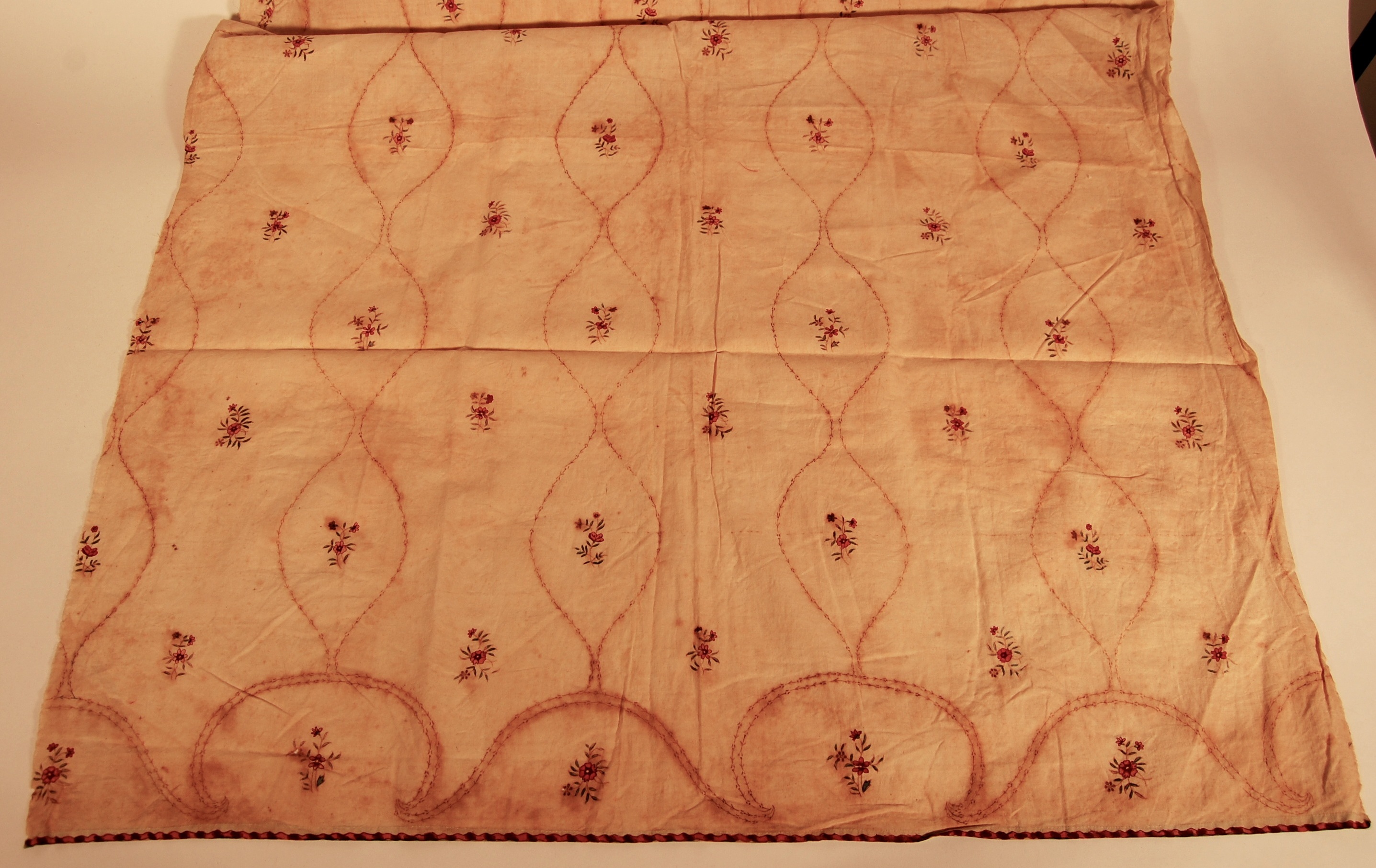
Skirt panel, painted Indian cotton. RIHS 1990.36.33
Skirt panel, painted Indian cotton.
RIHS 1990.36.33

Who wore the gown? Was the woman who wore it originally the same woman who wore it altered? I can only guess at this point, and may never find the smoking diary or mantua-maker’s bill. The alterations are not as finely done as the original gown, so I think there are two hands at work here– whose were those hands? There’s always more to think about and learn.

In case you’re wondering, thanks to the Met, we can see what the gown probably looked like in its first incarnation, and then what the alterations were meant to achieve. (Link to the gown on the left; link to the gown on the right.)

What would you carry?

The V&A’s extensive article includes many hints about what might be in woman’s pockets.

Pocket ca. 1784, American cotton, wool Brooklyn Museum Costume Collection at The Metropolitan Museum of Art,  Gift of the Brooklyn Museum, 2009; Bequest of Marie Bernice Bitzer, by exchange, 1996  MMA 2009.300.2241
Pocket
ca. 1784, American
cotton, wool
Brooklyn Museum Costume Collection at The Metropolitan Museum of Art,
Gift of the Brooklyn Museum, 2009; Bequest of Marie Bernice Bitzer, by exchange, 1996
MMA 2009.300.2241

Sharon Burnston, on the Historic New England site, points out that “Pockets thus represent the kind of dilemma that objects of material culture can present to scholars. Much is known about how and when these items were made, but evidence of how they were used remains fragmentary and tantalizing.”

Fragmentary and tantalizing indeed!

Another scholar posits that “Pockets empowered women in many ways: they allowed them to carry possessions around with them for practical and personal uses, and gave them rights of ownership and privacy. I argue that decorative pockets also heightened women’s self-esteem by making them to feel more attractive – and that they esteemed their pockets in return.

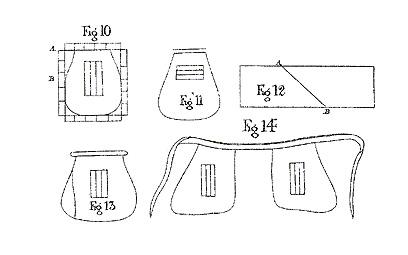
From the Workwoman’s Guide

As we can see from this diagram from the Workwoman’s Guide, pockets could take many shapes, and the extant evidence bears this out. There are oblong pockets, and more rectangular pockets, rounder pockets, longer and shorter and wider pockets. One suited one’s self, and cut one’s pattern to one’s cloth.

The identification of pockets with self, with intimacy and privacy, is explored in Women’s Pockets and the Construction of Privacy in the Long Eighteenth Century, by Ariane Fennetaux.
Fennetaux’ article and the V&A page on pockets were particularly useful in enumerating more specific kinds of items that might be carried in an 18th century woman’s pocket.

Nutmeg grater ca. 1690, British Cowrie shell, silver Gift of Irwin Untermyer, 1968 MMA 68.141.278
Nutmeg grater
ca. 1690, British
Cowrie shell, silver
Gift of Irwin Untermyer, 1968
MMA 68.141.278

Using cases from the Old Bailey, we can begin to draft possible contents lists.

A pair of silver buttons
A pair of buckles
A pen knife
Thimble
Coins
A silver spoon
A pair of scissors
Keys
Needlecase
Biscuit
Nutmeg and grater
Smelling bottle
An orange or an apple
A pocketbook
Comb
Snuff box
Jewellery
Needlebook
Pocketbook
Paper
Pen or pencil

When Pamela runs away, she takes with her, in her pocket, two handkerchiefs, two caps and five or six shillings.

Of all the listed things, what might Bridget have carried? Some of the things she carried would be needed, but others would be wanted.

Pockets of Evidence

Or is it evidence of pockets?

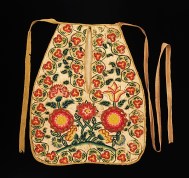
Pocket, 1770-1780 Rhode Island Linen, cotton and silk RIHS 1985.1.9
Pocket, 1770-1780
Rhode Island
Linen, cotton and silk
RIHS 1985.1.9

In any case, I thought it time to upgrade my pockets, since I have given so much attention to the rest of Bridget’s clothing. I have also been talking with a colleague about a pocket game activity, similar to the process I’ve used in thinking about Bridget: what is in your pocket? If I’m going to try that out in public, then I’d like not to be embarrassed about my pockets.

The first pocket I made was based completely on one in the RIHS Collection, and it annoyed the daylights out of me as it had exactly the same loop on top and twisted around under my petticoats, making the opening hard to find. I also realized that it was too small to be really correct for a woman’s pocket: those tend to be larger. Sew 18th Century has a really nice article on pockets here.

Pocket, 1789 American  linen  Gift of Miss Blanche Vedder-Wood, 1940  MMA Costume Institute C.I.40.159.4
Pocket, 1789
American
linen
Gift of Miss Blanche Vedder-Wood, 1940
MMA Costume Institute C.I.40.159.4

So I made a larger pocket based on this one at the Met, and made of a grey and cream striped linen with the slit bound in red calico. It’s dated to 1789, and technically that’s too late for my uses.

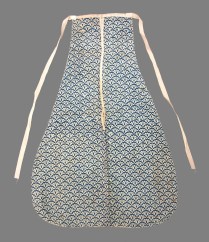
Pocket 1720-1730 block printed cotton and linen
Pocket
England, 1720-1730
Cotton; Linen
Winterthur Museum Collection 1960.0248

But the next one is too early.

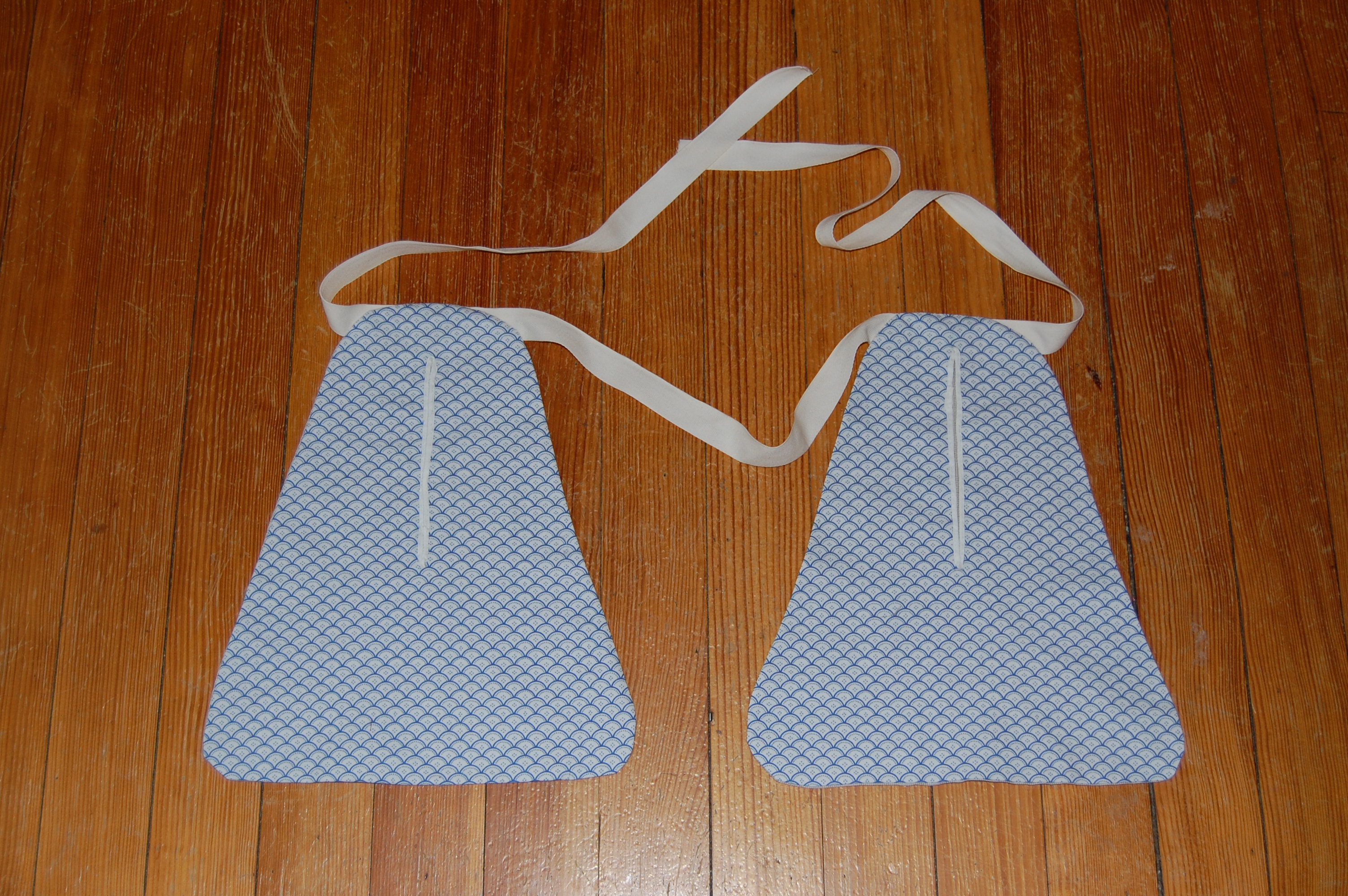
Well, it has survived this long, and Wm Booth has that lovely shell print cotton, so what’s a sister to do? Pockets don’t take much fabric, so making a matched pair of printed pockets seems the thing to do.

Now the question is, what should be in those pockets?