A Whale-Safe Bonnet

Complete with my interpretation of "Hat Face"
Complete with my interpretation of “Hat Face”

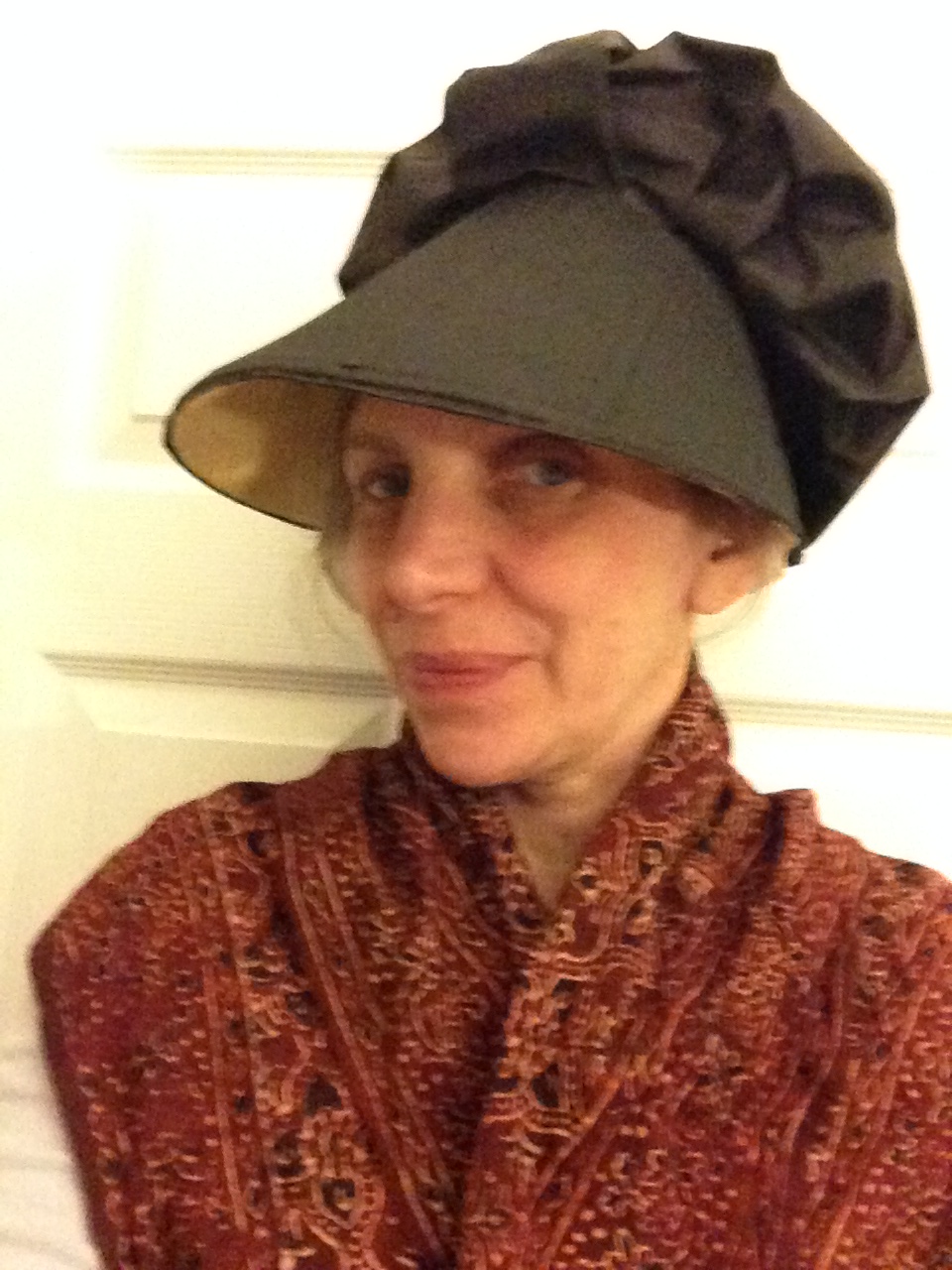
As promised, my interpretation of the ribbed bonnet in the 1789 engraving. There are a few problems with this beyond the model. (Which is not to say that I don’t like this bonnet– I do!)

I used the Kannik’s Korner bonnet pattern (view F, I think) as the basis for this because I already had a brim, lining, and caul cut and in a drawer. Given my current medicated state, using something pre-cut seemed advisable. That means I didn’t play with the brim to create the line of the Williamsburg bonnet, or the curve of the brim in the “Fortune Teller” engraving.
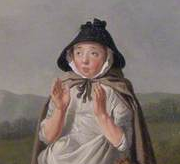
Detail, The Marquis of Grandby

Is this style acceptable for the period I typically interpret (1775-1783)? Well… there are other examples of the lampshade-style bonnet, as in the Edward Penny painting of the Marquis of Granby. This painting is dated “after 1765” so there’s some room for interpretation there…too much room. But if that’s 1765-1770, and the “Fortune Teller” is 1789, I think we have comfortably covered the 1775-1783 time frame, even if it is a bit like a queen-sized blanket on a twin bed.
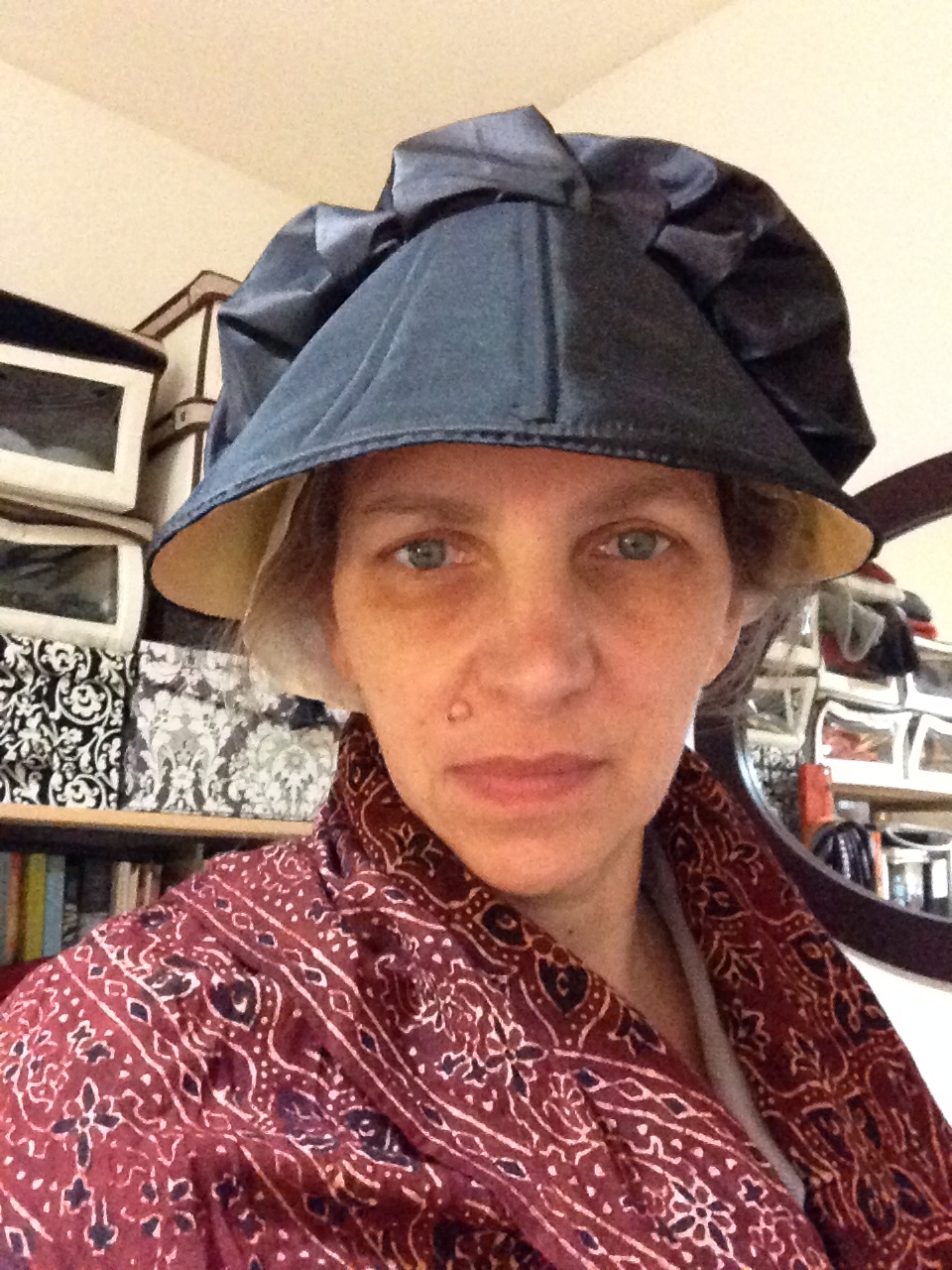
Front view: more lamp-shade like.

As you can see, the bonnet does have some lamp-shade-like tendencies on my head, which I consider a benefit. I like the way the ribs are visible, even if I remain unconvinced by the caning. I think it’s a little too wide, and lacks resiliency, though to be honest, I have only felt baleen at the New Bedford Whaling Museum, where there is a large sample on the second floor.

To compensate for the disappointing cane in the brim, I slipped a piece of millinery wire into the pocket underneath the cane. The layers in the brim are:

  • black taffeta
  • horsehair canvas
  • linen buckram
  • yellow taffeta

The channels are all hand-sewn, and then the cane was slipped in. I stitched the black taffeta caul to the first three layers, and then lapped the yellow taffeta over the raw edges and stitched it down to finish the brim/caul seam.

No, I didn’t take any in-process pictures…probably because this took considerable snake-eyed concentration last weekend. IMG_1477 IMG_1476

Usually, I line the cauls of my bonnets, but through shear laziness or distraction, I opted not to this time, and I think I’ll leave it this way for a while. You will also note that I have not trimmed this: I have some black silk ribbon coming, and I may try that. I don’t have enough black taffeta left to cut self-fabric ties, and there do seem to be some plain examples. A plainer, lamp-shade-like bonnet may be just the ticket for Bridget.

What would I do differently? Next time I would definitely play with the brim shape using a paper template. I’d like a lower, curvier, brim. Once I had the shape worked out in paper, I would use that as a template to cut the taffeta and horsehair or light buckram layers.

The Edenton Tea Party

I’d also try zip ties. I know: not period correct! But short of risking federal prosecution resulting from a trip to New Bedford with some shears, I’m not sure that anything other than plastic will have the resiliency and spring that baleen has, and that made these bonnets so special. I thought of them while making this bonnet, but I think Mr S used them all at work in the past two months. A Facebook friend has been thinking of zip ties, though, and has a hankering for one of these bonnets. I can’t say that I blame her– and honestly, I think I might join her.
Hat Face

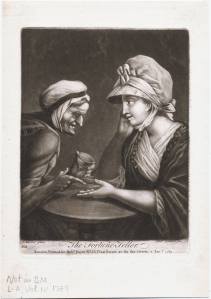
The Fortune Teller, 1789. Lewis Walpole Librray. 789.1.2.1

I like hats; I think it’s been made clear here before that I have a bit of a bonnet problem. As it stands, I have something in the neighborhood of a dozen bonnets, and really need to get my Etsy store up and running…

But as in life as in the Richard Scarry story, there’s always room for one more, and more to learn, so my collection hasn’t stopped me. I blame my Grandmother Elsa, who owned a dress shop, collected shoes, and had a particular face for trying on hats.

Black silk bonnet, 1770*1780. Colonial Williamsburg 1993*335

I’ve been thinking about bonnets because I lately came across some engravings showing what might be called baleen bonnets. At left above, a bonnet that is clearly reminiscent of the bonnet in the Colonial Williamsburg collection on the right. The CW bonnet (1993-335) has seven baleen bones, and a baleen rib around the bonnet brim.

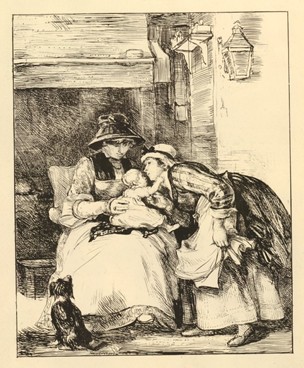
It is strikingly similar to the bonnet in the 1789 engraving, down to the decoration. In “Kissing the Baby,” a lithograph in the collection of the British Museum, the older woman appears to be wearing a ribbed black bonnet in the style my friend calls “lampshade,” and that others call “bucket.”

Kissing the Child. Lithograph by David Wilkie, 1800-1841. British Museum, 1852,1211.134

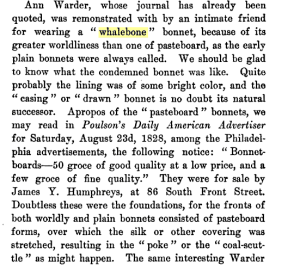
There are more bucket or lamp-shade-like bonnets depicted in engravings and paintings, and it is possible that flamboyant style was the one that got Ann Warder in trouble in 1788. I remembered this passage on page 223 of Amelia Mott Gummere’s book, The Quaker, A Study in Costume,:whalebone quote

Whalebone bonnet? Interesting… so, having an interest but no whalebone, I send the Young Mr to the basement for the remaining stock of caning I’d used for stays, and came up with a plan to replicate a “whalebone” bonnet, which I will describe and show you next time!

Not in Defense of ‘Turn’

John André’s self-portrait, 1780. George Dudley Seymour Papers, Manuscripts and Archives, Sterling Memorial Library, Yale University

Like all the other history-obsessed Rev War reenactors with basic cable, Mr S and I have been watching ‘Turn’ on AMC, and like some other reenactors, I’ve been lurking on the fringes of the Facebook feeds trashing the show, but hoping a contrarian view would be possible, just to keep things interesting.

So we watched last night with the best intentions: I would not think about shoulder seams, drawstring-neck shifts, circular caps, obvious mascara, white linen shirts on farmers, shirts with neck bands but not collars, a lilac silk cloak on a farmers’ wife, the amazing amount of light candles throw, beards on smugglers who look like they escaped from a spaghetti western… Mr S has learned to live with this and I have learned to keep quieter. He learns best visually, so he really had hopes for this show. I think we all did, even given what we know Hollywood does to historical realities.

Mr S keeps asking, “Where’s the war? Where are the soldiers?”

I keep asking, “Why is Tallmadge allowed to be on his own for so long, and what the heck is wrong with his uniform facings? And he’s a dragoon, where the heck is his horse?”

The low shoulder seams on Woodhull’s leather(?) jacket still make me nuts, though I think Anna serving in the tavern in a pristine white apron over a cranberry silk button-front gown really took the cake last night, costume-wise.

The dialogue howler I enjoyed the most (i.e. caused the final outburst) was Major Andre and his “player” girlfriend who is so not pumping him for information (horrid pun intentionally retained).

If you were the suave Major, you would respond with complete candor to the charming (mascara-eyelashed, obvious foundation-wearing, look out for the lip-gloss) woman’s question: “You will tell me where you’re going on your next secret mission, won’t you?” “Why, sweetie, yes, and let me use my time machine to bring you the Enigma machine and a smallpox vaccination.”

I expect and grudgingly tolerate:

  • Bad costuming
  • Odd set dressing (highly suspicious table in the church-stable; suspect it would be happier in Amistad)
  • The incredible candlepower of candles
  • Non-18th century speech rhythms
  • Changes to actual events for increased drama

But patently absurd, asinine dialogue on top of all that goes beyond my patience.

I should give it up: Two Advil PM at 8 and I’ll no longer spend an hour every Sunday night performing mental alterations on TV costumes. (Those shoulder seams really annoy me, and could someone try pressing the facings?)

But no; next week, Fort Lee should fall and chances are good Mr S will lead the screen-shouting…

Frivolous Friday: Whitaker Auction Waistcoat

It’s so nice to have enabling friends. If it’s not one tipping me off to a sale on fabric at Williamsburg (over now, keep calm) it’s another tipping me off to costume auctions.

My most recent tip-off came from Mr Cooke, about the Whitaker auction coming up April 25 and 26 in New Hope, PA. There are some very nice things from the collections of the Met and LACMA coming up in that sale. It’s hard to understand deaccessions from the outside, so I won’t comment on that part of the sales.

Unmade waistcoat ca. 1790. RIHS 1990.36.15

I was particularly taken with this waistcoat.

The lapel embroidery and button details remind me very much of an uncut dimity waistcoat in the collection of the Rhode Island Historical Society.

Whitaker’s got copyright notices on their images, so I won’t post them here, but I can assure you, the visit will be worth your while. But my tip to you is this: forget those estimates– from what I’ve seen lately, they’re all too low by a factor of 10.