Nine years ago, I made a pair of hip pads to go under the unfinished cross-barred sacque. This time around, I thought I should make the more common hoops or pocket panniers. I used the Dreamstress’s Pannier-Along pattern and instructions but failed in a few respects.
My panniers are crushed by petticoats, and fold in on themselves. The canes (I used synthetic whalebone) are both too soft and probably too long. The extra length allows them to curl in at the ends so that they migrate a bit to the rear even as they squish down. The linen I selected is too lightweight for this task; I erred by choosing based on color and not weight. Of course, I had (and have) enough mid-to-heavy-weight white linen in hand, but I was afraid I wouldn’t have enough for the gown lining. (Never mind the fact that I could have purchased fabric at the workshop, I was focused on the goal and not thinking things through as thoroughly as I might have.)
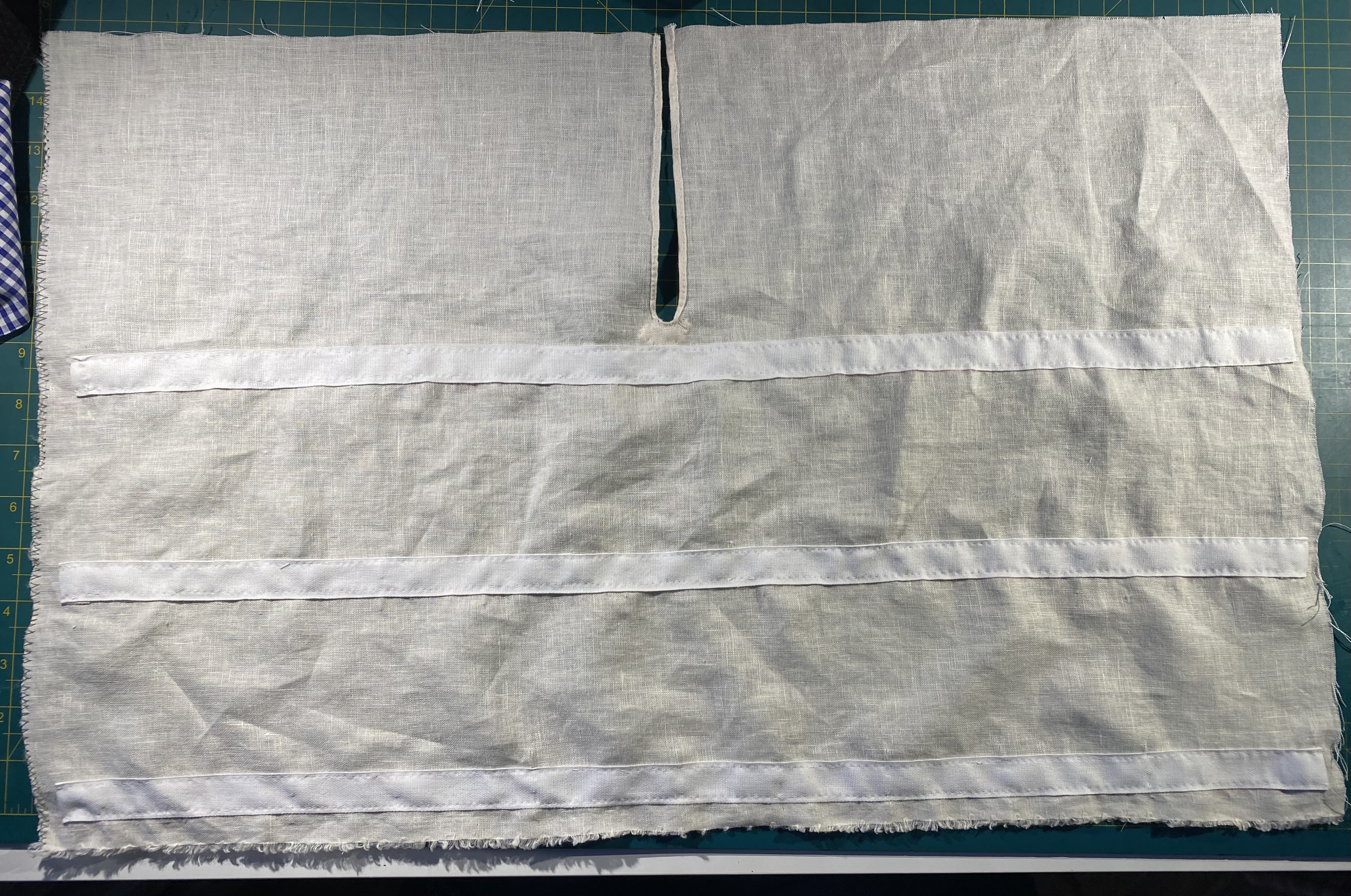
Side One with Tapes and pocket slit sewn
I started this project on Monday and finished by 10:00 PM on Tuesday, with full workdays in between start and finish. The panniers are sewn entirely by hand which makes it even more sad that they’re not all they could be. They’re supposed to be collapsible for travel, and they certainly are. That means that the solutions I try should not prevent these from folding flat.
First side all finished
It makes sense to start by pulling out the bones and trimming them a bit to prevent the curling. Another step might be cutting a pasteboard bottom insert to maintain the silhouette. This will require undoing some stitching to slip the bottom piece in but it still seems worth a try. I could double the bones (if I have enough) or supplement what’s there with canes (I do have that).
All finished, but a little squished
That’s three ideas before I need to start over with heavier linen. Even then, I can salvage and re-use the tape channels and bones to use again.
You’ve washed, mended, ironed, darned, and sorted.
Now what? Now, my friend, the hard truths: the assessments and upgrades.
The hard stuff. Winter is a good time to frankly assess what you have, what you need, and what you already have needs. Could that sleeve be re-set? Stroke gathers re-done on an apron waistband? When you’re finally not planning and packing every few weeks, you have the time to really think about what you have and what you want.
There are two primary areas to assess, fit and appropriateness.
Still needs work….
and the bonnet’s too big.
Fit:
How well do your clothes fit you? Are your skirts long enough? Short enough? Are your breeches tight enough? Cut correctly? Waistcoats long enough? Getting dressed and taking a good look at your clothes can be enlightening. I find that photographs help me figure out issues with fit. As Drunk Tailor and I work, we take photos (especially of backs) so that whoever is being fitted can see what the fitter sees. This has proven more useful than attempting to turn around to see one’s own back like a cat chasing its tail. I’ve also used mirrors and selfies to achieve similar results, but even a non-sewing friend can take a picture of your back.
Now I can see what works
and what to work on.
Period-correct clothes fit differently than modern off-the-rack clothes (you know this), so looking at period images will help you figure out what you need to change. Typically, I find that sleeves are too loose, backs too wide, or bodices too long. Making the changes you need to make can be intimidating, but even 20th-century guides can help you get where you need to go. (The Bishop Method book is super useful if you want to sew vintage clothes, or just get better at sewing clothes in general.) More online sources for 18th-century techniques include the Early Modern Dress & Textiles Research Network , and Burnley and Trowbridge’s videos.
Appropriateness:
Purveying ideas and goods as a milliner is a lot like being a curator.
New York and Maryland
Do you have the right gear for your impression? Are the fabrics correct? Do you have the accessories you need? You know I’m not going to tell you what you need: that’s for you to figure out, but there are some good methods for figuring how what to wear and carry. (Soldiers have it easier: the sergeant tells them, and there are manuals.) For the rest of us in the 18th century, runaway ads are helpful and can be a good source of inspiration for ensembles.
2015
2016
For other centuries, fashion plates and portraits can provide guidance and inspiration, and eventually, there are even pattern books and sewing guides. Small upgrades can make a big difference: in the course of a year, I improved my shoes, upgraded the scarf, and made both a cap a new and better bonnet. It took two more years, but eventually, I really upgraded everything. Sometimes it takes a while to get things right, and that’s okay.
It takes research, and there are some pitfalls (like confirmation bias) but Drunk Tailor lays out some avenues to pursue. What you choose depends on who you are, so that’s always the place to start: who are you, where do you live, and what do you do? With those questions in mind, you can embark on making the changes to perfect your impressions.
Here we are, on the cusp of winter: the season is (mostly) over for living history events, the days are short, and what is there to do but pine until the season starts again? Chores, gentle reader: chores.
Before you pack your kit away for the season, or even if you never do, there are some tasks you can undertake to make it better. You don’t need a major overhaul to improve your experience, just some simple maintenance. (These tips are applicable in pretty much every time period.)
Nasty, right? This is why you wash your apron!
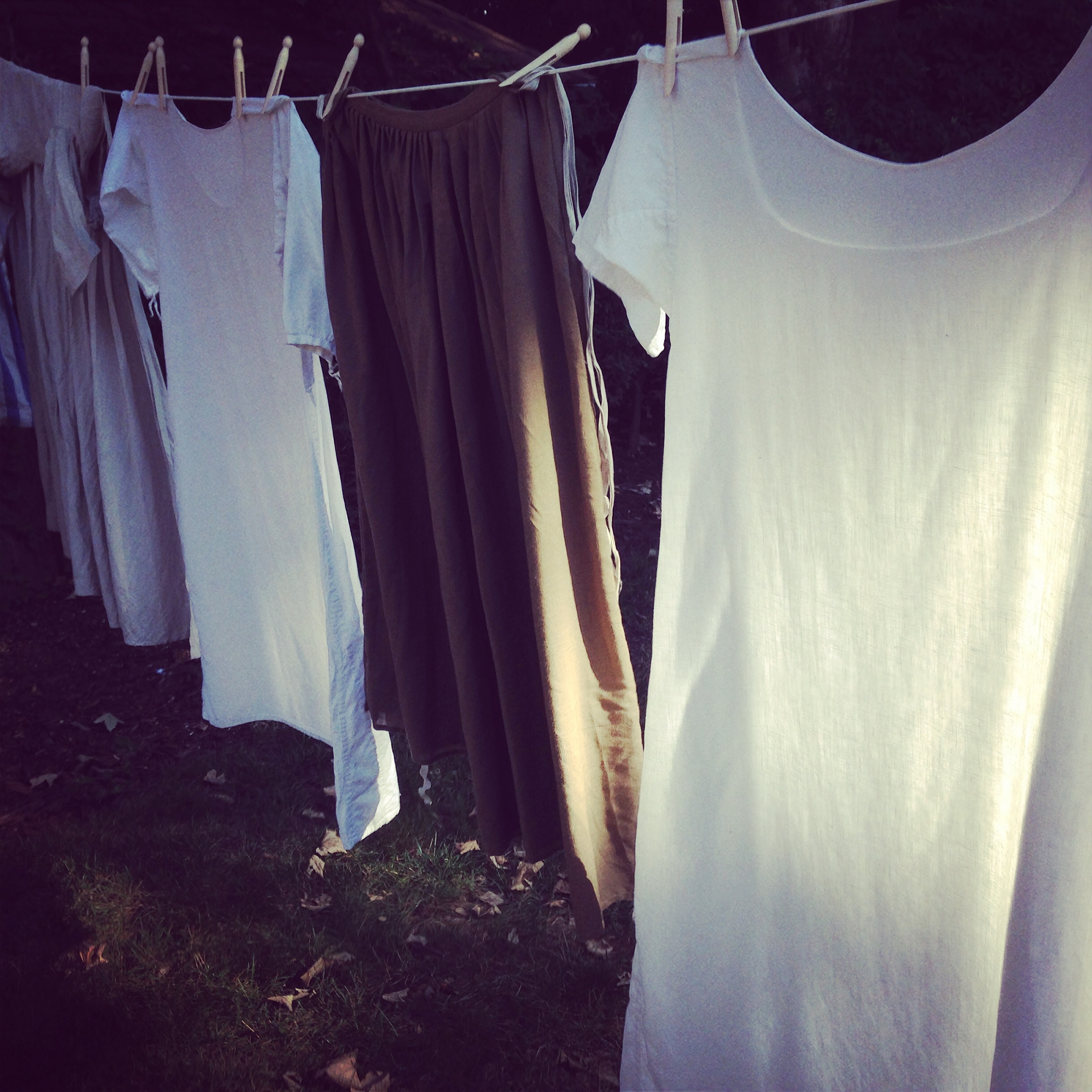
Wash your body linen. Please. Shirts, shifts, neck handkerchiefs, rollers: wash them. And your caps! They washed them, and so can you. I prefer to wash before I mend, but I hand wash my linens. We have a large kitchen sink that I can plug, so I fill it with hot water and wash my aprons, shifts, and stockings with lye soap. (I like that it does not smell like modern detergents; Drunk Tailor bought a lot of it for making white ball so we might as well use it.) Whenever possible, I hang my clothes to dry outside, preferably on a sunny day. You may also choose to spread your things out on the grass (if you have it); this helps whiten linens. We lack grass, or a clothesline, in our yard so it’s hangers in the trees or on the shower curtain rod for me. There’s no shame in that– it’s just not as picturesque. If you want to know more about laundry, Madam Johnson obliges.
Wash your stockings. Your feet will thank you. These are another handwash item; if you have wool stockings (I recommend Sally Pointer if you can get in the order window), handwashing is essential. Again, I use the kitchen sink, lukewarm water, and lye soap. Madam Johnson does not recommend using soap on worsted stockings, and she has a point: too much soap, heat, and agitation will felt your stockings. To dry, put down a towel, and reshape the stockings in the center of the towel. You may need to make sure the back seam is centered, and the feet correctly shaped. Fold in the edges of the towel and roll it. This will safely squeeze out the water. Dry flat (again, I like to put mine outdoors, but the guest bed will do in a pinch, or anyplace I can keep cat-free).
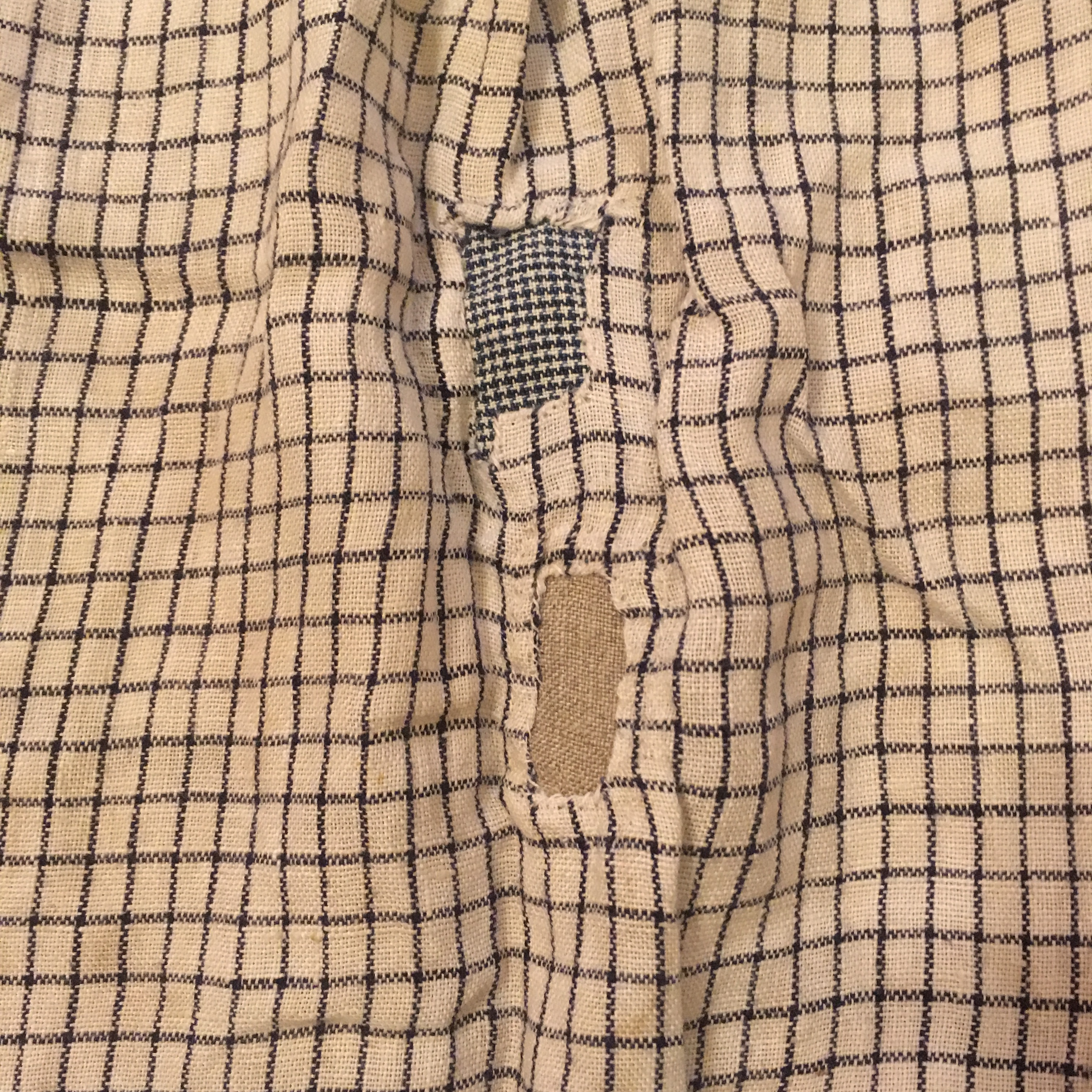
Patches that match are preferable.
Mend your linens. Underarms, collars, cuffs: they all get worn. Aprons get burned. Once you’ve gone over the garment to note the areas that need work, you can assemble your mending supplies: needle, thread, beeswax, and linen as close to the original as possible. Patch the holes neatly from the underside, making a small turned hem from the front. (This is not unlike needle-turned applique, but there are tutorials and guides. Turn or replace collars and cuffs. This is work I need to do on one of my shifts, along with restitching a neckline hem. It has taken several years to reach this point, but no matter the age of your clothes, it’s worth checking seams and hems and making repairs now.
Mend your stockings. These are often too expensive not to mend, plus, it’s period correct. There are tutorials for this, but the tools are simple: wool in weight similar to your stocking, a yarn needle, a darning egg, and patience. (Just use smaller yarn than shown here!) If you haven’t got a darning egg (and they’re pretty affordable, so…) a smooth, oval object will do (kitchen timer, small stone, a lime if you don’t poke it).
Living history laundry
Brush your outer garments. I have only laundered one of my gowns, and that was because it got very ashy and greasy. For the rest of my clothes, I brush off the dirt before I hang them up or pack them away. Greatcoats, regimentals, frock coats, breeches. Gowns, petticoats: all of them can benefit from a brushing. (This applies to your modern wool clothes, too.) There are a range of options, from brushes made in Sweden by the visually impaired to classic English options and German brushes for everything. Brush your hats, too! They get dirty, too. For all of these, if your garment is napped, brush with the nap, not against it.
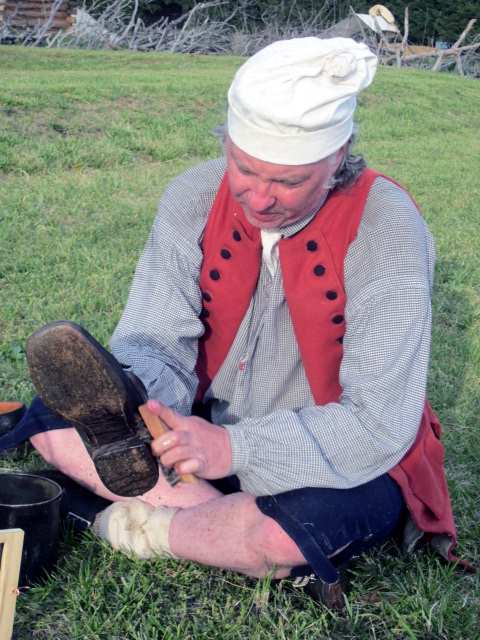
Drunk Tailor cleaning shoes
Clean, grease, and reshape your shoes. You may covet one of these shoe brush kits, or you may have some standard brushes already– they were available even at the grocery store in my long-past childhood. Redecker brushes– and there is a brush for everything shoe-related on these seven pages— take a little finding but last. First, brush off the mud and dirt. Then, wipe the shoes down with a damp washcloth or towel. Let them air dry. Never put your leather shoes directly on a heat source! Then treat the leather. (Tutorial here.) You may want to use black ball, or a colorless polish, depending on your shoes. Drunk Tailor has made it, though not blogged about it, but you can start here if you really want to dive into this. When I’m done, I put shoe trees in my shoes, or stuff them with acid-free tissue paper so they keep their shape.
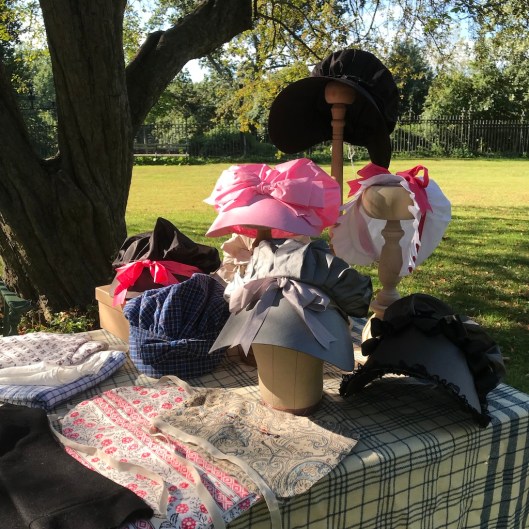
The strawberries and cream hat, with pinballs and pincushions
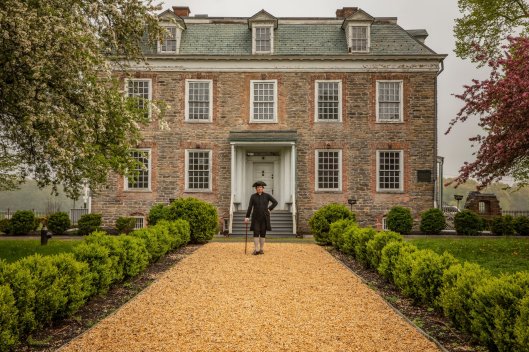
Last Saturday, I enjoyed a beautiful late summer afternoon on the lawn at Van Cortlandt House Museum in the Bronx. Built in 1748 for Frederick Van Cortlandt and his family, the house served as Washington’s headquarters in 1776, and again in 1783.
was The Van Cortlandt House, dating from 1748, is the oldest building in the Bronx.CreditTony Cenicola/The New York Times
It’s an idyllic site, and waking up to the sound of cricket bats and Canada geese, a visitor could be fooled into thinking you were not in the Bronx at all. Mist rose above the cricket pitch when I woke up, a large flock of geese picking at the grass. It was Netherland come to life, men beating bats on their cleats and laughing. I’m really grateful to Mrs M. for the place to sleep and chance for adventure.
This trip was a remarkable cultural experience for me, and one I really needed. Growing up on the north side of Chicago, I was used to urban density and scale, so after two years in Northern Virginia suburbs, a dose of urban life was welcome. It was all the more welcome because instead of spending my time judged by cats, I got to play with dogs (and earned a sore bicep for all the stick and giraffe throwing I did for one). The trip to Stew Leonard’s was remarkable, after the tame mercantile experiences of tiny Rhode Island, and even Wegman’s paled in comparison. It was a good set up for thinking about mercantile enterprises, impulse purchases, and the ways merchants (including milliners) and shop owners needed to keep customers coming back, tempting them with new goods. (Or, in the case of Stew Leonard’s, singing cows and/or milk cartons.)
More bonnets, most of which are available on Etsy
I managed, somehow, to finish a red silk satin quilted petticoat in time (lined with red “stuff” from Burley and Trowbridge, it was not too bed-covering like until the late afternoon) to dress up the Nancy Dawson dress. I didn’t manage to locate my sleeve ruffles in time ( stitched on a garment ) but in other regards, I was pleased with how this turned out.
Bathroom selfie, but you can see that sweet silk petticoat
Dressing my clothes up– that is, moving them up the social ladder– can be a challenge, but good accessories make a big difference. Eventually I will get a finer apron made, one with a ruffle, but for now, that has to wait.
With Lark, perhaps the sweetest little rescue pup I’ve ever met.
I have a trip to Philadelphia to make, bottles to label, and receipts to write. Elizabeth Weed returns to Carpenters Hall this weekend as part of the Occupied Philadelphia programming.






 Kirsten Hammerstrom
You must be logged in to post a comment.