To Wash or Not to Wash

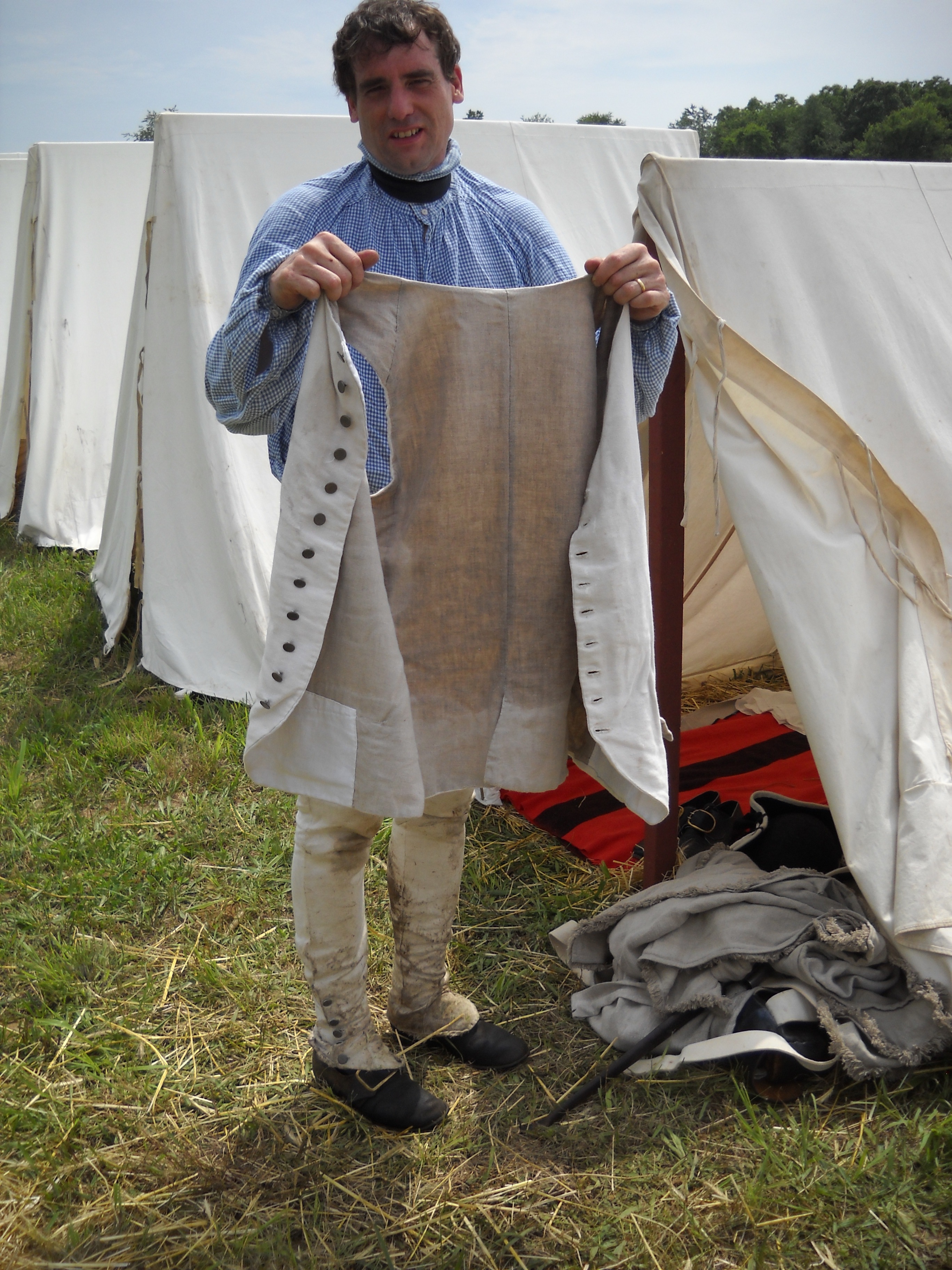
Mr S and his waistcoat at Monmouth

Sometimes I can almost hear, “Good God woman, what are you thinking?!” but so far I have only seen it in a man’s eyes. This is usually in regard to laundry.

I erred once in asking if one wanted his hunting shirt laundered, and I had planned only on cold water and hand washing, as the item seemed a bit crunchy and crumpled to my eye and hand. But, no, some other woman had washed that shirt some time ago, and it had taken considerable time—years—to reestablish fringe from fluff.

Well patinated now, formerly embarrassingly white.

Now, I give you Mr S’s waistcoat and overalls. Mr S’s waistcoat was completed on the New Jersey Turnpike in November 2011 while headed to Fort Lee. Since then, it has a acquired a smattering of powder specks, a patina of grunge, a stain or two of greasy beaver (curry, actually) and, most recently, spots of toothpaste. This is where I draw the line: the toothpaste spots must go, as they are inauthentic.

Shirts, shifts, stockings, aprons, and waistcoat

One doesn’t want one’s clothes too clean for reenactments or living history events: you’re “living” in the pre-detergent era, but that doesn’t mean you should never wash your clothes. We know that the armies employed women to wash clothing, and we know that linens–shirts, shifts, and drawers–were washed more frequently than outerwear like breeches, waistcoats, and gowns. It’s not so different from today, when we don’t clean business suits as often as we launder shirts or underwear. Still, we do clean our clothes, and there comes a point when those overalls will get washed. Right about when you figure you need gloves to handle them…
5 Days till Monmouth

This is not Cassandra's idea of a nice frock.
This is not Cassandra’s idea of a nice frock.

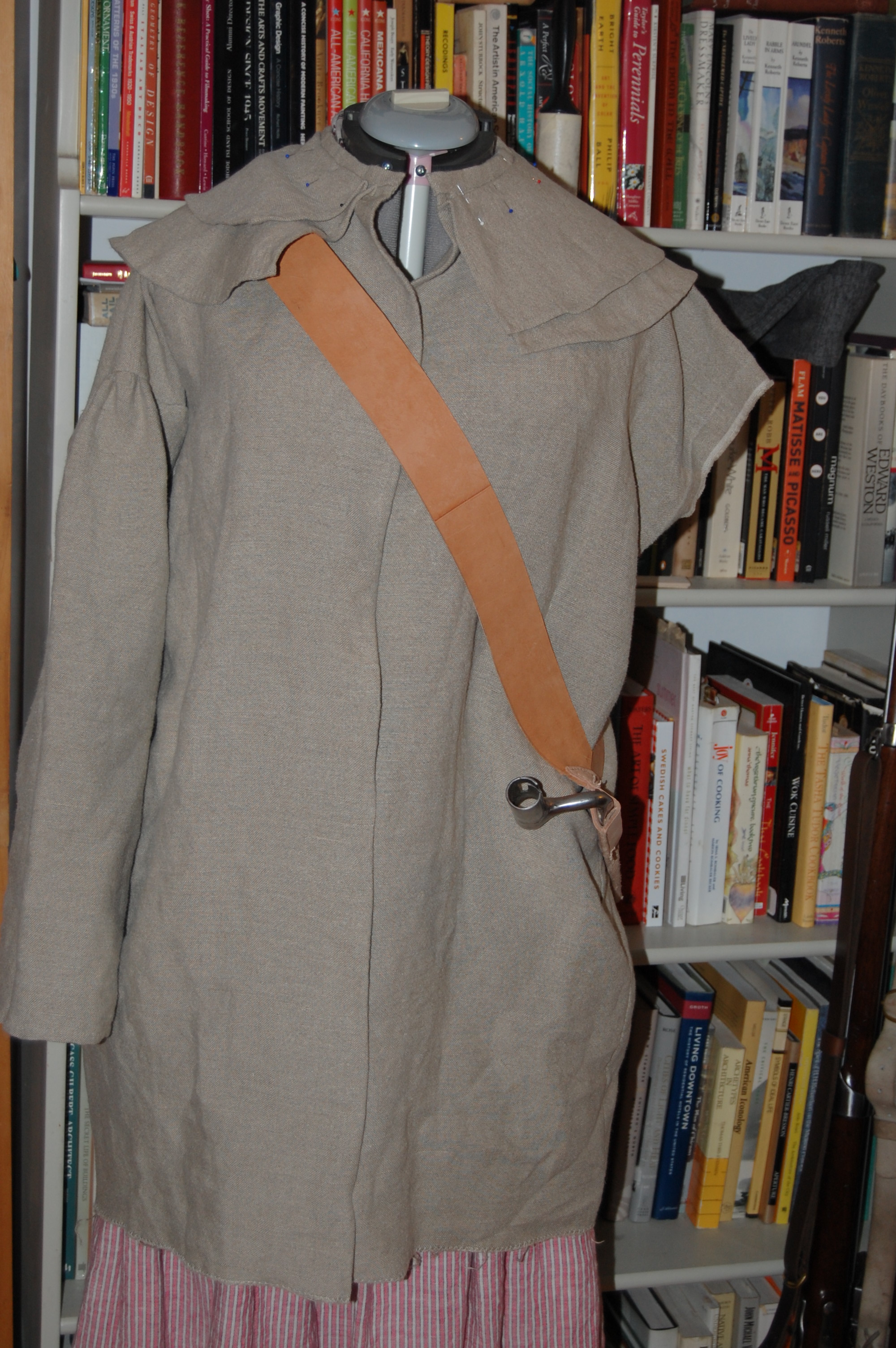
Cassandra doesn’t like wearing uniforms and bayonets. She wants to wear a dress. She will have to be patient. (Actually, she is wearing a chintz jacket in need of a hem, and if I revolt against buttonholes, I might finish that tonight. More fringe must be made this evening for the hunting frock.)

I switched to Mr S’s overalls for awhile, and we’ve done the first fitting, which gets us to buttonholes and then re-basting the inseam and outseam. In the process, I discovered that he does, in fact, have a twisty leg. I do not think it is statistically probable that the two pairs of overalls I have cut for him and the pair cut by Mr Cooke would all include the same slightly on the bias leg. So I reversed my plans to get those done, and will stick with getting them to fitting number two. They will need a master’s hand and eye for fitting.

Sunday: One last strip o' fringe required.
Sunday: One last strip o’ fringe required.

But I think I have a plan for food for Monmouth, have confessed to Mr S that, based on the Monmouth sutler list, we must leave room in the car for possible additions to the Strategic Fabric Reserve, and have convinced the child to try learning a new song on the drum. I also started a new pocket, but I’m not sure if my hands can take the backstitching. Slipstitching and whipstitching aren’t too painful, but backstitching proved quite painful last night. It’s totally annoying, because it’s pointless to post a photo until it’s done and right-side out!

You can see the binding, but not the stripes. Silly!

But this will be a panicky, intense week of samplers, reference, grant applications, and event prep. I suppose that’s not too different from many other weeks…though the last time I had this combination, we were only going to Sturbridge. I took comfort in the idea of how close we were to home, the way the cat knows how long it takes to dash to the basement when the doorbell rings. From Monmouth, it’s a long way back to my own basement.

What’s behind that green suit?

The American School, by Matthew Pratt, 1765. MMA 97.29.3

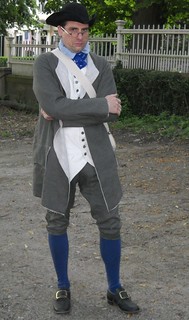
Mr S. has a green linen suit in the making; that is, he has breeches which mostly fit, and a frock coat in need of serious alteration. Since I will need to alter this coat eventually (that is, take it apart, re-cut and re-assemble it) I have started looking for images of green suits.

Portrait of a Boy, probably of the Crossfield family. William Williams, MMA 65.34
Portrait of a Boy, probably of the Crossfield family. William Williams, 1770-75, MMA 65.34

The green linen the suit was made from is no longer available, so there will be no matching waistcoat. If I can get the thing tweaked to an approximation of ca. 1763, we should be set for the August event (if that happens) and for Battle Road next year, though I know he might want wool. The taunts of “bet you wish you had the rest of that coat” from this year linger in my mind, at least.

The jacket is, admittedly, too short. I begin to wonder if I need to cut it down even more, like a workman’s short coat; the Massachusetts line “Bounty Coats” are cut shorter, and similar to a coat at the Connecticut Historical Society (1981.110.0, search by number here, the links are not stable).

Mr S last June, in the unfinished 36-hour-frock coat

The problem with that plan, at least for 1763, is that the cuffs are clearly larger and coats longer, in 1763, than they are in 1775, at least for gentleman. I realize that this means I am better off starting over completely for the 1763 coat from a muslin up (which against all instinct and principles, I did not do for the 36-hour-frock coat). So I’m waffling here, as Mr S doesn’t always want to portray the day laborer/tenant farmer, but would like some pretensions to artisan and property owner. That means more fabric, and that means starting over completely is in order–breeches, waistcoat, frock coat and all. But wait, there’s more!

The events in the queue before the August 10th event for 1763 include Monmouth on June 15-16 (for which overalls and hunting frock are in production), Washington’s Arrival in Cambridge on July 14, which requires militia clothing, and Old Sturbridge Village the first weekend in August, for which a regimental coat is requested. Somewhere along the line, I’d like to make myself something…but it looks more and more like a summer of menswear. Perhaps cutting down that green coat and altering the breeches for July 14 is the most sensible plan…though where that will leave 1763, or the regimental coat, I do not know.

Frivolity

chintz jacket
Detail, back neck and neckhandkerchief

Well, not all that frivolous, but pretty frivolous for someone who has been doubled down on a uniform production and class prep.

The remnant of chintz has turned into a nearly finished jacket, which is good. All that remains to do is the hem, and once the lining has been trimmed that shouldn’t be too hard. The pattern is an adaptation of the JP Ryan jacket pattern, with sleeve and length adjustments. It’s plain enough to pass, and with a striped “lincey” petticoat, will answer for New York-New Jersey servant wear. I have my eye on Monmouth.

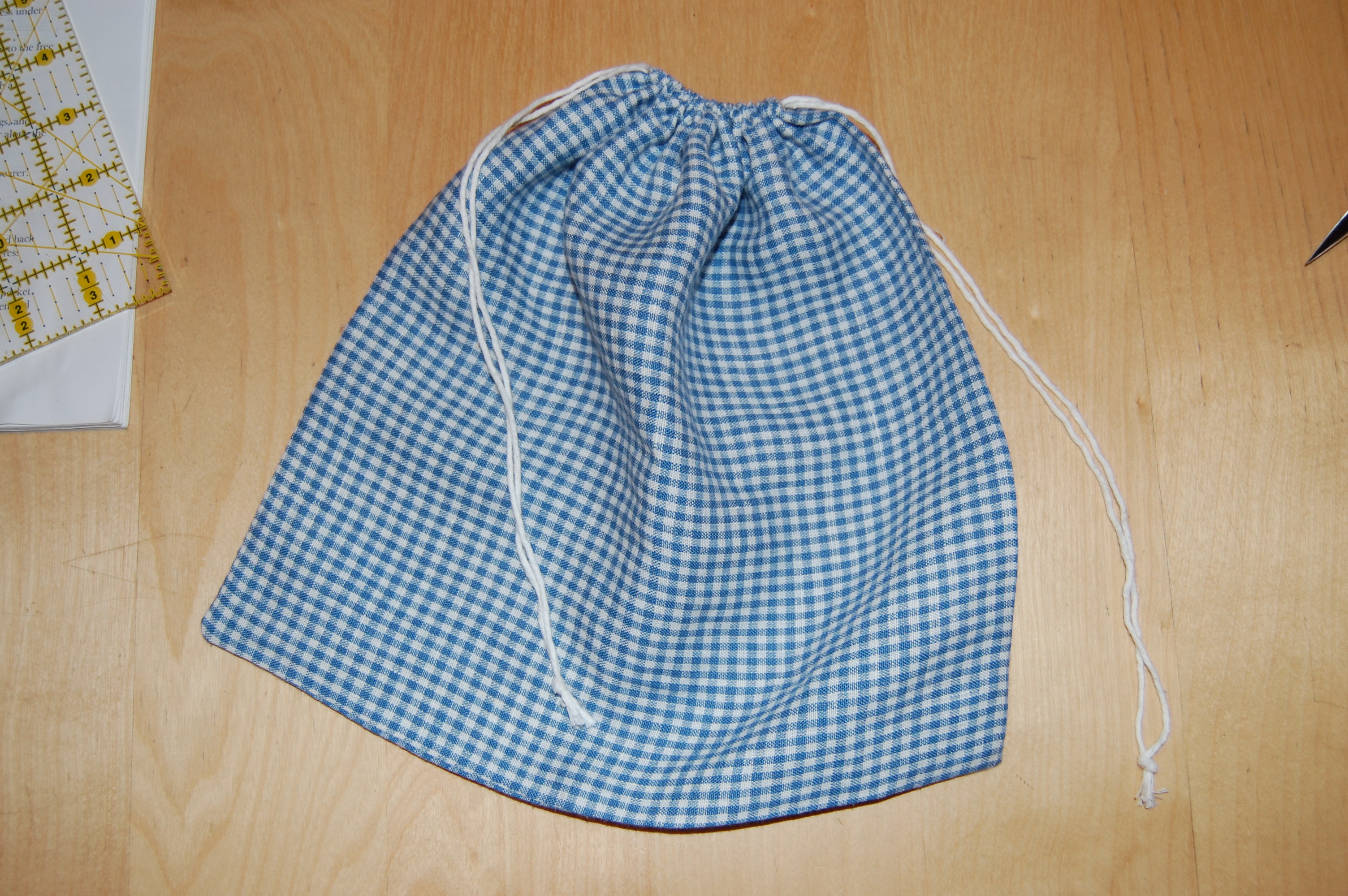
checked linen bagAlso for Monmouth, the first of two checked linen bags. Small enough for toothbrush, comb, and other toiletries necessary in this century but out of place in 1778, these bags should help make camp packing lighter weight and more authentic. Hope so anyway, or what’s that backstitching and overcasting for, fun?

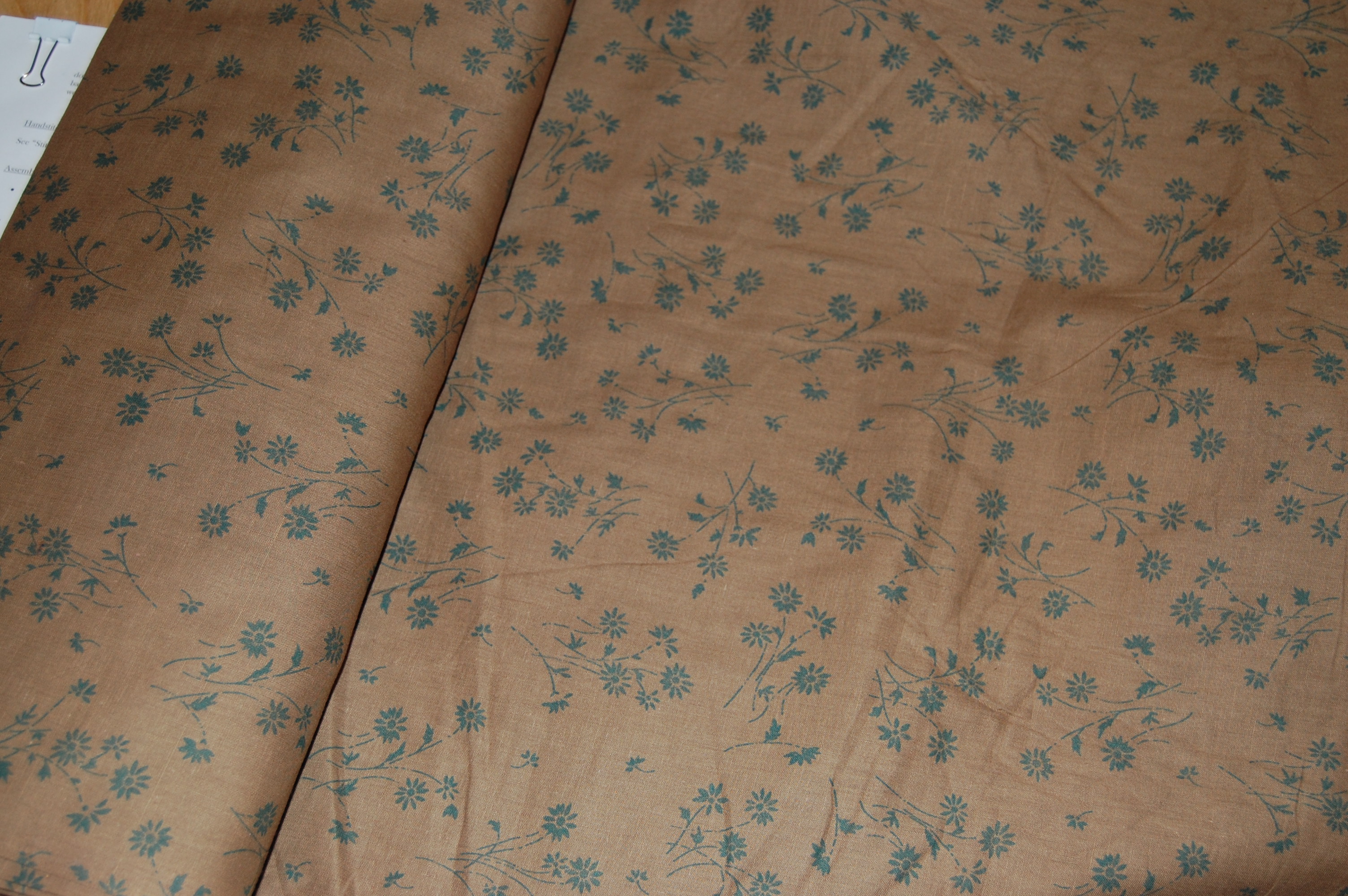
JoAnn Cotton fabric.
I watched it for six months.

And, finally, on a whimsical trip to Jo-Ann for plastic drawers, the remnant table was half off. The fabric I’ve been watching since it was $7/yard was $1.50 a yard. I got all 8 yards for $12. I see a dress of some kind in this fabric, though it will require caution to wear. 100% cotton, this will burn. Which century or decade? Not sure yet. But I like it, and that’s enough to start with, when you’re feeling frivolous. (And yes, I did read that article in the Times about hoarding, but this is Strategic Fabric Reserve purchasing, not hoarding.)