On & Off the Grid

It’s been a very busy time chez Calash, with many changes underway and to come. It’s hard to keep up with all the writing I’m doing everywhere, but eventually I’ll be back on topics of authenticity, standards, and whimsical Wednesdays.

This week, though, is all about checks. (Most weeks are, in some way, aren’t they?) Not paychecks, silly: linen checks.

We are headed out to Eastfield Village Friday afternoon where Mr Hiwell and the Young Mr will join in the 1833 militia muster, and Mr JS and I will occupy a house as a shop/tailoring business/punch-making and cooking establishment of one kind or another.

Mr Hiwell has been warned to expect a diet unlike his norm, and since his roundabout is white, we will quickly know if he is smuggling Oreos and barbeque sauce.
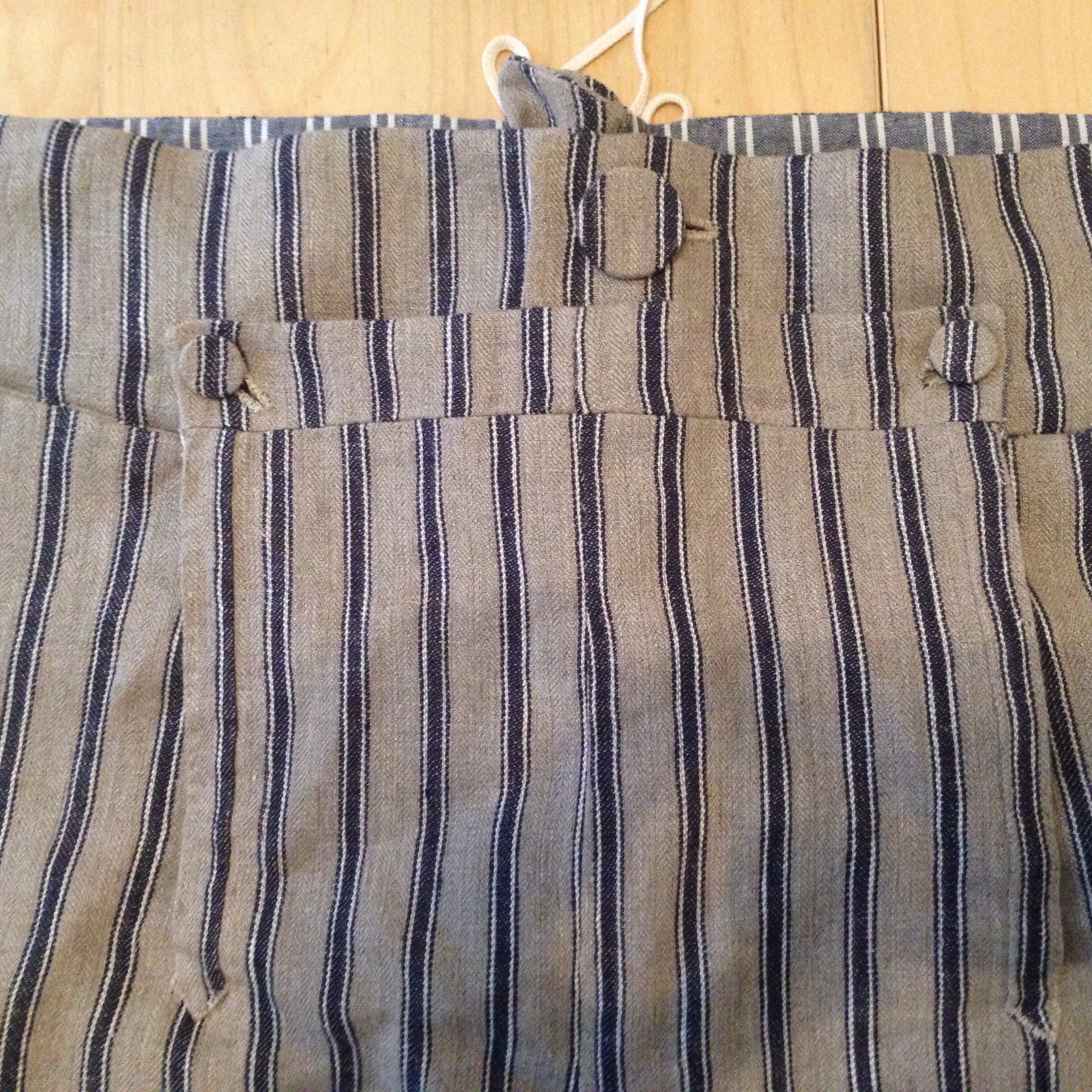
 For the Young Mr, I have been making trousers. Yes, I do like things to line up. I wasn’t even paying that much attention when I cut these, but apparently that was  was enough.

Yes, even the buttons.


Sigh. It’s a thing.

He’s also got a roundabout in the works, which I must focus on more closely to finish. This is patterned from an original in Henry Cooke’s collection, but… Mr. Cooke and I, on a very sticky Tuesday afternoon, did not have the Young Mr at hand to measure again. The original was too small: that we knew. What we did not know was that the boy had taken on a man’s shape– or, as a friend says, “he’s dude-shaped now!”–and the additions we made were not enough, except (barely) to the sleeves.


Oh, well. There was just enough to make it all work, and after some trials I realized it needed a lining. What kind of lining? A checked lining, of course!
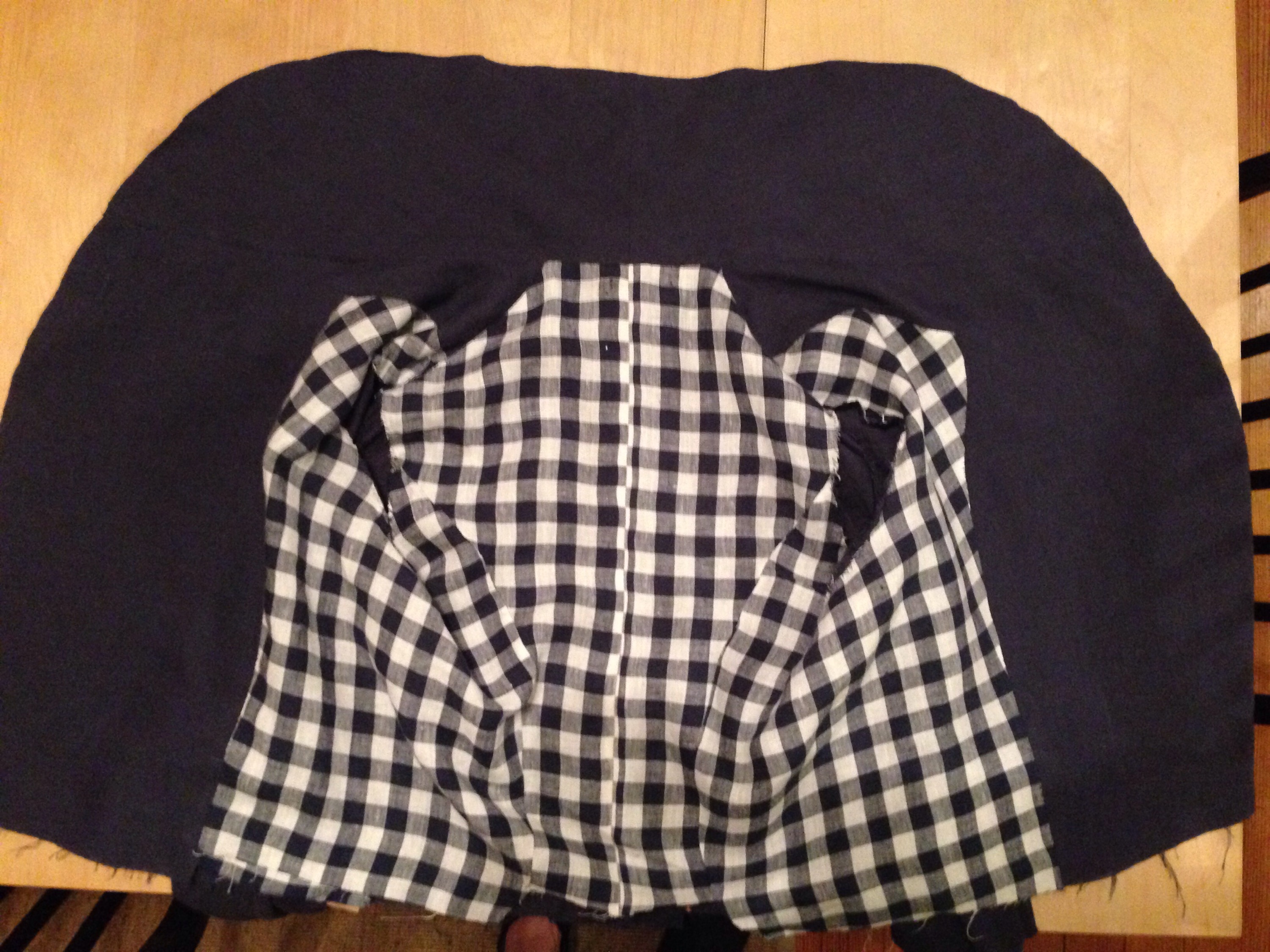
It seems okay, but these collars are strange to  me.


Well, at least he will be clad.

Let you think  I’m sewing only for the lad, I am in fact working on a gown for myself. There’s a hopeful yard or so of another check’d  linen from the stickiest fabric store on 39th Street lurking, but I do not think that apron will happen this week. Perhaps John Brown’s housekeeper will finish it someday.

At least there are already gowns and aprons ready-made that can travel with me. Someday soon I’d like to finish my new stays… winter will come soon enough, and more sewing then.

The Myth of Perfection

Ain’t nothin’ perfect.

Jackie’s got good points, and although I think they are slightly tangential to where I thought I was going on Monday, let’s pick them up.

Completely 1819 to represent 1819? My standard reply to pretty much every question is: It depends. Who are you, where are you, what are you doing? Middle class or higher bride? You are so 1819 it’s scary, from your skin out, head to toe. Lower class? You’ve altered your best dress, if not made a new one, and refreshed your accessories.

Look, folks: part of our problem is that we forget that the people in the past had the same covetous, jealous hearts that we have. They had wants and yearnings, for each other, for new bonnets, for velocipedes and overcoats. They were just as interested in impressing each other as we are, even if they sublimated desire into poetic images of greater obscurity than James Brown ever used.

I thought about this notion of mixed up times for clothing as I stood on a landing at work yesterday. Skin out, here’s what I wore on 1 September 2015:

  • Black Natori sports bra, purchased in Boston on January 10, 2014 (I saw my surgeon so I remember.)
  • White cotton tank top, label gone, acquired ca. 2013, possibly from Target
  • Blue and white striped cotton 3/4 sleeve J. Crew blouse, 2006
  • Black Nike undershorts, 2010
  • Lucky brand jeans, August, 2015
  • Red suede belt with brass buckle, ca. 2004
  • Red suede Naya oxfords, late winter, 2014

The oldest thing was the belt, followed by the blouse. The most stylistically determinate item is probably the jeans, since waistline height and cut of the legs fix trouser/jeans style. So, what could this mean for us, when we dress for the past?

Let’s start with dressing for the American Revolutionary War period, 1775-1783. What you wear depends of course on who and where you are; here I am in New England, wishing I was middling sorts.

Detail, Mrs Richard Skinner, oil on canvas by John Singleton Copley, 1772. MFA Boston, 06.2428
Detail, Mrs Richard Skinner, oil on canvas by John Singleton Copley, 1772. MFA Boston, 06.242

If I wear an open-front stomacher gown in 1775, will I still feel comfortable in that in 1783, when the ladies of means around me have switched to closed-front gowns? Or will I feel like I’m wearing bell bottoms and a macrame vest to high school, while the cool girls are wearing pegged Guess jeans and Fair Isle sweaters? (Not what happened to me, but you follow my point). Think how much American fashion changed between 1975 and 1983, and while you will surely see pieces carried over– watches, headbands, socks, Tretorn sneakers– they will be primarily small pieces, accessories, and not main garments.

Lady Williams and Child, oil on canvas by Ralph Earl, 1783. Metropolitan Museum of Art, 06.179
Lady Williams and Child, oil on canvas by Ralph Earl, 1783. Metropolitan Museum of Art, 06.17

That’s really want I think we want to get at: Yes, people mixed up clothes, wore favorite things, wore things out. But then as now, they wanted to be stylish. The more care you put into imagining yourself in the past, really being that person, the more convincing you’ll be. You won’t be perfect, and authenticity is as unachievable as objective truth, but you will be closer to real, and yes, even the public will know.

The Real Thing

Talking with a friend about authenticity and realness, I remembered the moment when I really understood the power of the real thing

Meret Oppenheim Object Paris, 1936 Museum of Modern Art, NY. 130.1946.a-c
Meret Oppenheim
Object
Paris, 1936
Museum of Modern Art, NY. 130.1946.a-c

Longer ago than I care to admit, I went to MoMA with my dad, and saw, up as close as you could get to a glass case, Meret Oppenheim’s fur lined tea cup, Object, or Luncheon in Fur

I’d seen slides, and illustrations in books, but only when I saw the object did I really understand what it was about. Unfortunately, even having seen Duchamp’s “Bride Stripped Bare” in person, I still don’t get that piece. Such is life.

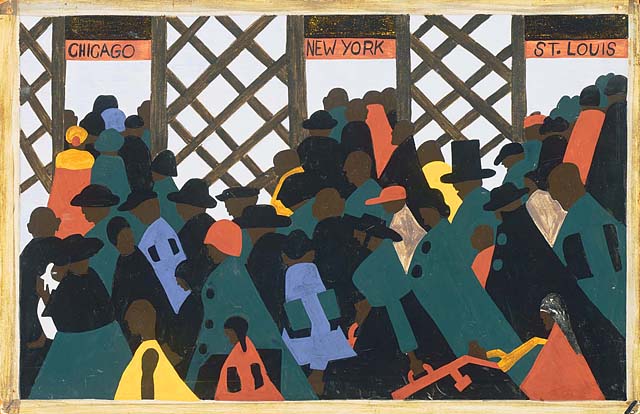
So what is it about the fur-lined tea cup in person that makes it so different? What is it about Jacob Lawrence’s Migration series that makes it different? Or Pollock, for that matter? Why is the real thing so ineluctable?

 JACOB LAWRENCE (1917–2000) The Migration of the Negro, Panel no. 1, 1940-1941. The Phillips Collection, Acquired 1942 © The Estate of Gwendolyn Knight Lawrence / Artists Rights Society (ARS), New York.

JACOB LAWRENCE (1917–2000)
The Migration of the Negro, Panel no. 1, 1940-1941. The Phillips Collection, Acquired 1942 © The Estate of Gwendolyn Knight Lawrence / Artists Rights Society (ARS), New York.

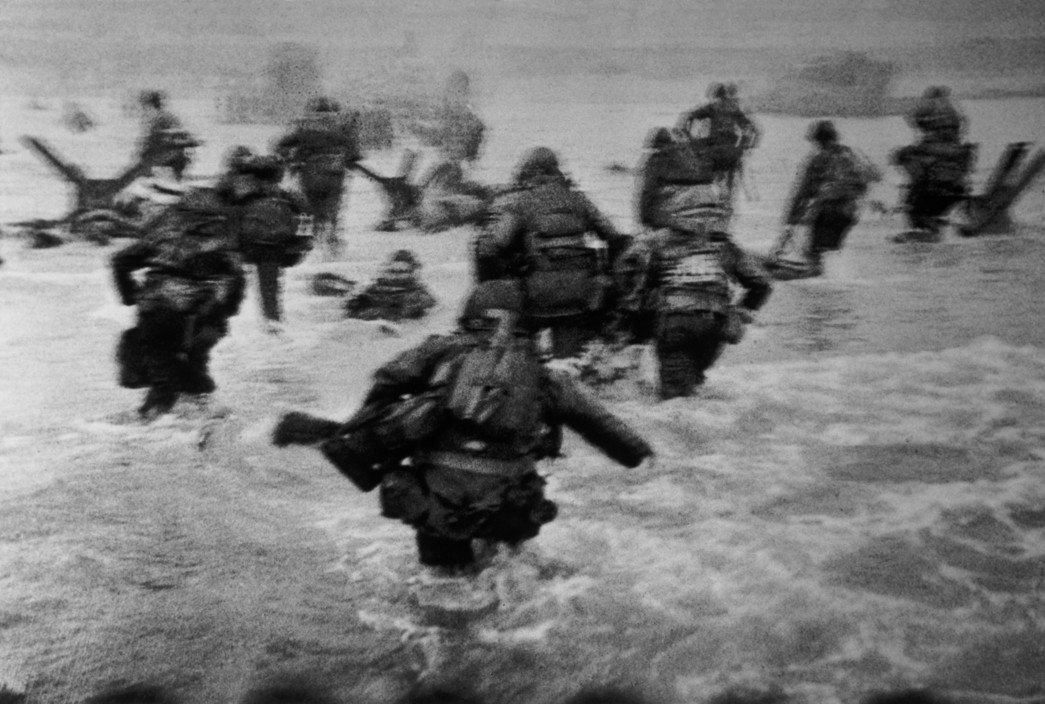
I don’t know, really; what I do know is that it matters. I’ve held a transparency of The Migration of the Negro, Panel no. 1, in my hand before, and it’s not as good as seeing the marks Lawrence put down in gouache. I’ve held a Robert Capa print in my hand, marked on the back with publication notes from the 1940s and it still gives me goosebumps to think of it, to think of him in the water off Normandy on D-Day. Existential ambiguity of the wrecked emulsion be damned: those images, held in your hand, are more moving than you can imagine from seeing them published in Life or any monograph.

FRANCE. Normandy. June 6th, 1944. US troops assault Omaha Beach during the D-Day landings.
FRANCE. Normandy. June 6th, 1944. US troops assault Omaha Beach during the D-Day landings.BOB194404CW00003/ICP586(PAR121451)© Robert Capa © International Center of Photography/Magnum Photos

I’ve had people say to me recently that “it doesn’t matter,” that no body will know if they’re wearing 1774-1783 clothes at a 1790 event, and I disagree strongly and thoroughly. It does matter. The mattering is the whole reason museums exist. It’s why we go to see our favorite music performed instead of sitting home with Victrola or iPod listening to the crackle of Bessie Smith² or album-produced Billy Bragg. Listening at home puts us at a remove, polishes the roughness and steps back from immediacy.

To say that the image in the book or the not-really-right clothes are the same at the real thing does a disservice to ourselves and to the public. Are we really suggesting that audiences for art or history are that stupid? Or that we are so unmoved ourselves that it just doesn’t matter?

I’m too old for nihilism. Bring on the real. Let’s get it right, because it does matter. I know when it’s real, and so do you.


______________

¹Sadly, this goes through my head with the phrase “the real thing.” Curse you, Douglas Coupland, for capturing my generation’s fixation on pop references.
²Yes, I know she’s dead, go with me here.

Punch-Drunk Love

No, Love: I didn’t get drunk and punch someone.

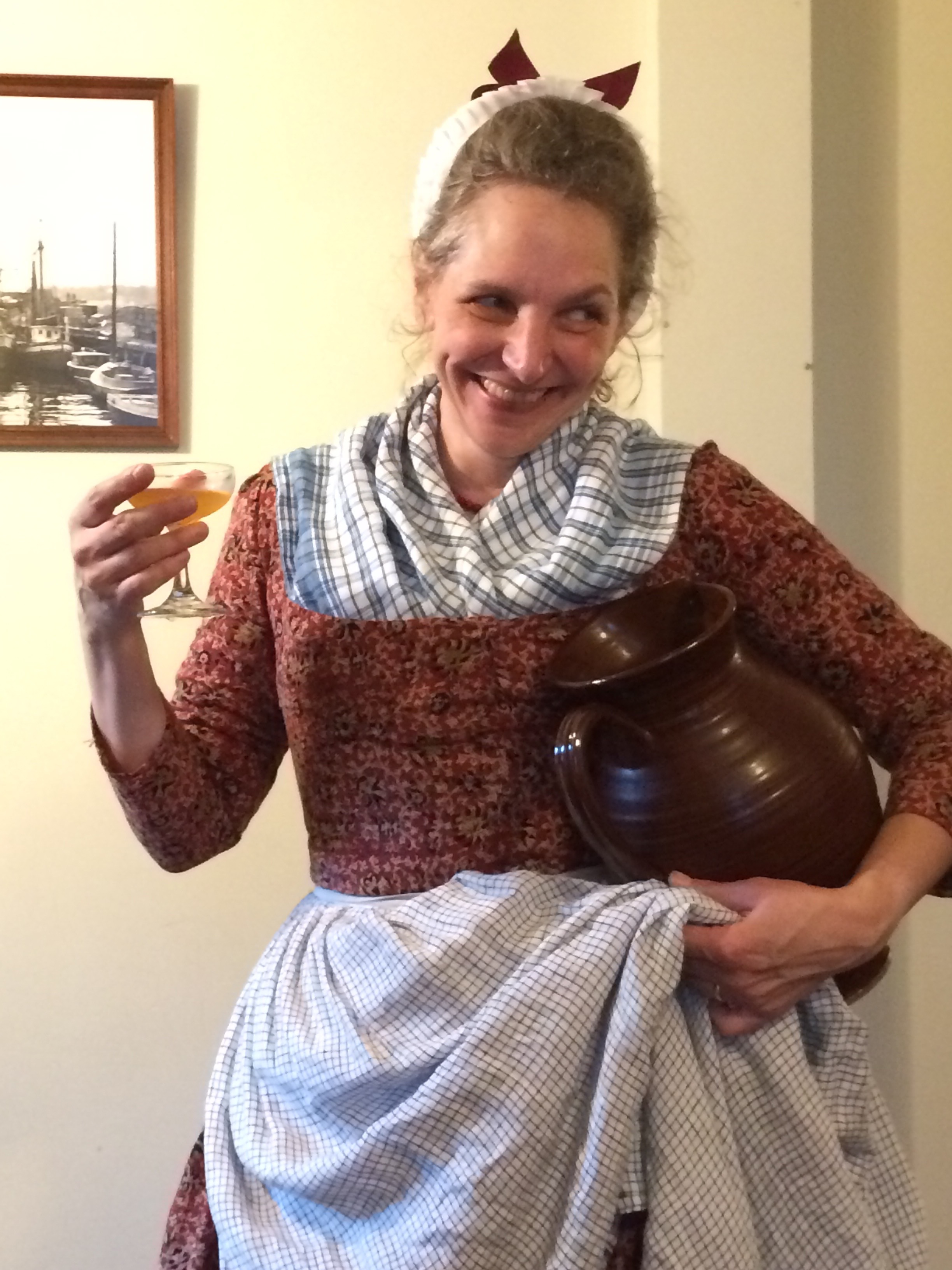
Worst. Housekeeper. Ever.

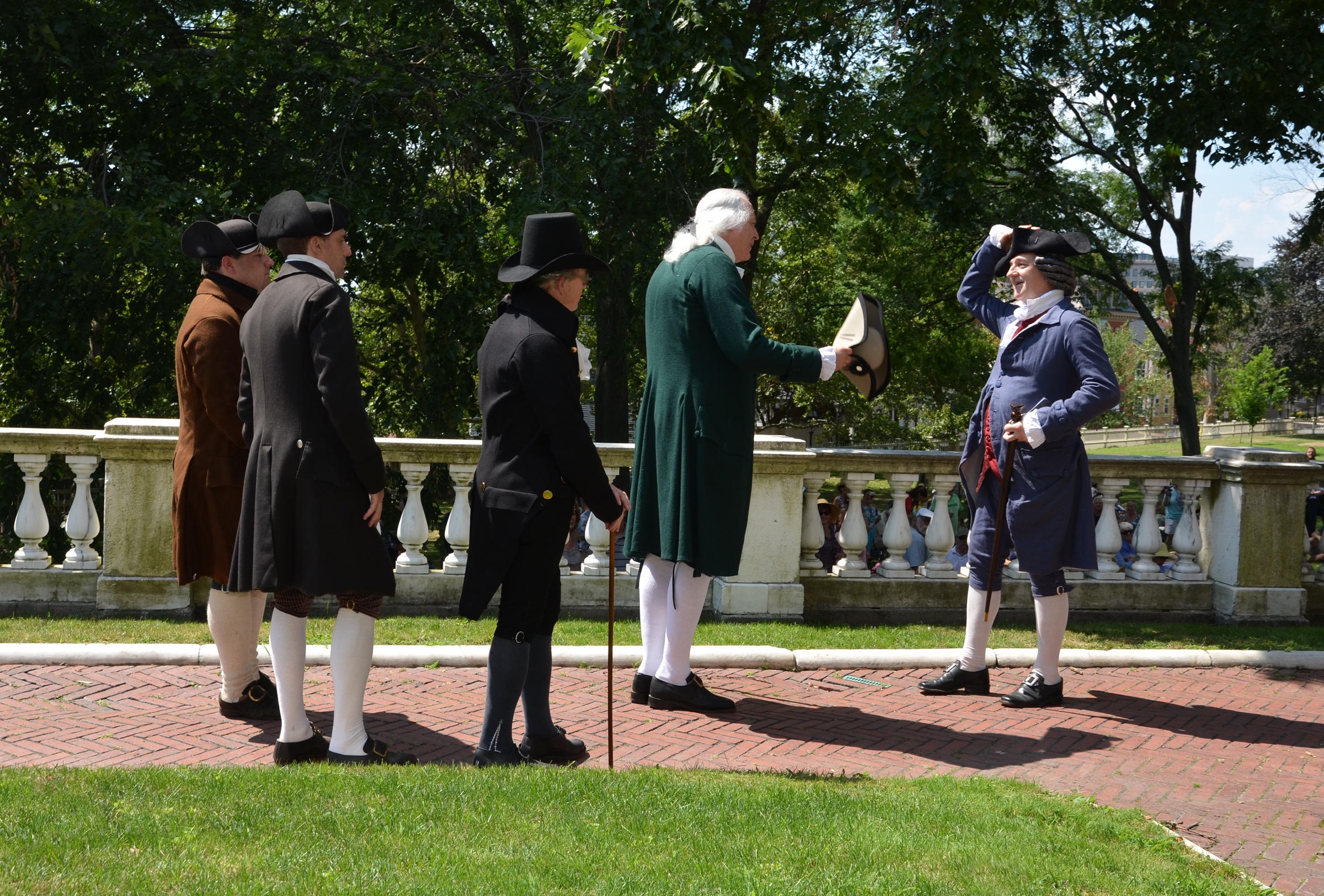
On Saturday, we commemorated the 225th anniversary of President Washington’s visit to Providence after Rhode Island finally ratified the United States Constitution on May 29th, 1790. We like to take our time with these things, to be sure that we will have all the rights we’re accustomed to. Happily, we did decide to go along with this United States of America business, and as a reward, His Excellency President Washington made a formal visit in August, 1790. It rained then; this time, we had sultry summer weather.

Once again, the housekeeper spent the day running back and forth and up and down the stairs. Fortunately, I didn’t trip on the gown too much: it’s longer than I usually wear, but I did catch the hem on my shoe buckle, so some tweaking will be required.

Mr Brown greets the President

There was the kind of ceremony and formality you would expect, with very little drama, which made for a simpler day than we often have. The afternoon was warm, the speeches were short, and the toasts were drunk.

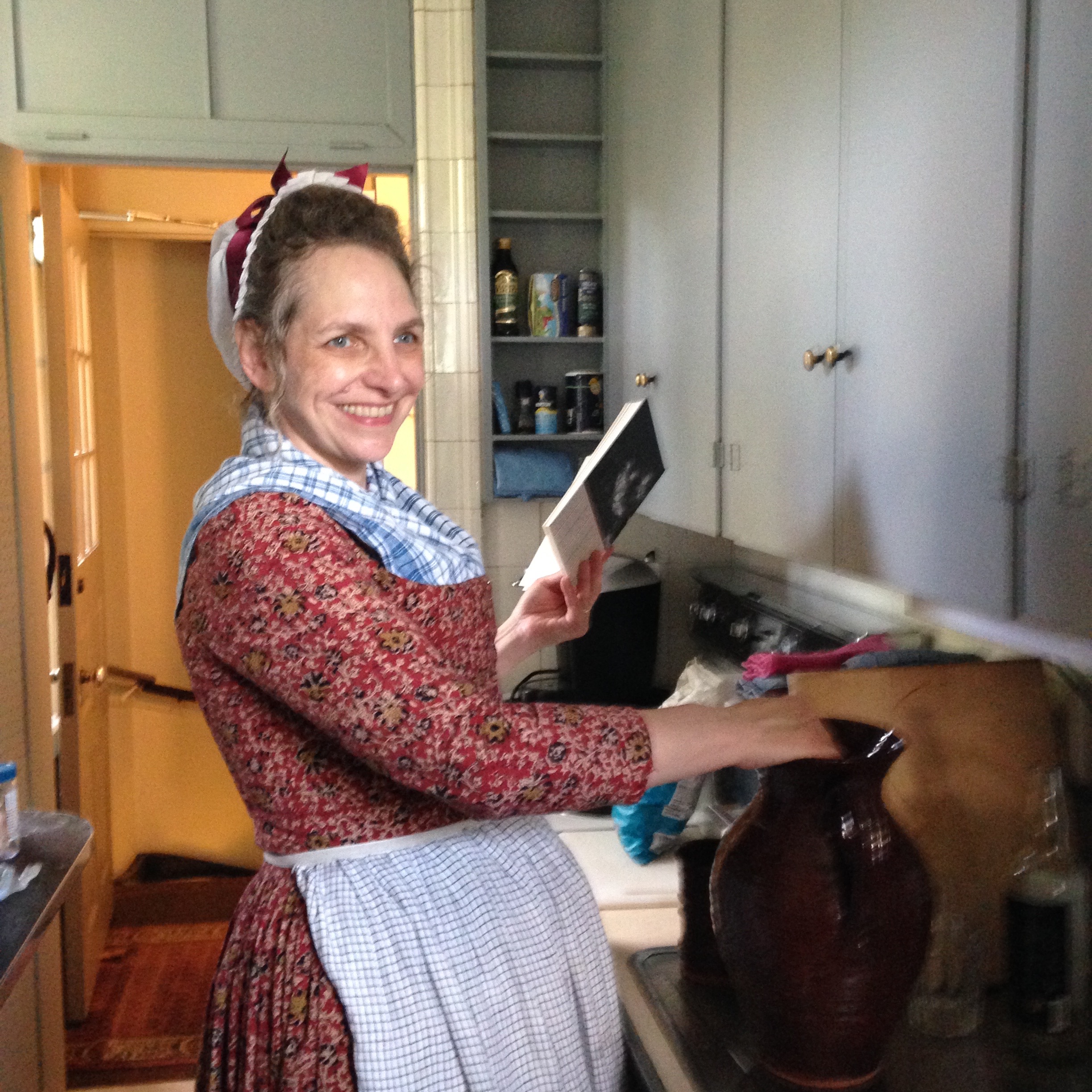
Of course, you have to look out for John Brown’s housekeeper, who is all too happy to spend her afternoon reading and making punch. Unlike a real 18th century person, I had no idea where to start with punch beyond the basic: rum. I turned to my friends for assistance, and got some solid advice, including a reference to Punch: The Delights and Dangers of the Flowing Bowl.Chapter VIII helpfully turns to “How to Make Punch, or the Four Pillars of Punch.”

Mmm, punch.
Mmm, punch.

I don’t always manage to read all the way through the directions I am meant to be following, but the oleo-saccharum was relatively straightforward, since the instructions were entirely on one page. Lemon peels, sugar, mashing. These are simple things that you can handle even in a week when the workplace van has been stolen and recovered, and you’ve had conversations in which someone asks you to find a photograph for them, even though they don’t know where they saw it.

No, I won't say how many cups I've had.
No, I won’t say how many cups I’ve had.

That went well enough, but I got distracted along the way by the excitement in the house, and added the correct ingredients in the wrong order. I don’t think it mattered. Water, black tea, lemon juice, and a bottle of Smith & Cross rum all went in to the redware pitcher and wafted up the back stairs, giving the servants’ quarters a festive ambience.

While the partakers did not know, the bowl from which they ladled punch had once been used in cleaning the Mr Brown’s house– but that only meant it was quite clean, and thus suitable for use. The bowl was nearly emptied and replenished once, by which time Mr Brown’s housekeeper had sampled quite enough of the concoction.