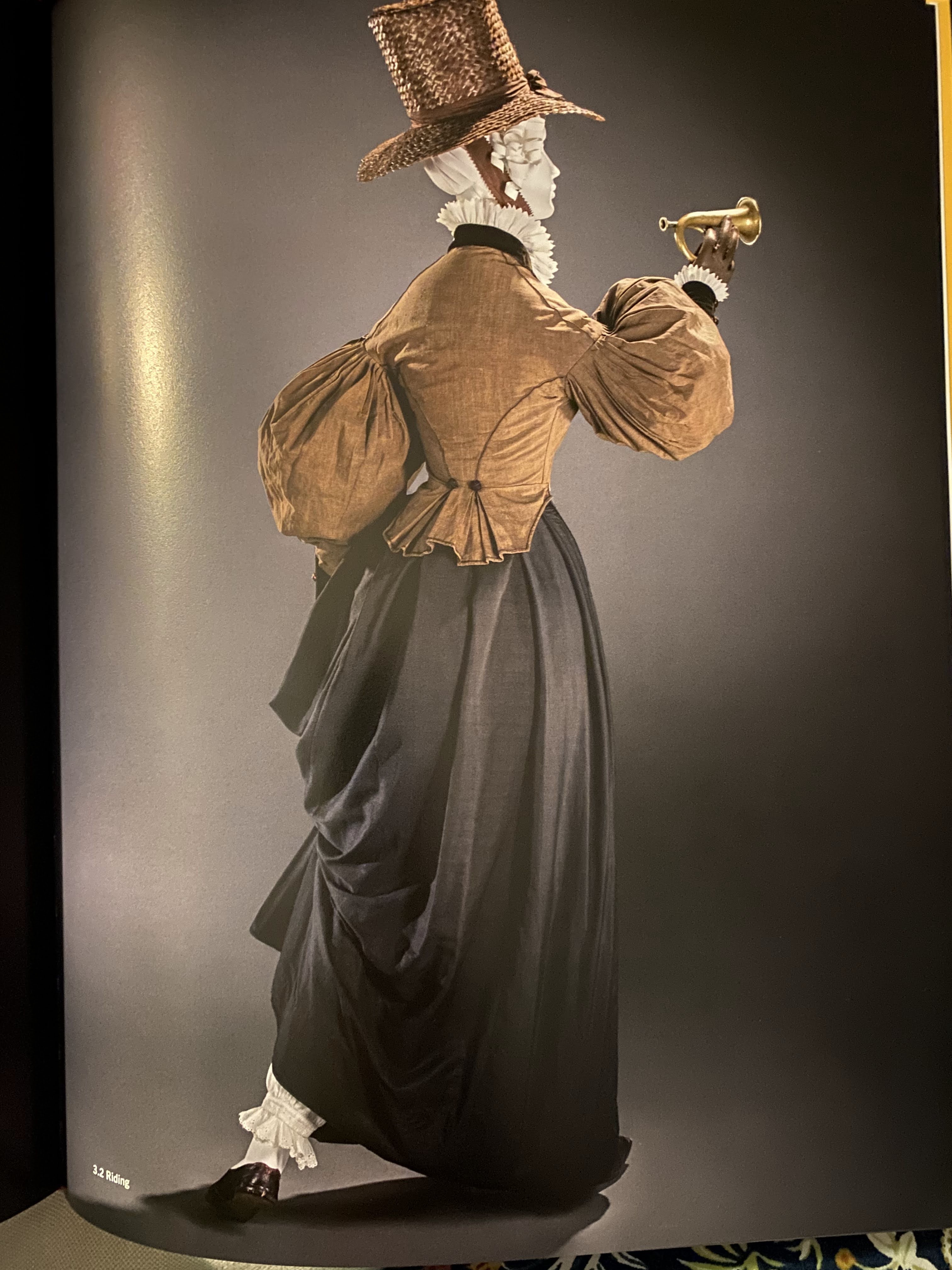
1830s Riding Jacket

There’s a wonderful exhibit winding up a tour, and although I have not been able (yet?) to see it, the catalog was a Christmas present in 2022. One ensemble in particular captivated me: an 1830s unbleached linen riding jacket worn in Boston, MA. The enormous sleeves and oversized hat probably contributed to my fascination, and with a place to actually wear such a thing, making seemed like a good idea. Or at least an achievable idea. 

This journey started in July, 2022, and was finished in August, 2023. Things happened.
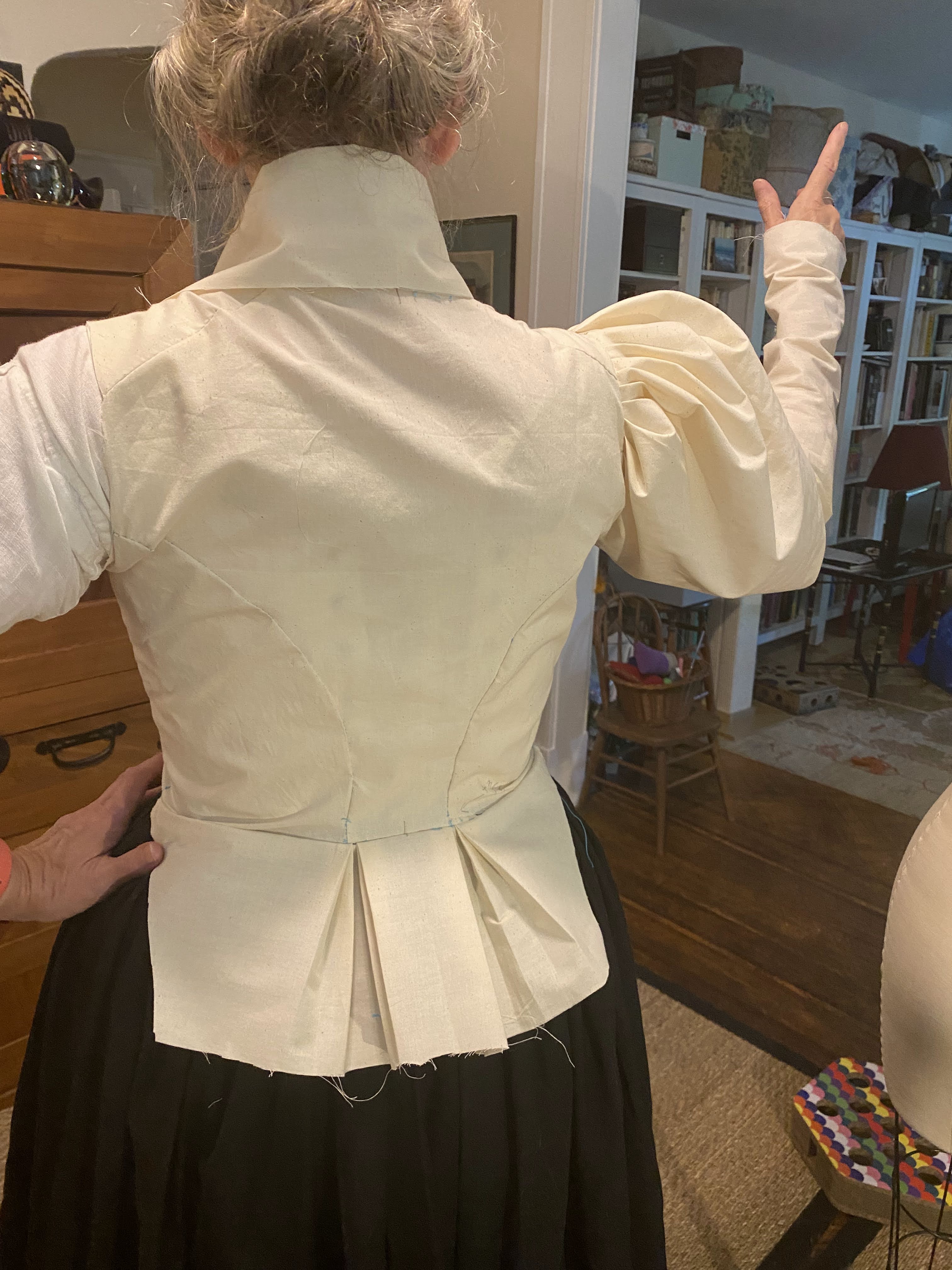
I started with a muslin mock-up, of course, using a previous year’s Spencer a l’Hussard as a starting point. (There is a point when you’ve made enough different things that you can kit-bash your way to many new garments.) The biggest change to the Spencer pattern was in the front closing and collar. The a l’Hussard has a standing collar and fastens with hooks, while this has a fall collar, lapels, and closes with buttons.

There are no published images of the front of the extant jacket, so I looked at both fashion plates and other extant riding habits, ultimately deciding to make a single-breasted jacket.

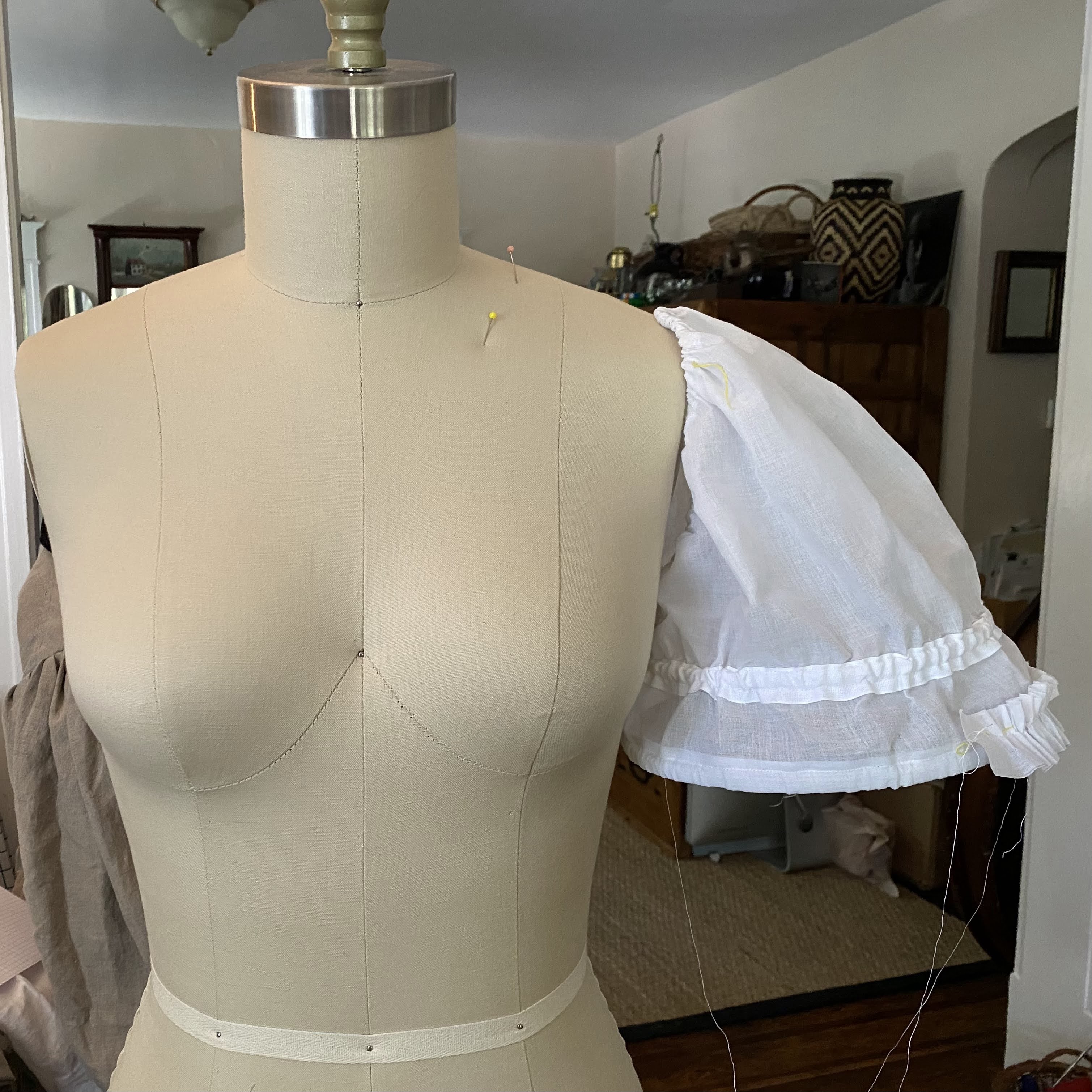
The construction is straightforward, and much like a gown from the period. The bodice is lined, while the sleeves are not. I took advantage of the smaller piece sizes to use up some linen cabbage, and got myself a flashy mis-matched lining as a bonus. One of the trickiest parts was figuring out sleeve supports. I had a melt down over the cage supports, which showed through the lightweight linen and looked awful. I tried them first because I was concerned about the heat down- or wool-filled sleeve puffs would generate for an Labor Day weekend event. In the end, I remembered that I had cotton organdy, and that crumpled up to a nice volume inside some polished cotton covers. These are made with twill tape to attach them to stay straps, if you’re wearing them under a gown; the straps slip over your arms and the puffs rest more or less on your biceps.
Unfortunately, I became anemic while I was making this, and attending a workshop not long before we were supposed to travel to New England wore me out to the extent that we could not travel. Truly annoying, both in thwarted plans and how lousy I felt. Many iron supplements and one appendectomy later, we decided we would make it to the Militia Muster event at Old Sturbridge Village. (It was quite a year.)
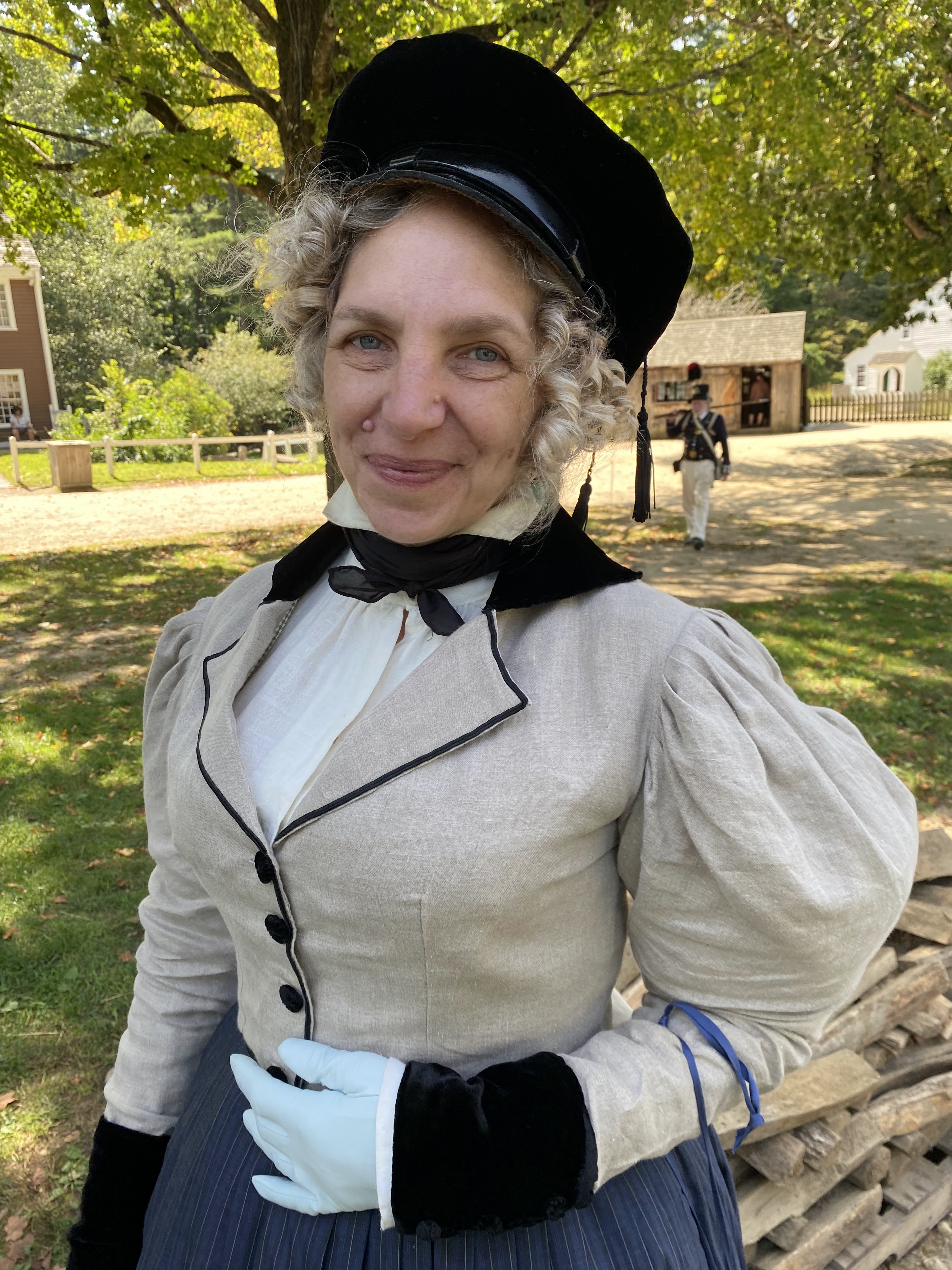
To finish this, I stitched on the black wool tape, outlinng back seams, the hem of the peplim, and the front edges. I couldn’t tell from the images whether or not the original had tape, but decided to err on the side of embellished, especially since the cuffs and collar were black velvet. I added custom black velvet buttons embellished with silk thread, made by Blue Cat Buttonworks. Truly lovely, and not within my skill level.
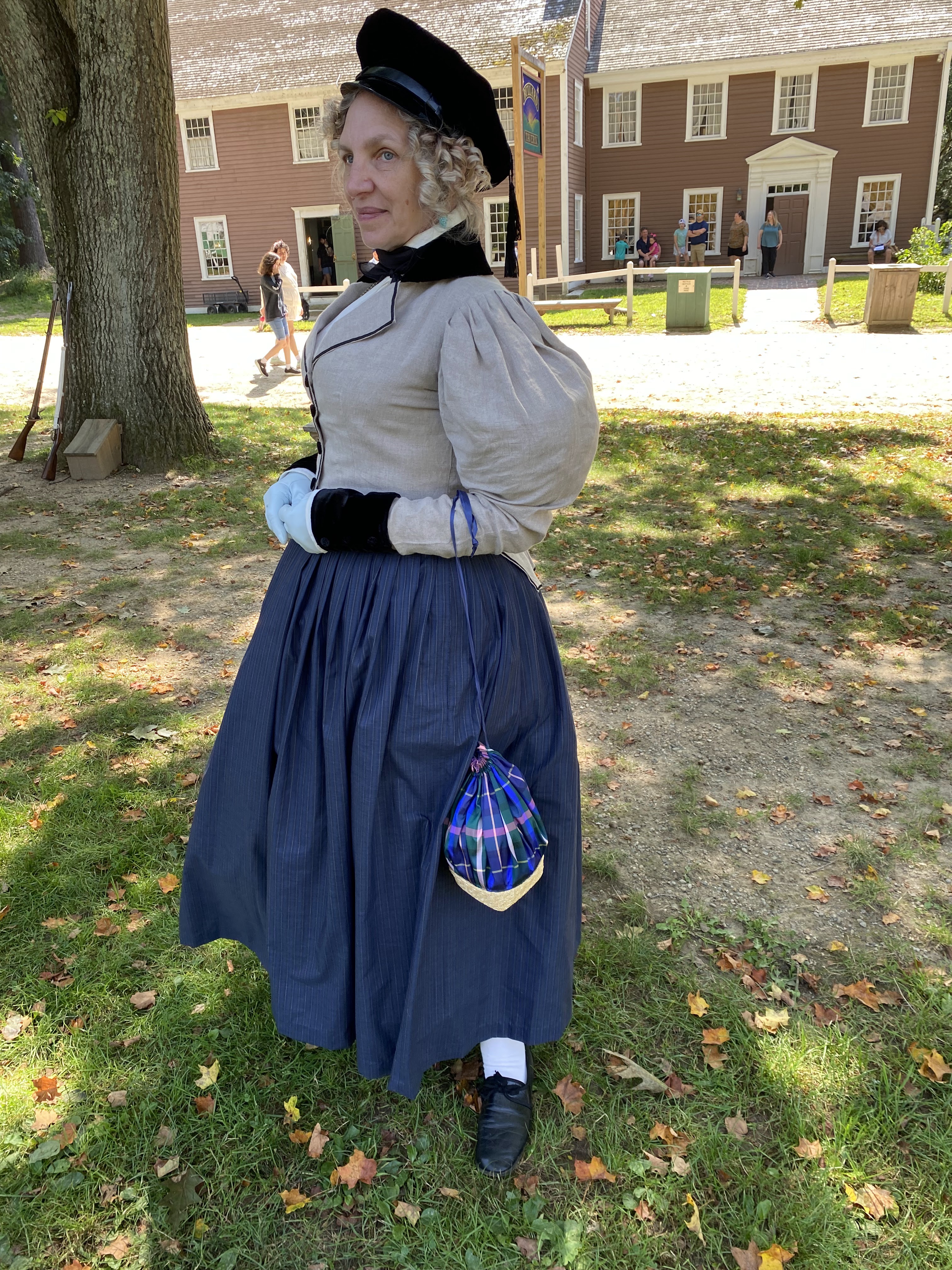
I had planned to wear this with the blue cotton skirt and a riding shirt or habit shirt, but I miscalculated the neck opening and ended up without enough time to restart, so I borrowed a shirt from Mr. K. Luckily the sleeve plumper fit over the shirt, and the jacket fit over all of it! The weather was lovely for early September in New England, and I spent a pleasant day talking about women’s sportswear and the rising interest in physical culture as part of a well-rounded and healthy education in the early 19th century.

The ensemble is accessorized with a black velvet wheel cap, for which Mr. K made the shiny leather brim. The reticule/workbag was made by Anna Worden, and the shoes are black leather Robert Land Regency slippers. The unbleached linen and checked linen lining came from Burnley and Trowbridge, while the skirt fabric came from a Rhode Island mill store remnant table. 

In the Pink

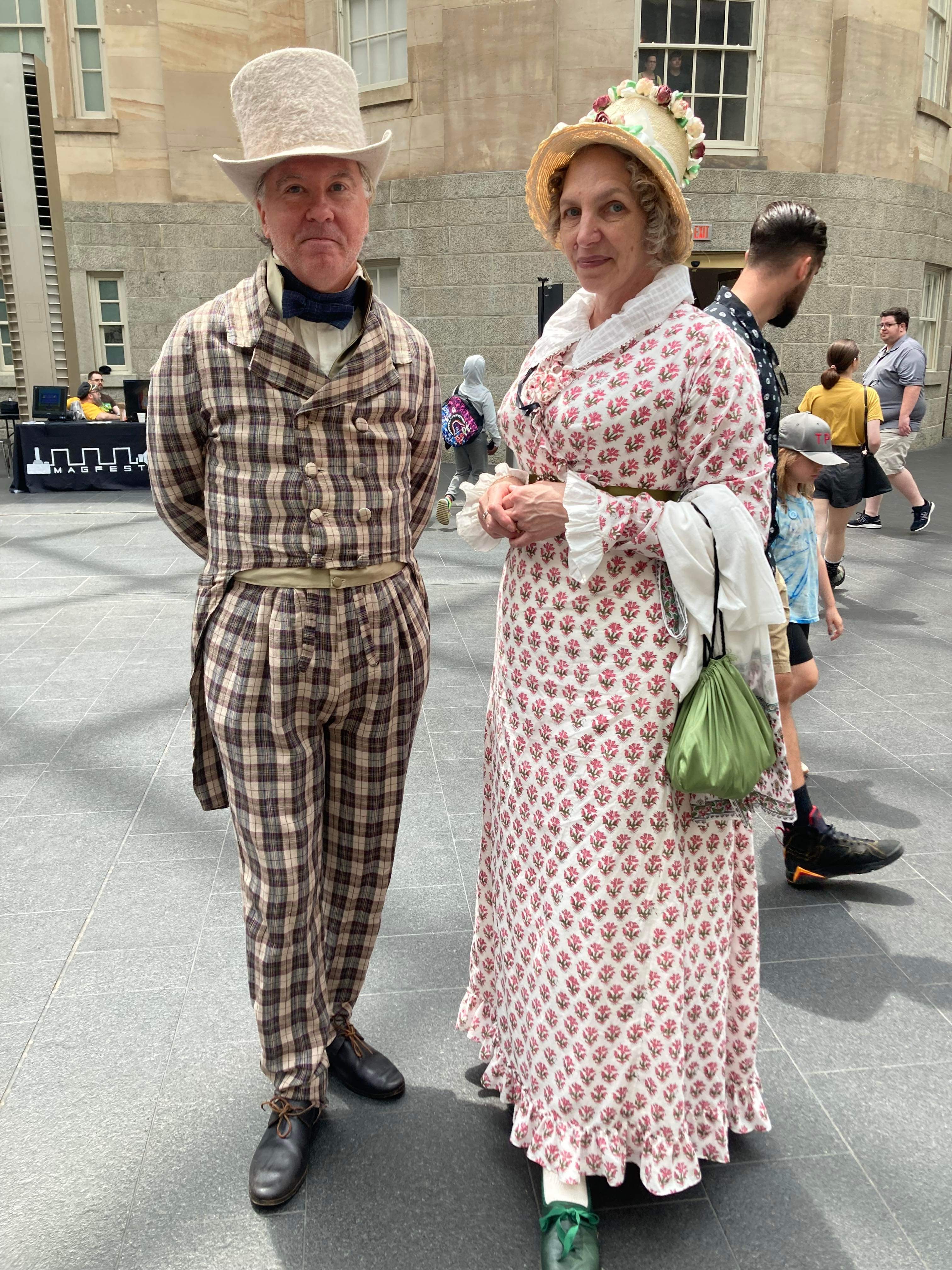
The costumed event schedule has been remarkably thin for obvious reasons, and for me since 2019 when I worked every weekend and thus lost the habit of traveling. In an attempt to change that, I joined a Facebook group for local-regional costumer meet-ups, mostly held at local museums. I talked Mr. K  into going with me to one in July at the National Portrait Gallery in Chinatown and then talked myself into making a new gown.

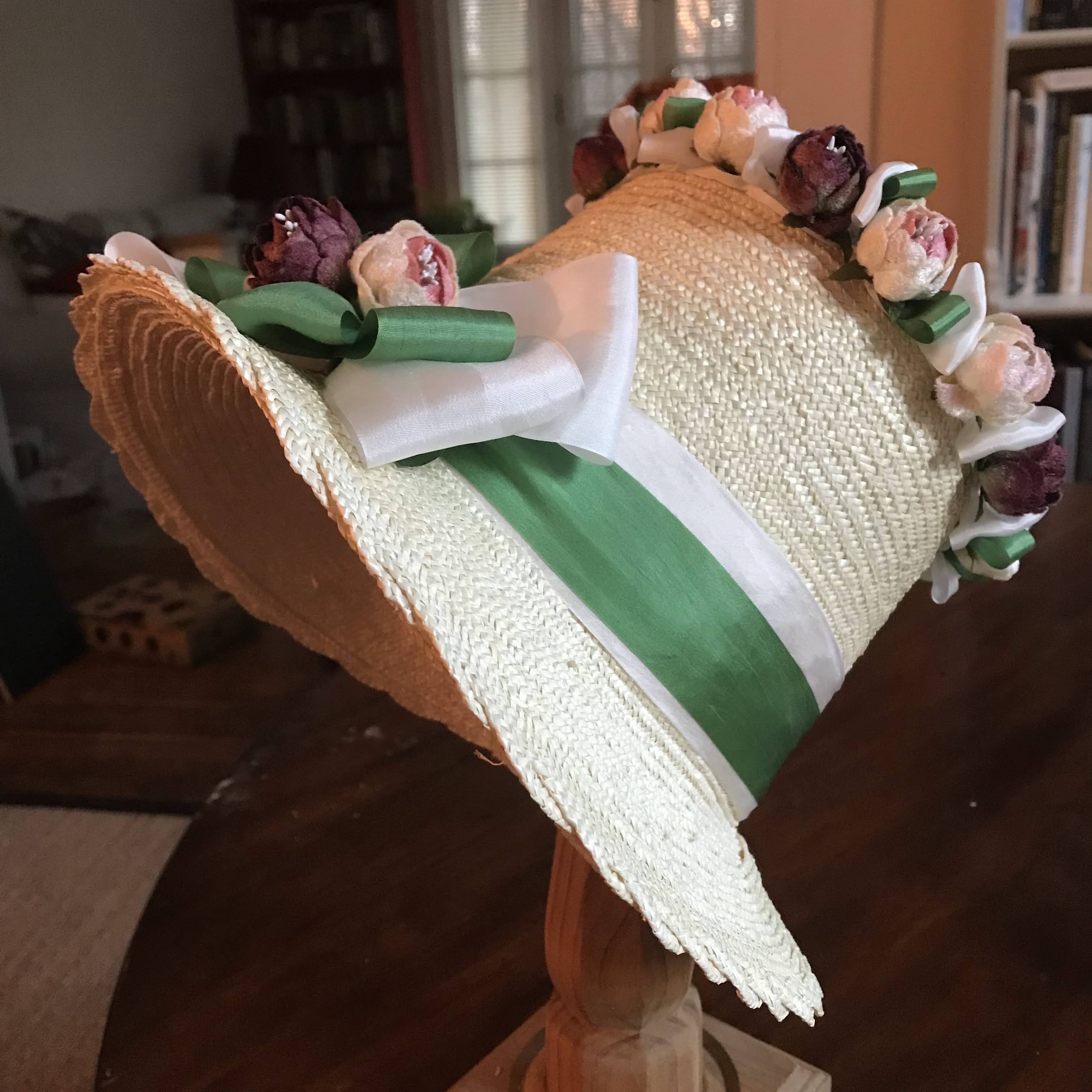
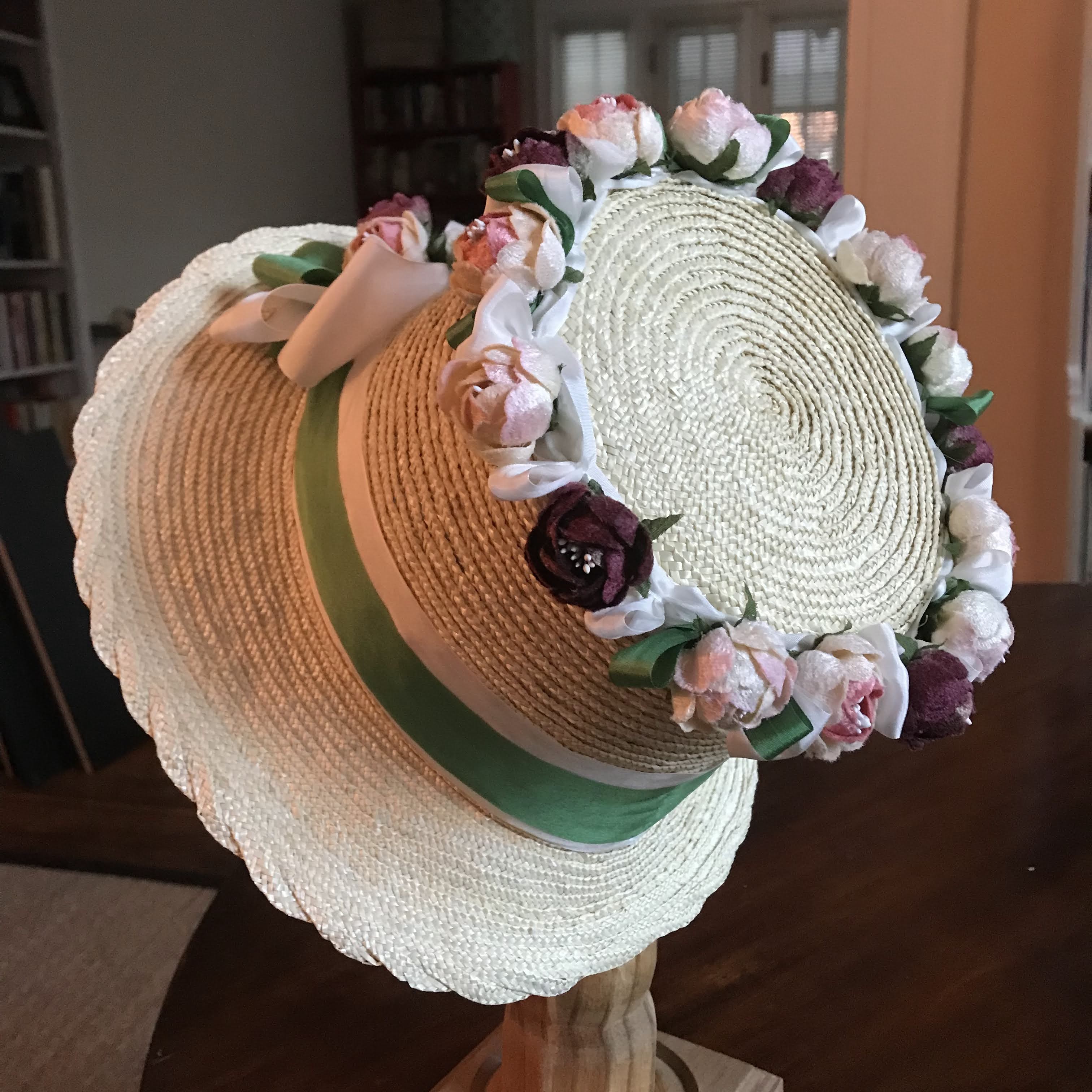
I built the outfit around two things: wanting to match Mr. K’s era and wanting to wear a straw hat I trimmed in late 2021 but probably purchased years earlier. Initially, that bonnet was going to be part of a historical wedding outfit but in the end, I settled for just a chance to wear it.

This 1814 fashion plate has long appealed to me: I like the expression on the model’s face, and I like the color scheme: Just Preppy Enough. Enter the Surplice Front Gown in block-printed Indian cotton. I used a pattern I worked up in early 2020; happily, it still fits so I did not have to make any modifications.

From there, it was simple enough to stitch pretty quickly and even work out trim. Not enough time to tier the ruffles at the hem, but enough to satisfy my desire to look like a strawberry smoothie. Worn with Robert Land Regency slippers in green leather, a shawl from Burnley & Trowbridge, and a chemisette and reticule made by me.
The straw hat was made by Anna Worden, and trimmed by me with vintage fabric roses and ribbon probably found on Etsy and at May Arts Ribbon. Portrait Gallery photos by Mike and Gloria of In the Long Run Designs.

A Pelisse for Emma Smith

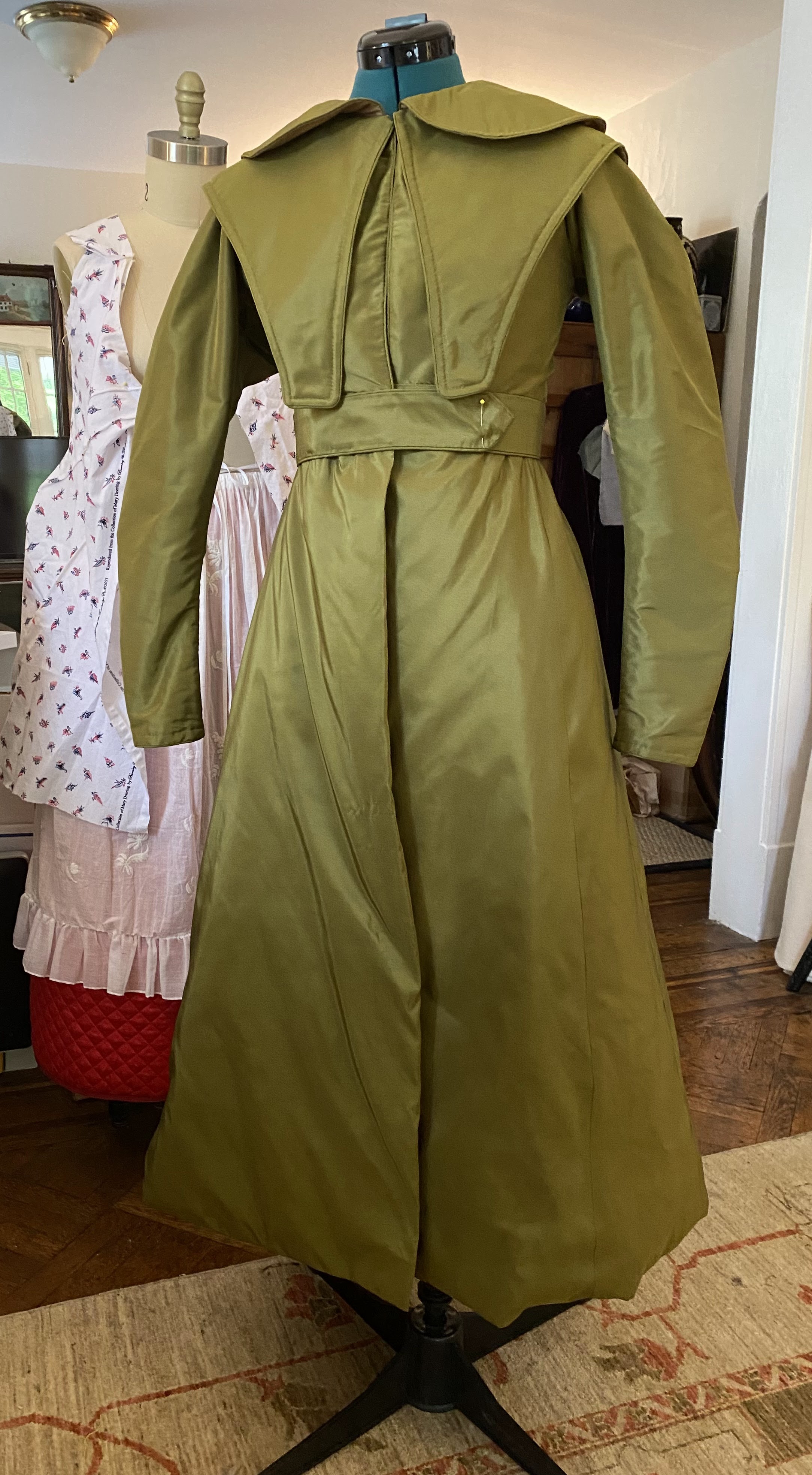
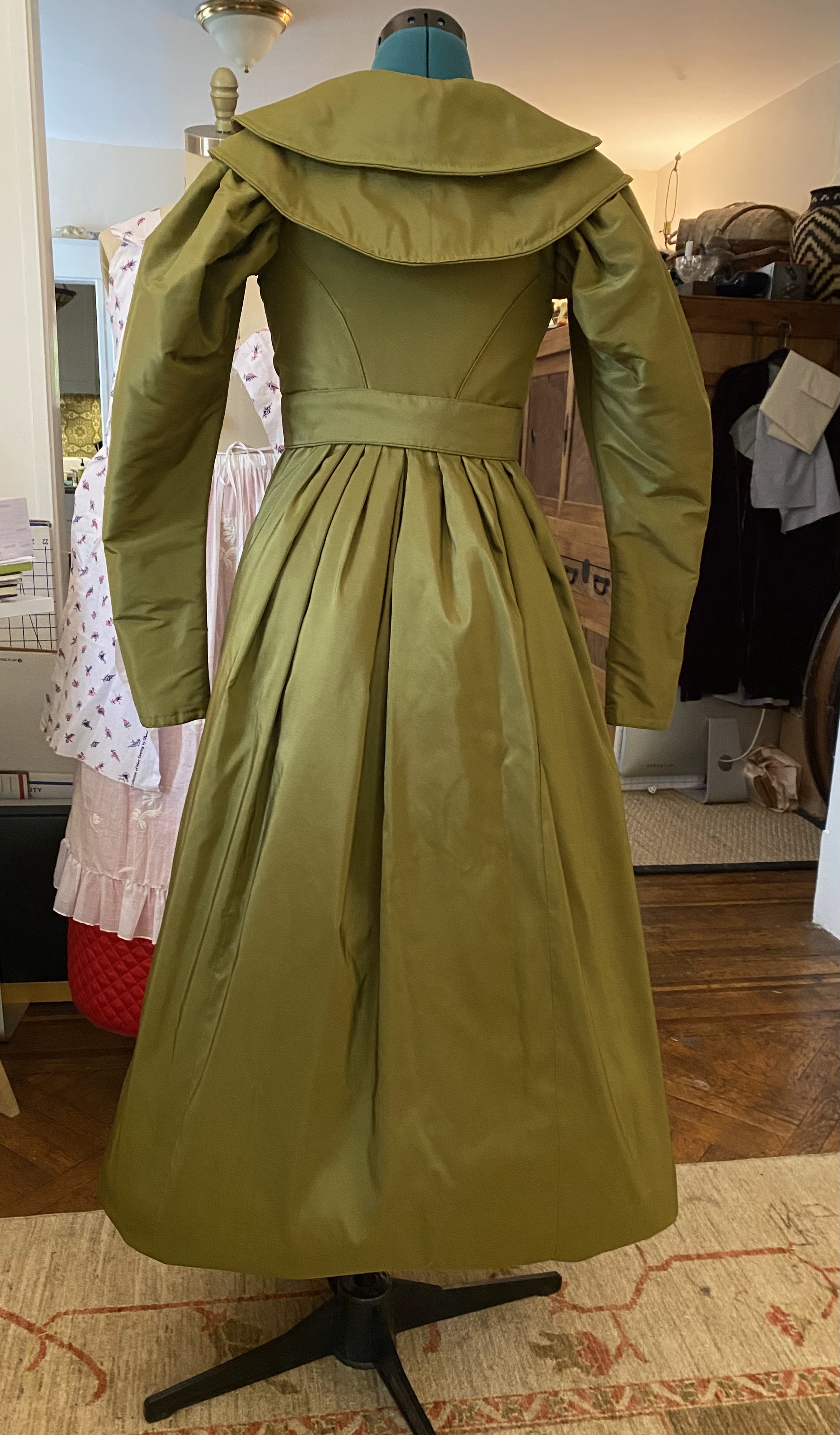
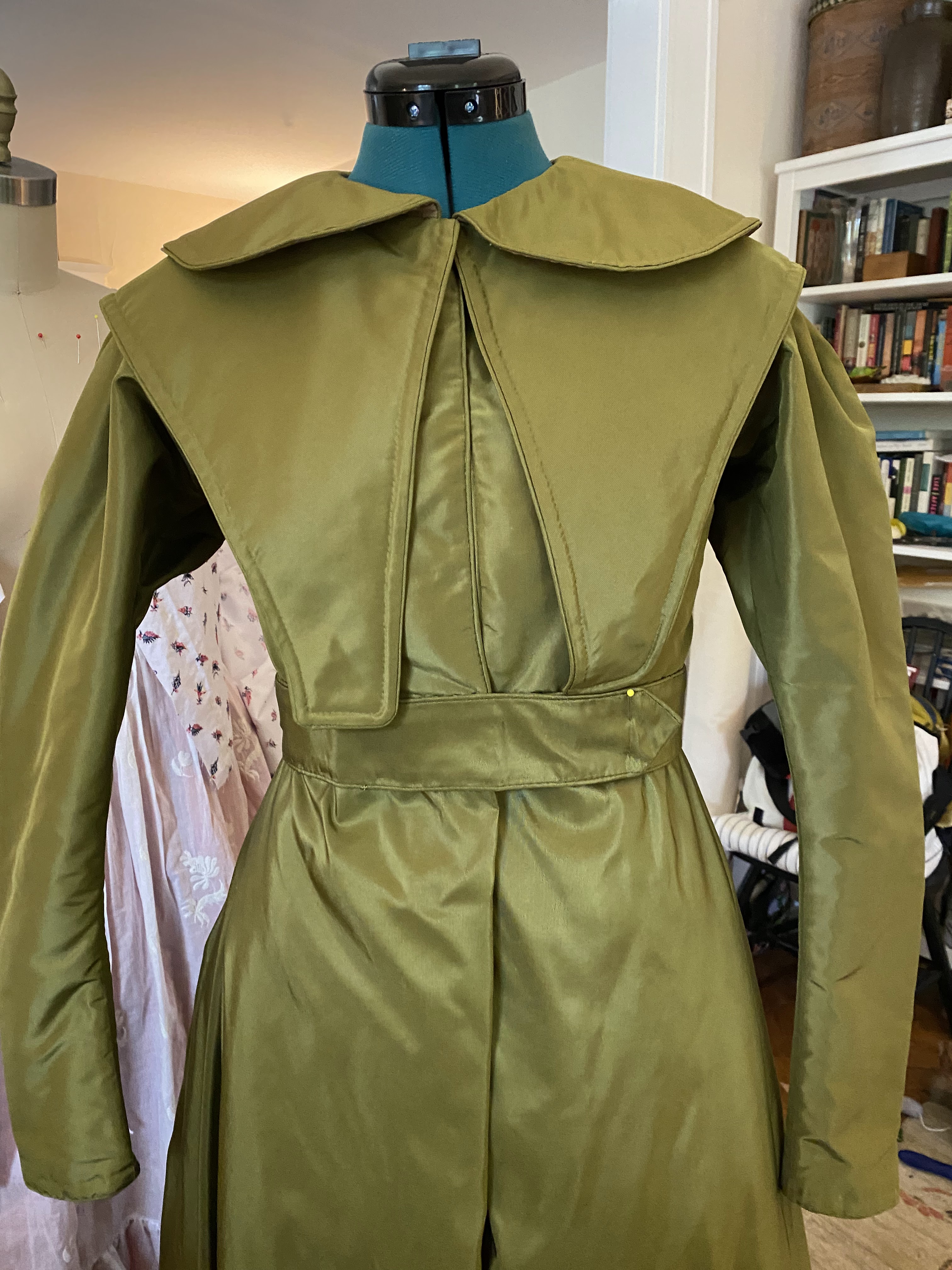
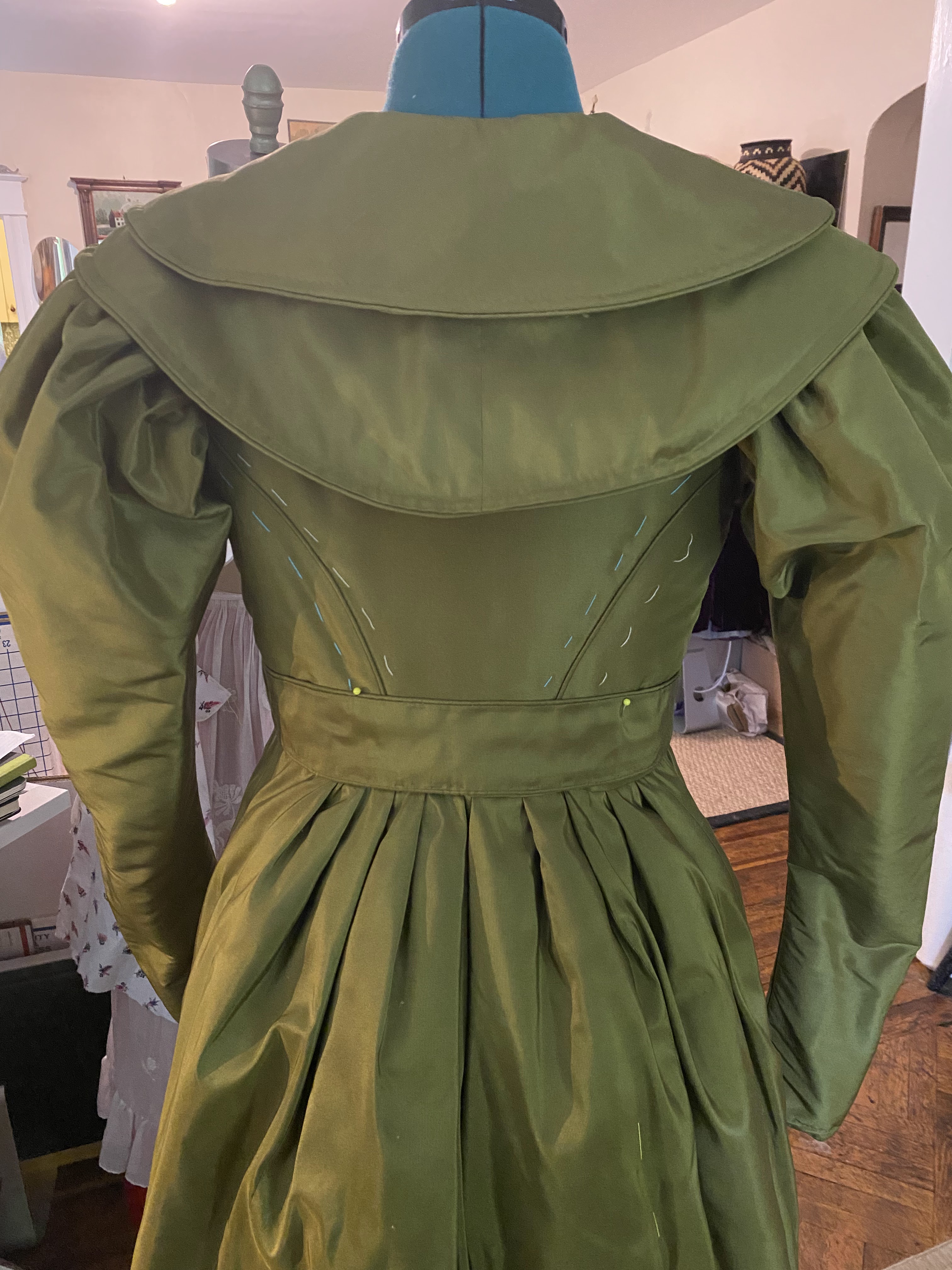
This was an interesting project that only needed to fit my small mannequin, which was a relief since the ultimate client was in Ohio.
It started with a conversation in the summer of 2022 about 1830s pelisses. I have an interest in the decade because we spend time at Old Sturbridge Village, and it’s a weird time period. I like the way that sleeves get smaller after the crash of 1837, and the various ways you can connect fashion and style to economics and politics. (See American Fancy, by Sumpter Priddy.)

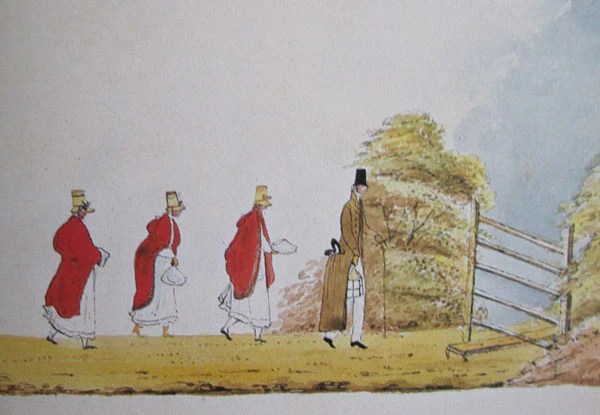
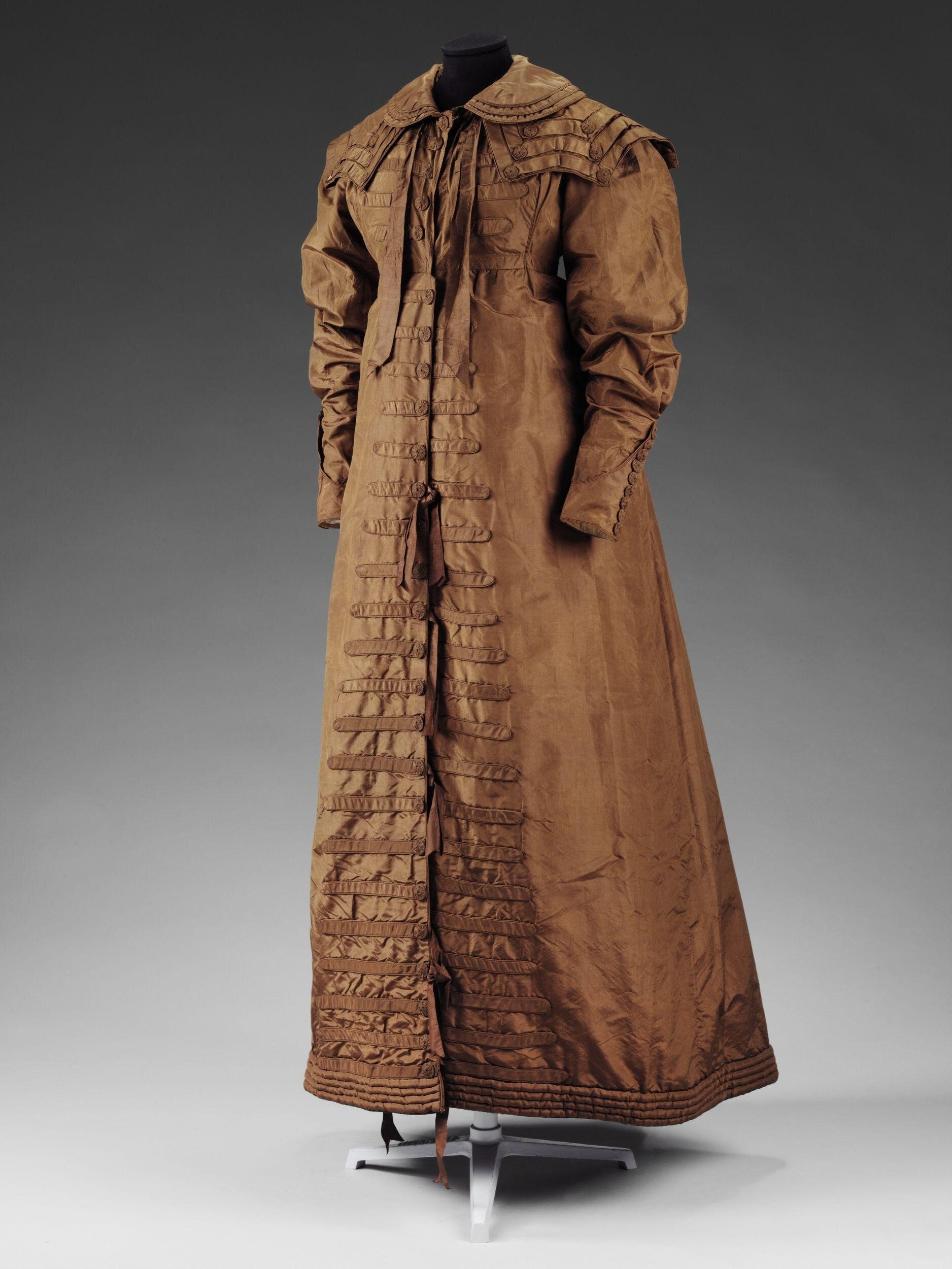
Pelisses were worn in the United States (and Europe) from the 1810s onward, though the bright scarlet wool cloak also persisted in use. The durability and water-resistance of the cloak, and the forgivingly loose fit, recommended them for continued use, Pelisses and cloaks were eventually superseded by sacques, dolmans, paletotes, and shawls, all of which accommodated the larger skirts and crinolines of the 1850s and 1860s. Many of these forms evolve but persist– think of the opera coat of the 1920s through 1960s, with its short sleeves, working over a range of silhouettes from shift dresses to tent dresses to bubble skirts.

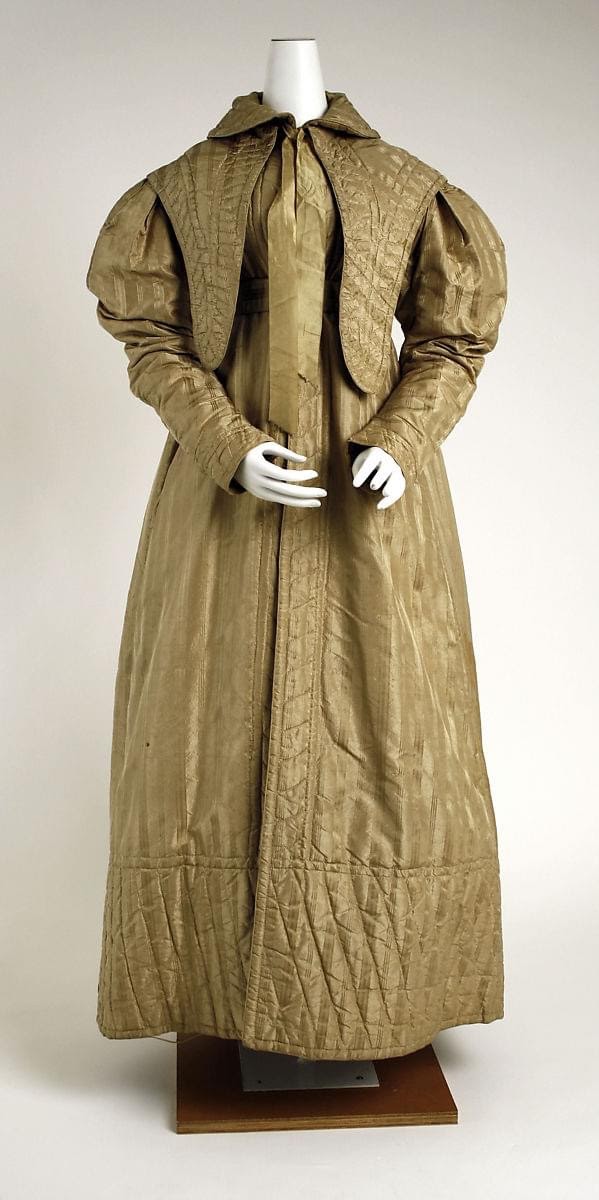
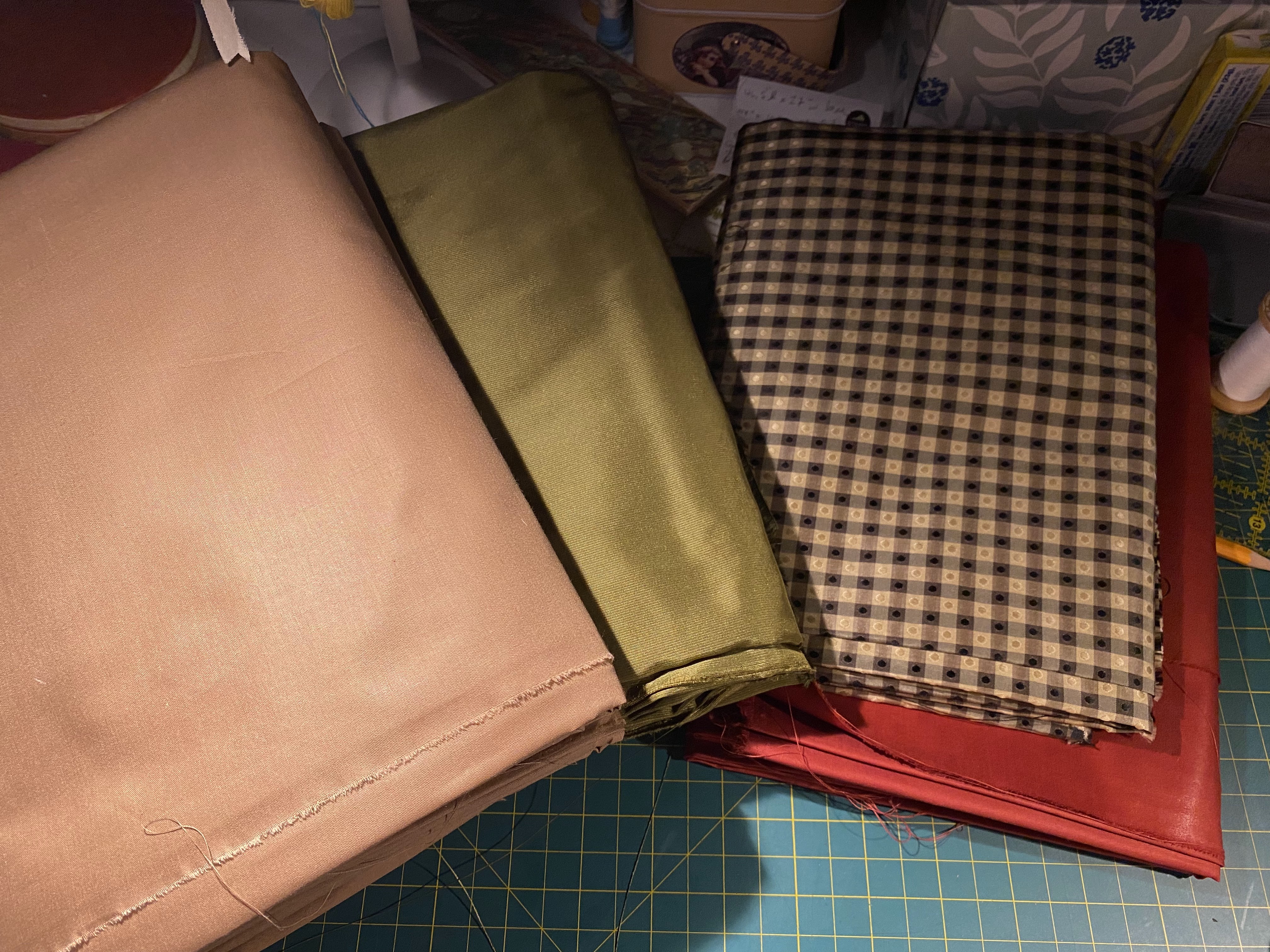
The typical colors seem to have been green or brown, with some stripes appearing as well. For this garment, I selected a range of green-brown silks for the client to choose from and, eventually, we settled on Silk Baron’s Ardennes green silk taffeta and I ordered the yardage. The lining was made of Renaissance Fabric’s polished cotton-poly blend, as the closest material I could find to the polished or glazed cotton linings seen in period garments.

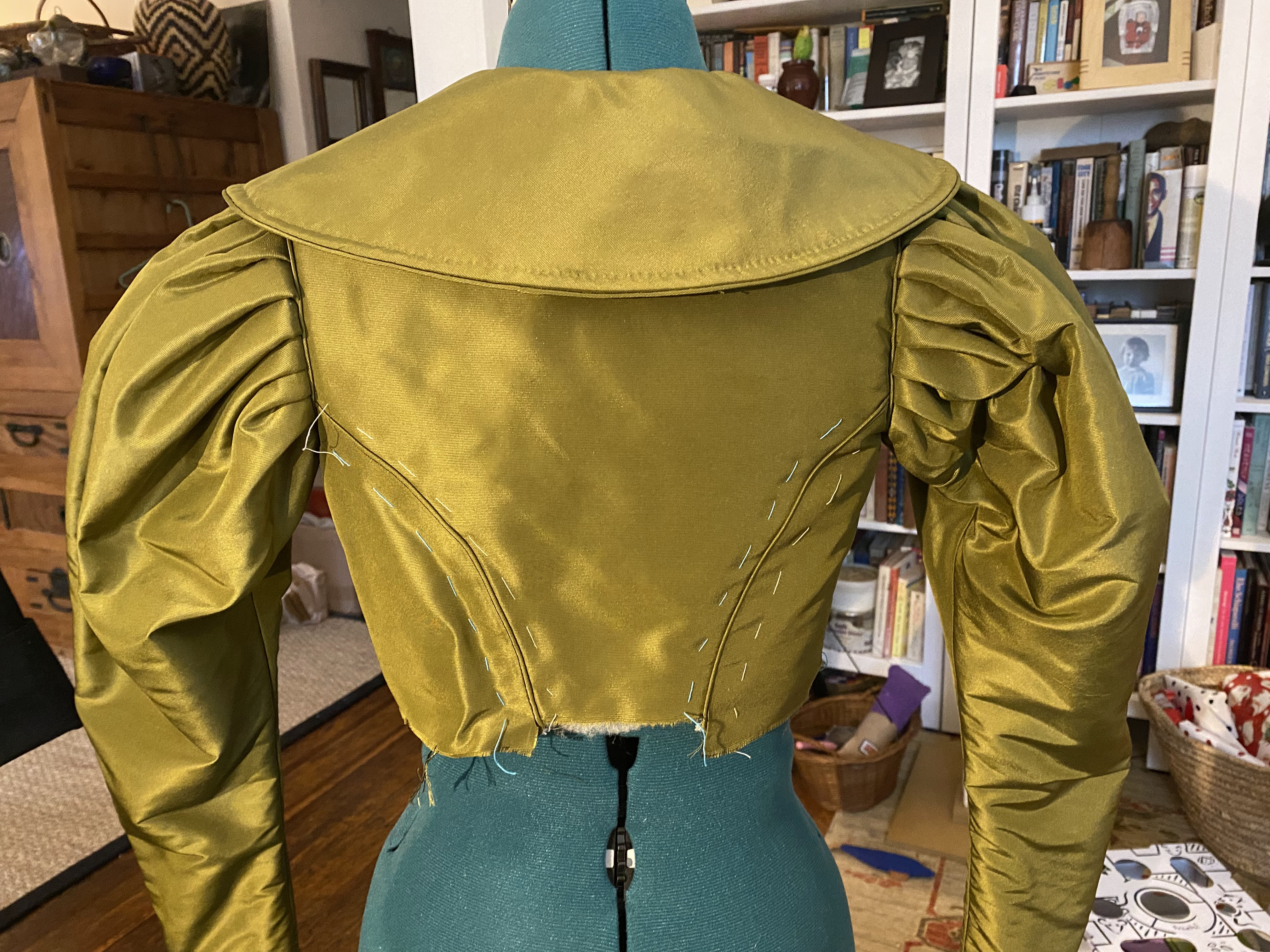
The pattern was scaled down from my own Spencer pattern, and draped to fit the mannequin. The sleeve pattern was a bit of kit-bashing, working between the Past Patterns Lowell Mill Girl’s dress sleeve and my own 1820s sleeve. I chose to err on the side of less enormous, trying to walk a line between fashionable but not too outre. For Boston, I’d make enormous sleeves; for the shore of Lake Erie, northeast of Cleveland, I went a little smaller.

The bodice, sleeves, pelerine, collar, and skirt were all constructed with padded laters of woo batting between the silk exterior and the cotton lining. This was not a fun project to quilt, given the taught weave of both the silk and cotton layers, but the quilting and piping add snazzy details to the edges– and both were typical in pelisses, Spencers, and gowns of the period. 

The sleeve puff is achieved in part through tiny pleating inside, a technique copied from the 1820s original gown in my collection, which was handy resource to have on hand, if a bit of splurge.

If I were to make one of these for myself, I would look for a lighter-weight silk taffeta, and I would consider a striped fabric. Some pelisses are less shaped– that is, they’re made more like a bathrobe, without a separate bodice and skirt (see Jane Austen’s pelisse, patterned and recreated by Hilary Davidson), but I prefer the shaped silhouette.

A 1920s-style Dress for a Wedding

It’s the time of year when people post what they accomplished in the past year. I’m late to the party, but I found it helpful to look at what I did manage as I think about what I’d like to do in the coming year. Underlying all these goals is the near-constant existential crisis of daily life in this world, which produces drag on anyone paying a bit of attention. Oh, and health issues like appendicitis twice and an ear infection to see the years out and in with a flourish. As I look back, I’ll break the year down chronologically into multiple posts. 

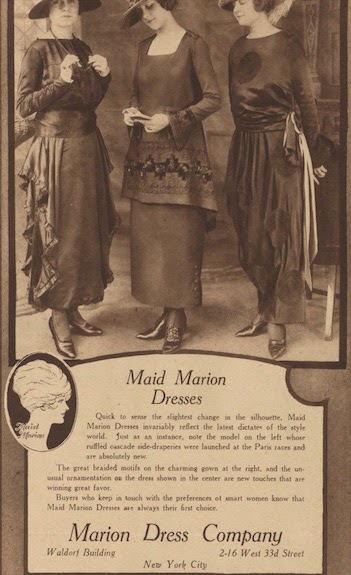
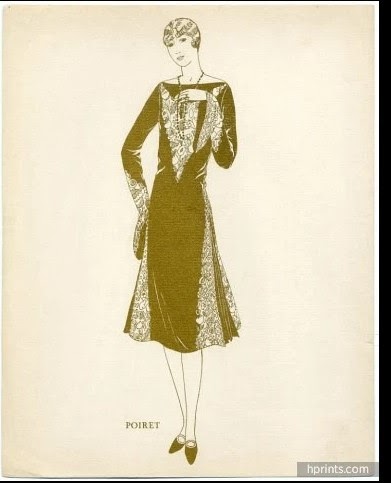
January was packed with disparate projects, each with their problems. There was a big work project that consumed a lot of the month, so Bryan decided that this was the time to plan and schedule a wedding. That meant making a dress at the same time I was working on a quilted hood and padded silk pelisse to represent Emma Smith at the Joseph Smith house in Ohio. Making a dress in this context meant deciding on a time period and a pattern, along with the undergarments, accessories, and shoes. I settled on the 1920s to work with a suit Bryan could comfortably wear– weather was also a consideration, as we anticipated being outdoors– and looked for inspiration and patterns. 

In the end, I made a hat, a corset, a slip, and three dresses. The three dresses were all the same pattern: the first to test the shape in silk, the second to be married in, and the third to wear on our “honeymoon” trip to Atlanta. That dress was made up in a vintage-style cotton print from Mood.

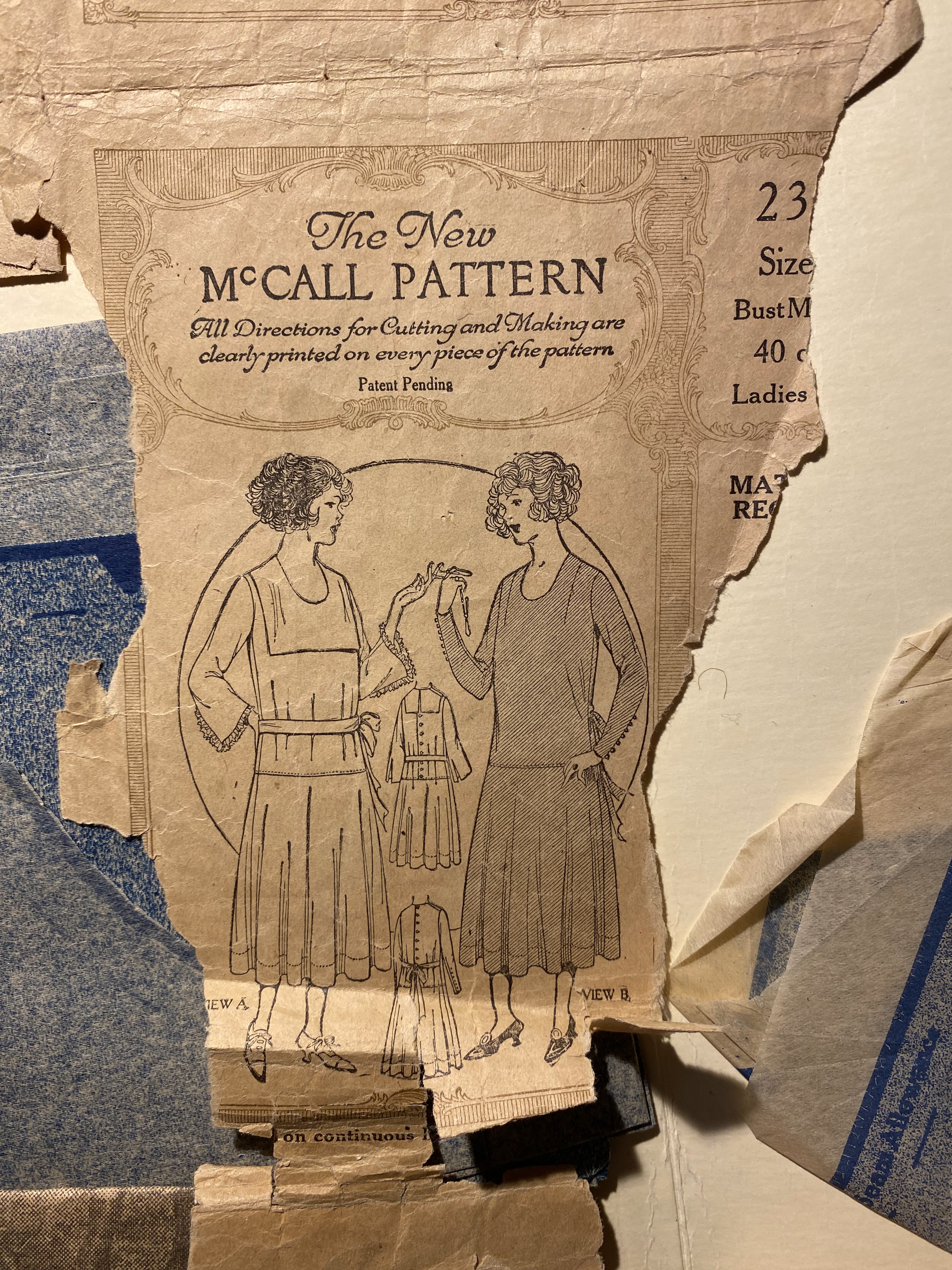
The pattern I used was based on an original 1923 McCall’s pattern in my collection. I traced the entire pattern and then scanned by sections to assemble a full, cuttable version that I could grade. The sleeve pieces were not intact, so I had to recreate the sleeve I wanted. Is this madness? Yes. Is it also my SOP? Again, yes. Obviously, I made up a muslin, but I also made a mockup in some gingham taffeta that I wasn’t particularly in love with, and had forgotten why I’d bought it. I took this step because I knew silk and cotton behave differently, and I really wanted to head off a draping failure.

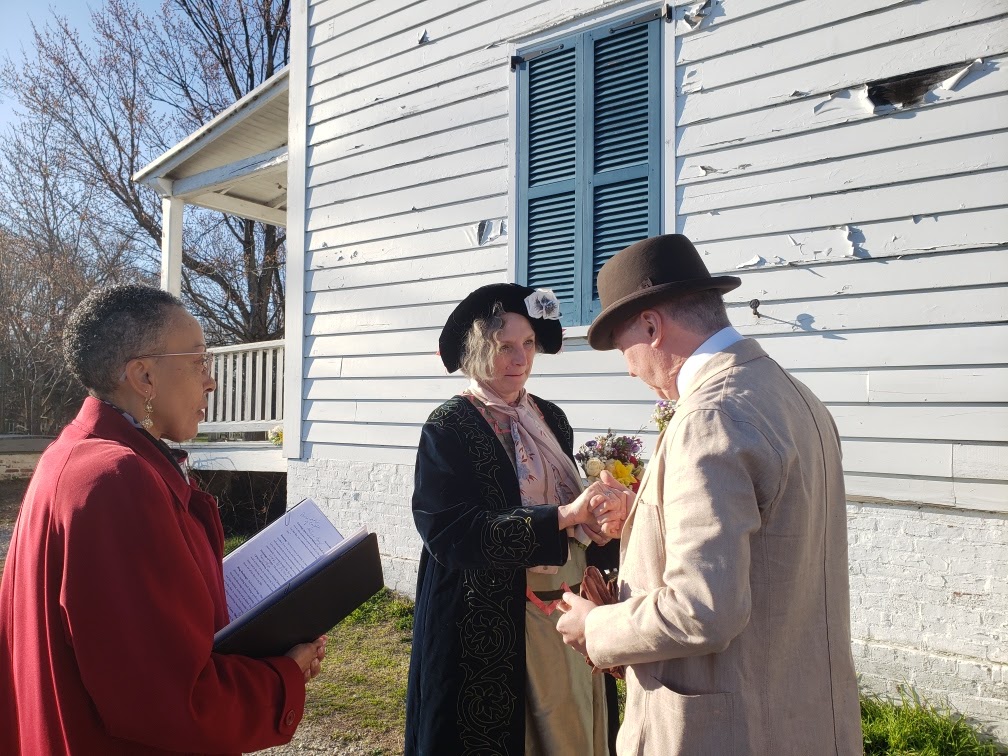
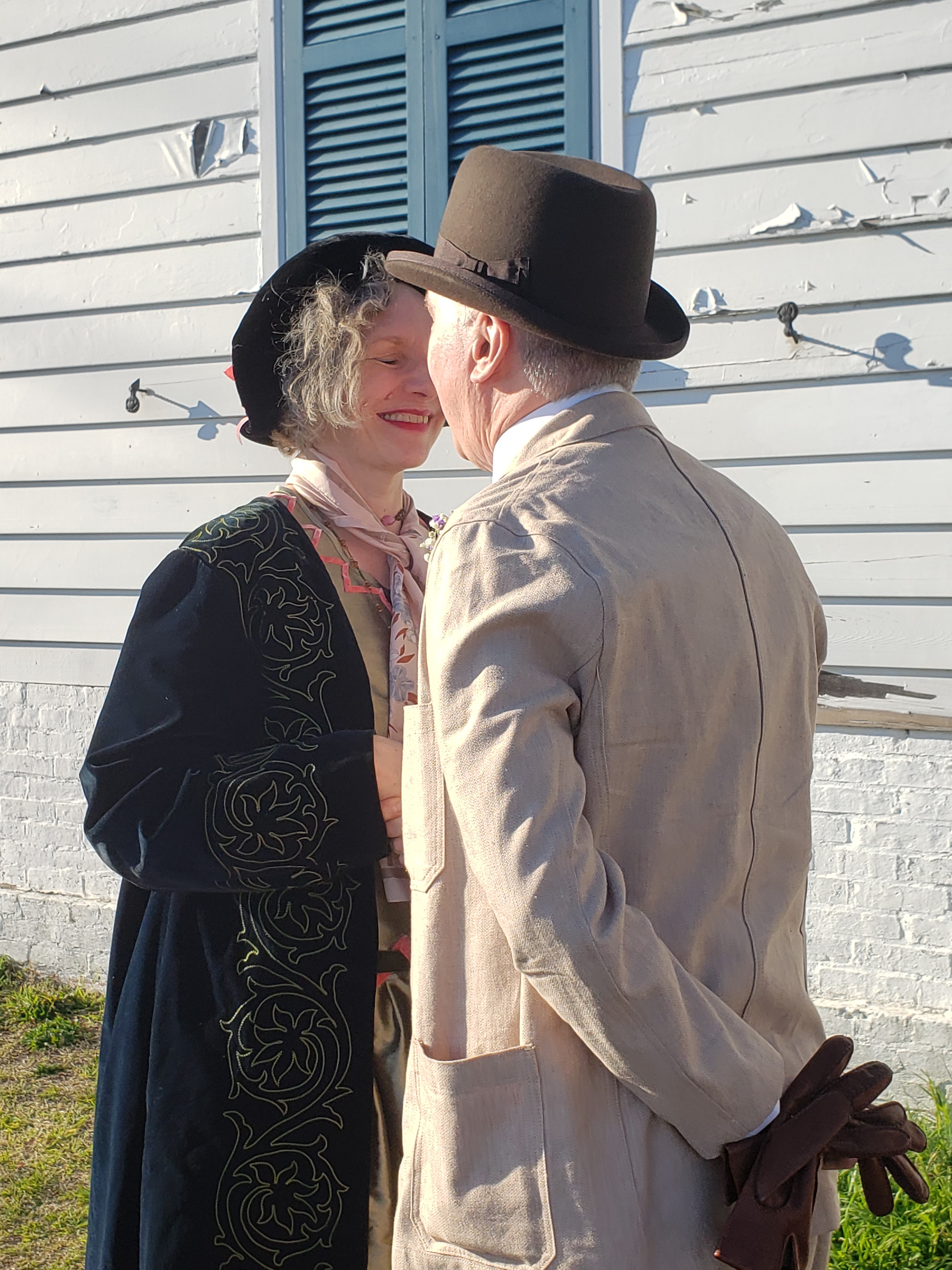
In the end, It’s a very simple dress: a two-piece bodice slips over the head, with the main interest in the color and trim. The dress trim is vintage velvet ribbon in a simple geometric pattern that didn’t take too much repinning. The accessories are a vintage wool purse I already had and a coat I picked up in a Facebook sewing group. The hat was originally a rose-colored straw sun hat my mother sent me. I covered it in black velvet and finished it with vintage trims.

We got married down on the Potomac River at Jones Point Park, with just one friend with us. To celebrate with other friends, we took the cake to them, which made scheduling a lot easier. 

And, in best vintage fashion, the “traveling” dress in the same pattern, worn at the Atlanta Botanical Garden, one of the places we visited on our honeymoon.