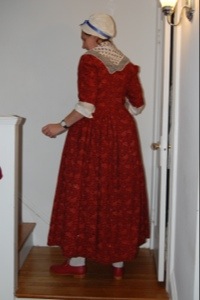
Styles Style: Book Recommendation

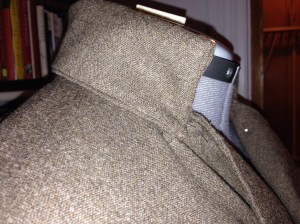
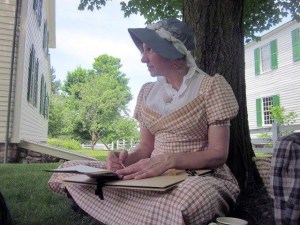
Please forgive the watch– a test shot of a gown from a runaway ad.

This is a quick one, because I’m writing in advance of a trip to New England, but for me, the best secondary source I’ve read that helped me understand the people I was clothing is John Styles’ The Dress of the People. That’s not to say that I haven’t read more, and found period resources and collections of resources equally useful. If you’re doing a poor woman in America, Don Hagist is your man, with Wenches, Wives and Serving Girls (now Wives, Slaves, and Servant Girls. Read Good Wives, Nasty Wenches, and Uneasy Patriarchs for more on period terminology).

I like Styles because he helps us understand the why of people’s clothing, and their wants. For me, context is key (I harp on this a lot) so insight into how many shifts are usual, the fashion for pocket watches, and the activity of the second hand clothes market is really helpful. So despite my love of shiny satin gowns and fashion of all eras, among the few books I didn’t send to storage when I moved was The Dress of the People. I think that’s a strong recommendation.

(researc

Bad, Mad Skillz: An Origin Story

Aragorn: one of many modified patterns

I’ve been sewing clothes off and on for while, and sewing pretty constantly since the 1990s—baby quilts, piped slipcovers for vintage chairs, knitting needle cases, costumes for the Giant, and sundry other items. Making calms me, and since I tend to operate at a pretty high RPM, I make a lot of things.

Historical clothing took off for me after the Giant decided he wanted in on the living history thing. Hunting frocks, overalls, and shirts gave way to stays, petticoats and gowns. I’m largely self-taught, and although workshops with Sharon Burnston and Henry Cooke helped immensely, much of what I learned about fitting and draping I learned by reading (books and tutorials, especially Koshka and Sabine) and by making mistakes.

The best way to succeed is to fail, and I am an accomplished failure —you have only to look through the archives here, and you will find waistcoats sewn by drunken, crack-addled monkeys , upside-down Spencer collars, and stays gone wrong. I’m okay with those mistakes, because they helped me (and, I hope, some of my readers) make progress towards better sewing.

Really, I’m not sure how this happened. But there it is: upside down.

I’ve made things of late of which I am proud, or at least pleased with; I have taught myself new skills over the years from pad stitching (still working on that) to hand knotting (getting better) . I’ve gained patience (which is a skill itself) as I’ve learned new techniques, and that counts for a lot.

Hand-knotted lapis bead necklace: a new, slightly frustrating skill

Way back when (for the true origins), struggling through a design studio, I realized that the greatest frustration typically comes just before a breakthrough. That understanding is really the origin of my historical sewing: getting frustrated means you’re making progress. And what’s more frustrating that replicating a historical garment?

Fave Friday: Full-On Federal


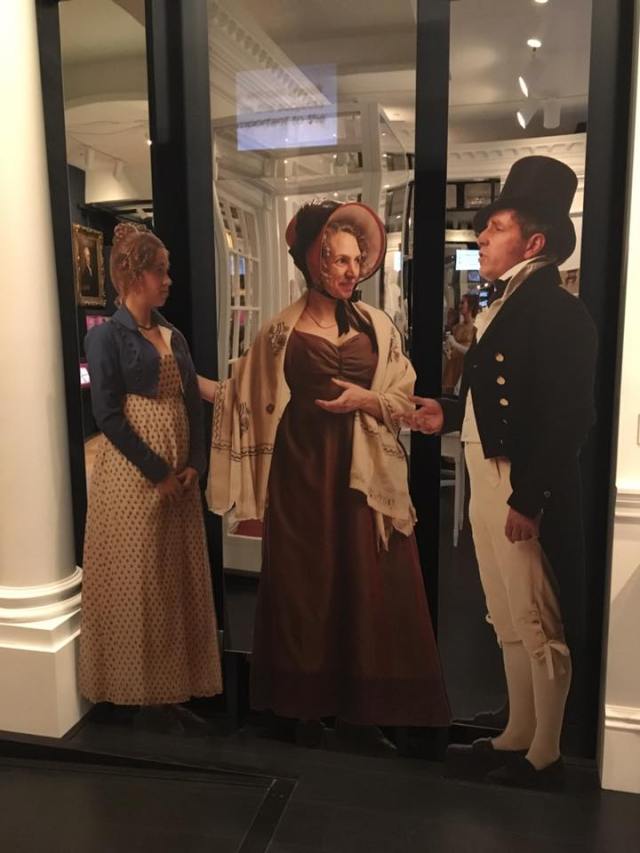
Favorite Era? Easy-peasy! Federal, of course. Whether furniture or fashion, the early Republic is my thing. I spend a fair amount of time in the 18th century, since there are so many events in that time period, and while I loved the story of the American Revolution as a child, the early Federal* period intrigues me more. Furniture, porcelain, wallpaper, and clothing from 1790-1820 all appeal to me, as well as the notion that women’s roles were in flux in the earliest decades of the United States.

“American Women and French Fashion,” from The Age of Napoleon

I love the idea of women in mercantile businesses and trade, and the way that milliners provided access to fashion (and you can read more about that in The Age of Napoleon).

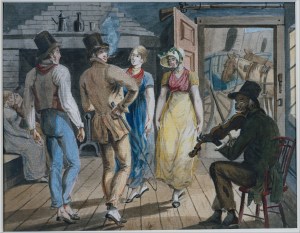
Merrymaking at a Wayside Inn, watercolor on paper by John Lewis Krimmel. 1811-1813. Metropolitan Museum of Art, 42.95.12

I also love the way that American women (and men) translated European high style into a vernacular, as seen in John Lewis Krimmel’s watercolors of Philadelphia and surrounding areas.

This is a time period I’m comfortable in (yes, the stays are part of that comfort) but aside from comfort and aesthetics, I think it’s also because for a brief time, women had slightly more freedom than they had previously.

It was short-lived, and Republican motherhood was confining in its own way before the “cult of womanhood” blossomed fully. But ideals of freedom and fashion very briefly aligned, and for that, I love the Federal– and vain creature that I am, I think it suits me.

*pre-Andy Jackson, amirite?

I Fall to Pieces: Extant Garment Fragments

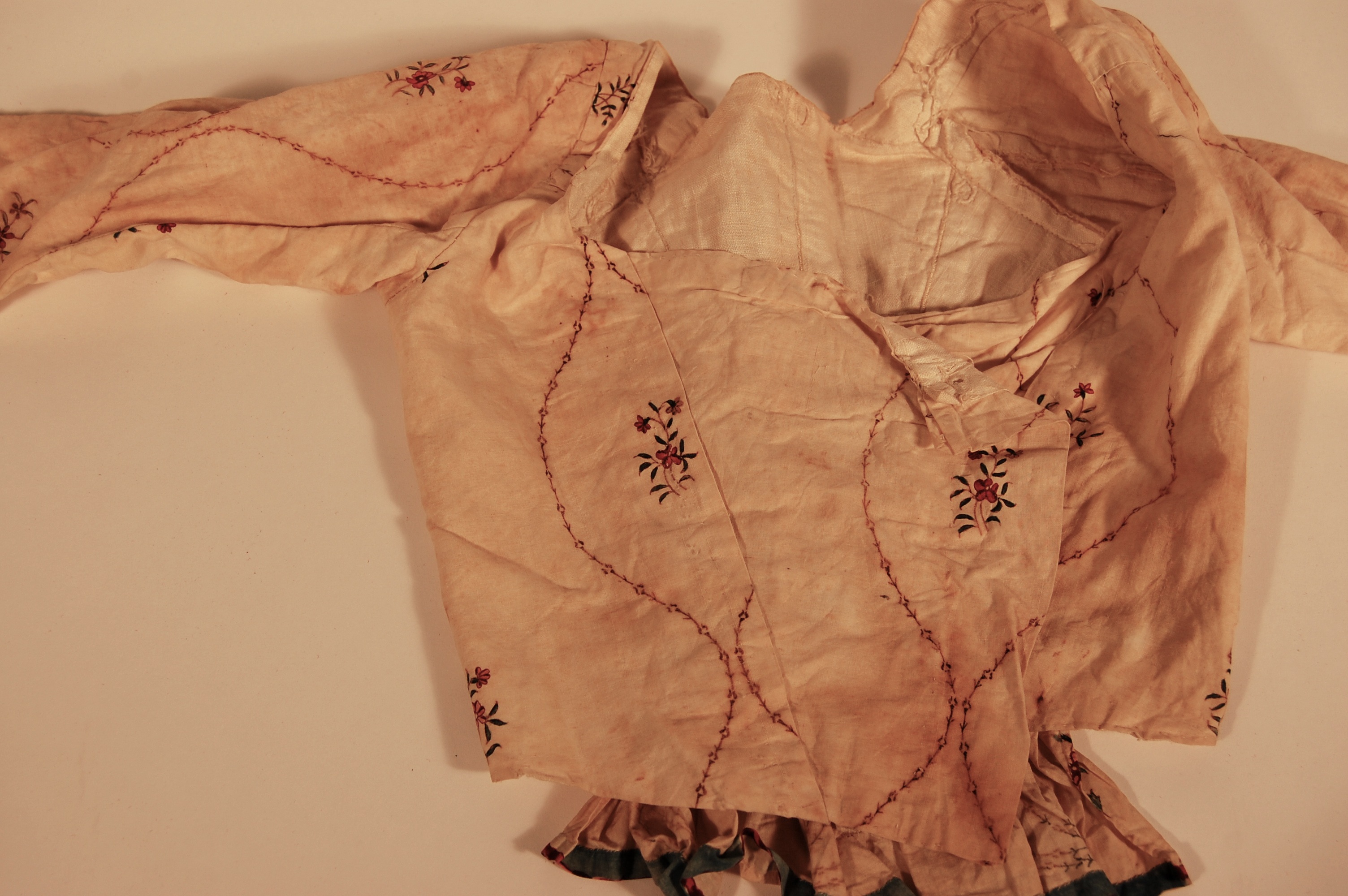
Bodice, painted Indian cotton, 1780-1795 RIHS 1990.36.27
Bodice, painted Indian cotton, 1780-1795
RIHS 1990.36.27

Once upon a time, not very long ago, when I worked in a historic house museum, I was asked to present at a conference in Worcester. I chose to talk about these fragments, and I still like to think about them. The delicate fabric was saved as a pair of sleeves, a bodice with a tiny peplum, a skirt.

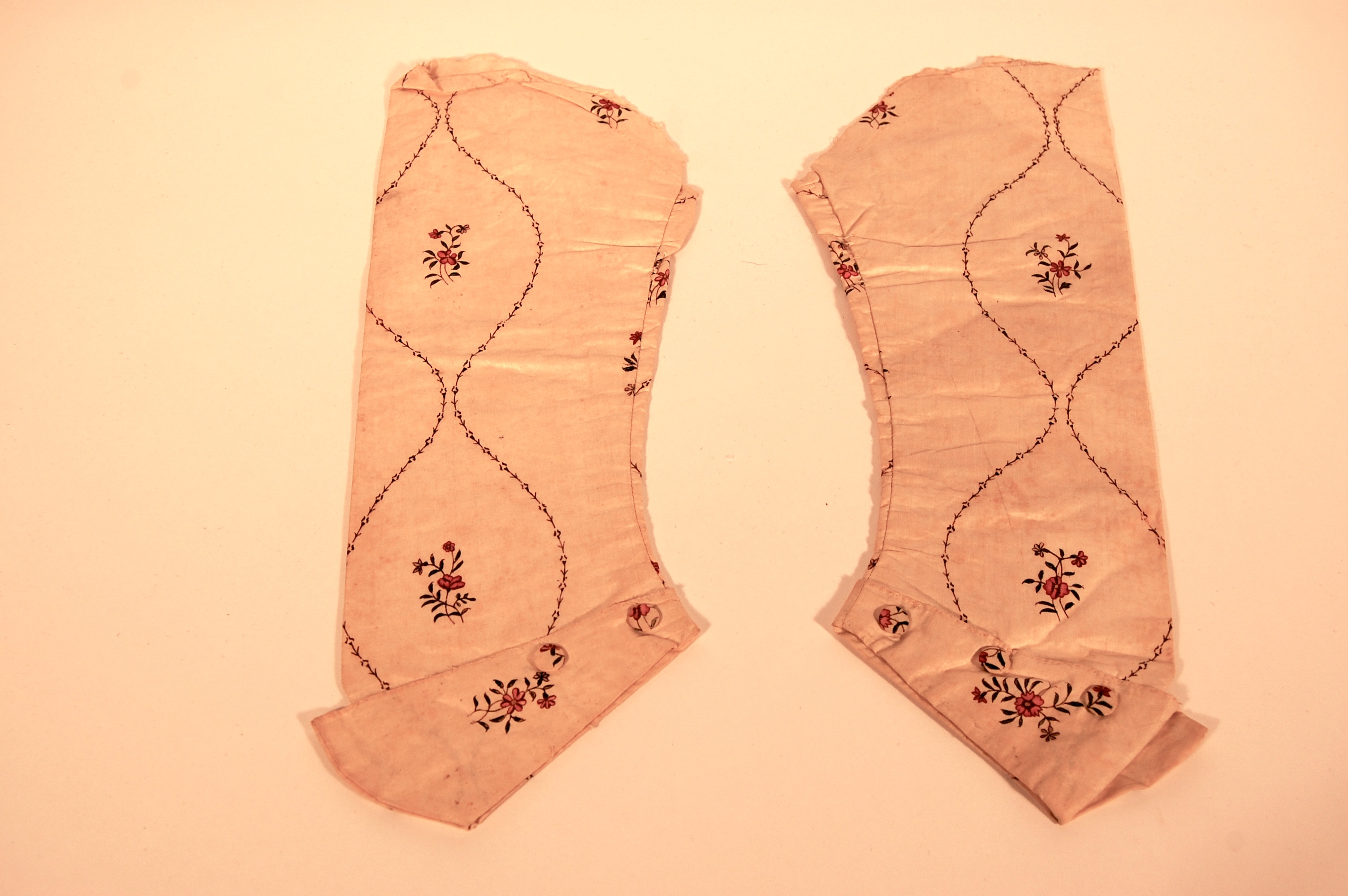
Sleeves, removed from bodice 1990.36.27. RIHS 1990.36.25A-B
Sleeves, removed from bodice 1990.36.27.
RIHS 1990.36.25A-B

The pieces appear to have been part of a pieced-back closed-front gown with a matching petticoat circa 1785. I think someone decided (quite rightly) that the style was too passé for 1795, and altered the gown significantly.

Not only is there evidence of new sleeves being fitted into the gown’s armscyes, we have the sleeves-that-used-to-be. And my dear! No one is wearing sleeves like that this season!

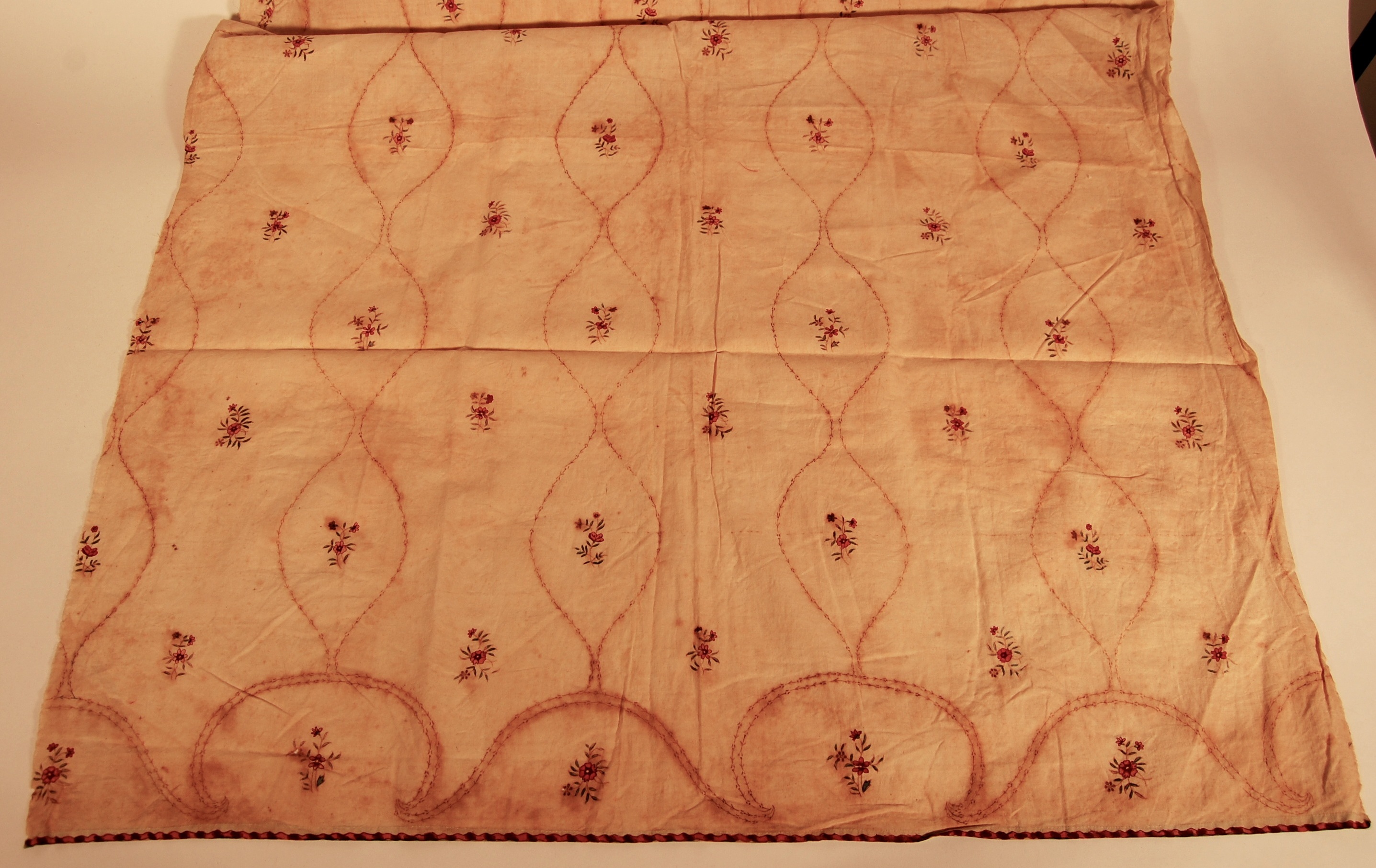
I find these garments in limbo really fascinating. Was that bodice finished and worn with a matching petticoat? (Yes, there’s a panel of that left, too; what a lovely hem!)

Skirt panel, painted Indian cotton. RIHS 1990.36.33
Skirt panel, painted Indian cotton.
RIHS 1990.36.33

Who wore the gown? Was it Sally Brown, born in 1773? And did she alter it, or did her sister’s mantua maker, Nancy Smith? We can only guess at this point, as so many documents remain in private hands. The alterations are not as finely done as the original gown, so I think there are two hands at work here– whose were those hands? There’s always more to think about and learn.

In case you’re wondering, thanks to the Met, we can see what the gown probably looked like in its first incarnation, and then what the alterations were meant to achieve. (Link to the gown on the left; link to the gown on the right.)