“may depend on being supplied”

Lady Anne Stewart. oil on canvas by Ann Forbes, 1774. National Gallery of Scotland, NG 2036

Part two of a series

A newspaper ad can be a rickety thing on which to build a persona when it’s not a runaway ad. Those will give you what the person is wearing, who is advertising for them, and sometimes the skills they have. To better understand Elizabeth Weed, I turned to genealogical and contextual research.

George Weed’s estate was settled by Elijah Weed, his son by his first wife, Esther. Altogether, it was worth £1268.19.7, a considerable sum in 1777. Granted, £775 was book debt, but that cash could be called in. The remainder consisted of £132.15.2 in Medicines etc.,£100 cash, and £261.3.9 in Goods and Chattels. Of this estate, widow Elizabeth kept £55.8.3 in Goods and Chattels, all of the Medicines etc. and £50 in cash. That’s all of the medicines, 20% of the value of the “Goods and Chattels,” and half the liquid cash of the estate. This would certainly provide the supplies and capital necessary to continue the pharmacy business.


Morris, Margaret Hill, 1737?-1816., Margaret Morris / Morris Smith, pinx’t ; eng. by J.M. Butler. Library Company of Philadelphia.

But what was life like as a woman in business? How many women were in business in Philadelphia in the last quarter of the 18th century? More than you would think– mostly as shopkeepers selling dry goods, some as tavern keepers, and others as nurses, midwives, and healers, including women acting as pharmacists and “doctresses.” Patricia Cleary’s article “‘She Will Be in the Shop’: Women’s Sphere of Trade in Eighteenth-Century Philadelphia and New York” published in the Pennsylvania Magazine of History & Biography Vol.CXIX,No. 3 (July 1995) was particularly helpful in understanding women in trade.

Another useful resource was Susan Brandt’s “‘Getting into a Little Business’: Margaret Hill Morris and Women’s Medical Entrepreneurship during the American Revolution,” published in Early American Studies, Vol. 13, Number 4 (Fall 2015). Margaret Hill Morris practiced as a pharmacist and healer in Burlington, New Jersey, worried lest she “spunge” off her relatives, and anxious to support herself as a widow with a son. (Morris was the sixth daughter of Dr. Richard Hill of Philadelphia, and presumably learned some of her trade from him. Quaker women were well-educated, and participated in the scientific and philosophical life of the city. )

Brandt’s article raised helpful questions to ponder: would Elizabeth Weed have taken food and firewood in barter for medicines? During the Occupation of Philadelphia, food was scarce and exorbitantly priced, and she was feeding not just herself but also her son George, born in 1774. How difficult was it to obtain medicinal supplies when the harbor remained closed (in part because of chevaux des frises built by Thomas Nevell)? When patriots fled the city ahead of the British, did Weed’s trade suffer? Did she conduct business with the British, and how did her friends and neighbors react if she did? Only some of those questions can ever be answered. For the rest– about Weed’s particular business– we can only make inferences based on other accounts.

Hair a la Titus and the Resting Bingley Face

Reader, it is hot where I live. June, July, and August are tiresome months here, humid and warmer than what I became accustomed to in New England. After a year, I realized I’d had enough of trimming my hair myself. I texted a friend with good hair, and found someone to liberate my neck. Excellent, right? Well…it’s all good until you want to dress up.

19th century history hair being somewhat mullet-like, my short in the back bob was not going to get the job done for last weekend’s Jane Austen Ball at Gadsby’s Tavern. What to do? Cap it, of course– there’s no way I could figure out how to tie a turban elegantly and reliably without giving up the hope of finishing some other projects I really want to finish this month. So, a cap/hat/sewn headdress. Aside from the examples seen in film adaptations of Jane Austen’s novels, what evidence is there for these concoctions?

ladies heads with various wraps and feathers
London Head Dresses, June 1804

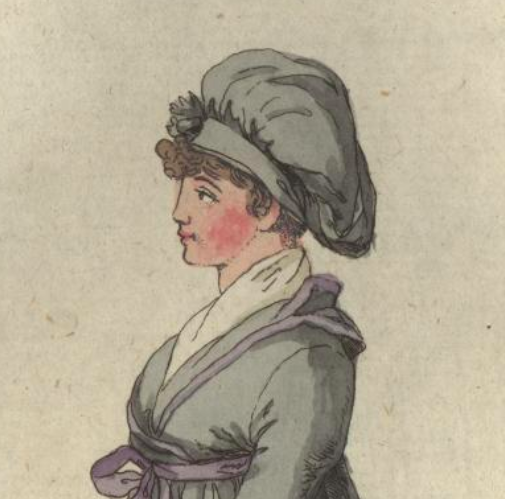
woman in a gray tam o-shanter cap
Detail, Plate 11, April 1799 Journal des Luxus und der Moden.

Enough, it would seem, to be getting on with. In addition to the 1804 Ladies’ Head Dresses plate, there are plates in the Journal des Luxus und der Moden showing headdresses and wraps, as well as an image of a pelisse and matching tam-o-shanter-like hat. These are simple enough to make, and I managed one in less than 24 hours.

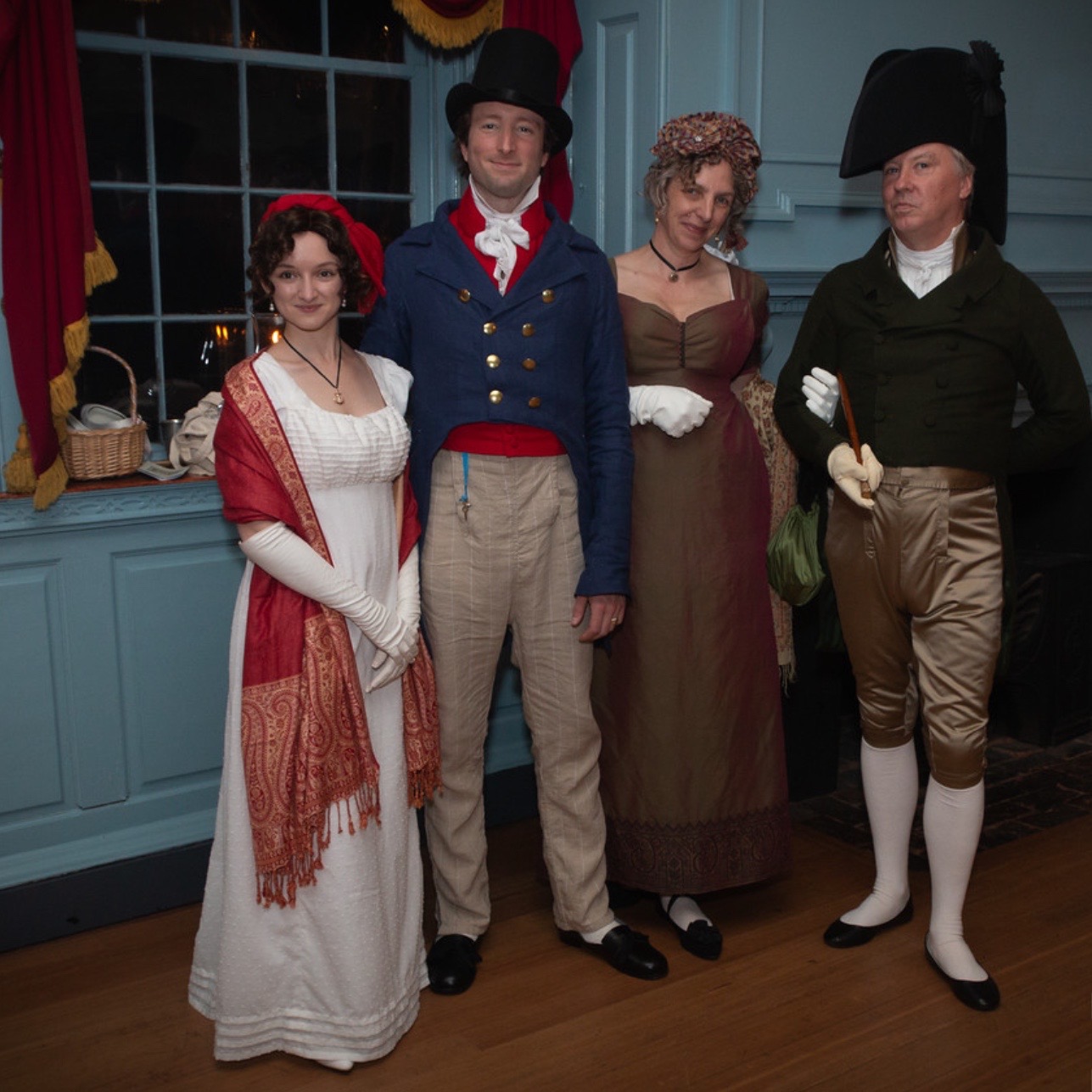
two couples in historical dress
I had no idea Drunk Tailor and I would color coordinate so well. Also, Dat Hat.

The fabric is left over from a gown I made to wear to a dance in Salem one spring, , but which happily coordinated well enough with the sari gown made for a photoshoot, and also worn to Salem for a dance. Briefly, the cap is made from scraps, ornamented with a two-layered rosette centered with a paste button, with the bulk of the caul gathered up and stitched down to hold the shape and embellished with three coordinating tassels looped onto a gold silk-wrapped cord. In the end, not too resting Bingley face, and a satisfactory cover for what I’ll call my hair a la Titus when I’m not in the current century. Drunk Tailor’s hat covered, somewhat, here.

Luxury and Fashion


Sometimes this is a hard hobby to love. My hands hurt, my creativity feels dead, and there’s no place to go all dressed up. After a long, unpleasant spring, I finally feel like sewing and playing. Drunk Tailor and I definitely missed some things we very much wanted to do, but now we’re reinspired, we could take baby steps back to our normal semi-hectic pace– except of course, we are plunging back in with three events in August after a whirlwind trip to Ticonderoga.

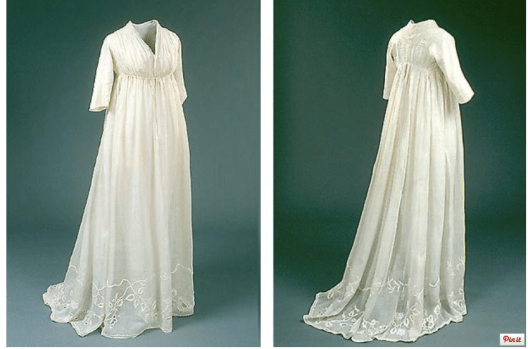
Wedding dress in cotton muslin ca. 1797. Nationalmuseet Danmark.

With the summer heat in mind, I ordered batiste and voile, thinking I would make the Tidens Toj gown, but when the fabric arrived, it seemed that the purveyor had confused the two fabric types, so a new plan was required. Alas, the trials of costume research and falling down the fashion magazine rabbit hole for hours at a time…

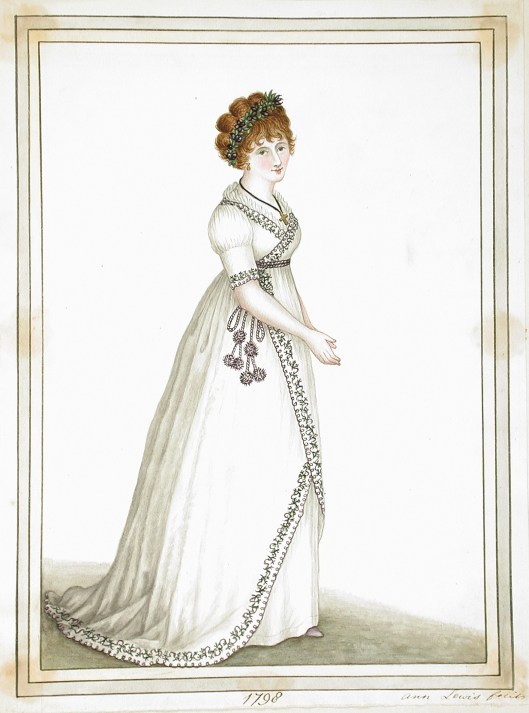
1798 Gown, watercolor by Ann Frankland Lewis, 1798. LACMA, Costume Council Fund (AC1999.154.1-.32)

Next up: an open robe or wrap-front gown over a matching petticoat, trimmed in blue-and-white Greek key trim, with a pair of pointy-toed ribbon-tied slippers and a sleeveless blue silk waistcoat, in three weeks or so.

The waistcoat construction is finished, scaled up from the original garment patterned in the DAR’s “An Agreeable Tyrant” catalog. I chose to line mine, possibly from pure habit of making men’s clothing, possibly because I’m not that great a teeny-tiny hemming and require a lining to hide my sins. With gold silk cord trim and covered buttons, I think it will have a pleasantly military vibe.

For the gown and petticoat, cotton in Virginia’s August heat seems like a solid choice, though by the time the layers are on and the sun is up, it’s possible that nothing will be really cool. (The majority of the day will be spent in air conditioning, so really, anything would be okay.) The trim arrived last night, and has a body that will need batiste (and not voile) for support. The combination causes me to entertain fears that this aesthetic is a little too boat-shoes-and-belts-with-embroidered-whales for 1797-1799, but when topped with something not unlike Drunk Tailor’s militia cap, the aesthetic will tilt from yachting to the Good Ship Lollipop.