Wrestling with Myself

Hard choices!
Hard choices!

I wrestle a lot with myself, which sounds much sexier and more athletic than it is, when it’s your patience and conscience. It’s a constant fight with my own brain and animal nature, like Snowy pondering a bone.

  • It’s hard to keep sewing for an ever-taller young man who refuses almost all attempts at fitting. (Especially when your calloused fingertips and split thumb keep catching on the silk buttonhole twist.)
  • It’s hard to have program ideas and then realize you will end up as the maid, serving a meal to a group including some people you might not like. (Don’t you think that must be a fairly authentic emotion, historically?)
  • It’s hard to put aside plans for your first pretty silk dress because someone doesn’t want to go where you want to go.
  • It’s hard to embrace the importance and meaning of interpreting the ordinary in a culture that celebrates the unique.

I come to that and stop: mission.
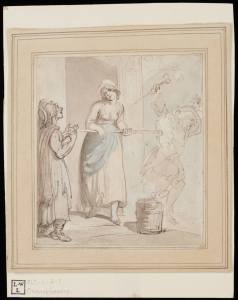
I'm a bad maid. Watercolor by Thomas Rowlandson, 1785? Lewis Walpole LibraryDrawings R79 no. 7
Watercolor by Thomas Rowlandson, 1785? Lewis Walpole LibraryDrawings R79 no. 7

You can take anything too far, of course, and an occasional silk gown and turn around a dance floor might make being the maid a little easier, but in the end I know that what’s important to me is representing the people who have been forgotten.

That same impulse may be part of what drives the splintering into ever-smaller groups with every-different coats, but walking the cat back also leads me to think that lace, tape, and shiny buttons may be part of the equation, too. Are those uniforms the gents’ equivalent to cross-barr’d silk sacques? As in any culture, it is easier to have your cake and eat it, too if you’re a guy.

For most of us women inhabiting the past, if we’re not baking cake, we’re serving it.
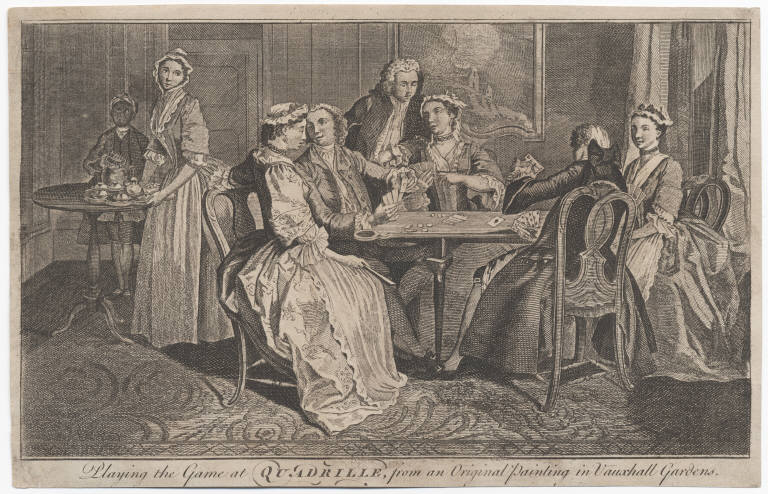
Playing the game at quadrille : from an original painting in Vauxhall Gardens. London : Robert Sayer, ca. 1750. Lewis Walpole Library, 750.00.00.14

It’s a funny thing to want a break from work you find important, but as with anything, variety and perspective are important.

She looks wistful, doesn't she? The others are whist-full.
She looks wistful, doesn’t she? The others are whist-full.

In a world of individualists, each trying to stand out, quotidian celebrities– cast a skeptical glance at your social media feed and tell me I’m wrong–our impulse may not be to inhabit the background. But most of us are the background. We’re large only in our own minds, stars of the movies of our lives that flicker past our eyelids. And that’s ok: that’s noble, even, to live a small, thoughtful life.

 Silver Pocket Watch of Meriwether Lewis, 1936.30.5
Silver Pocket Watch of Meriwether Lewis, 1936.30.5

Once upon a time, when I worked in Missouri, I was fortunate enough to spend a lot of quality time with some amazing artifacts.

Meriwether Lewis’s refracting telescope.

William Clark’s compass.

Meriwether Lewis’s pocket watch.

William Clark’s Account with John Griffin for thread, cloth and other articles including a hat for George and shoes for Mary. (July 1820, William Clark Papers, B13/F5, MHS)

Account of expenses in “horse keeping,” 1829- 1831. Request to Clark to pay to Mrs. Ingram, with request to serve as receipt. On same document: ADS Dashney to Major Graham, 26 June 1826. Order to pay William C. Wiggins. (1831 Dec 13, William Clark Papers, B14/F2, MHS).

There are letters to one of Clark’s sons, trying to get him to stay at West Point. There are bills for bolts and iron work for Clark’s house. Yes: there are amazing things in the collection as well, and historians of all kinds can do amazing work in the papers.

But they are ordinary. They are daily life played out in the first third of the nineteenth century in St. Louis, bills and accounts punctuated by letters from famous people and news of wars and explorers. But after processing the family’s collection, what struck me more than anything was how ordinary they were, how quotidian.
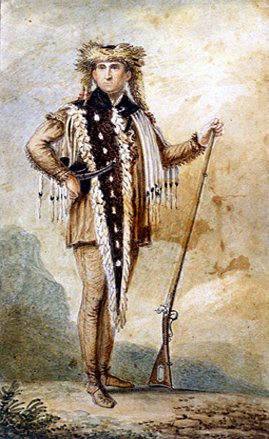
Meriwether Lewis in Indian dress. engraving after St. Memin, 1807.

Lewis was fabulous, interesting and mysterious. I don’t know what really happened on the Natchez Trace, but I know what happened in St. Louis. William Clark kept living, paying his bills and stumbling sometimes, refusing a role as territorial governor before accepting it. He got boring. And for that, I love him more than Lewis.

There’s real value in interpreting the everyday, ordinary people, in bringing work and working people to life in the past. I don’t always love repressing my ego, but I know that a nostalgic view of the past can be dangerous. I meant backwardly aspirational when I first wrote it, and I mean it now: most of us would not have been merchants wearing silks and velvets and superfine wools.

After wrestling with my ego and silk dress disappointment most of this afternoon*, I’ve found satisfaction in the thought of expanding my understanding of working class women. If really digging into interpreting the world of the marginal makes me uncomfortable, it must be worth doing, and doing well.

*Thankfully whilst performing useful tasks like running errands and thus wasting little real time on this nonsense.

Analogize This: Subcultures and Subgroups

Remember the post about the Clash, the rawness of the Vanilla Tapes, and authenticity? In response, someone commented elsewhere that there is a cross-over between punk and reenactor subcultures.

“For one thing, it’s “anti-fashion”, if fashion is defined by what’s newest. Likewise, where do we see more punks within the reenactor subpopulation? Authentics/Progs – which is an even more stringent ideology where the clothing worn is atypical of the general masses (and hand-made, to boot! *uniqueness intensifies*). The list of similarities goes on and on…”

If that’s TL;DR for you, Agnostic Front summed it up thusly:

Talk about unity
Then talk about conformity
You don’t want to support the scene
Why don’t you get the fuck away from me?

It’s that last line I’m interested in: what’s with all the sub-groups and sub-sub groups and not playing together? Someone brought a similar phenomenon up to me this morning, and in my half-awake haze, I sent him this: Kelefa Sanneh on the NYHC scene from the March 9th New Yorker.

Here’s why: my friend said,

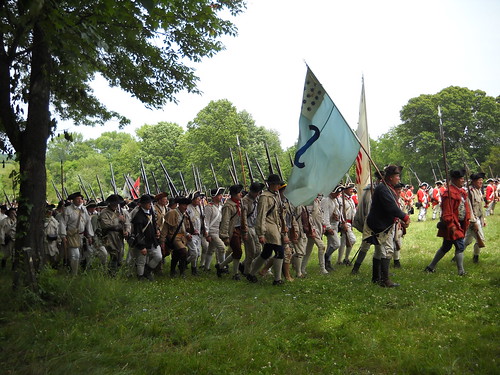
“The progressive “need to do your own thing and go your own way” leads to a constant parade of new units. Established Progressive units are always looking for new blood, but there are more splitters than lumpers…. There are huge farb units where quantity has a quality all its own.”

To have Men in Ranks, you need Men in Ranks.

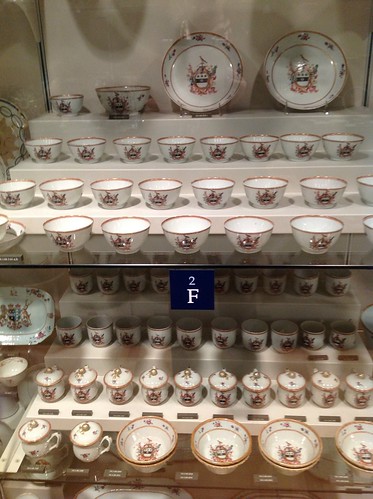
He’s not wrong, folks: there are times when size matters and Martha Stewart taught us about the impact of large groups of the same thing. You can see it working in a Met Museum open storage display of transferware or glass.

Mass Matters. Open storage at the Met, May 2013

Guys in uniforms, plates on shelves: comes to the same thing. When you get ‘em all together, they create a mass that gives an authentic presentation of force, while a handful of guys in super-accurate to the last rabbtre stitch might not—at least, not unless they’re a detachment from a light company or a scouting party, right? And what, then, of context?

So what’s happening? Are we cutting fine distinctions between groups that are actually very similar? Yes. “This new unit and uniform is totally different from your established unit: our buttons have a different number on the center.”

That raises my hackles. The more we divide, the less we conquer. It’s harder to win when you purposefully make it harder and more elite, and that’s happening as the units represented become more obscure, smaller, and more insular. It’s starting to look like show boating.

It may well be that the politics of the existing units are so awful that you have to splinter, and splinter again, but I also know units that have multiple impressions … of the same unit that show change over time. Is the sole reason this is not possible to replicate in other units the politics of these groups, or is there a badge of rank, a sense of accomplishment and uniqueness (dare I say a sense of elitism?) that comes from splintering to form ever smaller cadres of like-minded men?

“Most of all, being hardcore means turning inward, ignoring broader society in order to create a narrower one. In that narrower society, one’s ideological convictions can matter less than conviction itself—a sense, however vague, of shared purpose. In the New York hardcore scene, a wide range of characters—from Rastafarians to Republicans, street rats to suburbanites—came to see themselves as part of the same movement. That flexible spirit lives on in the genre’s famous suffix, which is now used to tag an array of movements, not all of them musical: rapcore, metalcore, grindcore, nerdcore, mumblecore, normcore.”

Ranks upon ranks of porcelain. Open storage, Met Museum May 2013

This is what we may have now: reenactor-core, instead of corps, if we fail to see ourselves as part of the same movement.

Groups, like egos and porcelain tea bowls, can be fragile. If we could handle each other with greater care, we might get more fun out of this business.

Ultimately, though, what this all makes me think of, as I lose patience watching the TWD mosh pit, is Woody Guthrie. The women may be ahead of the men, if only because there are so few of us, we must work together.

Does Accuracy Make Cromwell a Dull Boy?

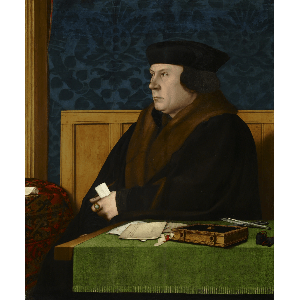
Thomas Cromwell, Hans Holbein the Younger. The Frick Collection,1915.1.76

My personal interwebs have been hating on Sons of Liberty, but I’ve left it alone, largely because I haven’t found the forty-syllable German word for “enjoying watching someone else enjoy hating something.” My FB feed exploded with meta-schadenfreude, but really: hating on that show is so easy it’s cruel.

Still, all that chatter did get me wondering: what about Wolf Hall? No, I haven’t yet gone proxy server and watched it on the BBC iPlayer, but I have been following along on the Twitterz and this turned up in my TL: Wolf Hall May be Historically Accurate, but it’s also A Bit Dull.

Except I think the author destroys the accuracy bit. First there’s this:

Peter Ackroyd audaciously asks us to imagine pre-Reformation London as the street markets of Marrakesh. Cheapside would have been a bustling surge of traders and customers, alive with noise and smells, packed with barrels and panniers of fish, fruit and spices, more like a bazaar than the modern city. Equally, to imagine the interiors of English churches in the 1520s, think Andalusian gaudy rather than Hawksmoor’s classicist austerity, the walls covered in brightly painted scenes, the chapels filled with statuary and icons.

Fete at Bermondsey, 1569. Joris Hoefnagel. Private Collection, UK. Colorful, right?

And this:

Early Tudor London was a bright, brash and bustling place, unlike its whitewashed Protestant successor, and its inhabitants behaved in similarly extravagant fashion. Foreign ambassadors were surprised by Englishmen’s capacity to weep openly and publicly at the slightest provocation. Satirists condemned the aristocracy and burghers for wearing too much bling: flaunting their status in chains of gold so heavy you were amazed they could walk at all.

Then this:

the costumes, beautifully designed and no doubt scrupulously researched, make Tudor society less, rather than more, intelligible. Only Cardinal Wolsey (a melancholic Jonathan Pryce) and Henry VIII (Damian Lewis on imperious form) are allowed bright colours. Everyone else, aristocrat and commoner alike, wear gowns in muted blacks, browns and greens, and so all look much the same – especially as so many scenes take place in near-darkness.

The past sure was a drab place, at least as seen on TV. That’s how you know it’s history! And if the show was so well-researched, why are the costumes so wrong? Because they’re costumes.

Cassidy has gone into good detail about how costume design for a movie or TV programs isn’t about accuracy: it’s about interpretation. And that’s where Sons of Liberty, Wolf Hall, Pride and (or &) Prejudice or Your Favorite Hobby Horse diverge wildly from interpretation in living history. We’re interpreting the past, they’re interpreting a script. (Yes, a script: Sons of Liberty is no way a documentary.)

So I’d save your ire for historic sites and museums and documentaries: what you see on TV is all drama, and just drama. The costuming (and, often, material culture) will in no way be accurate, because it is always designed to further the dramatic goals, and not the accurate depiction of an moment in time.

And that’s why Wolf Hall can be accurate and dull, correct and incorrect. Costume and production designers and directors want us to get the point of the story, so they’ll create dullness where there should be color to make sure we can “read” an otherwise unreadable scene. Now, between you and me, I think good writing can explicate all those class and origin relationships, and that actions large and subtle will show me the emotional relationships, but that’s asking a lot of people who wrecked Mantel’s amazing writing.

In the novel, Mantel has master and servant embrace each other in fleeting triumph. When the dukes go, Wolsey turns and hugs him, his face gleeful. Though it is the last of their victories and they know it, it is important to show ingenuity; 24 hours is worth buying when the king is so changeable. Besides, they enjoyed it. “Master of the Rolls”, Wolsey says, “did you know that, or did you make it up?”

In the adaptation, on the other hand, Wolsey stays seated and Cromwell stands, invisible behind him.

– Did you know that, or did you make it up?
– They’ll be back in a day.
– Well, these days 24 hours feels like a victory.

In the end, I may skip the BBC’s Wolf Hall and re-read the novels. It’s a lot less shouty.

Same Place, Different Day

We were doing some preliminary planning for an event this fall, and we were considering recreating the 1803 funeral of Important White Guy. Our event is in October; the funeral was in September. Somebody asked me, “What does it matter when we do it?” and I didn’t respond nearly as gracefully or eloquently as I could have.

Why does it matter? Does it matter to anyone but me and my cohort?

It does, and here’s one reason why: When interpreting the funeral in late October, perhaps a member of the public will ask, “When did he die?” Can an interpreter really say “September 20” and not expect a slew of questions about how long the body was kept and why the funeral was delayed and wasn’t that a health hazard? Can the event orientation start out with “We’re doing it in October because that’s when we want to do it,” without fundamentally changing the event?

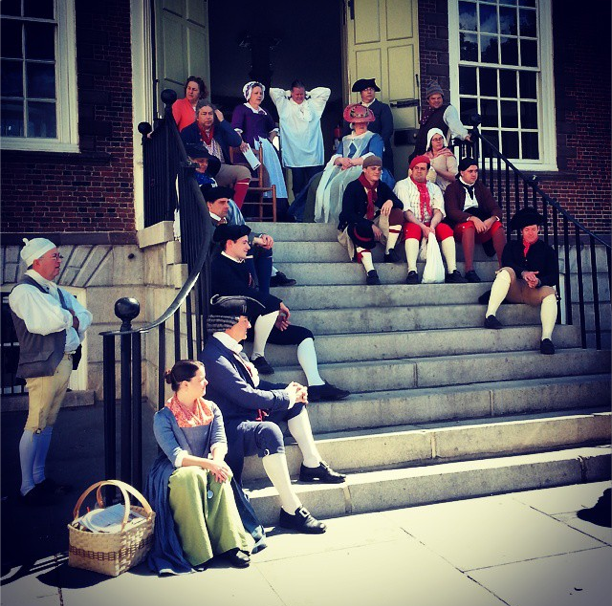
On the Colony House steps
August is hot. Can we riot in September? No!

Moving the recreation of a specific event by more than it takes to get to a weekend* seems dishonest to me: do you really want to celebrate your birthday 5 weeks after the actual date for someone else’s convenience? July 4th: Gosh, it’s not working for me this year. Let’s do that in August.

For a historical organization to suspend caring about accuracy for living history events but not for published articles, catalog records, or finding aids just contributes to the greater problem in and of living history.

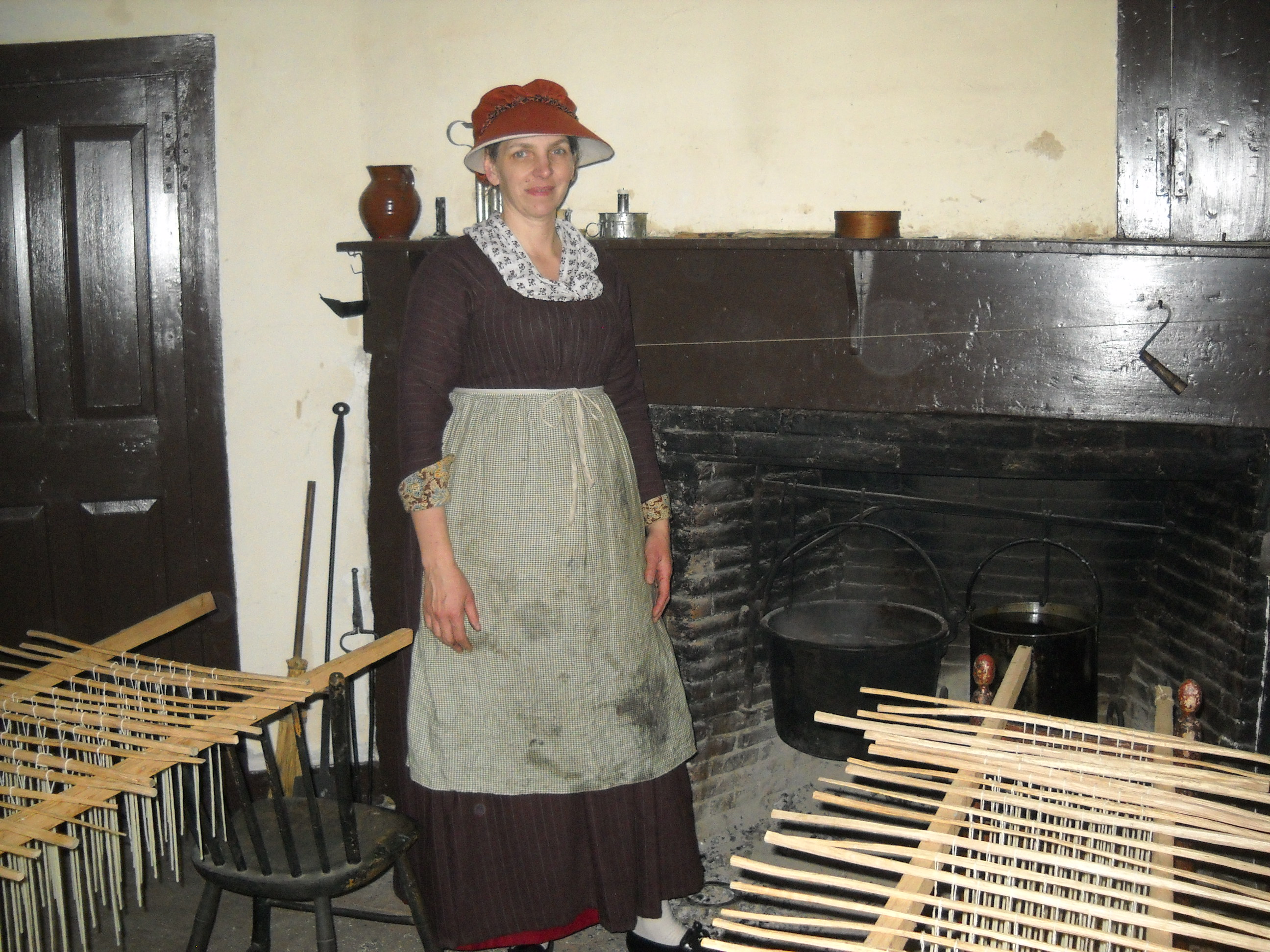
When asked about the goal of a living history event, I have been told, “Well, we want families, right? So we should have some hands-on activities, you know, immersive, like candle dipping.”+

It took a bit, but at last I grasped the core of the angry-making: Kids like living history, therefore it is less sophisticated than other forms of history.

The right place for immersive string activities.

Living history is not as sophisticated, nor need it be as accurate, as traditional (written, orated, curated) historical presentations: I think that is the background assumption a lot of people make, both in the adminstration of traditional historical organizations and in the presentation on the field. It is a complete fallacy.

Living history done well and done right is as well-researched as a paper, exhibition, or article. It draws from primary sources both written and visual, it requires the absorption of countless secondary sources to help analyze the primary sources. It is as collaborative and negotiated a process as any museum exhibition, and like exhibitions, it uses material culture interpretation to deliver its messages, i.e. meet its educational and interpretive goals.

15316751814_946818c254_z

A good living history event is beautiful, but like a ballet, that beauty does not come easily. There are no shortcuts, and beauty does not equal superficial or stupid. It indicates sophistication. Part of that appeal is accuracy: the better, the more accurate and immersive the historical setting and action you create, the more visitors can learn without asking.

Lawn games
Lawn games

When I organize an event in our house at work (or even on a guided tour) one of my interpretive points is always “people saw the world differently– literally– and this event/house tour helps you see the world of 1800 the way people living then saw it.” Aesthetics were different, and were underpinned by ideas and opinions. But understanding those aesthetics and the opinions people held about race, gender, beauty, work and class takes actual research and analysis. It’s not all putting on a pretty dress and cavorting on the lawn. Facts matter. Accuracy matters.

Museums are some of the most trusted organizations. If we started juicing facts like every History channel show, we’d lose that trust, and rightly so. Our trustworthiness is grounded in our honesty and integrity.

Living history events are mobile museums, and every reenactor curates his or her own impression. To retain the trust and interest of the public, we have to be accurate.

*Events are moved to weekends because that’s when interpreters and audiences can come.

+This at a house that not only lacks a working kitchen earlier than 1960 in the staff area and was owned by a partner in a candle factory. I’m thinking “bought ’em in bulk,” here, not dipping.