The Myth of Perfection

Ain’t nothin’ perfect.

Jackie’s got good points, and although I think they are slightly tangential to where I thought I was going on Monday, let’s pick them up.

Completely 1819 to represent 1819? My standard reply to pretty much every question is: It depends. Who are you, where are you, what are you doing? Middle class or higher bride? You are so 1819 it’s scary, from your skin out, head to toe. Lower class? You’ve altered your best dress, if not made a new one, and refreshed your accessories.

Look, folks: part of our problem is that we forget that the people in the past had the same covetous, jealous hearts that we have. They had wants and yearnings, for each other, for new bonnets, for velocipedes and overcoats. They were just as interested in impressing each other as we are, even if they sublimated desire into poetic images of greater obscurity than James Brown ever used.

I thought about this notion of mixed up times for clothing as I stood on a landing at work yesterday. Skin out, here’s what I wore on 1 September 2015:

  • Black Natori sports bra, purchased in Boston on January 10, 2014 (I saw my surgeon so I remember.)
  • White cotton tank top, label gone, acquired ca. 2013, possibly from Target
  • Blue and white striped cotton 3/4 sleeve J. Crew blouse, 2006
  • Black Nike undershorts, 2010
  • Lucky brand jeans, August, 2015
  • Red suede belt with brass buckle, ca. 2004
  • Red suede Naya oxfords, late winter, 2014

The oldest thing was the belt, followed by the blouse. The most stylistically determinate item is probably the jeans, since waistline height and cut of the legs fix trouser/jeans style. So, what could this mean for us, when we dress for the past?

Let’s start with dressing for the American Revolutionary War period, 1775-1783. What you wear depends of course on who and where you are; here I am in New England, wishing I was middling sorts.

Detail, Mrs Richard Skinner, oil on canvas by John Singleton Copley, 1772. MFA Boston, 06.2428
Detail, Mrs Richard Skinner, oil on canvas by John Singleton Copley, 1772. MFA Boston, 06.242

If I wear an open-front stomacher gown in 1775, will I still feel comfortable in that in 1783, when the ladies of means around me have switched to closed-front gowns? Or will I feel like I’m wearing bell bottoms and a macrame vest to high school, while the cool girls are wearing pegged Guess jeans and Fair Isle sweaters? (Not what happened to me, but you follow my point). Think how much American fashion changed between 1975 and 1983, and while you will surely see pieces carried over– watches, headbands, socks, Tretorn sneakers– they will be primarily small pieces, accessories, and not main garments.

Lady Williams and Child, oil on canvas by Ralph Earl, 1783. Metropolitan Museum of Art, 06.179
Lady Williams and Child, oil on canvas by Ralph Earl, 1783. Metropolitan Museum of Art, 06.17

That’s really want I think we want to get at: Yes, people mixed up clothes, wore favorite things, wore things out. But then as now, they wanted to be stylish. The more care you put into imagining yourself in the past, really being that person, the more convincing you’ll be. You won’t be perfect, and authenticity is as unachievable as objective truth, but you will be closer to real, and yes, even the public will know.

The Real Thing

Talking with a friend about authenticity and realness, I remembered the moment when I really understood the power of the real thing

Meret Oppenheim Object Paris, 1936 Museum of Modern Art, NY. 130.1946.a-c
Meret Oppenheim
Object
Paris, 1936
Museum of Modern Art, NY. 130.1946.a-c

Longer ago than I care to admit, I went to MoMA with my dad, and saw, up as close as you could get to a glass case, Meret Oppenheim’s fur lined tea cup, Object, or Luncheon in Fur

I’d seen slides, and illustrations in books, but only when I saw the object did I really understand what it was about. Unfortunately, even having seen Duchamp’s “Bride Stripped Bare” in person, I still don’t get that piece. Such is life.

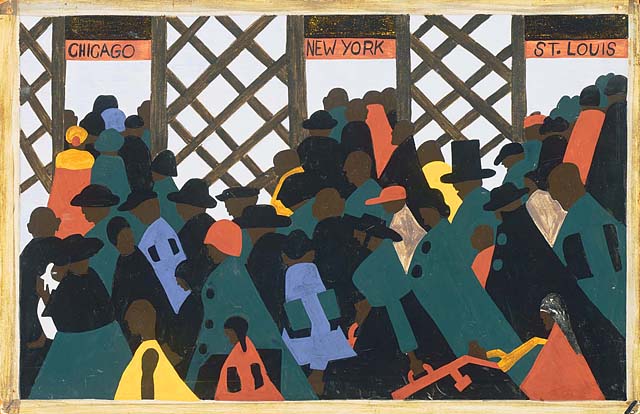
So what is it about the fur-lined tea cup in person that makes it so different? What is it about Jacob Lawrence’s Migration series that makes it different? Or Pollock, for that matter? Why is the real thing so ineluctable?

 JACOB LAWRENCE (1917–2000) The Migration of the Negro, Panel no. 1, 1940-1941. The Phillips Collection, Acquired 1942 © The Estate of Gwendolyn Knight Lawrence / Artists Rights Society (ARS), New York.

JACOB LAWRENCE (1917–2000)
The Migration of the Negro, Panel no. 1, 1940-1941. The Phillips Collection, Acquired 1942 © The Estate of Gwendolyn Knight Lawrence / Artists Rights Society (ARS), New York.

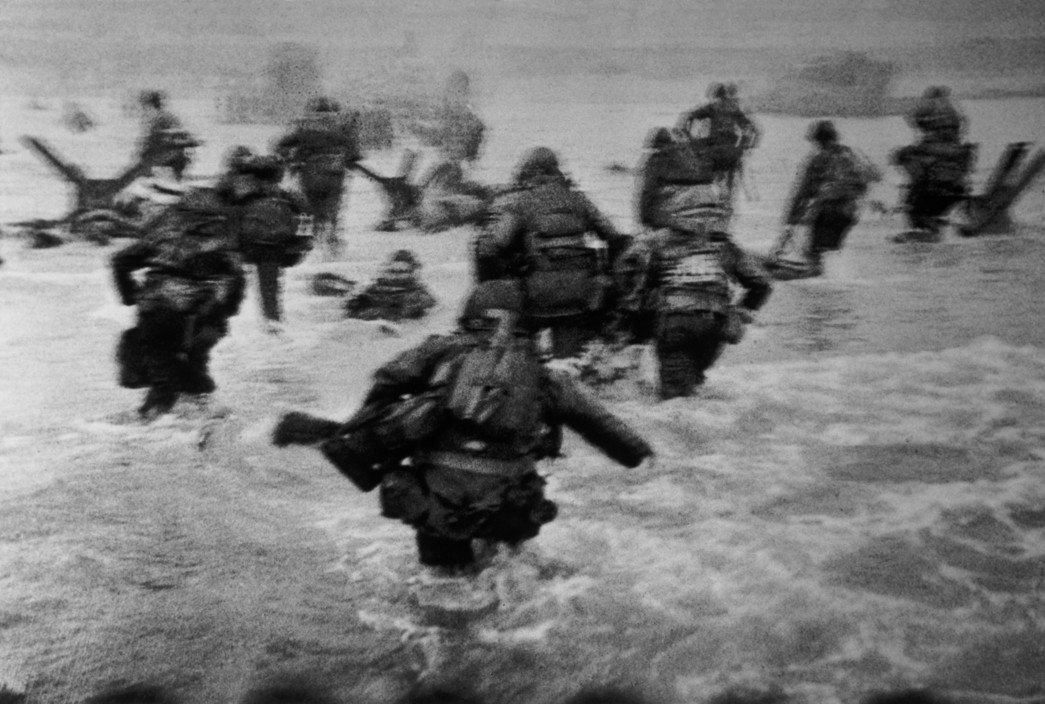
I don’t know, really; what I do know is that it matters. I’ve held a transparency of The Migration of the Negro, Panel no. 1, in my hand before, and it’s not as good as seeing the marks Lawrence put down in gouache. I’ve held a Robert Capa print in my hand, marked on the back with publication notes from the 1940s and it still gives me goosebumps to think of it, to think of him in the water off Normandy on D-Day. Existential ambiguity of the wrecked emulsion be damned: those images, held in your hand, are more moving than you can imagine from seeing them published in Life or any monograph.

FRANCE. Normandy. June 6th, 1944. US troops assault Omaha Beach during the D-Day landings.
FRANCE. Normandy. June 6th, 1944. US troops assault Omaha Beach during the D-Day landings.BOB194404CW00003/ICP586(PAR121451)© Robert Capa © International Center of Photography/Magnum Photos

I’ve had people say to me recently that “it doesn’t matter,” that no body will know if they’re wearing 1774-1783 clothes at a 1790 event, and I disagree strongly and thoroughly. It does matter. The mattering is the whole reason museums exist. It’s why we go to see our favorite music performed instead of sitting home with Victrola or iPod listening to the crackle of Bessie Smith² or album-produced Billy Bragg. Listening at home puts us at a remove, polishes the roughness and steps back from immediacy.

To say that the image in the book or the not-really-right clothes are the same at the real thing does a disservice to ourselves and to the public. Are we really suggesting that audiences for art or history are that stupid? Or that we are so unmoved ourselves that it just doesn’t matter?

I’m too old for nihilism. Bring on the real. Let’s get it right, because it does matter. I know when it’s real, and so do you.


______________

¹Sadly, this goes through my head with the phrase “the real thing.” Curse you, Douglas Coupland, for capturing my generation’s fixation on pop references.
²Yes, I know she’s dead, go with me here.

Rodentia, or, A Parable for Our Times

Once upon a time, as most of us were, I was in high school. It was not a stellar experience for me, but it was defining. Aside from the very few people who became my friends, and whom I follow along with even now, high school was populated with people who did not particularly care for me. Then as now, détente was a reasonable, if not always achievable, hope. But for some, there was a literal breaking point: a Rubicon, if you will. It started in sophomore French class.

John James Audubon. Marsh Shrew, Plate CXXV

We had a substitute teacher one Fall Monday. Her English was not perfect, though her French was; she was a regular teacher stepping in for our regular instructor. This was a pre-lunch class, but there were three 20-minute lunch periods. My class had second lunch; this meant that about 20 minutes into French class, a bell would ring, signaling the beginning of first lunch. After another 20 minutes, a second bell would ring, signaling the end of class and the beginning of second lunch.

John James Audubon. Bridled Weasel, Plate LX

On our first day with the substitute, when the first bell rang, two boys convinced her that class was over, and no one contradicted them: we left at the 20-minute bell. The next day, the same boys tried the same ruse. Three quarters of the class walked out, but at least two other girls and I stayed: I raised my hand and explained that the first bell was not the end of our class period.

John James Audubon. Black Rat, Plate XXIII

My nickname became then and stayed The Rat. My classmates taunted me and chanted The Rat in the halls. Drawings of rats were stuck to and shoved inside my locker. This lasted until graduation, when we had almost forgotten the origin of my nickname.

When I tell this story now, I don’t look for pity or sympathy: this is a pathetic Lord of the Flies played out in the grey-carpeted halls of a Chicago Gold Coast private school, where the stakes were low so the repercussions were high. This was where I learned about clothing conformity in the guise of Polo shirts, Tretorn sneakers, Levi’s 501 jeans, and Brooks Brothers shirts. I wore my classmates’ fathers’ hand-me-down shirts from the thrift shop; I wore their grandmothers’ dresses. A Rat requires some style.

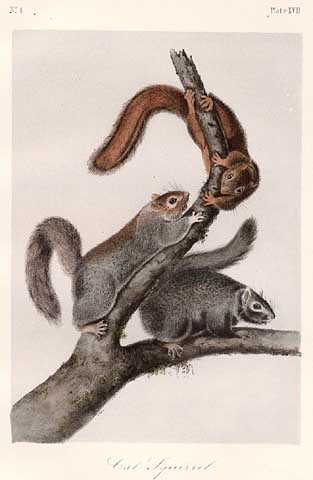
John James Audubon Cat Squirrel, Plate XVII
John James Audubon. Cat Squirrel, Plate XVII

As an adult, I find that people haven’t changed all that much. The cliques still exist, and while adults don’t usually shout at you, ostracism and snubbing are deployed regularly. But I learned long ago how to be alone, or with a few true friends. Evidence always speaks for itself.

Mind the Gap, or, The Basket Case

I was in the midst of planning yet another maid’s dress (some of us have all the luck) when a friend alerted me to an online discussion that drew from my recent post on baskets. The comments — which I skimmed but twice– made me think about philosophy and intent.

Engraved by John Raphael Smith, 1752–1812, British, A Lady and Her Children Relieving a Cottager, 1784, Mezzotint and line engraving on medium, slightly textured, cream laid paper, Yale Center for British Art, Paul Mellon Collection

There are two approaches to developing a living history persona and appearance I’ll consider here: one prescriptive, and one not. The prescriptive, didactic approach tells you what to wear and carry. Some folks like that. It is completely correct in some cases: soldiers, for example. You want to fall in with a unit of Light Infantry in 1777, it’s generally more convincing if you don’t wear the 1781 coat. Not everyone cares: some people will keep on wearing the Brighty Whitey Hunting Frocks and 1780 coats at reenactments commemorating events of 1776. Those folks can no longer be reached by prescriptive standards, and my preferred approach probably won’t reach them either.

Joshua Cristall, 1768–1847, British, Young Woodcutter, 1818, Watercolor with scraping over graphite on moderately thick, slightly textured, beige wove paper, laid on thick, slightly textured, beige card, Yale Center for British Art, Paul Mellon Collection

Mindful reenacting or living history sounds pretty nutty, but that’s what I would encourage. Thoughtfulness. Consideration. Not just the what, but the why. Why you wear or carry something can be as important and interesting as what you’re wearing and you’ll be all the more convincing for thinking it through. Thinking, not rationalizing. How appropriate is it to be in your best clothes carrying a basket also used to carry fire wood? You have to answer that for yourself, and if you’re doing it right, the answer will not always be the same– nor will the question!

Print made by James Bretherton, ca. 1730–1806, British, A Maid, 1774, Etching on moderately thick, rough, blued white laid paper, Yale Center for British Art, Paul Mellon Collection

This isn’t the easiest way to go about anything, asking all these questions, but for some of us, the experiences make it worthwhile. You won’t always be able to do, carry, or wear what you want.* But the picture you create of the past will be more accurate and more engaging if you think more and justify less.

Look, I threw down about that floppy bird basket, but I have to provide food to troops this Saturday in Cambridge. What the heck will I carry it in? What will I take my sewing in?**

Probably a wallet and a bag, unless I can pack that floppy basket convincingly– it is entirely suitable to my lower sorts-stained gown impression– but if I can’t, I won’t take it. And that’s just one less thing to carry.

*I’m pretty much always the maid to make scenarios work, and while it doesn’t come naturally, art imitates life.

**Prays no one gets the bright idea to bring (shhh) tents to work on.