Fitful Friday: Art Still Has Truth

Pitt and Napoleon carve up the world.

It’s been one of those weeks, hasn’t it? Up and down, emotionally, as we all prepare for change. Whig or Tory, these are turbulent times.

I’ve been surprised by recent fabric arrivals in the mail, disappointed when I waited a day too long to register for a dance, and now I’m at loose ends. What comes next?

Last weekend I cut out a black wool Spencer to line in lettuce green silk because why not? And teeny tiny backstitches later, I have one sleeve finished. Focus is hard to come by of late.

I meant to join the Historical Sew Monthly to give my sewing life some structure, and I still can, though I cannot seem to settle down. Clearly, I have Firsts & Lasts that could be made (not always in the time remaining, mind you, so I would have to choose wisely).Re-Make, Re-Use, Re-Fashion? Probably much there as well– at least if one counts the quilted petticoat worn at Princeton, which was remade and altered from its original form.

July: Fashion Plate, could become the shawl gown I’ve dreamt of for years, since, as you can see above, I’ve found one that might work, lured by a fair price on a sizable piece of wool– but wherever shall I wear it? Why can I not get past utility? The Dreamstress’ Kashmiri shawl gown and her research are there to emulate, and explain.

Oh, I have projects and events to research and plan, housework to complete, and plans to execute. But they all seem abstract and unreal at the moment when we hang on the pivot point between the future and the past. It’s been a strange year in many ways and places, and constructive projects help focus.

Art Still Has Truth Take Refuge There

Long ago, in the first turbulent times I was old enough to understand, I lived in St. Louis. Then, as now, I think the Art Museum’s motto holds, and reminds those of us who work in or appreciate sometimes frivolous-seeming fields and hobbies that all our actions have meaning. I’ve thought for a long time about the utility of sewing historic clothing, cataloging objects, and running around recreating the past.

Getting outside one’s own experience is incredibly hard; it’s hard to have an open heart, and to encourage openness to others. But that’s one of the most important roles museums and libraries play: we help people develop imagination and empathy. I know it’s part of why I do the work I do. I like to think that ultimately, helping illuminate the complexity of the past will help us all understand the present and make a better future.
Bang Bang Pew

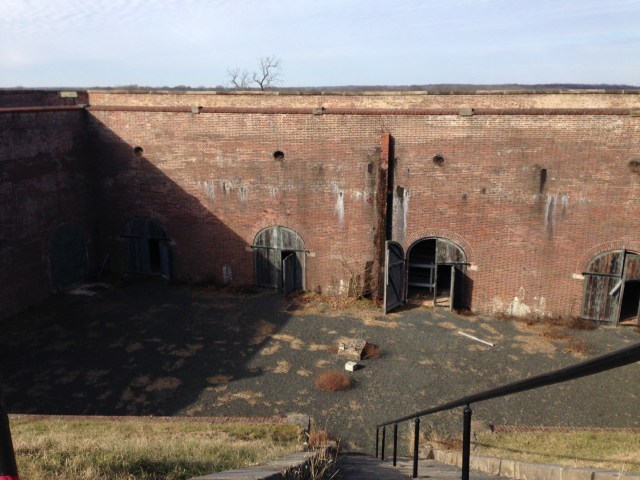
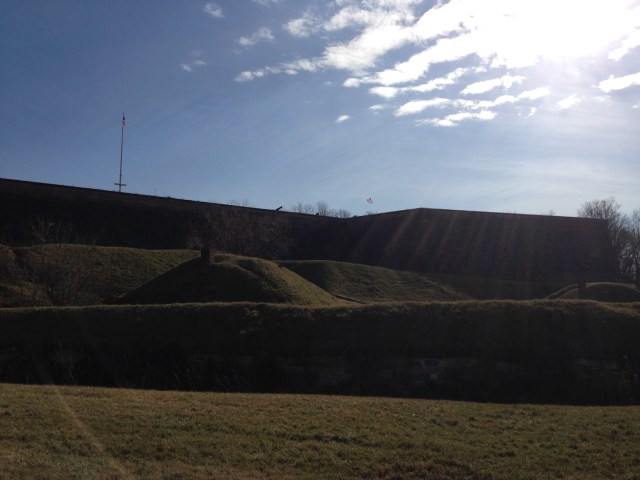
img_8896Like an energetic Golden Retriever, I need to be walked daily, almost without regard to weather, and I have a fondness for water that I fear makes me a questionable house guest-cum-nurse. Fortunately for me, Drunk Tailor has a granular knowledge of his surroundings that allows him to recalibrate his understanding of the places he likes to suit my needs: hence a Sunday trip to Fort Washington, Maryland. Plenty of room to wander, a wide* meandering river, defensive weapons installations.

It’s a large site and we only explored the main fort structure, the shore by the lighthouse, and the visitors’ center (I’ve seen plenty of Endicott batteries before, both on the Potomac and on Narragansett Bay). It started out well enough: the curious tripping stick figure sign warned us of the wooden bridge into the fort, and reminded me of a friend with a fondness for fonts and curious graphic design.

img_8890Guardhouse, batteries, masonry walls, stables, earthworks, former ditches, the remains of powder houses: all good stuff. The signs were what one comes to expect from the NPS: UV-damaged labels, slightly behind the times graphically, indicative of the slow pace and underfunding of the preservation of our national heritage.

img_8894

Drunk Tailor’s memories of Fort Washington include a first-person living history event set on the (literal) eve of the Civil War, with men portraying member of a Texas-based unit wondering how they would ever get home, and responding to a woman’s inquiries about General Lee and Grant with the suggestion that reading Harper’s would bring her up to date with current events. Now, we are in January and my expectations are low in the cultural heritage off-season: this is the time for maintenance, upgrades, rest and refurbishment.

img_8903
All the pew. Plus some spinning.

What I did not expect– though I should have– was the leftover daily event roster from some time in 2016.

Boom! Goes the cannon, et cetera. Because Boom! is easy. Add in a side of spinning and we are good to go, right? We got something for the ladies. (You know where this is going, right?)

The best thing I can say for Fort Washington is that I was spared endless racks of brown sticks displayed with only the barest of identifying labels and no interpretation**. But here we are at a site with over 200 years of history and just the vaguest hints in the visitor center of decades of use and change over time. And I like military history. I like weapons. But the more I visit the more I marvel at the way we underestimate our visitors’ capacity for understanding and interest in the past.

img_8889
Bigger Booms

As we drove away from Fort Washington, I began to think that once again, we are asking the wrong questions. Instead of questions that can be answered, “Guns Got Bigger,” why not ask some of the following:

  • What was daily life like for the men stationed here?
  • What material differences did officers and enlisted men experience?
  • Could enlisted men get married? Where were their wives?
  • How much did soldiers get paid?
  • What was the typical term of enlistment? Did that change over time?
  • Where were the stables? What were the horses used for?
  • How was the fort supplied? Where were the kitchens?
  • Where were the mess halls? What was a typical diet?
  • How did rations differ for men and officers?
  • Did any of the British officers or enlisted men remember the area around Washington, D.C. from their service in the Revolutionary War? To what degree might that have influenced the way the War of 1812 was fought?
  • What about that court martial, Captain Dyson? How was it run? What testimony did Dyson give?

Why did I have to go to the Fort Washington website to learn about the Adjutant General’s school, and the WAAC detachment? And why is it a PDF instead of a webpage?


Perhaps the most salient question to ask, on the Monday of inauguration week, is why do we care so little for our shared past that we accept the level of funding and staffing that gives us this level of interpretation? Don’t we, as a people, and our history, matter more than this?


*For the East Coast. The Potomac ain’t no Mississippi.

** I’m looking at you, West Point Museum.

Staging Christmas

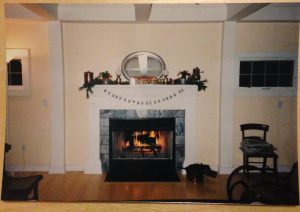
The house on High Street, Noank CT, 2000

It’s pretty stagey to begin with, isn’t it? Full of ritual, some so old we don’t know why we still perform them. What I like best is the food, not the cakes and cookies, delicious as they are, but savory meals and the warmth of a full table. Second to that, decorating.

The past year has given me opportunity to reflect on the tasks I love, and why, and the basis for the work I’m passionate about. Curiously, it began in high school, as the props mistress for drama productions, morphed into installations, performance art, and site specific sculpture in college, before metastasizing into exhibition development, installation, and historic house interpretation with a side line in living history because, you know, costumes. Things and I go way back, and thinking about that made getting ready for yet another Christmas more fun.

Providence, 2016
Providence, 2016

Embracing the staginess makes the sometimes uncomfortable family closeness easier; I have proposed celebrating by reenacting a Don Draper Christmas, as long as someone else does the driving. Adding a layer of actual performance somehow made it easier to understand, a phenomenon opposite to what happens when you write a word over and over until it makes no sense. It’s the same distance you feel when you really try to understand someone’s past, and how they think. It’s familiar, but somehow unrecognizable.

This is probably the last Christmas in this apartment, which adds a poignancy to the proceedings, and it’s the first interactions for some participants, so, as with What Cheer Day, I’ve set a stage and we’ll see what happens.

Christmas with Katie, Chicago.
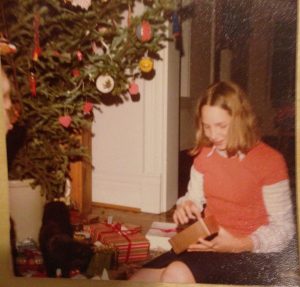
Christmas with Katie the Cat, Chicago, ca 1978

Every year, some things are the same: a balsam fir, candles, apples, cats. The characters and locations ebb and flow, with some consistency. Cats come and go, the boy grows. The love remains the same.

Change

my-obama-me_20-12-16-1

Changing seasons, change we can believe in, be the change you want to see in the world.

This dumpster fire of a year is nearly over, and the commonplace is to note how much has changed: that’s our human instinct. But much does not change, most often within ourselves.

It’s our perception or understanding that changes, and, if we are lucky, causes us to act. That’s the mechanism behind the progressive movement in enacting/reenacting/living history. It’s the mechanism behind organizational change, and personal change. Sometimes it’s the sole inspiration to get me to clean my house. Holy cats, that’s a lot of kitty fur! As the sun finally shines in on the rug.

Sometimes we push as hard as we can to make change happen, but lack access to all the levers: then we have to wait. I am waiting now: I have pushed every lever and turned every knob within my reach, and the waiting is agony.

High school seniors applying to college know this feeling: when will I know? People starting new habits wonder, when will I see a difference? As a species, we have trouble with time. But tiny changes and tweaks aggregate, accrue over time like compound interest. We’ll get there.

Think about what you used to know, and what you know now, how you’ve learned more about what (or who) you love, how the way you approach a problem from collar stands to coat names. All those little changes make a difference– all the difference, the only difference.