Send in the History Clowns

Once upon a time, I called reenactors and costumed interpreters History Clowns. The pilgrims at Plimoth Plantation 25 years ago scared me, and I did not like to visit living history museums.
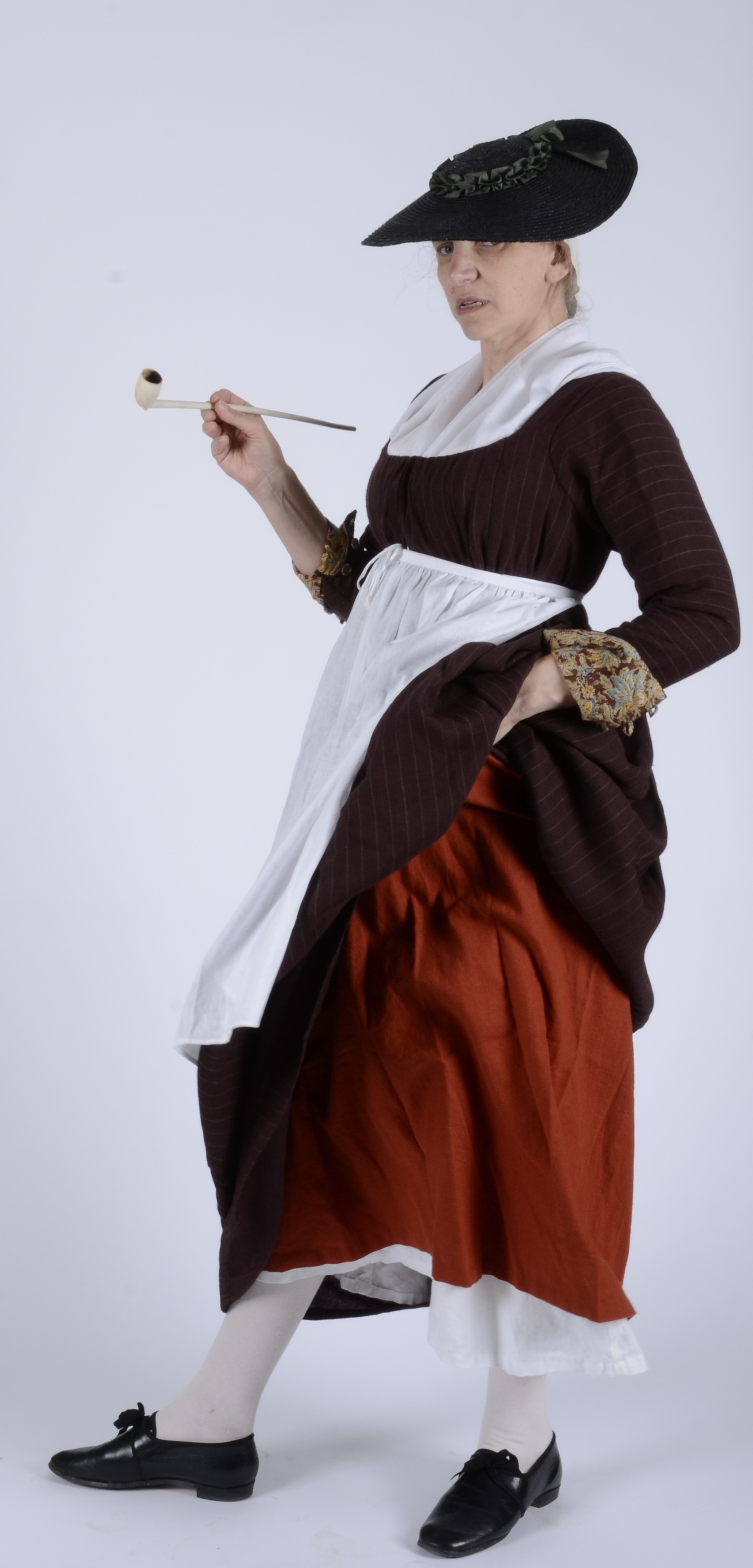
petticoat
History Clown

Now, I’m one those costumed clowns.

What changed? For one thing, I did. But more importantly, living history and reenacting changed. It got better. It became more accurate, more inclusive, more specific. (Even Plimoth admitted at a Dublin Seminar that their costuming had evolved.)

When I see the fights that erupt online (there was a skirmish on Facebook last night—Peale’s march will not die), I think about the History Clowns. I think about the evolution that has taken place, and I think about the skirmishes I get into in trying to plan living history events at my own institution.

Most of these fights are not about accuracy—that FB fracas wasn’t—but do we know what they are about? We try to push back with our insistence that accuracy matters, but that’s not the argument our opponents are trying to have with us. They don’t give two rats about the cut of your breeches or the cord on your canteen or what you think of their rubber-soled shoes.

They want to be recognized. They want to be appreciated. They want to matter.

It reminds me a lot of when I first came to the place I work; I was one of three new, younger people hired within a short span of time to work on exhibits and an expansion project that never happened. As we looked at the organization, we saw things that didn’t seem right to us. But often, we met a lot of resistance to new ideas: “We’ve done that already.” “We tried that and it didn’t work.” “This is fine the way it is.” “We’ve always done it that way.”

I think those translate thusly: If you do it, you might make my attempt look bad.

If you succeed where I failed, I will look bad.

I don’t want to change.

I’m afraid to try something new.

What about my efforts? Won’t they be rewarded anymore?

I think that’s what people are saying to us sometimes, even when the words they say are, “These haversacks are fine, they’re really durable. It doesn’t matter if the fabric isn’t really right,” or “Market wallets? No, that was just a Henry Cooke fad.”*

43919175The fight is probably not as much about accuracy and authenticity as it is about feelings. That said, I think it behooves people on both sides of this line (and it is often generational) to be equally mindful of each other’s feelings. While we can respect the work that people before us have done, they should respect the work we are doing now, as new resources come to light, and new thinking is applied to history and interpretation.

Just as we cannot live in the past of historic house museums, we cannot live in the past in reenacting/living history. And while I respect the tenure of some unchanging regiments and the work they’ve done before, it comes down to this:

Accuracy matters. Adapt or die.


*I think my eyeballs fell out when I heard that one, from a guy who prides himself on his extremely accurate topographic battlefield models.


Peale’s Progress, or, High on History

No, we didn’t go, and I have regrets. Six weeks before the event, I thought I was working on January 3rd, and by the time the schedule changed, it was too late. Instead, you can read about Drunktailor’s experience.

Reenactors portraying Philadelphia Associators take part in the real time tour of the Battle of Princeton, Princeton, NJ, January 3, 2015. Beverly Schaefer, Times of Trenton
Reenactors portraying Philadelphia Associators. Beverly Schaefer, Times of Trenton

The background is interesting, similar to the kind of events and projects we’ve been talking about here in RI: site- and time-specific events that combine commemoration, history, and experimental archaeology, or an emotional and social archaeology, if you will.

From event co-organizer Dave Niescior, quoted in the Rutgers-Camden News Now: “The goal is to gain a better understanding of the hardships endured by individuals who lived and made a critical moment in history.It is one thing to write ‘the troops marched overnight to Princeton,’ it is yet another to understand what that physically and mentally meant to the men who had to put one foot in front of the other all night long.” Co-organizer Matt White told NJ.com, “We’re trying to stage a number of vignettes to give people a sense of what was going on in the Continental Army in this period between late December and early January of 1776 and 1777.”

that’s cold. From Daily Reenactor

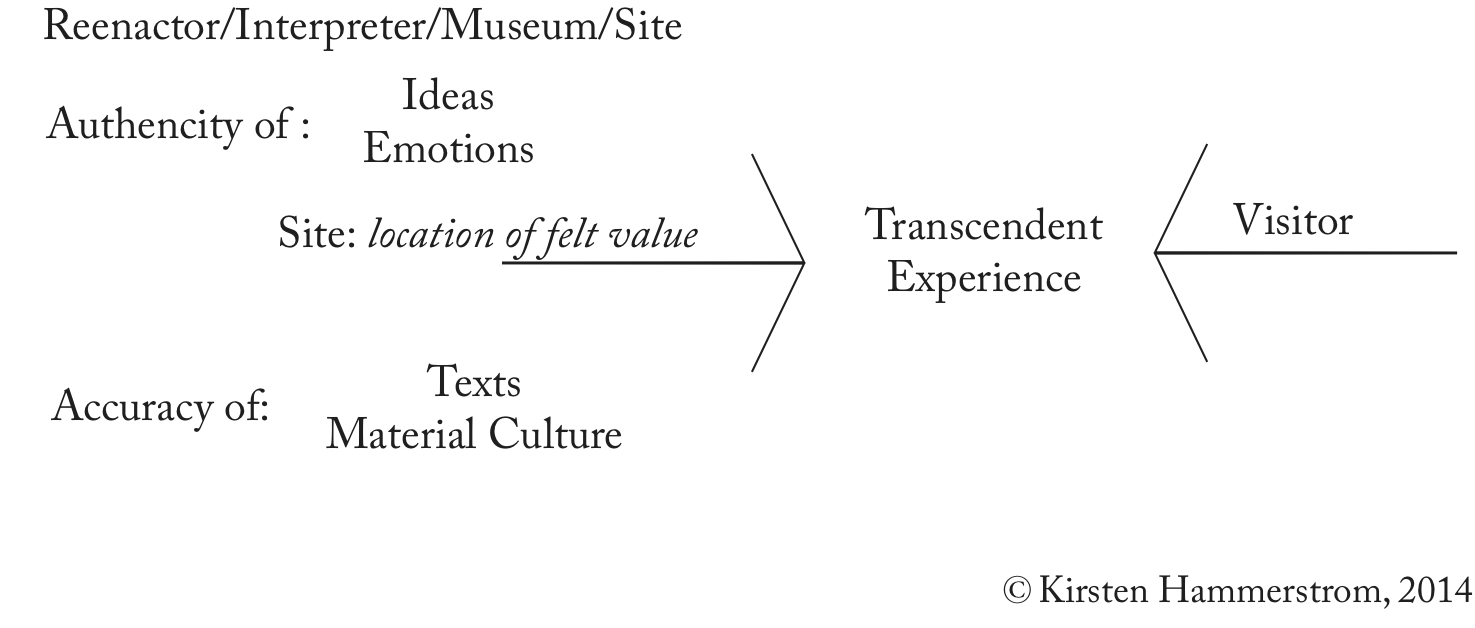
These and other collected images help convey a sense of the event,  which–as far as I can tell– did provide participants with the kind of transcendent experience I know I enjoy and hope to find at events.

This is the kind of event that I think proves a belabored (and elsewhere belittled) point: accuracy matters. It is just about ALL that matters.

On a now-defunct phone, I had an old video of the Young Mr with a now-deceased reenactor of whom I was quite fond, despite our wildly divergent politics. In it, Mr D shows his Charleville to the Young Mr on the front porch of an 18th century home and asks, “Do you know what this is?” The Young Mr shakes his head, and Mr D answers, “It’s a time machine.”

Although I remain committed to reducing the degree to which living history is musket-centric, there’s truth in that statement: Mr D had an original, period Charleville and a fairly well-cut uniform, considering his generous figure. Using, showing, and interpreting actual period pieces and well-made, correct replicas is the single best way to connect the present, and the public, to the past. Accuracy matters because it’s the literal key to the past: you have to cut the pattern right.

Accurate impressions rendered in a place of shared value will transport you to the past, and give you insights you did not expect. That is the point of these exercises: insight and understanding. It’s how to get high on history.

Scabbers Paints

Perhaps you know him as Timothy Spall, but the actor playing Mr Turner is best known in my house for his role as Scabbers, AKA Peter Pettigrew, in the Harry Potter films.

I am anxiously awaiting the release of Mr Turner, and have watched the trailer multiple times in anticipation of material for the authenticity and accuracy fires.I’ve also watched The Power of Art again, because I love Simon Schama as the David Attenborough of fine art, and I’ve enjoyed the way that Mr Turner’s titles appear to use a similar color-into-liquid trope as TPOA’s bleeding titles. Just go watch it.

Why am I so excited to see Scabbers paint? Because the trailer looks so damn good.

The color, the set dressing, the intensity of the colors, all suggest that the film team paid close attention to the material culture of the past, and to those tiny details that create a satisfactory, accurate closed world that helps us achieve experiential and even transcendent authenticity.

Of course I enjoy costume drama: you’d expect that, right? And messed up costume and material culture details can wreck a film or TV program for me, but what you might not expect is that there are some films I enjoy despite their apparent inaccuracy.

Take the Muppet Christmas Carol. That’s one of my favorite adaptations of the Dickens’ work, because it creates a world true to itself filled with believable objects and characters (even the ones I can’t stand), and returns authentic emotions. Scrooge’s headmaster was never an enormous eagle muppet: but the shabby school room works, much the way Beatrix Potter’s anthropomorphic tales work.

In The Pie and the Patty Pan, Duchess can’t bake– what dog can bake? But we can believe that Duchess is a greedy eater, and might well think she swallowed the patty pan. The touch of hypochondria in a greedy dog is intensely satisfying, I think.

Cat and dog at a tea table
Where is the Patty Pan?

What does this mean for historic house and living history interpretation? It means furnishing a believable world with accurate clothing, goods, and accouterments, based on primary sources with characters who convey authentic emotions and ideas to create a transcendent learning experience.

I even have a diagram:

The experience equation

And that’s why I want to see Scabbers Paint. Because anything that creates a believable historical experience is worth learning from.

Less is More

Though it may seem contrary to previous posts, there are times when I really believe less is more, and that’s when we’re out in the field.

Each year I’ve tried to improve our kit and impression by replacing or removing items, mostly to increase our accuracy but also to reduce what we carry. The less we have to carry, the less I have to pack and clean and think about and the more I can think about the history. This iteration of “What the heck can I quit?” was prompted by reports of a conversation with someone I respect, which caused me to rethink what we were hauling along and how I could change it.

The Box of Doom with the Pitcher of Inaccuracy

We have stripped away most of what we used to bring for the comfort of the kid; as he has grown up, he’s needed less to feel comfortable and “at home.” We traded ground pads for bed sacks* very quickly, and we never had any iron to begin with. I’ve tried to keep within seasonal and historical cooking guidelines, but the largest hurdle and heaviest literal burden is the wooden cooler box.

Feeding the Young Mr is a tricky thing: he likes what he likes, and he likes a lot of it. What he likes are carrots, apples, and meat. There’s some swapping that can be done with seasonal fruit, but the largest hurdle is meat: if I can scrap fresh, needs-to-be-kept-cool meat, I can leave the cooler box at home. (At this moment, several gentlemen are suddenly feeling empty inside, with a taste of ash in their mouths. Dirt stew, boys: it’s coming.)

No iron, but what goes into the kettle?

I had gotten about as far as pease porridge when, in a completely costuming context, I came across links to The Sewing Academy.

The squeamish and childless may writhe at the handouts on dealing with nursing babies, hygiene, and winter clothes for children, but these Civil War resources have utility for all of us trying to be more accurate in our portrayals of the past.

I had not thought about packing frozen meat and storing it underground, and though I like the idea very much, it will not suit in cases where digging is forbidden. But it is certainly a way around the cooler box, and one I’m willing to entertain. (Check “No Refrigeration Required.”) “The Progressive Questions” help sketch out a responses to a variety of situations.

Quoth the Mavens” contains this excellent definition: A truly progressive mind-set tries to figure out the logic of what was indeed used, rather than rationalizing modern logic into a period situation.

There’s nothing more to add to that pithy statement, but a renewed sense of dedication to accuracy and “less is more” thinking.

*As accurate as my attitude would be after resting arthritic bones on the ground, no one really needs to experience that. Call it a safety measure.