Once More, with Feeling

Ajax and Cassandra, Oil on canvas, 1806. Johann Heinrich Wilhelm Tischbein [Public domain], via Wikimedia Commons. Großherzogliches Schloss Eutin

Mansplaining. It’s a thing. I’ve written about it before. (Dude, I’m pretty sure I know you are.) Better writers than I have tackled the topic in auspicious titles like The Atlantic.

When I write about specific experiences at Fort Ti, or Eastfield, or about “The Hobby” generally, that writing does not mean that I didn’t enjoy myself at events or sites*, or think they’re not doing a good job. It doesn’t mean I’m going to quit the hobby, or that I hate men. It means I’ve taken issue with specific patterns of behaviour that affect not just me but others in the hobby- and sometimes issues that don’t affect me directly, but are serious and need to be addressed

Woodcut illustration of Cassandra’s prophecy of the fall of Troy (at left) and her death (at right). Giovanni Boccaccio’s De mulieribus claris. Penn Libraries. Inc B-720
To address the comments here, I have to say that I understand Sharon’s point, and I fully expect officers to treat me as if I am invisible during military reenactments. I’m calling out after-hours socializing behaviour. Still doesn’t mean I didn’t have a good time, doesn’t mean that I don’t enjoy all the conversations I have, but I note the fiercely gender-binary nature of discussions and call them out. I’ll call out the talking over and interrupting, too. I get that at home from a 17-year-old. I get that at work from men I supervise– with the exception of those who served in the military, thank you very much.

I don’t find civilian reenacting a completely mansplaining-free zone, either. It’s better, sure, but this is a societal issue, not a camp- or hobby-specific issue.

And, to Drunktailor, yes, you’re about half-right. The older organizations, the Big Three, the classic units, have more deeply ingrained habits. But when I see younger men and newer organizations perpetuating behaviour patterns I’ve seen from the guys they say they don’t want to be like, I think it’s worth calling out. There is a generational shift, on that you and I agree. But one can become the thing one hates most, or at least adopt some of their patterns, if you don’t examine, and then break, the mold completely.

Further, I believe the young women in living history today will not tolerate nearly as much as I did, and do, in their personal or work lives. They’ve grown up fully in the time of Title IX. 

Organizational change is hard. Societal change is hard. It starts with individuals. Listen. Women being talked over have talent, knowledge, and skills that can help move living history forward both professionally and avocationally. They have research, sewing, organizational and management skills that can vastly improve visitor and reenactor experiences. 

Fail to listen at your peril. I’ve said it before: Adapt or die.

*And if you ever wonder whether or not I did enjoy an event or site, feel free to ask me about it– or anything else! kittycalash (at) gmail (dot) com. Thanks for playing!

The Real Thing

Talking with a friend about authenticity and realness, I remembered the moment when I really understood the power of the real thing

Meret Oppenheim Object Paris, 1936 Museum of Modern Art, NY. 130.1946.a-c
Meret Oppenheim
Object
Paris, 1936
Museum of Modern Art, NY. 130.1946.a-c

Longer ago than I care to admit, I went to MoMA with my dad, and saw, up as close as you could get to a glass case, Meret Oppenheim’s fur lined tea cup, Object, or Luncheon in Fur

I’d seen slides, and illustrations in books, but only when I saw the object did I really understand what it was about. Unfortunately, even having seen Duchamp’s “Bride Stripped Bare” in person, I still don’t get that piece. Such is life.

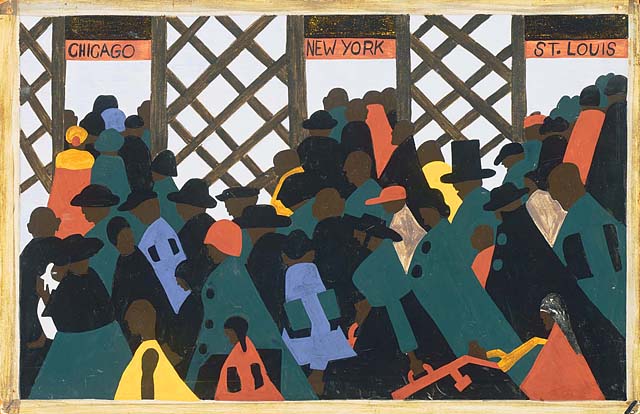
So what is it about the fur-lined tea cup in person that makes it so different? What is it about Jacob Lawrence’s Migration series that makes it different? Or Pollock, for that matter? Why is the real thing so ineluctable?

 JACOB LAWRENCE (1917–2000) The Migration of the Negro, Panel no. 1, 1940-1941. The Phillips Collection, Acquired 1942 © The Estate of Gwendolyn Knight Lawrence / Artists Rights Society (ARS), New York.

JACOB LAWRENCE (1917–2000)
The Migration of the Negro, Panel no. 1, 1940-1941. The Phillips Collection, Acquired 1942 © The Estate of Gwendolyn Knight Lawrence / Artists Rights Society (ARS), New York.

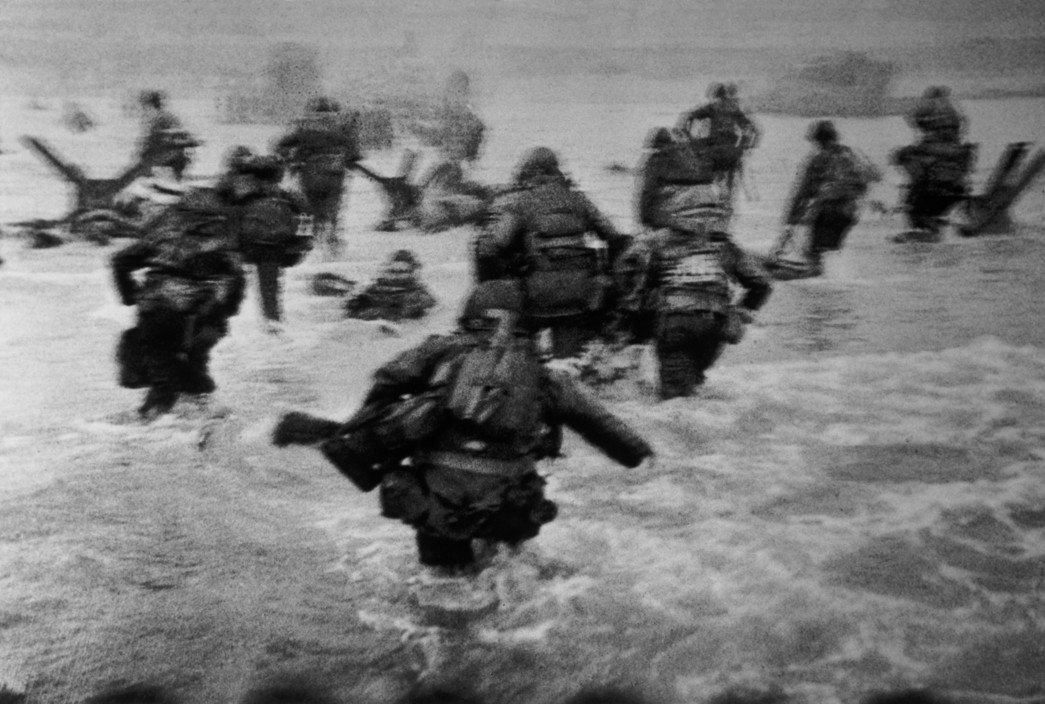
I don’t know, really; what I do know is that it matters. I’ve held a transparency of The Migration of the Negro, Panel no. 1, in my hand before, and it’s not as good as seeing the marks Lawrence put down in gouache. I’ve held a Robert Capa print in my hand, marked on the back with publication notes from the 1940s and it still gives me goosebumps to think of it, to think of him in the water off Normandy on D-Day. Existential ambiguity of the wrecked emulsion be damned: those images, held in your hand, are more moving than you can imagine from seeing them published in Life or any monograph.

FRANCE. Normandy. June 6th, 1944. US troops assault Omaha Beach during the D-Day landings.
FRANCE. Normandy. June 6th, 1944. US troops assault Omaha Beach during the D-Day landings.BOB194404CW00003/ICP586(PAR121451)© Robert Capa © International Center of Photography/Magnum Photos

I’ve had people say to me recently that “it doesn’t matter,” that no body will know if they’re wearing 1774-1783 clothes at a 1790 event, and I disagree strongly and thoroughly. It does matter. The mattering is the whole reason museums exist. It’s why we go to see our favorite music performed instead of sitting home with Victrola or iPod listening to the crackle of Bessie Smith² or album-produced Billy Bragg. Listening at home puts us at a remove, polishes the roughness and steps back from immediacy.

To say that the image in the book or the not-really-right clothes are the same at the real thing does a disservice to ourselves and to the public. Are we really suggesting that audiences for art or history are that stupid? Or that we are so unmoved ourselves that it just doesn’t matter?

I’m too old for nihilism. Bring on the real. Let’s get it right, because it does matter. I know when it’s real, and so do you.


______________

¹Sadly, this goes through my head with the phrase “the real thing.” Curse you, Douglas Coupland, for capturing my generation’s fixation on pop references.
²Yes, I know she’s dead, go with me here.

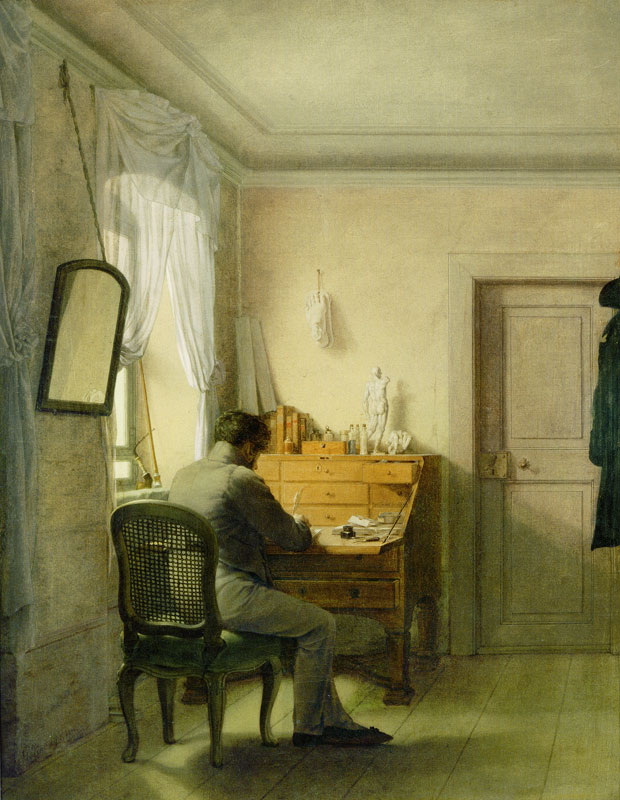
Man at His Desk

Georg Friedrich Kersting, A Man (artist) at His Desk.  1811. Klassik Stiftung Weimar, Goethe Nationalmuseum
Georg Friedrich Kersting, A Man (artist) at His Desk. 1811. Klassik Stiftung Weimar, Goethe Nationalmuseum

1811 caught my eye and stopped my Twitter scrolling. Kersting never fails to please, luminous watercolors and delicate details. Summer is here, along with events in so many years I feel quite distracted.

1780 this weekend (L’Hermione in Boston). 1775 a few weeks later. 1814 in August. 1833 in September. You could get whiplash looking at waistlines and sleeve silhouettes.

What I need is to take the time to sit, like Kersting’s man, to reflect and to write and to make a plan. I’ve fallen behind on the garment-a-week program, and need to catch up quickly. The faster I sew, the less like the Young Mr can outgrow the garment before it’s finished.

Snap, Crackle, Pop

Chamber by candlelight

One of the best things about Genesee last weekend was a roof. After driving through torrential downpours on Friday, we were grateful for a house to sleep in, instead of a tent. I’ve never woken up to find my hip planted in a drainage channel (Saratoga was stormy) but Friday night would have provided ample opportunity for somnolent soakings.

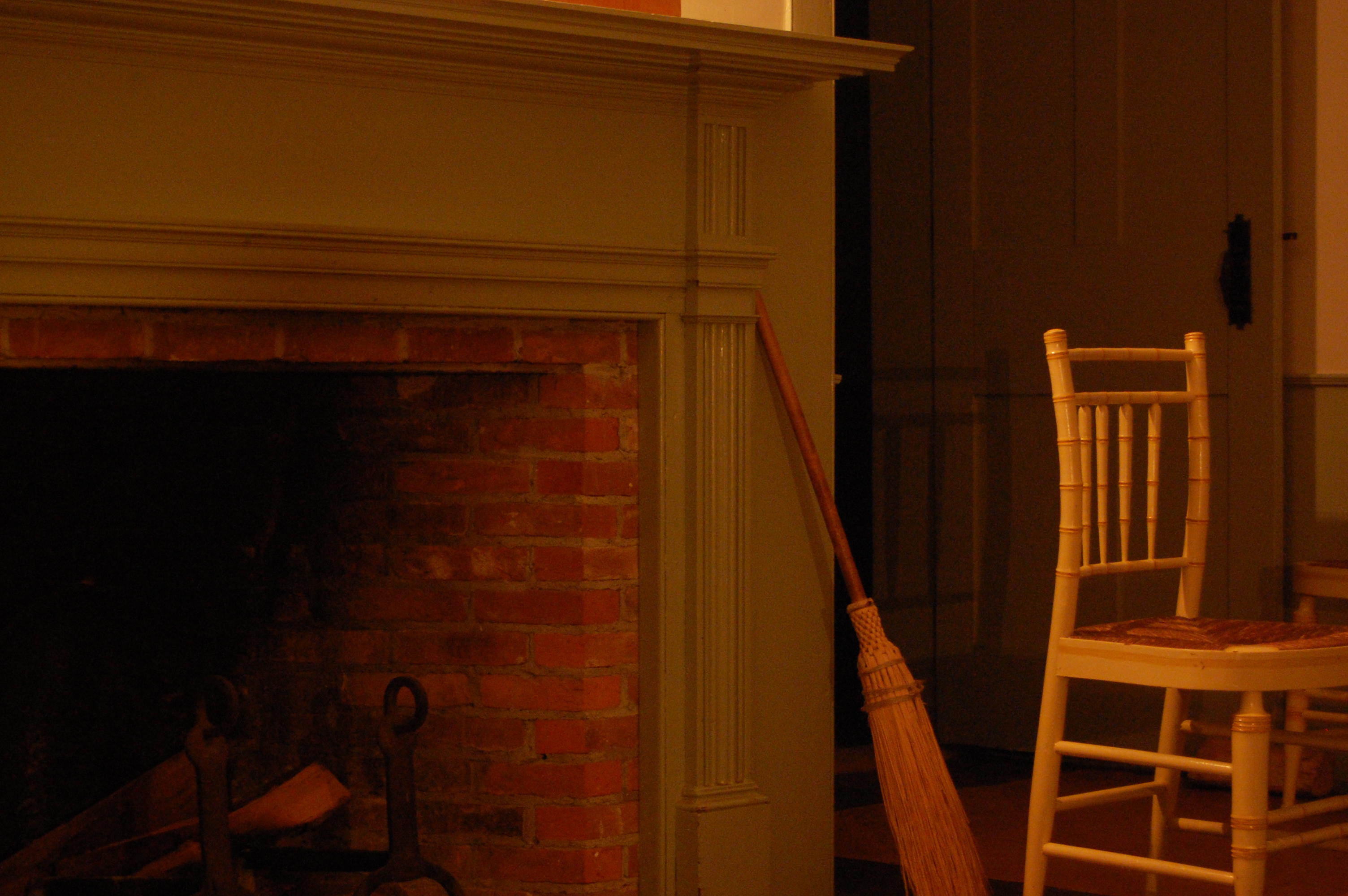
The 1836 Foster-Tufts House was our just-right billet, with a bed for each of us.

Foster-Tufts House, photo from Genesee country Village & Museum

So we were set, right? Each of us had bedding (many thanks to Mr JS for the loan of a linen sheet: I still regret the vintage sheet I did not buy) and a real bed, a pretty plush situation, really. The only tricky part was getting into bed, and then adjusting yourself once you were on the mattress. It’s not that the bedding was going to rise up and cast us out. It’s not that the accommodations were exceptionally uncomfortable to modern, bed-spring accustomed sleepers.

It was the noise. The bed sacks were filled with packing peanuts and other inorganic materials that crunched and cracked and popped and creaked and grumbled with an and tiny movement. There was a solution, though. There’s always a solution.

Weekend billet: pretty swank, actually

Synchronized spinning. Without thinking about it too hard, though with deference and consideration for fellow occupants, we quickly learned to turn simultaneously. As soon as one of us cracked the wall of sound, the other two would shift. Problem solved.