Letters for Service

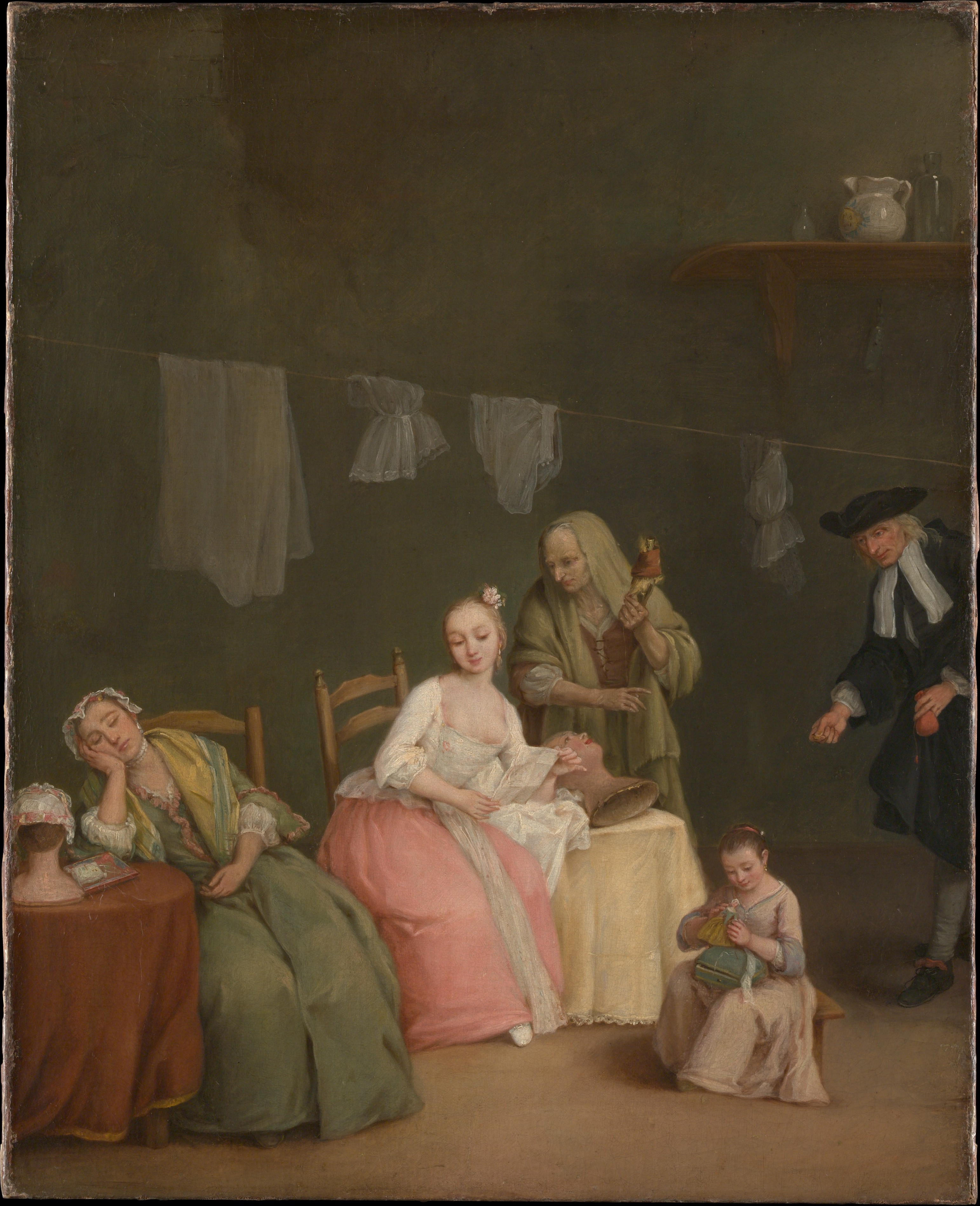
The Letter, oil on canvas by Pietro Longhi. MMA 14.32.1.

Sew 18th Century wrote me the loveliest letter, and ever since I have been remiss in my epistolary duty. To better prepare myself, I took a look at a lovely little imprint at work, The Fashionable American Letter Writer: or, The Art of Polite Correspondence (Providence: Edward and J.W. Cory. 1833) which is thus far the earliest letter writing manual I have found in that collection. Below you will find some examples about servants, or for servants.

Letter XXV.—Recommending a Man Servant.
Sir—
The bearer has served me with integrity and fidelity these three years, but having a desire to settle in New-York, he left my house about a week ago, and by a letter received from him this day, I find you are willing to employ him on my recommendation., and it is with the greatest pleasure that I comply with his request. His behavior while with me was strictly honest, sober, and diligent, and I doubt not but it will be the same with you. I have sent this enclosed in one to himself, and if you employ him, I hope he will give satisfaction.
I am, sir, your humble servant,

Letter LXX.—From a young Woman just gone to service, to her mother in the country.
Dear Mother—
It is now a month that I have been at Mr Wilson’s. My master and mistress are both worthy people, and greatly respected by all their neighbors. At my first coming here I thought every thing strange, and wondered to see such multitudes of people in the streets; but what I suffer most from is, the remembrance of yours and my father’s kindness; but I begin to be more reconciled to my state, as I know you were not able to support me at home. I return you a thousand thanks for the kind advice you was so good as to give me at parting, and I shall endeavor to practice them as long as I live. Let me hear from you as often as you have an opportunity. With my duty to you and father, and kind love to all friends, I remain ever,
Your most dutiful daughter,

Letter LXXI.—The Mother’s Answer.
My Dear Child—
I am glad to hear that you reside in so worthy a family. You know that we should never have parted with you had it not been for your good. If you continue virtuous and obliging, all the family will love and esteem you. Keep yourself employed as much as you can, and be always ready to assist your fellow servants. Never speak ill of anybody; but when you hear a bad story, try to soften it as much as you can. I am in great hopes that all the family are kind to you, from the good character I have heard of them. If you have any time to spare from your business, I hope you will spend some part of it reading your Bible, and other religious books. I pray for you daily, and there is nothing I desire more than my dear child’s happiness. Your father desires his blessing, and your brothers and sisters their kind love to you. Heaven bless you, my dear child, and continue you to be a comfort to us all, and particularly to
Your affectionate mother,

Longbourn: Book Review

The Chocolate Girl is adapted for the cover of Jo Baker’s new book

 On Sunday, I read the NYT review of Jo Baker’s new book, Longbourn. As soon as I finished the review, I ordered the book, which arrived Wednesday evening. By 2:00 AM Thursday, I had finished it.

I like Austen, but my favorite Austen novel is Mansfield Park, not Pride & Prejudice. The BBC and other adaptations sometimes make the world of her novels seem too cloistered, too precious, and too refined to me. (Mrs Hurst Dancing can be a helpful corrective.) So of course I was captivated by the premise of Longbourn: “The world of the people who laid the fires, cooked the meals and fetched the horses for Jane Austen’s Bennet family.”

The story was engaging–heck, I stayed up until 2:00AM  to find out how it ended–and while I found it slightly romantic for my taste, on the whole, the world was believable.

For one thing, there is plenty of mud. And Sarah the housemaid must clean the mud off the Bennett girls’ petticoats. The hauling of water, laying of fires, and the chill and exhaustion the maids feel is pretty well rendered. Baker addresses the question I’ve always had, How did servants tolerate servitude? by portraying Sarah’s struggle with resentment and resignation to her lot.

I thought, too, that the way Baker described women as “breeding” was also good; she referred as well to Elizabeth Bennett’s “dark, musky” armpits, and that seemed a nice way to slip in historical hygiene information. But women in English gentry were valued for their breeding capabilities: the need for a male heir didn’t die with Henry VIII, and it is much of what drives, or drove, the plot of Downton Abbey. For women, the past was a smaller world, and Sarah’s life is particularly small. Her carriage rides help define the very real confinement of her world.

There are a few slips: backpack instead of knapsack once or twice, but not many. It feels well-researched, well imagined, and believable. I don’t want to wreck it for you, so I won’t go into too much…there are some classic plot twists and devices that I put up with because they’re so typical of the literature of the period. I particularly enjoyed that Sarah reads from Mr Bennett’s library, including Pamela. It was a nice way to reinforce Wickham’s creepiness, and the echoes between the novel derived from a novel, in which  fictional characters read real novels, delighted me. (Being a fictional character myself.)

Jo Baker’s not Hilary Mantel-– this isn’t the kind of writing where the language stops you cold and sentences leave you breathless with awe, but for historical fiction derived from Jane Austen, Baker’s book is excellent and well-written.

The Business

Sotheby's sale June 11 2013
Fine Books & Manuscripts, June 11, 2013

I’m in this business, so I shouldn’t be bothered. I have been a seller and a buyer, and I’m a card-carrying member of Team Hoarder, AKA the Curators. So why does this bother me?

This sale features a strong selection of modern authors highlighted by Property from the Descendants of William Faulkner, including the manuscript of his Nobel Prize speech with the gold Nobel medal and diploma (1950), autograph letters written to his mother from Paris in 1925, the typescript book of his poem sequence “Vision in Spring” in a handmade binding by the author, drawings, corrected typescripts and other items.

You’d think I’d know better by now: Life isn’t an Indiana Jones movie, and no amount of saying “It belongs in a museum!” will help matters along.

More and more I see the cultural economy–and the disposition of cultural goods–following the “winner takes all” pattern of the larger economy. I give you Walmart, and Walmart gives you the Crystal Bridges Museum of Art. The FAQ’s deny any tie to Walmart stores, but Alice Walton founded the museum. For a lot of people, that’s a connection to Walmart. The claim that there is no connection seems even more disingenuous when you visit the homepage and read “General admission to Crystal Bridges is sponsored by Walmart. There is no cost to view the Museum’s permanent collection, which is on view year-round.”

The people of Arkansas deserve a nice museum; everyone does–that’s not my point. My point is that private collectors can buy, and keep from public hands, important pieces of material cultural and cultural heritage. Faulkner’s work post-Nobel may have paled compared to earlier work, but he won the Nobel–score one for Southern Literature and the power of Faulkner’s words, the sway he held over American letters.

Also in what is shaping up to be a very wordy sale: “[O]ne of possibly as few as three intact 1924 recordings of Joyce reading Ulysses.” Joyce reading Ulysses. That’s pretty damn cool. Lucky for you and me, if we’re word fans, you can listen to another recording here, thanks to The Public Domain Review.

Would an online photo, or a magazine photo, of Faulkner’s medal ever be as good as the online version of Joyce’s reading? No,  I don’t think so.  Because there is a power in the authentic, in the real. And the medal is material, three-dimensional: sound waves over an internet speaker wouldn’t be as frisson-inducing as listening to a recording in a darkened library, but they’re still sound waves.

Authenticity will be the subject of an upcoming session at AAM’s Annual Meeting in Baltimore, and though I can’t be there, I’m following as best I can.

Authenticity is something reenactors strive for in their work. Museums present authentic– real– objects and experiences. I sit the gallery and one of the most common questions people ask is, “Is it real?” and when told, “Yes, it is,” they gasp a little.

So when museums and libraries are priced out of the auction or private sale market, what does that mean? It means less public access to authentic items, to the “real,” three-dimensional evidence of the past.

We’re choosy, of course: it could well be that the University of Virginia did not want these items. Perhaps they did not contribute materially to Faulkner scholarship–the medal wouldn’t, really, would it? But the additional papers and letters might, but would be hard to justify at $250,000-$350,000.

Private collectors, people who can afford a $286,000 watch, drive up prices. Museums that can attract major donors attract more major donors.

MET MFA RIHS NHS
2011 Income $470,048,040 $157,082,067 $3,440,281 $615,008

That’s a chart of the 2011 income for the Met, the MFA, the RIHS, and the Newport Historical Society. All four have decorative art, art, and textile collections. All four would be interested in pieces of Newport furniture. Two are art museums, two are historical societies. Only one has the financial power to bid for major pieces.

And then there’s Crystal Bridges: 2011 revenue? $625,995,749. Sorry Met, you were just outdone by $155,947,709. Over one hundred and fifty-five million dollars. Dr. Evil is beyond impressed. The Crystal Bridges Form 990 includes a donor list with $700,000 from Cisco Systems. Nicely done. With endowment return of just a little more than $16 million, and  $37 million for “museum procurement expenses,”  they need those donations to stay healthy financially. But that $37 million buys a lot of art.  And where does that leave smaller museums and collecting organizations?

Pretty much where Walmart left small businesses: highly specialized but small.

And what does that mean for Faulkner’s papers, or a Plunket Fleeson chair?

Chances are they’ll be in private hands, accumulating value.

A Digression on Lofting

20121210-184656.jpg
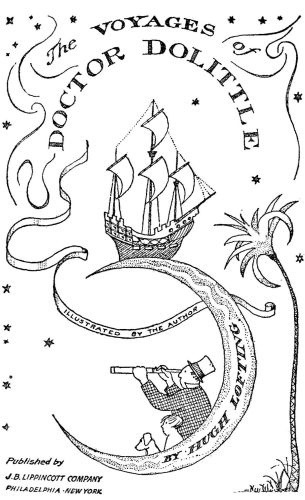
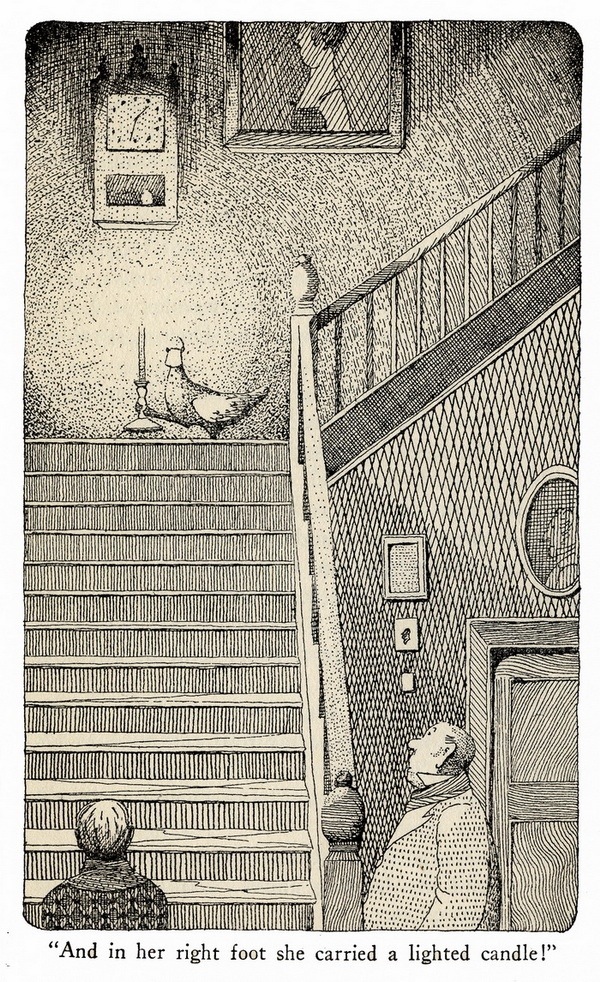
You could blame the Doctor. It’s not entirely his fault, but at an early age I discovered the Dr. Dolittle books and was captivated: talking animals, quirky illustrations, an idyllic-mythical English past without dragons? I’m moving there, please write.

I was reminded of this when Amanda Vickery tweeted about favourite children’s book illustrators and the article in the Guardian, and I thought of how much my son’s drawings have lately reminded me of Lofting’s, and how much he and I love the books. Yes, they’re racist, and they are of their time. They’re mild fantasies, they’re anthropomorphic, they’re silly, and at a certain level, misogynistic (see the treatment of Sarah Dolittle, the doctor’s sister). But really, don’t you want a duck to be your housekeeper?

20121210-184422.jpgLofting, born in England in 1886, studied there before coming to America to study civil engineering at MIT in Cambridge, MA. The clear line of his Puddleby drawings are infused with the drafting he could have learned as an engineer. He served with the Irish Guards on the Western Front during World War I, and the Dr. Dolittle stories grew from the letters he wrote home to his children.

As a child, Dr. Dolittle had all the things I liked: talking animals, adventures, English villages and cities, and a wardrobe from the past.

My son likes Dr. Dolittle because the stories are about things he’d like to doing: “talking to animals, going on wild adventures, doing all this crazy stuff, and going with the flow.” He says the stories inspire him to learn about animals, and “to get out there and be with them..” (I assume he means at Coggeshall Farm). Dumber, beware.

Lofting moved his family to Connecticut after he was wounded in the war, and died there in 1947. Most of the books he wrote were published in the 1920s, though some anthologies of stories were published posthumously. An inveterate (congenital?) literary snob, I considered the posthumous works rather lesser, even as I read them several times.

Whether you approve of him or not, Lofting remains one of the gentle fabulists of the early 20th century, and the fact that my son reads him today is testament to the staying power of gentle, animal-centric fabulist fiction.