A Digression on Lofting

20121210-184656.jpg
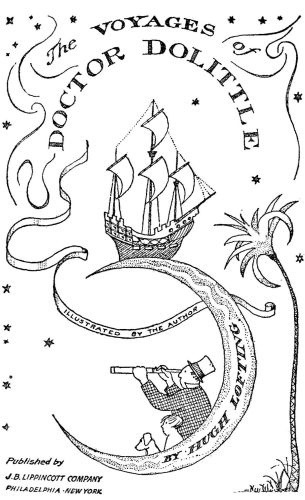
You could blame the Doctor. It’s not entirely his fault, but at an early age I discovered the Dr. Dolittle books and was captivated: talking animals, quirky illustrations, an idyllic-mythical English past without dragons? I’m moving there, please write.

I was reminded of this when Amanda Vickery tweeted about favourite children’s book illustrators and the article in the Guardian, and I thought of how much my son’s drawings have lately reminded me of Lofting’s, and how much he and I love the books. Yes, they’re racist, and they are of their time. They’re mild fantasies, they’re anthropomorphic, they’re silly, and at a certain level, misogynistic (see the treatment of Sarah Dolittle, the doctor’s sister). But really, don’t you want a duck to be your housekeeper?
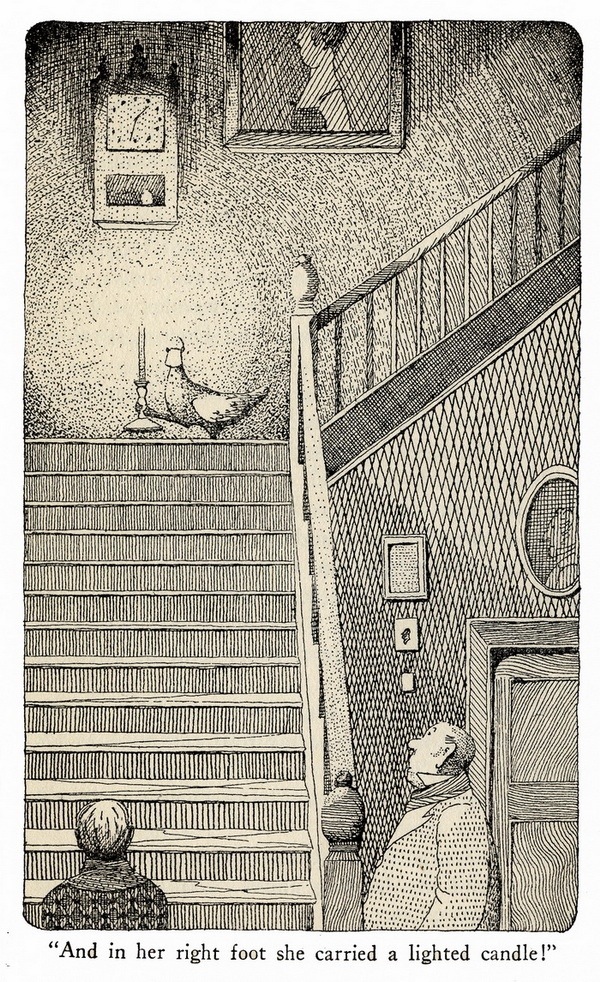
20121210-184422.jpgLofting, born in England in 1886, studied there before coming to America to study civil engineering at MIT in Cambridge, MA. The clear line of his Puddleby drawings are infused with the drafting he could have learned as an engineer. He served with the Irish Guards on the Western Front during World War I, and the Dr. Dolittle stories grew from the letters he wrote home to his children.

As a child, Dr. Dolittle had all the things I liked: talking animals, adventures, English villages and cities, and a wardrobe from the past.

My son likes Dr. Dolittle because the stories are about things he’d like to doing: “talking to animals, going on wild adventures, doing all this crazy stuff, and going with the flow.” He says the stories inspire him to learn about animals, and “to get out there and be with them..” (I assume he means at Coggeshall Farm). Dumber, beware.

Lofting moved his family to Connecticut after he was wounded in the war, and died there in 1947. Most of the books he wrote were published in the 1920s, though some anthologies of stories were published posthumously. An inveterate (congenital?) literary snob, I considered the posthumous works rather lesser, even as I read them several times.

Whether you approve of him or not, Lofting remains one of the gentle fabulists of the early 20th century, and the fact that my son reads him today is testament to the staying power of gentle, animal-centric fabulist fiction.
Domestic Bliss

Museum of London
Museum of London, John Middleton &tc

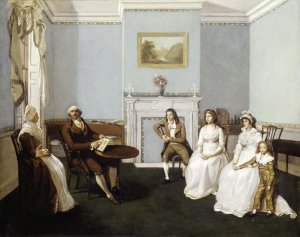
I’ll come back another time to John Middleton & His Family, 1797 from the Museum of London, but today, this group portrait represents one of the online galleries at The Geffrye Museum of the Home in London. Their website has some nice features, and while I did get distracted playing the Topsy-Turvy Timeline game, what I really like playing with exploring is the Life in the Living Room 1600-2000 gallery.

The Geffrye Museum

This has proven useful in keeping on (slightly distracted) track as we polish silver and think about lighting, entertaining, and the ways rooms were used in the past. In particular, since we settled on the idea of setting a formal table for the “holiday themed tours,” and on the After Dark tours, I’ve been thinking about lighting.

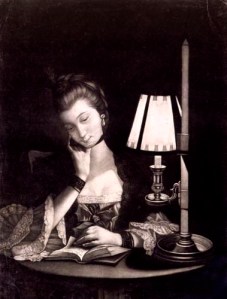
Not only is it clear that the expansive use of candles represented expense and disposable income, it’s also clear that it was uncommon. Special occasions on high-style homes: yes. Everyday use in middling homes: no. Even the charming and well-dressed lady reads by just one candle (though that is also a composition choice, and not purely documentary).

More hilariously to the point, this satirical engraving from the Lewis Walpole Libary:

The Pantry Apparition
Lewis Walpole Library, The Pantry Apparition

Surprise!

Warning: Museum content ahead.

I found this link in the AASLH.org twitter feed yesterday: a post at The Uncataloged Museum about the Museum of Hunting and Nature in Paris.

CW Peale: The Artist in His Museum

What a great find, a wunderkammer in the 21st century. After this weekend, I was thinking even more about the ways in which museums engage (or fail to engage) their viewers. Working where I do, I can’t light a fire in a fireplace and hearth cook: for one thing, it wasn’t done in that house (and chimneys are all capped now, anyway).

But wait: isn’t there some place other than a living history museum where people have immersive and transformative experiences? Perhaps art museums? The last time I went to the MFA I did have to keep convincing my companion to stay a little longer–but even the 13-year-old was convinced when each gallery led us to a new surprise.

MFA: American Wing, with replicas

Take away lesson: surprise. wonderment. unusual presentations.

My colleague at work said one of the best things we ever did was to install a post-party room with a broken plate on the floor. You don’t see broken things in a museum! You don’t see messes. But that’s normal for a house, so why not for a house museum?

In preparing a room for a display change, we removed the manservant mannequin, and stashed him temporarily outside a storeroom (former bedroom) door. There’s a niche, and he was partially hidden, and looked guilty, as he reached for the door knob. That’s another kind of surprise, the hidden history of of a house–not just the servants, but also the gossip– that could be brought to life.

It Isn’t History Till it Hurts

End of the day, Sunday

That’s approximately what the costumed interpreters say their leader says.

Let me affirm for you that history does, in fact, hurt, when you are doing it right. That is to say, you will be bodily tired. You will be hungry. You will be cold. Your judgment will be impaired. Your world will shrink.

I have so many thoughts/ideas/inspirations/observations after another weekend at the farm that I do not quite know where to begin.

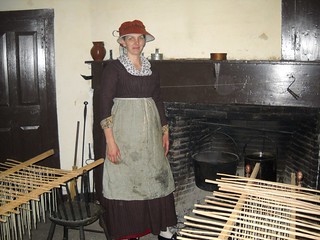
Yesterday, I made 290 candlewicks and draped them, with some help, over 50 sticks. My colleague and I managed to dip each stick of 6 wicks 2 or 3 times, though I had to trim the wicks after the first or second dip so they would match the depth of the kettle. Today, we got there late (thanks to my broken stay laces which had to be replaced…once replacements were found…annoying) so the fire was not hot, the wood not gathered, the tallow not melted—oh, it was not what this control freak wanted. I wanted to both make dinner and dip candles.

Well, we did manage both, in a way. Dinner was more of a snack of boiled chicken and root vegetables, followed by a snack of squash custard tart, and the candle dipping was managed only sporadically once the tallow was melted. First it was too cold, then too hot: it was a day of details. At some point I realized I was so tired that I could no longer think about a simple thing, and that what got in my way was simple lack of fluency. If I did this every day, I wouldn’t need to think about it. But I don’t. So while I can do these unfamiliar tasks, they are just a bit harder when I am cold, hungry, tired, or hurting.

Hot tip: sheepskin insoles. In wool stockings yesterday, my feet were freezing cold in the kitchen when I was not near the fire. With sheepskin insoles, my feet were warm today. Your mileage may vary, but well worth a try.