Frivolous Friday: Whitaker Auction Waistcoat

It’s so nice to have enabling friends. If it’s not one tipping me off to a sale on fabric at Williamsburg (over now, keep calm) it’s another tipping me off to costume auctions.

My most recent tip-off came from Mr Cooke, about the Whitaker auction coming up April 25 and 26 in New Hope, PA. There are some very nice things from the collections of the Met and LACMA coming up in that sale. It’s hard to understand deaccessions from the outside, so I won’t comment on that part of the sales.

Unmade waistcoat ca. 1790. RIHS 1990.36.15

I was particularly taken with this waistcoat.

The lapel embroidery and button details remind me very much of an uncut dimity waistcoat in the collection of the Rhode Island Historical Society.

Whitaker’s got copyright notices on their images, so I won’t post them here, but I can assure you, the visit will be worth your while. But my tip to you is this: forget those estimates– from what I’ve seen lately, they’re all too low by a factor of 10.
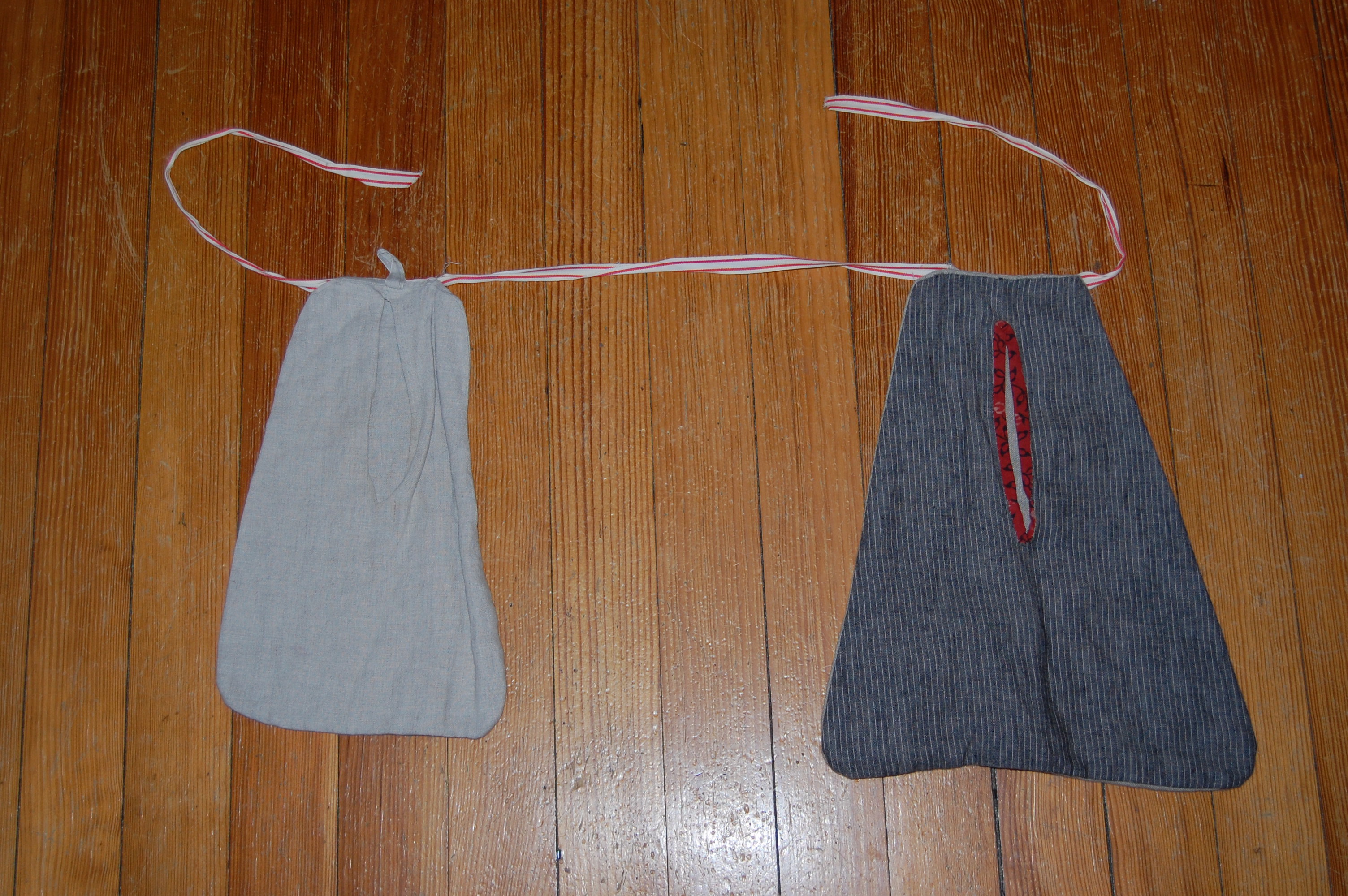
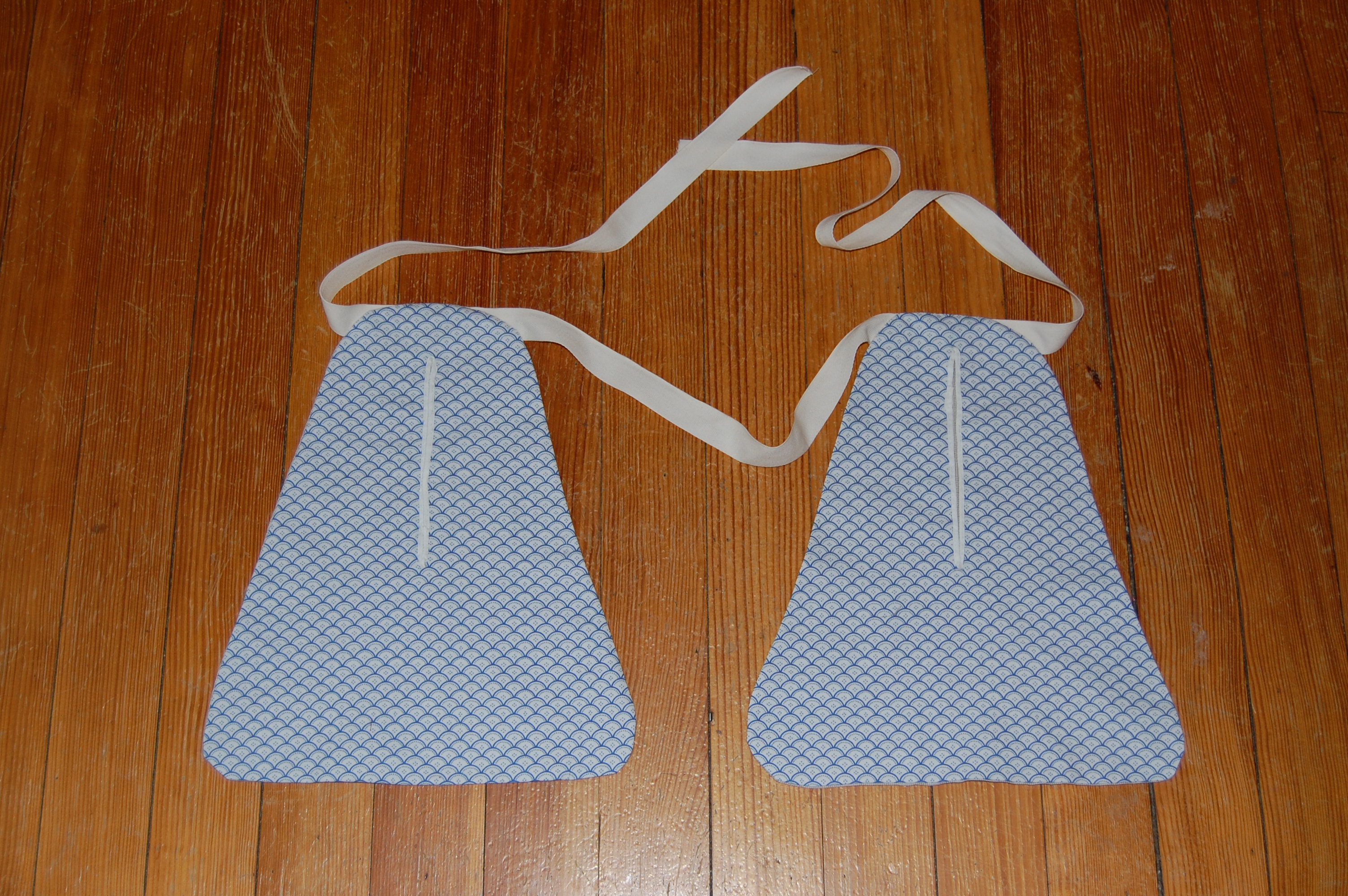
Pockets 2.0

Pockets the First
Pockets the First

At left, Pockets 1.0 or perhaps beta. The far left pocket, when worn alone, was definitely beta. Then came the striped pocket, and then sewing them both to the tape. That helped– and I use the small pocket for things like wallet, phone, car keys and Band-aids, and the larger pocket for interpretive things. I try to follow the Under the Redcoat kind of model: one pocket is modern, one is historical; that way I don’t pull the car keys out along with the knitting, or am at least less likely to.

Too much stuff.
Too much stuff.

Here’s the stuff I carry in my purse today, actually a backpack-purse, downsized from a messenger bag. That’s a lot of stuff. But if you compare the list to the list of what might have been in an 18th century pocket, you’ll find a lot of similarities.

There’s a pen and a pencil, wallet and checkbook, granola bar, chewing gum, change purse, keys, more keys, and phone. All of those are just modern analogues for paper money, coins, orange or apple, candy, book and notebook, since the phone can fill in for so many things– notebook, money, keys, pen, book…

DSC_0174

The historical assortment is much more attractive, in part because I don’t use these things every day, and they don’t get tangled up and worn in a bag. Mitts, kerchief, hankie, my husband’s pay, knife, thimble, spoon, and knitting (I may never get a pair of stockings knit): these are all accurate to carry, though the knitting needles will have to change before that’s taken out in public.

DSC_0173

All that, or some combination of like things, will go into one pocket, and the modern mess into the other. I fear these new pockets are, for now, too nice for Bridget. I may just stick with my old, mis-matched ones for now.

Use it Up, Wear it Out, Make it Do

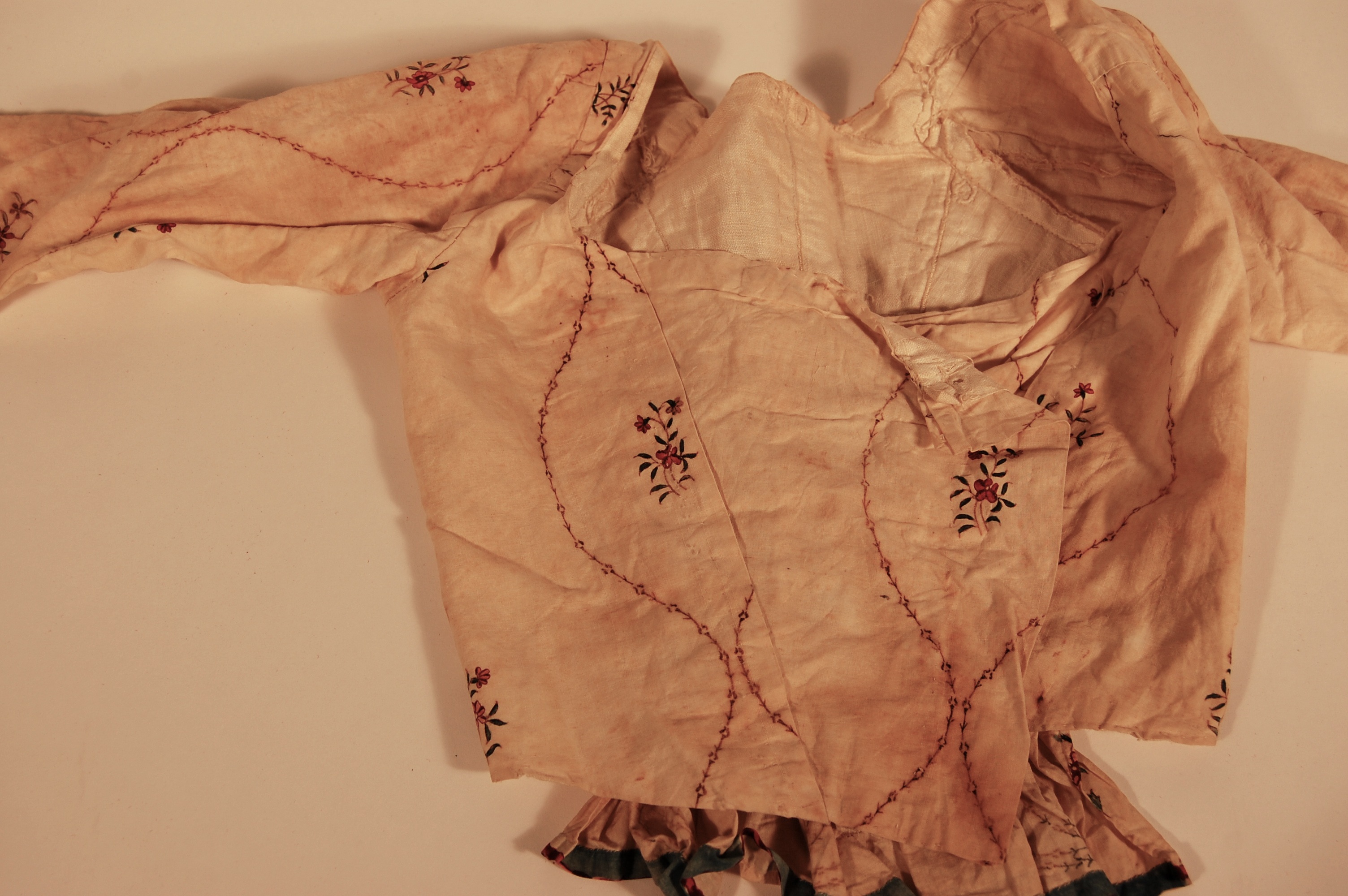
Bodice, painted Indian cotton, 1780-1795 RIHS 1990.36.27
Bodice, painted Indian cotton, 1780-1795
RIHS 1990.36.27

I’ve fallen behind again, as I spent considerable early morning time this past week working on a short presentation for a program in Worcester this past weekend. If you are among the people who do not wake at 4:00 AM panicking about the organization of your thoughts, or whom, exactly, might have worn a heavily-remade bodice, you are lucky indeed.

But I managed to present without falling all over myself, putting out someone’s eye, or causing mayhem and self-embarassment, so, phew! (I do this so much less often than I used to that my anticipatory anxiety is always high.)

Above you can see one of the items I talked about: a re-worked bodice from the collection of the Rhode Island Historical Society.

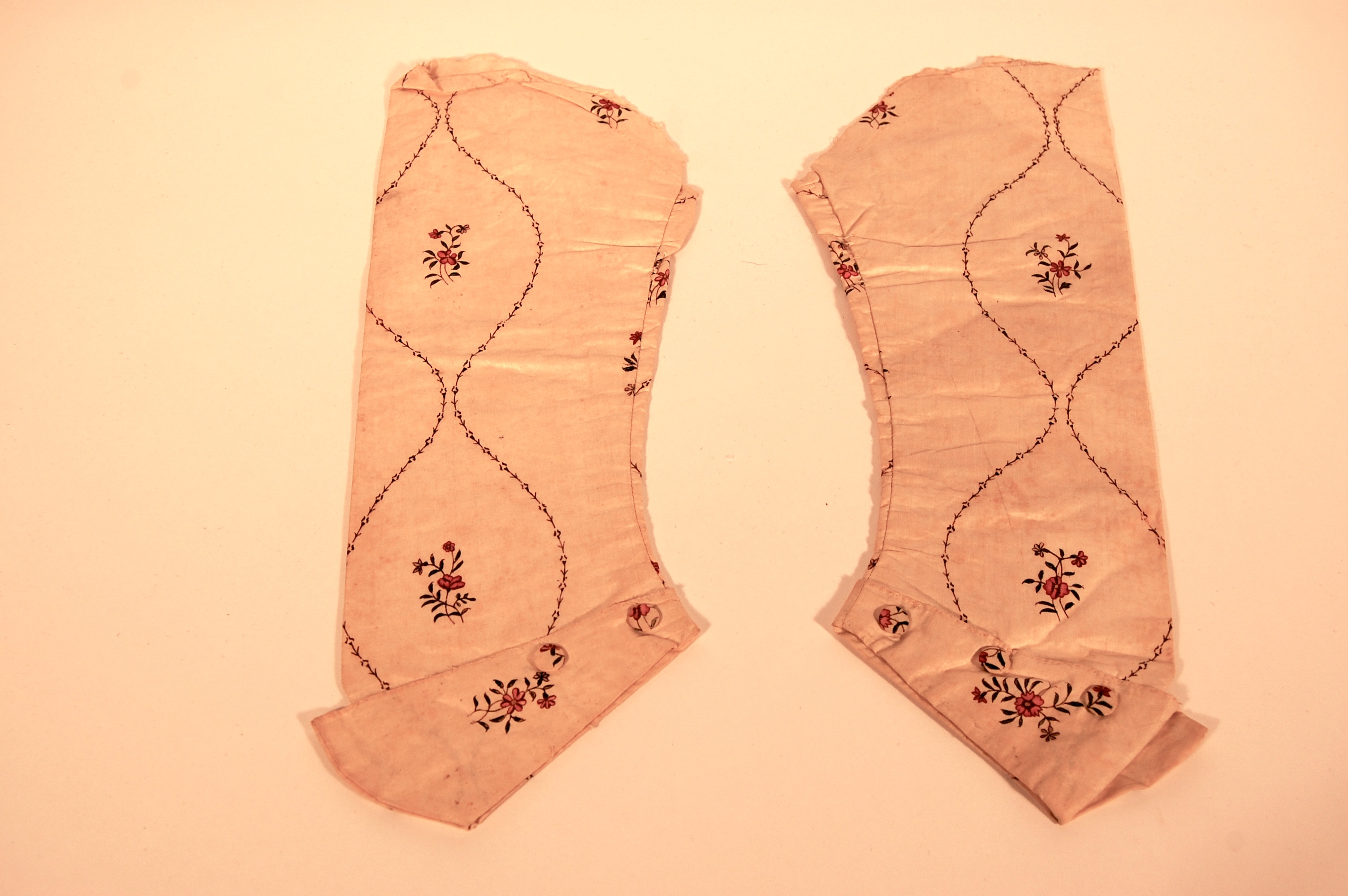
Sleeves, removed from bodice 1990.36.27. RIHS 1990.36.25A-B
Sleeves, removed from bodice 1990.36.27.
RIHS 1990.36.25A-B

I think, once upon a time, that bodice was part of a pieced-back closed-front gown with a matching petticoat.

And then I think someone decided (quite rightly) that the style was too passé for 1795, and altered the gown significantly.

Not only is there evidence of new sleeves being fitted into the gown’s armscyes, we have the sleeves-that-used-to-be. And my dear! No one is wearing sleeves like that this season!

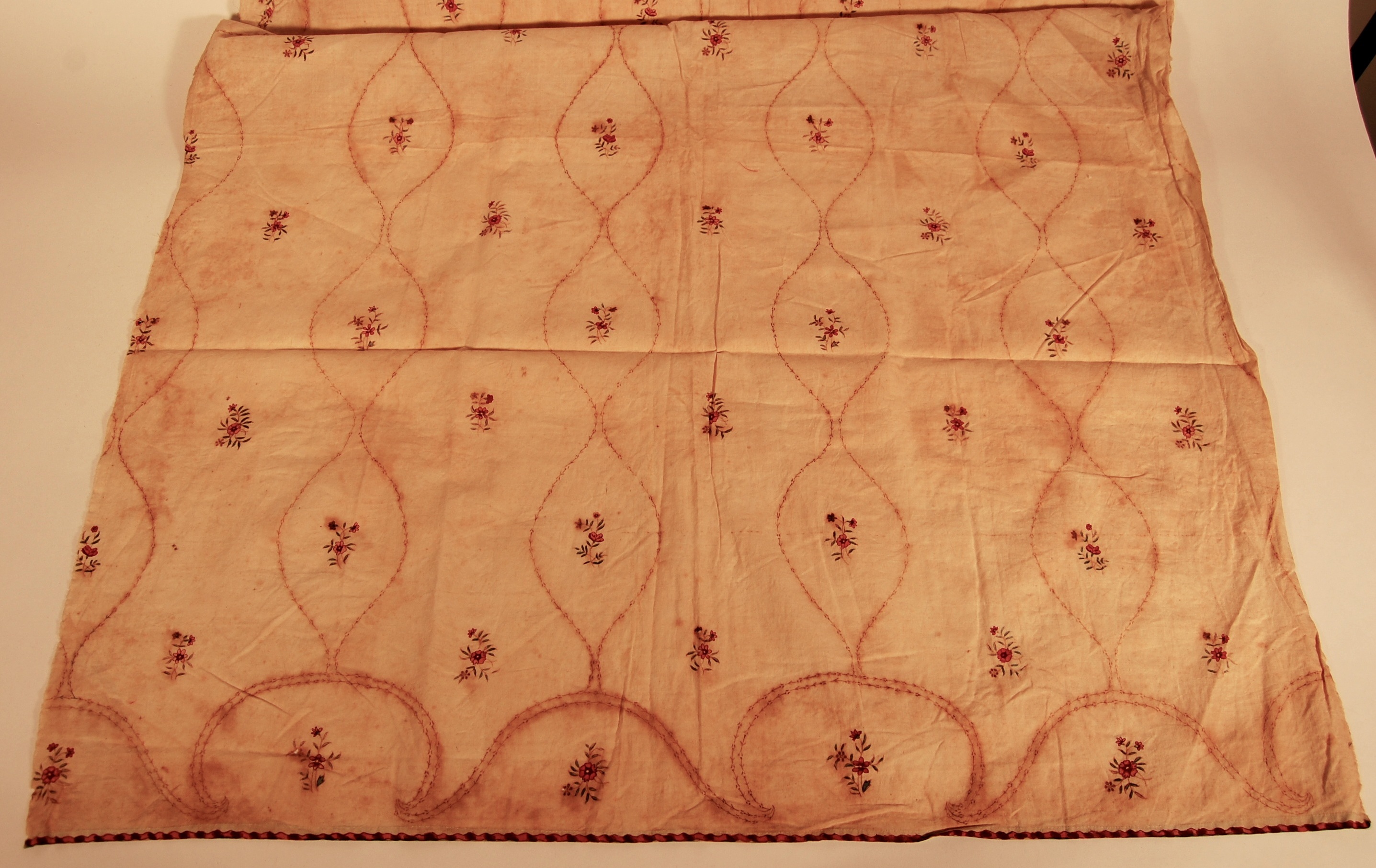
I find these garments in limbo really fascinating. Was that bodice finished and worn with a matching petticoat? (Yes, there’s a panel of that left, too; what a lovely hem!)

Skirt panel, painted Indian cotton. RIHS 1990.36.33
Skirt panel, painted Indian cotton.
RIHS 1990.36.33

Who wore the gown? Was the woman who wore it originally the same woman who wore it altered? I can only guess at this point, and may never find the smoking diary or mantua-maker’s bill. The alterations are not as finely done as the original gown, so I think there are two hands at work here– whose were those hands? There’s always more to think about and learn.

In case you’re wondering, thanks to the Met, we can see what the gown probably looked like in its first incarnation, and then what the alterations were meant to achieve. (Link to the gown on the left; link to the gown on the right.)

Mail Call!

writing letter0001Gentle Readers, would you be writers?

You can join the fun this year by providing mail for the HMS Acasta‘s mail bag at the Jane Austen Festival. Maybe you can’t go, but why shouldn’t your letter?*

Read more here about the suggestions for types of letters, and the characters to whom you may write. It’s on my list of neat things to try to get done.

*Hot tip: Jo Baker, author of Longbourn, will be there. Creative writing, author talks and dressing in high-waisted gowns? Why am I not going? (Because I have too much to do in July!)