Forsaken Friday: a love letter from 1800

Once again, I begin to consider What Cheer Day, and, feeling uninspired, I turned to primary sources, thinking that reacquainting myself with the characters might prove useful. Among the documents I read today was this letter written by Carl F. Herrreshoff (late of Prussia, but now in New York) to Miss Sally Brown of Providence.

New York 17th June 1800

I hasten my dear Sally to answer three of your letters, two of which, one by Gideon and one by the mail, I received yesterday. I am glad to know you at your favourite place, and the more so as I am well convinced you will think of your absent friend on visiting those spots where we have been so happy. That moments like those should ever return, I thought it folly to hope until a few weeks since; a little lonely spot, where I would quietly reflect on what is past and love you with a pious resignation, was all I dare to wish for, but my love is too powerful for my reason, one beam of light was sufficient to give another turn to my imagination, and your last letter has compleated it. I begin already to see a chain of melancholy days in my solitude, I begin to think myself entitled to more happyness, what ever reason may say to the contrary; but taught by sad experience, like you my dear Sally, not to anticipate much happyness, I shall guard my heart from being to sanguine.One happyness I am not however determined to enjoy, let the consequences be what they will. I will see you, dear excellent girl, I will hear it confirmed from your lips that your heart is above the caprices of fortune, that it is as constant as my own. But though I feel now as much alacrity to obey your command as ever, it is not in my power to do it immediately. I have fixed to go to Philadelphia for a few days; I shall be as expeditious as possible, and on my return the first packet shall convey me to you. I rely on finding you at Point Pl. for I feel very averse to go to Providence. Ursus is in the same condition with your little mare, and I have sent him to the pasture, but I will try to get another horse.
Think of your promise: let me find you in good health and spirits; as for my own health, though never blooming, it is very strong, it have never been really affected from all my mind has suffered these ten months past, and since I have entertained the prospect of meeting you again, I feel as if there had been a great change in my fortune.
I lament that our pleasure will be chilled by the situation of poor A. Let us be ever so good we cannot escape our share of misery in the world, every one must have his turn.
As for your request regarding H I assure you, that if
I made a confident of him in matters which concerned you, it was of my own sentiments merely.
Adieu my charming little Sally, I expect a letter from you dated from Point Pl. forget not to direct all your letters in future to the care of John Murray & Son. Is Mr Coggeshall’s house still a tavern in Bristol? You shall soon hear again from

Your sincerest friend
Herreshoff

I think it proper to write to your father before I go to Providence, are you not of the same opinion & if I should write from here, before I receive your answer, I shall enclose my letter in yours.

Carl Herreshoff to Sally Brown, 17 June 1800.
MSS 487, Herreshoff-Lewis Family Papers
RIHS Manuscripts Collection

A month after this letter was written, “poor A.” gave birth to her first daughter, Abby Brown Mason, a day after marrying James Brown Mason, the child’s father. It was not until 1801 that Sally Brown married Carl Herreshoff, despite her father’s misgivings. John Brown never really liked his sons-in-law, and given his nickname of “Old Thunder,” you have to wonder how they felt about him.

For me, this letter full of longing and acquiescence to a powerful love, has resonance beyond its years. Distance is easier to overcome today, to a degree, but letters remain a poor substitute for a lover.

Serious Saturday: Security Concerns

Warning: Museum Content Ahead

Woman Selling Salop. William Henry Pyne. The Costume of Great Britain. 1805.

Night watchmen. We’ve been over them before, tangentially, but never in an experienced way. Sure, sleeping overnight at museum sites, I’ve encountered the night watchman making his rounds. And as a museum visitor, I’ve met the guards who monitor how I’m wearing my messenger bag, and how close I get to various works of art.

But what I don’t think about enough, and don’t observe being thought about, is the safety of people over objects. The Museum Security Network has posts on art theft, forgery, and vandalism— all of which are important topics– but there’s a clear focus. For years, decades, that was our focus at work: stuff, buildings, not people.

That changed in our Library five years ago with one obstreperous patron who touched–didn’t hurt, but was angry, and put a hand on– one of our librarians. Now we think about books, papers, and people. But it’s hard: for as long as I’ve worked in this field, and it’s fully half my life, I’ve had the mission drummed into me: access. We preserve these materials, these objects, these sites, for the use and enjoyment of the public, and that means everyone.

The radical democracy of object care (everything we own is preserved with the best care we can provide, from 17th century basket to 21st century advertising hard hat) translated for me into the radical democracy of access: everyone gets in. (It helps that I’ve worked at places where we could provide a lot of free access, and where we continue to strive for as much free access as possible.)

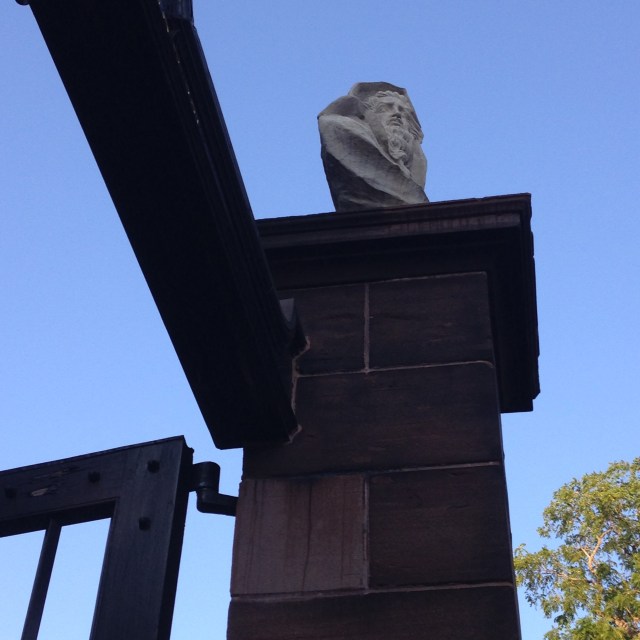
Hades atop the front gate pillar

Everyone gets in. Everyone can appreciate our shared cultural heritage. And then I met Mr Hades. That’s not his real name, but the young man who has been visiting us at the museum (after coming to the library last summer in a quieter mode) has developed an obsession with Hades. He came in Thursday, asking about the front gates, about Hades being the god of Hell, and whether the gates of hell were in our basement. I’ve heard a lot of myths about our basement, but not that one. After ten minutes, and before we could connect to 911, Mr Hades left.

But he was back yesterday, more erratic than before, sunglasses hiding his wide and striking pale green eyes, ranging through the house from front to back streaming a rap song on his phone. He paid for the tour, but left after 10 minutes in the house. He’s clearly been on a tour before.

So we met two police officers from the local substation, and we know to call them immediately if Mr Hades returns. A little research (that’s what we do) turned up a lot of interesting information about Mr Hades, and we suspect that there are officers and judges and guards who are pretty familiar with him, and that he needs help as much or more than he needs incarceration. But he disturbs our visitors, and agitates the staff, and that’s a bad visitor experience. (Thanks to my anti-anxiety meds, I don’t get anxious; I just get a stomach ache and keep talking with Mr Hades to try to keep him focused.)

But last night, talking about safety and Mr Hades with Drunk Tailor, I realized that we don’t think enough about the security of our staff. We put our visitors and our objects before the staff, and that’s not right. This incident made me put the safety of our staff above that of the objects, but we can’t help our visitors be safe unless we take care of ourselves.

oxygen-mask

If your staff members know their routines, know how to respond and have the tools they need to respond, they’ll be better able to care for and direct visitors to safety. I know we have to shift our thinking and procedures where I am; chances are your procedures are up for their annual review, too. For many of us, the new fiscal year has just begun. What better time for review and changes?

Indocent Exposure

IMG_7288 Or, Confusion into Confusion.

Docents and volunteers: the backbone of any non-profit organization, right?

Well…sort of. I’ve worked with docents for more than a decade, and along the way I’ve learned what does and doesn’t work. What does work is intensive engagement and participation, though the occasional shock to the system can be necessary and useful. For special events, though, and in cases of turf, diplomatic relations must be opened with the enemy early and often.

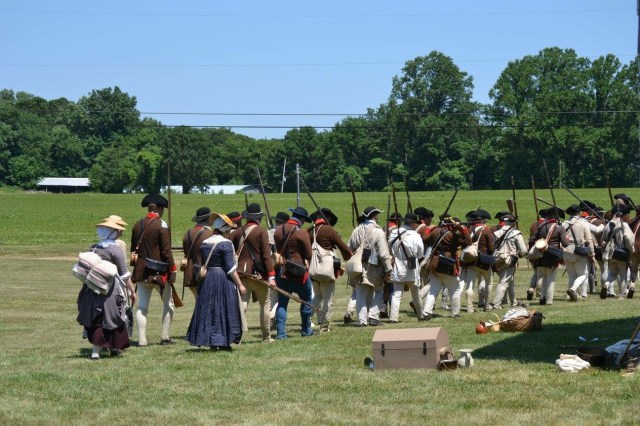
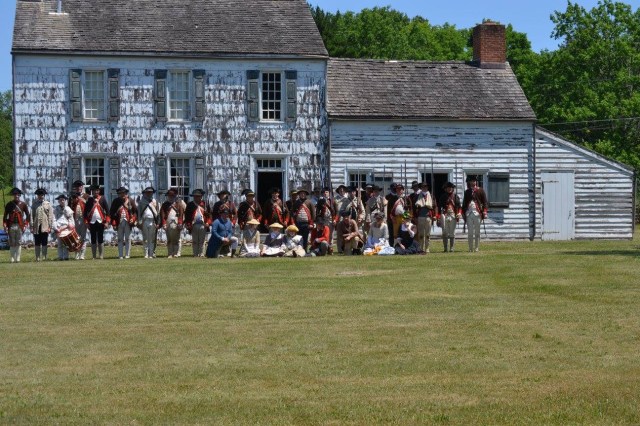
That is not to fault the organizers of the “Order Out of Confusion” event this past weekend, for I was one of the people organizing the civilian, non-marching end of things, and due to turbulence in my own life, I failed to plan adequately in the arena of Docent Relations.

IMG_7296

We had a Retaliator, a Pine Robber, a Quaker, and a Slave-Owning Patriot. We managed a debate or two over slavery. We begged people to take the Quaker home with them. But we did not occupy the house, for the house was occupied by red-shirted volunteers who gave at least some of us the five cent Condescension Tour punctuated with, “But I suppose you’re not interested in that.”

IMG_7298

Actually, that look was one of sheer disbelief, sir, at the farm implements in a bedroom, the tidy piles of perfectly formed ashen coals under the cookware in the fireplace, and the roomful of flax accented with a snake charmer’s basket. In my line of work, I enjoy house tours, but find they generally go better when tour guides don’t point out all the flaws to me. Complaining about the state (which owns the site) and onerous regulations that make repairs expensive will also increase my look of horror and disbelief. But really, if you want full-on horror, kindly inform the Quaker that Japanese POW camps “really weren’t that bad” because we are thriving on confusion today.

IMG_7297

The volunteers were thrilled by the marchers, and were clearly very positive about the event. They love Craig House, and the battlefield, but that sense of pride and ownership made it impossible for them to share the house with us, or to see us as anything but invaders– an Army of Occupation in our own right.

It’s my fault that I’m not an agile enough negotiator to convince recalcitrant octogenarians that my friends and I are safe to play with and will respect the house, and it’s my fault that I didn’t put in place all the lessons I’ve learned in the past decade. Then again, I don’t know that I would have had time to travel for meetings with the volunteers to generate buy in and support, given the maelstrom that was my life this past spring.

IMG_7289

But it’s a lesson well-learned: interpreters will read voraciously, acquire tons of material, and turn that research into appropriately-dressed characters making interpretive points, but unless you work with the site and its volunteers or staff to create agreement about presentation, you’ll get about half the value of the work you put into the planning.

Many heartfelt thanks to everyone who participated, and to the organizers for letting me try out my interpretive model. Next time, I know I have to work with the site staff and volunteers to make sure that execution matches vision.

Free-for-All Friday

Well, at least I can dress myself.

Most sadly, my obnoxious yellow gown will not be finished for this coming weekend, so I will not be flaunting my goods in such flashy clothing. Instead, I will be dressed like a giant version of the darling Miss B, whom I fear does wear the Space Invaders print better than I.

The real point, of course, is the action expected for Saturday, June 25, at the Craig House. The press release is fairly general about how we’ll be representin’ New Jersey’s 18th century civil war, and no one has leaped up to portray Little Anthony the [Quaker] Insurrectionist, but here’s the scene:

Craig House is empty the day of the battle. John Craig is with the Continental Army, leaving Ann Craig to flee with chattel, child, and two slaves in two wagons. This leaves the house and remaining property vulnerable to occupation and depredation.

An armed member of the Association for Retaliation is snooping around the Craig house and catches Loyalist and Quaker refugees who are squatting/hiding, as well as a “London” trader. He can’t let them go, and he is afraid to move them for fear of the British by day and the Tories by night. The Retaliator is joined by a local farmer who has stopped by to check on Mrs Craig’s safety in the surrounding commotion of the troops moving towards the coming battle. 

“Disaffected” smugglers use the chaos of the war in New Jersey to continue trading with the British and Loyalists. The “London trade” feeds the taste for tea, fabrics, rum, lemons, and sugar that even the Revolutionaries cannot shake.

Quakers are viewed with suspicion and animosity for their pacifist, anti-slavery views, which gives the impression that they are Loyalists. Harassed in Philadelphia by various committees requisitioning blankets and other goods; by 1778, the Quakers’ abolitionist views make them vastly unpopular in Monmouth County.

These characters in search of a plot will encounter each other at Craig House and, with some history improv, portray the tension and conflict between New Jersey residents in the Revolutionary period. Want to come out? Craig House is here, and a visitors’ guide is here.